

 Download PDF
 Download PDF
Market Overview
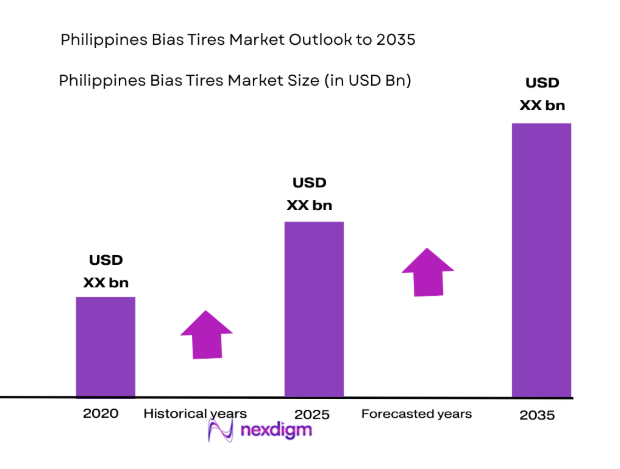
The Philippines Bias Tires market is poised for steady growth, driven by an expanding automotive industry. With an estimated market value of USD 1.2 billion, the demand for tires continues to rise as vehicle production increases across both commercial and private sectors. This demand is fueled by both infrastructure development and the growing number of motorized vehicles. The increasing use of passenger and commercial vehicles and technological advancements in tire manufacturing are contributing to market growth.
The Philippines is home to a growing number of manufacturing hubs in key cities such as Manila, Davao, and Cebu. These regions lead the market due to their strategic locations for distribution and access to automotive industries. The dominance of Metro Manila, as the economic center, has fueled demand for tires due to the expanding vehicle fleet, including private and fleet vehicles. The region’s automotive and logistics activities play a significant role in driving the bias tire market.
Market Segmentation
By Product Type
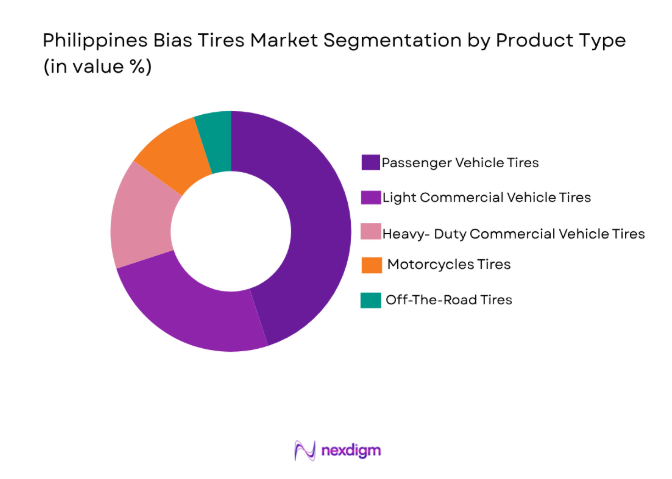
Philippines Bias Tires market is segmented by product type into passenger vehicle tires, light commercial vehicle tires, heavy-duty commercial vehicle tires, motorcycle tires, and off-road tires. Recently, passenger vehicle tires have a dominant market share due to increasing demand for personal vehicles, especially in urban areas. Consumers prefer these tires for their superior performance in both urban and rural environments, thanks to their ability to provide enhanced stability, handling, and safety. The increasing number of vehicle registrations and urbanization trends have contributed to the dominance of passenger vehicle tires in the market.
By Platform Type
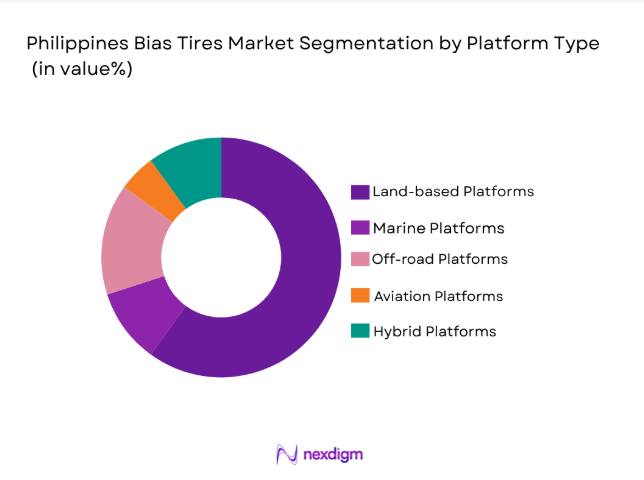
Philippines Bias Tires market is segmented by platform type into land-based platforms, marine platforms, off-road platforms, aviation platforms, and hybrid platforms. Recently, land-based platforms, including on-road vehicles such as cars, trucks, and motorcycles, have dominated the market share. This dominance is attributed to the increasing vehicle fleet on the road, especially in urban regions, where demand for personal and commercial transportation has seen a surge. The accessibility and widespread usage of land vehicles have led to the prevalence of this sub-segment in the tire market.
Competitive Landscape
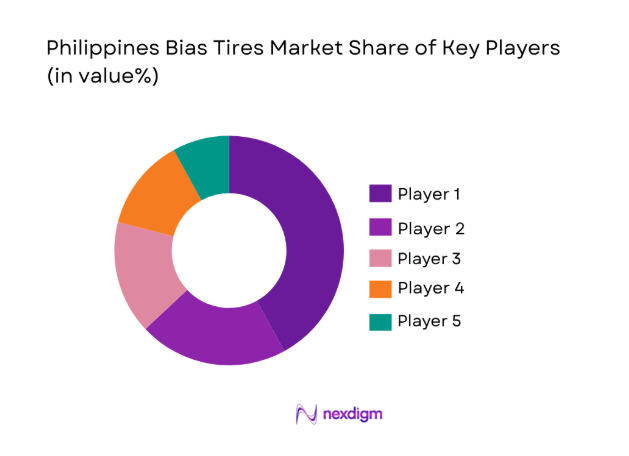
The competitive landscape of the Philippines Bias Tires market is shaped by a mix of established global tire manufacturers and local players. Major companies are focusing on expanding their presence and increasing production capacity to meet the rising demand. Consolidation among key players continues, with collaborations and partnerships enhancing market access and distribution networks. Companies are also focusing on technological advancements, such as tire durability and performance optimization, to maintain a competitive edge.
| Company Name | Establishment Year | Headquarters | Technology Focus | Market Reach | Key Products | Revenue (USD) | Additional Market-Specific Parameter |
| Michelin | 1889 | Clermont-Ferrand | ~ | ~ | ~ | ~ | ~ |
| Bridgestone | 1931 | Tokyo | ~ | ~ | ~ | ~ | ~ |
| Goodyear | 1898 | Akron | ~ | ~ | ~ | ~ | ~ |
| Continental | 1871 | Hanover | ~ | ~ | ~ | ~ | ~ |
| Yokohama | 1917 | Tokyo | ~ | ~ | ~ | ~ | ~ |
Philippines Bias Tires Market Analysis
Growth Drivers
Increasing Vehicle Production
Vehicle production in the Philippines has been steadily increasing in recent years, driven by rising domestic demand as well as growing foreign investments in the automotive industry. The country’s automotive sector has seen a significant boost, with both established manufacturers and new players entering the market, providing a wide range of vehicle options for consumers. As the number of vehicles—both personal and commercial—continues to rise, the demand for tires, including original equipment tires and replacement tires, is experiencing a corresponding surge. This trend is not only supported by the growing preference for new vehicles but also by the need for tire replacements as vehicle fleets expand. The rise in vehicle ownership across urban and rural areas will lead to sustained market growth for the tire industry, especially the bias tire market, over the next several years. Additionally, as infrastructure development improves, more vehicles are expected to be put on the road, further fueling tire demand and solidifying the growth trajectory for the industry.
Rising Consumer Preference for Durable Tires
Consumers in the Philippines are increasingly seeking durable and high-performance tires that can provide better longevity and stability across various terrains. As road infrastructure improves and more vehicles venture into both urban and rural regions, the demand for tires that can withstand diverse road conditions, including rough, uneven, and challenging terrains, is on the rise. The increasing focus on vehicle safety and fuel efficiency is pushing consumers to choose tires that not only enhance driving performance but also offer longer service life. Moreover, with the growing adoption of higher-end vehicle models, there is a marked shift towards premium tire options. These tires are designed to meet the demands of consumers who prioritize traction, handling, and comfort, contributing to an increase in demand for durable tire products. Manufacturers are responding by producing tires with advanced materials and technologies that promise better performance, durability, and fuel efficiency, which will continue to drive the market forward in the coming years.
Market Challenges
High Import Duties
The Philippines faces significant challenges due to the high import duties imposed on tires, which directly affect the pricing and affordability of international tire brands in the local market. This makes it more expensive for consumers to purchase high-quality imported tires, thus limiting their access to a wider variety of tire options. This challenge creates a more competitive environment for local manufacturers, as consumers often opt for more affordable, locally manufactured tires that provide comparable performance. While this benefits domestic producers, it also creates a barrier to entry for international brands looking to penetrate the market, limiting their ability to compete effectively. Furthermore, this trade barrier pushes foreign tire manufacturers to explore alternatives such as establishing local production facilities or forming strategic partnerships with domestic companies to bypass the import duties and reduce overall costs. This dynamic continues to shape the competitive landscape in the Philippines bias tire market.
Fluctuating Raw Material Prices
The cost of raw materials essential to tire manufacturing, such as rubber, synthetic compounds, and other critical materials, is highly volatile. These price fluctuations create an unpredictable environment for manufacturers, complicating pricing strategies and cost management. As raw material prices increase, tire manufacturers are often forced to raise their prices, which can negatively impact market demand, especially for consumers who are price-sensitive. Additionally, this fluctuation in material costs can disrupt the tire manufacturing process, causing supply chain disruptions that affect product availability and lead times. For companies that rely heavily on imported raw materials, these challenges are particularly pronounced, as global market dynamics and exchange rate fluctuations add another layer of complexity to their operations. As such, tire manufacturers must develop flexible strategies to adapt to these shifts and ensure consistent product quality and pricing stability, while also maintaining their competitive edge in the market.
Opportunities
Adoption of Eco-friendly Tires
Growing environmental concerns and a heightened awareness of sustainability are creating new opportunities for the tire industry in the Philippines. There is a rising demand for eco-friendly tire options, including those made from recycled rubber, bio-based materials, and other sustainable alternatives. These tires not only help reduce the environmental footprint of the automotive sector but also offer consumers the added benefit of longer-lasting products, which in turn can lead to reduced waste and lower long-term costs. With government incentives promoting greener practices and sustainability in various industries, there is significant potential for tire manufacturers to innovate in this area and cater to the growing demand for eco-friendly solutions. The shift towards sustainability is also supported by increasing consumer preferences for products that contribute to environmental protection, making this an opportune time for tire manufacturers to develop and market eco-friendly options. As the market for green technologies continues to expand, eco-friendly tires will play an
Expansion of the Electric Vehicle Market
The rise of electric vehicles (EVs) in the Philippines offers a unique opportunity for the tire industry, especially in the development of specialized tires tailored for electric vehicles. EVs require tires that focus on optimizing energy efficiency, reducing rolling resistance, and providing longer tire life due to the absence of internal combustion engines. As the government accelerates efforts to expand the EV infrastructure, including charging stations, and as consumers show growing interest in environmentally friendly transportation options, the demand for tires that are specifically designed for electric vehicles will increase. This presents an emerging segment for tire manufacturers to cater to, with new opportunities for product innovation and development. Manufacturers who can design tires that meet the unique requirements of EVs, such as low rolling resistance and improved durability, will have a significant competitive advantage in the evolving market. The growth of the electric vehicle market in the Philippines will, therefore, contribute to the expansion of the bias tire market, with tire manufacturers looking to meet the specific needs of this rapidly growing market segment.
Future Outlook
The future outlook for the Philippines Bias Tires market is positive, with expected growth driven by expanding automotive production, increasing vehicle ownership, and the continued development of infrastructure. Technological advancements, such as tire innovations focused on performance and sustainability, will play a key role in shaping the market. Additionally, regulatory support for green technologies and the rise of electric vehicles are likely to enhance market demand. The next few years will witness the continued rise of e-commerce and online tire sales, further expanding consumer access to a wide range of tire options.
Major Players
- Michelin
- Bridgestone
- Goodyear
- Continental
- Yokohama
- MRF
- Apollo Tyres
- Hankook
- Pirelli
- Sumitomo Rubber Industries
- Cooper Tire
- Trelleborg
- Toyo Tires
- CEAT
- Maxxis
Key Target Audience
- Investments and venture capitalist firms
- Government and regulatory bodies
- Vehicle manufacturers
- Commercial vehicle fleet operators
- Automotive aftermarket distributors
- Electric vehicle manufacturers
- Logistics and transportation
Research Methodology
Step 1: Identification of Key Variables
Identifying key market variables such as market size, growth rate, key drivers, and challenges, including economic, political, and social factors.
Step 2: Market Analysis and Construction
Analyzing the identified variables to construct a detailed market model, focusing on segment-wise growth and dynamics.
Step 3: Hypothesis Validation and Expert Consultation
Consulting industry experts, conducting surveys, and validating hypotheses with empirical data to ensure accuracy and reliability.
Step 4: Research Synthesis and Final Output
Synthetizing all gathered data and analysis to provide a comprehensive report, including insights and market forecasts.

- Executive Summary
- Research Methodology (Definitions, Scope, Industry Assumptions, Market Sizing Approach, Primary & Secondary Research Framework, Data Collection & Verification Protocol, Analytic Models & Forecast Methodology, Limitations & Research Validity Checks)

- Market Definition and Scope
- Value Chain & Stakeholder Ecosystem
- Regulatory / Certification Landscape
- Sector Dynamics Affecting Demand
- Strategic Initiatives & Infrastructure Growth

- Growth Drivers
Increase in Vehicle Production and Sales
Rising Demand for Durable and Cost-effective Tires
Growing Off-road Vehicle Market
Technological Advancements in Tire Manufacturing - Market Challenges
Raw Material Price Fluctuations
High Import Duty on Tire Imports
Environmental Impact of Tire Disposal - Market Opportunities
Rise in Demand for Eco-friendly Tires
Expanding Automotive Aftermarket
Growth in the Electric Vehicle Segment - Trends
Shift Toward Smart Tires
Integration of Sustainability Practices in Manufacturing - Government Regulations
- SWOT Analysis
- Porter’s Five Forces

- By Market Value, 2020-2025
- By Installed Units, 2020-2025
- By Average System Price, 2020-2025
- By System Complexity Tier, 2020-2025

- By System Type (In Value%)
Passenger Vehicle Tires
Light Commercial Vehicle Tires
Heavy-Duty Commercial Vehicle Tires
Motorcycle Tires
Off-Road Tires - By Platform Type (In Value%)
Land-based Platforms
Marine Platforms
Off-road Platforms
Aviation Platforms
Hybrid Platforms - By Fitment Type (In Value%)
OEM Fitment
Aftermarket Fitment
Retreaded Fitment
Tire Repair Kits - By End User Segment (In Value%)
Automotive Manufacturers
Logistics and Transport Companies
Vehicle Fleet Operators
Private Vehicle Owners

- Market Share Analysis
- Cross Comparison Parameters (System Type, Platform Type, Procurement Channel, EndUser Segment, Fitment Type, Market Value, Installed Units)
- SWOT Analysis of Key Competitors
- Pricing & Procurement Analysis
- Key Players
- Michelin
Bridgestone
Goodyear
Continental
Sumitomo Rubber Industries
Pirelli
Trelleborg
Yokohama Rubber Company
Hankook
Kumho Tires
MRF
Apollo Tyres
Maxxis International
CEAT
Toyo Tires

- Increase in Fleet Operations Driving Tire Demand
- Government Policies Affecting Vehicle Imports and Maintenance
- Urbanization Increasing Demand for Personal Vehicles
- Adoption of Electric and Autonomous Vehicles Influencing Tire Development

- Forecast Market Value, 2026-2035
- Forecast Installed Units, 2026-2035
- Price Forecast by System Tier, 2026-2035
- Future Demand by Platform, 2026-2035


 Request a Sample
 Ask for Customization
 Get a Quote
 Enquire Now