
 Download PDF
Market Overview
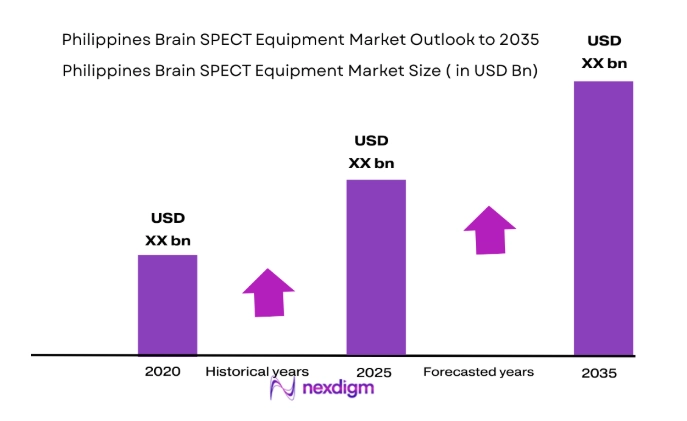
The market for Brain SPECT (Single Photon Emission Computed Tomography) equipment in the Philippines has seen significant growth, with a market size valued at approximately USD ~ million. This growth is primarily driven by the rising prevalence of neurological conditions and the increasing demand for advanced imaging technologies in hospitals and diagnostic centers. As the healthcare sector continues to invest in state-of-the-art medical equipment, the market for Brain SPECT is expected to expand further. Factors such as technological advancements and rising healthcare infrastructure are expected to contribute significantly to the market’s overall growth.
In terms of regional dominance, Metro Manila and other key urban centers, including Cebu and Davao, are at the forefront of the Philippines Brain SPECT market. These regions are home to the majority of advanced healthcare facilities, equipped with modern imaging technologies. The concentration of high-income populations, coupled with improved access to healthcare services in these urban areas, has bolstered the demand for Brain SPECT systems. Moreover, government and private sector investments in these cities continue to create an environment conducive to healthcare innovation, solidifying their position as leaders in the market.
Market Segmentation
By Product Type
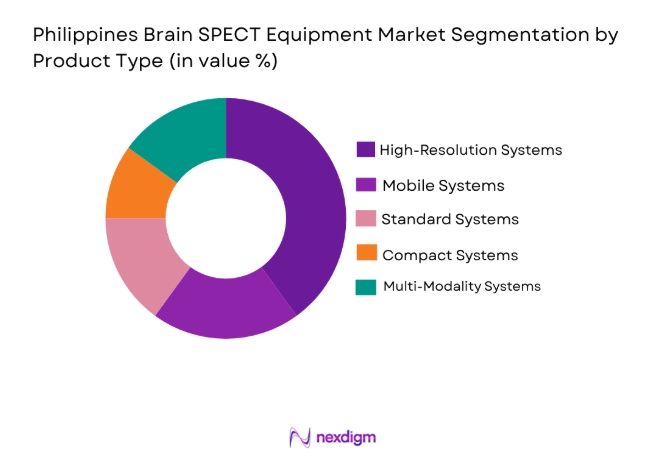
Philippines Brain SPECT market is segmented by product type into high-resolution, mobile, standard, compact, and multi-modality systems. Recently, high-resolution systems have dominated the market share due to factors such as increasing demand for precise diagnostic tools and advancements in imaging technology. These systems provide enhanced imaging capabilities, making them highly preferred by healthcare providers in both public and private sectors. Their growing adoption is also supported by their ability to deliver detailed results in diagnosing neurological disorders.
By Platform Type
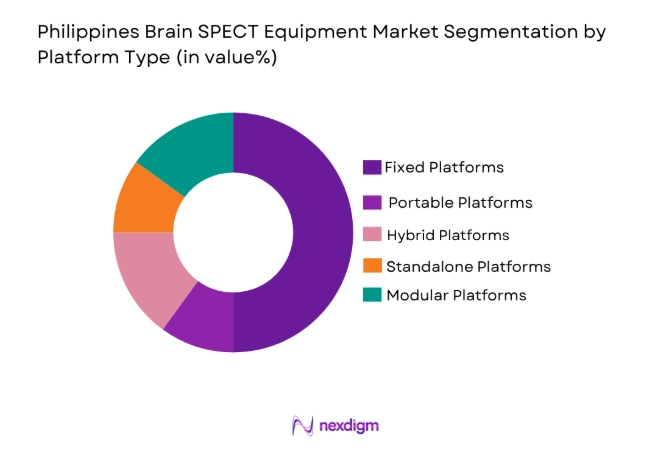
The market is further segmented by platform type into fixed, portable, hybrid, standalone, and modular systems. Fixed platforms currently dominate the market, driven by their robustness, long-term performance, and integration into larger healthcare settings such as hospitals and research institutions. These platforms are particularly favored in the Philippines due to their reliability and high imaging quality, which are essential for accurate diagnoses in clinical environments. Moreover, the availability of dedicated spaces for these systems in major medical institutions has supported their widespread adoption.
Competitive Landscape
The Philippines Brain SPECT equipment market is highly competitive, with key players such as Philips Healthcare, Siemens Healthineers, and GE Healthcare at the forefront. These companies maintain a strong presence due to their ability to innovate and provide state-of-the-art systems. Additionally, these players are heavily involved in market consolidation activities, such as mergers and strategic alliances, to expand their product portfolios and reach in the region. With continuous technological advancements and increasing competition, the market is expected to experience more collaboration and partnerships moving forward.
| Company Name | Establishment Year | Headquarters | Technology Focus | Market Reach | Key Products | Revenue (USD) | Technological Innovations |
| Philips Healthcare | 1891 | Netherlands | ~ | ~ | ~ | ~ | ~ |
| Siemens Healthineers | 1847 | Germany | ~ | ~ | ~ | ~ | ~ |
| GE Healthcare | 1892 | USA | ~ | ~ | ~ | ~ | ~ |
| Canon Medical Systems | 1937 | Japan | ~ | ~ | ~ | ~ | ~ |
| Fujifilm Holdings Corporation | 1934 | Japan | ~ | ~ | ~ | ~ | ~ |
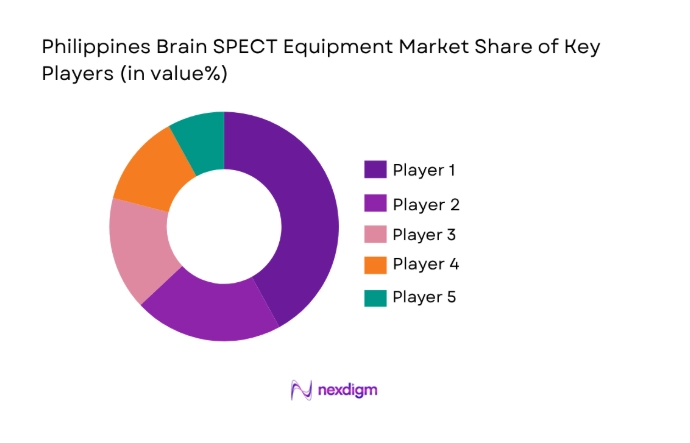
Philippines Brain SPECT Equipment Market Analysis
Growth Drivers
Rising Prevalence of Neurological Disorders
The increasing prevalence of neurological disorders, such as Alzheimer’s disease, Parkinson’s disease, and epilepsy, plays a critical role in driving the demand for Brain SPECT equipment in the Philippines. The growing aging population, coupled with rising awareness about neurological diseases, has led to a surge in the need for advanced diagnostic tools like Brain SPECT systems. These imaging technologies are highly valued for their ability to detect abnormalities in brain function, offering insights that are crucial for early diagnosis. As early diagnosis is vital for the effective management of neurological disorders, the demand for Brain SPECT systems continues to rise. Furthermore, the healthcare sector’s expansion in the Philippines, with increasing investments in hospitals and diagnostic centers, aligns with this rising demand for advanced imaging systems. The growing burden of neurological diseases directly contributes to the need for better healthcare infrastructure, thus creating an environment where Brain SPECT equipment becomes an indispensable part of medical diagnostics. Along with an aging population, the advancement of healthcare systems to cater to neurological conditions creates a promising market for these diagnostic tools.
Technological Advancements in Brain SPECT Imaging
Technological advancements in Brain SPECT imaging systems represent another key driver of the market. Over the past few years, innovations such as high-resolution imaging, the integration of artificial intelligence (AI), and the introduction of hybrid imaging systems have significantly improved the performance of Brain SPECT systems. These advancements provide higher accuracy and enhanced imaging capabilities, which are crucial for detecting and diagnosing complex neurological disorders. Additionally, the incorporation of AI and machine learning algorithms into Brain SPECT systems has improved diagnostic efficiency by reducing the time required for image processing and analysis. AI-driven tools not only assist in the accurate interpretation of images but also help in predicting the progression of diseases, making them an essential part of modern medical practice. The integration of these technologies into Brain SPECT systems makes them more effective, precise, and user-friendly, enhancing their appeal to hospitals and healthcare centers. With the continuous evolution of these technologies, Brain SPECT systems are expected to become even more essential for the diagnosis and management of neurological diseases, resulting in greater market adoption and expansion in the Philippines.
Market Challenges
High Initial Cost of Brain SPECT Equipment
One of the most significant challenges faced by the Brain SPECT equipment market in the Philippines is the high initial cost associated with acquiring these advanced systems. The upfront capital required to purchase Brain SPECT systems, particularly high-end models, can be prohibitively expensive for many healthcare institutions, especially smaller or regional hospitals and diagnostic centers. In addition to the purchase price of the equipment, there are additional costs involved, including installation, training, and ongoing maintenance. These financial barriers make it difficult for some healthcare providers to justify the investment, particularly in regions where budgets for healthcare infrastructure are limited. This challenge is further compounded by the economic disparities across various parts of the country, where affluent urban centers have better access to funding and advanced healthcare technologies compared to less affluent provinces. As a result, despite the growing demand for advanced diagnostic technologies like Brain SPECT, the high cost remains a significant hurdle for many healthcare providers seeking to invest in these systems. Overcoming this challenge requires strategies to make these technologies more affordable or financially accessible to a wider range of healthcare facilities.
Limited Availability of Skilled Personnel
Another challenge impacting the widespread adoption of Brain SPECT technology in the Philippines is the limited availability of skilled personnel capable of operating and interpreting results from Brain SPECT systems. These sophisticated imaging systems require specialized training for radiologists, nuclear medicine technologists, and other healthcare professionals. However, there is a shortage of such trained personnel, particularly in less urbanized areas. In many regions outside Metro Manila, the availability of trained staff to operate these systems is limited, which can delay the effective deployment of Brain SPECT equipment. As a result, healthcare providers may be hesitant to invest in expensive diagnostic systems without the assurance that they will have access to a qualified workforce to operate and interpret the results. This issue not only affects the effectiveness of the systems but also impacts the overall quality of care provided in these regions. Addressing this challenge will require focused efforts on improving educational and training programs for healthcare professionals in nuclear medicine and radiology, particularly in rural areas, to ensure that Brain SPECT systems are utilized effectively.
Opportunities
Expanding Healthcare Infrastructure
The ongoing expansion of healthcare infrastructure in the Philippines presents a significant opportunity for the Brain SPECT equipment market. The Philippine government has prioritized improving healthcare services, especially in underserved areas, to ensure that more citizens have access to high-quality medical care. As new healthcare facilities are built and existing ones are upgraded, there will be a greater need for advanced medical equipment, including Brain SPECT systems, to improve the diagnosis and treatment of neurological disorders. This expanding healthcare infrastructure is crucial to meeting the rising demand for diagnostic technologies across the country. Moreover, as healthcare services become more accessible in rural and regional areas, the adoption of advanced diagnostic tools like Brain SPECT will increase. The government’s initiatives to provide better healthcare access, particularly in areas previously underserved, will contribute to the broader adoption of these technologies. Additionally, the establishment of new hospitals and diagnostic centers will require investments in advanced medical imaging equipment, providing an opportunity for Brain SPECT systems to become more widely available to patients.
Government Initiatives to Improve Healthcare Access
The Philippine government’s initiatives to enhance healthcare access and affordability present another key opportunity for the Brain SPECT market. Programs such as the expansion of the Philippine Health Insurance Corporation (PhilHealth) coverage are aimed at making healthcare more affordable for a larger portion of the population. This includes coverage for advanced diagnostic services, such as Brain SPECT imaging, which is critical in the early detection and management of neurological disorders. As these government policies take effect, the adoption of Brain SPECT technology is expected to grow, particularly among healthcare providers that serve lower-income patients. Furthermore, these initiatives are likely to encourage more public-private partnerships, where private healthcare providers collaborate with government programs to expand the availability of advanced medical technologies. The increased financial support from the government for healthcare facilities to adopt such technologies will not only enhance diagnostic capabilities but also ensure that more individuals have access to life-saving treatments. These factors create a fertile ground for the sustained growth of the Brain SPECT equipment market in the Philippines.
Future Outlook
The future of the Philippines Brain SPECT equipment market looks promising, with expected growth driven by advancements in technology, increasing healthcare investments, and a rising demand for precise diagnostic tools. As the country continues to develop its healthcare infrastructure, Brain SPECT systems will play an integral role in the diagnosis and management of neurological disorders. The introduction of AI-enhanced imaging systems and more cost-effective solutions will also contribute to the growth of this market. Furthermore, regulatory support and increased access to healthcare in regional areas are anticipated to widen the market’s reach, leading to sustained expansion.
Major Players
- Philips Healthcare
- Siemens Healthineers
- GE Healthcare
- Canon Medical Systems
- Fujifilm Holdings Corporation
- Mediso Medical Imaging Systems
- Neusoft Medical Systems
- Hitachi Medical Corporation
- Shimadzu Corporation
- Nihon Kohden Corporation
- Mindray Medical International
- Brain Biosciences
- United Imaging Healthcare
- Carestream Health
- Block Imaging
Key Target Audience
- Investments and venture capitalist firms
- Government and regulatory bodies
- Healthcare service providers
- Hospitals and diagnostic centers
- Medical equipment distributors
- Healthcare technology integrators
- Private clinic
Research Methodology
Step 1: Identification of Key Variables
Key variables influencing the market were identified, focusing on technological trends, market dynamics, and regional healthcare infrastructure.
Step 2: Market Analysis and Construction
Data was collected from primary and secondary sources to construct the market framework, ensuring accurate market sizing and segmentation.
Step 3: Hypothesis Validation and Expert Consultation
The market hypotheses were validated through consultations with industry experts, including key players in the medical equipment sector.
Step 4: Research Synthesis and Final Output
Final market insights were synthesized and compiled, ensuring the inclusion of all critical data points and actionable information for stakeholders.

- Executive Summary
- Research Methodology (Definitions, Scope, Industry Assumptions, Market Sizing Approach, Primary & Secondary Research Framework, Data Collection & Verification Protocol, Analytic Models & Forecast Methodology, Limitations & Research Validity Checks)

- Market Definition and Scope
- Value Chain & Stakeholder Ecosystem
- Regulatory / Certification Landscape
- Sector Dynamics Affecting Demand
- Strategic Initiatives & Infrastructure Growth

- Growth Drivers
Rising Prevalence of Neurological Disorders
Increasing Healthcare Infrastructure Investments
Advancements in Medical Imaging Technology - Market Challenges
High Initial Capital Investment
Limited Awareness in Remote Areas
Regulatory Hurdles in Import and Distribution - Market Opportunities
Government Initiatives in Healthcare Expansion
Technological Advancements in SPECT Equipment
Growth in Medical Tourism - Trends
Adoption of Hybrid Imaging Systems
Focus on Point-of-Care Diagnostics - Government Regulations
SWOT Analysis
Porter’s Five Forces

- By Market Value, 2020-2025
- By Installed Units, 2020-2025
- By Average System Price, 2020-2025
- By System Complexity Tier, 2020-2025

- By System Type (In Value%)
High-End Systems
Mid-Range Systems
Low-End Systems
Portable Systems
Hybrid Systems - By Platform Type (In Value%)
Analog Systems
Digital Systems
Hybrid Systems
Wireless Systems
Portable Systems - By Fitment Type (In Value%)
Fixed Systems
Mobile Systems
Hybrid Fitment Systems
Modular Systems - By End User Segment (In Value%)
Hospitals
Diagnostic Centers
Research Institutes

- Market Share Analysis
- Cross Comparison Parameters (System Type, Platform Type, End User, Region, Market Value, Price Trends, Installed Units)
- SWOT Analysis of Key Competitors
- Pricing & Procurement Analysis
- Key Players
GE Healthcare
Siemens Healthineers
Philips Healthcare
Canon Medical Systems
Mindray Medical
Shimadzu Corporation
Hitachi Medical Systems
Neusoft Medical Systems
Medtronic
Toshiba Medical Systems
United Imaging Healthcare
ClearScan Technologies
Accuray Incorporated
Fujifilm Medical Systems
Esaote S.p.A

- Hospital Sector Growth
- Diagnostic Centers Demand
- Research Institutes and Academic Applications
- Emerging Markets for Brain SPECT Equipment

- Forecast Market Value, 2026-2035
- Forecast Installed Units, 2026-2035
- Price Forecast by System Tier, 2026-2035
- Future Demand by Platform, 2026-2035


 Request a Sample
 Ask for Customization
 Get a Quote
 Enquire Now