
 Download PDF
 Download PDF
Market Overview
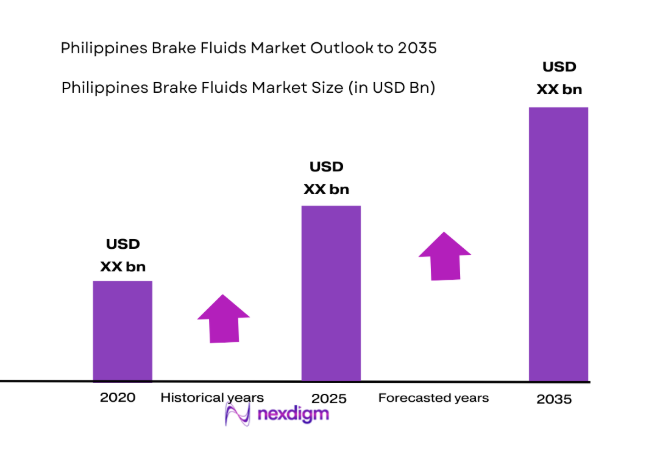
The Philippines brake fluids market, valued in billions ~ USD, is driven by the increasing automotive production and growing vehicle sales across various vehicle categories. The demand for higher-quality and advanced brake fluids such as synthetic and high-performance fluids is rising, spurred by consumer preferences for improved vehicle safety and performance. As vehicle fleets expand and automotive manufacturing strengthens, the market is seeing a surge in both product demand and innovations in fluid formulations, particularly those designed for enhanced durability and eco-friendly use.
The Philippines is dominated by major urban centers such as Metro Manila, Cebu, and Davao, which are key contributors to the market’s expansion. These cities exhibit the highest vehicle ownership rates and are hubs for transportation and manufacturing industries. The strong automotive aftermarket sector in these regions, along with growing infrastructure developments, boosts the demand for high-quality brake fluids, making them crucial markets for both OEMs and aftermarket suppliers.
Market Segmentation
By Product Type
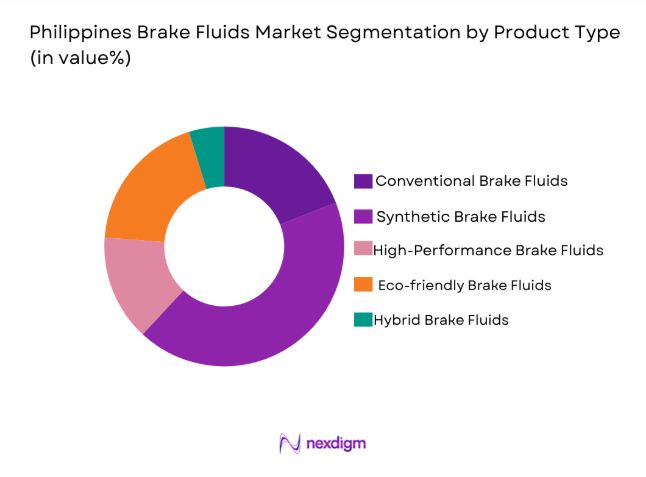
The Philippines brake fluids market is segmented by product type into conventional, synthetic, high-performance, and eco-friendly brake fluids. Recently, the synthetic brake fluids sub-segment has been dominating the market share due to increased consumer preference for fluids offering superior performance and longevity. These fluids are widely used in high-end vehicles and offer enhanced safety by operating effectively under extreme temperatures. Furthermore, the shift towards performance-based applications in passenger vehicles and commercial transport has bolstered the demand for synthetic fluids, which offer better stability and durability compared to conventional fluids.
By Platform Type
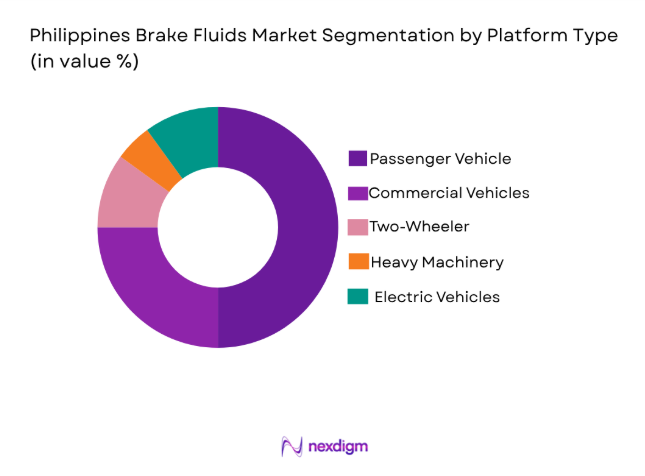
The Philippines brake fluids market is segmented by platform type into passenger vehicles, commercial vehicles, two-wheelers, electric vehicles, and heavy machinery. Passenger vehicles have the dominant market share due to the high number of cars on the road and the increasing sales of private cars. The demand for high-performance and eco-friendly brake fluids in passenger vehicles is fueled by consumer focus on vehicle safety and environmental concerns. These vehicles require higher-grade fluids that can perform well under varying conditions, thus driving the adoption of synthetic and specialized brake fluids within this segment.
Competitive Landscape
The competitive landscape in the Philippines brake fluids market is influenced by consolidation among key players, as well as the influence of established companies who command significant market share. These players often have vast distribution networks and strong brand presence in the local market. As the market for advanced brake fluids grows, these companies are focusing on increasing product offerings and advancing their technological capabilities to cater to the growing demand for high-performance fluids.
| Company Name | Establishment Year | Headquarters | Technology Focus | Market Reach | Key Products | Revenue | Additional Parameter |
| Castrol | 1899 | UK | ~ | ~ | ~ | ~ | ~ |
| ExxonMobil | 1870 | USA | ~ | ~ | ~ | ~ | ~ |
| Total | 1924 | France | ~ | ~ | ~ | ~ | ~ |
| Shell | 1907 | Netherlands | ~ | ~ | ~ | ~ | ~ |
| Valvoline | 1866 | USA | ~ | ~ | ~ | ~ | ~ |
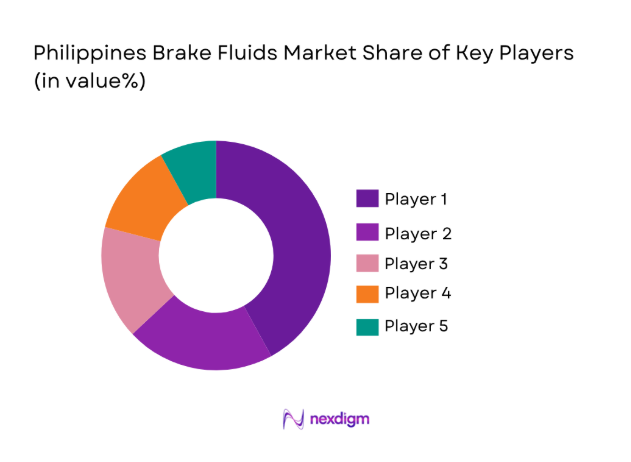
Philippines Brake Fluids Market Analysis
Growth Drivers
Increasing Vehicle Sales
The rise in vehicle ownership across the Philippines, fueled by growing economic development and an expanding middle class, is driving the demand for brake fluids. The increasing disposable income of consumers and the availability of financing options are propelling the automotive sector. This surge in vehicle sales, especially in cities like Metro Manila, Cebu, and Davao, is directly influencing the demand for brake fluids, both in the OEM and aftermarket segments. With an increasing number of vehicles on the road, the demand for regular maintenance, including fluid changes, is expected to see sustained growth. This has led to an increased focus on high-performance and eco-friendly fluids that align with consumer preferences for long-lasting, efficient, and environmentally responsible options. Additionally, the rise of electric vehicles in the Philippines is further boosting the demand for specialized brake fluids that cater to new technologies and provide superior performance.
Technological Advancements in Brake Fluids
The development of high-performance, synthetic, and eco-friendly brake fluids is another key growth driver. These advancements in fluid formulations allow brake systems to perform better under extreme conditions, thus enhancing vehicle safety. For instance, synthetic brake fluids are more stable at higher temperatures and provide superior protection against moisture absorption, which reduces the risk of brake failure. As automotive manufacturers strive to offer enhanced safety features and as consumer expectations rise for improved vehicle performance, the demand for advanced brake fluids is also growing. Moreover, innovations such as bio-based brake fluids, which offer reduced environmental impact, are further accelerating growth in this market, as environmental sustainability becomes a key factor in consumer decision-making.
Market Challenges
Fluctuating Raw Material Costs
A significant challenge facing the Philippines brake fluids market is the volatility in raw material costs. Brake fluid formulations are heavily dependent on chemicals like glycol ethers and borates, whose prices can fluctuate due to factors such as geopolitical instability and changes in supply chain dynamics. These price fluctuations pose a challenge to manufacturers who must either absorb the costs or pass them onto consumers, impacting product pricing. Furthermore, the availability of raw materials may be inconsistent, leading to potential delays in production and supply chain disruptions. The impact of such fluctuations on pricing strategies can also affect the competitive dynamics of the market, as companies struggle to maintain margins while meeting the growing demand for high-quality brake fluids. This can affect smaller players and limit their ability to scale up their operations in the face of rising production costs.
Environmental Regulations and Compliance
Strict environmental regulations concerning the disposal of hazardous substances like brake fluids pose a challenge for the market. These regulations are especially stringent in the Philippines due to rising concerns over environmental degradation and pollution. Brake fluids, if improperly disposed of, can cause significant harm to the environment, which has prompted local authorities to introduce stricter guidelines for disposal and recycling. Manufacturers must now comply with these regulations, leading to additional costs for proper disposal, recycling, and compliance with waste management laws. The evolving regulatory landscape requires brake fluid manufacturers to adapt their production processes and materials to meet new environmental standards, which can lead to increased production costs and longer product development cycles. As consumer demand for eco-friendly products grows, manufacturers must find ways to balance these regulatory requirements with consumer expectations while maintaining profitability.
Opportunities
Rise of Electric Vehicles
The growing adoption of electric vehicles (EVs) in the Philippines represents a significant opportunity for the brake fluids market. As the number of EVs increases, the demand for specialized fluids designed for electric braking systems will rise. Unlike conventional vehicles, electric vehicles often utilize regenerative braking, which reduces wear on brake pads and fluid consumption. However, the use of fluid in these vehicles still requires advanced formulations to enhance performance and ensure safety under high-speed conditions. As the Philippine government and local municipalities continue to support EV adoption through incentives and infrastructure development, brake fluid manufacturers have a unique opportunity to develop innovative products that cater to the needs of the EV sector, positioning themselves as leaders in this emerging market segment.
Growth in the Aftermarket Segment
The Philippines automotive aftermarket industry is expanding rapidly due to the increasing number of vehicles on the road. As vehicle ownership rises, the need for regular vehicle maintenance and part replacements, including brake fluids, grows. This shift towards aftermarket services offers a promising opportunity for brake fluid manufacturers to tap into a lucrative market segment. With more consumers opting for independent mechanics and service stations, there is an increasing demand for affordable, high-quality replacement parts, including fluids. As this trend continues, the aftermarket segment is poised to become a key growth driver for brake fluid sales, especially with an increase in the number of vehicles in need of routine maintenance and repair.
Future Outlook
The future outlook of the Philippines brake fluids market shows strong growth over the next five years. Factors such as increased vehicle sales, technological advancements in fluid formulations, and rising demand for eco-friendly and high-performance fluids are expected to drive market expansion. The regulatory environment is also expected to evolve, with more emphasis on environmental sustainability and stricter guidelines for fluid disposal. As the demand for specialized fluids increases with the rise of electric vehicles, manufacturers will focus on product innovation to meet evolving consumer needs. Additionally, the growth of the automotive aftermarket industry in the Philippines will contribute to increased brake fluid sales.
Major Players
- Castrol
- ExxonMobil
- Total
- Shell
- Valvoline
- Fuchs
- Liquimoly
- BP
- Chevron
- Royal Purple
- Motul
- Petron Corporation
- Caltex
- Texaco
- SABIC
Key Target Audience
- Investments and venture capitalist firms
- Government and regulatory bodies
- Large automotive manufacturers
- Automotive aftermarket service providers
- Retail distribution channels
- Automotive fluid manufacturers
- Vehicle repair and maintenance service providers
Research Methodology
Step 1: Identification of Key Variables
This step involves determining the critical factors that influence market dynamics, such as vehicle sales trends, fluid preferences, and regulatory considerations.
Step 2: Market Analysis and Construction
Data is collected from a variety of primary and secondary sources to understand the current market landscape, including consumer preferences, sales data, and market trends.
Step 3: Hypothesis Validation and Expert Consultation
The collected data is analyzed to validate initial hypotheses, followed by expert consultations to refine the insights and ensure that they are aligned with industry expectations.
Step 4: Research Synthesis and Final Output
The synthesized data is organized into a comprehensive report, providing a clear understanding of the market size, trends, and forecasts. This final output is used for strategic decision-making.

- Executive Summary
- Research Methodology (Definitions, Scope, Industry Assumptions, Market Sizing Approach, Primary & Secondary Research Framework, Data Collection & Verification Protocol, Analytic Models & Forecast Methodology, Limitations & Research Validity Checks)

- Market Definition and Scope
- Value Chain & Stakeholder Ecosystem
- Regulatory / Certification Landscape
- Sector Dynamics Affecting Demand
- Strategic Initiatives & Infrastructure Growth

- Growth Drivers
Increasing automotive production
Growing vehicle sales
Rising demand for high-performance and synthetic brake fluids - Market Challenges
Price fluctuations of raw materials
Environmental regulations and standards
Limited awareness of brake fluid maintenance - Market Opportunities
Growing trend of electric vehicles
Increase in the automotive aftermarket industry
Technological advancements in fluid performance - Trends
Development of eco-friendly brake fluids
Shift towards advanced synthetic brake fluids - Government Regulations
Environmental compliance for fluid disposal
Regulations on fluid manufacturing standards
Incentives for electric vehicle manufacturers - SWOT Analysis
- Porter’s Five Forces

- By Market Value, 2020-2025
- By Installed Units, 2020-2025
- By Average System Price, 2020-2025
- By System Complexity Tier, 2020-2025

- By System Type (In Value%)
Conventional Brake Fluids
Synthetic Brake Fluids
Non-mineral Brake Fluids
High-Performance Brake Fluids
Eco-friendly Brake Fluids - By Platform Type (In Value%)
Passenger Vehicles
Commercial Vehicles
Two-wheelers
Electric Vehicles
Heavy Machinery - By Fitment Type (In Value%)
OEM Fitment
Aftermarket Fitment
Service Stations
Independent Mechanics - By End User Segment (In Value%)
Automotive Manufacturers
Automobile Service Providers
OEMs
Retail Distribution Channels

- Market Share Analysis
- Cross Comparison Parameters (System Type, Platform Type, Fitment Type, End User Segment, Market Share, Technological Advancements, Pricing Strategies)
- SWOT Analysis of Key Competitors
- Pricing & Procurement Analysis
- Key Players
Castrol
ExxonMobil
Total
Shell
BP
Liquimoly
Fuchs
Valvoline
Chevron
Petron Corporation
Caltex
Royal Purple
Motul
SABIC
Texaco

- Automotive manufacturers’ growing need for high-quality brake fluids
- Service providers focusing on fluid performance
- Rise in independent mechanic service providers
- Expanding retail distribution networks

- Forecast Market Value, 2026-2035
- Forecast Installed Units, 2026-2035
- Price Forecast by System Tier, 2026-2035
- Future Demand by Platform, 2026-2035


 Request a Sample
 Ask for Customization
 Get a Quote
 Enquire Now