
 Download PDF
Market Overview
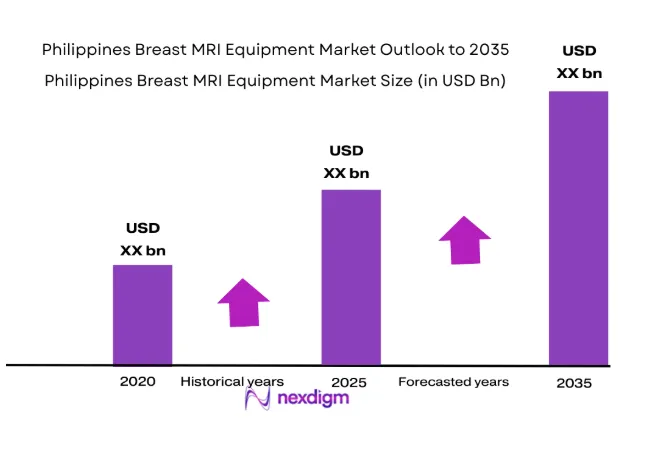
The market size for breast MRI equipment in the Philippines is valued at USD ~ million based on a recent historical assessment. This growth is primarily driven by increasing awareness of breast cancer and the rising adoption of advanced diagnostic imaging technologies. The demand for breast MRI equipment is further propelled by the government’s initiatives to enhance healthcare infrastructure, including investment in modern medical imaging systems. The market’s growth is also influenced by advancements in MRI technology, providing more accurate and detailed images for better diagnosis.
The Philippines’ market is dominated by major urban centers such as Metro Manila, Cebu, and Davao, which host a significant portion of the country’s healthcare facilities. These cities benefit from better infrastructure, higher medical budgets, and advanced healthcare facilities compared to rural areas. Metro Manila, being the capital and the healthcare hub of the country, accounts for a significant share of the demand for breast MRI equipment. Furthermore, the growing number of diagnostic imaging centers in these regions is a major contributor to the market expansion.
Market Segmentation
By Product Type
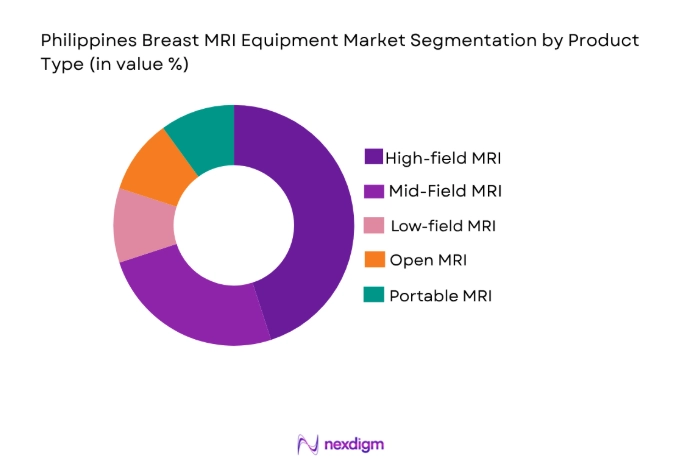
The Philippines Breast MRI Equipment market is segmented by product type into high-field MRI, mid-field MRI, low-field MRI, open MRI, and portable MRI. Recently, high-field MRI systems have dominated the market share due to their ability to provide high-resolution images that are crucial for early breast cancer detection. This type of MRI is highly preferred by hospitals and diagnostic centers due to its superior diagnostic capabilities, which make it the go-to option for accurate screening and evaluation of breast tissue.
By Platform Type
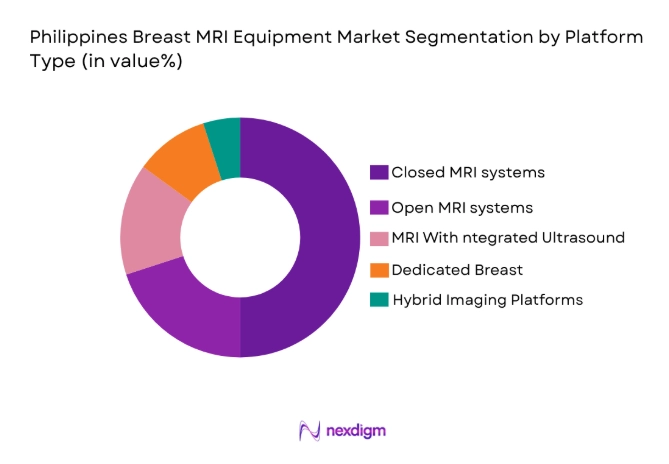
The market is segmented by platform type into closed MRI systems, open MRI systems, MRI with integrated ultrasound, dedicated breast MRI, and hybrid imaging platforms. Closed MRI systems currently dominate the market due to their established presence in major medical institutions and diagnostic centers. These systems offer superior image quality and are more commonly used in clinical settings where high diagnostic accuracy is required. Additionally, the widespread adoption of closed MRI systems in urban areas contributes to their market leadership.
Competitive Landscape
The competitive landscape of the Philippines Breast MRI Equipment market is marked by the presence of several key players, with ongoing consolidation and innovation. Major global players have a significant influence on the market due to their technological advancements and strong brand recognition. These companies are focusing on enhancing their product offerings through the development of high-performance MRI systems and expanding their reach in both metropolitan and rural areas. Strategic partnerships and collaborations are also common in the market, as companies aim to strengthen their presence and distribution networks across the region.
| Company Name | Establishment Year | Headquarters | Technology Focus | Market Reach | Key Products | Revenue | Market-specific Parameter |
| Philips Healthcare | 1891 | Netherlands | ~ | ~ | ~ | ~ | ~ |
| GE Healthcare | 1892 | USA | ~ | ~ | ~ | ~ | ~ |
| Siemens Healthineers | 1847 | Germany | ~ | ~ | ~ | ~ | ~ |
| Canon Medical Systems | 1933 | Japan | ~ | ~ | ~ | ~ | ~ |
| Hologic | 1985 | USA | ~ | ~ | ~ | ~ | ~ |
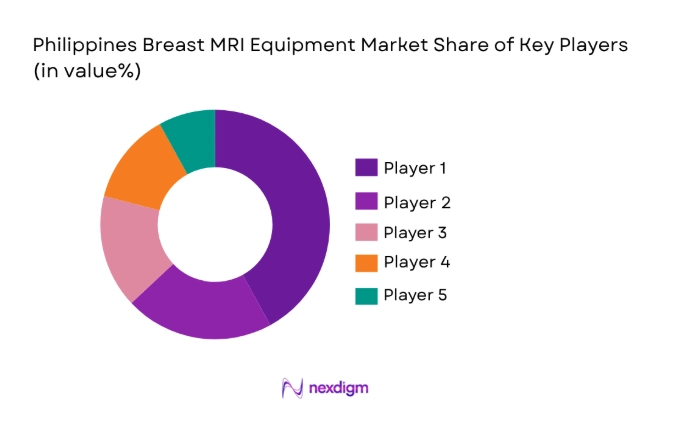
Philippines Breast MRI Equipment Market Analysis
Growth Drivers
Increasing Breast Cancer Incidence
The increasing prevalence of breast cancer in the Philippines is a major growth driver for the breast MRI equipment market. With the rising number of breast cancer diagnoses, there is an increasing demand for advanced diagnostic tools, such as MRI, that offer higher accuracy in detecting tumors in early stages. The availability of state-of-the-art breast MRI systems in both public and private healthcare settings enables more efficient screening programs, improving patient outcomes. Along with this, the awareness campaigns by the government and healthcare organizations have also contributed to the increased demand for early diagnosis using advanced imaging technologies like breast MRI. Furthermore, government funding and support for cancer detection and prevention programs are also pushing the growth of the market, making such diagnostic technologies more accessible to a wider population. This combined effort of health initiatives and technological advancements is driving the demand for breast MRI systems, creating a favorable market landscape. Hospitals and diagnostic centers across major cities are rapidly incorporating MRI technology into their offerings to meet the growing demand, further driving market expansion.
Technological Advancements in MRI
Technological advancements in MRI systems are significantly contributing to the growth of the Philippines Breast MRI Equipment market. The continuous development of higher field strength MRI systems with improved image resolution and faster scanning capabilities has enhanced their diagnostic efficiency. These technological advancements have led to more accurate and reliable breast cancer detection, contributing to the growing preference for MRI over traditional diagnostic methods. Newer MRI machines are also designed with patient comfort in mind, with reduced noise and more compact models, making them more attractive to healthcare providers. Moreover, developments in software and imaging techniques, such as functional MRI and contrast-enhanced MRI, offer more detailed images and provide better insights into the patient’s condition. The continuous innovation in the MRI field, along with the growing trend of automation and AI integration for faster and more precise image interpretation, is boosting the adoption of breast MRI equipment in healthcare facilities across the country.
Market Challenges
High Cost of MRI Systems
The high cost of acquiring and maintaining breast MRI systems remains a significant challenge for the market. These systems require substantial capital investment, making it difficult for smaller hospitals and diagnostic centers to adopt the technology. The initial cost of purchasing the MRI equipment, along with the ongoing maintenance, calibration, and operation costs, further exacerbates the affordability issue. Despite the advantages of using MRI for breast cancer detection, the high price point limits its widespread adoption, especially in underserved rural areas. Additionally, the cost of MRI-compatible accessories and infrastructure, such as specialized rooms and power supply systems, adds to the financial burden of healthcare providers. The economic challenges faced by the healthcare sector in the Philippines, coupled with limited insurance coverage for MRI procedures, create barriers to the full potential of breast MRI adoption, affecting the overall growth of the market. Consequently, many diagnostic centers and hospitals are hesitant to invest in breast MRI systems, opting for less expensive alternatives like mammography.
Regulatory Barriers in Equipment Certification
Regulatory barriers in the approval and certification of breast MRI equipment are another challenge hindering market growth. The approval process for medical devices in the Philippines can be lengthy and complex, requiring adherence to strict local and international standards. This prolonged process delays the introduction of new technologies to the market, preventing healthcare facilities from accessing the latest advancements in MRI technology. Additionally, regulatory hurdles can increase the cost of bringing new equipment to market, as manufacturers must navigate compliance with multiple regulations. While the Philippine Food and Drug Administration (FDA) oversees the approval process, the varying standards between the local and international regulatory bodies can create discrepancies in the certification process. These regulatory challenges pose obstacles to the market’s expansion, as it takes significant time and resources to obtain the necessary approvals for MRI systems. The slower pace of certification may discourage manufacturers from launching new products or expanding their presence in the Philippine market.
Opportunities
Growing Demand for Early Detection
There is a significant opportunity for the breast MRI equipment market in the Philippines due to the growing demand for early breast cancer detection. As awareness of breast cancer continues to rise, healthcare providers are increasingly focusing on offering advanced diagnostic technologies to improve early diagnosis rates. Breast MRI is one of the most effective imaging tools for detecting early-stage breast cancer, particularly in women with dense breast tissue. The high sensitivity and accuracy of MRI in detecting tumors make it an essential tool for preventive healthcare, especially for women at higher risk of developing breast cancer. With the rise in public health awareness campaigns, government funding, and increasing healthcare access, more women are opting for advanced screening methods, thus driving the demand for breast MRI systems. Hospitals and diagnostic centers are increasingly investing in this technology to cater to the growing need for early detection, creating opportunities for market expansion.
Increase in Healthcare Investments
An increase in healthcare investments in the Philippines is creating a favorable environment for the growth of the breast MRI equipment market. As the government and private sectors continue to invest in healthcare infrastructure, there is a growing demand for advanced diagnostic equipment, including breast MRI systems. These investments are aimed at improving the overall quality of healthcare and addressing the rising incidence of breast cancer. The expansion of healthcare facilities, especially in underserved areas, is creating new opportunities for the adoption of advanced diagnostic technologies. Moreover, the increasing number of specialized diagnostic centers dedicated to breast health is contributing to the demand for breast MRI systems. These investments in healthcare infrastructure not only provide better access to state-of-the-art equipment but also increase the capacity of healthcare systems to handle the growing patient load, thus boosting the market for breast MRI equipment.
Future Outlook
The future outlook for the Philippines Breast MRI Equipment market is positive, with anticipated growth driven by increasing healthcare investments, technological advancements, and regulatory support. As the awareness of breast cancer continues to grow, there will be higher demand for accurate and early detection methods, pushing the adoption of breast MRI systems. Moreover, advancements in MRI technology, such as reduced scan times and enhanced image quality, will further stimulate market growth. Healthcare infrastructure development, especially in rural areas, will improve access to these advanced diagnostic tools. The government’s focus on healthcare reform and disease prevention will also play a significant role in supporting market expansion over the next five years.
Major Players
- Philips Healthcare
- GE Healthcare
- Siemens Healthineers
- Canon Medical Systems
- Hologic
- Fujifilm Healthcare
- Hitachi Medical Systems
- Toshiba Medical Systems
- Esaote
- MagVenture
- Elekta
- Mindray
- Konica Minolta
- Neusoft Medical
- Samsung Medison
Key Target Audience
- Investments and venture capitalist firms
- Government and regulatory bodies
- Hospitals and healthcare providers
- Diagnostic imaging centers
- Healthcare equipment distributors
- Private health insurers
- Large-scale healthcare organizations
Research Methodology
Step 1: Identification of Key Variables
The key market variables are identified to provide a comprehensive framework for research, ensuring all relevant factors are considered in the analysis.
Step 2: Market Analysis and Construction
A thorough market analysis is conducted, followed by the construction of the market model that reflects the current landscape, growth trends, and key challenges.
Step 3: Hypothesis Validation and Expert Consultation
Expert consultations and hypothesis validation are conducted to refine insights and ensure the accuracy and relevance of the findings.
Step 4: Research Synthesis and Final Output
The research is synthesized into a final report, integrating data, trends, and expert opinions to provide actionable insights into the market.

- Executive Summary
- Research Methodology (Definitions, Scope, Industry Assumptions, Market Sizing Approach, Primary & Secondary Research Framework, Data Collection & Verification Protocol, Analytic Models & Forecast Methodology, Limitations & Research Validity Checks)

- Market Definition and Scope
- Value Chain & Stakeholder Ecosystem
- Regulatory / Certification Landscape
- Sector Dynamics Affecting Demand
- Strategic Initiatives & Infrastructure Growth

- Growth Drivers
Increasing Breast Cancer Incidence
Technological Advancements in MRI
Government Initiatives for Healthcare Infrastructure - Market Challenges
High Cost of MRI Systems
Limited Healthcare Accessibility in Rural Areas
Regulatory Barriers in Equipment Certification - Market Opportunities
Growing Demand for Early Detection
Increase in Healthcare Investments
Expansion of Healthcare Facilities - Trends
Shift Towards Non-Invasive Diagnostic Solutions
Rising Popularity of Personalized Medicine in Oncology - Government Regulations
- SWOT Analysis
- Porter’s Five Forces

- By Market Value, 2020-2025
- By Installed Units, 2020-2025
- By Average System Price, 2020-2025
- By System Complexity Tier, 2020-2025

- By System Type (In Value%)
High-Field MRI
Mid-Field MRI
Low-Field MRI
Open MRI
Portable MRI - By Platform Type (In Value%)
Closed MRI Systems
Open MRI Systems
MRI with Integrated Ultrasound
Dedicated Breast MRI
Hybrid Imaging Platforms - By Fitment Type (In Value%)
Fixed MRI Units
Mobile MRI Units
Modular MRI Units
Portable MRI Units - By End User Segment (In Value%)
Hospitals
Diagnostic Imaging Centers
Research & Educational Institutes

- Market Share Analysis
- Cross Comparison Parameters (System Type, Platform Type, End User Segment, Region, Market Value, Installed Units, System Complexity Tier)
- SWOT Analysis of Key Competitors
- Pricing & Procurement Analysis
- Key Players
Philips Healthcare
GE Healthcare
Siemens Healthineers
Canon Medical Systems
Hologic
Fujifilm Healthcare
Hitachi Medical Systems
Toshiba Medical Systems
Esaote
MagVenture
Elekta
Mindray
Konica Minolta
Neusoft Medical
Samsung Medison

- Hospitals Adoption Trends
- Diagnostic Imaging Centers’ Technological Integration
- Research and Academic Institutions Growth
- Shift in Healthcare Budget Allocations

- Forecast Market Value, 2026-2035
- Forecast Installed Units, 2026-2035
- Price Forecast by System Tier, 2026-2035
- Future Demand by Platform, 2026-2035


 Request a Sample
 Ask for Customization
 Get a Quote
 Enquire Now