
 Download PDF
Market Overview
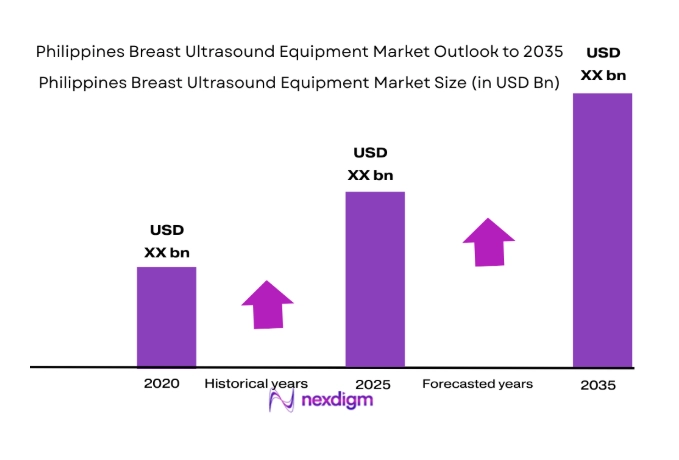
The Philippines breast ultrasound equipment market is valued at approximately USD ~ million based on a recent historical assessment. This market has experienced steady growth driven by increasing healthcare awareness, the adoption of advanced diagnostic technologies, and a rising incidence of breast cancer. Furthermore, the government’s initiatives to improve healthcare infrastructure, especially in rural areas, have further propelled the demand for ultrasound equipment. The market’s expansion is bolstered by advancements in mobile and portable ultrasound systems, which offer accessibility in remote areas.
Dominant cities, such as Metro Manila, Cebu, and Davao, are leading the adoption of breast ultrasound equipment due to their advanced healthcare facilities and higher levels of medical infrastructure. These areas are supported by numerous hospitals and diagnostic centers equipped with the latest medical technologies. Additionally, regional growth in healthcare investment and government-backed initiatives to enhance medical services in underserved areas are contributing to the overall market expansion. The availability of skilled professionals in these urban centers has also played a crucial role in the increased demand for breast ultrasound systems.
Market Segmentation
By Product Type
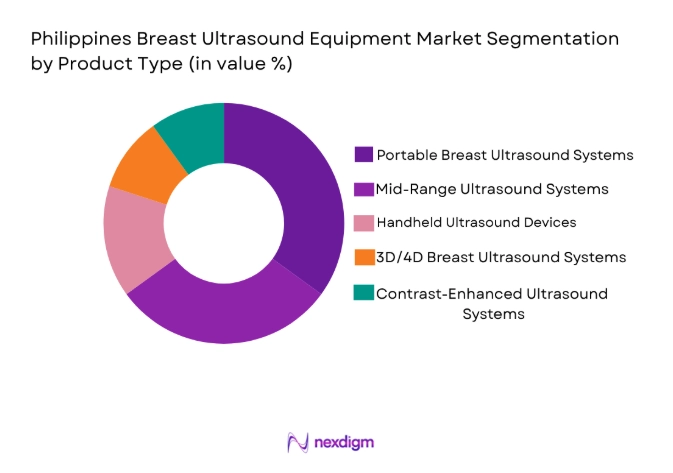
The Philippines breast ultrasound equipment market is segmented by product type into mammography ultrasound systems, portable breast ultrasound systems, handheld ultrasound devices, 3D/4D breast ultrasound systems, and contrast-enhanced ultrasound systems. Recently, portable breast ultrasound systems have dominated the market share due to factors such as their convenience, affordability, and suitability for use in rural and remote areas. The increasing demand for mobile diagnostic solutions has significantly contributed to the popularity of portable systems, which offer flexibility and cost-efficiency, making them particularly favored in both urban and rural healthcare settings.
By Platform Type
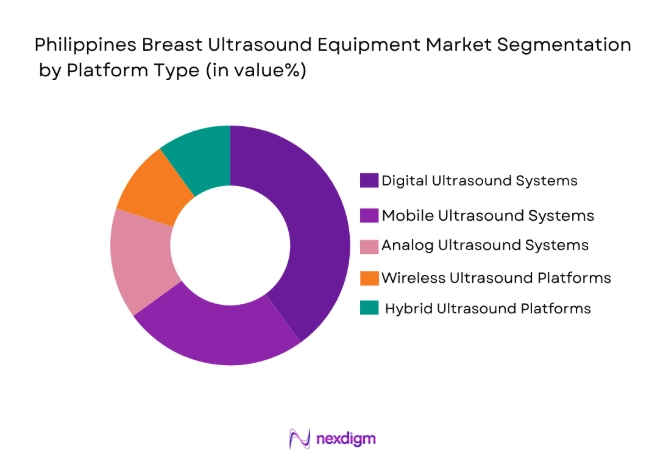
The market is also segmented by platform type into digital ultrasound systems, analog ultrasound systems, wireless ultrasound platforms, hybrid ultrasound platforms, and mobile ultrasound systems. Digital ultrasound systems have been the dominant segment due to their enhanced image quality, faster processing times, and integration with electronic health records. These systems provide superior diagnostic capabilities, making them the preferred choice in hospitals and diagnostic centers, which drive their widespread adoption. The growing emphasis on precision diagnostics and the need for quicker, more reliable results has led to the dominance of digital systems in the market.
Competitive Landscape
The competitive landscape of the Philippines breast ultrasound equipment market is characterized by consolidation, with major global players establishing strong footholds in the region. The market is highly competitive, with key players focusing on expanding their product portfolios, enhancing technology, and improving affordability. Market leaders dominate through strategic partnerships and investments in local healthcare infrastructure, helping them maintain a significant influence in the growing demand for breast ultrasound systems.
| Company Name | Establishment Year | Headquarters | Technology Focus | Market Reach | Key Products | Revenue | Additional Parameter |
| GE Healthcare | 1892 | USA | ~ | ~ | ~ | ~ | ~ |
| Philips Healthcare | 1891 | Netherlands | ~ | ~ | ~ | ~ | ~ |
| Siemens Healthineers | 1847 | Germany | ~ | ~ | ~ | ~ | ~ |
| Samsung Medison | 1985 | South Korea | ~ | ~ | ~ | ~ | ~ |
| Mindray | 1991 | China | ~ | ~ | ~ | ~ | ~ |
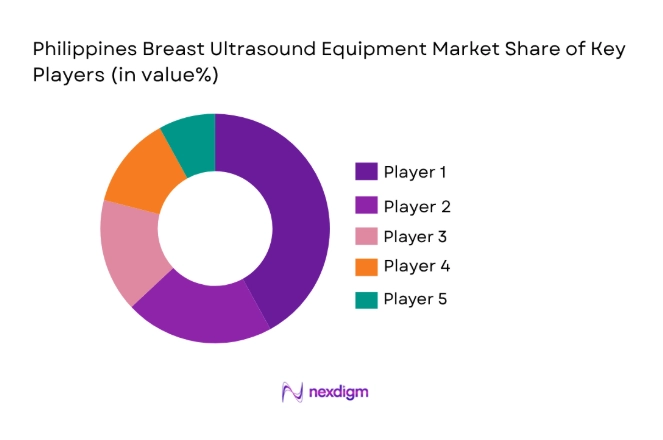
Philippines Breast Ultrasound Equipment Market Analysis
Growth Drivers
Government Healthcare Initiatives
Government-led initiatives focused on increasing access to advanced diagnostic technologies have been instrumental in driving the demand for breast ultrasound systems across the Philippines. These initiatives include substantial funding for hospitals, particularly those in underserved rural areas, as well as policies aimed at improving breast cancer detection rates across the nation. These government efforts are designed to enhance healthcare delivery by ensuring that all regions, regardless of economic status, have access to modern medical tools. Additionally, government-backed programs have increased awareness about early breast cancer detection, leading to higher demand for diagnostic equipment such as ultrasound machines. Moreover, the strengthening of primary healthcare infrastructure has significantly contributed to the widespread use of breast ultrasound devices in smaller clinics and rural healthcare centers. The continuous support for healthcare initiatives aimed at reducing the breast cancer mortality rate is expected to further promote the growth of breast ultrasound equipment usage, which is pivotal for early-stage detection. These government-backed programs are vital for improving healthcare accessibility, ensuring that all citizens, regardless of location or income, have access to the necessary diagnostic services, and ultimately contribute significantly to the market’s growth.
Technological Advancements
The rapid technological advancements in breast ultrasound systems have played a pivotal role in shaping the market landscape. One of the major drivers has been the integration of artificial intelligence (AI) technologies in ultrasound machines, which has improved diagnostic accuracy and efficiency. These advanced AI algorithms are capable of analyzing images with high precision, which aids healthcare providers in making faster and more accurate diagnoses. Furthermore, innovations in portable and handheld devices have enabled greater flexibility and ease of use in diagnosing breast cancer, particularly in rural areas where access to large, stationary systems is limited. The flexibility of these devices ensures that healthcare providers can offer timely diagnostic services even in the most remote locations. Additionally, developments in 3D/4D ultrasound systems and contrast-enhanced imaging techniques have contributed to the growing adoption of these advanced solutions. These technologies enhance both the efficiency and effectiveness of breast cancer screenings, offering clearer images and more detailed analyses. The rapid evolution of ultrasound systems is not only improving diagnostic capabilities but also contributing to the overall expansion of the market. As the technology continues to evolve, the accessibility, affordability, and overall effectiveness of ultrasound systems are expected to improve, further driving the market’s growth.
Market Challenges
High Equipment Cost
One of the most significant challenges facing the Philippines breast ultrasound equipment market is the high cost of advanced systems, which limits their adoption, particularly in smaller clinics and rural healthcare centers. While advanced ultrasound systems offer state-of-the-art diagnostic capabilities, their high price points can be prohibitive for healthcare providers operating in low-income or rural areas. The financial burden of purchasing and maintaining such sophisticated ultrasound equipment may deter many healthcare facilities from investing in these technologies, even though the systems are crucial for early detection and diagnosis of breast cancer. Additionally, the Philippines’ healthcare financing constraints exacerbate this issue, as smaller healthcare providers may not have the necessary capital or access to funding to acquire expensive equipment. Even though the government has made efforts to subsidize costs and make advanced equipment more accessible, the financial barriers remain a significant challenge to the broader adoption of breast ultrasound devices. These challenges are particularly pronounced in rural areas where budgets are already stretched thin. The overall affordability of breast ultrasound equipment needs to improve for the technology to be widely adopted across the country, especially in smaller healthcare centers, where it is most needed.
Skilled Labor Shortages
Another major challenge hindering the growth of the Philippines breast ultrasound equipment market is the shortage of adequately trained healthcare professionals skilled in the use of advanced ultrasound technology. Although breast ultrasound systems are available in many hospitals and clinics, there is a significant gap in the number of skilled sonographers and radiologists who are proficient in utilizing these complex devices. The issue is particularly prominent in remote and underserved regions, where access to training and professional development opportunities is limited. Without sufficient numbers of trained professionals, even the most advanced ultrasound systems cannot be used to their full potential, limiting the overall effectiveness of these diagnostic tools. Furthermore, the lack of trained personnel contributes to longer waiting times for breast cancer screenings and diagnoses, especially in rural areas. Addressing this skilled labor shortage is crucial for maximizing the potential of breast ultrasound devices and ensuring that patients across the country can benefit from early and accurate diagnoses. This challenge remains a significant barrier to the widespread adoption of ultrasound technology and is one that will need to be addressed for the market to fully thrive.
Opportunities
Expansion of Healthcare Infrastructure
The Philippines is experiencing a continued expansion of its healthcare infrastructure, particularly in underserved areas. The Philippine government has prioritized increasing access to quality healthcare services in remote and rural regions, which creates significant opportunities for the breast ultrasound equipment market. As new healthcare facilities are built and existing ones are upgraded, the demand for modern diagnostic equipment, including breast ultrasound systems, is expected to rise. The expansion of healthcare infrastructure is aligned with the government’s focus on improving early detection and preventative care, particularly in the fight against breast cancer. This presents an opportunity for ultrasound manufacturers to supply a growing number of healthcare facilities with advanced diagnostic tools that enable early cancer detection. With the modernization of hospitals and clinics in underserved areas, the market for breast ultrasound systems will see a surge in demand. Additionally, the increased focus on preventive healthcare, especially among women, is expected to create a steady demand for breast cancer screening services. As healthcare infrastructure continues to improve across the Philippines, the market for breast ultrasound equipment is expected to expand, benefiting both urban and rural healthcare providers.
Growing Adoption of Point-of-Care Ultrasound Devices
One of the most promising opportunities in the Philippines breast ultrasound equipment market is the growing adoption of point-of-care ultrasound devices. These portable and compact ultrasound systems have become increasingly popular due to their ability to provide immediate diagnostic results in a wide range of settings, particularly in rural areas where access to traditional diagnostic centers is limited. Point-of-care ultrasound devices offer an affordable and non-invasive option for breast cancer screening, which is particularly beneficial for women in underserved communities. As mobile health solutions continue to gain traction, more healthcare providers are turning to point-of-care ultrasound devices to offer on-the-spot diagnostics and improve the speed of breast cancer detection. These devices can be used in various settings, including mobile clinics, remote healthcare units, and even private healthcare practices. The ability to conduct breast cancer screenings at the point of care, without the need for patients to travel to centralized diagnostic centers, is expected to drive significant growth in the adoption of these portable devices. With the increasing demand for mobile health solutions, point-of-care ultrasound devices are set to become an essential tool in the Philippines, creating a unique opportunity for growth in the breast ultrasound equipment market.
Future Outlook
The future outlook for the Philippines breast ultrasound equipment market is positive, with strong growth expected over the next five years. Technological advancements, such as the integration of AI and mobile platforms, are anticipated to drive further market penetration, particularly in underserved and remote regions. Additionally, increasing government support for healthcare infrastructure and diagnostic access will contribute to the market’s expansion. Rising awareness of breast cancer and the growing demand for non-invasive diagnostic methods will continue to fuel the adoption of breast ultrasound systems across the country. Regulatory support and healthcare policy changes will also play a key role in facilitating market growth.
Major Players
- GE Healthcare
- Philips Healthcare
- Siemens Healthineers
- Samsung Medison
- Hitachi Healthcare
- Canon Medical Systems
- Esaote S.p.A.
- Mindray
- Hologic, Inc.
- Shimadzu Corporation
- Samsung Electronics
- Fujifilm Healthcare
- Toshiba Medical Systems
- Carestream Health
- SonoSite Inc.
Key Target Audience
- Investments and venture capitalist firms
- Government and regulatory bodies
- Hospitals and diagnostic centers
- Medical device distributors
- Healthcare equipment manufacturers
- Public health organizations
- Private healthcare providers
Research Methodology
Step 1: Identification of Key Variables
This step involves defining the critical variables affecting market trends, including technological advancements, regulatory factors, and consumer preferences.
Step 2: Market Analysis and Construction
Data is collected from primary and secondary sources to construct the market framework, including historical data and trend analysis.
Step 3: Hypothesis Validation and Expert Consultation
Industry experts and stakeholders are consulted to validate hypotheses and ensure the reliability of market projections and assumptions.
Step 4: Research Synthesis and Final Output
All gathered data is synthesized into a final market report, offering actionable insights and forecasts based on the findings.


 Request a Sample
 Ask for Customization
 Get a Quote
 Enquire Now