

 Download PDF
Market Overview
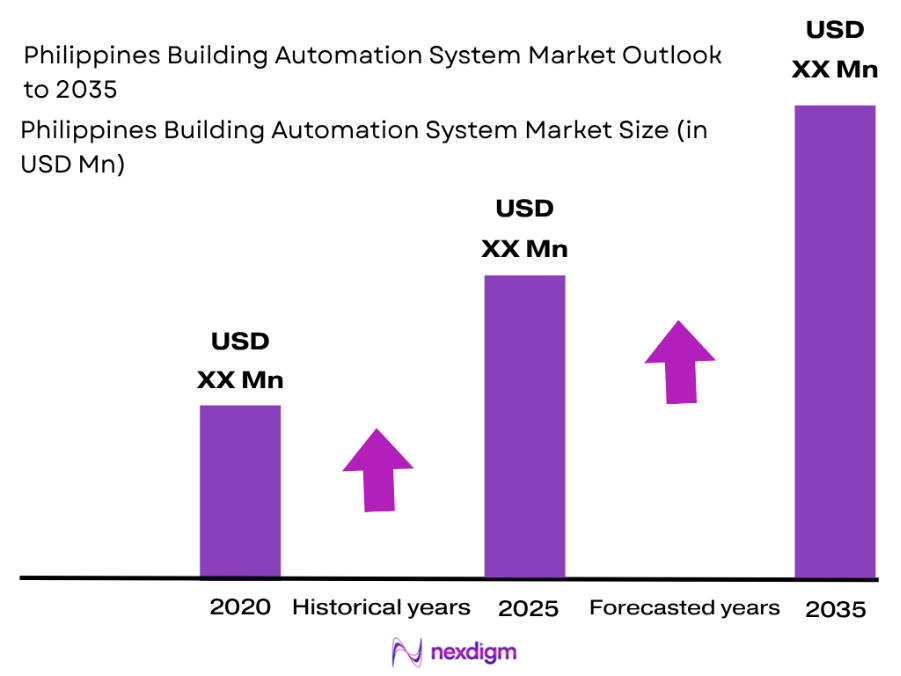
The Philippines Building Automation System market is supported by expanding building activity, modernization of MEP infrastructure and increasing requirements for automated HVAC and energy management. The latest construction data records 180,341 approved constructions, 42.84 million sq. m. of floor area and PHP 563.89 billion of construction value, compared with 171,268 constructions, 41.47 million sq. m. and PHP 515.30 billion previously. Construction also grew 10.2 in real economic activity, strengthening demand for automated building controls.
The Philippines BAS market is concentrated around Metro Manila, CALABARZON, Central Luzon and Central Visayas, where commercial buildings, industrial facilities, mixed-use developments, hotels and digital infrastructure create dense demand for automation. CALABARZON recorded 41,471 constructions, while Central Luzon and Central Visayas recorded 22,824 and 19,585 respectively. NCR also generated PHP 112.84 billion of construction value, while CALABARZON reached PHP 118.37 billion, reflecting the concentration of building activity around major economic and employment centres.
Market Segmentation
By Building Type
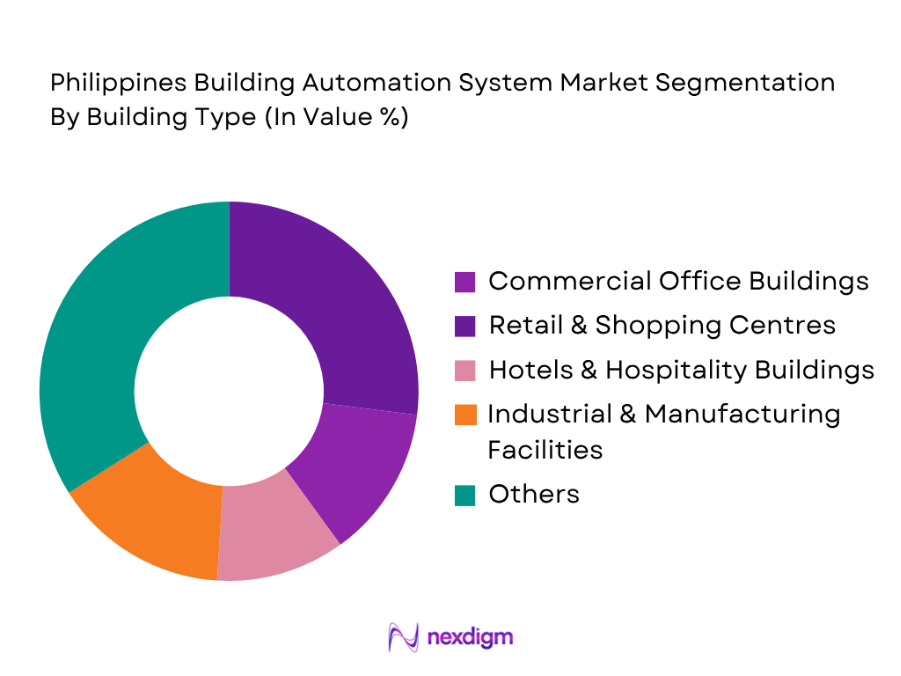
The Philippines Building Automation System market is segmented by building type into commercial office buildings, retail and shopping centres, hotels and hospitality buildings, healthcare facilities, educational institutions, industrial and manufacturing facilities, data centres, government and public buildings, transportation facilities, and residential and mixed-use developments. Commercial office buildings are positioned as the leading segment because they require centralized HVAC control, lighting automation, occupancy management, energy monitoring and integrated facility operations. The strong concentration of economic activity in Metro Manila and surrounding growth corridors supports deployment across office towers, business parks and mixed-use developments. Data centres represent an important high-value application because cooling, environmental monitoring, power management and equipment reliability require continuous automation. Industrial and manufacturing buildings also create demand for HVAC, electrical monitoring and equipment-control integration. The breadth of commercial and non-residential construction provides BAS vendors and system integrators with opportunities across both new-build projects and modernization of existing properties.
By Component Type
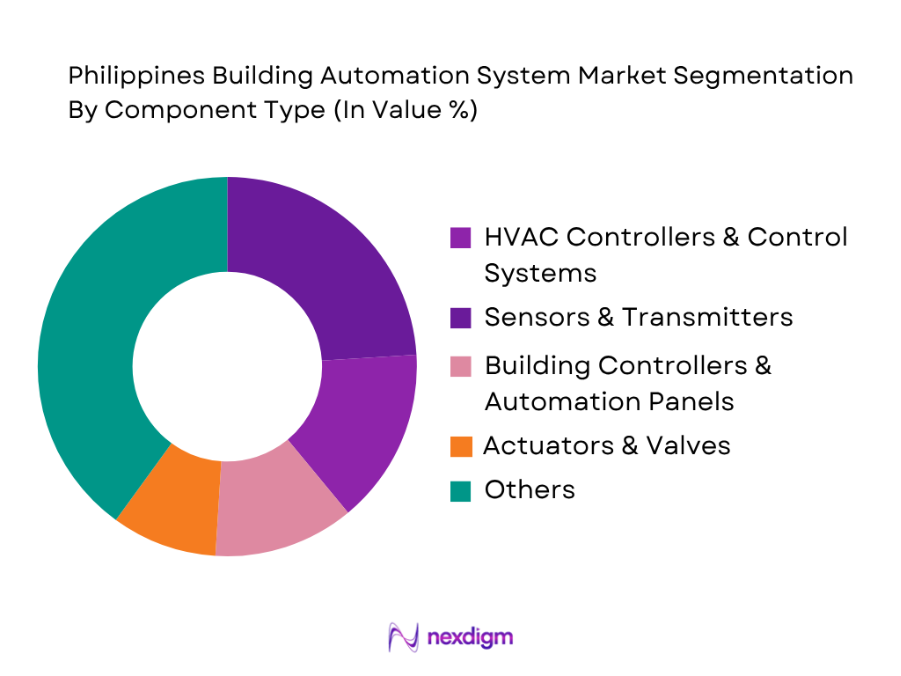
The Philippines Building Automation System market is segmented by component type into HVAC controllers and control systems, sensors and transmitters, actuators and valves, building controllers and automation panels, variable-frequency drives, smart meters and energy-monitoring devices, communication gateways, BAS software platforms, cloud-based building-management platforms, and building analytics and optimization software. HVAC controllers and control systems are positioned as the dominant component category because air-conditioning represents a critical operational function in Philippine commercial, hospitality, healthcare and industrial buildings. Automated temperature control, scheduling, chiller sequencing, AHU management and variable-speed operation create direct requirements for controllers, sensors and actuators. The increasing adoption of centralized energy monitoring further strengthens the need for connected control architectures. Software and cloud platforms are gaining importance as building owners seek portfolio-level visibility and remote facility management. The development of data centres also raises demand for highly reliable monitoring and control of cooling, power and environmental conditions.
Competitive Landscape
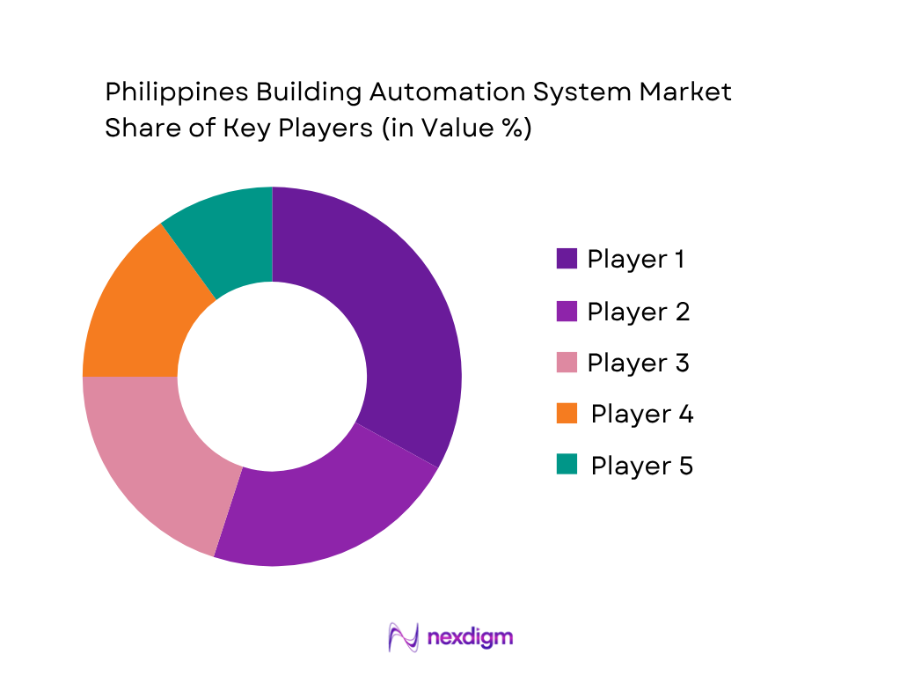
The Philippines Building Automation System market includes global building-controls and HVAC technology providers alongside specialist automation vendors and local system integrators. Competition is increasingly based on HVAC integration, open-protocol connectivity, energy-management capabilities, cybersecurity, cloud architecture and the ability to execute complex MEP projects. Major international suppliers such as Johnson Controls, Siemens, Schneider Electric, Honeywell and ABB offer integrated platforms covering HVAC, energy, lighting, security and facility-management functions.
| Company | Established | Headquarters | BAS Platform | HVAC Integration | Open-Protocol Capability |
| Johnson Controls | 1885 | Cork, Ireland | ~ | ~ | ~ |
| Siemens | 1847 | Munich, Germany | ~ | ~ | ~ |
| Schneider Electric | 1836 | Rueil-Malmaison, France | ~ | ~ | ~ |
| Honeywell | 1906 | Charlotte, USA | ~ | ~ | ~ |
| ABB | 1883 | Zurich, Switzerland | ~ | ~ | ~ |
Philippines Building Automation System Market Analysis
Growth Drivers
Commercial Real Estate Development and Metro Manila Building Expansion
Commercial real estate development is a major growth driver for the Philippines Building Automation System market because new office towers, mixed-use developments, retail facilities and business parks require centralized HVAC, lighting, energy monitoring and facility-management controls. The Philippine Statistics Authority recorded 180,341 approved constructions with 42.84 million sq. m. of floor area and PHP 563.89 billion in construction value, compared with 171,268 constructions, 41.47 million sq. m. and PHP 515.30 billion previously. Non-residential construction alone reached 39,238 projects and PHP 250.86 billion, while commercial-type buildings accounted for PHP 112.42 billion. These figures provide a substantial pipeline for BAS installation in offices, shopping centres, hotels and mixed-use properties. Metro Manila remains particularly important because it concentrates corporate headquarters, financial institutions, premium commercial buildings and large-scale mixed-use developments. Continued investment in high-density buildings increases requirements for HVAC scheduling, chiller optimization, occupancy-based controls, indoor-air-quality monitoring and centralized facility management. The IMF recorded Philippine real GDP growth of 5.8 in 2024, supporting continued domestic economic activity and capital formation.
Data Centre Expansion and HVAC Energy Optimization
Data-centre development is creating a specialized growth opportunity for the Philippines Building Automation System market because facilities require continuous monitoring and automated control of cooling, power, environmental conditions, fire protection and equipment spaces. The Philippine Board of Investments reported a 36 MW data-centre project in Biñan City with an initial 6 MW IT capacity and planned expansion to 36 MW. The facility incorporates a 24/7 building management system, backup power, security and fire-suppression infrastructure, demonstrating the direct role of BAS technology in digital infrastructure. The same government source reported that Philippine IT capacity was expected to exceed 180 MW by 2027, indicating a substantial pipeline of facilities requiring sophisticated environmental and energy controls. HVAC optimization is particularly important because data-centre equipment operates continuously and cooling systems require precise temperature and airflow management. BAS platforms can coordinate chillers, pumps, cooling units, sensors and alarms while providing centralized monitoring. Philippine real GDP growth was recorded at 5.8 in 2024 by the IMF, while gross fixed capital formation was projected at 8.3, reinforcing the broader investment environment supporting infrastructure development.
Market Challenges
Legacy BMS Infrastructure and Retrofit Installation Complexity
Legacy BMS infrastructure represents a significant challenge for the Philippines Building Automation System market because many existing commercial and industrial properties were developed with standalone HVAC controls or proprietary automation architectures. Integrating modern BAS platforms into these facilities can require replacement or upgrading of controllers, sensors, actuators, gateways and communication networks. Philippine construction statistics show that the existing building base is complemented by a significant volume of alteration and repair activity: the value of alteration and repair construction reached PHP 43.05 billion, compared with PHP 33.98 billion previously. This indicates a meaningful retrofit environment, but retrofit projects often involve greater engineering complexity than greenfield installations because new BAS equipment must interface with existing chillers, air-handling units, pumps and electrical systems. The country recorded 13,997 alteration and repair projects, compared with 12,875 in the preceding year, creating an addressable modernization pipeline but also highlighting the fragmented nature of existing building infrastructure. Proprietary protocols and incomplete equipment documentation can increase commissioning requirements and extend project timelines. BAS deployment therefore requires careful site surveys, protocol mapping, controller replacement planning and staged commissioning, particularly in older Metro Manila commercial properties.
Skilled BAS Engineer Requirements and Cybersecurity Vulnerabilities
The requirement for specialized engineering expertise is another challenge for the Philippines Building Automation System market because sophisticated BAS installations combine HVAC engineering, controls programming, networking, cybersecurity and facility operations. Large projects require professionals capable of configuring controllers, integrating BACnet or other communication protocols, commissioning sensors and actuators, and troubleshooting HVAC sequences. The challenge becomes more significant as buildings move from isolated control systems toward connected platforms that transmit operational data across corporate networks and cloud environments. Philippine construction activity provides evidence of a broad and increasingly complex project environment, with 180,341 approved constructions and 39,238 non-residential constructions recorded in 2024. Each additional commercial, industrial, hospitality or infrastructure project can create requirements for controls engineering and post-installation support. Cybersecurity is particularly important for connected BAS because centralized building networks can interact with HVAC, lighting, access control and energy-management systems. The IMF recorded 5.8 real GDP growth for the Philippines in 2024, indicating continued economic activity and investment that can increase the number of digitally connected facilities. BAS suppliers consequently need stronger commissioning processes, network segmentation, authentication, software-update procedures and technical training to manage increasingly connected building environments.
Market Opportunities
Cloud-Based Building Automation and AI-Enabled Energy Optimization
Cloud-based BAS and AI-enabled energy optimization represent significant opportunities because Philippine building owners are increasingly managing larger portfolios of commercial, retail, hospitality and industrial properties. Cloud platforms can connect multiple buildings to centralized dashboards, while analytics can identify abnormal HVAC operation, equipment degradation, occupancy patterns and energy-intensive operating schedules. The opportunity is supported by the scale of the country’s construction pipeline: 180,341 approved constructions and 42.84 million sq. m. of floor area were recorded, while non-residential construction reached PHP 250.86 billion. These buildings create opportunities for digital controls not only during initial construction but also through modernization programs. The retrofit opportunity is reinforced by 13,997 alteration and repair projects valued at PHP 43.05 billion, demonstrating an existing base where cloud-connected monitoring can be layered onto upgraded control infrastructure. Data-centre projects provide an especially strong use case because the BOI identified a 36 MW facility with 24/7 BMS capability and an initial 6 MW IT capacity. AI-based BAS can build on these connected architectures through predictive HVAC maintenance, automated set-point optimization and anomaly detection.
Commercial Building Retrofits, Indoor Air Quality Monitoring and Integrated Energy Management
Commercial building retrofits create an important future opportunity for the Philippines Building Automation System market as property owners seek to modernize HVAC controls, improve operational visibility and integrate energy-management functions without completely replacing existing building systems. Philippine construction statistics recorded 13,997 alteration and repair projects with a combined value of PHP 43.05 billion, compared with 12,875 projects valued at PHP 33.98 billion previously. This retrofit activity creates opportunities for smart sensors, digital thermostats, variable-frequency drives, automated dampers, smart meters and supervisory BAS platforms. Indoor-air-quality monitoring can be integrated with HVAC controls to provide automated responses to temperature, humidity and ventilation conditions in offices, healthcare facilities, schools and hospitality properties. Integrated energy management also creates opportunities to coordinate HVAC, lighting, electrical loads and on-site renewable generation. The broader commercial construction base provides additional demand, with commercial-type buildings accounting for PHP 112.42 billion in construction value. As building owners increasingly manage operating costs and asset performance, BAS suppliers can position retrofit packages around measurable operational improvements rather than complete system replacement.
Future Outlook
Over the forecast period, the Philippines Building Automation System market is expected to benefit from continued commercial construction, industrial development and digital infrastructure investment. BAS adoption is likely to move beyond conventional HVAC scheduling toward connected energy management, predictive maintenance, occupancy analytics and cloud-based monitoring. Data centres, premium commercial properties and large mixed-use developments should remain important technology-adoption areas. Retrofit activity should also become increasingly relevant as building owners modernize legacy controls without replacing complete HVAC systems.
Major Players
- Johnson Controls
- Siemens
- Schneider Electric
- Honeywell
- ABB
- Delta Electronics
- Trane Technologies
- Carrier
- Mitsubishi Electric
- Daikin
- Azbil Corporation
- Bosch Building Technologies
- Belimo
- Distech Controls
- Automated Logic
Key Target Audience
- Commercial real estate developers and property owners
- Data centre operators and digital infrastructure developers
- Industrial and manufacturing facility operators
- HVAC OEMs and building-controls manufacturers
- MEP contractors and BAS system integrators
- Facility management and building operations companies
- Investments and venture capitalist firms
- Government and regulatory bodies (Department of Energy, Department of Public Works and Highways, Department of Trade and Industry, Board of Investments)
Research Methodology
Step 1: Identification of Key Variables
The initial phase involves mapping the Philippines Building Automation System ecosystem across BAS manufacturers, HVAC OEMs, controls distributors, MEP contractors, system integrators, facility managers, property developers and building owners. The study defines variables covering BAS hardware, software, integration services, HVAC automation, energy management, IoT connectivity, smart-building deployment and retrofit activity.
Step 2: Market Analysis and Construction
Historical construction activity, commercial development, industrial facilities, data-centre projects and building modernization requirements are compiled to establish the addressable BAS opportunity. Building-floor-area indicators, construction values, project pipelines, HVAC requirements and technology deployment patterns are evaluated to construct demand estimates across building types and applications.
Step 3: Hypothesis Validation and Expert Consultation
Market hypotheses are validated through interviews with BAS manufacturers, HVAC suppliers, MEP contractors, system integrators, facility managers and commercial property stakeholders. Discussions focus on controller adoption, project specifications, open-protocol requirements, retrofit complexity, system integration, purchasing criteria and the evolution of cloud-connected and analytics-enabled BAS.
Step 4: Research Synthesis and Final Output
The final stage triangulates primary findings with government construction statistics, investment approvals, building-development indicators and company-level product information. Bottom-up estimates are cross-checked against building-level demand, component penetration and project activity to produce a validated market structure covering hardware, software, services, building types and applications.

- Executive Summary
- Research Methodology (Market Definitions and Assumptions, Philippines BAS Classification, Building Automation System Scope, BMS and IBMS Mapping, HVAC Automation Mapping, Building Controls Product Mapping, Smart Building Technology Mapping, Market Sizing Approach, Top-Down Analysis, Bottom-Up Analysis, Demand-Side Assessment, Supply-Side Assessment, Building Stock Assessment, Construction Pipeline Assessment, Data Centre Pipeline Assessment, Primary Industry Interviews, System Integrator Interviews, Project-Level Validation, Data Triangulation, Forecasting Framework, Limitations and Future Conclusions)

- Definition and Scope
- Market Evolution and Development of Building Management Systems, HVAC Automation, Integrated Building Management Systems, Smart Building Controls, IoT-Enabled BAS, Cloud Building Management, AI-Based Building Optimization and Digital Facility Management
- Philippines Building Automation Ecosystem Analysis
- Building Automation Value Chain Analysis
- Smart Building Infrastructure Assessment
- Energy-Efficient Building Ecosystem Assessment

- Growth Drivers (Commercial Real Estate Development, Metro Manila Building Expansion, Cebu Commercial Development, Davao Urban Development, Data Centre Expansion, HVAC Energy Optimization, Smart Building Adoption, Green Building Development, Energy Efficiency Requirements, Facility Management Digitization, IoT Sensor Deployment, Chiller Optimization, Occupancy-Based Controls)
- Market Challenges (Legacy BMS Infrastructure, Proprietary Control Platforms, Interoperability Constraints, Protocol Compatibility Issues, Retrofit Installation Complexity, Skilled BAS Engineer Requirements, Cybersecurity Vulnerabilities, Fragmented System Integration Ecosystem, Existing HVAC Integration Constraints, Long Equipment Replacement Cycles, Building Data Management Complexity, Limited Automation Budgets)
- Market Opportunities (Data Centre BAS, Cloud-Based Building Automation, AI-Enabled Energy Optimization, Predictive HVAC Maintenance, Smart Chiller Controls, Commercial Building Retrofits, Green Building Modernization, Industrial Facility Automation, Indoor Air Quality Monitoring, Occupancy Analytics, Digital Twin Integration, Multi-Site Facility Management, Demand Response Integration, Building Electrification Controls, Solar and BMS Integration, EV Charging and Building Energy Management)
- Market Trends (IoT-Enabled BAS, Cloud-Based Building Management, AI-Driven HVAC Optimization, Smart Chiller Controls, Predictive Maintenance, Wireless Sensors, Occupancy-Based Automation, Real-Time Energy Monitoring, Open-Protocol BAS, Digital Facility Management, Building Analytics, Integrated MEP Controls)
- Government Regulations and Standards (Philippine Green Building Code, National Building Code of the Philippines, Energy Efficiency and Conservation Act, Department of Energy Energy Efficiency Policies, Philippine Energy Efficiency Project Requirements, BERDE Certification, Fire Code of the Philippines, Electrical Code Requirements, Mechanical Code Requirements, Data Privacy and Cybersecurity Requirements)
- SWOT Analysis
- Porter’s Five Forces Analysis
- PESTLE Analysis
- Stakeholder Ecosystem
- Building Automation Competition Ecosystem

- By Market Value (2020-2025)
- By BAS Hardware Revenue (2020-2025)
- By BAS Software Revenue (2020-2025)
- By System Integration and Services Revenue (2020-2025)
- By Installed BAS Systems (2020-2025)
- By Connected Building Floor Area (2020-2025)

- By Component Type (In Value %)
HVAC Controllers and Control Systems
Sensors and Transmitters
Actuators and Valves
Building Controllers and Automation Panels
Variable Frequency Drives
Smart Meters and Energy Monitoring Devices
Gateways and Communication Interfaces
BAS Software and Supervisory Platforms
Cloud-Based Building Management Platforms
Building Analytics and Optimization Software - By Building Type (In Value %)
Commercial Office Buildings
Retail and Shopping Centres
Hotels and Hospitality Buildings
Healthcare Facilities
Educational Institutions
Industrial and Manufacturing Facilities
Data Centres
Government and Public Buildings
Transportation Facilities
Residential and Mixed-Use Developments - By System Application (In Value %)
HVAC and Chiller Plant Automation
Lighting Control
Energy Management
Fire and Life Safety Integration
Access and Security System Integration
Indoor Air Quality Monitoring
Elevator and Escalator Monitoring
Water and Pumping System Control
Power Monitoring and Electrical Management
Occupancy and Space Management - By Deployment Model (In Value %)
New Construction BAS
Existing Building Retrofit
BAS Modernization and Expansion
Integrated Building Management Systems
Cloud-Based BAS
Hybrid BAS
Managed Building Automation Services - By Technology Type (In Value %)
Conventional Building Management Systems
Integrated Building Management Systems
IoT-Enabled Building Automation
Wireless Building Automation
IP-Based Building Controls
AI-Enabled Building Optimization
Cloud-Based Building Automation
Digital Twin-Based Building Management
Edge-Based Building Automation
Open-Protocol Building Automation - By End-Use Sector (In Value %)
Commercial Real Estate
Hospitality and Tourism
Healthcare
Education
Industrial and Manufacturing
Data Centres
Retail
Government and Public Infrastructure
Transportation Infrastructure
Residential and Mixed-Use Developments

- Market Share of Major Players (By Revenue, BAS Hardware, BAS Software, System Integration, Building Type, Application, Installed Base, Project Value)
- Cross Comparison Parameters (BAS Product Portfolio Breadth, HVAC and Chiller Automation Capability, Integrated Building Management Platform Capability, IoT and Cloud Architecture, Open-Protocol Compatibility, AI and Analytics Capability, Green Building and Energy Optimization Capability, Philippines System Integration and Service Network)
- SWOT Analysis of major players
- Detailed Profiles of Major Companies
Johnson Controls
SiemensSchneider Electric
Honeywell
ABB
Delta Electronics
Trane Technologies
Carrier
Mitsubishi Electric
Daikin
Azbil Corporation
Bosch Building Technologies
Belimo
Distech Controls
Automated Logic

- Building Owner BAS Requirement Assessment
- Commercial Property Developer Assessment
- Facility Manager Requirement Analysis
- Data Centre Operator BAS Assessment
- Hotel and Hospitality BAS Requirement Assessment
- Industrial Facility BAS Requirement Assessment

- By Market Value (2026-2035)
- By BAS Hardware Revenue (2026-2035)
- By BAS Software Revenue (2026-2035)
- By System Integration and Services Revenue (2026-2035)
- By Installed BAS Systems (2026-2035)
- By Connected Building Floor Area (2026-2035)


 Request a Sample
 Ask for Customization
 Get a Quote
 Enquire Now
