
 Download PDF
Market Overview
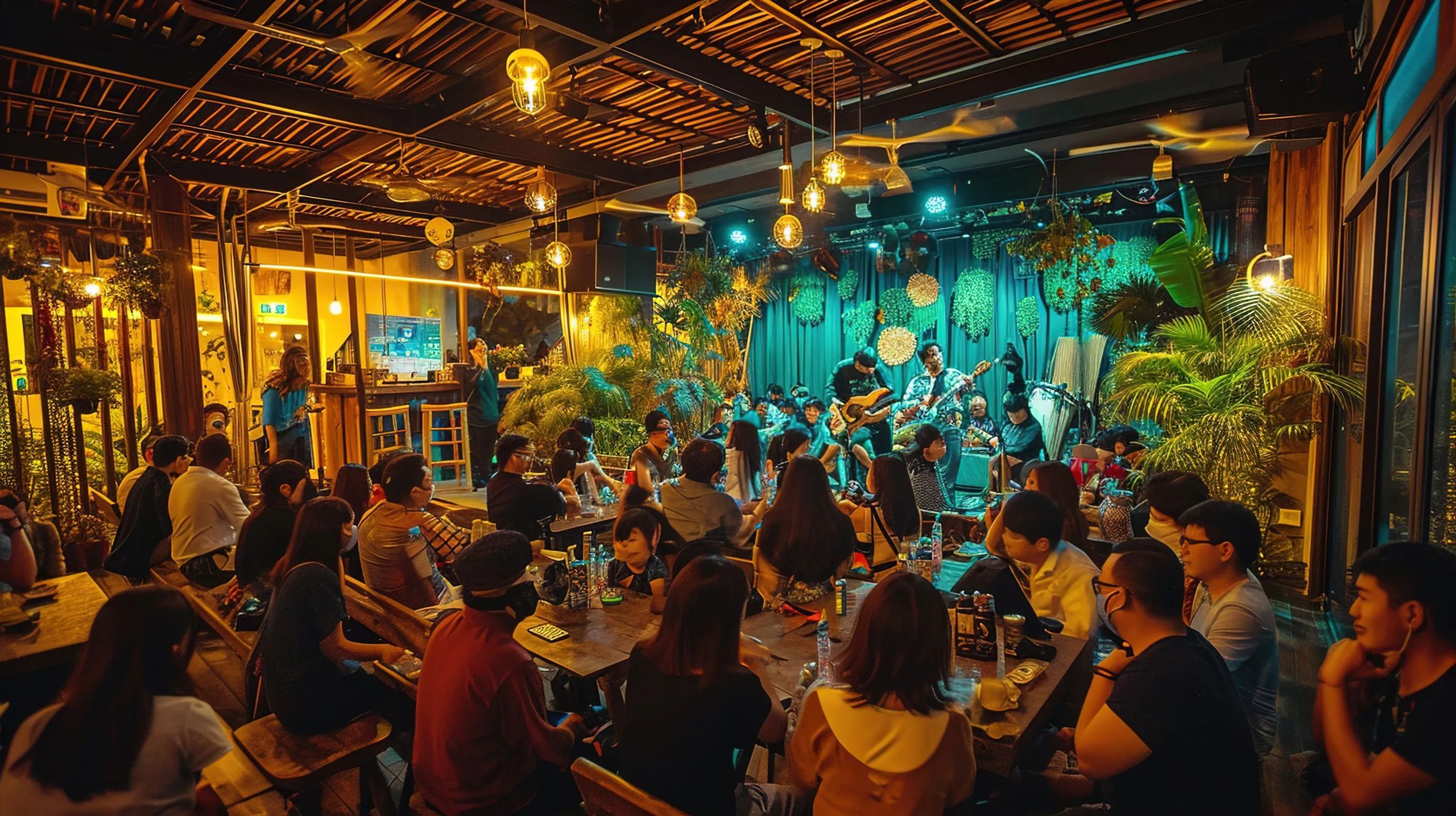
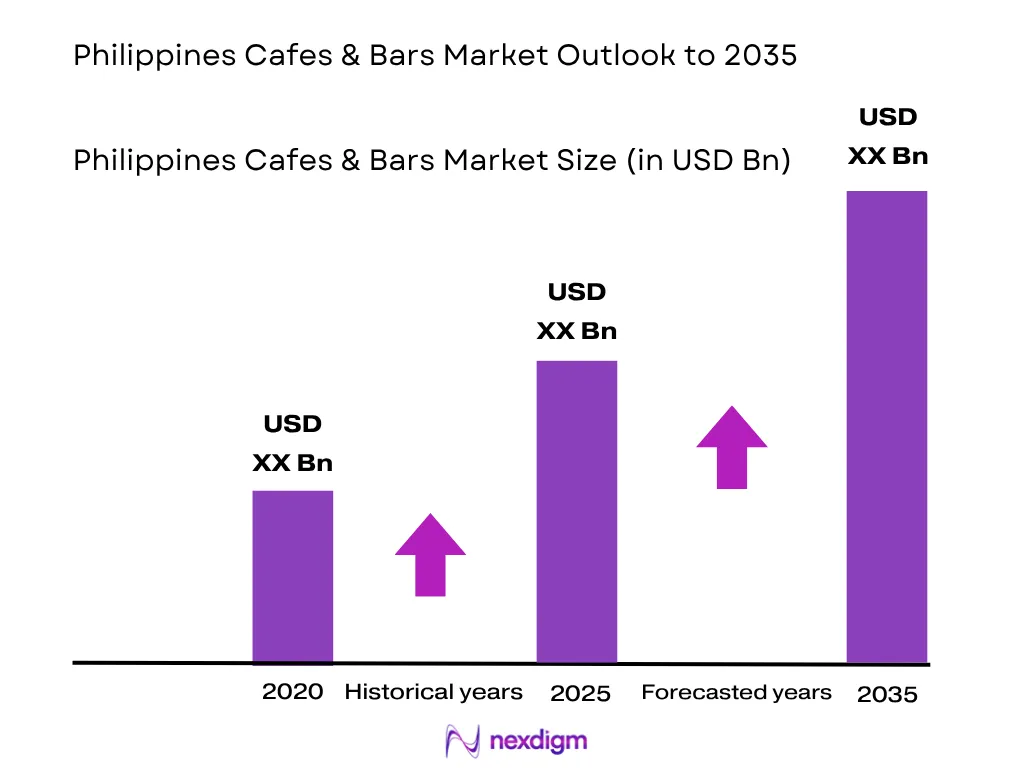
The Philippines Cafes & Bars market is valued at USD ~ billion, based on Nexdigm five-year historical analysis, and is forecast to expand at a CAGR of 3.43% for the 2026-2035 period. The sector’s recovery is supported by foodservice mobility, value-driven coffee formats, specialist coffee-shop expansion, cold beverage demand and social dining. Historical café/bar sales stood at USD ~ billion in the latest reported historical dataset, while the broader Philippines foodservice market reached USD ~ billion in the base year.
Metro Manila, Cebu and Davao dominate the Philippines Cafes & Bars market because they combine office density, malls, university catchments, BPO employment, tourism corridors and affluent residential clusters. NCR accounted for PHP 503,483 GRDP per capita and 31.2% of national GDP, reinforcing its role as the leading café-bar demand center. Tourism also supports Cebu, Boracay, Palawan and resort-led bar clusters, with tourism contributing 8.6% to GDP in one historical period and 8.9% in the latest reported period.
Market Segmentation
By Category
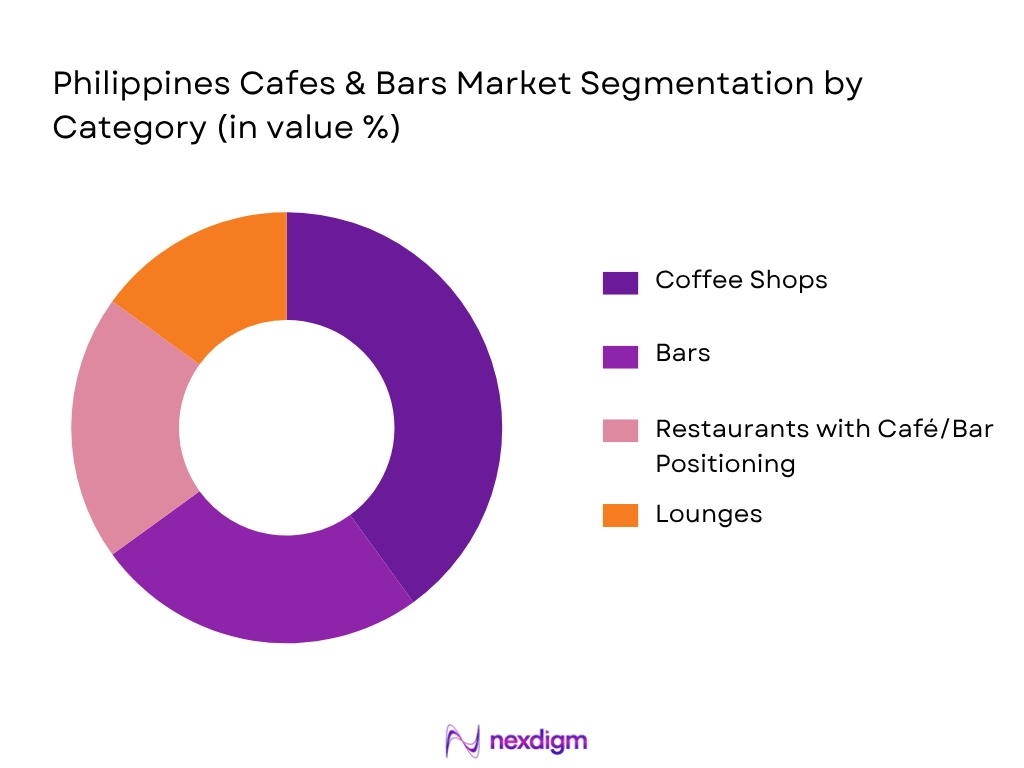
The Philippines Cafes & Bars market is segmented by category into coffee shops, bars, restaurants and lounges. Coffee shops hold the dominant market share because they serve multiple consumption missions: morning caffeine, student hangouts, remote-work seating, mall breaks, delivery beverages and dessert-led social visits. The segment also benefits from the country’s rising coffee culture, with branded chains, independent specialty cafés and affordable kiosk models expanding simultaneously. Operators such as Starbucks, Dunkin’, Bo’s Coffee, Figaro Coffee, PICKUP Coffee and But First, Coffee have widened consumer access across premium, mass-premium and value tiers. Coffee shops also have stronger daypart coverage than bars, operating from morning to evening, while bars remain more dependent on nightlife districts, alcohol licensing, event calendars and discretionary social occasions. Cold coffee, Spanish latte, matcha, ube beverages, barako positioning and pastry bundles are strengthening average ticket sizes and repeat visits.
By Business Model
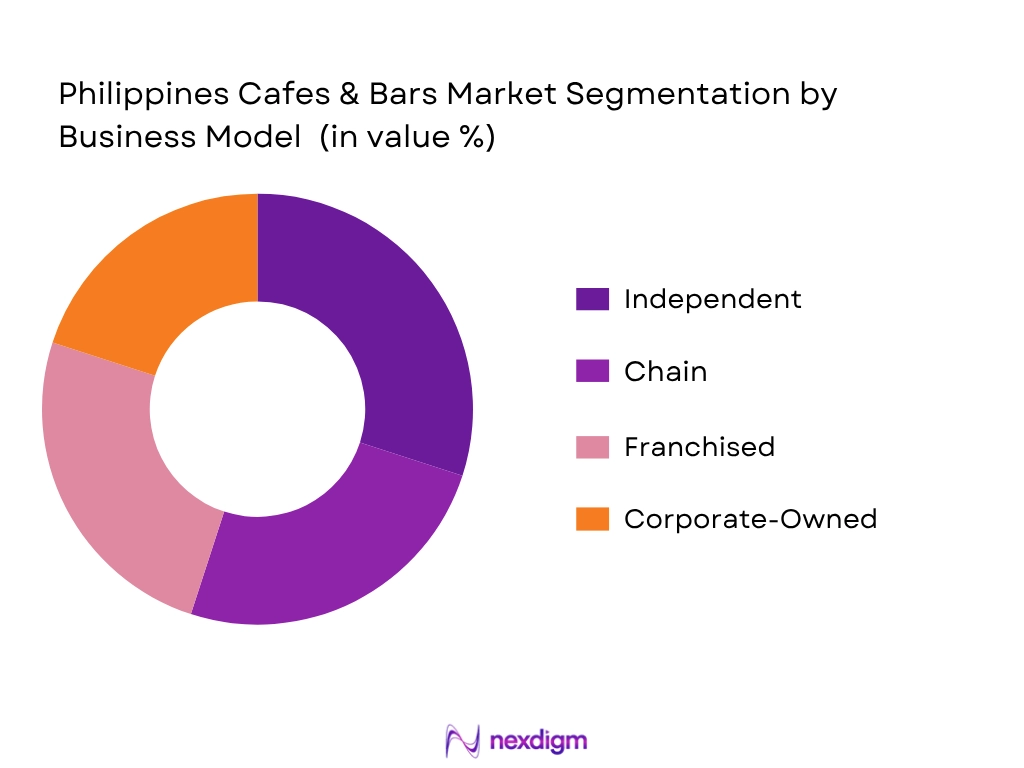
The Philippines Cafes & Bars market is segmented by business model into independent, chain, franchised and corporate-owned outlets. Independent cafés and bars hold the dominant share because the market remains highly localized, with neighborhood cafés, speakeasies, resort bars, university-area coffee shops and owner-operated concepts responding quickly to local taste preferences. Their dominance is visible in personalized interiors, Filipino-inspired beverages, local beans, flexible menu engineering and community-driven customer acquisition. However, franchised and chain-led models are gaining momentum as investors pursue standardized store formats, lower learning curves and stronger procurement support. Brands such as Dunkin’, Bo’s Coffee, Figaro Coffee and new value-led coffee concepts are using franchising or multi-unit expansion to enter secondary cities. Chains are particularly strong in malls, CBDs and transport-linked locations, while independents remain influential in specialty coffee, cocktail bars and experiential venues.
Competitive Landscape
The Philippines Cafes & Bars market is fragmented but increasingly shaped by scaled coffee operators, value coffee chains, specialty cafés and large foodservice groups. Starbucks remains a premium leader through store experience, location strategy and community positioning, while Dunkin’ has the widest mass-market coffee-and-snacking footprint. Local players such as Bo’s Coffee and Figaro Coffee compete through Filipino coffee heritage, franchising and multi-format expansion. Coffee Project differentiates through destination café interiors, while newer value players pressure incumbents through affordable iced coffee and app-enabled urban convenience.
| Player | Establishment Year | Headquarters | Core Format | Market Positioning | Outlet/Expansion Footprint | Signature Strength | Pricing Tier | Key Consumer Base | Operating Model |
| Starbucks Philippines | 1997 in the Philippines | Makati City, Metro Manila | ~ | ~ | ~ | ~ | ~ | ~ | ~ |
| Dunkin’ Philippines | 1981 in the Philippines | Metro Manila | ~ | ~ | ~ | ~ | ~ | ~ | ~ |
| Bo’s Coffee | 1996 | Cebu City | ~ | ~ | ~ | ~ | ~ | ~ | ~ |
| Figaro Coffee Group | 1993 | Mandaluyong / Metro Manila | ~ | ~ | ~ | ~ | ~ | ~ | ~ |
| Coffee Project | 2014 | Quezon City / Metro Manila | ~ | ~ | ~ | ~ | ~ | ~ | ~ |
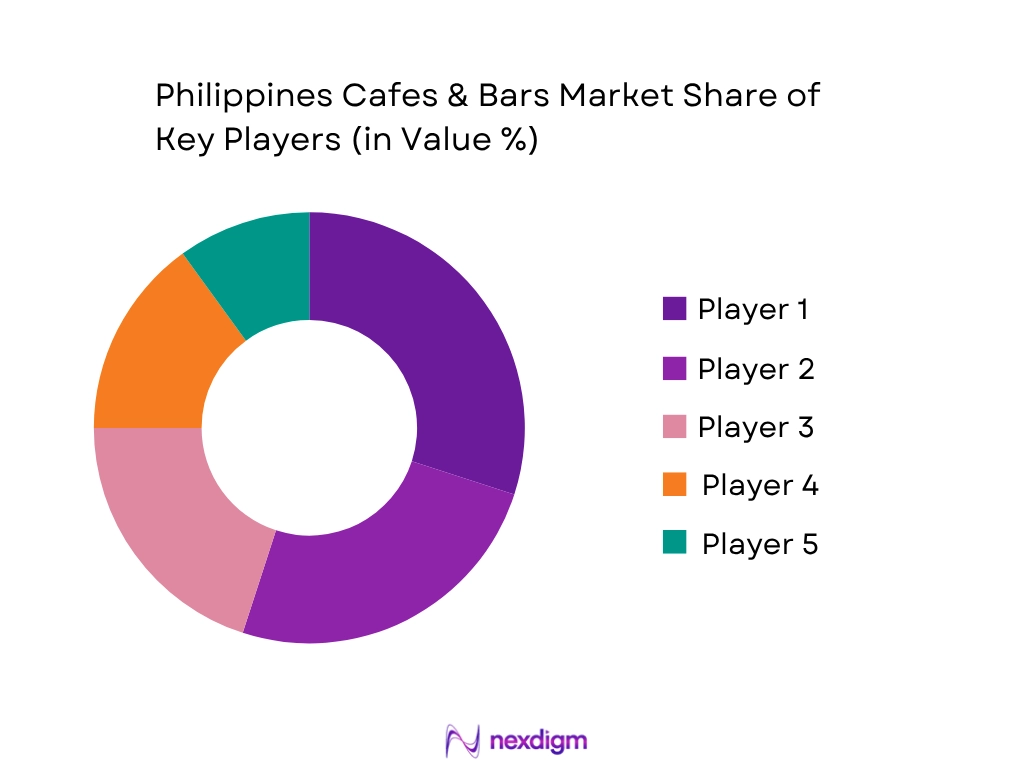
Philippines Cafes & Bars Market Analysis
Growth Drivers
Urban Middle-Class Spend
Urban middle-class spending is a direct growth driver for the Philippines Cafes & Bars market because café visits, bakery cafés, specialty coffee, after-office bars, and lounge formats depend on discretionary household consumption in dense service-led cities. The Philippines recorded national GDP growth of 5.7 in 2024, while household final consumption expenditure increased by 4.9, supporting out-of-home food and beverage occasions. Accommodation and food service activities grew by 10.4 in 2024, making it one of the fastest-growing industries in the national economy and directly relevant to cafés, bars, lounges, and coffee-led foodservice formats. NCR remains the strongest demand base because its per-capita household final consumption expenditure reached PHP 264,343, compared with the national level of PHP 142,837, creating a larger addressable consumer pool for premium coffeehouses, dessert cafés, cocktail bars, speakeasies, hotel bars, and mall-based café chains. World Bank also reported Philippines GNI per capita at USD 4,470 in 2024, reinforcing the broader income base for foodservice frequency.
Youth Demographics
Youth demographics support the Philippines Cafes & Bars market because younger consumers are core users of iced coffee, flavored beverages, affordable café kiosks, co-study cafés, social bars, nightlife venues, and delivery-based beverage orders. World Bank placed the Philippines population at 115,843,670 in 2024, giving operators a large domestic consumer base for repeat foodservice occasions. The country’s internet usage reached 67 per 100 people in 2024, supporting social-media-led café discovery, mobile ordering, digital loyalty, online reviews, delivery platforms, and influencer-led beverage adoption. PSA reported that workers aged 15 to 30 reached 2.62 million in formal establishments in August 2024, showing a substantial young employed base with workplace-linked café and bar consumption. PSA also reported youth labor-force participation at 31.9 and youth employment at 90.9 in December 2024, which is relevant for budget coffee, student cafés, after-work beverages, and value-led socializing formats.
Market Challenges
High Commercial Rent
High commercial rent is a structural challenge for the Philippines Cafes & Bars market because demand is concentrated in malls, CBDs, mixed-use townships, transport corridors, hotel districts, and nightlife streets where café/bar operators compete with QSRs, convenience stores, restaurants, retailers, banks, gyms, and service tenants for visible frontage. NCR accounted for 31.2 of total Philippine GDP in 2024, the highest among all regions, and registered the biggest share of national services output at 41.1, showing why operators cluster in Metro Manila despite intense real-estate competition. Services represented 82.9 of NCR’s GRDP in 2024, including accommodation and food service activities, retail trade, real estate, transport, professional services, finance, and other urban service categories. NCR’s household final consumption expenditure grew 4.1 in 2024, while gross capital formation grew 7.3, reinforcing continued commercial-space demand from consumer-facing businesses. For cafés and bars, this means stronger sales potential in prime locations but also a tighter site-selection environment, higher fit-out discipline, and stronger pressure to maximize seat turnover, daypart use, delivery fulfilment, and beverage gross margin.
Labor Attrition
Labor attrition is a market challenge because cafés and bars require baristas, bartenders, kitchen staff, servers, cashiers, shift supervisors, store managers, delivery coordinators, and commissary workers with consistent service standards. PSA recorded 50.19 million employed persons in December 2024, with services accounting for 60.5 of total employed persons, meaning café and bar operators compete within the country’s largest employment sector for frontline workers. Wage and salary workers represented 63.1 of employed persons in December 2024, while private establishments accounted for 78.9 of wage and salary workers, indicating strong competition from retail, BPO, logistics, hotels, restaurants, and other formal employers. Accommodation and food service activities also recorded a month-on-month employment decline of 219 thousand from November to December 2024, highlighting workforce volatility in the foodservice-adjacent labor pool. In January 2026, accommodation and food service activities again appeared among subsectors with employment drops, losing 140 thousand workers from December 2025, making retention, scheduling, training, and multi-skilled staffing critical for café and bar profitability.
Opportunities
Provincial Expansion
Provincial expansion is a major opportunity for the Philippines Cafes & Bars market because regional cities are gaining stronger services activity, tourism demand, and household consumption, creating room for coffee chains, franchise cafés, independent specialty cafés, resort bars, and hybrid café-bar concepts beyond Metro Manila. Central Visayas recorded the fastest regional economic growth at 7.3 in 2024, with accommodation and food service activities expanding 14.6, directly supporting Cebu-led café, bar, resort, and tourist F&B demand. Central Visayas also recorded household final consumption expenditure growth of 7.7 and gross capital formation growth of 13.8, indicating stronger consumer spending and investment conditions for new outlets. Davao Region posted 6.3 economic growth in 2024, with its regional economy valued at PHP 1.08 trillion at constant prices, while services accounted for 61.1 of GRDP. Tourism further strengthens provincial foodservice expansion: PSA reported tourism direct gross value added of PHP 2.35 trillion in 2024, while domestic tourism expenditure reached PHP 3.16 trillion, supporting cafés and bars in Cebu, Davao, Palawan, Boracay, Iloilo, Bacolod, and other destination-led markets.
Local Coffee Sourcing
Local coffee sourcing is a future growth opportunity for the Philippines Cafes & Bars market because café operators can differentiate through Philippine-origin beans, barako positioning, farmer partnerships, regional provenance, and premium local beverage storytelling instead of competing only on imported espresso blends. PSA-linked official posts reported that coffee green bean production reached 13.06 thousand metric tons in the first quarter of 2025, providing a current production base for local sourcing discussions among specialty cafés, roasters, and Filipino-branded coffee chains. DOST-PCAARRD notes that the Philippines can produce 4 coffee types Robusta, Arabica, Liberica/Barako, and Excelsa giving café operators a wider local-origin platform than many single-variety sourcing markets. The same DOST-PCAARRD profile identifies Robusta as the most common variety and describes Liberica/Barako as having a rich, intense taste, which is commercially relevant for cafés promoting Filipino identity, black coffee formats, espresso blends, cold brew, bottled coffee, and tourist-facing café menus. With accommodation and food service activities growing 10.4 nationally in 2024, local coffee sourcing can align café expansion with domestic agriculture, regional branding, and premium beverage innovation.
Future Outlook
The Philippines Cafes & Bars market is expected to maintain steady growth, supported by premium coffee adoption, expansion of affordable kiosk models and stronger foodservice demand in NCR, Cebu, Davao and tourist destinations. The next phase will be defined by cold beverage innovation, local coffee sourcing, delivery-channel integration, loyalty apps and store formats with stronger unit economics. Bars and lounges are expected to benefit from tourism, business travel, events and the recovery of nightlife districts, but compliance, rent and labor costs will remain critical operating risks.
Major Players
- Starbucks Philippines
- Dunkin’ Philippines
- The Coffee Bean & Tea Leaf Philippines
- Tim Hortons Philippines
- Bo’s Coffee
- Figaro Coffee Group
- Coffee Project
- But First, Coffee
- PICKUP Coffee
- UCC Coffee Philippines
- Seattle’s Best Coffee Philippines
- Mary Grace Café
- Toby’s Estate Philippines
- Yardstick Coffee
- The Palace Manila
Key Target Audience
- Café chain operators and multi-brand F&B groups
- Bar, pub, lounge and nightlife operators
- Coffee roasters, coffee importers and local coffee aggregators
- Mall developers, retail real estate owners and mixed-use township developers
- Hotel, resort and tourism F&B operators
- Food delivery platforms, POS providers and digital ordering solution companies
- Investments and venture capitalist firms
- Government and regulatory bodies (Department of Tourism, Philippine Statistics Authority, Department of Trade and Industry, Food and Drug Administration Philippines, Bureau of Internal Revenue, Local Government Units)
Research Methodology
Step 1: Identification of Key Variables
The initial phase involves constructing an ecosystem map covering cafés, coffee shops, bars, lounges, roasters, franchisees, mall operators, delivery platforms and beverage suppliers in the Philippines Cafes & Bars market. Desk research is used to identify key variables such as outlet density, category mix, pricing tiers, daypart behavior, coffee sourcing and alcohol-led consumption occasions.
Step 2: Market Analysis and Construction
This phase includes compilation of historical revenue, foodservice value, transaction behavior, outlet expansion and channel-level performance. Market construction uses top-down foodservice benchmarks and bottom-up outlet economics, including average ticket size, daily transaction counts, food attach rates, seating capacity, rent-to-sales ratio and delivery penetration.
Step 3: Hypothesis Validation and Expert Consultation
Market hypotheses are validated through structured interviews with café operators, bar owners, franchise managers, coffee roasters, mall leasing teams, distributors and digital ordering platforms. These discussions help verify consumer demand, pricing movement, supply constraints, expansion priorities, operating margins and regional white spaces.
Step 4: Research Synthesis and Final Output
The final stage integrates secondary research, expert interviews, company benchmarking and financial modeling into a validated market view. Findings are triangulated across revenue pools, category segmentation, player positioning, unit economics and city-level demand indicators to produce a business-ready assessment of the Philippines Cafes & Bars market.

- Executive Summary
- Research Methodology (Market Definitions and Assumptions, Café/Bar Classification Framework, GMV and Net Sales Sizing Approach, Outlet Universe Mapping, Menu Price Benchmarking, Footfall-to-Transaction Conversion, Primary Interviews with Café Owners/Bar Operators/Franchisees/Distributors, POS and Delivery Aggregator Data Triangulation, Consumer Cohort Sampling, Limitations and Future Conclusions)

- Definition and Scope
- Market Genesis and Evolution
- Timeline of Major Café Chains, Specialty Coffee Operators and Bar Concepts
- Business Cycle
- Supply Chain and Value Chain Analysis
- Café and Bar Operating Model Analysis
- Revenue Pool Mapping
- Location Cluster Analysis

- Growth Drivers (Urban Middle-Class Spend, Youth Demographics, Mall Culture, BPO Night-Shift Demand, Tourism Recovery, Social Media-Led Beverage Discovery, Café Workspaces, Affordable Coffee Kiosks, Premium Cocktail Culture)
- Market Challenges (High Commercial Rent, Labor Attrition, Coffee Bean Import Dependence, Dairy Cost Inflation, Liquor Licensing, Late-Night Compliance, Delivery Commission Pressure, Mall Lease Competition, Weather and Disaster Disruptions)
- Opportunities (Provincial Expansion, Local Coffee Sourcing, Barako/Liberica Positioning, Drive-Thru Coffee, Office Tower Micro-Markets, Hotel Bar Partnerships, Event-Led Nightlife, Functional Beverages, Plant-Based Milk, Loyalty Apps)
- Trends (Cold Brew, Ube Beverages, Pandan Lattes, Matcha, Visual Social Media Drinks, Speakeasy Bars, Rooftop Bars, Café Workspaces, Delivery Bundles, Sustainability, Reusable Cups, Local Bean Traceability)
- Government Regulations (Food Safety Permits, Sanitary Permits, Business Permits, Liquor Licenses, Excise Tax, VAT, Local Curfew Rules, Smoking/Vaping Restrictions, Live Entertainment Permits, Data Privacy for Loyalty Apps)
- SWOT Analysis (Brand Density, Local Flavor Innovation, Import Cost Exposure, Franchise Scalability, Delivery Dependence, Tourism Upside, Nightlife Regulation Risk)
- Stakeholder Ecosystem (Coffee Farmers, Roasters, Importers, Dairy Suppliers, Alcohol Distributors, Mall Operators, Franchisees, Delivery Platforms, POS Providers, Influencers, Tourism Operators, LGUs, Hotel Groups)
- Porter’s Five Forces (Supplier Power, Buyer Power, Substitution by Convenience Stores/QSRs/Milk Tea, Threat of New Entrants, Competitive Rivalry by Location Cluster)
- Menu Engineering and Pricing Analysis (Core Coffee SKUs, Signature Drinks, Local Flavors, Barako Drinks, Cocktails, Beer Buckets, Pastry Bundles, Happy-Hour Pricing, Premium Add-Ons, Alternative Milk Upsell)

- By Value (2020-2025)
- By Number of Outlets (2020-2025)
- By Number of Transactions (2020-2025)
- By Average Order Value (2020-2025)
- By Revenue per Outlet (2020-2025)
- By Foodservice Channel Contribution (2020-2025)

- By Establishment Type (In Value%)
Specialist Coffee Shops
Branded Chain Cafés
Independent Neighborhood Cafés
Bakery Cafés and Dessert Cafés
Tea, Matcha and Non-Coffee Beverage Cafés
Cocktail Bars and Speakeasies
Pubs, Beer Bars and Gastropubs
Nightclubs and Lounge Bars
Hotel and Resort Bars
Hybrid Day-to-Night Café-Bar Concepts - By Beverage Category (In Value%)
Hot Coffee
Iced Coffee and Cold Brew
Specialty and Third-Wave Coffee
Filipino-Flavored Beverages: Ube, Pandan, Calamansi, Barako
Tea, Matcha and Fruit-Based Drinks
Alcoholic Cocktails
Beer and Draught Beer
Wine and Spirits
Low-Calorie, Plant-Based and Functional Beverages - By Food and Attach Category (In Value%)
Bakery and Pastries
Cakes and Desserts
Sandwiches, Wraps and Light Meals
Brunch and All-Day Breakfast
Filipino Snacks and Local Pairings
Bar Chow and Small Plates
Premium Dining-Led Bar Food - By Ownership Model (In Value%)
Company-Owned Chains
Franchise-Led Chains
Master Franchise International Brands
Independent Owner-Operated Cafés
Multi-Branch Local Specialty Operators
Hotel and Resort Managed Bars
Mall and Transport Hub Concession Models - By Location Format (In Value%)
Shopping Mall Outlets
High-Street and Lifestyle District Outlets
CBD and Office Tower Outlets
Kiosks, Carts and Grab-and-Go Counters
Drive-Thru and Transit-Oriented Outlets
University and Campus-Area Outlets
Tourist Destination and Resort Outlets
Residential Community Cafés - By Price Tier (In Value%)
Economy and Budget
Mid-Market
Mass Premium
Premium Specialty
Luxury and Experiential - By Service Model (In Value%)
Dine-In
Takeaway
Delivery Aggregator Orders
Drive-Thru
Self-Ordering Kiosk/App-Based Ordering
Table-Service Bar - By Consumer Cohort (In Value%)
Students and Campus Consumers
Young Professionals and BPO Workers
Remote Workers and Freelancers
Family and Weekend Diners
Domestic Tourists
International Tourists and Expats
Nightlife and Social Drinking Consumers
Premium Specialty Coffee Consumers - By Region (In Value%)
National Capital Region
Rest of Luzon
Visayas
Mindanao
Metro Cebu
Metro Davao
Tourism-Led Island Markets

- Market Share of Major Players (Value Share, Outlet Share, Transaction Share, Beverage Category Share, Delivery Share, Mall-Based Store Share, Specialty Coffee Share, Bar/Nightlife Share)
- Market Share by Establishment Type (Chain Cafés, Independent Cafés, Specialist Coffee Shops, Kiosks, Bars, Pubs, Nightclubs, Hotel Bars)
- Cross Comparison Parameters (Outlet Footprint by City and Format, Average Ticket Size, Beverage Menu Mix, Food Attach Rate, Daypart Revenue Split, Delivery Aggregator Penetration, Franchise/Company-Owned Mix, Local Coffee/Barako Sourcing, Seating Capacity and Dwell-Time Strategy, Alcohol License and Event Calendar, Loyalty/App Ecosystem, Rental Cluster Strategy)
- Competitive Benchmarking Matrix (Store Count, Menu Breadth, Signature Beverage Differentiation, Pricing Tier, Delivery Coverage, Franchise Availability, Social Media Engagement, Customer Experience, Speed of Service, Store Design, Regional Expansion)
- SWOT Analysis of Major Players (Brand Equity, Expansion Capability, Menu Innovation, Supply Chain Strength, Pricing Power, Franchise Risk, Saturation Exposure, Delivery Dependence)
- Pricing Analysis by Core SKUs (Americano, Latte, Spanish Latte, Cold Brew, Matcha, Ube/Pandan Drinks, Pastry Bundle, Beer, Cocktail, Happy-Hour Offer, Group Alcohol Package)
- Detailed Profiles of Major Companies
Starbucks Philippines
Dunkin’ Philippines
The Coffee Bean & Tea Leaf Philippines
Tim Hortons Philippines
Bo’s Coffee
Figaro Coffee Group
Coffee Project
But First, Coffee
PICKUP Coffee
UCC Coffee Philippines
Seattle’s Best Coffee Philippines
Mary Grace Café
Toby’s Estate Philippines
Yardstick Coffee
The Palace Manila

- Demand and Utilization (Morning Coffee, Afternoon Snack, Work/Study Sessions, Weekend Brunch, After-Office Drinks, Late-Night Socializing, Tourist Leisure, Events and Celebrations)
- Purchasing Power and Budget Allocation (Budget Coffee Spend, Premium Beverage Spend, Alcohol Basket Size, Group Spend, Student Affordability, Tourist Spend, Corporate Catering Budgets)
- Needs, Desires and Pain Points (Wi-Fi and Seating, Air-Conditioned Third Space, Fast Service, Parking, Menu Novelty, Instagrammable Interiors, Price Transparency, Consistent Taste, Safety and Security at Night)
- Decision-Making Process (Location Convenience, Brand Familiarity, Menu Craving, Peer Recommendation, Social Media Visibility, Delivery Availability, Loyalty Points, Reviews and Ratings, Event Line-Up)
- Consumer Cohort Mapping (Gen Z, Millennials, BPO Employees, Students, Remote Workers, Families, Domestic Tourists, International Tourists, High-Income Cocktail Consumers)

- By Value (2026-2035)
- By Number of Outlets (2026-2035)
- By Number of Transactions (2026-2035)
- By Average Order Value (2026-2035)
- By Revenue per Outlet (2026-2035)
- By Foodservice Channel Contribution (2026-2035)


 Request a Sample
 Ask for Customization
 Get a Quote
 Enquire Now