

 Download PDF
Market Overview
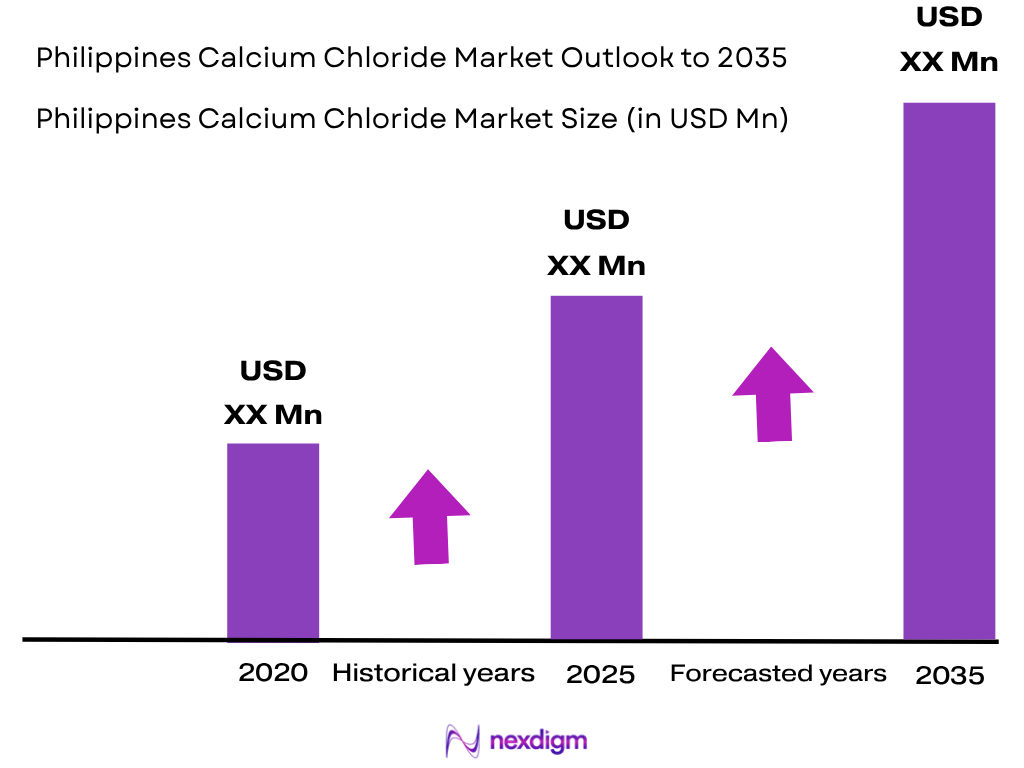
The Philippines Calcium Chloride Market is supported by industrial chemical distribution, food processing, water treatment, construction, refrigeration and specialty chemical applications. Public trade data records 2.424 million kg of calcium chloride imports valued at USD 1.286 million, indicating the importance of imported supply in the domestic market. The broader Philippine economy generated GDP of USD 461.67 billion, while industry including construction represented 27.0% of GDP, creating a substantial industrial base for calcium chloride consumption. (WITS)
Metro Manila, Bulacan, CALABARZON and Cebu represent important demand and distribution centers because they combine chemical distribution, food manufacturing, industrial processing, ports and construction activity. Inchem operates its main 22-hectare facility in Guiguinto, Bulacan and supplies calcium chloride to industries including food processing, chemicals, oil refining, textiles, pulp and paper and semiconductor manufacturing. The Philippines also recorded PHP 3.92 trillion in manufacturing gross value added at constant 2018 prices, with food manufacturing contributing PHP 1.90 trillion, reinforcing the importance of major manufacturing clusters.
Market Segmentation
By Product Form
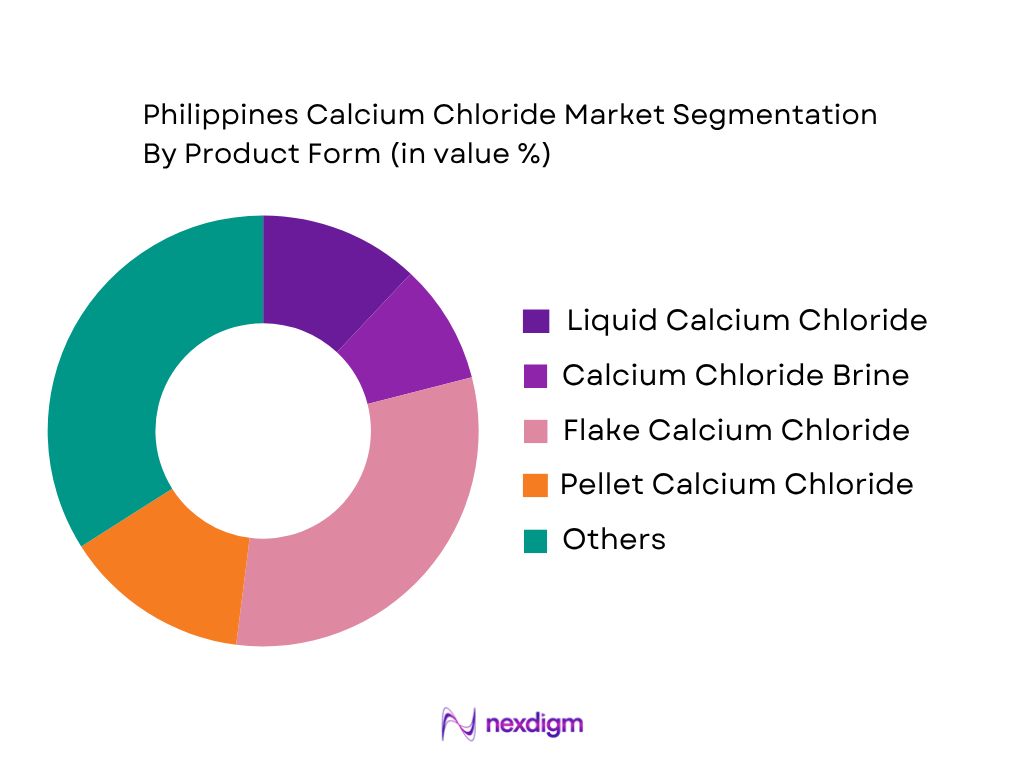
The Philippines Calcium Chloride Market is segmented by product form into liquid calcium chloride, calcium chloride brine, flake calcium chloride, pellet calcium chloride, granulated calcium chloride, briquette calcium chloride, anhydrous calcium chloride and powdered calcium chloride. Flake calcium chloride is expected to represent the dominant sub-segment because it is comparatively convenient to transport, store and dose across multiple industrial applications. Local supplier Inchem specifically imports calcium chloride flakes at 74% concentration and identifies applications including ice control, dust control and brining. Solid flake material can also be repacked into different package sizes for industrial and commercial users, supporting distribution through chemical traders and industrial suppliers. Food-grade and technical-grade solid products provide additional flexibility for food processing, refrigeration and water-treatment users. The fragmented geography of Philippine industrial demand further supports portable solid formats because material can be distributed from centralized warehouses to users outside the principal manufacturing centers.
By Application
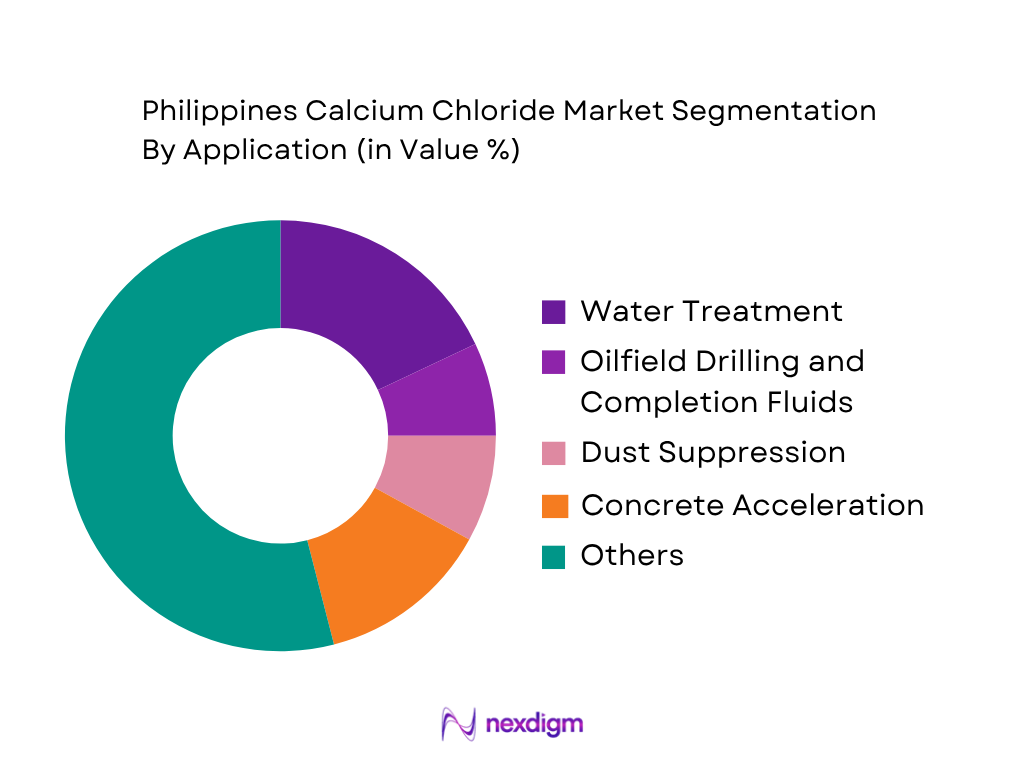
The Philippines Calcium Chloride Market is segmented by application into water treatment, oilfield drilling and completion fluids, dust suppression, concrete acceleration, food processing, refrigeration brine, chemical processing, mining and mineral processing, paper and pulp processing, and industrial drying and dehumidification. Water treatment is positioned as a leading application because calcium chloride provides a versatile source of calcium ions and is used across industrial water and process applications. The country’s expanding manufacturing base creates recurring requirements for industrial water management, while food processing, chemical production and other manufacturing operations generate wastewater and process-water requirements. PSA data shows manufacturing gross value added reached PHP 3.92 trillion in 2024, while food manufacturing alone reached PHP 1.90 trillion at constant 2018 prices. Calcium chloride also has established applications in food processing, refrigeration and industrial brining, allowing distributors to serve multiple end-use sectors from the same supply network.
Competitive Landscape
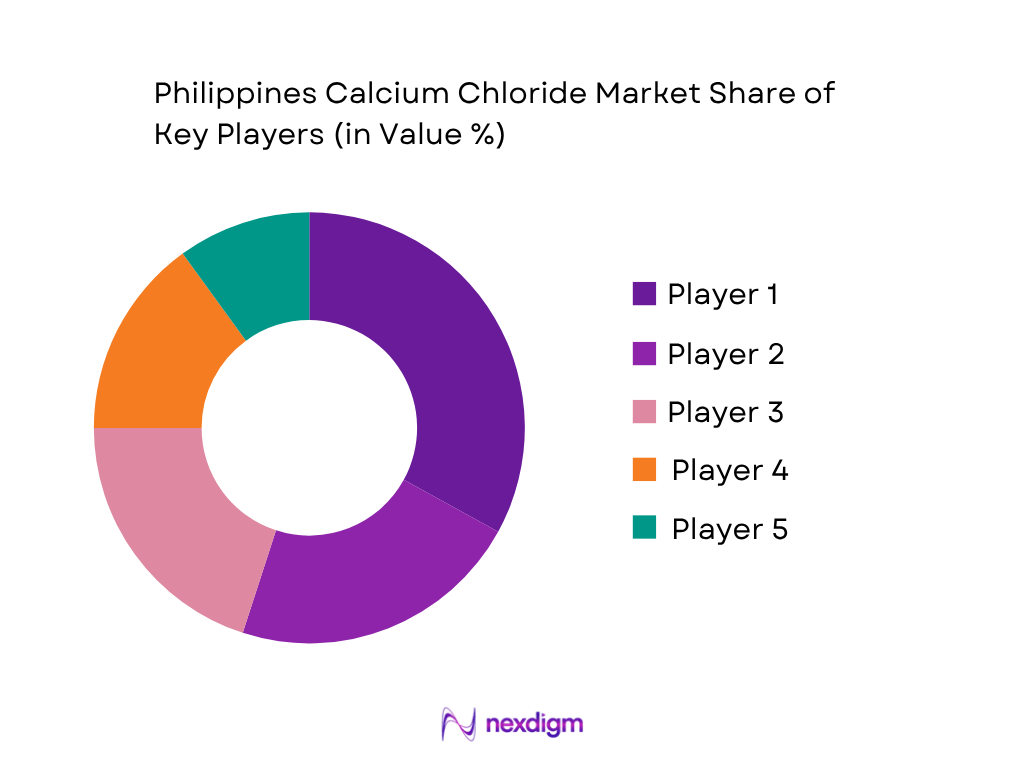
The Philippines Calcium Chloride Market has an import-oriented and distribution-led competitive structure, with local chemical suppliers operating alongside multinational chemical distributors and international calcium chloride producers. Inchem has an established domestic chemical manufacturing and distribution presence and supplies calcium chloride flakes, while Chemtradeasia markets calcium chloride for food-additive applications under HS 2827.20.00. Brenntag operates a Philippine chemical distribution network, and global distributors such as Univar Solutions maintain broad calcium chloride portfolios across technical and food grades.
| Company | Establishment Year | Headquarters | Calcium Chloride Forms | Key Grades | Primary Applications | Distribution Model | Philippines Presence |
| International Chemical Industries, Inc. (Inchem) | 1957 | Metro Manila, Philippines | ~ | ~ | ~ | ~ | ~ |
| Chemtradeasia Philippines | ~2000s | Singapore / Manila operations | ~ | ~ | ~ | ~ | ~ |
| Brenntag Philippines | 2000s | Muntinlupa, Philippines | ~ | ~ | ~ | ~ | ~ |
| Univar Solutions | 1924 | Downers Grove, Illinois, USA | ~ | ~ | ~ | ~ | ~ |
| Dominion Chemicals Corporation | 1990 | Philippines | ~ | ~ | ~ | ~ | ~ |
Philippines Calcium Chloride Market Analysis
Growth Drivers
Expansion of Chemical Manufacturing
The Philippine calcium chloride market is supported by the scale and continued activity of the domestic manufacturing base, particularly food products, chemicals, industrial processing and other material-intensive industries that use calcium chloride for moisture control, processing, brine preparation and formulation. Philippine Statistics Authority data shows manufacturing gross value added reached PHP 4.146 trillion at current prices in 2024, compared with PHP 3.946 trillion in 2023. Within manufacturing, food-product manufacturing reached PHP 2.229 trillion in 2024, up from PHP 2.103 trillion in 2023. These figures indicate a substantial industrial demand base for functional chemicals used in processing operations. Calcium chloride also has relevance to chemical manufacturing because it can be used in brine systems, drying, process-water management and selected downstream formulations. The market is additionally supported by the country’s established import channel: World Bank WITS records 2,424,480 kg of calcium chloride imports in 2024, demonstrating an active commercial supply chain. China supplied 2,235,540 kg, while Indonesia supplied 53,899 kg. The combination of a large manufacturing ecosystem and established international sourcing channels creates a structural demand foundation for calcium chloride across industrial applications.
Growth of Water Treatment Infrastructure
Water treatment represents an important demand pathway for calcium chloride because industrial and municipal treatment operations require chemicals for hardness adjustment, wastewater processing and selected water-conditioning applications. The Philippines has a sizeable industrial base generating requirements for water and wastewater management alongside manufacturing and construction activity. Philippine Statistics Authority national accounts record PHP 150.723 billion of value added from water supply, sewerage, waste management and remediation activities in 2024. Construction also generated PHP 2.047 trillion of value added during the same period, creating a broad installed base of infrastructure requiring water-management services. The wider industrial sector generated PHP 6.47 trillion of gross value added in 2024, compared with PHP 6.13 trillion in 2023, reinforcing the scale of industrial activities that require process-water management. Calcium chloride’s utility in treatment-related applications is particularly relevant where controlled calcium-ion addition, brine preparation or dewatering is required. The continuing development of industrial facilities, commercial buildings and infrastructure therefore provides multiple points of consumption rather than dependence on a single end-use sector. This diversified industrial demand base can support sustained procurement by chemical distributors and industrial users.
Market Challenges
Import Dependency
Import dependency remains a structural challenge for the Philippine calcium chloride market because domestic demand is substantially connected to international supply channels. World Bank WITS data records Philippine calcium chloride imports of 2,424,480 kg in 2024, valued at USD 1.286 million, compared with 7,736,390 kg valued at USD 1.842 million in 2023. The reduction in imported quantity means buyers can face changes in product availability even when industrial demand remains present. Supply is also geographically concentrated: China alone supplied 2,235,540 kg in 2024, while Indonesia supplied 53,899 kg, the Czech Republic supplied 59,540 kg, and Germany supplied 29,422 kg. Such concentration makes the domestic market exposed to overseas production schedules, shipping availability, port handling and international trade disruptions. Import dependence is particularly relevant for applications requiring consistent concentration, moisture specification or specialized grades, because replacement suppliers may not provide identical product characteristics. The challenge is therefore not simply the physical availability of calcium chloride but maintaining reliable access to the required grade and form. For Philippine buyers, inventory planning and diversified sourcing become important commercial considerations as calcium chloride demand expands across manufacturing, food processing, construction and water-treatment applications.
International Freight Exposure
International logistics create an additional challenge because the Philippine calcium chloride supply chain relies on imported material and therefore involves ocean freight, port handling, inland transportation and moisture-controlled storage. The 2024 trade record shows imports of 2.424 million kg from multiple international suppliers, with China accounting for 2.236 million kg, indicating that substantial physical volumes must enter the country through international logistics channels. Calcium chloride is hygroscopic, making protection against moisture important during transportation and warehousing because exposure can alter the physical condition of solid products and increase handling requirements. The country’s geographic structure, comprising numerous islands and dispersed industrial centers, can further increase the logistical complexity of moving imported chemicals from ports to end users. This is relevant to manufacturers and distributors serving food processing, water treatment, construction and industrial applications outside major commercial centers. Philippine industry activity is concentrated in several major industrial provinces and urban areas; PSA data shows that Laguna, Cavite and Batangas were among the largest contributors to national industry gross value added, with their combined industrial activity creating significant demand corridors. Consequently, suppliers must manage both international inbound logistics and domestic distribution efficiently.
Market Opportunities
Domestic Production Development
Development of domestic calcium chloride production or localized processing could reduce the market’s exposure to international sourcing and create opportunities for suppliers capable of serving Philippine industrial specifications. Current trade data demonstrates the addressable supply gap: the Philippines imported 2,424,480 kg of calcium chloride in 2024, including 2,235,540 kg from China. At the same time, Philippine manufacturing generated PHP 4.146 trillion of gross value added in 2024, while food-product manufacturing alone generated PHP 2.229 trillion. This combination indicates both an established industrial customer base and substantial dependence on external calcium chloride supply. Local production could potentially support shorter replenishment cycles, application-specific grades and improved supply continuity for industrial users. Opportunities can also extend beyond primary production into repacking, concentration adjustment, brine preparation and grade-specific distribution, allowing domestic businesses to participate without necessarily establishing large-scale chemical synthesis facilities. Such models could serve water treatment, food processing, construction, refrigeration and industrial processing customers. The opportunity is particularly relevant because calcium chloride imports were sourced from numerous countries, demonstrating that Philippine buyers already have established procurement demand. A domestic or regional supply model could therefore build upon existing consumption rather than requiring entirely new end-use markets.
Specialty Grade Distribution
Specialty-grade distribution provides an opportunity to move beyond commodity calcium chloride toward applications where concentration, purity, physical form and documentation are important purchasing criteria. Philippine manufacturing generated PHP 3.921 trillion of gross value added at constant 2018 prices in 2024, while food-product manufacturing generated PHP 1.904 trillion on the same basis. The country’s calcium chloride import structure also demonstrates differentiated sourcing: in 2024, suppliers included China with 2,235,540 kg, the Czech Republic with 59,540 kg, Germany with 29,422 kg, Japan with 10,358 kg and Singapore with 3,055 kg. This supplier diversity can support distributors that specialize in food-grade, high-purity, industrial-grade, flake, pellet, liquid or brine formats according to customer requirements. Specialty distribution can particularly address users in food processing, water treatment, refrigeration, chemical processing and industrial manufacturing where technical specifications and consistent supply are more important than generic commodity availability. The opportunity is strengthened by the country’s broad industrial base, which creates multiple customer groups with different calcium chloride requirements. Local warehousing, technical documentation, batch consistency and application-specific inventory management can therefore become important differentiators for Philippine suppliers seeking to expand within the calcium chloride value chain.
Future Outlook
Over the next decade, the Philippines Calcium Chloride Market is expected to benefit from expansion in food processing, industrial manufacturing, water treatment, construction and chemical distribution. The market will remain influenced by imported-product availability and international logistics because domestic supply is complemented by imported calcium chloride. Growth opportunities are likely to emerge from higher-grade products, application-specific formulations, food-grade calcium chloride and regional distribution. The manufacturing ecosystem provides an important underlying demand base, with manufacturing gross value added reaching PHP 3.92 trillion and food manufacturing reaching PHP 1.90 trillion in 2024.
Major Players
- International Chemical Industries, Inc.
- Chemtradeasia Philippines
- Brenntag Philippines
- Univar Solutions
- Dominion Chemicals Corporation
- OxyChem
- TETRA Technologies, Inc.
- Solvay
- Tata Chemicals
- Nirma Limited
- Nedmag B.V.
- Occidental Petroleum Corporation
- Compass Minerals
- Weifang Haibin Chemical Co., Ltd.
- Shandong Haihua Group
Key Target Audience
- Calcium Chloride Manufacturers and Importers
- Industrial Chemical Distributors and Repackagers
- Food and Beverage Ingredient Procurement Companies
- Water Treatment Chemical Buyers
- Oilfield Services and Drilling Companies
- Investments and Venture Capitalist Firms (Industrial Chemicals and Manufacturing)
- Government and Regulatory Bodies (Department of Environment and Natural Resources, Department of Trade and Industry, Food and Drug Administration)
- Construction, Infrastructure and Industrial Chemical Procurement Companies
Research Methodology
Step 1: Identification of Key Variables
The initial phase involves mapping the Philippine Calcium Chloride ecosystem across manufacturers, importers, distributors, industrial users and regulatory stakeholders. Secondary research covers HS 282720 trade flows, manufacturing activity, food processing, water treatment, construction and industrial applications. Product forms, grades, concentrations and end-use applications are established as core market variables.
Step 2: Market Analysis and Construction
Historical trade and industrial indicators are compiled to establish the domestic supply structure and consumption framework. Import value, import volume, supplier countries, product forms and distribution channels are assessed alongside manufacturing and end-use industry indicators. The bottom-up approach then reconstructs demand across water treatment, food processing, refrigeration, construction, chemical processing and other applications.
Step 3: Hypothesis Validation and Expert Consultation
Market hypotheses are validated through discussions with chemical distributors, importers, industrial procurement professionals, food-ingredient suppliers, water-treatment companies and downstream users. Interviews are used to validate product-form preferences, grade requirements, procurement practices, supply constraints and application-specific demand patterns. The resulting insights are triangulated against trade and industrial datasets.
Step 4: Research Synthesis and Final Output
The final stage integrates supply-side and demand-side findings into a consolidated Philippine Calcium Chloride Market assessment. Import statistics, distributor information, manufacturing indicators and application-level evidence are reconciled to identify market structure, competitive positioning and growth opportunities. The final framework supports segmentation, competitive analysis, forecasting and strategic recommendations.

- Executive Summary
- Research Methodology (Market Definition and Scope, Calcium Chloride Market Boundary, HS-Code and Product Mapping, Top-Down Market Sizing, Bottom-Up Demand Reconstruction, Import-Led Supply Assessment, End-Use Consumption Mapping, Primary Industry Interviews, Data Triangulation, Forecasting Framework, Sensitivity Analysis, Limitations and Future Conclusions)

- Definition and Scope
- Philippines Calcium Chloride Industry Evolution
- Calcium Chloride Product Ecosystem
- Philippines Calcium Chloride Value Chain Analysis
- Philippines Calcium Chloride Supply Chain Analysis

- Growth Drivers (Expansion of Chemical Manufacturing, Growth of Water Treatment Infrastructure, Food Processing Expansion, Construction Activity, Oil and Gas Services, Refrigeration Infrastructure, Mining Activity, Industrial Manufacturing)
- Market Challenges (Import Dependency, International Freight Exposure, Product Grade Availability, Limited Domestic Production, Moisture-Control Requirements, Chemical Handling Compliance, Logistics Costs, Supply Chain Concentration)
- Market Opportunities (Domestic Production Development, Specialty Grade Distribution, Food Grade Applications, Water Treatment Expansion, Oilfield Brine Applications, Mining Applications, Construction Chemicals, Cold Chain Applications)
- Market Trends (Import-Based Supply Expansion, Higher-Purity Grade Adoption, Food Grade Calcium Chloride Demand, Industrial Brine Applications, Water Treatment Chemical Integration, Regional Chemical Distribution, Bulk Packaging, Application-Specific Product Grades)
- Government Regulations and Standards (DENR Chemical Management Regulations, Philippine Inventory of Chemicals and Chemical Substances, Environmental Management Bureau Requirements, Food and Drug Administration Food Additive Requirements, Occupational Safety and Health Standards, Chemical Storage and Transport Requirements, Bureau of Customs Import Regulations)
- SWOT Analysis
- Porter’s Five Forces Analysis
- PESTLE Analysis

- By Market Value (2020-2025)
- By Consumption Volume (2020-2025)
- By Import Volume (2020-2025)
- By Import Value (2020-2025)
- By Domestic Distribution Volume (2020-2025)
- By Product Form Consumption (2020-2025)

- By Product Form (In Value %)
Liquid Calcium Chloride
Calcium Chloride Brine
Flake Calcium Chloride
Pellet Calcium Chloride
Briquette Calcium Chloride
Anhydrous Calcium Chloride
Powdered Calcium Chloride - By Application (In Value %)
Water Treatment
Oilfield Drilling and Completion Fluids
Dust Suppression
Concrete Acceleration
Food Processing
Refrigeration Brine
Chemical Processing
Mining and Mineral Processing
Paper and Pulp Processing
Industrial Drying and Dehumidification - By Grade (In Value %)
Industrial Grade
Food Grade
Pharmaceutical Grade
Technical Grade
Agricultural Grade
High-Purity Grade - By End-Use Industry (In Value %)
Chemical Manufacturing
Water and Wastewater Treatment
Food and Beverage Processing
Construction and Infrastructure
Oil and Gas Services
Mining and Mineral Processing
Refrigeration and Cold Storage
Pulp and Paper
Agriculture
Pharmaceutical and Healthcare Manufacturing - By Distribution Channel (In Value %)
Direct Import and Industrial Supply
Chemical Importers and Distributors
Bulk Chemical Traders
Specialty Chemical Suppliers
Industrial Repackers
Food Ingredient Distributors
Water Treatment Chemical Suppliers - By Region (In Value %)
National Capital Region
CALABARZON
Central Luzon
Central Visayas
Western Visayas
Davao Region
Northern Mindanao
Other Regions

- Market Share of Major Players (By Value, Volume, Product Form, Grade, Application, Distribution Channel)
- Cross Comparison Parameters (Calcium Chloride Product Portfolio, Product Grade Coverage, Import Volume Capability, Warehouse and Storage Network, Bulk Packaging Capability, Distribution Network Reach, End-Use Industry Coverage, Technical and Regulatory Support)
- SWOT Analysis of Major Players
- Detailed Profiles of Major Companies
International Chemical Industries, Inc. (Inchem)
Chemrez Technologies, Inc.
Philippine Prosperity Chemicals, Inc.
D&L Industries, Inc.
Brenntag Philippines, Inc.
Univar Solutions Philippines, Inc.
Chemtrade Asia Philippines, Inc.
Kerry Logistics Philippines Chemical Distribution
OxyChem
TETRA Technologies, Inc.
Solvay
Nedmag B.V.
Nouryon
Tata Chemicals
Nirma Limited

- Industrial Consumption Assessment
- Water Treatment Demand Analysis
- Food Processing Consumption Analysis
- Construction Application Analysis
- Oil and Gas Application Analysis
- Refrigeration and Cold Chain Analysis

- By Market Value (2026-2035)
- By Consumption Volume (2026-2035)
- By Import Volume (2026-2035)
- By Import Value (2026-2035)
- By Domestic Distribution Volume (2026-2035)
- By Product Form Consumption (2026-2035)


 Request a Sample
 Ask for Customization
 Get a Quote
 Enquire Now