

 Download PDF
 Download PDF
Market Overview
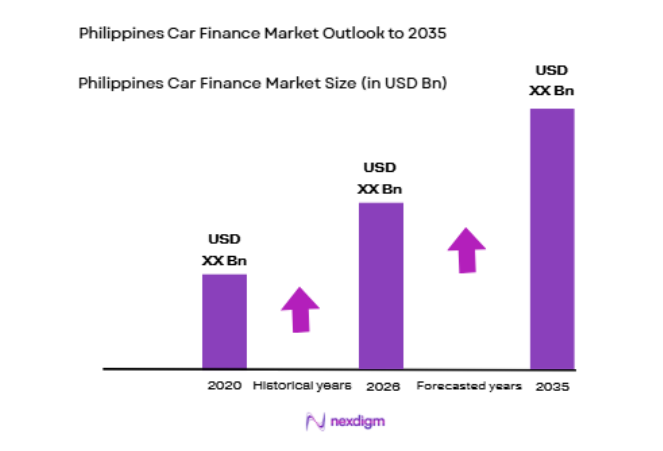
The Philippines car finance market is projected to reach USD ~ billion based on a recent historical assessment. This growth is driven by the rising middle class, increasing demand for personal vehicles, and greater financial product availability. Government initiatives, lower interest rates, and affordable loan options from banks and non-bank financial institutions have made it easier for individuals to purchase cars, thus expanding the market. Additionally, a shift in consumer preferences towards more accessible financing options is fueling market growth.
Metro Manila, Cebu, and Davao are key urban centers dominating the car finance market due to their higher population densities, growing disposable income, and substantial car ownership. These cities are home to a large number of car dealerships and financial institutions offering accessible car financing options. The improving economic conditions and the government’s focus on infrastructure development have further encouraged car ownership, making these cities critical for the car finance market in the Philippines.
Market Segmentation
By Loan Type
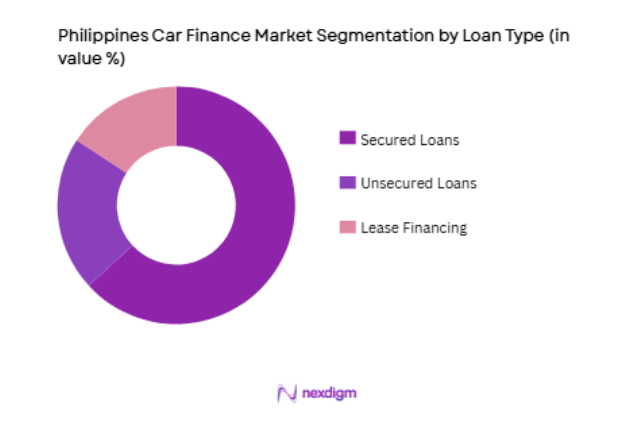
The Philippines car finance market is segmented by loan type into secured loans, unsecured loans, and lease financing. Secured loans dominate the market due to their lower interest rates and longer repayment periods. Banks and financial institutions prefer secured loans as they are less risky, with the car itself serving as collateral. This makes secured loans the most affordable option for consumers, encouraging their adoption. As more Filipinos seek car ownership, secured loans have become the most common choice, allowing for more accessible financing and promoting greater car sales in the country.
By Consumer Type
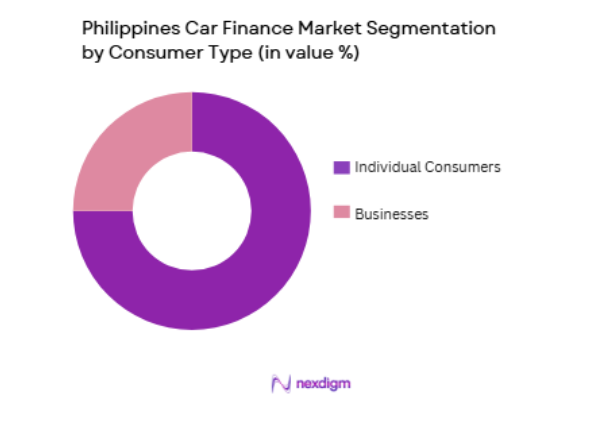
The Philippines car finance market is segmented by consumer type into individual consumers and businesses. Individual consumers dominate the market due to the increasing affordability of car loans and the rise in the middle-class population. This segment includes young professionals, families, and first-time car buyers seeking accessible financing options to purchase their vehicles. The growing number of car dealerships offering flexible loan terms and financing schemes has made it easier for individuals to secure car loans. The individual consumer segment is expected to continue to drive the market as disposable income increases and consumers seek personal mobility solutions.
Competitive Landscape
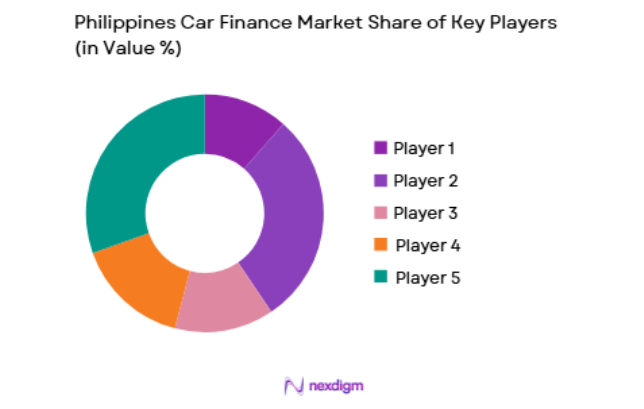
The competitive landscape of the Philippines car finance market is characterized by both traditional banks and non-bank financial institutions. Major banks such as BDO Unibank, Metrobank, and Bank of the Philippine Islands (BPI) lead the market by offering a variety of car loan products. Non-bank financial institutions like Home Credit and Cebuana Lhuillier are also gaining market share by providing flexible financing options with less stringent requirements. The competition in the market is intensifying as financial institutions increasingly compete on interest rates, loan terms, and customer service. With more players entering the market, the variety of financing options and the ability to cater to different customer segments are expanding.
| Company Name | Establishment Year | Headquarters | Technology Focus | Market Reach | Key Products | Revenue | Market-Specific Parameter |
| BDO Unibank | 1968 | Mandaluyong, Philippines | ~ | ~ | ~ | ~ | ~ |
| Metrobank | 1962 | Makati, Philippines | ~ | ~ | ~ | ~ | ~ |
| Bank of the Philippine Islands (BPI) | 1851 | Makati, Philippines | ~ | ~ | ~ | ~ | ~ |
| Home Credit | 2008 | Prague, Czech Republic | ~ | ~ | ~ | ~ | ~ |
| Cebuana Lhuillier | 1954 | Makati, Philippines | ~ | ~ | ~ | ~ | ~ |
Philippines Car Finance Market Analysis
Growth Drivers
Increasing Middle-Class Population
The growth of the middle class in the Philippines is one of the major drivers of the car finance market. With the expansion of the country’s economy and an increase in disposable income, more Filipinos can afford to purchase cars, and financing options have become more accessible. Government policies that encourage car ownership, along with the proliferation of car dealerships offering financing schemes, are helping to boost the market. Financial institutions are also making it easier for consumers to secure loans through lower interest rates, longer repayment periods, and flexible terms. The increasing number of young professionals and families looking to own their first vehicles will continue to drive the demand for car loans, contributing to the expansion of the car finance market in the Philippines.
Attractive Financing Options
The availability of various attractive financing options is driving the car finance market in the Philippines. Both traditional banks and non-bank financial institutions offer a range of loan products, including low-interest rates, longer loan terms, and flexible payment schemes, which make car ownership more accessible to a larger population. Financial institutions are also adopting digital platforms, allowing customers to apply for loans online, thus improving accessibility and convenience. Moreover, the growing number of financing schemes that offer zero down payment, low monthly installments, and quick loan processing are making it easier for consumers to secure loans for purchasing cars. These factors are expected to continue driving the growth of the car finance market, as more individuals opt for financing options to afford their vehicles.
Market Challenges
High Interest Rates
Despite the availability of financing options, high interest rates on car loans remain a challenge for many potential buyers. Although car loans have become more accessible, the cost of borrowing can still be significant, especially for consumers who have lower credit scores or are purchasing higher-end vehicles. High interest rates increase the total cost of the loan, making car ownership less affordable for a large portion of the population. While the Philippine government has implemented policies to help reduce interest rates, the cost of borrowing remains a barrier for many consumers, especially in the more price-sensitive segments of the market. Reducing interest rates and providing more affordable financing options will be crucial to accelerating market growth.
Limited Access to Financing in Rural Areas
While car loans have become more accessible in urban areas like Metro Manila, access to financing in rural and underserved regions remains limited. Many rural residents lack access to formal financial institutions and are unable to secure car loans, particularly for those who do not have formal credit histories. This lack of access to financing restricts the growth potential of the car finance market in these areas. Expanding the reach of car loan products to rural populations and offering more flexible loan terms and lower entry barriers for underserved communities can help drive adoption and expand the market to a broader audience.
Opportunities
Expansion of Digital Car Financing Platforms
The rise of digital lending platforms presents a significant opportunity for the Philippines car finance market. As more consumers shift toward digital solutions for their financial needs, car financing is no exception. Many financial institutions and fintech companies are now offering online platforms where customers can apply for car loans, check their eligibility, and make payments digitally. This ease of access, combined with the convenience of online transactions, is helping to drive the growth of the market. Digital platforms also enable faster loan processing, increased customer engagement, and better targeting of the consumer base. As digital platforms continue to evolve and become more popular, the car finance market will benefit from greater accessibility and a wider customer base.
Growth of the Ride-Hailing Industry
The expansion of ride-hailing services in the Philippines presents a unique opportunity for car finance companies. Many drivers in the ride-hailing industry are looking to purchase cars, and car financing products tailored to this market are becoming increasingly popular. Ride-hailing companies like Grab and Angkas have created a demand for affordable and accessible car financing, especially as more Filipinos enter the gig economy. Offering specialized financing options for ride-hailing drivers, such as flexible loan terms and lower down payments, can help expand the customer base. As the gig economy continues to grow, financing options for ride-hailing drivers will continue to be an attractive opportunity for car finance providers.
Future Outlook
The Philippines car finance market is expected to grow significantly over the next five years, driven by the increasing middle-class population, more accessible financing options, and the expansion of digital lending platforms. As the country continues to urbanize and the demand for personal mobility increases, the car finance market will expand to meet the needs of both individual consumers and businesses. Furthermore, the growing ride-hailing industry and government support for green transportation initiatives are expected to contribute to market growth. As financial products continue to evolve and become more accessible, the Philippines car finance market is poised for strong growth in the coming years.
Major Players
- BDO Uniban
- Metrobank
- Bank of the Philippine Islands (BPI)
- Home Credit
- Cebuana Lhuillier
- Toyota Financial Services
- Honda Financial Services
- UnionBank
- EastWest Bank
- RCBC
- Philippine National Bank (PNB)
- Security Bank
- Maybank
- Land Bank of the Philippines
- Citibank
Key Target Audience
- Investments and venture capitalist firms
- Government and regulatory bodies
- Car dealerships
- Financial institutions
- Fleet management companies
- Ride-hailing service providers
- Consumers looking for car financing
- Insurance companies
Research Methodology
Step 1: Identification of Key Variables
Identify key drivers, challenges, and market segments affecting the Philippines car finance market, such as government policies, interest rates, and consumer demographics.
Step 2: Market Analysis and Construction
Analyze market trends, demand patterns, and financial products offered by institutions to construct a reliable market forecast.
Step 3: Hypothesis Validation and Expert Consultation
Consult with industry experts, government agencies, and financial institutions to validate market assumptions and projections.
Step 4: Research Synthesis and Final Output
Synthesize the research findings into a detailed report, offering insights and actionable recommendations for stakeholders in the car finance market.

- Executive Summary
- Research Methodology (Definitions, Scope, Industry Assumptions, Market Sizing Approach, Primary & Secondary Research Framework, Data Collection & Verification Protocol, Analytic Models & Forecast Methodology, Limitations & Research Validity Checks)

- Market Definition and Scope
- Value Chain & Stakeholder Ecosystem
- Regulatory / Certification Landscape
- Sector Dynamics Affecting Demand
- Strategic Initiatives & Infrastructure Growth

- Growth Drivers
Increasing Middle-Class Population
Growing Demand for Personal Vehicles
Expansion of Online Financing Platforms - Market Challenges
High Interest Rates
Limited Credit Accessibility
Regulatory and Compliance Hurdles - Market Opportunities
Digital Transformation in Car Financing
Government Policies Supporting Electric Vehicle Financing
Partnerships Between Automakers and Financial Institutions - Trends
Adoption of Digital Payment Solutions in Car Financing
Growth of Subscription-based Car Financing Models - Government Regulations
Financing Terms and Interest Rate Guidelines
Consumer Protection Laws in Vehicle Financing
Regulations on Electric Vehicle Financing - SWOT Analysis
- Porter’s Five Forces

- By Market Value, 2020-2025
- By Installed Units, 2020-2025
- By Average System Price, 2020-2025
- By System Complexity Tier, 2020-2025

- By System Type (In Value%)
Leasing Options
Installment Financing
Personal Loans
Fleet Financing
Balloon Financing - By Platform Type (In Value%)
Online Platforms
Banks & Financial Institutions
Automaker Partnerships
Independent Finance Companies
Peer-to-Peer Platforms - By Fitment Type (In Value%)
New Car Financing
Used Car Financing
Refinancing
Flexible Financing Options - By End User Segment (In Value%)
Individual Consumers
Car Dealerships
Fleet Operators
Corporate Buyers

- Market Share Analysis
- Cross Comparison Parameters (System Type, Platform Type, End User Segment, Interest Rates, Loan Tenure, Credit Score Requirements, Loan-to-Value Ratio, Geographic Reach, Financing Approval Process, Repayment Flexibility)
- SWOT Analysis of Key Competitors
- Pricing & Procurement Analysis
- Key Players
Vietcombank
BIDV
VPBank
VietinBank
Sacombank
Techcombank
Shinhan Bank
Lotte Finance
HDBank
ACB
HD Saison Finance
Masan Consumer
Toyota Financial Services
Honda Finance
Mercedes-Benz Financial Services

- Increasing Adoption of Car Financing Among Millennials
- Fleet Operators Expanding Their Financing Options
- Government Support for Corporate Car Financing
- Rising Interest in Flexible Payment Schemes

- Forecast Market Value, 2026-2035
- Forecast Installed Units, 2026-2035
- Price Forecast by System Tier, 2026-2035
- Future Demand by Platform, 2026-2035


 Request a Sample
 Ask for Customization
 Get a Quote
 Enquire Now