

 Download PDF
 Download PDF
Market Overview
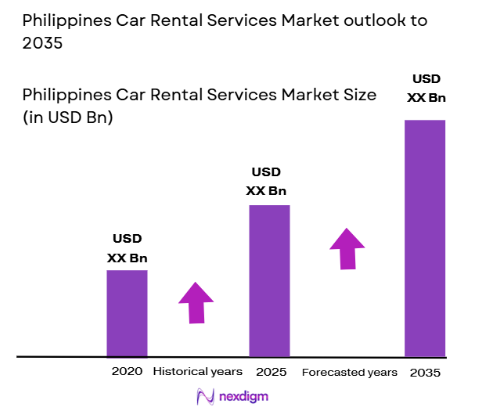
The Philippines car rental services market is expected to reach a size of USD ~ billion based on a recent historical assessment. The market is primarily driven by increasing travel demand, both for leisure and business, as well as rising disposable incomes that encourage domestic and international tourism. Additionally, the growth of ride-sharing services and the expansion of digital platforms facilitating bookings are playing significant roles in boosting the market. This demand is further supported by the adoption of electric vehicles in car rental fleets and the growing preference for short-term rentals.
The market’s growth is primarily concentrated in urban areas such as Metro Manila, Cebu, and Davao, driven by increased tourism and business activities. These cities also benefit from the presence of international airports and a large number of corporate hubs, which drive the demand for rental services. The growing trend of local tourism, combined with increasing vehicle fleet availability, is helping drive market expansion in these regions. Additionally, the infrastructure development in these cities supports the growth of car rental services, providing more accessibility to rental outlets.
Market Segmentation
By Product Type:
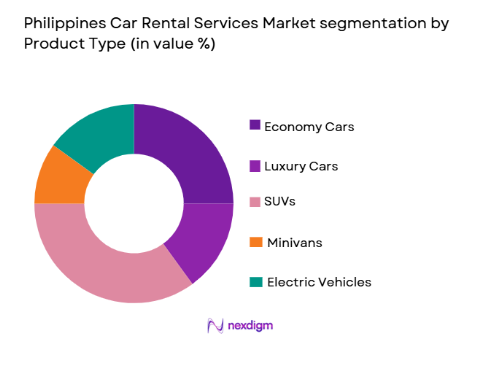
The Philippines car rental services market is segmented by product type into economy cars, luxury cars, SUVs, minivans, and electric vehicles. Recently, the SUV sub-segment has been dominating the market share due to factors such as increased consumer preference for versatility, especially in tourist regions with diverse terrain. Moreover, SUVs offer larger space and comfort, which appeals to both local and international tourists looking for family-friendly rental options. The rise of adventure tourism, combined with greater availability of SUVs in rental fleets, has boosted demand for this vehicle type.
By Platform Type:
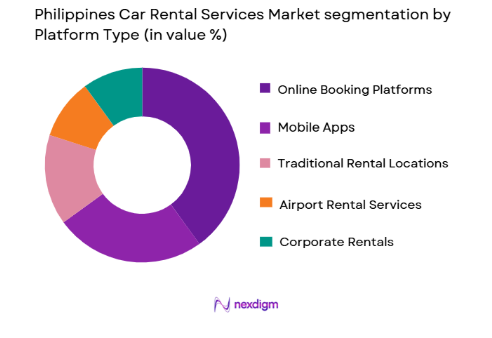
The market is also segmented by platform type, including online booking platforms, mobile apps, traditional rental locations, airport rental services, and corporate rentals. The online booking platform sub-segment holds the largest market share, as consumers increasingly prefer the convenience and ease of booking their rentals through digital channels. With widespread smartphone usage and the popularity of travel apps, booking a rental car online has become the preferred option, offering a seamless experience from reservation to payment. This shift to digital platforms reflects the growing trend of online service consumption in the Philippines.
Competitive Landscape
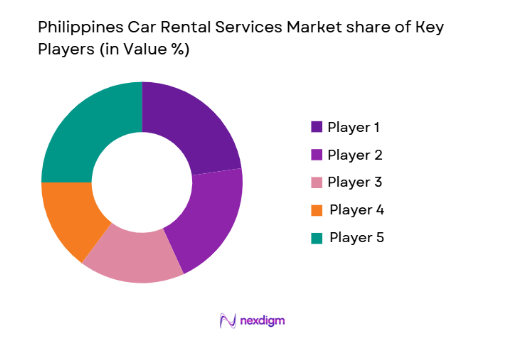
The competitive landscape of the Philippines car rental services market is characterized by a fragmented structure, with both international players and local providers competing for market share. Leading players focus on expanding their fleets, introducing more sustainable vehicle options like electric cars, and enhancing customer experiences through user-friendly digital platforms. The market is undergoing consolidation, with larger international brands increasing their presence through strategic partnerships and acquisitions of smaller, local companies. Local brands, on the other hand, are expanding their operations to cater to the increasing demand from domestic tourists.
| Company Name | Establishment Year | Headquarters | Technology Focus | Market Reach | Key Products | Revenue | Fleet Size |
| Hertz Philippines | 1970 | Manila | ~ | ~ | ~ | ~ | ~ |
| Avis Philippines | 1968 | Makati | ~ | ~ | ~ | ~ | ~ |
| Europcar Philippines | 1985 | Quezon City | ~ | ~ | ~ | ~ | ~ |
| Thrifty Car Rental | 1980 | Davao | ~ | ~ | ~ | ~ | ~ |
| Enterprise Rent-A-Car | 1990 | Cebu | ~ | ~ | ~ | ~ | ~ |
Philippines Car Rental Services Market Analysis
Growth Drivers
Increasing Tourism and Business Travel:
The Philippines is becoming an increasingly popular destination for both leisure and business travelers. The influx of international tourists, particularly from neighboring countries like Japan, South Korea, and China, is driving the demand for car rental services. The tourism industry is one of the key drivers, with scenic locations like Boracay, Palawan, and Cebu attracting both local and international tourists. Business travelers also contribute significantly to the market as more international companies establish operations in major cities such as Metro Manila and Cebu. This rise in tourism and business activities, supported by government efforts to promote the Philippines as a prime travel destination, continues to boost the demand for car rentals. Furthermore, the easing of travel restrictions has led to a surge in bookings, particularly in the post-pandemic recovery phase.
Adoption of Electric Vehicles (EVs):
The car rental market is witnessing a shift towards the adoption of electric vehicles. With growing awareness of environmental issues and the rising popularity of sustainable travel options, many car rental companies are incorporating EVs into their fleets. The Philippines government’s push for more eco-friendly transportation solutions, combined with incentives for the use of electric vehicles, has played a significant role in this transition. EVs are gaining popularity due to their low operating costs and environmental benefits. Consumers increasingly prefer electric cars for short-term rentals, especially in urban areas where charging infrastructure is expanding. This growth in electric vehicle adoption is expected to continue as the country works towards reducing carbon emissions and promoting clean energy solutions.
Market Challenges
High Operating Costs for Rental Companies:
One of the key challenges faced by car rental companies in the Philippines is the high operational cost. The maintenance and management of a diverse fleet, especially with increasing demand for electric vehicles, require significant financial investment. The cost of vehicle maintenance, insurance, and fuel, coupled with the need to comply with local regulations regarding vehicle standards, poses a considerable burden on operators. The expense of acquiring new vehicles, as well as managing the depreciation of fleet assets, makes profitability challenging for many players. The rising cost of labor and fuel also contributes to the increased operational cost, impacting rental pricing and profit margins. For many companies, balancing the cost of maintaining high-quality services while managing expenses is a continuous struggle.
Regulatory and Licensing Barriers:
Car rental operators in the Philippines must navigate a complex web of regulatory and licensing requirements. These regulations cover various aspects of the business, from vehicle inspections to safety standards, and compliance with tax laws. The need for periodic vehicle registration, insurance, and other legal obligations increases the burden on operators. Furthermore, obtaining permits to operate in certain cities or locations may involve navigating bureaucratic red tape, which can delay business operations and increase costs. In addition, some cities impose restrictions on the number of rental vehicles allowed to operate within urban centers, limiting the expansion potential for companies. These regulatory and licensing challenges complicate the growth of car rental services in the Philippines and create barriers for smaller, local operators who may lack the resources to comply with regulations.
Opportunities
Expansion of Digital Platforms and Online Booking Systems:
The ongoing digital transformation presents a major opportunity for the Philippines car rental market. As consumers increasingly prefer to book services online, car rental companies can benefit from investing in digital platforms that allow customers to easily reserve and manage their rentals. Mobile apps and online booking platforms not only enhance customer convenience but also enable car rental operators to streamline their operations, track fleet usage, and improve customer engagement. The integration of advanced technologies like artificial intelligence and machine learning into these platforms can further personalize the customer experience, offering tailored rental options and optimizing fleet management. Companies that leverage digital solutions to offer seamless booking experiences will likely have a competitive edge in this growing market.
Development of Subscription-Based Car Rental Services:
Subscription-based car rental models present an emerging opportunity in the Philippines. Consumers are increasingly seeking flexibility in their mobility solutions, and subscription-based services offer a convenient and cost-effective alternative to traditional car ownership or short-term rentals. Under this model, consumers can pay a monthly fee for access to a vehicle of their choice, with the flexibility to switch between different types of cars based on their needs. This model appeals to urban dwellers who may not require a car year-round but still want access to a variety of vehicles for occasional use. Subscription services can help car rental companies build a more stable and loyal customer base, reducing dependency on seasonal fluctuations and offering a steady revenue stream. The growth of this model is likely to increase as consumer preferences shift towards more flexible, on-demand transportation options.
Future Outlook
The Philippines car rental services market is poised for significant growth over the next five years. As tourism continues to rebound and business travel grows, demand for rental services is expected to rise in major urban areas and tourist destinations. Advances in technology, particularly digital platforms for booking and fleet management, will further streamline the customer experience, making it easier to access rental services. In addition, the adoption of electric vehicles and government support for eco-friendly initiatives will drive the transition towards more sustainable transportation options. Market players will continue to innovate with subscription models, providing consumers with greater flexibility and convenience. Overall, the market is set to expand with the help of regulatory support, infrastructure development, and increased demand for flexible and sustainable mobility solutions.
Major Players
- Hertz Philippines
- Avis Philippines
- Europcar Philippines
- Thrifty Car Rental
- Enterprise Rent-A-Car
- Budget Rent-A-Car
- Sixt Philippines
- EzyCar Rentals
- Star Rent A Car
- GreenRide Car Rentals
- AutoRent Philippines
- DriveNow Philippines
- Prestige Car Rentals
- Metro Manila Car Rentals
- Ace Car Rentals
Key Target Audience
- Investments and venture capitalist firms
- Government and regulatory bodies
- Car rental operators
- Travel agencies
- Tourism boards
- Large corporations with fleet management needs
- International travel service providers
- Automotive rental technology solution providers
Research Methodology
Step 1: Identification of Key Variables
Identification of variables such as market size, trends, and demand drivers that influence the car rental services market.
Step 2: Market Analysis and Construction
Data gathering from primary and secondary sources to analyze market patterns, customer behavior, and competitive dynamics.
Step 3: Hypothesis Validation and Expert Consultation
Validation of market hypotheses through consultations with industry experts, market participants, and stakeholders.
Step 4: Research Synthesis and Final Output
Synthesis of all research data into a comprehensive report with actionable insights and validated findings.

- Executive Summary
- Research Methodology (Definitions, Scope, Industry Assumptions, Market Sizing Approach, Primary & Secondary Research Framework, Data Collection & Verification Protocol, Analytic Models & Forecast Methodology, Limitations & Research Validity Checks)

- Market Definition and Scope
- Value Chain & Stakeholder Ecosystem
- Regulatory / Certification Landscape
- Sector Dynamics Affecting Demand
- Strategic Initiatives & Infrastructure Growth

- Growth Drivers
Rising Tourism and Travel Activities
Increased Demand for Electric Vehicles
Advances in Digitalization and Online Booking
Government Support for Infrastructure Development
Rising Disposable Incomes and Consumer Spending - Market Challenges
High Operational Costs
Regulatory Compliance and Licensing Barriers
Vehicle Maintenance and Fleet Management
Traffic Congestion in Major Cities
Competition from Ride-Hailing Services - Market Opportunities
Expansion of Car Rental Networks in Secondary Cities
Adoption of Green and Sustainable Fleet Options
Collaboration with Ride-Hailing and Mobility Platforms - Trends
Shift Towards Contactless Payment Solutions
Increase in Fleet Electrification
Integration of Artificial Intelligence for Fleet Management
Growth in Subscription-Based Car Rental Services
Expansion of Mobile Booking Apps - Government Regulations & Defense Policy
Vehicle Emission Standards
Road Safety and Licensing Regulations
Government Incentives for Electric Vehicles - SWOT Analysis
- Stakeholder and Ecosystem Analysis
- Porter’s Five Forces Analysis
- Competition Intensity and Ecosystem Mapping

- By Market Value, 2020-2025
- By Installed Units, 2020-2025
- By Average System Price, 2020-2025
- By System Complexity Tier, 2020-2025

- By System Type (In Value%)
Economy Cars
Luxury Cars
SUVs
Minivans
Electric Vehicles - By Platform Type (In Value%)
Online Booking Platforms
Mobile Apps
Traditional Rental Locations
Airport Rental Services
Corporate Rentals - By Fitment Type (In Value%)
Self-Drive
Chauffeur-Driven
Long-Term Rentals
Short-Term Rentals
Subscription Services - By EndUser Segment (In Value%)
Tourists
Corporate Clients
Local Residents
Frequent Travelers
Government and NGO Organizations - By Procurement Channel (In Value%)
Direct Booking
Online Travel Agents
Corporate Travel Agencies
Airport Kiosks
Third-Party Aggregators - By Material / Technology (In Value%)
Fleet Management Software
GPS and Telematics Solutions
Electric Vehicle Charging Infrastructure
Mobile Payment Systems
Fleet Tracking Technologies

- Market structure and competitive positioning
- Market share snapshot of major players
- CrossComparison Parameters (Fleet Size, Service Pricing, Customer Satisfaction, Digital Integration, Fleet Management Software, Geographic Coverage, Market Reach, Rental Options, Customer Retention Strategies, Regulatory Compliance)
- SWOT Analysis of Key Players
- Pricing & Procurement Analysis
- Key Players
Hertz Philippines
Avis Philippines
Europcar Philippines
Budget Rent a Car Philippines
National Car Rental Philippines
Sixt Philippines
Thrifty Car Rental Philippines
MAV Car Rentals
Enterprise Rent-A-Car Philippines
Greenwich Mobility Solutions
AutoRent Philippines
DriveNow Philippines
EzyCar Rentals
Star Rent a Car Philippines
Budget Mobility Philippines

- Tourists’ Rising Preference for Flexible Rental Options
- Corporate Clients’ Demand for Long-Term Fleet Management
- Local Residents Seeking Affordable and Convenient Mobility
- Government Entities Increasing Fleet Procurement

- Forecast Market Value, 2026-2035
- Forecast Installed Units, 2026-2035
- Price Forecast by System Tier, 2026-2035
- Future Demand by Platform, 2026-2035


 Request a Sample
 Ask for Customization
 Get a Quote
 Enquire Now