
 Download PDF
 Download PDF
Market Overview
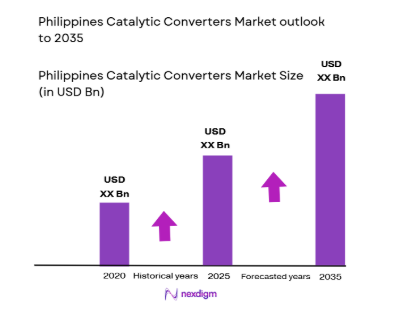
The Philippines Catalytic Converters market is valued at USD ~ billion based on a recent historical assessment, supported by data from automotive production trends, import statistics, and emissions compliance requirements. The market is primarily driven by increasing vehicle ownership, stricter environmental regulations, and the growing need for emission control technologies. Rising urbanization and traffic congestion further amplify demand, as catalytic converters play a critical role in reducing harmful exhaust emissions from gasoline and diesel vehicles.
Metro Manila, Cebu, and Davao emerge as dominant regions due to higher vehicle density, industrial activity, and regulatory enforcement intensity. These urban centers benefit from better automotive infrastructure, stronger distribution networks, and higher consumer awareness regarding emission compliance. Additionally, proximity to ports and logistics hubs supports efficient supply chains, while government enforcement of emission standards in these areas accelerates adoption of catalytic converters across both OEM and aftermarket segments.
Market Segmentation
By Product Type
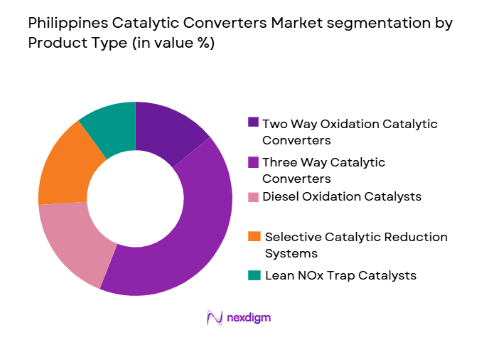
Philippines Catalytic Converters market is segmented by product type into two way oxidation catalytic converters, three way catalytic converters, diesel oxidation catalysts, selective catalytic reduction systems, and lean NOx trap catalysts. Recently, three way catalytic converters has a dominant market share due to factors such as widespread use in gasoline powered vehicles, strong compatibility with emission norms, and established supply chains. Their ability to simultaneously reduce carbon monoxide, hydrocarbons, and nitrogen oxides makes them the preferred solution across urban passenger vehicles, supported by increasing regulatory enforcement and vehicle modernization trends.
By Platform Type
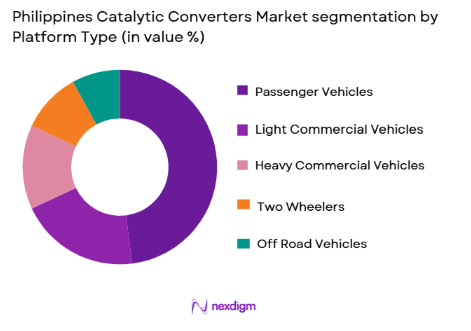
Philippines Catalytic Converters market is segmented by platform type into passenger vehicles, light commercial vehicles, heavy commercial vehicles, two wheelers, and off road vehicles. Recently, passenger vehicles has a dominant market share due to factors such as high urban vehicle ownership, increasing middle class income levels, and rapid expansion of personal mobility. Government regulations targeting emissions in urban areas further reinforce demand, while the presence of strong dealership networks and financing options accelerates adoption of catalytic converters within this segment.
Competitive Landscape
The Philippines Catalytic Converters market demonstrates moderate consolidation with a mix of global emission technology providers and regional manufacturing players. Major companies leverage advanced catalyst technologies, strong OEM partnerships, and established distribution networks to maintain competitive positioning. The market is influenced by technological differentiation, cost optimization, and compliance with environmental standards, while local players focus on aftermarket opportunities and cost-effective solutions.
| Company Name | Establishment Year | Headquarters | Technology Focus | Market Reach | Key Products | Revenue | Local Integration Capability |
| Faurecia Clean Mobility | 1997 | France | ~ | ~ | ~ | ~ | ~ |
| Tenneco Inc. | 1940 | USA | ~ | ~ | ~ | ~ | ~ |
| Eberspaecher Group | 1865 | Germany | ~ | ~ | ~ | ~ | ~ |
| Bosal Group | 1923 | Belgium | ~ | ~ | ~ | ~ | ~ |
| Futaba Industrial | 1945 | Japan | ~ | ~ | ~ | ~ | ~ |
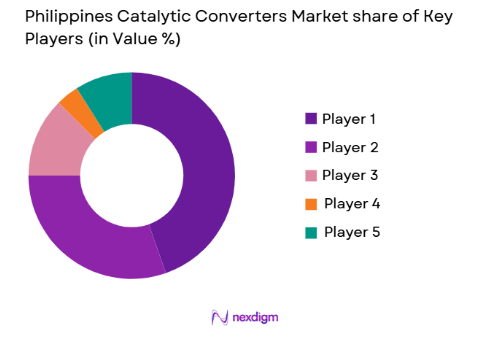
Philippines Catalytic Converters Market Analysis
Growth Drivers
Increasing Stringency of Emission Regulations and Environmental Compliance:
The Philippines catalytic converters market is strongly driven by tightening environmental regulations aimed at reducing vehicular emissions and improving air quality. Government authorities are implementing stricter emission standards, particularly in densely populated urban areas, where pollution levels have become a significant concern. These regulations compel automotive manufacturers and vehicle owners to adopt advanced emission control technologies, including catalytic converters. The enforcement of vehicle inspection programs and emission testing protocols further strengthens demand for compliant systems. As environmental awareness rises among consumers, there is also an increasing preference for vehicles equipped with efficient emission reduction technologies. Import regulations for vehicles and components further emphasize compliance with global emission norms. Automotive manufacturers are aligning their production processes with these regulatory requirements to avoid penalties and maintain market access. The growing integration of catalytic converters into both new and existing vehicles reflects the regulatory push. Additionally, government initiatives promoting sustainable transportation further reinforce the adoption of emission control technologies across the country.
Expansion of Automotive Fleet and Urban Mobility Demand:
The rapid growth of the automotive fleet in the Philippines is a major driver of catalytic converter demand, supported by increasing urbanization and rising disposable incomes. As more consumers purchase vehicles for personal and commercial use, the need for emission control systems grows proportionally. Urban centers experience high traffic congestion, leading to increased fuel combustion and higher emission levels, thereby necessitating efficient catalytic systems. The expansion of ride hailing services and logistics operations also contributes to increased vehicle utilization, further boosting demand. Automotive financing options and government infrastructure development programs facilitate vehicle ownership growth. The aftermarket segment also benefits from replacement demand due to wear and tear of catalytic converters over time. Fleet operators prioritize compliance with emission standards to avoid operational restrictions. As vehicle usage intensifies, the replacement cycle of catalytic converters shortens, creating sustained market demand. Overall, the expansion of mobility ecosystems significantly supports market growth.
Market Challenges
High Dependence on Precious Metal Inputs and Price Volatility:
The catalytic converters market faces significant challenges due to its reliance on precious metals such as platinum, palladium, and rhodium, which are essential for emission reduction processes. These metals are subject to global price fluctuations driven by supply constraints, geopolitical factors, and mining output variations. Such volatility directly impacts manufacturing costs and pricing strategies, creating uncertainty for both producers and buyers. The high cost of raw materials also increases the overall cost of catalytic converters, affecting affordability for consumers and fleet operators. Limited local sourcing capabilities further exacerbate dependency on imports, exposing the market to foreign exchange risks. Manufacturers must continuously optimize their material usage to maintain cost efficiency. The unpredictability of metal prices complicates long term planning and investment decisions. Additionally, recycling infrastructure for recovering precious metals remains underdeveloped, limiting cost recovery opportunities. This challenge restricts profitability and market expansion potential.
Prevalence of Counterfeit and Low Quality Aftermarket Products:
The presence of counterfeit and substandard catalytic converters in the aftermarket segment poses a significant challenge to market growth and regulatory compliance. These products are often sold at lower prices, attracting cost sensitive consumers and fleet operators. However, they fail to meet emission standards and degrade quickly, leading to environmental and performance issues. The lack of stringent enforcement mechanisms in certain regions allows such products to circulate widely. Genuine manufacturers face competition from these low cost alternatives, impacting their market share and brand reputation. Consumers may also lack awareness regarding the importance of certified emission systems. The proliferation of counterfeit products undermines regulatory efforts to control pollution. It also creates safety risks due to inferior material quality. Addressing this issue requires stronger enforcement, awareness campaigns, and improved supply chain transparency. Without effective intervention, the challenge will continue to hinder market development.
Opportunities
Development of Catalytic Converter Recycling and Metal Recovery Ecosystems:
The establishment of recycling infrastructure for catalytic converters presents a significant opportunity for the Philippines market, particularly in recovering valuable precious metals such as platinum, palladium, and rhodium. Recycling reduces dependency on imports and mitigates the impact of price volatility in global markets. As the number of end of life vehicles increases, the availability of used catalytic converters also rises, creating a steady supply of recyclable materials. Investments in recycling facilities can enhance sustainability while generating economic value. Government support for circular economy initiatives further strengthens this opportunity. Local recycling capabilities can reduce production costs for manufacturers. It also aligns with environmental goals by minimizing waste and resource extraction. Partnerships between automotive companies and recycling firms can accelerate ecosystem development. This opportunity supports both economic and environmental objectives, contributing to long term market resilience.
Growth in Hybrid and Alternative Fuel Vehicle Adoption:
The increasing adoption of hybrid and alternative fuel vehicles in the Philippines creates new opportunities for advanced catalytic converter technologies. Hybrid vehicles still rely on internal combustion engines, requiring efficient emission control systems to meet regulatory standards. The transition toward cleaner fuels such as compressed natural gas and biofuels also necessitates specialized catalytic solutions. Automotive manufacturers are investing in innovative catalyst designs to enhance efficiency and durability. Government incentives promoting cleaner transportation further support this trend. The growing awareness of environmental sustainability among consumers drives demand for eco friendly vehicle technologies. This shift encourages the development of next generation catalytic converters with improved performance. Suppliers can capitalize on this trend by offering customized solutions for emerging vehicle platforms. The integration of advanced materials and technologies enhances product differentiation. Overall, the transition to cleaner mobility creates a strong growth avenue for the market.
Future Outlook
The Philippines Catalytic Converters market is expected to witness steady growth driven by stricter emission regulations and rising vehicle ownership. Technological advancements in catalyst materials and recycling processes will enhance efficiency and sustainability. Increasing adoption of hybrid vehicles and government support for cleaner mobility will further boost demand. The expansion of automotive infrastructure and aftermarket services will contribute to long term market stability.
Major Players
- Faurecia Clean Mobility
- Tenneco Inc.
- Eberspaecher Group
- Bosal Group
- Futaba Industrial
- Sejong Industrial
- Yutaka Giken
- Katcon Global
- Benteler International
- Sango Co Ltd
- Calsonic Kansei
- Harada Industry
- Nippon Steel Catalytic Systems
- Walker Exhaust Systems
- MagnaFlow
Key Target Audience
- Automotive manufacturers
- Aftermarket distributors
- Fleet operators
- Logistics companies
- Industrial equipment manufacturers
- Investments and venture capitalist firms
- Government and regulatory bodies
- Automotive component suppliers
Research Methodology
Step 1: Identification of Key Variables
Market variables such as vehicle production, emission norms, and import trends were identified. These factors were analyzed to understand demand patterns and regulatory impacts influencing catalytic converter adoption across the Philippines automotive ecosystem.
Step 2: Market Analysis and Construction
Comprehensive data from automotive production, trade statistics, and emission standards were used to construct market estimates. Segmentation analysis was performed based on product type and platform type to define structural dynamics.
Step 3: Hypothesis Validation and Expert Consultation
Findings were validated through expert consultations with industry professionals and supply chain participants. Cross verification ensured alignment with real world market conditions and emerging technological trends in emission control systems.
Step 4: Research Synthesis and Final Output
All insights were consolidated into a structured framework, ensuring consistency and accuracy. The final output integrates quantitative and qualitative analysis to present a comprehensive view of the Philippines Catalytic Converters market.

- Executive Summary
- Research Methodology (Definitions, Scope, Industry Assumptions, Market Sizing Approach, Primary & Secondary Research Framework, Data Collection & Verification Protocol, Analytic Models & Forecast Methodology, Limitations & Research Validity Checks)

- Market Definition and Scope
- Value Chain & Stakeholder Ecosystem
- Regulatory / Certification Landscape
- Sector Dynamics Affecting Demand
- Strategic Initiatives & Infrastructure Growth

- Growth Drivers
Increasing vehicle parc and urban mobility demand
Stringent emission norms and environmental regulations
Rising adoption of fuel efficient and cleaner technologies
Expansion of automotive manufacturing ecosystem
Growth in logistics and e commerce driven transportation demand - Market Challenges
High cost of precious metals used in catalytic systems
Volatility in raw material supply chains
Limited recycling infrastructure for used converters
Prevalence of counterfeit aftermarket components
Technological compatibility issues with older vehicle fleets - Market Opportunities
Development of recycling and metal recovery facilities
Growing demand for advanced emission control systems
Expansion of hybrid and alternative fuel vehicle segment - Trends
Shift toward low emission and green mobility solutions
Integration of advanced catalyst materials for efficiency
Increasing penetration of aftermarket replacement demand
Technological advancements in substrate design
Localization of catalytic converter manufacturing - Government Regulations & Defense Policy
Implementation of stricter emission standards
Policies promoting sustainable automotive technologies
Incentives for cleaner fuel and emission control adoption - SWOT Analysis
- Stakeholder and Ecosystem Analysis
- Porter’s Five Forces Analysis
- Competition Intensity and Ecosystem Mapping

- By Market Value, 2020-2025
- By Installed Units, 2020-2025
- By Average System Price, 2020-2025
- By System Complexity Tier, 2020-2025

- By System Type (In Value%)
Two Way Oxidation Catalytic Converters
Three Way Catalytic Converters
Diesel Oxidation Catalysts
Selective Catalytic Reduction Systems
Lean NOx Trap Catalysts - By Platform Type (In Value%)
Passenger Vehicles
Light Commercial Vehicles
Heavy Commercial Vehicles
Two Wheelers
Off Road Vehicles - By Fitment Type (In Value%)
OEM Fitment
Aftermarket Replacement
Retrofit Installations
Fleet Based Installations
Customized Industrial Fitment - By EndUser Segment (In Value%)
Automotive Manufacturers
Aftermarket Service Providers
Fleet Operators
Logistics and Transportation Companies
Industrial Equipment Operators - By Procurement Channel (In Value%)
Direct OEM Procurement
Authorized Dealer Networks
Independent Aftermarket Distributors
Online Automotive Parts Platforms
Bulk Fleet Contracts - By Material / Technology (in Value %)
Platinum Based Catalysts
Palladium Based Catalysts
Rhodium Based Catalysts
Ceramic Substrate Technology
Metallic Substrate Technology

- Market structure and competitive positioning
- Market share snapshot of major players
- CrossComparison Parameters (Product Portfolio Diversity, Pricing Strategy, Supply Chain Integration, Technological Innovation, Regional Presence, Production Capacity, Aftermarket Support, OEM Partnerships, Sustainability Practices, Raw Material Sourcing)
- SWOT Analysis of Key Players
- Pricing & Procurement Analysis
- Key Players
Bosal Philippines Automotive Systems
Faurecia Clean Mobility Philippines
Tenneco Philippines Emission Systems
Eberspaecher Philippines Exhaust Technology
MagnaFlow Philippines Automotive Solutions
Walker Exhaust Systems Philippines
Futaba Industrial Philippines
Sejong Industrial Philippines
Yutaka Giken Philippines
Benteler Automotive Philippines
Katcon Philippines Emission Control
Calsonic Kansei Philippines
Sango Philippines Manufacturing
Harada Industry Philippines
Nippon Steel Catalytic Systems Philippines

- Automotive manufacturers focusing on emission compliant systems integration
- Fleet operators prioritizing cost efficient and durable catalytic solutions
- Aftermarket players expanding distribution and service networks
- Industrial users adopting emission control technologies for compliance

- Forecast Market Value, 2026-2035
- Forecast Installed Units, 2026-2035
- Price Forecast by System Tier, 2026-2035
- Future Demand by Platform, 2026-2035


 Request a Sample
 Ask for Customization
 Get a Quote
 Enquire Now