
 Download PDF
 Download PDF
Market Overview
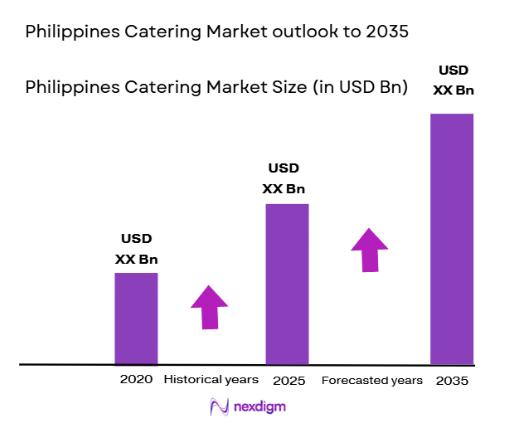
The Philippines Catering Market is experiencing notable growth, driven by a strong demand for diverse catering services across various sectors, including corporate events, weddings, and government functions. With an estimated market size of USD ~ billion, this industry continues to expand as consumer preferences shift towards convenience, premium services, and customized meal options. The rise of food delivery services and event-based catering has further accelerated market growth. Key drivers such as increased disposable incomes, a thriving middle class, and the growing popularity of experiential dining have fueled this expansion.
The market’s dominant regions include Metro Manila, Cebu, and Davao, where a high concentration of corporate offices, hotels, and event venues supports a robust catering ecosystem. Metro Manila, the capital region, leads due to its economic activities, infrastructure, and demand for large-scale events. Cebu and Davao follow due to their increasing tourism and event sectors, bolstered by growing consumer awareness and preference for convenience and quality in food services. These urban hubs have become central to catering business operations, fostering competitive dynamics and service innovation.
Market Segmentation
By Product Type:
Philippines Catering Market is segmented by product type into corporate catering, event catering, hospitality catering, institutional catering, and healthcare catering. Recently, corporate catering has a dominant market share due to factors such as the rise in corporate events, employee catering solutions, and the increasing preference for professional catering services among businesses. The demand for specialized corporate catering services that provide custom meal plans, dietary-specific menus, and a variety of options continues to grow. This has been amplified by companies investing in employee wellness programs, where catering services play a crucial role in providing healthy, balanced meal options for office settings.

By Platform Type:
Philippines Catering Market is segmented by platform type into online catering platforms, traditional catering services, hybrid catering models, food truck catering, and catering for weddings and parties. Recently, online catering platforms have been dominating due to their ability to provide convenience, accessibility, and customization options. These platforms allow consumers to easily access catering services, browse menus, place orders, and track deliveries with just a few clicks. The rise in e-commerce and digital penetration has also supported this shift, with online platforms gaining traction among urban consumers seeking hassle-free catering services for personal and corporate events.

Competitive Landscape
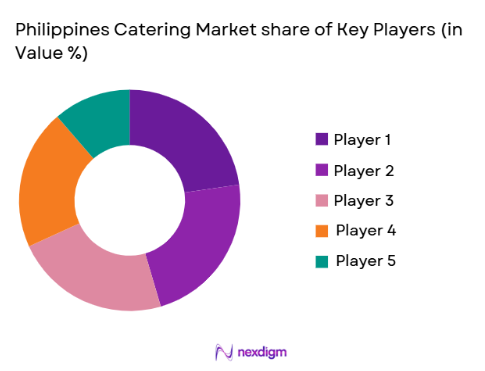
The Philippines Catering Market is characterized by a fragmented competitive landscape with a mix of small and medium enterprises and large catering companies. Key players are consolidating their positions through strategic mergers, acquisitions, and partnerships to tap into new segments, broaden their geographic reach, and introduce innovative catering solutions. Larger firms with established brands and robust supply chains continue to hold significant influence, while smaller, niche players focus on unique service offerings to capture the evolving consumer demand.
| Company Name | Establishment Year | Headquarters | Technology Focus | Market Reach | Key Products | Revenue (USD) | Additional Parameter |
| Mang Inasal | 2003 | Quezon City | ~ | ~ | ~ | ~ | ~ |
| Max’s Group | 1945 | Quezon City | ~ | ~ | ~ | ~ | ~ |
| Shakey’s Pizza | 1954 | Pasig City | ~ | ~ | ~ | ~ | ~ |
| Goldilocks | 1966 | Quezon City | ~ | ~ | ~ | ~ | ~ |
| The Bistro Group | 1995 | Taguig City | ~ | ~ | ~ | ~ | ~ |
Philippines Catering Market Analysis
Growth Drivers
Increasing Disposable Income:
The increasing disposable income of Filipino consumers is a key driver of growth in the catering market. As the population’s income levels rise, consumers are spending more on dining experiences, especially catered meals for corporate events, parties, and family gatherings. The rise in disposable income enables people to opt for higher-quality, specialized catering services that offer customizations, such as dietary restrictions or premium ingredients. As more people embrace urbanization and adopt a modern lifestyle, the demand for personalized, convenient catering options continues to rise. This shift in spending habits has directly impacted the growth of corporate and event catering services. Additionally, the growing middle-class segment contributes significantly to market demand, as they increasingly seek new and diverse dining experiences, with catering being a key part of their social and corporate gatherings.
Shift Toward Online and Hybrid Platforms:
Another major growth driver in the Philippines catering market is the shift toward online and hybrid catering platforms. The increasing adoption of e-commerce and online services has propelled the growth of online food delivery and catering platforms. These platforms provide consumers with the convenience of ordering catering services online, saving time and effort in managing catering for events. Hybrid models combining online platforms and traditional catering services offer consumers greater flexibility, enabling them to select menu items, customize orders, and arrange for timely deliveries without the hassle of in-person transactions. This technological advancement has greatly improved accessibility to high-quality catering services, attracting a larger base of tech-savvy, convenience-oriented customers. As digital technology continues to evolve, online platforms are likely to further enhance their offerings with advanced features like AI-driven recommendations, subscription-based services, and better customer service options, continuing to fuel market growth.
Market Challenges
Rising Operational Costs:
One of the key challenges facing the Philippines catering market is the rising operational costs, which have put pressure on both small and large catering service providers. The costs of raw ingredients, labor, logistics, and packaging have all been increasing steadily, making it difficult for caterers to maintain profit margins without increasing their prices. With the growing demand for high-quality, fresh, and locally sourced ingredients, catering companies are struggling to balance the cost of sourcing ingredients while keeping prices competitive. Moreover, as labor wages rise and fuel prices increase, delivery and service costs also add to the financial strain on catering businesses. These increased costs are often passed onto customers, which could affect the affordability of catering services for lower-income consumers. Additionally, catering providers must find ways to optimize their operations and improve their supply chain efficiency to mitigate the impact of rising operational costs.
Intense Competition and Market Fragmentation:
The intense competition and fragmentation of the market pose significant challenges for catering companies in the Philippines. The market is crowded with numerous small and medium-sized catering businesses, many of which specialize in niche services such as local cuisine or budget-friendly options. Larger catering firms are focusing on consolidating their market positions by expanding their offerings, leveraging brand recognition, and investing in customer loyalty programs. However, the intense competition has led to price wars and reduced profit margins for many catering providers. Smaller catering companies struggle to compete with large players who can offer lower prices, broader menu options, and better infrastructure. To remain competitive, catering businesses must innovate and adapt to changing consumer preferences, often requiring significant investments in technology, marketing, and service improvements. This fragmentation and competition make it difficult for businesses to stand out and secure a loyal customer base.
Opportunities
Expansion of Custom Catering Services:
The demand for customized catering services presents a major opportunity in the Philippines catering market. Consumers are increasingly looking for personalized catering experiences that cater to their specific dietary needs, preferences, and event themes. For example, offering vegan, gluten-free, or organic menu options is becoming a common request among customers who have specific dietary requirements. Catering services that specialize in customized meal plans for corporate events, weddings, and large gatherings are gaining popularity. As consumers prioritize health and sustainability, catering companies that offer locally sourced, organic, or farm-to-table options are poised to capture a larger market share. This demand for customization is driving catering companies to innovate and diversify their offerings to cater to these specific customer needs. Expanding customized catering services will also open new revenue streams, particularly in the high-end corporate and event catering sectors.
Government Support for Local Sourcing and Sustainability:
Government initiatives supporting local food sourcing and sustainability provide an excellent opportunity for catering companies to differentiate themselves and capture new business. The Philippine government has been actively encouraging the use of locally sourced ingredients, promoting sustainability, and reducing the carbon footprint of food services. Catering companies that align their operations with these governmental initiatives can benefit from regulatory incentives, partnerships, and public support. By investing in sustainable sourcing practices, eco-friendly packaging, and waste-reduction measures, catering businesses can not only improve their environmental impact but also appeal to environmentally conscious consumers. This trend is particularly appealing to millennials and Gen Z consumers, who are more likely to support businesses that prioritize sustainability and ethical sourcing practices. Companies that capitalize on these trends will be well-positioned to grow their customer base while benefiting from government support and favorable market conditions.
Future Outlook
The future outlook for the Philippines catering market looks promising, with continued growth expected over the next five years. Increasing urbanization, rising disposable incomes, and a growing preference for customized catering services will drive market expansion. Technological advancements, particularly in online ordering platforms and food delivery services, will continue to enhance accessibility and convenience for consumers. Furthermore, the government’s focus on promoting local sourcing and sustainability in the food service industry will provide additional growth opportunities. As catering businesses adopt more advanced technology and diversify their service offerings, the market will witness greater innovation, resulting in a more competitive and consumer-centric catering ecosystem.
Major Players
- MangInasal
- Max’s Group
- Shakey’s Pizza
- Goldilocks
- The Bistro Group
- Antonio’s
- Kenny Rogers Roasters
- Jollibee
- S&R Membership Shopping
- Red Ribbon
- Seafood Market
- The Catering Authority
- Lennox Catering
- Seafood City
- Figaro Coffee Company
Key Target Audience
- Investments and venture capitalist firms
- Government and regulatory bodies
- Large corporations and SMEs seeking catering services
- Event management companies
- Hotels and resorts
- Educational institutions and government agencies
- Private sector technology firms
- Catering technology providers
Research Methodology
Step 1: Identification of Key Variables
Market size, growth trends, customer preferences, and regulatory factors are identified and analyzed.
Step 2: Market Analysis and Construction
Data is gathered from primary and secondary sources, market reports, and key stakeholders.
Step 3: Hypothesis Validation and Expert Consultation
Insights are validated through consultations with market experts, industry leaders, and company representatives.
Step 4: Research Synthesis and Final Output
The data and insights are synthesized into a comprehensive report for accurate market predictions.

- Executive Summary
- Research Methodology(Definitions, Scope, Industry Assumptions, Market Sizing Approach, Primary & Secondary Research Framework, Data Collection & Verification Protocol, Analytic Models & Forecast Methodology, Limitations & Research Validity Checks)

- Market Definition and Scope
- Value Chain & Stakeholder Ecosystem
- Regulatory / Certification Landscape
- Sector Dynamics Affecting Demand
- Strategic Initiatives & Infrastructure Growth

- Growth Drivers
Increasing demand for corporate catering services
Growth in the number of events and weddings
Improvement in food delivery and catering technology
Rising disposable incomes of urban consumers
Focus on health-conscious and sustainable catering options - Market Challenges
High operational costs in catering businesses
Competition from local food delivery services
Stringent health and safety regulations
Rising food prices and supply chain disruptions
Challenges in scaling small catering businesses - Market Opportunities
Rising demand for customized catering solutions
Expansion of catering services in remote and underserved areas
Growing trend of eco-friendly and sustainable catering - Trends
Integration of online booking systems in catering services
Growth of health-focused and dietary-specific catering
Increase in demand for event-based catering services
Rising interest in organic and locally sourced foods
Technological innovations in food preparation and delivery - Government Regulations & Defense Policy
Food safety regulations and compliance
Licensing and certification requirements for catering businesses
Government incentives for sustainable and local food sourcing - SWOT Analysis
- Stakeholder and Ecosystem Analysis
- Porter’s Five Forces Analysis
- Competition Intensity and Ecosystem Mapping

- By Market Value, 2020-2025
- By Installed Units, 2020-2025
- By Average System Price, 2020-2025
- By System Complexity Tier, 2020-2025

- By System Type (In Value%)
Corporate Catering
Event Catering
Hospitality Catering
Institutional Catering
Healthcare Catering - By Platform Type (In Value%)
Online Catering Platforms
Traditional Catering Services
Hybrid Catering Models
Food Truck Catering
Catering for Weddings and Parties - By Fitment Type (In Value%)
Full-Service Catering
Buffet Catering
Drop-Off Catering
Ready-to-Eat Catering
On-site Catering - By EndUser Segment (In Value%)
Corporate Clients
Government & Educational Institutions
Hotels & Resorts
Event Organizers
Healthcare Institutions - By Procurement Channel (In Value%)
Direct Procurement
Online Platforms
Third-Party Distributors
Event Management Agencies
Private Sector Procurement - By Material / Technology (in Value%)
Sustainable Catering Solutions
Frozen Food Technology
Smart Catering Equipment
Mobile Catering Technology
Organic & Locally Sourced Ingredients

- Market structure and competitive positioning
- Market share snapshot of major players
- CrossComparison Parameters (System Type, Platform Type, Procurement Channel, EndUser Segment, Fitment Type, Material/Technology, Delivery Model, Geographic Coverage, Customer Reach, Service Offering)
- SWOT Analysis of Key Players
- Pricing & Procurement Analysis
- Key Players
Mang Inasal
Max’s Group
Café Yess
The Bistro Group
S&R Membership Shopping
Shakey’s Pizza
Red Ribbon
Goldilocks
Antonio’s
Kenny Rogers Roasters
Watsons
Jollibee
Seafood Market
The Catering Authority
Lennox Catering

- Increasing demand for corporate catering in urban areas
- Government and institutional focus on meal services
- Growth in event-based catering due to cultural trends
- Private sector demand for customized meal plans

- Forecast Market Value, 2026-2035
- Forecast Installed Units, 2026-2035
- Price Forecast by System Tier, 2026-2035
- Future Demand by Platform, 2026-2035


 Request a Sample
 Ask for Customization
 Get a Quote
 Enquire Now