
 Download PDF
 Download PDF
Market Overview
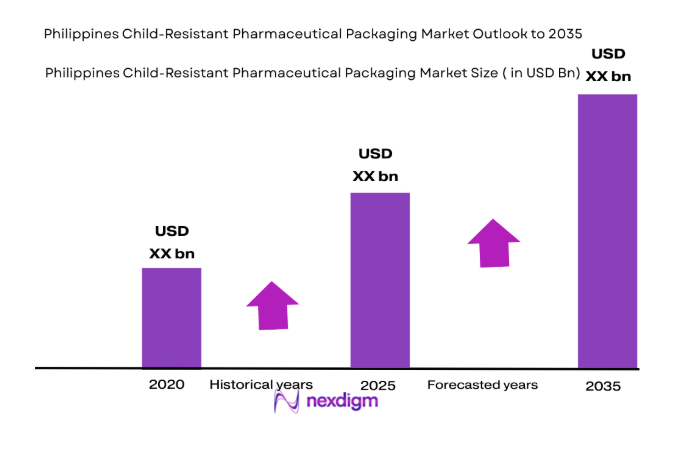
The Philippines Child-Resistant Pharmaceutical Packaging market has experienced steady growth due to rising concerns over child safety and regulatory requirements in the pharmaceutical industry. Based on a recent historical assessment, the market is valued at approximately USD ~ million, driven by increased demand for secure packaging solutions across the growing pharmaceutical sector. Regulatory bodies such as the Department of Health have enforced strict packaging standards, further propelling the demand for child-resistant solutions.
The market is dominated by urban centers like Metro Manila, where pharmaceutical manufacturing is concentrated. These regions benefit from enhanced infrastructure, logistics, and consumer demand for safe and reliable pharmaceutical products. As the regulatory landscape continues to evolve, the dominance of these urban areas remains critical to the growth of the child-resistant packaging market.
Market Segmentation
By Product Type
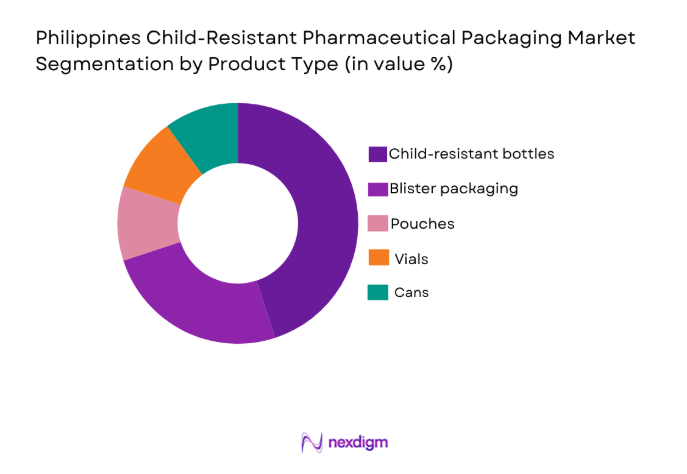
The Philippines Child-Resistant Pharmaceutical Packaging market is segmented by product type into bottles, blister packaging, pouches, vials, and cans. Recently, child-resistant bottles have emerged as the dominant sub-segment due to the growing consumer preference for bottle-based packaging in both prescription and over-the-counter products. Factors such as convenience, ease of use, and improved production techniques have positioned bottles at the forefront of this market.
By Platform Type
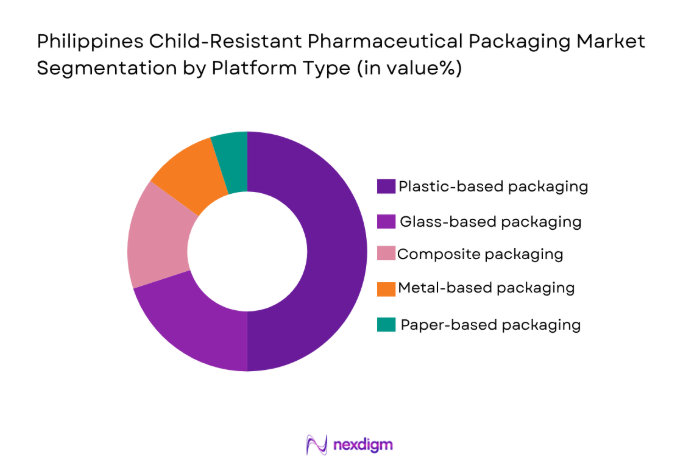
The market is segmented by platform type into plastic-based packaging, glass-based packaging, composite packaging, metal-based packaging, and paper-based packaging. Among these, plastic-based packaging holds the largest market share. This dominance is driven by its affordability, versatility, and widespread availability. Plastic packaging is not only cost-effective but also offers a variety of designs and styles to cater to the diverse needs of the pharmaceutical industry.
Competitive Landscape
The Philippines Child-Resistant Pharmaceutical Packaging market is highly competitive, with key players continuously innovating to stay ahead of regulatory requirements and market trends. Major players are consolidating their positions by expanding their product offerings and focusing on increasing production capacity to meet growing demand. Their competitive edge lies in technological advancements in packaging materials and the ability to provide customized solutions for pharmaceutical companies.
| Company Name | Establishment Year | Headquarters | Technology Focus | Market Reach | Key Products | Revenue | Market-Specific Parameter |
| Amcor Limited | 1860 | Australia | ~ | ~ | ~ | ~ | ~ |
| Berry Global Inc. | 1967 | USA | ~ | ~ | ~ | ~ | ~ |
| Sealed Air Corp. | 1960 | USA | ~ | ~ | ~ | ~ | ~ |
| West Pharmaceutical | 1923 | USA | ~ | ~ | ~ | ~ | ~ |
| Gerresheimer AG | 1864 | Germany | ~ | ~ | ~ | ~ | ~ |
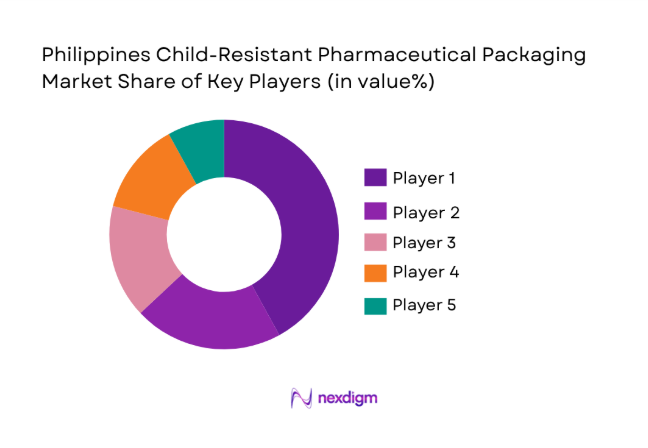
Philippines Child-Resistant Pharmaceutical Packaging Market Analysis
Growth Drivers
Increased demand for child safety in pharmaceuticals
With rising concerns over accidental ingestion by children, demand for child-resistant packaging solutions has surged. As a result, the Philippines market has witnessed significant growth in packaging solutions that ensure safety without compromising product accessibility. Packaging manufacturers are innovating to meet the strict regulatory requirements of child-resistant packaging, thus driving market growth. The growing health consciousness and the pharmaceutical sector’s expansion are major factors fueling this demand. The rising awareness among consumers and healthcare providers regarding child safety in households has led to heightened regulations and standards that packaging manufacturers must adhere to. Additionally, the increase in over-the-counter medications and the growing elderly population requiring prescribed medications have contributed to an uptick in demand for packaging solutions that prevent accidental ingestion by children. These developments create opportunities for packaging manufacturers to develop more robust, cost-effective, and user-friendly child-resistant packaging solutions, further driving market expansion.
Technological advancements in packaging materials
Another significant growth driver is the continuous innovation in packaging technology. Manufacturers are adopting new materials such as biodegradable plastics and advanced composites that provide better protection and safety features while reducing environmental impact. These advancements enable the pharmaceutical industry to comply with increasingly stringent safety regulations while meeting the demand for sustainable packaging solutions. Packaging companies are increasingly focusing on research and development to provide innovative, child-resistant packaging designs, contributing to market growth. These innovations allow packaging companies to produce more effective solutions that not only secure products from accidental child exposure but also improve their overall durability and performance. For instance, the development of tamper-evident features combined with child-resistant mechanisms offers consumers added peace of mind. The move towards eco-friendly materials also plays a crucial role in addressing growing concerns over plastic waste, helping companies position themselves as leaders in sustainability while catering to evolving consumer preferences.
Market Challenges
High production costs of child-resistant packaging
The production of child-resistant packaging materials, especially bottles and vials, involves higher costs due to the specialized manufacturing processes and materials required. This increases the overall price of pharmaceutical products, which can hinder the affordability of child-resistant packaging solutions for small and medium-sized pharmaceutical companies in the Philippines. Packaging manufacturers are faced with balancing cost-efficiency while maintaining the necessary safety standards. For many smaller pharmaceutical companies, the cost of incorporating child-resistant features into their packaging solutions can be prohibitive, limiting their ability to compete effectively in the market. Additionally, the costs of obtaining certifications and ensuring compliance with regulatory standards further raise the production costs, making it challenging for some companies to maintain profitability. The need for economies of scale to reduce these costs may also lead to concentration in the market, with larger players gaining a competitive advantage. As a result, there is a growing need for technological advancements that can reduce production costs while maintaining safety and regulatory compliance.
Lack of consumer awareness in rural areas
Despite the rising popularity of child-resistant packaging, many consumers in rural regions of the Philippines remain unaware of the safety benefits. This lack of awareness, compounded by limited access to advanced packaging solutions in remote areas, poses a challenge to the widespread adoption of child-resistant packaging. Manufacturers and stakeholders need to work on consumer education and regional distribution to overcome this challenge. In rural areas, where traditional medicine practices are prevalent, the understanding of modern packaging solutions may be limited. Consequently, there is a need for targeted educational campaigns that can inform consumers about the dangers of accidental poisoning and the role that child-resistant packaging plays in preventing such incidents. Furthermore, limited infrastructure in rural areas can also make it difficult for companies to distribute child-resistant packaging solutions efficiently. This challenge may hinder the overall market penetration, requiring innovative distribution models and partnerships with local healthcare providers to reach more remote consumers.
Opportunities
Advancements in sustainable packaging solutions
As sustainability becomes a central concern in the packaging industry, there is a growing opportunity for child-resistant packaging manufacturers to adopt eco-friendly materials and technologies. By integrating recyclable and biodegradable materials into child-resistant packaging solutions, companies can meet both safety and environmental standards. This will not only appeal to environmentally-conscious consumers but also help companies comply with global sustainability regulations, providing an opportunity for market differentiation. The rising trend of environmentally friendly consumer products, driven by both government incentives and consumer demand, provides a fertile ground for the growth of sustainable child-resistant packaging. Packaging companies are increasingly investing in research to find alternative materials that are both child-safe and eco-friendly. For example, biodegradable plastics and plant-based materials are gaining traction as viable options for replacing conventional plastic packaging. As more pharmaceutical companies prioritize sustainability, those using eco-friendly child-resistant packaging will likely benefit from improved brand reputation, leading to greater consumer loyalty and an expanded market share.
Collaboration with pharmaceutical companies for customized packaging solutions
Another opportunity lies in forming strategic partnerships with pharmaceutical companies to provide tailored packaging solutions. By collaborating closely with pharmaceutical firms, packaging companies can design child-resistant packaging that meets the unique requirements of specific products, thus opening new market segments. These partnerships can result in the development of more efficient, cost-effective, and safe packaging solutions tailored to the growing demand for secure pharmaceuticals. Customization allows pharmaceutical companies to enhance the safety of their products while meeting specific market requirements, such as dosage forms or regional regulations. Additionally, these collaborations can lead to the creation of innovative packaging designs that integrate additional functionalities, such as tamper-evident features, that enhance product security and consumer trust. By offering packaging solutions that are tailored to the needs of pharmaceutical companies, manufacturers can establish long-term relationships with key industry players and secure a competitive edge in a rapidly evolving market.
Future Outlook
The Philippines Child-Resistant Pharmaceutical Packaging market is expected to witness steady growth over the next five years, driven by advancements in packaging technology and increasing regulatory requirements for child safety. The trend toward sustainable packaging solutions is likely to dominate, as both manufacturers and consumers seek environmentally friendly alternatives. The government’s support for health safety standards and packaging regulations will continue to propel market growth, with further technological innovations enhancing the safety and functionality of packaging solutions.
Major Players
- Amcor Limited
- Berry Global Inc.
- Sealed Air Corporation
- West Pharmaceutical Services
- Gerresheimer AG
- RPC Group Plc
- Packaging Corporation of America
- Mondi Group
- Saint-Gobain
- Sonoco Products Company
- AptarGroup
- Mauser Packaging Solutions
- Comar LLC
- Rexam
- Biocorp
Key Target Audience
- Investments and venture capitalist firms
- Government and regulatory bodies
- Pharmaceutical manufacturers
- Packaging technology companies
- Retailers and pharmacies
- Logistics and distribution companies
- Environmental organizations
Research Methodology
Step 1: Identification of Key Variables
Identify the key factors driving the market, including technological advancements, regulatory developments, and consumer demand patterns.
Step 2: Market Analysis and Construction
Analyze data on market size, growth trends, and segment performance to construct an accurate market model.
Step 3: Hypothesis Validation and Expert Consultation
Validate hypotheses using expert consultations and secondary data from credible industry sources.
Step 4: Research Synthesis and Final Output
Synthesize the research findings to create a comprehensive market report with actionable insights and strategic recommendations.

- Executive Summary
- Research Methodology (Definitions, Scope, Industry Assumptions, Market Sizing Approach, Primary & Secondary Research Framework, Data Collection & Verification Protocol, Analytic Models & Forecast Methodology, Limitations & Research Validity Checks)

- Market Definition and Scope
- Value Chain & Stakeholder Ecosystem
- Regulatory / Certification Landscape
- Sector Dynamics Affecting Demand
- Strategic Initiatives & Infrastructure Growth

- Growth Drivers
Rising demand for child safety in pharmaceutical packaging
Government regulations on packaging safety standards
Increase in pharmaceutical consumption - Market Challenges
High production costs of child-resistant packaging
Technological limitations in packaging materials
Lack of awareness in rural areas - Market Opportunities
Advancements in packaging technology for better safety
Partnerships between packaging companies and pharmaceutical manufacturers
Expansion of the pharmaceutical market in emerging cities - Trends
Focus on sustainability in pharmaceutical packaging
Integration of digital solutions in packaging for traceability - Government Regulations
Packaging safety regulations by the Department of Health
Standards for packaging material disposal
Certification for child-resistant packaging - SWOT Analysis
- Porter’s Five Forces

- By Market Value, 2020-2025
- By Installed Units, 2020-2025
- By Average System Price, 2020-2025
- By System Complexity Tier, 2020-2025

- By System Type (In Value%)
Child-resistant bottles
Blister packaging
Pouch packaging
Vials
Cans - By Platform Type (In Value%)
Plastic-based packaging
Glass-based packaging
Composite packaging
Metal-based packaging
Paper-based packaging - By Fitment Type (In Value%)
Screw caps
Push-and-turn caps
Pop-up dispensers
Snap-on lids - By End User Segment (In Value%)
Pharmaceutical manufacturers
Healthcare packaging companies
Retailers and pharmacies

- Market Share Analysis
- Cross Comparison Parameters (System Type, Platform Type, End User Segment, Fitment Type, Price Sensitivity, Material Innovation, Technological Integration)
- SWOT Analysis of Key Competitors
- Pricing & Procurement Analysis
- Key Players
Amcor Limited
Berry Global Inc.
Sealed Air Corporation
GPI Packaging
West Pharmaceutical Services
Mondi Group
Gerresheimer AG
RPC Group Plc
Plastic Suppliers Inc.
Mitsubishi Chemical Holdings
Cosmopak
Stora Enso
Ball Corporation
Schott AG
Albea Group

- Growing adoption of child-resistant packaging by pharmaceutical companies
- Retailers’ increasing focus on packaging safety
- Demand for cost-effective solutions from smaller pharmaceutical manufacturers
- Shift towards eco-friendly packaging solutions

- Forecast Market Value, 2026-2035
- Forecast Installed Units, 2026-2035
- Price Forecast by System Tier, 2026-2035
- Future Demand by Platform, 2026-2035


 Request a Sample
 Ask for Customization
 Get a Quote
 Enquire Now