
 Download PDF
Market Overview
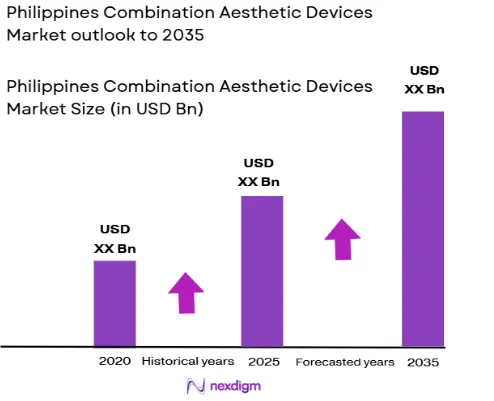
The Philippines combination aesthetic devices market is part of the broader aesthetic devices industry, which was valued at USD ~ billion based on a recent historical assessment, supported by data from healthcare industry databases. The market is driven by rising demand for minimally invasive cosmetic procedures, expansion of dermatology clinics, and increasing consumer spending on personal appearance treatments. Growth is also supported by the availability of multifunctional platforms combining laser, radiofrequency, and ultrasound technologies.
Major urban centers such as Metro Manila, Cebu City, and Davao City dominate demand due to the concentration of dermatology clinics, plastic surgery centers, and medical spas. These cities benefit from higher disposable income levels, better healthcare infrastructure, and greater exposure to global beauty trends through social media. The presence of trained dermatologists and access to imported medical aesthetic technologies also strengthens their position as primary demand hubs for combination aesthetic treatment systems.
Market Segmentation
By System Type
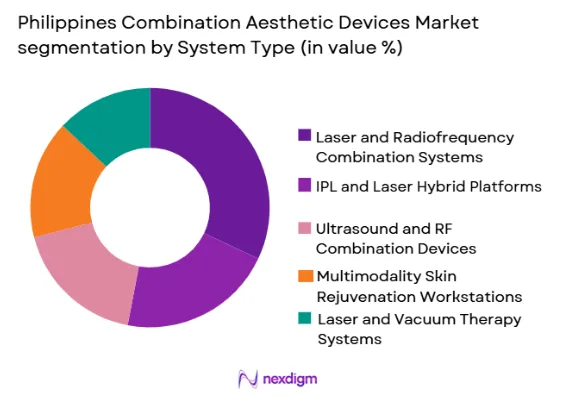
Philippines Combination Aesthetic Devices market is segmented by system type into laser and radiofrequency combination systems, IPL and laser hybrid platforms, ultrasound and RF combination devices, laser and vacuum therapy systems, and multimodality skin rejuvenation workstations. Recently, laser and radiofrequency combination systems have a dominant market share due to their versatility in treating skin tightening, acne scars, pigmentation, and anti-aging concerns within a single platform. Clinics prefer these systems because they reduce capital expenditure on multiple standalone devices while improving treatment efficiency. Strong brand presence from global manufacturers and increasing physician preference for combination therapies have also supported adoption. Additionally, patient preference for shorter treatment times and better clinical outcomes has strengthened demand. The ability to generate recurring treatment revenue from multiple applications further supports the segment’s leadership.
By Platform Type
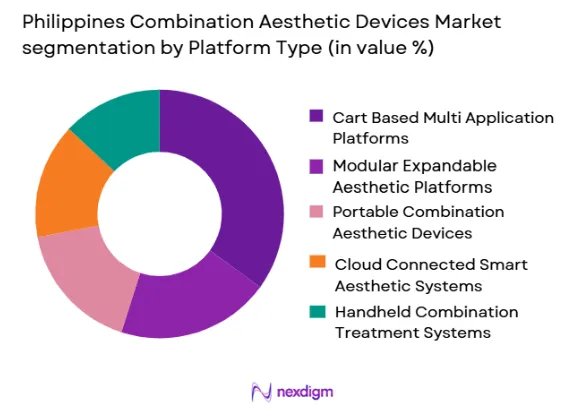
Philippines Combination Aesthetic Devices market is segmented by platform type into cart based multi-application platforms, portable combination aesthetic devices, handheld combination treatment systems, modular expandable aesthetic platforms, and cloud connected smart aesthetic systems. Recently, cart based multi application platforms have a dominant market share due to their widespread use in dermatology clinics and hospitals where high patient volumes require robust and multifunctional systems. These platforms allow multiple handpieces and treatment options, enabling providers to deliver diverse procedures from one capital investment. Infrastructure readiness in premium clinics and the availability of trained professionals capable of handling advanced systems further strengthens this segment. Financing options from distributors and vendor training programs also encourage clinics to adopt these larger platforms. Their durability and ability to handle continuous operations also make them attractive for high-end aesthetic centers.
Competitive Landscape
The Philippines combination aesthetic devices market shows moderate consolidation, with global aesthetic device manufacturers dominating technology supply while local distributors control sales networks. Major companies compete through innovation in energy-based treatment combinations, training support, and after-sales services. Strategic partnerships with dermatology chains and medical spas are common to expand installed bases. Product differentiation is driven by treatment versatility and safety features. The competitive environment is shaped by technology imports, regulatory approvals, and brand trust among dermatologists.
| Company Name | Establishment Year | Headquarters | Technology Focus | Market Reach | Key Products | Revenue | Local Distribution Partnerships |
| Alma Lasers | 1999 | Israel | ~ | ~ | ~ | ~ | ~ |
| Cutera Inc. | 1998 | USA | ~ | ~ | ~ | ~ | ~ |
| Lumenis Ltd. | 1966 | Israel | ~ | ~ | ~ | ~ | ~ |
| Candela Medical | 1970 | USA | ~ | ~ | ~ | ~ | ~ |
| Venus Concept | 2002 | Canada | ~ | ~ | ~ | ~ | ~ |
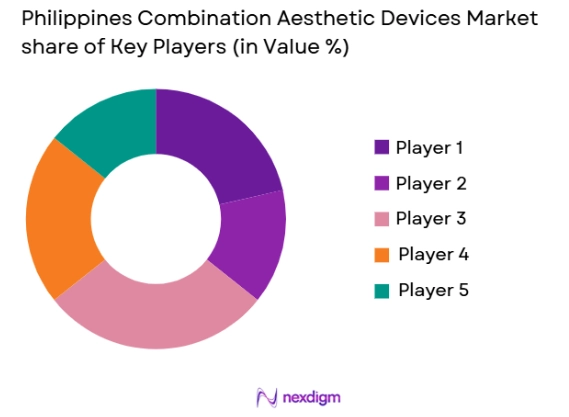
Philippines Combination Aesthetic Devices Market Analysis
Growth Drivers
Rising Demand for Non-Invasive Multi-Procedure Cosmetic Treatments
The increasing preference for non-invasive aesthetic procedures is significantly accelerating the adoption of combination aesthetic devices across the Philippines. Patients are increasingly choosing treatments that offer visible results without surgery, downtime, or significant risks. Combination platforms allow clinics to offer multiple services such as skin rejuvenation, acne scar reduction, pigmentation treatment, and body contouring using one system. This flexibility enables providers to improve treatment profitability and operational efficiency. The growing middle class is also becoming more willing to spend on cosmetic improvements due to lifestyle changes and social visibility. Social media platforms have further increased awareness of dermatological treatments and encouraged younger consumers to explore preventive skin care procedures. Physicians are also recommending combination therapies as they often produce superior clinical outcomes compared to single modality treatments. Clinics benefit from improved patient retention because customers often return for multiple procedures on the same device platform. Manufacturers are responding by developing safer systems with improved cooling technologies and customizable treatment settings. As a result, the demand for multifunctional aesthetic devices is becoming a strong growth engine for the market.
Expansion of Medical Aesthetic Clinics in Urban Philippine Healthcare Clusters
The rapid growth of dermatology chains, cosmetic clinics, and medical spas in urban healthcare clusters is another major growth driver for the market. Metro Manila continues to see expansion of premium aesthetic centers offering international standard cosmetic services. Cebu and Davao are also emerging as important regional hubs due to growing healthcare investments. The expansion of these clinics directly increases demand for high performance combination devices capable of handling multiple treatment categories. Investors are increasingly funding aesthetic clinics due to strong consumer demand and attractive margins. Medical tourism is also contributing to the growth of advanced aesthetic treatment facilities. Clinics are differentiating themselves by offering comprehensive treatment portfolios supported by combination devices. The availability of leasing models has allowed smaller clinics to invest in advanced platforms without large upfront capital expenditure. Training programs provided by manufacturers are also improving device utilization rates. Additionally, partnerships between distributors and clinic chains are improving access to advanced technology. These structural developments are collectively strengthening the demand outlook for combination aesthetic devices.
Market Challenges
High Capital Investment Requirements for Advanced Combination Platforms
The high acquisition cost of advanced combination aesthetic devices remains a major barrier for many small and mid-sized clinics in the Philippines. Multifunctional platforms often require significant upfront investment, which can strain financial resources of independent dermatology practices. Financing challenges are especially prominent outside major urban areas where access to medical equipment loans is limited. Maintenance contracts and consumable components further increase operational costs. Clinics must also consider training costs to ensure safe device operation. The risk of underutilization also discourages investment when patient volumes are uncertain. Import duties and logistics costs add further financial pressure on buyers. Smaller clinics sometimes prefer lower cost single function devices despite lower efficiency. Currency fluctuations can also impact the pricing of imported equipment. These financial barriers slow the penetration of premium combination systems in price sensitive segments. As a result, cost remains a key constraint for broader market adoption.
Limited Availability of Skilled Aesthetic Device Operators and Clinical Trainers
The shortage of adequately trained professionals capable of operating combination aesthetic systems is another major challenge affecting market growth. These devices require technical understanding of multiple energy modalities and treatment protocols. Improper use can lead to safety risks and unsatisfactory clinical outcomes. Training programs are often concentrated in major cities, limiting access for provincial clinics. Clinics must invest additional time and resources to train dermatology staff. Some physicians remain hesitant to adopt complex systems due to learning curve concerns. Certification requirements also create barriers to rapid workforce expansion. Manufacturers must often provide onsite training support to ensure proper usage. High staff turnover in aesthetic clinics can also reduce skill continuity. Lack of experienced trainers can delay new device deployment. This skills gap continues to slow adoption despite strong demand for combination treatments.
Opportunities
Growth Potential in Tier Two Cities and Emerging Aesthetic Service Corridors
Significant opportunity exists for market expansion in secondary Philippine cities where aesthetic services are still developing. Cities such as Iloilo, Cagayan de Oro, and Bacolod are seeing rising demand for dermatology services. Increasing urbanization and income growth are supporting demand for cosmetic treatments. Combination devices offer clinics the ability to offer multiple services without needing large equipment inventories. Distributors are increasingly targeting these markets through regional partnerships. Government support for healthcare infrastructure development is also improving access. Teleconsultation trends are helping clinics expand patient outreach. Local entrepreneurs are entering the medical spa segment in these cities. Leasing models can further enable equipment penetration. As awareness of aesthetic treatments grows, these regions may become important growth frontiers. This geographic expansion represents a major opportunity for device suppliers.
Integration of AI-Enabled Treatment Planning and Smart Device Ecosystems
Technology innovation presents a strong opportunity for differentiation in the Philippines combination aesthetic devices market. Manufacturers are integrating artificial intelligence to support treatment planning and parameter selection. Smart interfaces can help reduce operator error and improve patient outcomes. Digital record integration allows clinics to track treatment histories more effectively. Cloud connectivity can enable remote diagnostics and predictive maintenance. AI based skin analysis tools are becoming attractive to premium clinics. Such features can improve treatment personalization and patient satisfaction. Clinics adopting these technologies may gain competitive advantage in premium service segments. Technology upgrades can also support recurring revenue through software updates. These innovations may drive replacement demand for older devices. As technology awareness increases, smart platforms may become a key growth opportunity.
Future Outlook
The Philippines combination aesthetic devices market is expected to experience steady expansion driven by increasing adoption of non-invasive cosmetic treatments and continuous improvements in energy-based technologies. The next five years are likely to see stronger integration of AI-assisted treatment planning and device connectivity features. Regulatory clarity for imported medical devices is also expected to improve market confidence. Demand growth will be supported by clinic expansion and consumer interest in preventive aesthetic treatments. Growing competition may also lead to more financing options and service innovation.
Major Players
- Alma Lasers
- Cutera Inc.
- Lumenis Ltd.
- Candela Medical
- Venus Concept
- Fotona
- InMode
- Lutronic Corporation
- Sciton Inc.
- Aerolase Corporation
- Quanta System
- Bausch Health Aesthetic Devices
- Jeisys Medical
- Asclepion Laser Technologies
- Cynosure
Key Target Audience
- Dermatology clinic chains
- Medical spa operators
- Plastic surgery centers
- Hospital procurement departments
- Medical device distributors
- Investments and venture capitalist firms
- Government and regulatory bodies
- Cosmetic treatment franchise operators
Research Methodology
Step 1: Identification of Key Variables
The research process began with identification of key market indicators including device sales, installed base, pricing trends, and technology adoption rates. Demand drivers such as clinic expansion and consumer treatment trends were evaluated. Regulatory and import data were also examined to define the market structure. Key company strategies were mapped to identify competition patterns.
Step 2: Market Analysis and Construction
Market sizing was developed using secondary databases, company disclosures, and healthcare device industry reports. Segment level analysis was constructed based on product adoption patterns and clinical usage trends. Pricing benchmarks were used to validate revenue estimates. Historical demand patterns were analyzed to create a structured market framework.
Step 3: Hypothesis Validation and Expert Consultation
Preliminary findings were validated through consultation with industry professionals including distributors and clinical practitioners. Technology adoption assumptions were tested through comparative analysis. Feedback from domain experts helped refine segmentation assumptions. Data triangulation methods were applied to ensure reliability.
Step 4: Research Synthesis and Final Output
Final insights were synthesized through integration of quantitative data and qualitative industry observations. Market dynamics were structured to highlight realistic growth pathways. Competitive benchmarking was used to present strategic positioning. The final output was prepared to provide actionable insights for stakeholders.

- Executive Summary
- Research Methodology (Industry Assumptions, Market Sizing Approach, Primary & Secondary Research Framework, Data Collection & Verification Protocol, Analytic Models & Forecast Methodology, Limitations & Research Validity Checks)

- Market Definition and Scope
- Value Chain & Stakeholder Ecosystem
- Regulatory / Certification Landscape
- Sector Dynamics Affecting Demand
- Strategic Initiatives & Infrastructure Growth

- Growth Drivers
Rising demand for non-invasive cosmetic procedures among urban population
Growth of medical aesthetics clinics in Metro Manila and Cebu
Increasing disposable income supporting elective cosmetic treatments
Technology advancements enabling multi treatment platforms
Growing social media influence driving appearance awareness - Market Challenges
High capital cost of multifunction aesthetic equipment
Shortage of trained aesthetic device operators
Regulatory compliance requirements for medical devices
Maintenance and servicing costs of advanced platforms
Competition from low cost single function devices - Market Opportunities
Expansion of aesthetic clinics in tier 2 Philippine cities
Growing demand for anti aging and skin tightening treatments
Partnerships between device makers and dermatology chains - Trends
Adoption of AI enabled treatment customization features
Demand for devices offering multiple treatments in one platform
Increasing preference for minimally invasive skin rejuvenation
Growth of subscription based device procurement models
Rising use of combination therapies for acne scar management - Government Regulations & Defense Policy
Philippine FDA medical device registration compliance requirements
Import regulations on energy based aesthetic equipment
Safety certification standards for dermatology treatment systems - SWOT Analysis
- Stakeholder and Ecosystem Analysis
- Porter’s Five Forces Analysis
- Competition Intensity and Ecosystem Mapping

- By Market Value, 2020-2025
- By Installed Units, 2020-2025
- By Average System Price, 2020-2025
- By System Complexity Tier, 2020-2025

- By System Type (In Value%)
Laser and Radiofrequency Combination Systems
IPL and Laser Hybrid Platforms
Ultrasound and RF Combination Devices
Laser and Vacuum Therapy Systems
Multimodality Skin Rejuvenation Workstations - By Platform Type (In Value%)
Cart Based Multi-Application Platforms
Portable Combination Aesthetic Devices
Handheld Combination Treatment Systems
Modular Expandable Aesthetic Platforms
Cloud Connected Smart Aesthetic Systems - By Fitment Type (In Value%)
Standalone Aesthetic Systems
Clinic Integrated Workstation Units
Dermatology Chair Mounted Systems
Mobile Trolley Mounted Devices
Multi Room Networked Platforms - By End-user Segment (In Value%)
Dermatology Clinics
Medical Spas and Aesthetic Centers
Hospitals with Cosmetic Departments
Plastic Surgery Centers
Wellness and Beauty Chains - By Procurement Channel (In Value%)
Direct Procurement from Manufacturers
Authorized Medical Device Distributors
Online B2B Medical Equipment Platforms
Leasing and Equipment Financing Providers
Refurbished Equipment Suppliers - By Material / Technology (in Value %)
Diode Laser Based Combination Systems
Nd:YAG Laser Integrated Platforms
Fractional CO2 Laser Hybrid Systems
Radiofrequency Microneedling Technologies
Ultrasound Cavitation Integrated Systems

- Market structure and competitive positioning
- Market share snapshot of major players
- Cross Comparison Parameters (Product Portfolio Breadth, Technology Integration Capability, Average Selling Price, Installed Base Strength, Distribution Network Reach, After Sales Service Support, Training Programs Availability, Financing Options, Regulatory Compliance Strength, Innovation Pipeline Depth, Brand Recognition, Energy Modalities Offered, Software Integration Features, Warranty Terms, Local Partnership Presence)
- SWOT Analysis of Key Players
- Pricing & Procurement Analysis
- Key Players
Alma Lasers
Cutera Inc.
Lumenis Ltd.
Candela Medical
Bausch Health Aesthetic Devices
Fotona
Venus Concept
InMode
Syneron Candela Asia
Lutronic Corporation
Quanta System
Aerolase Corporation
Sciton Inc.
Asclepion Laser Technologies
Jeisys Medical

- Dermatology clinics driving majority demand due to high patient turnover
- Medical spas expanding services through multifunction aesthetic platforms
- Hospitals investing in aesthetic departments for premium services
- Plastic surgery centers adopting combination devices for pre and post operative treatments

- Forecast Market Value, 2026-2035
- Forecast Installed Units, 2026-2035
- Price Forecast by System Tier, 2026-2035
- Future Demand by Platform, 2026-2035


 Request a Sample
 Ask for Customization
 Get a Quote
 Enquire Now