
 Download PDF
Market Overview
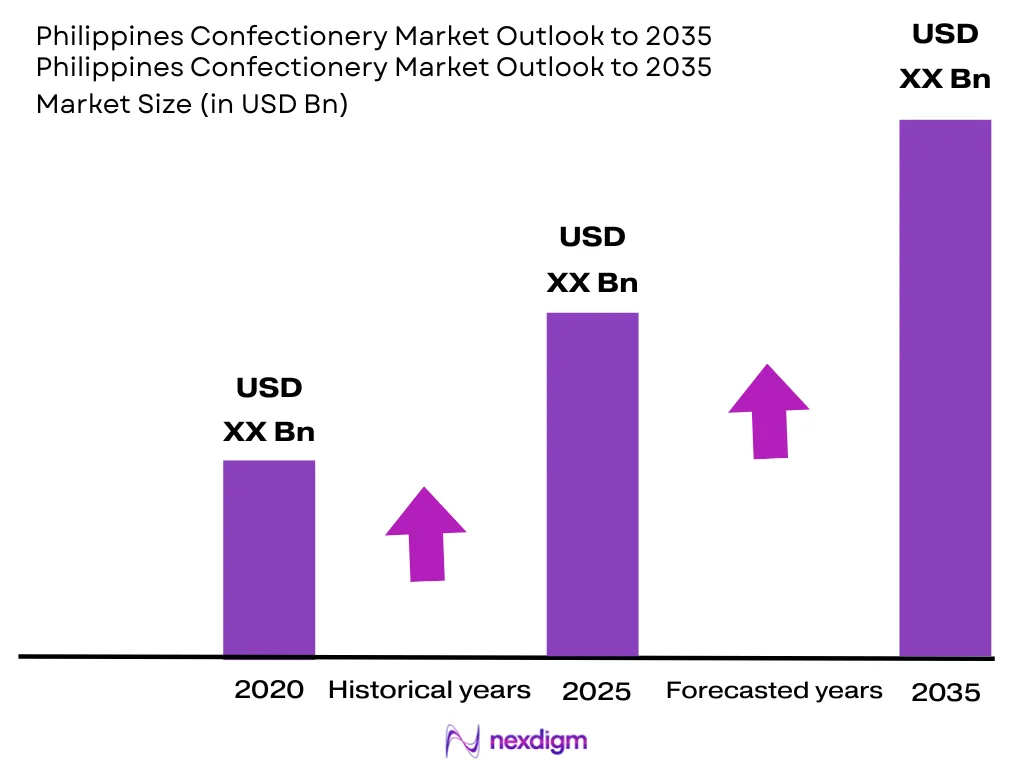
The Philippines confectionery market was valued at USD ~ billion in 2024 and is projected to expand at a CAGR of ~% during the 2026–2035 forecast period. According to industry statistics published by the Philippine Statistics Authority (PSA), the food and beverage manufacturing sector remains one of the largest contributors to industrial output in the country, while confectionery represents one of the most widely consumed processed food categories given the Philippines’ large, young, and rapidly urbanizing population. Data from industry associations indicates that chocolate and sugar confectionery production and imports continue to grow steadily, while confectionery sales continued to benefit from strong gifting culture, festive consumption, expanding modern retail networks, and the country’s deeply embedded tradition of sweet snacking. Growth is supported by rising household incomes, wider product availability, product innovation, and increasing demand for both affordable everyday confectionery and premium gifting products across the country’s diverse regional markets.
Market Segmentation
By Product Type
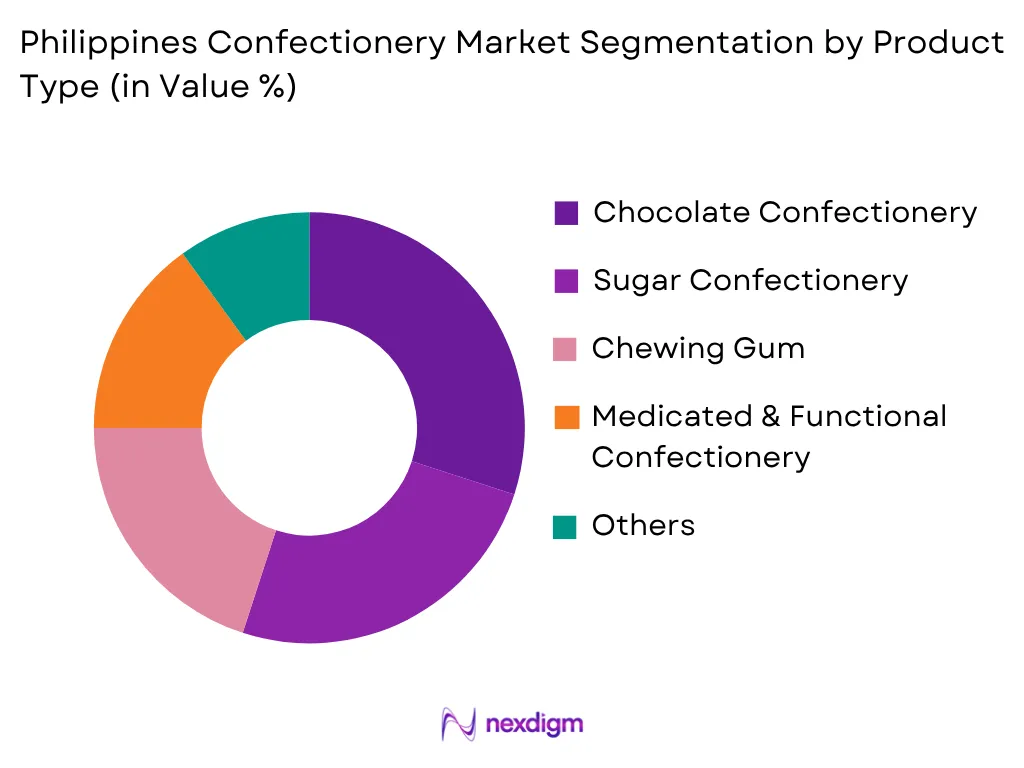
Chocolate confectionery dominates the Philippines confectionery market owing to the country’s long heritage of cacao cultivation, strong domestic demand for chocolate-based products, and the cultural significance of chocolate during seasonal celebrations and gift-giving occasions. The Philippines is one of the few countries in Southeast Asia with meaningful domestic cacao production, primarily in the Davao Region and South Cotabato in Mindanao, supporting both traditional tablea production and modern chocolate manufacturing. Consumer demand remains particularly strong during Christmas, Valentine’s Day, and town fiesta celebrations, when chocolate gifting and confectionery purchases significantly increase retail sales. Large multinational manufacturers alongside fast-growing Filipino artisanal chocolate brands continue introducing innovative flavors, single-origin cacao formulations, and limited-edition products that attract both domestic and international consumers. Continuous investments in premium chocolates, Filipino heritage cacao products, and sustainable sourcing have further strengthened the segment’s leadership while expanding its presence across supermarkets, specialty stores, convenience outlets, and online retail platforms.
By Distribution Channel
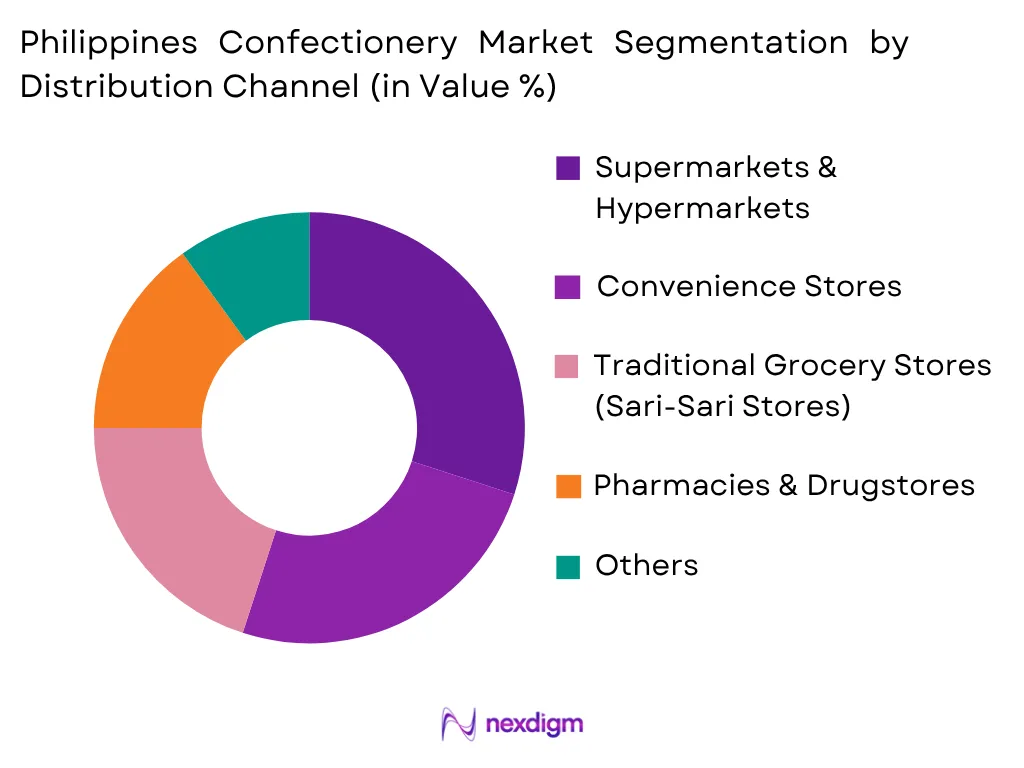
Traditional grocery stores, locally known as sari-sari stores, represent the most widely distributed confectionery retail channel in the Philippines, serving the majority of the country’s dispersed population across urban barangays, rural communities, and island provinces. These informal micro-retail outlets stock affordable confectionery products in single-serve and sachet formats accessible to lower-income household segments, making them indispensable to confectionery manufacturers seeking broad geographic penetration. However, supermarkets and hypermarkets account for the largest share of confectionery sales by value, as these modern trade outlets serve urban and middle-income consumers seeking a wider product assortment across premium and mass-market categories. Large retail chains maintain strong procurement relationships with domestic and international confectionery manufacturers, ensuring continuous product availability throughout the year. Seasonal merchandising during Christmas and Valentine’s Day further boosts modern trade sales volumes significantly. The growing presence of convenience store chains such as 7-Eleven, Ministop, and FamilyMart across Metro Manila and key provincial cities also contributes to impulse confectionery purchases, while e-commerce platforms including Shopee, Lazada, and food delivery applications are increasingly important channels for premium and gifting confectionery.
Competitive Landscape
The Philippines confectionery market is moderately fragmented, with multinational manufacturers competing alongside well-established domestic conglomerates and a growing community of Filipino artisanal chocolate producers. Global companies such as Mondelez, Nestle, Ferrero, and Mars Wrigley leverage extensive distribution networks and strong brand equity, while domestic companies including Universal Robina Corporation, Rebisco Philippines, Ricoa Chocolates, and Goya Incorporated maintain strong consumer loyalty through affordable product offerings, wide sari-sari store penetration, and localized innovation. Emerging Filipino bean-to-bar producers including Malagos Chocolate and Auro Chocolate are carving premium segments with single-origin cacao sourced from Mindanao. Continuous investments in affordable packaging formats, sari-sari store distribution, premium chocolate innovation, and digital commerce platforms remain key competitive differentiators.
| Company | Establishment Year | Headquarters | Primary Protein Focus | Processing Facilities
|
Export Presence | Production Integration | Sustainability Programs | Value-Added Product Portfolio |
| Mondelez Philippines | 1963 | ~ | ~ | ~ | ~ | ~ | ~ | ~ |
| Nestle Philippines | 1911 | ~ | ~ | ~ | ~ | ~ | ~ | ~ |
| Universal Robina Corporation (URC) | 1954 | ~ | ~ | ~ | ~ | ~ | ~ | ~ |
| Rebisco Philippines | 1963 | ~ | ~ | ~ | ~ | ~ | ~ | ~ |
| Ricoa Chocolates | 1946 | ~ | ~ | ~ | ~ | ~ | ~ | ~ |
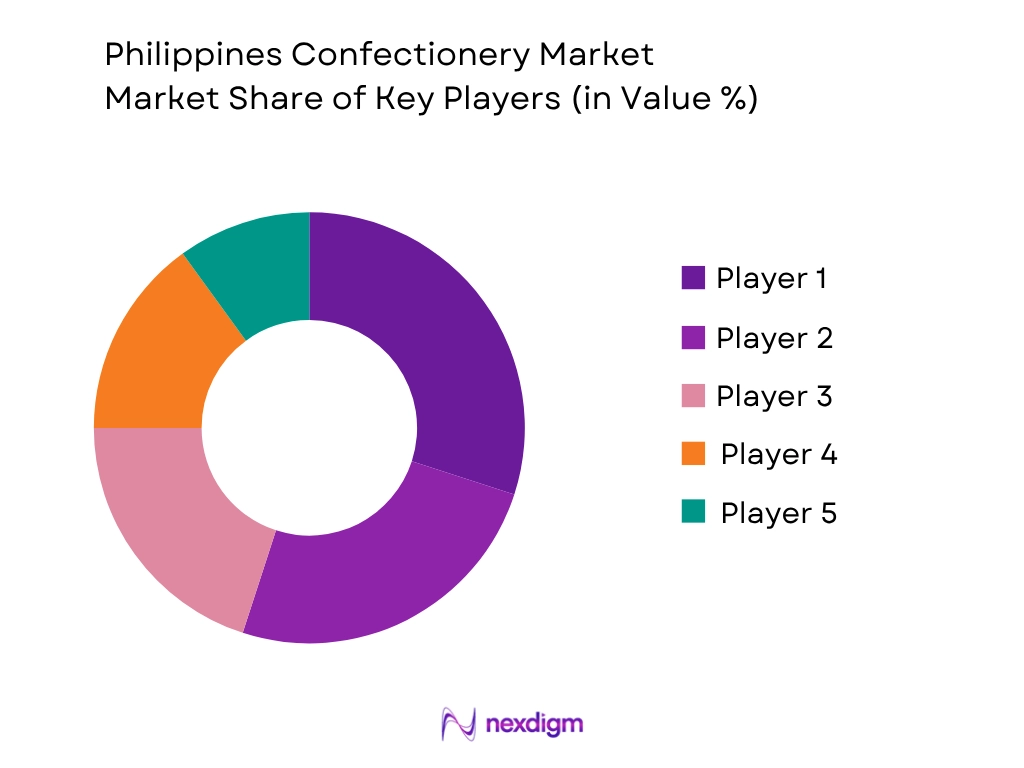
Philippines Confectionary Market Analysis
Growth Drivers
Large, Young, and Rapidly Urbanizing Population
The Philippines’ large and youthful population continues to be one of the primary structural growth drivers for the confectionery market. The Philippine Statistics Authority estimates the country’s population at more than 113 million, making it the thirteenth most populous nation globally and one of the largest consumer markets in Southeast Asia. The population’s median age of approximately 25 years means a significant proportion of consumers falls within the core confectionery-consuming age bracket of children, teenagers, and young adults, sustaining robust household-level demand for chocolates, candies, gums, and sugar confectionery products across all income segments. Rapid urbanization is further strengthening demand, as the World Bank estimates that approximately 48 percent of Filipinos now live in urban areas, with this share expected to rise substantially over the forecast period. Urban consumers demonstrate higher levels of modern trade engagement, wider exposure to new product launches, and greater propensity for premium confectionery purchases. The International Monetary Fund (IMF) estimates the Philippines’ nominal GDP at more than USD 430 billion and projects sustained economic growth above 6 percent annually, supporting rising household expenditure on packaged food and confectionery. Remittances from the country’s large overseas Filipino worker (OFW) community also boost household disposable incomes, with the Bangko Sentral ng Pilipinas recording annual remittance inflows exceeding USD 36 billion. These remittances disproportionately support consumer spending in middle and lower-middle income households, which represent a significant portion of confectionery demand nationwide. Seasonal celebrations including Christmas, Valentine’s Day, and town fiestas further amplify consumption peaks, supporting year-round demand across all product categories.
Deeply Embedded Festive and Gifting Culture
The Philippines’ deeply rooted festive culture, particularly the world-renowned Christmas celebration season beginning as early as September and extending through January, continues to be one of the most significant drivers of confectionery demand in the country. The Filipino tradition of gift-giving during Pasko (Christmas) drives substantial seasonal purchasing of chocolate boxes, candy assortments, and premium confectionery gift sets, making the fourth quarter of each calendar year the highest revenue period for confectionery manufacturers and retailers. The Philippine Retailers Association consistently reports strong year-on-year growth in confectionery-related Christmas gifting across modern trade and e-commerce channels. Beyond Christmas, regional town fiestas celebrated throughout the year in provinces, municipalities, and barangays across Luzon, Visayas, and Mindanao provide additional recurring demand occasions for confectionery consumption and gifting. Valentine’s Day also represents a significant sales opportunity, particularly for chocolate confectionery, as Filipino consumers maintain a strong tradition of chocolate gifting between family members, friends, and romantic partners. The culture of pasalubong, a uniquely Filipino custom of bringing back gifts and food items when visiting or returning from travel, also creates consistent demand for confectionery products that are appropriate as take-home presents. Manufacturers and retailers have responded by introducing wider gifting assortments, premium packaging formats, personalized chocolate collections, and exclusive seasonal varieties that capture this deep-rooted cultural demand and encourage repeat purchases throughout the calendar year.
Market Challenges
Highly Fragmented Retail Landscape and Island Geography Logistics
The Philippines’ unique archipelagic geography, comprising more than 7,600 islands, presents one of the most structurally complex distribution challenges faced by any confectionery market globally. Unlike mainland markets where overland logistics can connect major population centers efficiently, Philippine confectionery manufacturers and distributors must navigate a multi-modal logistics system combining road transport, inter-island shipping, and air freight to deliver products across Luzon, Visayas, and Mindanao. The highly fragmented retail landscape, dominated by an estimated 1.5 to 2 million sari-sari stores operating as informal micro-retailers across urban barangays and rural communities, further amplifies distribution complexity. These micro-outlets require frequent, small-volume replenishment runs with products in affordable single-serve and sachet formats, demanding extensive van-selling networks and third-party distributor partnerships that add substantially to logistics costs. Road congestion in Metro Manila and other major urban centers compounds distribution inefficiencies, while underdeveloped road infrastructure in rural provinces and island communities increases transit times and product damage risks, particularly for temperature-sensitive chocolate products. The Philippine Ports Authority reports continued expansion of inter-island shipping capacity, but cold-chain logistics for chocolate and premium confectionery products remain underserved across many provincial and island markets. These logistical challenges require manufacturers to invest heavily in distribution infrastructure, refrigerated transport capabilities, regional warehouse networks, and third-party logistics partnerships, increasing operational costs and limiting the ability of smaller domestic producers to achieve truly nationwide distribution.
Cocoa Supply Constraints and Raw Material Price Volatility
Although the Philippines possesses a meaningful domestic cacao cultivation base, primarily concentrated in the Davao Region, South Cotabato, and Bukidnon in Mindanao, total domestic production continues to fall significantly short of the country’s confectionery manufacturing requirements. The Philippine Cacao Industry Roadmap developed by the Department of Agriculture acknowledges that domestic cacao production remains constrained by fragmented smallholder farming systems, limited access to certified planting materials, low farm productivity, inadequate post-harvest processing infrastructure, and insufficient financing for cacao farmers seeking to expand cultivation areas. As a result, the Philippines continues to import a substantial proportion of its cocoa beans, cocoa butter, cocoa mass, and finished chocolate ingredients to support commercial confectionery production. Globally, the International Cocoa Organization (ICCO) reported cocoa production falling to approximately 4.37 million tonnes, with end-of-season stocks declining to nearly 1.27 million tonnes, the lowest stock-to-grinding ratio recorded in decades. These global supply shortfalls directly affect Philippine confectionery manufacturers through elevated cocoa commodity prices and tighter availability of raw materials from West Africa. Combined with the volatility of the Philippine Peso against major trading currencies, import-dependent manufacturers face compounding cost pressures that are difficult to pass on to price-sensitive Filipino consumers without risking volume losses. Manufacturers must therefore invest in domestic cacao sourcing partnerships, supply chain diversification, and procurement hedging strategies to maintain production continuity and manage raw material cost inflation.
Market Opportunities
Philippine Heritage Cacao and Premium Artisanal Chocolate
The Philippines’ rich cacao heritage and growing global reputation for high-quality single-origin Filipino chocolate present a significant and underexploited opportunity for domestic confectionery manufacturers and artisanal producers. The Davao Region in Mindanao, which accounts for the majority of domestic cacao production, has gained international recognition for its distinct cacao varieties including the native Criollo cultivars prized for their unique flavor profiles by fine chocolate makers worldwide. Emerging Filipino bean-to-bar producers including Malagos Chocolate, Auro Chocolate, and Cacao Culture Farms have already begun winning international recognition at prestigious competitions including the Academy of Chocolate Awards and the International Chocolate Awards, placing Philippine single-origin chocolate among the world’s finest and creating a premium positioning platform that mainstream manufacturers have yet to fully exploit. Domestic demand for premium and heritage chocolate is also growing, particularly among urban middle-class and upper-income consumers in Metro Manila and key provincial cities who increasingly seek authentic local food products with traceable origins and sustainable sourcing credentials. The Department of Agriculture’s Philippine Cacao Industry Roadmap targets significant expansion in domestic cacao production, processing capacity, and value-addition capabilities over the coming decade, creating a structural foundation for the premium segment to scale. Manufacturers investing in direct farmer partnerships, single-origin sourcing, premium tablea and heritage cacao product lines, and authentic Filipino brand storytelling are well positioned to capture growing domestic and export demand for premium Philippine chocolate, while also differentiating themselves from mass-market multinational competitors.
Sachet Economy, Affordable Innovation, and Mass Market Expansion
The Philippines’ established sachet economy, which refers to the widespread consumer practice of purchasing products in small, affordable single-serve packaging formats due to limited per-purchase spending power, presents a distinctive and large-scale opportunity for confectionery manufacturers seeking to deepen mass market penetration across lower-income consumer segments. The Philippine Institute for Development Studies estimates that a significant proportion of Filipino households manage their spending on a daily or near-daily basis, creating sustained demand for affordable confectionery products priced at retail points accessible even to minimum wage earners in urban and rural markets. Confectionery manufacturers that develop dedicated small-format and single-serve product lines priced within the reach of sari-sari store consumers can access an enormous addressable market that remains underserved by premium-focused product strategies. The Bangko Sentral ng Pilipinas continues to report strong annual remittance inflows exceeding USD 36 billion, providing a consistent supplementary income stream that periodically lifts household spending capacity across middle and lower-income segments, including occasional confectionery indulgences. Rising smartphone penetration and the rapid growth of e-commerce and social commerce platforms including Shopee, Lazada, and TikTok Shop are also creating new digital purchasing pathways for confectionery products that can complement traditional sari-sari store distribution with direct-to-consumer accessibility. Manufacturers investing in affordable product formats, wider sari-sari store distributor networks, digital commerce capabilities, and locally relevant product innovation combining familiar Filipino flavors with improved formulations are well positioned to convert the country’s large and growing lower-to-middle income population into a loyal confectionery consumer base driving sustained long-term volume growth.
Future Outlook
The Philippines confectionery market is expected to witness sustained growth throughout the forecast period, supported by a large and youthful population, rising disposable incomes, strong festive consumption traditions, and expanding modern retail infrastructure. Manufacturers are increasingly investing in affordable sachet formats, premium Filipino heritage chocolate products, sustainable cacao sourcing partnerships, and digital commerce platforms. Growing penetration of organized retail outside Metro Manila, expansion of specialty chocolate stores, and innovation in seasonal gifting products are expected to create additional growth opportunities. Continued investments in island logistics, cold-chain infrastructure, and environmentally responsible packaging will further strengthen long-term market competitiveness.
Major Players
- Mondelez Philippines
- Nestle Philippines
- Universal Robina Corporation (URC)
- Jack n Jill (URC)
- Ferrero Philippines
- Mars Wrigley Philippines
- Rebisco Philippines
- Ricoa Chocolates
- Goya Incorporated
- Lindt & Sprungli Philippines
- Meiji Philippines
- Malagos Chocolate
- Auro Chocolate
- Cacao Culture Farms
- Casa de Cacao Philippines
Key Target Audience
- Confectionery Manufacturers
- Chocolate Manufacturers
- Cocoa and Cacao Importers and Processors
- Sugar and Ingredient Suppliers
- Modern Retail Chains and Food Distributors
- Packaging Material Manufacturers
- Investments and Venture Capitalist Firms
- Government and Regulatory Bodies (Food and Drug Administration (FDA) Philippines, Department of Agriculture (DA), Department of Trade and Industry (DTI))
Research Methodology
Step 1: Identification of Key Variables
The research begins by identifying the major stakeholders across the Philippines confectionery value chain, including cacao farmers, cocoa importers, ingredient manufacturers, confectionery producers, distributors, modern trade retailers, sari-sari store networks, and consumers. Extensive secondary research is conducted using government publications, industry associations, trade databases, company reports, and proprietary databases to establish the key variables influencing market performance.
Step 2: Market Analysis and Construction
Historical market information is compiled and evaluated to estimate the overall market size, product penetration, production and import volumes, consumption trends, pricing dynamics, and revenue generation across major confectionery categories. Both demand-side and supply-side indicators are analyzed using bottom-up and top-down market sizing approaches to ensure comprehensive market coverage across Luzon, Visayas, and Mindanao.
Step 3: Hypothesis Validation and Expert Consultation
Preliminary market estimates and analytical assumptions are validated through Computer Assisted Telephone Interviews (CATIs) and structured discussions with confectionery manufacturers, cacao farmers and cooperatives, cocoa importers, distributors, retail executives, procurement specialists, and industry experts. These interviews provide valuable commercial insights that strengthen the reliability of market estimates.
Step 4: Research Synthesis and Final Output
The final stage integrates primary research findings with secondary information to develop a comprehensive assessment of market size, segmentation, competitive landscape, consumer behavior, and future opportunities. Multiple validation techniques, including data triangulation and cross-verification, are employed to ensure the consistency, accuracy, and credibility of the final market report.

- Executive Summary
- Research Methodology (Market Definitions and Assumptions, Abbreviations, Market Taxonomy, Market Sizing Approach, Top-Down Analysis, Bottom-Up Analysis, Demand-Side Assessment, Supply-Side Assessment, Primary Industry Interviews, Secondary Research Validation, Data Triangulation, Forecasting Framework, Limitations and Future Conclusions)

- Definition and Scope
- Market Evolution and Industry Genesis
- Timeline of Major Industry Developments
- Industry Value Chain Analysis
- Supply Chain Analysis

- Growth Drivers (Large and Young Population Base, Rising Disposable Income, Expansion of Modern Retail, Strong Festive and Gifting Culture, Increasing Snacking Culture Among Youth, Product Innovation and Sachet Economy, Rising Convenience Consumption, Expanding E-Commerce and Quick Commerce Sales)
- Market Challenges (Volatility in Cocoa Prices, Sugar Price Fluctuations, Highly Fragmented Retail Landscape, Inflationary Pressure on Consumer Spending, Health Concerns Regarding Sugar Intake, Infrastructure and Logistics Limitations Across Islands, Grey-Market and Counterfeit Products, Intense Retail Price Competition)
- Market Opportunities (Sugar-Free Confectionery Expansion, Functional Gummies and Medicated Sweets, Premium Chocolate Gifting, Sustainable Tablea Cocoa Sourcing, Plant-Based Chocolate, Personalized and Corporate Gifting, Sachet and Single-Serve Pack Innovation, Quick Commerce Expansion)
- Market Trends (Tablea-Based and Filipino Heritage Chocolate, Clean Label Ingredients, Premiumization, Limited Edition Christmas and Fiesta Products, Protein-Enriched Confectionery, Sustainable Packaging Adoption, Reduced Sugar Formulations, Premium Filled Chocolates)
- Government Regulations (Food and Drug Administration (FDA) Philippines Food Safety Standards, Nutritional Labelling Requirements under FDA Regulations, Republic Act 10611 (Food Safety Act of 2013), Republic Act 10963 (Tax Reform for Acceleration and Inclusion – TRAIN Law), Allergen Declaration Requirements, Food Additive Regulations, Packaging Compliance Standards, Import and Quarantine Regulations by the Bureau of Plant Industry)
- Cocoa Supply and Pricing Analysis (Domestic Cacao Production in Davao and Cotabato, Import Dependency for Cocoa Derivatives, Cocoa Bean and Derivative Imports, Cocoa Butter Prices, Tablea Processing Capacity, Price Transmission Analysis)
- Sugar Supply Analysis (Domestic Sugar Availability from Negros Occidental, Sugar Cost Trends, Alternative Sweetener Adoption)
- Seasonal Demand Analysis (Christmas (Pasko), Valentines Day, Fiestas and Town Celebrations, Easter (Semana Santa), Mother’s Day, All Saints Day (Undas), Back-to-School Season, Corporate and Festive Gifting)
- Retail Shelf Space Analysis (Modern Trade Penetration, Category Allocation, Promotional Displays, Checkout Placement, Sari-Sari Store Distribution)
- Innovation Landscape (Flavor Innovation, Texture Innovation, Functional Ingredients, Packaging Innovation, Premium Launches)
- Sustainability Analysis (Philippine Cacao Industry Roadmap, Sustainable Cocoa Sourcing, Sustainable Packaging, Carbon Reduction Initiatives)
- SWOT Analysis
- Porter’s Five Forces Analysis
- PESTLE Analysis
- Stakeholder Ecosystem
- Competition Ecosystem

- By Market Value (2020-2025)
- By Volume Consumption (2020-2025)
- By Average Selling Price (2020-2025)

- By Product Type (In Value %)
Chocolate Confectionery
Sugar Confectionery
Chewing Gum
Medicated & Functional Confectionery
Seasonal Confectionery
Premium & Gourmet Confectionery
Filled and Molded Chocolates
Countlines and Chocolate Bars - By Ingredient Type (In Value %)
Cocoa-Based Confectionery
Sugar-Based Confectionery
Sugar-Free Confectionery
Functional & Fortified Confectionery
Organic & Natural Confectionery
Plant-Based & Vegan Confectionery - By Distribution Channel (In Value %)
Supermarkets & Hypermarkets
Convenience Stores
Traditional Grocery Stores (Sari-Sari Stores)
Pharmacies & Drugstores
Specialty Chocolate Stores
Cash & Carry Wholesale
E-Commerce
Direct-to-Consumer - By Packaging Type (In Value %)
Flexible Packs
Flow Wraps
Boxes
Pouches
Gift Packs
Multipacks
Sustainable Packaging - By Region (In Value %)
National Capital Region (Metro Manila)
Luzon (excluding Metro Manila)
Visayas
Mindanao

- Market Share Analysis (By Value, Volume, Product Category, Distribution Channel, Price Segment)
- Cross Comparison Parameters (Chocolate Portfolio Breadth, Sugar Confectionery Portfolio, Annual New Product Launches, Domestic Cacao Sourcing Capability, Distribution Reach Across Luzon, Visayas and Mindanao, Seasonal Product Portfolio Strength, Premium Product Mix, Sari-Sari Store Penetration)
- SWOT Analysis of Major Players
- Pricing Analysis (By SKU, Product Type, Cocoa Content, Premium Positioning, Pack Size)
- Detailed Profiles of Major Companies
Mondelez Philippines
Nestle Philippines
Universal Robina Corporation (URC)
Jack n Jill (URC)
Ferrero Philippines
Mars Wrigley Philippines
Rebisco Philippines
Ricoa Chocolates
Goya Incorporated
Lindt & Sprungli Philippines
Meiji Philippines
Malagos Chocolate
Auro Chocolate
Cacao Culture Farms
Casa de Cacao Philippines

- Consumption Pattern Analysis (Consumption Frequency, Chocolate Preference, Sugar Confectionery Preference, Seasonal Buying Behavior, Household Penetration)
- Demographic Consumption Analysis (Age, Gender, Income Level, Household Size, Regional and Urban-Rural Distribution)
- Household Expenditure Analysis
- Premium vs Mass Market Consumption Analysis
- Brand Loyalty Analysis
- Health & Wellness Purchase Behaviour
- Product Attribute Preference Analysis (Taste, Sweetness Level, Texture, Sugar Content, Brand Reputation, Packaging, Price, Ingredients)
- Impulse Purchase Behaviour
- Online vs Offline Purchase Behaviour
- Consumer Pain Point Analysis
- Purchase Decision-Making Process

- By Market Value (2026-2035)
- By Volume Consumption (2026-2035)
- By Average Selling Price (2026-2035)


 Request a Sample
 Ask for Customization
 Get a Quote
 Enquire Now