
 Download PDF
Market Overview
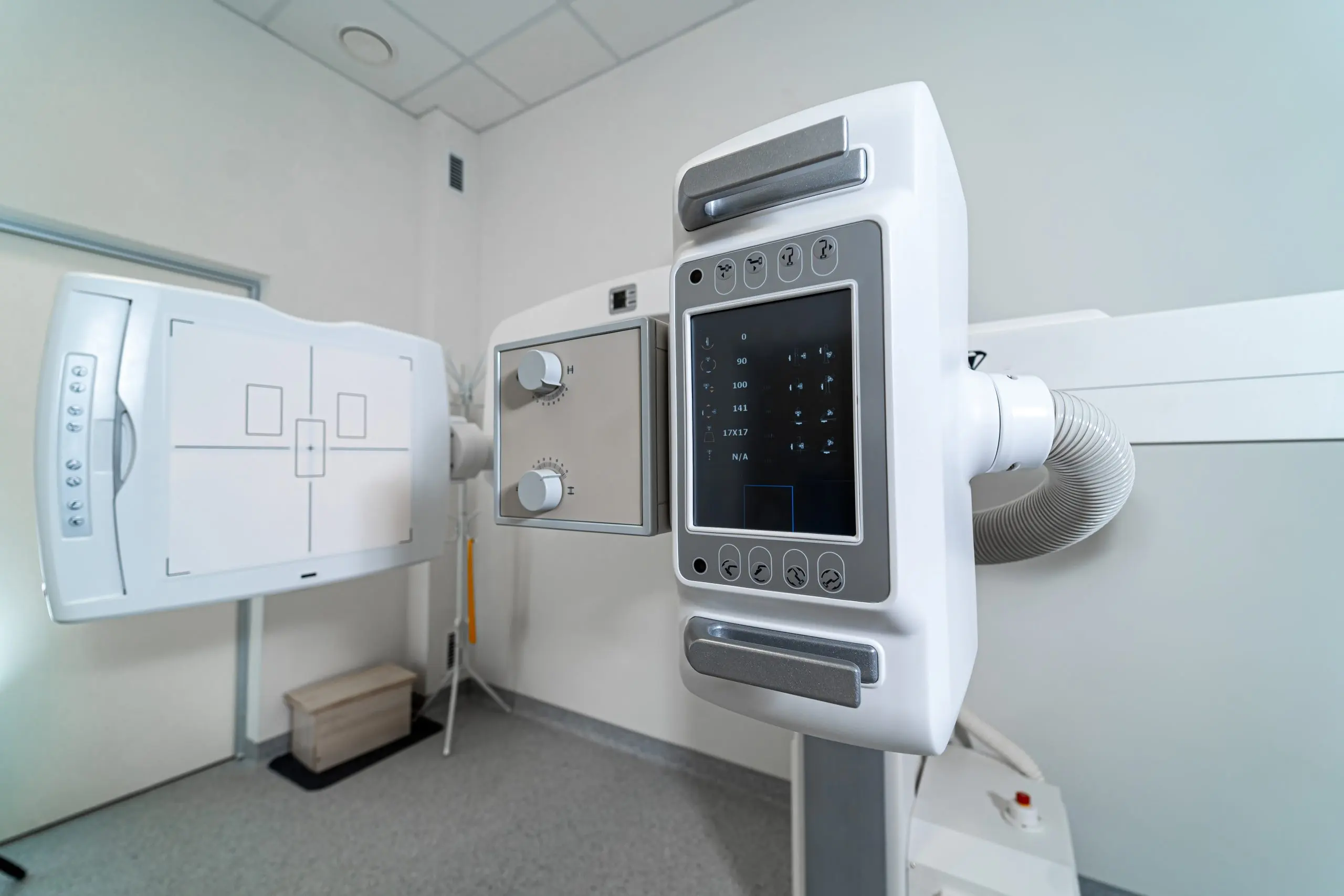
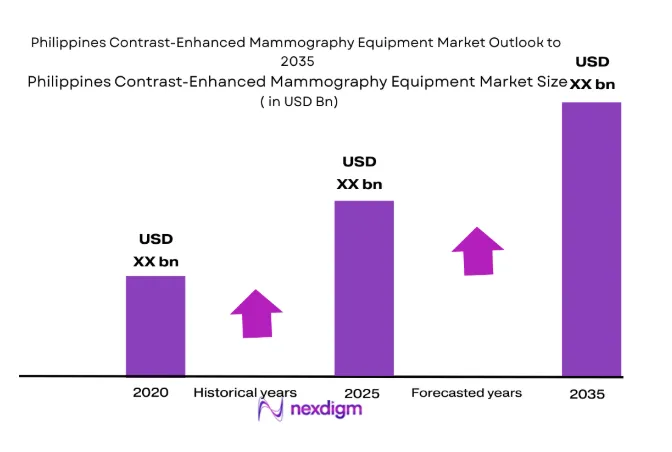
The Philippines contrast-enhanced mammography equipment market is valued at approximately USD ~ million, with a steady growth trajectory driven by increasing healthcare demand. The expansion of diagnostic imaging systems is driven by higher incidences of breast cancer, a growing geriatric population, and the need for early detection. Increased government funding for healthcare infrastructure and advancements in mammography technology are significant contributors to market growth. Furthermore, hospitals and diagnostic centers in urban areas are incorporating advanced mammography solutions to meet the rising demand for non-invasive cancer detection techniques.
The dominant cities for contrast-enhanced mammography equipment in the Philippines include Metro Manila, Cebu, and Davao. Metro Manila, as the capital, leads in terms of infrastructure and healthcare facilities, hosting numerous hospitals and diagnostic centers that adopt cutting-edge medical technology. Cebu and Davao are also critical hubs due to their strategic locations and growing healthcare demands, particularly in regional and private healthcare establishments. The urbanization of these areas, coupled with a rising awareness of cancer prevention, fuels the dominance of these cities in the adoption of advanced mammography equipment.
Market Segmentation
By Product Type
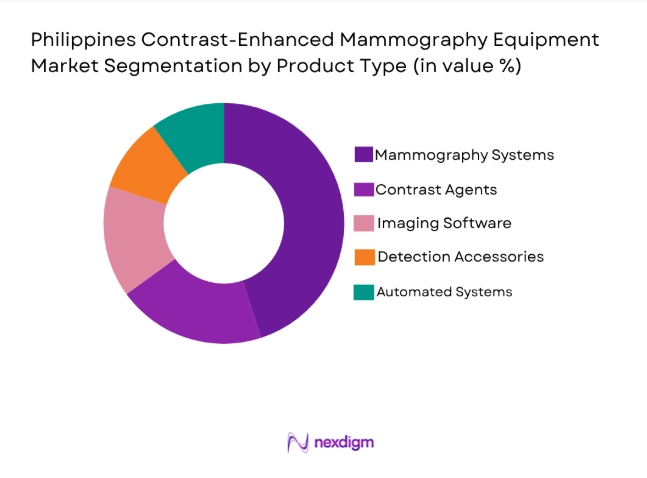
Philippines contrast-enhanced mammography equipment market is segmented by product type into mammography systems, contrast agents, imaging software, detection accessories, and automated systems. Recently, mammography systems have the dominant market share due to their high adoption rates in hospitals and diagnostic centers. The increasing focus on early breast cancer detection and the advanced imaging capabilities offered by mammography systems contribute to their prominence. These systems enable precise and effective diagnosis, which is crucial for the early detection of breast cancer.
By Platform Type
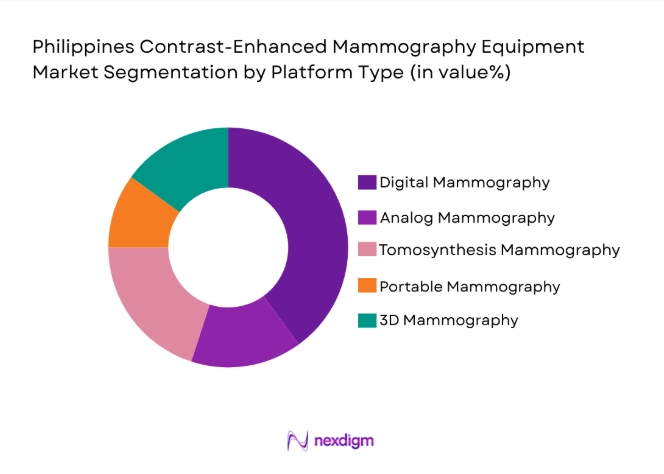
The market is segmented by platform type into digital mammography, analog mammography, tomosynthesis mammography, portable mammography, and 3D mammography. Digital mammography is the dominant segment due to its higher accuracy, faster processing, and ease of integration with advanced imaging systems. The preference for digital platforms over analog systems is driven by technological advancements in imaging technology and the increased need for precise diagnostic tools. Hospitals and diagnostic centers prefer digital mammography for its superior image quality and diagnostic efficiency.
Competitive Landscape
The competitive landscape of the Philippines contrast-enhanced mammography equipment market is influenced by several key players offering advanced imaging systems. These players often dominate through technological advancements, strategic partnerships, and large-scale distribution networks across major cities. The presence of multinational players has resulted in increased competition, pushing local players to innovate. Furthermore, several companies focus on consolidating their positions through mergers and acquisitions, ensuring they remain competitive in a growing market.
| Company Name | Establishment Year | Headquarters | Technology Focus | Market Reach | Key Products | Revenue | Market-Specific Parameter |
| GE Healthcare | 1892 | Chicago, USA | ~ | ~ | ~ | ~ | ~ |
| Siemens Healthineers | 1847 | Erlangen, Germany | ~ | ~ | ~ | ~ | ~ |
| Philips Healthcare | 1891 | Amsterdam, Netherlands | ~ | ~ | ~ | ~ | ~ |
| Canon Medical Systems | 1937 | Tokyo, Japan | ~ | ~ | ~ | ~ | ~ |
| Fujifilm Medical Systems | 1934 | Tokyo, Japan | ~ | ~ | ~ | ~ | ~ |
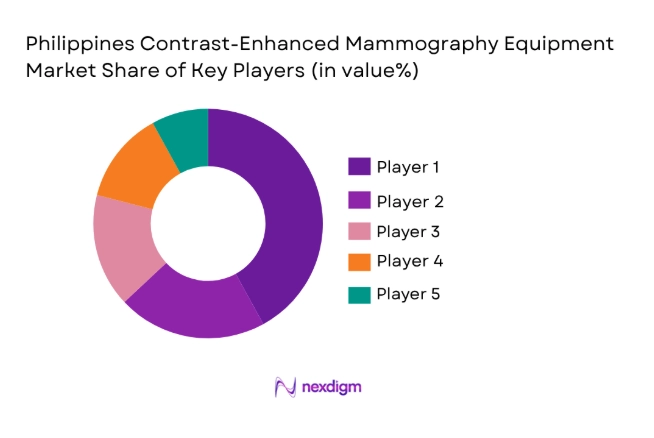
Philippines Contrast-Enhanced Mammography Equipment Market Analysis
Growth Drivers
Increasing breast cancer prevalence
The rise in breast cancer cases across the Philippines has been a significant driving factor in the growing demand for advanced diagnostic tools, particularly contrast-enhanced mammography systems. As the incidence of breast cancer continues to increase, particularly in women, there is a heightened focus on the importance of early detection. The Philippines has seen a rise in healthcare awareness among the general population, and breast cancer, being one of the most common types of cancer, has triggered a need for better diagnostic equipment. Healthcare providers are prioritizing early detection as it significantly improves patient outcomes, with early-stage cancer being more treatable. This shift in focus towards early diagnosis, combined with the widespread adoption of modern mammography technologies, is driving the demand for contrast-enhanced mammography equipment. The ability of advanced imaging technologies to provide higher diagnostic accuracy is further fueling this trend, and the adoption of these systems is expected to continue rising as the need for early-stage detection grows, benefiting patient survival rates and overall healthcare quality. This increasing focus on cancer detection is driving the growth of the contrast-enhanced mammography market in the country.
Advancements in imaging technology
Continuous advancements in mammography technology have greatly enhanced the diagnostic capabilities of the equipment used in breast cancer detection. The development of digital and 3D mammography systems has significantly improved diagnostic accuracy, enabling healthcare professionals to detect cancerous lesions more effectively. These innovations have resulted in faster image processing, superior image quality, and a more seamless user experience, making mammography procedures more efficient. With increasing support from both the private and public sectors, there has been substantial investment in the integration of these advanced imaging systems into hospitals and diagnostic centers across the country. The demand for contrast-enhanced mammography equipment has surged as healthcare providers continue to adopt these cutting-edge technologies, which provide more accurate and reliable results. The adoption of digital and 3D systems also reduces the radiation exposure to patients, further encouraging their use in medical facilities. With growing technological advancements and an increasing number of healthcare institutions seeking to upgrade their diagnostic equipment, the market for contrast-enhanced mammography equipment is seeing continuous growth, ensuring that these systems become a mainstay in breast cancer screening nationwide.
Market Challenges
High initial costs of systems
One of the major obstacles facing the Philippines contrast-enhanced mammography equipment market is the high initial costs associated with the purchase and installation of advanced imaging systems. The initial capital expenditure required for these systems can be substantial, which is a significant barrier for many hospitals and diagnostic centers, especially smaller healthcare facilities that may struggle with budget constraints. The upfront costs for high-tech systems such as digital and 3D mammography units are significantly higher than older, traditional models, making it difficult for many medical institutions to upgrade their equipment. In addition to the purchase costs, hospitals and clinics must also consider ongoing expenses for maintenance, training, and calibration, further adding to the total cost of ownership. This high cost of entry for new or upgraded mammography systems can create a financial burden for healthcare providers, especially in a developing market such as the Philippines, where resources can be limited. As a result, the slow adoption of advanced mammography systems can hinder the market’s growth, particularly in rural areas where healthcare facilities are already working with limited budgets.
Limited access to healthcare facilities in rural areas
A significant challenge facing the Philippines contrast-enhanced mammography equipment market is the lack of adequate healthcare infrastructure, particularly in rural and remote regions. While large cities such as Metro Manila and Cebu benefit from advanced healthcare facilities equipped with state-of-the-art diagnostic equipment, many rural areas still lack access to modern diagnostic tools, including contrast-enhanced mammography systems. This geographic disparity creates a significant gap in healthcare access, as women in rural regions may have limited opportunities to undergo breast cancer screening, which can lead to delayed diagnoses and poorer health outcomes. The shortage of qualified healthcare professionals and the lack of proper equipment further exacerbate this issue, as rural facilities may not have the resources to install and maintain advanced mammography systems. This limited access to essential healthcare services in underserved areas of the country presents a critical challenge for the widespread adoption of contrast-enhanced mammography, which ultimately affects the ability of the population to benefit from early cancer detection and treatment.
Opportunities
Government initiatives and funding for healthcare
The Philippine government has been increasingly focused on improving the country’s healthcare infrastructure and addressing the growing need for advanced diagnostic technologies. Government-backed initiatives aimed at improving the early detection of breast cancer are playing a significant role in the growth of the contrast-enhanced mammography equipment market. In particular, the government has been working to bridge the gap between urban and rural healthcare access by funding the installation of modern medical equipment in public hospitals and clinics throughout the country. These initiatives are helping to increase the availability of high-quality mammography services, which is driving demand for advanced imaging systems. As part of its efforts to strengthen the healthcare system, the Philippine government is providing financial support for the acquisition of state-of-the-art diagnostic tools, including mammography equipment. Public and private sector partnerships are also being encouraged to improve cancer detection rates and access to medical imaging. These efforts present a significant opportunity for the market, as increased government investment will likely result in greater market penetration of advanced contrast-enhanced mammography equipment.
Rising public awareness of breast cancer
Public awareness of breast cancer is steadily increasing across the Philippines, contributing to greater demand for early screening and diagnostic services. National campaigns focused on educating the population about the importance of early detection have been instrumental in shifting public attitudes towards proactive health measures. More people are becoming aware of the value of early-stage cancer screening, which has led to an increased demand for mammography services across both public and private healthcare facilities. As awareness of breast cancer detection continues to rise, hospitals, diagnostic centers, and clinics will need to expand their offerings of high-quality mammography services to meet this growing demand. This presents an opportunity for the contrast-enhanced mammography equipment market, as healthcare facilities invest in advanced diagnostic tools to keep up with increasing consumer demand. The growing focus on early detection and prevention of breast cancer will drive further adoption of contrast-enhanced mammography equipment, making this an essential opportunity for market growth.
Future Outlook
The future outlook for the Philippines contrast-enhanced mammography equipment market over the next five years is positive, with significant growth expected due to technological advancements and increasing healthcare investments. The continued development of digital and 3D mammography systems will improve diagnostic accuracy, contributing to more widespread adoption across both urban and rural areas. Furthermore, government support and healthcare initiatives targeting breast cancer prevention are expected to drive demand for advanced mammography systems. The market will likely see the integration of AI and other advanced technologies in the coming years, offering opportunities for further growth.
Major Players
- GE Healthcare
- Siemens Healthineers
- Philips Healthcare
- Canon Medical Systems
- Fujifilm Medical Systems
- Hologic, Inc.
- Carestream Health
- Samsung Medison
- Konica Minolta Healthcare
- Hitachi Medical Systems
- Mindray Medical International
- Agfa-Gevaert Group
- PerkinElmer Inc.
- Esaote S.p.A.
- Planmed Oy
Key Target Audience
- Investments and venture capitalist firms
- Government and regulatory bodies
- Hospitals and healthcare providers
- Diagnostic centers and clinics
- Research institutions and academic organizations
- Private healthcare organizations
- Medical device distributors
Research Methodology
Step 1: Identification of Key Variables
We begin by identifying critical variables affecting market dynamics, including technology trends, demand drivers, and regulatory factors.
Step 2: Market Analysis and Construction
Next, we analyze historical data and current market conditions to construct an accurate and reliable market model.
Step 3: Hypothesis Validation and Expert Consultation
We validate our findings through consultations with industry experts and stakeholders to ensure accuracy.
Step 4: Research Synthesis and Final Output
The final step involves synthesizing research findings into a comprehensive report, ensuring all data and insights are clearly presented.

- Executive Summary
- Research Methodology (Definitions, Scope, Industry Assumptions, Market Sizing Approach, Primary & Secondary Research Framework, Data Collection & Verification Protocol, Analytic Models & Forecast Methodology, Limitations & Research Validity Checks)

- Market Definition and Scope
- Value Chain & Stakeholder Ecosystem
- Regulatory / Certification Landscape
- Sector Dynamics Affecting Demand
- Strategic Initiatives & Infrastructure Growth

- Growth Drivers
Increasing Breast Cancer Incidences
Technological Advancements in Imaging
Government Investments in Healthcare Infrastructure - Market Challenges
High Initial Investment Cost
Lack of Skilled Personnel
Regulatory Hurdles - Market Opportunities
Rising Healthcare Expenditures
Expanding Healthcare Infrastructure
Growing Public Awareness on Early Detection - Trends
Integration of AI in Mammography Systems
Shift Towards Non-Invasive Diagnostic Solutions - Government Regulations
- SWOT Analysis
- Porter’s Five Forces

- By Market Value, 2020-2025
- By Installed Units, 2020-2025
- By Average System Price, 2020-2025
- By System Complexity Tier, 2020-2025

- By System Type (In Value%)
Mammography Systems
Contrast Agents
Imaging Software
Detection Accessories
Automated Systems - By Platform Type (In Value%)
Digital Mammography
Analog Mammography
Tomosynthesis Mammography
Portable Mammography
3D Mammography - By Fitment Type (In Value%)
Standalone Units
Integrated Units
Mobile Units
Modular Systems - By End User Segment (In Value%)
Hospitals
Diagnostic Centers
Research Laboratories

- Market Share Analysis
- Cross Comparison Parameters (Technology Adoption, Regional Reach, Product Innovation, Pricing Strategy, Brand Loyalty, Customer Service, Regulatory Compliance)
- SWOT Analysis of Key Competitors
- Pricing & Procurement Analysis
- Key Players
GE Healthcare
Siemens Healthineers
Philips Healthcare
Canon Medical Systems
Fujifilm Medical Systems
Hologic, Inc.
Carestream Health
Samsung Medison
Konica Minolta Healthcare
Hitachi Medical Systems
Mindray Medical International
Agfa-Gevaert Group
PerkinElmer Inc.
Esaote S.p.A.
Planmed Oy

- Hospitals and Healthcare Facilities
- Diagnostic Centers and Clinics
- Research and Academic Institutions
- Private Diagnostic Providers

- Forecast Market Value, 2026-2035
- Forecast Installed Units, 2026-2035
- Price Forecast by System Tier, 2026-2035
- Future Demand by Platform, 2026-2035


 Request a Sample
 Ask for Customization
 Get a Quote
 Enquire Now