
 Download PDF
Market Overview
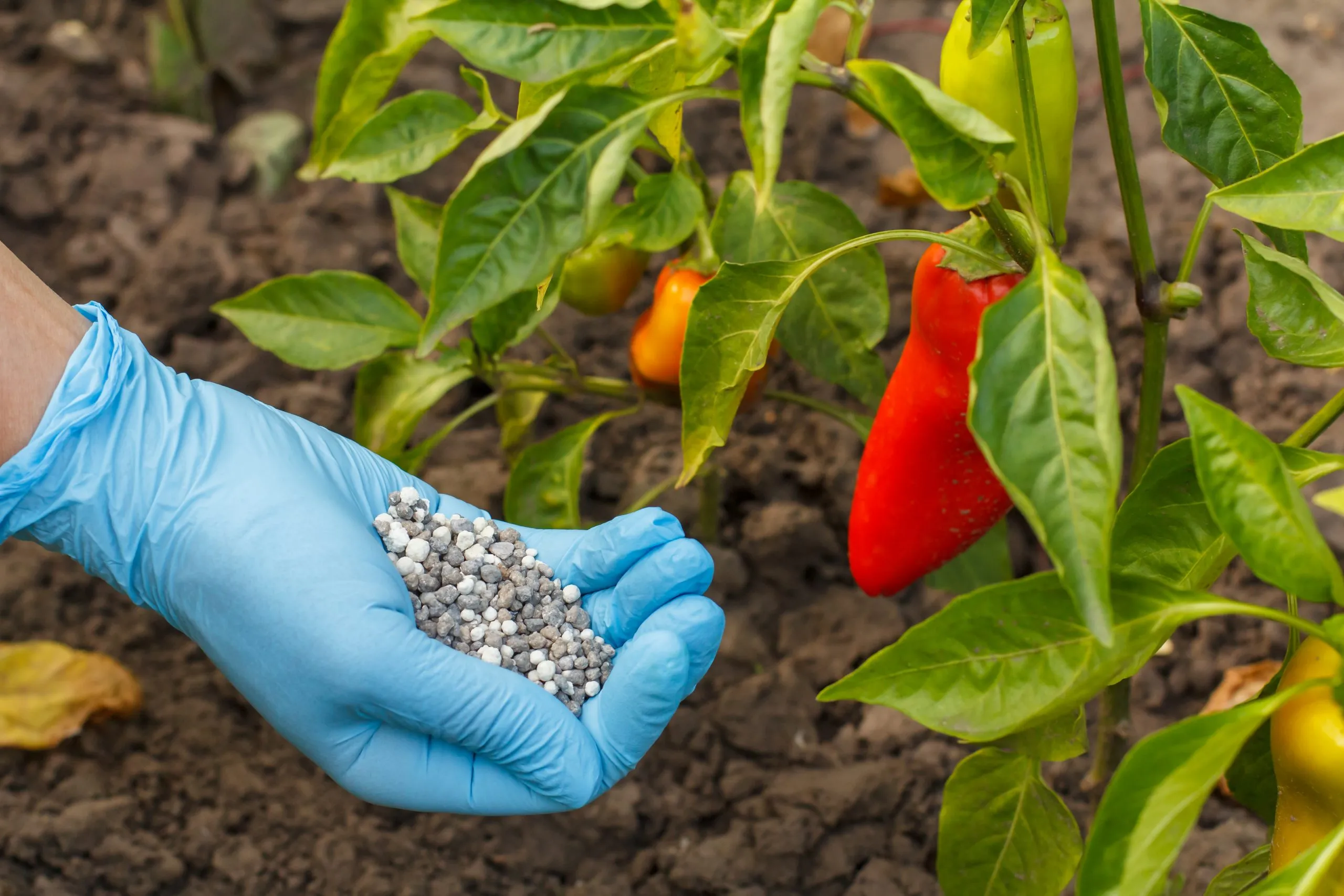
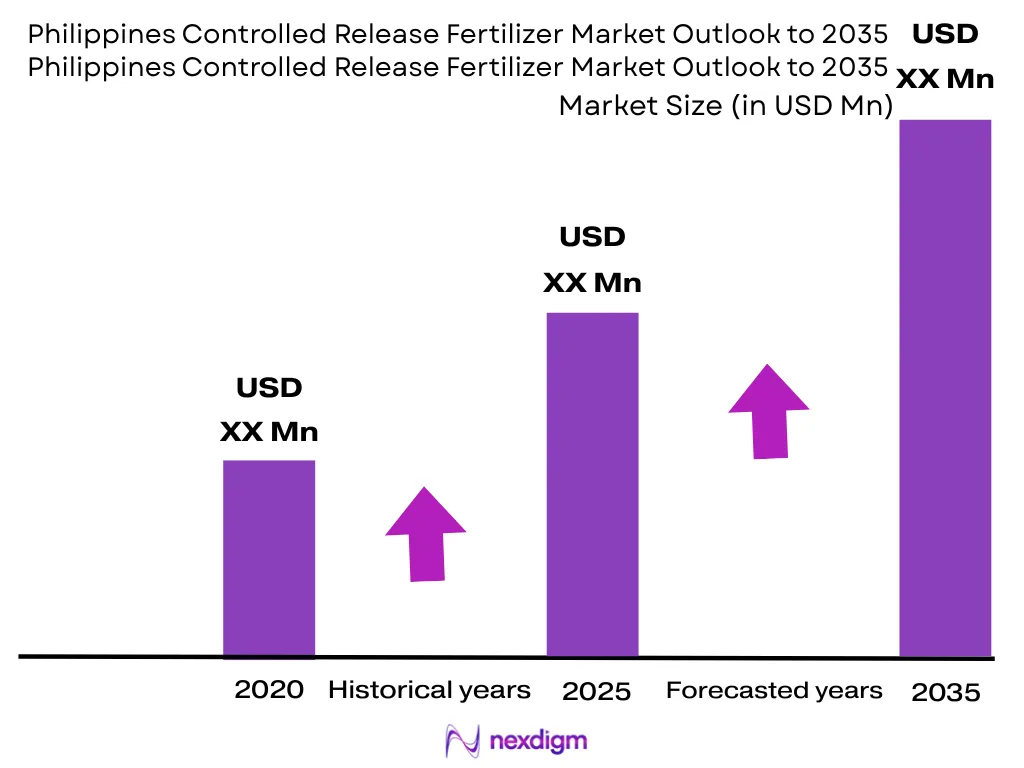
The Philippines Controlled Release Fertilizer Market is valued at USD ~ Million, supported by the country’s large agricultural sector and increasing demand for efficient nutrient management solutions. According to the Philippine Statistics Authority, agriculture generated PHP 1.76 trillion in gross value added during 2024 compared to PHP 1.67 trillion in 2023. Fertilizer demand is closely linked to rice, corn, banana, coconut, and sugarcane cultivation, which collectively account for a significant share of agricultural output. The Department of Agriculture continues to promote productivity-enhancing technologies, while rising fertilizer-use efficiency requirements and increasing adoption of climate-smart farming practices are driving demand for controlled release fertilizer products across commercial farms and plantation crops.
Market Segmentation
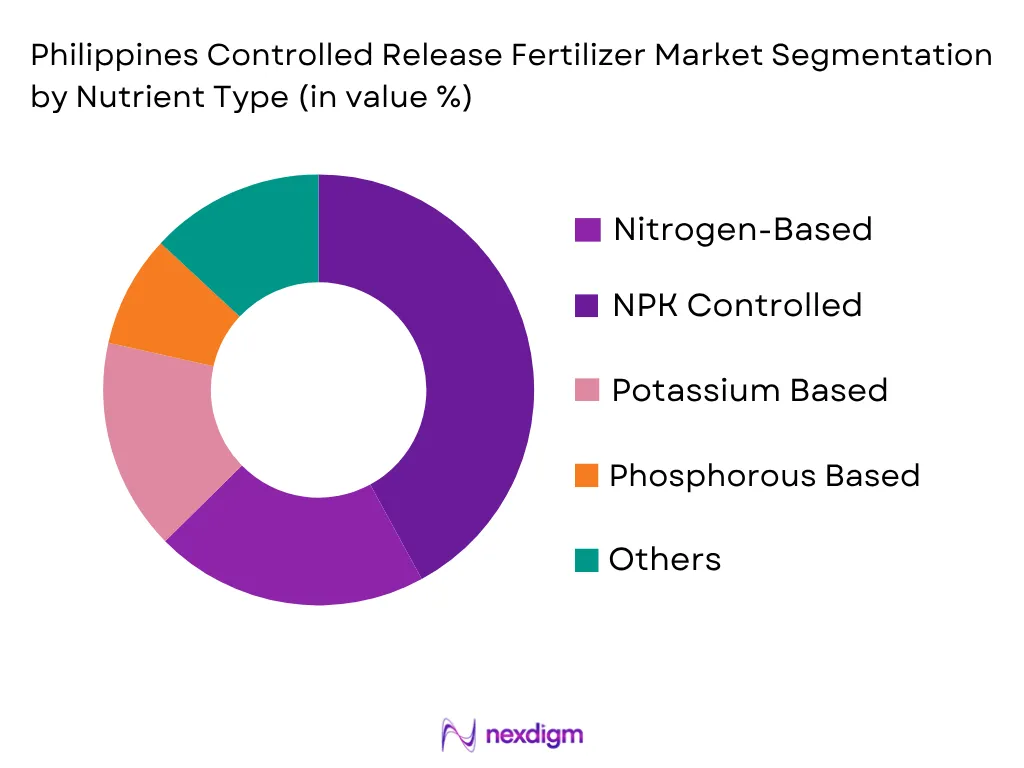
By Nutrient Type
By Nutrient Type, the Philippines Controlled Release Fertilizer Market is segmented into nitrogen-based controlled release fertilizers, phosphorus-based controlled release fertilizers, potassium-based controlled release fertilizers, multi-nutrient (NPK) controlled release fertilizers, and micronutrient-enriched controlled release fertilizers. Nitrogen-based controlled release fertilizers currently dominate the market due to the extensive cultivation of rice, corn, sugarcane, and other cereal crops that require substantial nitrogen inputs for optimal growth and yield performance. Nitrogen is the most widely consumed plant nutrient in Philippine agriculture because it directly influences vegetative growth, chlorophyll production, and biomass accumulation. Controlled release nitrogen fertilizers are increasingly preferred as they provide a gradual nutrient supply throughout the crop cycle, reducing losses caused by volatilization, leaching, and runoff. This is particularly important in tropical agricultural environments where heavy rainfall can significantly reduce fertilizer efficiency. In addition, government-supported productivity enhancement programs and growing awareness of nutrient-use efficiency have encouraged farmers to adopt advanced nitrogen management solutions. The segment also benefits from strong demand among commercial plantations and large-scale crop producers seeking to maximize yields while minimizing fertilizer application frequency and labor costs, reinforcing its leadership position within the Philippines Controlled Release Fertilizer Market.
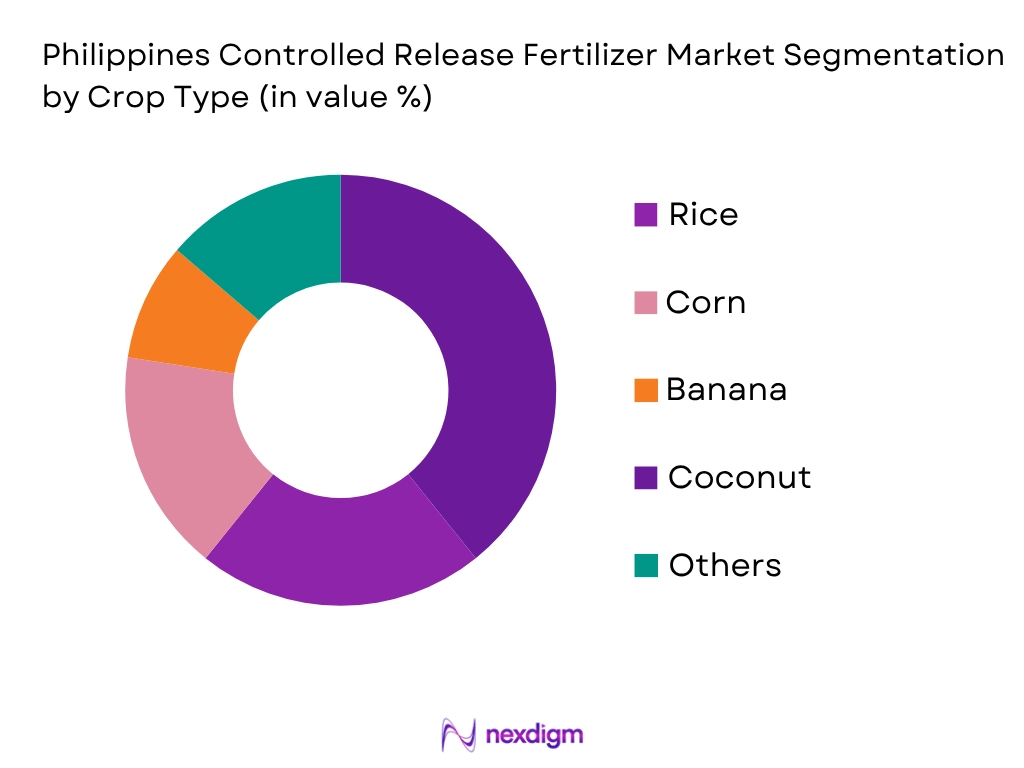
By Crop Type
By Crop Type, the Philippines Controlled Release Fertilizer Market is segmented into rice, corn, banana, coconut, sugarcane, pineapple, and high-value fruits & vegetables. Rice currently dominates the market due to its strategic importance within the country’s agricultural sector and food security framework. The Philippines remains one of Asia’s largest rice-consuming nations, creating sustained demand for technologies that improve productivity and nutrient-use efficiency. Controlled release fertilizers are increasingly utilized in rice cultivation because they reduce the frequency of fertilizer applications while improving nitrogen utilization and minimizing nutrient losses. Government programs aimed at improving rice self-sufficiency and farmer productivity have further supported the adoption of advanced fertilizer products. Additionally, large cultivated areas dedicated to rice production across Luzon, Visayas, and Mindanao contribute to significant fertilizer consumption. As farmers increasingly focus on improving yields while managing input costs, controlled release fertilizers have become an attractive solution, enabling the rice segment to maintain its dominant position within the market.
Competitive Landscape
The Philippines Controlled Release Fertilizer Market is characterized by the presence of global specialty fertilizer manufacturers and domestic fertilizer suppliers. Competition is driven by product innovation, nutrient efficiency, crop-specific formulations, and distribution network strength. International companies dominate advanced coated fertilizer technologies, while local players maintain strong dealer relationships and market access across agricultural regions. Strategic partnerships with cooperatives, plantations, and government-supported agricultural programs continue to influence competitive positioning within the market.
| Company | Establishment Year | Headquarters | CRF Portfolio | Coating Technology Capability | Production Presence in Philippines | Crop Focus | Distribution Strength | Sustainability Focus |
| ICL Group | 1968 | ~ | ~ | ~ | ~ | ~ | ~ | ~ |
| Yara International | 1905 | ~ | ~ | ~ | ~ | ~ | ~ | ~ |
| Haifa Group | 1966 | ~ | ~ | ~ | ~ | ~ | ~ | ~ |
| COMPO EXPERT | 1956 | ~ | ~ | ~ | ~ | ~ | ~ | ~ |
| Atlas Fertilizer Corporation | 1981 | ~ | ~ | ~ | ~ | ~ | ~ | ~ |
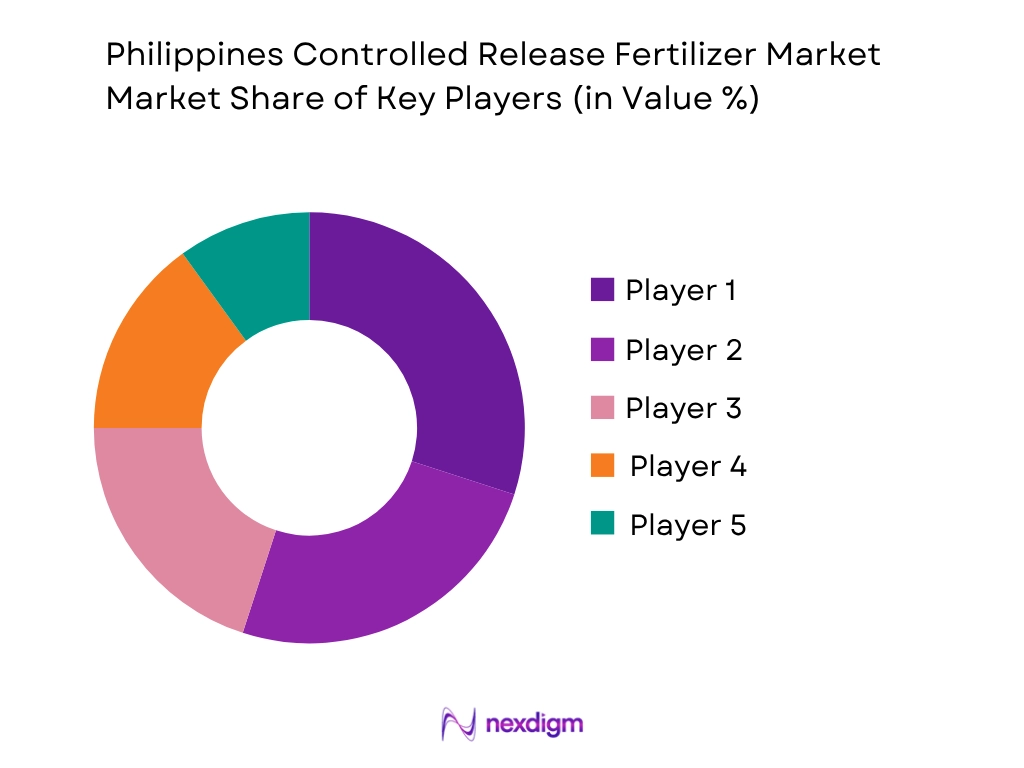
Philippines Controlled Release Fertilizer Market Analysis
Growth Drivers
Expansion of High-Value Crop and Plantation Agriculture
The Philippines controlled release fertilizer market is being driven by the continued expansion of plantation agriculture and high-value crop production. According to the Philippine Statistics Authority (PSA), agriculture, forestry, and fishing generated PHP 1.76 trillion in gross value added during 2024, compared with PHP 1.67 trillion in 2023, demonstrating the sector’s importance to the national economy. Banana production exceeded 9 million metric tons, while pineapple production remained above 2.8 million metric tons, making the Philippines one of the leading fruit exporters in Asia. The country also harvested more than 20 million metric tons of palay and over 8 million metric tons of corn, creating significant nutrient demand across major crop segments. Controlled release fertilizers are increasingly adopted by commercial plantations because they improve nutrient-use efficiency, reduce nutrient losses, and support consistent crop yields. The Philippines possesses approximately 12 million hectares of agricultural land according to the World Bank, supporting large-scale cultivation activities. Additionally, merchandise exports exceeded USD 73 billion, with agricultural exports contributing significantly through banana, coconut, and pineapple shipments. These production volumes and export-oriented farming systems create strong demand for advanced fertilizer technologies that optimize nutrient delivery and enhance crop productivity across commercial agriculture.
Government Support for Agricultural Productivity and Food Security
Government initiatives focused on food security and agricultural modernization are supporting demand for controlled release fertilizers across the Philippines. The Department of Agriculture continues to implement programs designed to improve crop productivity, nutrient efficiency, and farm profitability. According to the PSA, rice production remained above 20 million metric tons while corn production exceeded 8 million metric tons, highlighting the strategic importance of maximizing agricultural output. The Philippines had a population exceeding 117 million people in 2024 according to World Bank estimates, creating sustained demand for staple food production. Controlled release fertilizers help farmers improve nutrient management while reducing application frequency, which is particularly beneficial in regions facing labor constraints. The country’s GDP exceeded USD 470 billion according to IMF estimates, supporting continued public and private investment in agricultural infrastructure and modernization initiatives. Furthermore, fertilizer support and mechanization programs encourage adoption of technologies that improve yields while minimizing nutrient wastage. Rice-producing provinces across Luzon, Visayas, and Mindanao increasingly require efficient nutrient management solutions to sustain production levels. As food demand rises alongside population growth, controlled release fertilizers are becoming an important component of strategies aimed at improving agricultural productivity and enhancing national food security outcomes.
Market Challenges
Dependence on Imported Fertilizer Inputs and Specialty Nutrients
A major challenge for the Philippines controlled release fertilizer market is its dependence on imported fertilizer products and raw materials. According to Philippine Statistics Authority trade data, fertilizer imports exceeded USD 1 billion in recent reporting periods, reflecting substantial reliance on overseas suppliers. Controlled release fertilizers require specialized coatings, polymers, and nutrient technologies that are largely sourced from countries such as China, Israel, Germany, Japan, and South Korea. The Philippines recorded total imports exceeding USD 130 billion, demonstrating the economy’s dependence on international supply chains. Supply disruptions, shipping delays, and fluctuations in global raw material availability can directly affect product availability for farmers. Furthermore, the country’s archipelagic geography, consisting of more than 7,600 islands, increases logistical complexity and distribution costs for specialty agricultural inputs. While agriculture contributes significantly to rural employment, many smallholder farmers remain dependent on imported fertilizers whose availability is influenced by global trade conditions. Controlled release fertilizer suppliers must therefore manage inventory, transportation, and procurement challenges while maintaining consistent product supply across dispersed agricultural regions. These structural dependencies continue to present obstacles to broader market penetration and adoption of advanced fertilizer technologies throughout the Philippines.
Smallholder Farmer Affordability and Limited Technology Adoption
The predominance of smallholder farming remains a significant challenge for the Philippines controlled release fertilizer market. According to the Philippine Statistics Authority, agriculture employs more than 10 million individuals, many of whom operate relatively small farms focused on rice, corn, coconut, and vegetable production. The average farm size in many agricultural regions remains limited, affecting purchasing capacity for advanced agricultural inputs. While controlled release fertilizers provide long-term agronomic benefits, adoption can be constrained by farmer preference for conventional fertilizers that are more familiar and widely available. The Philippines recorded gross value added from agriculture of PHP 1.76 trillion, yet productivity gaps remain across several crop categories. Additionally, rural households continue to face financial constraints associated with weather risks, fluctuating commodity prices, and production uncertainties. Controlled release fertilizers often require greater technical understanding regarding nutrient management and application timing. As a result, limited awareness and insufficient extension services can slow adoption among smaller producers. The challenge is particularly pronounced in remote farming communities where access to agronomic support, training programs, and specialized agricultural products remains less developed compared to major commercial farming regions.
Market Opportunities
Rising Demand for Export-Oriented Plantation Crops
The strong performance of export-oriented plantation agriculture presents a major opportunity for the Philippines controlled release fertilizer market. The Philippines remains one of the world’s leading exporters of bananas, pineapples, and coconut products. According to PSA production statistics, banana output exceeded 9 million metric tons and pineapple production remained above 2.8 million metric tons. Agricultural exports continue to contribute significantly to merchandise export earnings exceeding USD 73 billion. Export-oriented producers increasingly focus on improving crop quality, consistency, and productivity to remain competitive in international markets. Controlled release fertilizers support these objectives by providing precise nutrient delivery, reducing nutrient losses, and enhancing crop performance throughout the growing cycle. Large-scale plantations in Mindanao, particularly in Davao and Bukidnon, have increasingly adopted advanced crop nutrition practices to maintain productivity and meet export standards. Furthermore, global demand for tropical fruits continues to encourage investment in plantation expansion and modernization. As producers seek technologies that improve nutrient-use efficiency and optimize yields, controlled release fertilizers are well positioned to benefit from the growing importance of export agriculture within the Philippines’ broader agricultural economy.
Expansion of Climate-Smart and Sustainable Agriculture Practices
The increasing focus on climate-smart agriculture creates significant opportunities for controlled release fertilizer adoption across the Philippines. The country experiences frequent climate-related challenges including typhoons, flooding, and irregular rainfall patterns, making efficient nutrient management increasingly important. According to the World Bank, agricultural land exceeds 12 million hectares, providing a substantial base for sustainable farming technologies. Controlled release fertilizers help reduce nutrient runoff and improve nutrient-use efficiency, supporting more resilient crop production systems. The Philippines’ population exceeds 117 million people, creating long-term pressure to increase food production while minimizing environmental impacts. Government initiatives promoting sustainable agriculture and resource conservation are encouraging farmers to adopt technologies that improve productivity and reduce input wastage. Additionally, the agriculture sector generated PHP 1.76 trillion in economic output, highlighting the importance of maintaining productivity under changing climatic conditions. Controlled release fertilizers align closely with sustainability objectives because they deliver nutrients gradually and reduce environmental losses. As growers increasingly prioritize climate resilience, resource efficiency, and sustainable production methods, the market for controlled release fertilizers is expected to benefit from the broader transition toward climate-smart agricultural practices.
Future Outlook
The Philippines Controlled Release Fertilizer Market is expected to witness robust expansion over the forecast period, supported by increasing adoption of sustainable agriculture practices and the growing need for higher crop productivity. Rising fertilizer-use efficiency requirements, labor optimization needs, and environmental concerns are encouraging growers to shift toward advanced nutrient delivery solutions. Plantation agriculture, particularly bananas, pineapples, and coconuts, is expected to remain a major source of demand. Government efforts to improve food security and support climate-resilient farming practices will further encourage adoption. Additionally, technological advancements in biodegradable coatings and crop-specific fertilizer formulations are expected to create new opportunities across the agricultural sector.
Major Players
- ICL Group
- Yara International
- Haifa Group
- Nutrien Ltd.
- COMPO EXPERT
- Atlas Fertilizer Corporation
- Philippine Phosphate Fertilizer Corporation
- Soiltech Agricultural Corporation
- Koch Agronomic Services
- Coromandel International
- Kingenta Ecological Engineering Group
- Shandong Jinzhengda Ecological Engineering
- SQM
- J.R. Simplot Company
- Everris International
Key Target Audience
- Department of Agriculture (DA)
- Fertilizer and Pesticide Authority (FPA)
- Investments and Venture Capitalist Firms
- Commercial Plantation Operators
- Fertilizer Manufacturers and Importers
- Agricultural Cooperatives and Farmer Associations
- Agri-Input Distributors and Dealers
- Government and Regulatory Bodies (Department of Agriculture, Fertilizer and Pesticide Authority)
Research Methodology
Step 1: Identification of Key Variables
The initial phase involves constructing an ecosystem map covering all stakeholders operating within the Philippines Controlled Release Fertilizer Market. Extensive secondary research is conducted through government publications, fertilizer industry databases, trade statistics, company reports, and agricultural associations. The objective is to identify critical variables affecting fertilizer demand, nutrient consumption patterns, technology adoption, and competitive dynamics.
Step 2: Market Analysis and Construction
In this phase, historical market information is compiled and analyzed to evaluate fertilizer consumption trends, crop-wise demand, import dependence, and distribution structures. Supply-side and demand-side assessments are integrated to estimate market size and segment-level performance. Product, crop, and application-level analysis is conducted to determine revenue contributions across key categories.
Step 3: Hypothesis Validation and Expert Consultation
Market assumptions are validated through structured interviews with fertilizer manufacturers, distributors, agronomists, plantation managers, agricultural cooperatives, and government representatives. These consultations provide operational insights regarding product adoption, distribution challenges, pricing dynamics, and future demand trends. Feedback from industry experts is used to refine and validate market estimates.
Step 4: Research Synthesis and Final Output
The final phase integrates primary and secondary research findings into a comprehensive market assessment. Data collected from manufacturers, distributors, government agencies, and commercial end users is triangulated to ensure accuracy and consistency. The resulting analysis provides validated market sizing, segmentation, competitive benchmarking, and long-term growth projections for the Philippines Controlled Release Fertilizer Market.

- Executive Summary
- Research Methodology (Market Definitions and Assumptions, Abbreviations, Market Sizing Approach, Top-Down Analysis, Bottom-Up Analysis, Demand-Side Assessment, Supply-Side Assessment, Fertilizer Consumption Assessment, Import-Export Analysis, Primary Industry Interviews, Distributor and Dealer Interviews, Data Triangulation, Forecasting Framework, Limitations and Future Conclusions)

- Definition and Scope
- Market Evolution and Industry Genesis
- Timeline of Major Industry Developments
- Philippine Fertilizer Industry Structure
- Controlled Release Fertilizer Technology Landscape

- Growth Drivers (Rising Rice Productivity Requirements, Expansion of High-Value Crop Cultivation, Increasing Adoption of Precision Farming, Government Fertilizer Support Programs, Need for Improved Nutrient Use Efficiency)
- Market Challenges (High Dependence on Imported Specialty Fertilizers, Limited Farmer Awareness of Controlled Release Technologies, Price Sensitivity Among Smallholder Farmers, Distribution Challenges Across Islands, Counterfeit Fertilizer Availability)
- Market Opportunities (Expansion of Plantation Agriculture, Growth in Banana and Pineapple Export Production, Adoption of Climate-Smart Agriculture, Development of Crop-Specific Fertilizer Formulations, Sustainable Nutrient Management Initiatives)
- Market Trends (Polymer-Coated Fertilizer Adoption, Precision Nutrient Management, Customized Fertilizer Blends, Biodegradable Coating Technologies, Digital Agriculture Integration)
- Government Regulations (Fertilizer and Pesticide Authority Registration Requirements, Fertilizer Quality Standards, Import Licensing Framework, Nutrient Management Programs, Agricultural Modernization Policies)
- SWOT Analysis
- PESTLE Analysis
- Porter’s Five Forces Analysis
- Stakeholder Ecosystem
- Competition Ecosystem

- By Market Value (2020-2025)
- By Volume Consumption (2020-2025)
- By Average Selling Price (2020-2025)

- By Nutrient Type (In Value %)
Nitrogen-Based Controlled Release Fertilizers
Phosphorus-Based Controlled Release Fertilizers
Potassium-Based Controlled Release Fertilizers
Multi-Nutrient (NPK) Controlled Release Fertilizers
Micronutrient-Based Controlled Release Fertilizers - By Distribution Channel (In Value %)
Agricultural Cooperatives
Fertilizer Dealers and Retailers
Direct Sales to Commercial Farms
Agri-Input Distributors
E-Commerce Platforms
Government Procurement Programs - By End User (In Value %)
Smallholder Farmers
Commercial Farms
Plantation Companies
Agribusiness Companies
Government Agricultural Programs
Landscaping and Turf Operators - By Crop Type (In Value %)
Rice
Corn
Sugarcane
Banana
Coconut
Pineapple
High-Value Fruits and Vegetables
Plantation Crops - By Application (In Value %)
Field Crops
Plantation Agriculture
Horticulture
Greenhouse Cultivation
Turf and Landscaping
Commercial Nurseries
High-Value Crop Production

- Market Share of Major Players (By Value, Volume, Nutrient Type, Crop Segment, Coating Technology)
- Cross Comparison Parameters (Product Portfolio Breadth, Controlled Release Fertilizer SKU Count, Nutrient Release Duration Range, Coating Technology Capability, Crop-Specific Formulation Portfolio, Distribution Network Reach, Plantation Sector Penetration, Import and Supply Chain Strength)
- SWOT Analysis of Major Players
- Pricing Analysis by Product Category and Nutrient Composition
- Detailed Profiles of Major Companies
Yara International
ICL Group
Haifa Group
Nutrien Ltd.
COMPO EXPERT
Atlas Fertilizer Corporation
Philippine Phosphate Fertilizer Corporation
Soiltech Agricultural Corporation
Koch Agronomic Services
Coromandel International
Kingenta Ecological Engineering Group
Shandong Jinzhengda Ecological Engineering
SQM
J.R. Simplot Company
Everris International

- Fertilizer Consumption Pattern Assessment
- Nutrient Application Practices
- Farm Size-Based Demand Analysis
- Fertilizer Budget Allocation Analysis
- Crop Yield Optimization Requirements

- By Market Value (2026-2035)
- By Volume Consumption (2026-2035)
- By Average Selling Price (2026-2035)


 Request a Sample
 Ask for Customization
 Get a Quote
 Enquire Now