
 Download PDF
 Download PDF
Market Overview
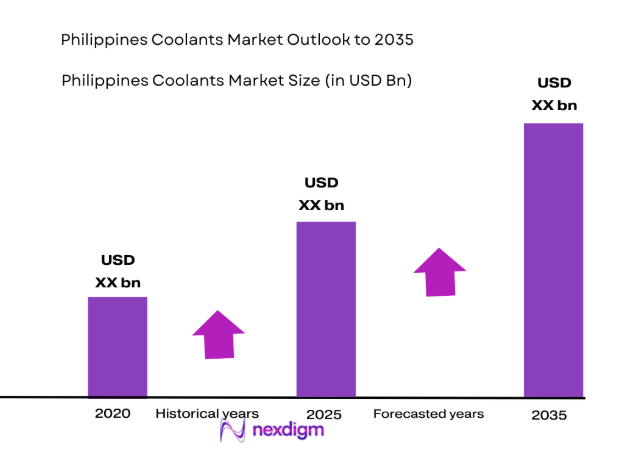
The Philippines coolants market is witnessing steady growth, with an estimated market size in the billions ~ USD based on a recent historical assessment. The demand for coolants is driven by an expanding automotive sector, increasing industrial production, and a surge in the need for efficient HVAC systems. The market’s growth is largely attributed to technological advancements in coolant formulations, improving product efficiency, and the demand for sustainable and eco-friendly cooling solutions. As a result, key industry players are focusing on product innovation and expanding their distribution networks to capture more of the growing demand.
Dominant countries such as the Philippines have seen a rise in demand due to increasing industrialization, automotive manufacturing, and a focus on energy-efficient cooling systems. Urban centers like Manila and Cebu are witnessing significant growth in HVAC and refrigeration sectors, contributing to the demand for high-performance coolants. Moreover, government initiatives supporting the adoption of green technologies and energy-efficient systems are fueling the demand for specialized coolants, positioning the Philippines as a dominant market in Southeast Asia.
Market Segmentation
By Product Type
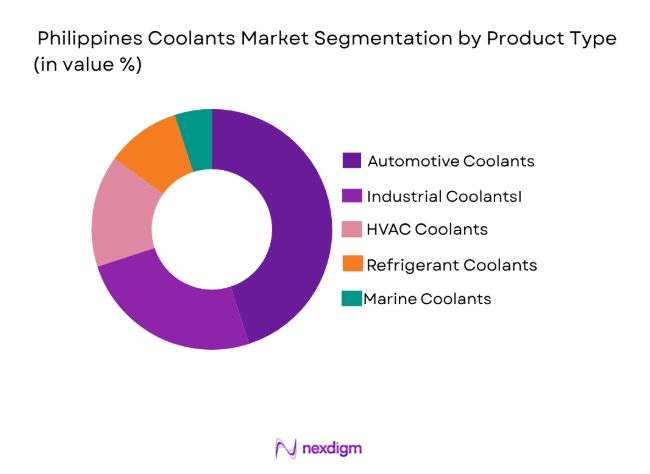
Philippines coolants market is segmented by product type into automotive coolants, industrial coolants, HVAC coolants, refrigerant coolants, and marine coolants. Recently, automotive coolants have dominated the market share due to factors such as increasing vehicle production and consumer demand for high-performance and eco-friendly cooling solutions. The rising automotive manufacturing sector, alongside stringent regulations on vehicle emissions and fuel efficiency, has made automotive coolants a leading segment. Additionally, infrastructure improvements and the increasing adoption of electric vehicles further boost the demand for specialized automotive coolants, reinforcing the segment’s dominance in the market.
By Platform Type
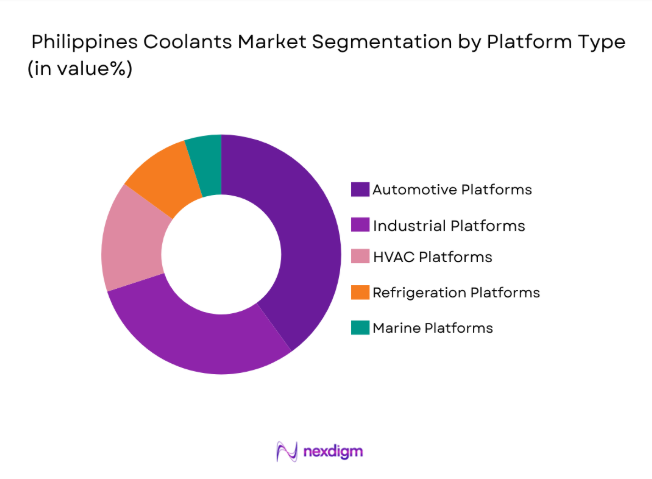
Philippines coolants market is segmented by platform type into automotive platforms, industrial platforms, HVAC platforms, refrigeration platforms, and marine platforms. Recently, automotive platforms have dominated the market share due to increased vehicle production, rising vehicle sales, and the rapid growth of the automotive sector. The demand for automotive coolants has been particularly robust, driven by the need for improved vehicle efficiency, performance, and environmental sustainability. Additionally, innovations in electric vehicles and the automotive sector’s shift towards more eco-friendly solutions continue to support the dominance of automotive platforms in the market.
Competitive Landscape
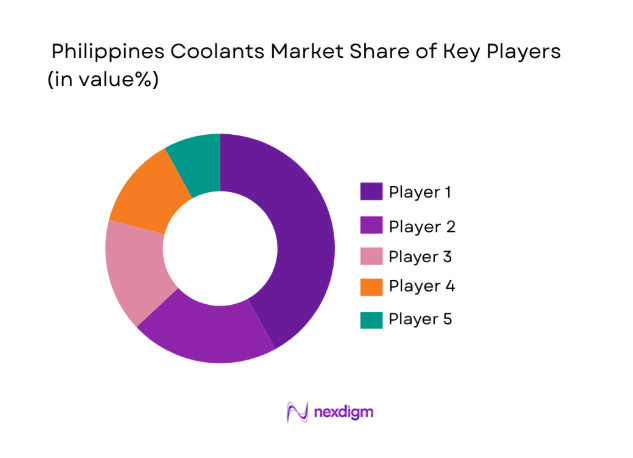
The competitive landscape of the Philippines coolants market is shaped by several key players dominating the sector, both globally and locally. Market consolidation has been a trend, with leading multinational companies partnering with local distributors to expand their reach. These players influence pricing, technology adoption, and innovation. The market is highly competitive, with firms investing in advanced manufacturing technologies, eco-friendly solutions, and expanding their presence in key urban centers. Strategic mergers and acquisitions further contribute to the consolidation of market share among leading players.
| Company Name | Establishment Year | Headquarters | Technology Focus | Market Reach | Key Products | Revenue | Market-Specific Parameter |
| Petron Corporation | 1933 | Makati, Philippines | ~ | ~ | ~ | ~ | ~ |
| Shell Philippines | 1914 | Makati, Philippines | ~ | ~ | ~ | ~ | ~ |
| Total Philippines | 1997 | Makati, Philippines | ~ | ~ | ~ | ~ | ~ |
| Caltex Philippines | 1936 | Makati, Philippines | ~ | ~ | ~ | ~ | ~ |
| BASF Philippines | 1995 | Makati, Philippines | ~ | ~ | ~ | ~ | ~ |
Philippines Coolants Market Analysis
Growth Drivers
Increasing Automotive Production
The Philippine automotive industry has seen a significant uptick in production, which has driven the demand for high-performance automotive coolants. The government’s focus on developing automotive manufacturing infrastructure and offering tax incentives for vehicle production has encouraged local and foreign manufacturers to increase their output. Additionally, the shift towards electric vehicles (EVs) has introduced new coolant technologies that focus on sustainability, enhancing the demand for advanced coolants that cater to the specific needs of electric vehicles, such as higher thermal efficiency. The growing preference for energy-efficient and eco-friendly cooling solutions is expected to continue driving automotive coolant demand.
Expansion of Industrial Sector
The rapid growth of the industrial sector in the Philippines is another key driver of the coolant market. Industrial activities across various sub-sectors, including manufacturing, mining, and construction, require reliable and efficient cooling systems to manage the heat generated by equipment and machinery. This demand for industrial coolants is propelled by increasing investments in infrastructure projects and government initiatives promoting industrial growth. Moreover, with the rise of energy-efficient technologies, industrial plants are increasingly adopting advanced cooling solutions to optimize operations and reduce energy consumption, further fueling the demand for industrial coolants in the country.
Market Challenges
Environmental Concerns over Coolant Disposal
One of the significant challenges facing the Philippines coolants market is the environmental impact of coolant disposal. The improper disposal of coolants can lead to water and soil contamination, which has prompted governments and organizations to impose stringent regulations on their usage and disposal. The growing awareness of environmental issues among consumers and regulators has led to calls for the development of more sustainable, biodegradable coolants. However, the transition to eco-friendly coolants presents challenges related to cost, performance, and consumer adoption, making it a hurdle for market growth in the short term.
Regulatory Compliance and High Production Costs
Compliance with environmental and safety standards is another challenge facing the coolant industry in the Philippines. The need to meet regulatory requirements for coolant formulations, production processes, and waste management can drive up production costs. Small and medium enterprises in the Philippines may struggle with the financial and logistical challenges associated with these regulations. Additionally, the production of high-performance, environmentally friendly coolants requires significant investments in research and development, which can further raise costs for manufacturers, thus impacting the affordability and availability of coolants in the market.
Opportunities
Adoption of Eco-Friendly Coolants
The growing awareness of environmental issues presents a significant opportunity for the Philippines coolants market, particularly in the development and adoption of eco-friendly coolants. Consumers and industries are increasingly seeking cooling solutions that minimize environmental impact, and manufacturers are responding by developing coolants that are biodegradable and non-toxic. The adoption of sustainable coolants is further supported by government policies aimed at reducing carbon emissions and promoting the use of green technologies. This shift towards sustainability offers manufacturers the opportunity to lead in the development of innovative coolant solutions that align with the growing demand for environmentally friendly products.
Growth in Electric Vehicle Market
The rise of electric vehicles (EVs) presents a major opportunity for the Philippines coolants market. EVs require advanced cooling systems to regulate battery temperatures, and as the automotive industry in the Philippines embraces the electric revolution, the demand for specialized coolants for EVs is expected to increase. This presents an exciting growth opportunity for coolant manufacturers to develop products that cater specifically to the needs of electric vehicles. The increasing support for electric vehicles through government incentives and infrastructure development will further drive the demand for efficient and high-performance coolants tailored to this growing market segment.
Future Outlook
The future outlook for the Philippines coolants market is positive, with continued growth expected over the next five years. Technological advancements in coolant formulations and the increasing adoption of energy-efficient systems are likely to drive demand across various sectors. The automotive sector, in particular, is poised for significant growth, driven by rising vehicle production, a shift towards electric vehicles, and greater focus on sustainable solutions. Additionally, government support for green technologies and eco-friendly products will likely bolster the market’s expansion. With a growing emphasis on industrial and HVAC cooling systems, the market will benefit from technological innovations and infrastructure development.
Major Players
- Petron Corporation
- Shell Philippines
- Total Philippines
- Caltex Philippines
- BASF Philippines
- ExxonMobil Philippines
- Chemrez Technologies
- Afton Chemical
- Solvay Philippines
- Chevron Philippines
- Filcoro Manufacturing
- Dow Chemical Philippines
- Sabic
- Cognis Philippines
- Petrochemical Corporation of Singapore
Key Target Audience
- Investments and venture capitalist firms
- Government and regulatory bodies
- Automotive manufacturers
- Industrial manufacturers
- HVAC companies
- Refrigeration companies
- Marine industry stakeholder
Research Methodology
Step 1: Identification of Key Variables
Key variables that influence the coolant market, including technological innovations, consumer preferences, and regulatory frameworks, are identified and defined.
Step 2: Market Analysis and Construction
Comprehensive market analysis is conducted, examining historical trends, current market dynamics, and emerging opportunities to construct a reliable market model.
Step 3: Hypothesis Validation and Expert Consultation
The developed hypothesis is validated through consultations with industry experts, regulatory bodies, and market participants to ensure accuracy and relevance.
Step 4: Research Synthesis and Final Output
The findings are synthesized into a comprehensive report, with actionable insights, forecasts, and strategic recommendations for market stakeholders.

- Executive Summary
- Research Methodology (Definitions, Scope, Industry Assumptions, Market Sizing Approach, Primary & Secondary Research Framework, Data Collection & Verification Protocol, Analytic Models & Forecast Methodology, Limitations & Research Validity Checks)

- Market Definition and Scope
- Value Chain & Stakeholder Ecosystem
- Regulatory / Certification Landscape
- Sector Dynamics Affecting Demand
- Strategic Initiatives & Infrastructure Growth

- Growth Drivers
Increase in Automotive Production
Expansion of Industrial Sector
Growth of HVAC Systems
Rising Demand for Refrigeration Solutions - Market Challenges
Environmental Impact of Coolants
Regulatory Compliance in Chemical Usage
High Production and Maintenance Costs - Market Opportunities
Emerging Demand for Eco-Friendly Coolants
Growth in Electric Vehicle Cooling Solutions
Rising Adoption of Energy-Efficient Systems - Trends
Sustainability in Coolant Manufacturing
Integration of Smart Cooling Technologies - Government Regulations
- SWOT Analysis
- Porter’s Five Forces

- By Market Value, 2020-2025
- By Installed Units, 2020-2025
- By Average System Price, 2020-2025
- By System Complexity Tier, 2020-2025

- By System Type (In Value%)
Automotive Coolants
Industrial Coolants
HVAC Coolants
Refrigerant Coolants
Marine Coolants - By Platform Type (In Value%)
Automotive Platforms
Industrial Platforms
HVAC Platforms
Refrigeration Platforms
Marine Platforms - By Fitment Type (In Value%)
OEM Solutions
Aftermarket Solutions
Direct Fit Solutions
Custom Fit Solutions - By End User Segment (In Value%)
Automotive Manufacturers
Industrial Sector
HVAC Sector
Refrigeration and Cold Storage

- Market Share Analysis
- Cross Comparison Parameters (System Type, Platform Type, Procurement Channel, End User Segment, Fitment Type, Material/Technology, Price)
- SWOT Analysis of Key Competitors
- Pricing & Procurement Analysis
- Key Players
Petron Corporation
Shell Philippines
Total Philippines
Caltex Philippines
Filcoro Manufacturing
Chemrez Technologies
Solvay Philippines
BASF Philippines
ExxonMobil Philippines
Dow Chemical Philippines
SABIC
Afton Chemical
Cognis Philippines
Chevron Philippines
Petrochemical Corporation of Singapore

- Automotive Industry’s Shift Towards Green Coolants
- Industrial Demand for Customized Coolant Solutions
- HVAC Sector’s Focus on Energy-Efficient Systems
- Rising Demand from Refrigeration and Cold Chain Industry

- Forecast Market Value, 2026-2035
- Forecast Installed Units, 2026-2035
- Price Forecast by System Tier, 2026-2035
- Future Demand by Platform, 2026-2035


 Request a Sample
 Ask for Customization
 Get a Quote
 Enquire Now