
 Download PDF
Market Overview
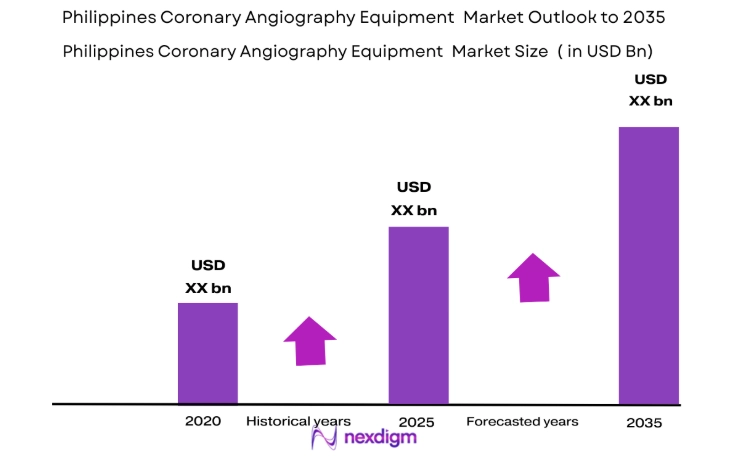
The coronary angiography equipment market has witnessed considerable growth over recent years, driven by an increasing prevalence of cardiovascular diseases and advancements in imaging technology. Based on a recent historical assessment, the market size for coronary angiography equipment stands at approximately USD ~ billion. This growth is propelled by the rising demand for advanced diagnostic techniques, the expansion of healthcare infrastructure, and government initiatives aimed at improving the healthcare sector. The introduction of technologically advanced, minimally invasive imaging systems also plays a crucial role in increasing adoption rates, particularly in urban hospitals and diagnostic centers. The availability of innovative devices that improve image quality and reduce radiation exposure is further fueling the market’s expansion.
The Philippines is experiencing a surge in demand for coronary angiography equipment, primarily in its metropolitan areas such as Metro Manila, Cebu, and Davao. These regions are home to some of the country’s largest hospitals, medical research facilities, and diagnostic centers. The demand is particularly strong in urban centers due to better healthcare infrastructure, higher healthcare awareness, and access to cutting-edge medical technology. As the healthcare system improves, the government’s support for advanced diagnostics and treatment options in major cities also drives the demand for coronary angiography equipment. Additionally, the rise in medical tourism, especially in regions like Cebu, contributes to the growth of the market as international patients seek high-quality cardiac care.
Market Segmentation
By Product Type:
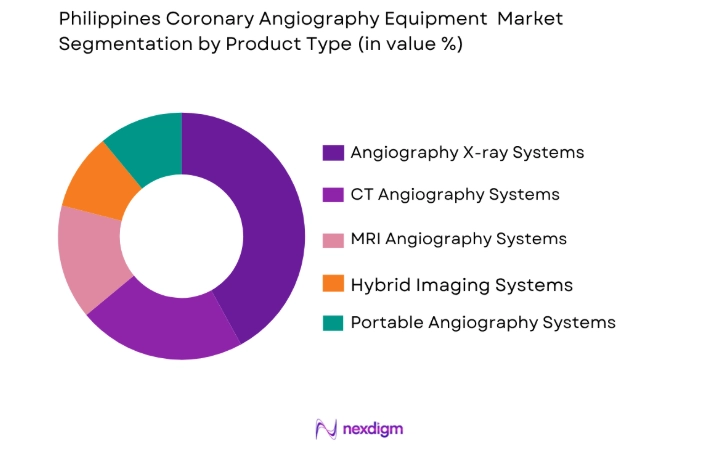
The coronary angiography equipment market is segmented by product type into angiography X-ray systems, CT angiography systems, MRI angiography systems, hybrid imaging systems, and portable angiography systems. Recently, angiography X-ray systems have a dominant market share due to factors such as their widespread use in diagnostic procedures, high-quality imaging, and cost-effectiveness. These systems have become the preferred choice in hospitals and diagnostic centers due to their ability to provide detailed images for accurate diagnosis, making them the most commonly used equipment in the cardiovascular diagnostic market.
By Platform Type:
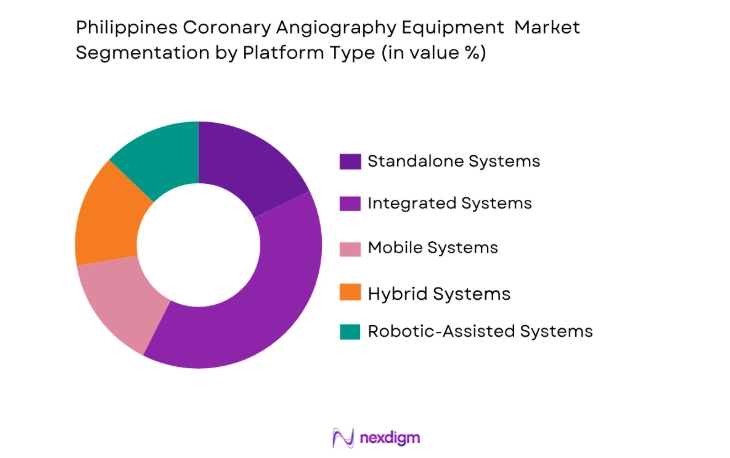
The market for coronary angiography equipment is segmented by platform type into standalone systems, integrated systems, mobile systems, hybrid systems, and robotic-assisted systems. Integrated systems dominate the market as they provide comprehensive diagnostic capabilities in a single unit, combining imaging modalities like X-ray, CT, and MRI. Hospitals and diagnostic centers prefer integrated systems due to their efficiency, space-saving designs, and ability to provide precise imaging for various cardiovascular procedures. The integration of multiple technologies into one platform enhances workflow and reduces the overall cost of ownership, making these systems more attractive to healthcare providers.
Competitive Landscape
The coronary angiography equipment market is highly competitive, with several global and regional players striving for dominance. Major companies focus on product innovations, strategic acquisitions, and partnerships to enhance their market presence. Consolidation is expected to continue as large companies merge with or acquire smaller players to expand their portfolio and technology offerings. The market is also influenced by the increasing adoption of advanced technologies, such as hybrid imaging systems and robotic-assisted angiography, which provide better diagnostic accuracy and improved patient outcomes. Leading players are investing in research and development to enhance the functionality and performance of their products, driving the overall growth of the market.
| Company Name | Establishment Year | Headquarters | Technology Focus | Market Reach | Key Products | Revenue (USD) | Additional Parameter |
| GE Healthcare | 1892 | Chicago, USA | ~ | ~ | ~ | ~ | ~ |
| Siemens Healthineers | 1847 | Erlangen, Germany | ~ | ~ | ~ | ~ | ~ |
| Philips Healthcare | 1891 | Amsterdam, Netherlands | ~ | ~ | ~ | ~ | ~ |
| Canon Medical Systems | 1937 | Tokyo, Japan | ~ | ~ | ~ | ~ | ~ |
| Medtronic | 1949 | Dublin, Ireland | ~ | ~ | ~ | ~ | ~ |
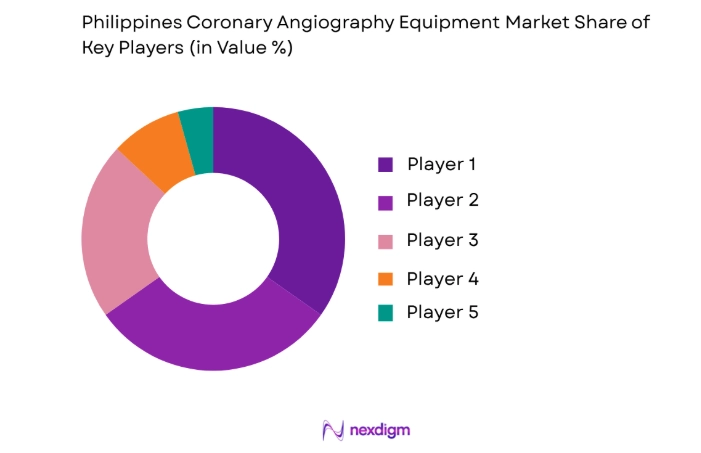
Philippines Coronary Angiography Equipment Market Analysis
Growth Drivers
Technological Advancements:
The continuous innovation in coronary angiography equipment, especially in imaging technology, is a primary growth driver. The integration of AI and machine learning in imaging systems allows for quicker, more accurate diagnoses. These advancements help healthcare providers improve patient outcomes by offering enhanced image resolution, reducing radiation exposure, and enabling real-time decision-making. With the global emphasis on improving diagnostic accuracy and the increasing demand for minimally invasive procedures, technological advancements are driving the adoption of new angiography systems. Healthcare institutions are actively upgrading their equipment to incorporate the latest technologies to meet these needs, and this trend is expected to persist as healthcare providers continue to prioritize diagnostic precision and efficiency.
Increasing Incidence of Cardiovascular Diseases:
The rising prevalence of cardiovascular diseases globally has significantly increased the demand for coronary angiography equipment. As lifestyle-related diseases such as obesity, diabetes, and hypertension rise, the need for effective diagnostic tools to detect cardiovascular issues has become more critical. Coronary angiography is an essential procedure for diagnosing heart conditions, and as the incidence of these diseases increases, hospitals and diagnostic centers are investing in more advanced angiography equipment. This growing patient population is expected to drive the market forward as healthcare providers seek to meet the rising demand for cardiovascular care, particularly in urban regions with better access to healthcare facilities.
Market Challenges
High Cost of Equipment:
One of the major challenges facing the coronary angiography equipment market is the high upfront cost of these systems. The acquisition of advanced angiography equipment involves substantial capital investment, which can be a barrier for smaller hospitals and healthcare facilities, particularly in developing regions. Despite the long-term benefits, such as improved diagnostic accuracy and patient outcomes, the high initial costs often deter healthcare providers from upgrading or expanding their equipment. Additionally, maintenance and operation costs further increase the total cost of ownership, making it difficult for some institutions to adopt the latest technologies. This challenge may slow the adoption of advanced angiography equipment in certain markets and hinder overall market growth.
Regulatory and Certification Hurdles:
Regulatory approval and certification processes for coronary angiography equipment are complex and time-consuming. The stringent regulations and lengthy approval processes often delay the introduction of new products to the market. These regulations are in place to ensure the safety and efficacy of medical devices, but they can also be a significant barrier for manufacturers seeking to introduce innovative products. The lengthy timelines involved in obtaining regulatory approval, especially in different regions, can result in delays and increased costs for companies in the market. Furthermore, compliance with different regulations in various countries adds another layer of complexity for global manufacturers, creating additional challenges in the expansion of the market.
Opportunities
Growth in Medical Tourism:
The rise in medical tourism, especially in countries like the Philippines, presents a significant opportunity for the coronary angiography equipment market. As patients from countries with advanced healthcare systems seek high-quality, cost-effective medical treatments abroad, the demand for advanced diagnostic and treatment technologies increases. The Philippines, with its competitive healthcare costs and improving medical infrastructure, is emerging as a popular destination for medical tourism. This growing influx of international patients presents a significant opportunity for local hospitals and diagnostic centers to invest in state-of-the-art coronary angiography equipment, catering to both domestic and international patients seeking high-quality cardiac care.
Expansion of Healthcare Infrastructure in Rural Areas:
Another key opportunity lies in the expansion of healthcare infrastructure in rural and underserved areas. As governments and private sector players focus on improving healthcare access across the country, rural hospitals and clinics are increasingly equipped with advanced diagnostic equipment, including coronary angiography systems. This expansion helps bridge the gap in healthcare accessibility between urban and rural regions, and as these facilities are upgraded, the demand for coronary angiography equipment is expected to rise. With increasing government support for healthcare in rural regions and a focus on reducing healthcare disparities, there is a growing market for angiography equipment outside of metropolitan areas.
Future Outlook
The future outlook for the coronary angiography equipment market remains positive, driven by several factors. Technological innovations such as the integration of AI, hybrid imaging systems, and robotic-assisted angiography are expected to play a significant role in shaping the market over the next five years. Additionally, ongoing improvements in healthcare infrastructure, particularly in developing regions, are likely to drive the demand for advanced diagnostic equipment. With increasing government support and a focus on enhancing healthcare access, the coronary angiography equipment market is poised for significant growth, especially as the incidence of cardiovascular diseases continues to rise.
Major Players
- GE Healthcare
- Siemens Healthineers
- Philips Healthcare
- Canon Medical Systems
- Medtronic
- Fujifilm Healthcare
- Samsung Medison
- Hitachi Healthcare
- Toshiba Medical Systems
- Shimadzu Corporation
- Hologic
- Carestream Health
- Agfa-Gevaert Group
- Esaote
- Konica Minolta Healthcare
Key Target Audience
- Investments and venture capitalist firms
- Government and regulatory bodies
- Healthcare institutions and hospitals
- Diagnostic centers
- Cardiovascular research organizations
- Medical device distributors
- Medical technology providers
- Health insurance companies
Research Methodology
Step 1: Identification of Key Variables
The first step involves identifying the critical factors that influence the market, such as product types, technological innovations, end-users, and regional trends.
Step 2: Market Analysis and Construction
After identifying key variables, the market is segmented based on relevant parameters, including product type, platform type, and end-user segmentation. A detailed analysis of each segment follows to understand its contribution to the overall market.
Step 3: Hypothesis Validation and Expert Consultation
Expert consultations are conducted to validate initial hypotheses and gain insights into market trends, challenges, and opportunities from industry leaders, manufacturers, and stakeholders.
Step 4: Research Synthesis and Final Output
The final research output synthesizes all findings from previous steps to provide an in-depth market analysis, with conclusions and recommendations for stakeholders and decision-makers.

- Executive Summary
- Research Methodology (Definitions, Scope, Industry Assumptions, Market Sizing Approach, Primary & Secondary Research Framework, Data Collection & Verification Protocol, Analytic Models & Forecast Methodology, Limitations & Research Validity Checks)

- Market Definition and Scope
- Value Chain & Stakeholder Ecosystem
- Regulatory / Certification Landscape
- Sector Dynamics Affecting Demand

- Growth Drivers
Increasing Incidence of Cardiovascular Diseases
Technological Advancements in Imaging Systems
Government Initiatives and Healthcare Infrastructure Development - Market Challenges
High Initial Investment Costs
Limited Access to Advanced Healthcare Facilities in Rural Areas
Regulatory Hurdles and Certification Delays - Market Opportunities
Expansion of Healthcare Infrastructure
Rising Demand for Non-invasive Imaging Techniques
Growth in Medical Tourism - Trends
Adoption of AI in Imaging Systems
Integration of Robotic-Assisted Angiography
Rise in Demand for Portable and Mobile Unit - Government Regulations

- By Market Value, 2020-2025
- By Installed Units, 2020-2025
- By Average System Price, 2020-2025
- By System Complexity Tier, 2020-2025

- By System Type (In Value%)
Angiography X-ray Systems
CT Angiography Systems
MRI Angiography Systems
Hybrid Imaging Systems
Portable Angiography Systems - By Platform Type (In Value%)
Standalone Systems
Integrated Systems
Mobile Systems
Hybrid Systems
Robotic-Assisted Systems - By Fitment Type (In Value%)
Fixed Systems
Portable Systems
Modular Systems
Mobile Units
Hybrid Units - By EndUser Segment (In Value%)
Hospitals
Diagnostic Centers
Ambulatory Surgical Centers
Specialized Cardiac Centers
Research Institutions

- Market Share Analysis
- CrossComparison Parameters (Product Type, Platform Type, Market Value, Installed Units, Growth Rate)
- SWOT Analysis of Key Competitors
- Pricing & Procurement Analysis
- Porter’s Five Forces
- Key Players
GE Healthcare
Philips Healthcare
Siemens Healthineers
Canon Medical Systems
Hitachi Healthcare
Medtronic
Fujifilm Healthcare
Samsung Medison
Toshiba Medical Systems
Shimadzu Corporation
Hologic
Carestream Health
Agfa-Gevaert Group
Esaote
Konica Minolta Healthcare

- Hospitals’ Growing Focus on Cardiology
- Emerging Demand from Diagnostic Centers
- Expansion of Cardiac Care in Rural Areas
- Increased Collaboration Between Hospitals and Research Institutions

- Forecast Market Value, 2026-2035
- Forecast Installed Units, 2026-2035
- Price Forecast by System Tier, 2026-2035
- Future Demand by Platform, 2026-2035


 Request a Sample
 Ask for Customization
 Get a Quote
 Enquire Now