
 Download PDF
 Download PDF
Market Overview
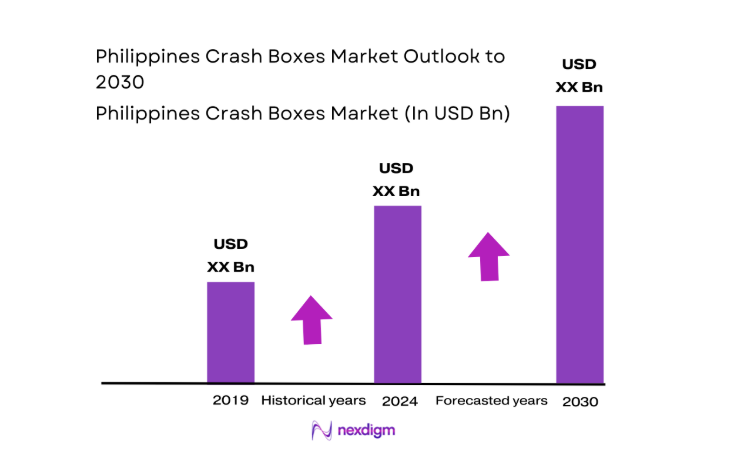
The Philippines Crash Boxes market current size stands at around USD ~ million, reflecting steady momentum supported by rising safety integration across passenger and commercial vehicles. In the most recent year, the market expanded to nearly USD ~ million, driven by increased installation volumes of ~ units across OEM and aftermarket channels. Growth has been reinforced by higher deployment of crash management systems in ~ vehicles, alongside expanding imports of lightweight aluminum and hybrid crash structures, indicating a gradual shift toward higher-value safety components.
Market activity is primarily concentrated in Metro Manila, Central Luzon, and CALABARZON, where vehicle assembly hubs, logistics corridors, and major dealership networks are located. These regions benefit from stronger repair ecosystems, higher fleet density, and faster adoption of safety-focused vehicle platforms. The presence of major ports and industrial parks also supports smoother inflow of crash box components, while regulatory alignment with international vehicle safety frameworks further strengthens demand concentration in these urban and peri-urban automotive clusters.
Market Segmentation
By Fleet Type
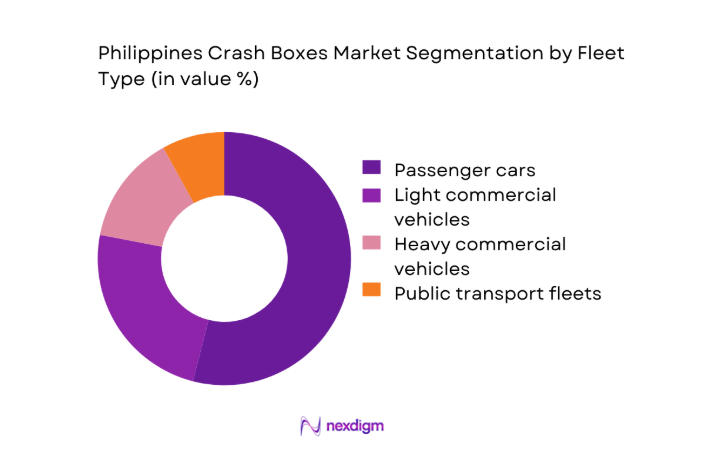
Passenger cars dominate the Philippines crash boxes market due to their significantly larger parc size and higher replacement frequency following minor and moderate collisions. The segment benefits from consistent demand across both OEM fitment and aftermarket repair channels, supported by urban traffic density and increasing insurance penetration. Light commercial vehicles follow closely, driven by last-mile delivery expansion and fleet modernization programs. Heavy commercial vehicles and public transport fleets contribute steadily, particularly through refurbishment cycles rather than new installations. Overall, fleet-based demand remains structurally tied to accident exposure, vehicle utilization intensity, and the growing emphasis on cost-efficient crash repair systems.
By Technology Architecture
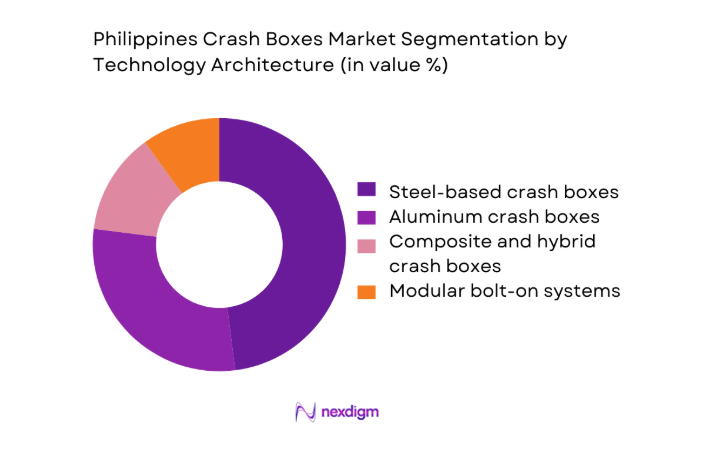
Steel-based crash boxes continue to lead the market due to cost efficiency and compatibility with mass-market vehicle platforms. However, aluminum crash boxes are gaining traction as OEMs prioritize weight reduction and improved energy absorption performance. Composite and hybrid material systems remain niche but are increasingly specified in premium and electric vehicle platforms. Modular bolt-on crash box systems are also expanding rapidly, particularly in the aftermarket, as they reduce repair time and total replacement cost. This technology shift reflects a broader transition toward repair-friendly and performance-optimized crash management architectures.
Competitive Landscape
The Philippines crash boxes market shows moderate concentration, with a mix of global automotive safety suppliers and regional component manufacturers serving OEM and aftermarket demand. Competitive intensity is shaped by technology depth, supply chain reliability, and long-term platform approvals rather than price competition alone.
| Company Name | Establishment Year | Headquarters | Formulation Depth | Distribution Reach | Regulatory Readiness | Service Capability | Channel Strength | Pricing Flexibility |
| Autoliv | 1953 | Sweden | ~ | ~ | ~ | ~ | ~ | ~ |
| ZF Friedrichshafen | 1915 | Germany | ~ | ~ | ~ | ~ | ~ | ~ |
| Magna International | 1957 | Canada | ~ | ~ | ~ | ~ | ~ | ~ |
| Gestamp Automoción | 1997 | Spain | ~ | ~ | ~ | ~ | ~ | ~ |
| Hyundai Mobis | 1977 | South Korea | ~ | ~ | ~ | ~ | ~ | ~ |
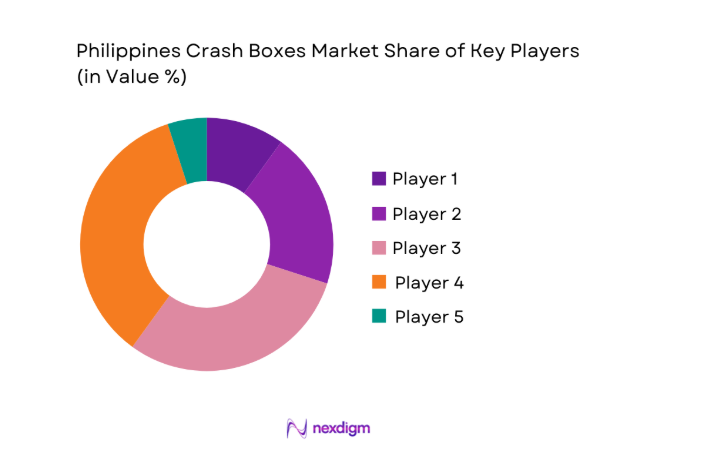
Philippines Crash Boxes Market Analysis
Growth Drivers
Rising vehicle safety awareness among Filipino consumers
Growing awareness of vehicle safety has translated into higher demand for crash protection components across new and existing vehicles. In recent years, installations of crash management systems reached ~ units annually, reflecting adoption across ~ vehicles in urban centers. Insurance-linked repair mandates have also driven the replacement of damaged crash boxes valued at USD ~ million each year. As safety awareness deepens, workshops report servicing volumes exceeding ~ systems annually, reinforcing steady aftermarket consumption. This behavioral shift has created a measurable uplift in unit movement and has strengthened the business case for OEMs to standardize crash box integration across mid-range vehicle platforms.
Increasing adoption of global NCAP-aligned safety standards by OEMs
OEM alignment with international crash performance benchmarks has directly expanded demand for standardized energy absorption components. Platform upgrades have led to the installation of crash boxes in ~ vehicles annually, up from ~ vehicles in earlier cycles. This transition has supported procurement volumes of ~ units per year across assembly operations, translating into market value expansion of USD ~ million through higher-specification parts. The push for improved frontal and rear impact ratings has also increased average system complexity, raising installed base figures to ~ systems nationwide and accelerating the shift toward modular crash management solutions.
Challenges
Limited local manufacturing base for advanced crash box technologies
The domestic supply chain remains constrained, with most advanced crash boxes imported, resulting in dependence on ~ shipments annually from overseas suppliers. This reliance has pushed logistics-related expenditures to around USD ~ million per year, affecting lead times and inventory stability. Local fabrication capacity accounts for only ~ units annually, insufficient to meet rising OEM and aftermarket demand. As a result, service centers often face component shortages impacting ~ vehicles each month, creating operational bottlenecks. The lack of localized production also limits technology transfer and slows the adoption of lightweight and composite crash box systems.
Price sensitivity in mass-market vehicle segments
Cost considerations heavily influence purchasing decisions, particularly in entry-level passenger vehicles where crash box replacement budgets average USD ~ million across the repair ecosystem annually. Workshops typically service ~ units per year using lower-cost alternatives, which constrains penetration of premium safety components. Fleet operators managing ~ vehicles prioritize affordability over advanced material specifications, limiting demand for higher-priced aluminum and hybrid crash boxes. This sensitivity suppresses margin expansion for suppliers and restricts investment in localized manufacturing, reinforcing a cycle of dependency on imported, cost-optimized components rather than innovation-led upgrades.
Opportunities
Localization of crash box manufacturing within ASEAN supply chains
The expansion of regional automotive manufacturing presents strong potential for localized crash box production. Establishing facilities capable of producing ~ units annually could reduce import dependence by a significant margin and retain USD ~ million within the domestic value chain. Proximity to vehicle assembly clusters would shorten delivery cycles for ~ systems each year, improving supply resilience. Localization also supports the development of skilled labor pools across ~ plants and enables faster customization for platform-specific requirements, positioning the Philippines as a competitive node in the broader ASEAN automotive safety components network.
Rising electrification creating demand for lightweight crash structures
The gradual shift toward electric and hybrid vehicles is increasing demand for lightweight crash management systems designed to protect battery packs. Recent platform introductions have driven installations of ~ units of aluminum and hybrid crash boxes across ~ vehicles annually. This segment already represents USD ~ million in emerging value, with strong growth potential as electrified fleets expand. Lightweight structures also support range efficiency, making them strategically important for OEMs. As electrification accelerates, suppliers positioned in advanced materials stand to capture a growing share of next-generation crash safety demand.
Future Outlook
The Philippines crash boxes market is expected to evolve steadily toward higher-value safety components as vehicle platforms modernize and regulatory alignment deepens. Growing electrification, expanding fleet renewal programs, and rising insurance-linked repair standards will shape long-term demand. Over the coming years, the market will increasingly favor modular, lightweight, and repair-friendly crash management systems, strengthening opportunities for suppliers that can combine localized production with advanced engineering capabilities.
Major Players
- Autoliv
- ZF Friedrichshafen
- Magna International
- Gestamp Automoción
- Benteler Automotive
- thyssenkrupp Automotive Technology
- Martinrea International
- CIE Automotive
- Aisin Corporation
- Toyoda Gosei
- Hyundai Mobis
- KIRCHHOFF Automotive
- Autokiniton
- OPmobility
- Valeo
Key Target Audience
- Automotive OEMs and vehicle assemblers
- Tier I and Tier II automotive component suppliers
- Fleet operators and logistics companies
- Public transport authorities and fleet modernization agencies
- Automotive aftermarket distributors and service chains
- Insurance companies and accident repair networks
- Investments and venture capital firms
- Government and regulatory bodies including the Department of Transportation and the Land Transportation Office
Research Methodology
Step 1: Identification of Key Variables
Core demand drivers, supply constraints, and regulatory influences were mapped across OEM and aftermarket channels. Key performance indicators included installation volumes, replacement frequency, and material adoption trends. Market boundaries were defined by vehicle classes and crash management system architectures.
Step 2: Market Analysis and Construction
Historical and current market behavior was analyzed using bottom-up aggregation of component demand. Supply chain flows, import dependency, and localization potential were assessed to build a comprehensive market structure model aligned with industry realities.
Step 3: Hypothesis Validation and Expert Consultation
Industry practitioners across manufacturing, repair networks, and fleet operations were consulted to validate assumptions. Their inputs helped refine demand elasticity, technology adoption timelines, and operational bottlenecks influencing market performance.
Step 4: Research Synthesis and Final Output
All findings were consolidated into a unified analytical framework. Insights were stress-tested for consistency and relevance, ensuring the final output reflects practical market dynamics and strategic decision-making needs.

- Executive Summary
- Research Methodology (Market definitions and scope boundaries, crash box taxonomy across front rear and modular energy absorbers, market sizing logic by vehicle production and crash module content value, revenue attribution across components materials and service parts, primary interview program with OEMs Tier 1 suppliers and body structure specialists, data triangulation validation assumptions and limitations)

- Definition and scope of automotive crash box systems
- Market evolution in relation to vehicle safety standards
- Usage pathways across OEM and aftermarket channels
- Ecosystem structure including Tier I, Tier II, and assemblers
- Supply chain and localization dynamics in ASEAN context
- Regulatory and road safety environment in the Philippines

- Growth Drivers
Rising vehicle safety awareness among Filipino consumers
Increasing adoption of global NCAP-aligned safety standards by OEMs
Growth in light commercial vehicle and fleet-based transport demand
Expansion of local vehicle assembly and CKD operations
Higher accident rates driving demand for crash repair and replacement parts
Integration of crash management systems with modern vehicle platforms - Challenges
Limited local manufacturing base for advanced crash box technologies
Price sensitivity in mass-market vehicle segments
Dependence on imported steel and aluminum components
Fragmented aftermarket with quality consistency issues
Slow regulatory enforcement of advanced safety components
Logistics and supply chain disruptions affecting Tier II suppliers - Opportunities
Localization of crash box manufacturing within ASEAN supply chains
Rising electrification creating demand for lightweight crash structures
Growth in fleet renewal programs for public transport modernization
Aftermarket premiumization for certified safety components
Partnerships between global Tier I suppliers and local assemblers
Expansion of export-oriented production for Southeast Asia - Trends
Shift from steel to aluminum and hybrid crash box materials
Increased modularization of front-end crash management systems
Greater OEM focus on repair-friendly crash box designs
Integration of crash structures with pedestrian safety systems
Use of simulation and digital twin tools in crash box design
Standardization of crash performance metrics across platforms - Government Regulations
- SWOT Analysis
- Stakeholder and Ecosystem Analysis
- Porter’s Five Forces Analysis
- Competition Intensity and Ecosystem Mapping

- By Value, 2019–2024
- By Volume, 2019–2024
- By Installed Base, 2019–2024
- By Average Selling Price, 2019–2024

- By Fleet Type (in Value %)
Passenger cars
Light commercial vehicles
Heavy commercial vehicles
Public transport fleets including buses and jeepneys - By Application (in Value %)
Front crash management systems
Rear crash management systems
Side impact energy absorption systems - By Technology Architecture (in Value %)
Steel-based crash boxes
Aluminum crash boxes
Composite and hybrid material crash boxes
Modular bolt-on crash box systems - By End-Use Industry (in Value %)
Automotive OEMs
Aftermarket replacement suppliers
Fleet operators and transport companies
Bus and truck body builders - By Connectivity Type (in Value %)
Non-connected passive crash boxes
Sensor-integrated crash boxes for ADAS alignment - By Region (in Value %)
National Capital Region
Luzon
Visayas
Mindanao

- Market structure and competitive positioning
Market share snapshot of major players - Cross Comparison Parameters (material type, energy absorption rating, component weight, unit cost, localization rate, OEM platform approvals, production capacity in ASEAN, aftermarket coverage)
- SWOT Analysis of Key Players
- Pricing and Commercial Model Benchmarking
- Detailed Profiles of Major Companies
Autoliv
ZF Friedrichshafen
Magna International
Gestamp Automoción
Benteler Automotive
thyssenkrupp Automotive Technology
Martinrea International
CIE Automotive
Aisin Corporation
Toyoda Gosei
Hyundai Mobis
KIRCHHOFF Automotive
Autokiniton
OPmobility
Valeo

- Demand and utilization drivers across OEM and fleet segments
- Procurement and tender dynamics among vehicle assemblers
- Buying criteria including safety certification and lifecycle cost
- Budget allocation and financing preferences in fleet upgrades
- Implementation barriers and risk factors in aftermarket adoption
- Post-purchase service and warranty expectations

- By Value, 2025–2030
- By Volume, 2025–2030
- By Installed Base, 2025–2030
- By Average Selling Price, 2025–2030


 Request a Sample
 Ask for Customization
 Get a Quote
 Enquire Now