
 Download PDF
Market Overview
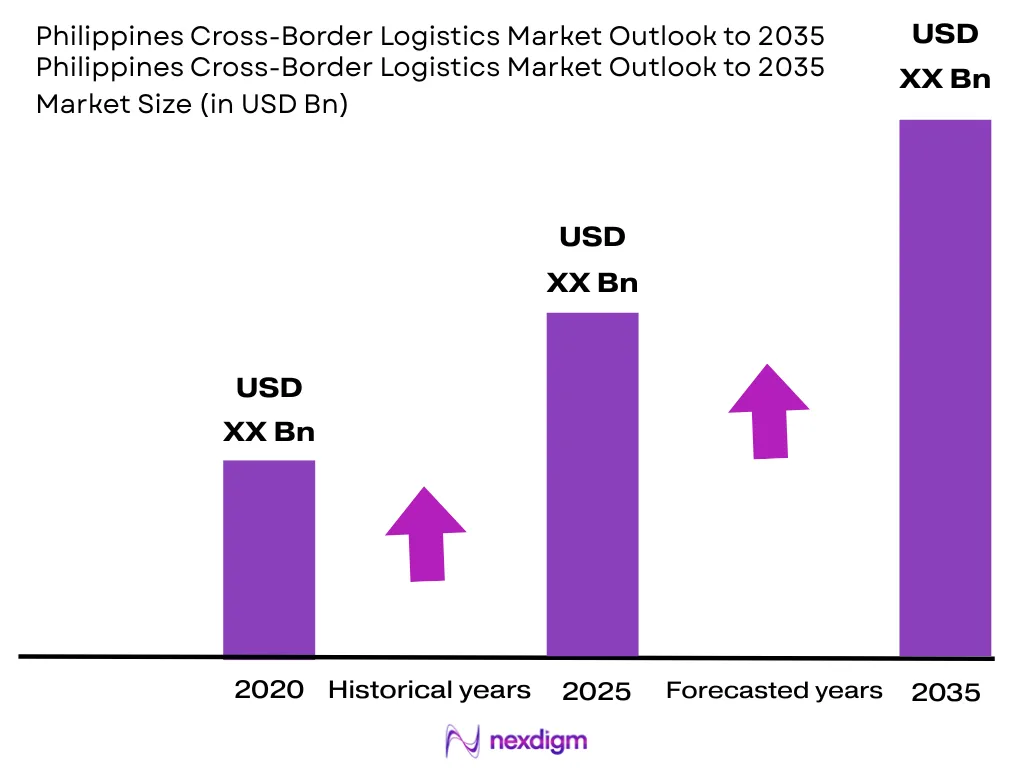
The Philippines Cross-Border Logistics Market was valued at USD ~ Billion in 2024 and is anticipated to expand at a CAGR of ~% during 2026–2035. The market is primarily driven by explosive cross-border e-commerce growth, regional economic integration under the Regional Comprehensive Economic Partnership, and continued liberalization of foreign ownership limits under the 2023 Public Service Act. The Philippines Freight Forwarding Market alone is projected to grow from USD 2.33 billion in 2025 to USD 3.12 billion by 2030, at a CAGR of 6.03%, according to Mordor Intelligence, with SM Investments Corp. (including 2GO Group), LBC Express Holdings, DHL Group, Royal Cargo, and DSV A/S recognized as the major companies operating in the market. Approximately 50% of Filipino shoppers now purchase from international retailers, primarily in China, the United States, and South Korea, boosting demand for international freight services including courier, express, and parcel delivery. The Philippine Ports Authority reported a 19.8% increase in container throughput at Manila ports in 2024, handling more than 5.2 million TEUs, while the Bureau of Customs reported that import clearances for retail and e-commerce goods in Metro Manila increased by 22.6% year-on-year, placing significant strain on last-mile delivery networks and warehouse facilities currently operating at roughly 94% capacity, according to the Department of Transportation’s 2024 Logistics Performance Report.
Market Segmentation
By Mode of Transport
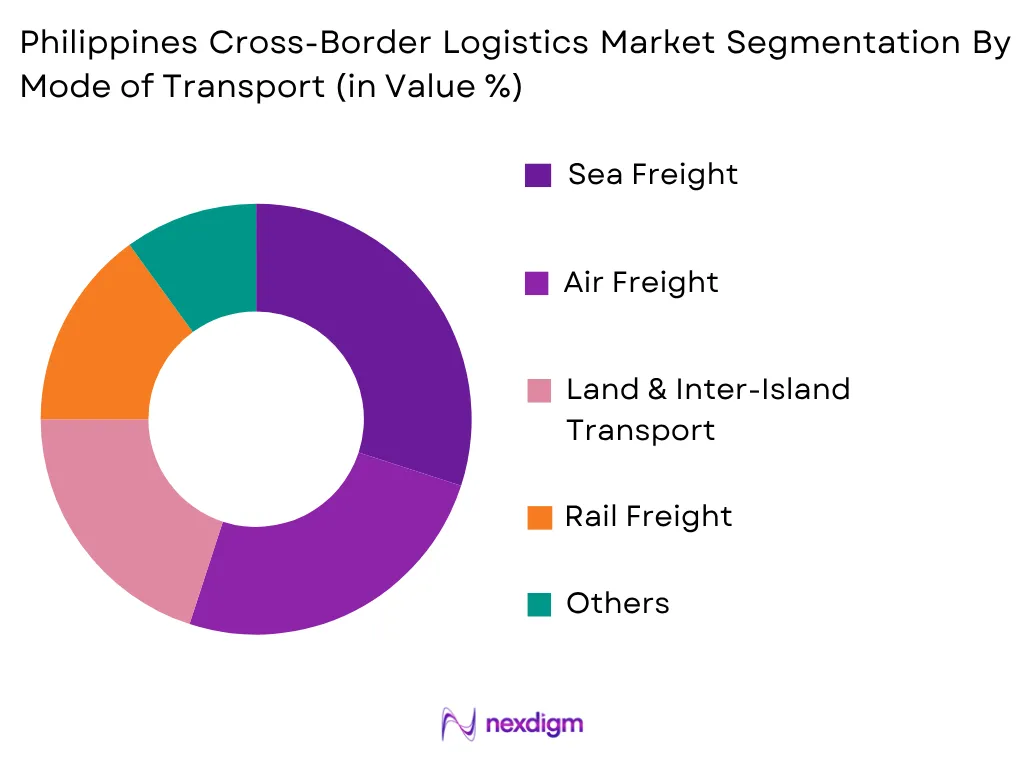
Among these, Sea Freight continues to dominate the Philippines Cross-Border Logistics Market, reflecting the archipelago’s fundamental reliance on sea channels for both inter-island and international cargo movement across its more than 7,000 islands. However, Air Freight represents the fastest-growing mode as electronics and biologics shippers increasingly purchase speed to protect value, with the cold chain segment of the freight and logistics market widening its share faster than ambient space, supported by pharmaceutical supply chains aligned under ASEAN regulations. A.P. Moller-Maersk opened its largest distribution center to date in November 2024, a 10-hectare facility in Calamba, Laguna known as the Maersk Optimus Distribution Center, featuring 76,000 pallet positions and LEED credentials, signaling multinational demand for sustainable, temperature-controlled warehousing that enhances support for customer inventory networks along this vital transportation corridor.
By Trade Corridor
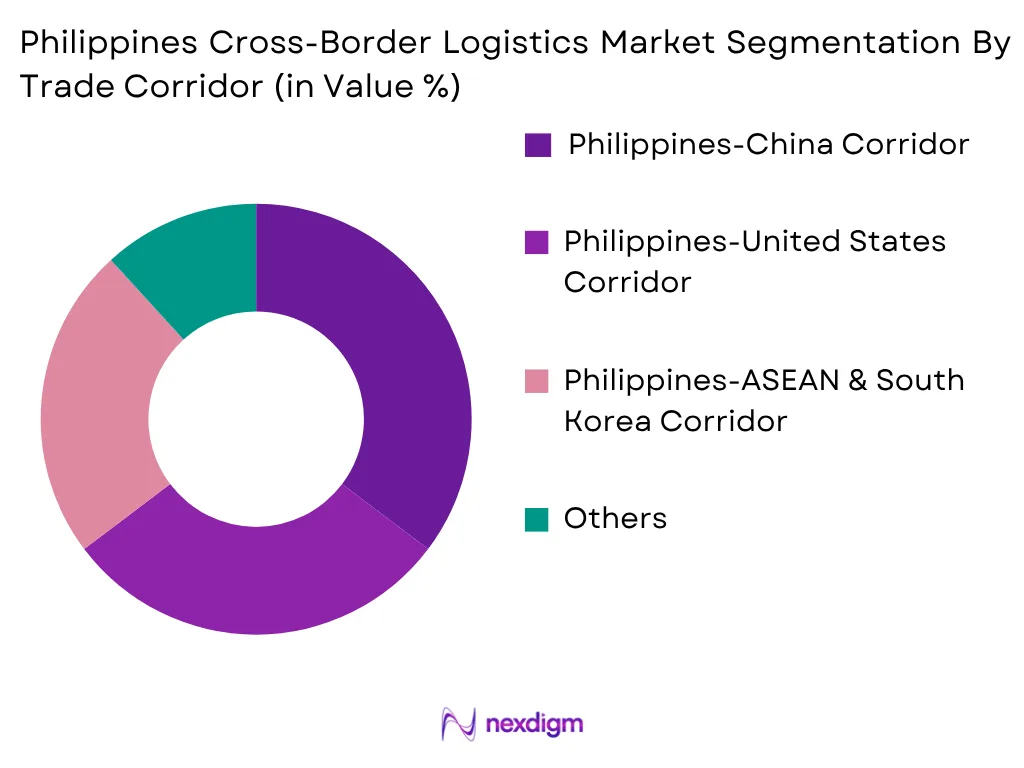
The Philippines-China Corridor represents a leading trade corridor within the Philippines Cross-Border Logistics Market, reflecting China’s position as one of the top three international shopping destinations for Filipino consumers alongside the United States and South Korea. Cross-border e-commerce is gaining significant momentum along these corridors, boosting demand for international freight services including courier, express, and parcel delivery. The Philippines-ASEAN Corridor is expected to see accelerated growth as Regional Comprehensive Economic Partnership implementation and broader ASEAN economic integration boost intra-Asia trade flows, while liberalized foreign-ownership limits under the 2023 Public Service Act have attracted global third-party logistics providers, exemplified by C.H. Robinson’s June 2024 inauguration of a Philippines office as part of the company’s broader Asia-Pacific expansion strategy.
Competitive Landscape
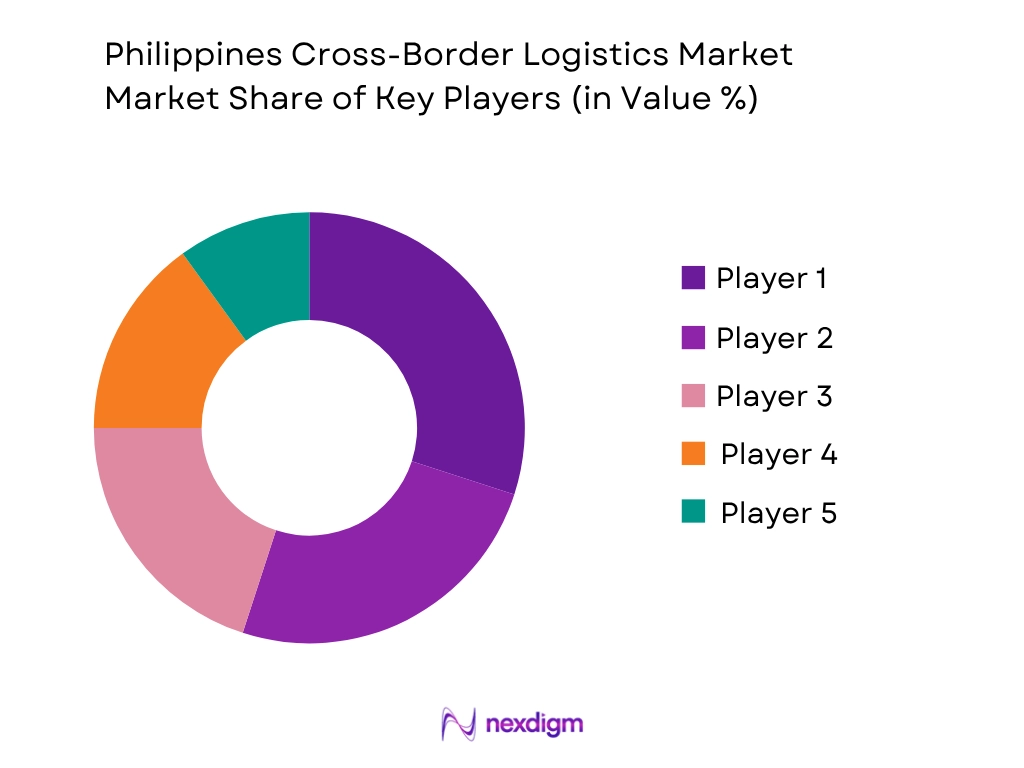
The Philippines Cross-Border Logistics Market is moderately fragmented, with established domestic shipping and courier conglomerates competing alongside multinational logistics providers that have expanded their presence following the liberalization of foreign ownership limits. Competition is primarily based on network capacity spanning the archipelago’s inter-island and international routes, customs brokerage expertise, cold chain capability, and the ability to serve the country’s rapidly growing cross-border e-commerce sector. 2GO Group, tracing its origins to William Lines Inc., founded on May 26, 1949, in Cebu City, and now majority-owned by SM Investments Corporation, operates as the largest integrated supply chain company in the Philippines, spanning 18 ports, 48 warehouses, and a fleet of ROPAX and cargo vessels. LBC Express, founded in 1945 as Luzon Brokerage Corporation by Carlos Araneta, has grown into the Philippines’ leading courier, cargo, and remittance company, operating a network of over 1,400 branches nationwide and international operations dating to its first overseas branch in San Francisco in 1985. International players including DHL Group, Royal Cargo, and DSV A/S continue to compete alongside newer entrants such as C.H. Robinson, which opened a Philippines office in June 2024, and A.P. Moller-Maersk, which committed USD 30 million in September 2024 to modernize crane systems and digital tracking at the Port of Manila.
| Company | Established | Headquarters | Primary Service | Cross-Border Network | Customs Brokerage | Digital Visibility Platform | Sustainability capability | Certifications & Complainces |
| 2GO Group (SM Investments Corp) | 1949 | ~ | ~ | ~ | ~ | ~ | ~ | ~ |
| LBC Express Holdings | 1945 | ~ | ~ | ~ | ~ | ~ | ~ | ~ |
| Airspeed | 1985 | ~ | ~ | ~ | ~ | ~ | ~ | ~ |
| DHL Group | 1969 | ~ | ~ | ~ | ~ | ~ | ~ | ~ |
| DSV A/S | 1976 | ~ | ~ | ~ | ~ | ~ | ~ | ~ |
Philippines Cross-Border Logistics Market Analysis
Growth Drivers
Explosive Cross-Border E-Commerce Growth
The Philippines Cross-Border Logistics Market is experiencing sustained growth due to explosive cross-border e-commerce activity, with approximately 50% of Filipino shoppers now purchasing from international retailers, primarily in China, the United States, and South Korea. This growth is boosting demand for international freight services including courier, express, and parcel delivery, while the Bureau of Customs reported that import clearances for retail and e-commerce goods in Metro Manila increased by 22.6% year-on-year, reflecting the scale of cross-border parcel volume growth. E-commerce platforms require fast and reliable delivery networks, prompting logistics companies to enhance operations with innovative strategies including investments in fleet management, distribution centers, and partnerships with third-party logistics providers to expedite cross-border deliveries, with the online seller base having grown from just 1,700 in March 2020 to 93,318 by January 2021, according to the Department of Trade and Industry, and continuing to expand steadily since.
RCEP and ASEAN Economic Integration with Liberalized Foreign Ownership
Regional Comprehensive Economic Partnership implementation and broader ASEAN economic integration continue to boost intra-Asia trade flows, creating substantial growth opportunities within the Philippines Cross-Border Logistics Market. Liberalized foreign-ownership limits under the 2023 Public Service Act have attracted global third-party logistics providers to establish or expand Philippine operations, exemplified by C.H. Robinson’s June 2024 inauguration of a Philippines office aligned with the company’s mission to deliver customized services across crucial Asia-Pacific markets. A.P. Moller-Maersk’s November 2024 opening of its largest distribution center to date, the 10-hectare Maersk Optimus Distribution Center in Calamba, Laguna, further illustrates the scale of multinational investment flowing into the Philippines as regional trade integration deepens and enhanced trade ties with ASEAN and other Asia-Pacific economies increase the need for international freight services and customs brokerage.
Market Challenges
Archipelago Geography and Port Dwell Time Inefficiencies
The Philippines Cross-Border Logistics Market faces significant challenges stemming from the country’s archipelago geography and persistent port dwell time inefficiencies. According to the World Bank, a shipping container takes nearly 44 days between entering a port in the Philippines and exiting for its destination, and reducing the time spent by ships at port could significantly improve the overall efficiency of the import-export process. The Philippines ranked 43rd out of 139 countries in the World Bank’s Logistics Performance Index 2023, an improvement of 0.4 points from 2018, but continued congestion at Manila ports, which handled more than 5.2 million TEUs in 2024 following a 19.8% increase in container throughput, continues to strain warehouse facilities currently operating at roughly 94% capacity, according to the Department of Transportation’s 2024 Logistics Performance Report.
Customs Procedural Complexity Despite Reform
Despite ongoing reform efforts, complex regulatory frameworks and inefficient customs procedures remain a key challenge within the Philippines Cross-Border Logistics Market. Inconsistent enforcement of import-export laws, cumbersome documentation processes, and bureaucratic delays often disrupt cargo movement and raise operational costs, particularly affecting time-sensitive shipments and discouraging international businesses from investing in local supply chain operations. While the Cross-Border Paperless Trade Framework has begun cutting customs clearance times, the resulting delays and uncertainty from legacy procedural inefficiencies continue to hinder the overall competitiveness of the Philippine logistics industry, underscoring the ongoing need to streamline customs protocols, improve transparency, and embrace digital solutions for document processing to overcome these persistent bottlenecks.
Market Opportunities
Cold Chain Expansion for Pharmaceuticals and Agri-Exports
Growing demand for cold chain logistics presents substantial opportunities within the Philippines Cross-Border Logistics Market, driven by increasing requirements for temperature-sensitive products spanning the expanding pharmaceutical industry and food exports. The Department of Agriculture placed PHP 3 billion (USD 51.77 million) in 2024 for 99 provincial cold stores aimed at trimming post-harvest waste by one-third, supporting the 21.8% growth in agricultural exports recorded from July to September 2024. Artificial intelligence-enabled cold chain management, monitoring temperature-sensitive pharmaceuticals and agricultural products throughout the supply chain, continues to support this growth trajectory, with the Maersk Optimus Distribution Center’s LEED-certified, temperature-controlled capacity exemplifying the scale of investment flowing into this high-growth segment.
Roll-On Roll-Off Nautical Highway Expansion
The expansion of Roll-On Roll-Off Nautical Highways continues to open new inter-island corridors, presenting meaningful opportunities for logistics providers seeking to improve connectivity across the Philippines’ archipelago geography. This expanding nautical highway network, combined with the government’s Logistics Efficiency Enhancement Program, which has allocated PHP 15.3 billion to improve Metro Manila’s logistics infrastructure, creates opportunities for logistics providers to develop more efficient inter-island distribution networks that reduce the friction historically associated with the country’s fragmented island geography, supporting both domestic distribution and the onward movement of cross-border cargo to and from the country’s various regional ports and population centers.
Future Outlook
The Philippines Cross-Border Logistics Market is expected to witness sustained expansion over the forecast period, supported by continued cross-border e-commerce growth, ongoing RCEP and ASEAN economic integration, and growing multinational investment in distribution and cold chain infrastructure. Continued implementation of the Cross-Border Paperless Trade Framework and the government’s Logistics Efficiency Enhancement Program is expected to gradually improve port dwell times and customs processing efficiency. The market is also likely to benefit from continued Roll-On Roll-Off Nautical Highway expansion and growing foreign direct investment following the 2023 Public Service Act’s liberalized ownership limits, supporting long-term growth across e-commerce, electronics, pharmaceutical, and agricultural export cross-border logistics applications.
Major Players
- 2GO Group (SM Investments Corp)
- LBC Express Holdings
- Airspeed
- DHL Group
- DSV A/S
- Royal Cargo
- A.P. Moller-Maersk
- C.H. Robinson Worldwide Inc.
- Kuehne+Nagel
- Kerry Logistics Network
- Philippine Postal Corporation (PHLPost)
- FedEx Corporation
- United Parcel Service (UPS)
- J&T Express
- Ninja Van Philippines
Key Target Audience
- Cross-Border Logistics and Freight Forwarding Companies
- E-Commerce Platforms and Retailers
- Electronics Manufacturers and Exporters
- Pharmaceutical and Cold Chain Companies
- Agricultural Export Companies
- Port Authorities and Terminal Operators
- Investment and Venture Capitalist Firms
- Government and Regulatory Bodies (Bureau of Customs (BOC), Philippine Ports Authority (PPA), Department of Transportation (DOTr))
- Technology Providers and System Integrators
Research Methodology
Step 1: Identification of Key Variables
The research process begins with identifying the complete ecosystem of the Philippines Cross-Border Logistics Market, including freight forwarders, customs brokers, warehousing providers, e-commerce platforms, and regulatory authorities. Extensive secondary research is conducted using company annual reports, government publications, trade associations, customs statistics, industry journals, and proprietary databases to determine the variables influencing market demand, pricing, shipment volumes, and technological developments.
Step 2: Market Analysis and Construction
Historical market information is collected and analyzed to estimate market size, shipment volumes, import-export activity, application-wise demand, and pricing trends. A combination of top-down and bottom-up approaches is used to estimate market revenues and validate segment-level performance. Consumption patterns across e-commerce, electronics, pharmaceuticals, and agricultural exports are evaluated to establish an accurate representation of the industry.
Step 3: Hypothesis Validation and Expert Consultation
The preliminary findings are validated through Computer-Assisted Telephone Interviews (CATIs) and structured discussions with logistics providers, procurement managers, customs brokers, regulatory experts, and senior executives operating within the Philippine logistics industry. These interviews help verify market assumptions, competitive developments, technology adoption trends, pricing dynamics, and future investment opportunities while refining the overall market estimates.
Step 4: Research Synthesis and Final Output
The final stage integrates insights obtained from primary interviews with quantitative information collected through secondary sources. Data triangulation techniques are applied to reconcile differences between supply-side and demand-side estimates, ensuring robust market forecasting. The report is then reviewed through multiple quality assurance checkpoints to deliver a comprehensive analysis covering market size, segmentation, competitive landscape, future outlook, and strategic recommendations for industry stakeholders.

- Executive Summary
- Research Methodology (Market Definitions and Assumptions, Abbreviations, Market Sizing Approach, Top-Down Analysis, Bottom-Up Analysis, Demand-Side Assessment, Supply-Side Assessment, Primary Industry Interviews, Trade Flow Assessment, Freight Intelligence Analysis, Data Triangulation, Forecasting Framework, Limitations and Future Conclusions)

- Definition and Scope
- Market Evolution and Industry Genesis
- Timeline of Major Industry Developments
- Cross-Border Logistics Industry Value Chain Analysis
- Supply Chain Analysis

- Growth Drivers (Explosive Cross-Border E-Commerce Growth, RCEP and ASEAN Economic Integration with Liberalized Foreign Ownership, Government Build Better More Infrastructure Pipeline, Growth in Cold Chain Pharmaceutical and Agricultural Exports, Rising Electronics and Biologics Air Freight Demand, Port Capacity Expansion)
- Market Challenges (Archipelago Geography and Port Dwell Time Inefficiencies, Customs Procedural Complexity Despite Reform, Warehouse Capacity Constraints, High Fuel and Transportation Costs, Regulatory Compliance Complexity)
- Market Opportunities (Cold Chain Expansion for Pharmaceuticals and Agri-Exports, Roll-On Roll-Off Nautical Highway Expansion, Digital Customs and Paperless Trade Adoption, Multinational 3PL Market Entry, Underserved Regional Distribution Network Expansion)
- Market Trends (Growth of Cross-Border Paperless Trade Framework Adoption, Cold Storage Infrastructure Investment, Multinational Distribution Center Development, Air Freight Modal Shift for High-Value Goods, Consolidation Through Mergers and Acquisitions)
- Government Regulations (Bureau of Customs Import Clearance Procedures, 2023 Public Service Act Foreign Ownership Liberalization, Cross-Border Paperless Trade Framework, Logistics Efficiency Enhancement Program, Philippine Ports Authority Regulations)
- Import and Export Analysis (Trade Volume, Major Import Sources, Export Destinations, HS Code Analysis, Trade Balance)
- Infrastructure Availability Analysis (Manila Ports, Roll-On Roll-Off Nautical Highways, Cold Storage Facilities, Warehousing Capacity, Airport Cargo Terminals)
- Technology Landscape (Digital Customs Platforms, Cold Chain Monitoring Systems, Route Optimization Software, Automated Warehouse Management Systems, Real-Time Cargo Tracking)
- Sustainability Assessment (LEED-Certified Distribution Centers, Fleet Modernization, Carbon Footprint Reduction, Green Supply Chain Initiatives, Post-Harvest Waste Reduction)
- PESTLE Analysis
- SWOT Analysis
- Porter’s Five Forces Analysis
- Stakeholder Ecosystem
- Competition Ecosystem

- By Market Value (2020-2025)
- By Cargo/Container Throughput (2020-2025)
- By Average Cost Per Shipment (2020-2025)

- By Mode of Transport (In Value %)
Sea Freight
Air Freight
Land & Inter-Island Transport
Rail Freight - By Service Type (In Value %)
Freight Forwarding
Customs Brokerage
Warehousing & Distribution
Courier, Express & Parcel (CEP) - By End User (In Value %)
E-Commerce & Retail
Electronics
Pharmaceuticals & Cold Chain
Agriculture & Food Export - By Trade Corridor (In Value %)
Philippines-China Corridor
Philippines-United States Corridor
Philippines-ASEAN & South Korea Corridor - By Region (In Value %)
Central Region
East Region
West Region
North Region
North-East Region

- Market Share of Major Players (By Value, Volume, Mode of Transport, Service Type, Trade Corridor)
- Cross Comparison Parameters (Service Portfolio Breadth, Customs Brokerage Capability, Application Technical Support Capability, Network Capacity, Regulatory Compliance & Certifications, E-Commerce Customer Base, Innovation & New Service Launch Frequency)
- SWOT Analysis of Major Players
- Pricing Analysis by Service Category and Trade Lane
- Network Capacity Analysis
- Warehousing and Distribution Footprint Analysis
- Distribution Network Analysis
- Innovation Benchmarking
- Detailed Profiles of Major Companies
2GO Group (SM Investments Corp)
LBC Express Holdings
Airspeed
DHL Group
DSV A/S
Royal Cargo
A.P. Moller-Maersk
C.H. Robinson Worldwide Inc.
Kuehne+Nagel
Kerry Logistics Network
Philippine Postal Corporation (PHLPost)
FedEx Corporation
United Parcel Service (UPS)
J&T Express
Ninja Van Philippines

- Consumption Pattern Analysis (Shipment Volume, Order Size, Product Category Penetration, Seasonal Demand, Reformulation Activity)
- Purchasing Criteria (Transit Time Reliability, Regulatory Compliance, Cost Efficiency, Customs Expertise, Real-Time Tracking, Supply Reliability)
- Procurement and Supplier Selection Analysis
- Sustainable Logistics Adoption Assessment
- Premium vs Conventional Service Demand
- Product Attribute Preference Analysis (Transit Speed, Documentation Accuracy, Real-Time Visibility, Customs Compliance, Cost Efficiency, Damage-Free Delivery)
- Consumer and Business Trade Transparency Influence on Service Development
- Pain Point Analysis
- Decision-Making Process

- By Market Value (2026-2035)
- By Cargo/Container Throughput (2026-2035)
- By Average Cost Per Shipment (2026-2035)


 Request a Sample
 Ask for Customization
 Get a Quote
 Enquire Now