
 Download PDF
Market Overview
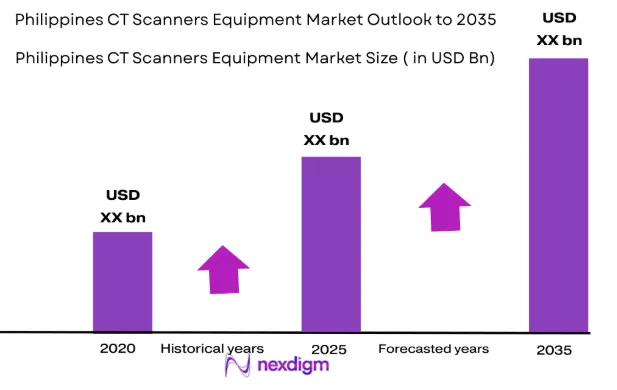
The Philippines CT Scanners Equipment Market has experienced significant growth, reaching a market size of USD ~ million based on a recent historical assessment. This market growth is primarily driven by the increasing demand for diagnostic imaging services in hospitals and diagnostic centers across the country. Factors such as the rise in the prevalence of chronic diseases, including cancer and cardiovascular diseases, have further contributed to the market’s expansion. In addition, advancements in CT scanner technologies, such as the development of AI-powered and portable systems, have propelled the market to new heights, improving diagnostic accuracy and patient care.
Several major cities and regions in the Philippines are contributing to the dominance of the CT scanners market, including Metro Manila, Cebu, and Davao. Metro Manila, being the capital and largest metropolitan area, holds a significant share due to its well-established healthcare infrastructure and a high concentration of private hospitals and diagnostic centers. Cebu and Davao are also seeing growing investments in healthcare services, making them crucial players in the market. The presence of international healthcare providers, coupled with government support for healthcare modernization, has enhanced the availability of advanced diagnostic tools in these regions.
Market Segmentation
By Product Type
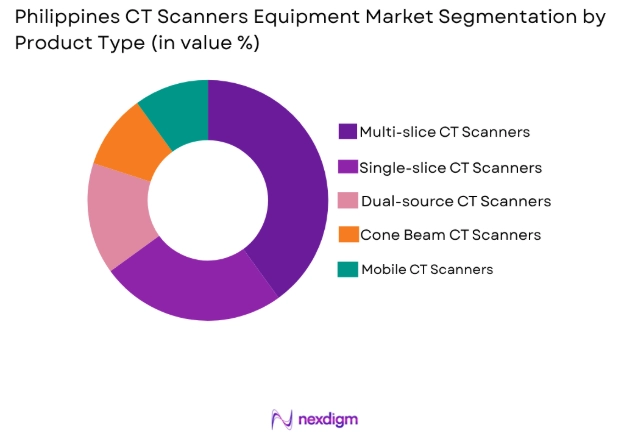
Philippines CT Scanners Equipment market is segmented by product type into multi-slice CT scanners, single-slice CT scanners, dual-source CT scanners, cone beam CT scanners, and mobile CT scanners. Recently, multi-slice CT scanners have a dominant market share due to their ability to provide high-resolution images in less time, which enhances their appeal in hospitals and diagnostic centers where efficiency and precision are crucial. Additionally, their ability to perform a wide range of imaging studies, from routine scans to more complex procedures, has driven widespread adoption.
By Platform Type
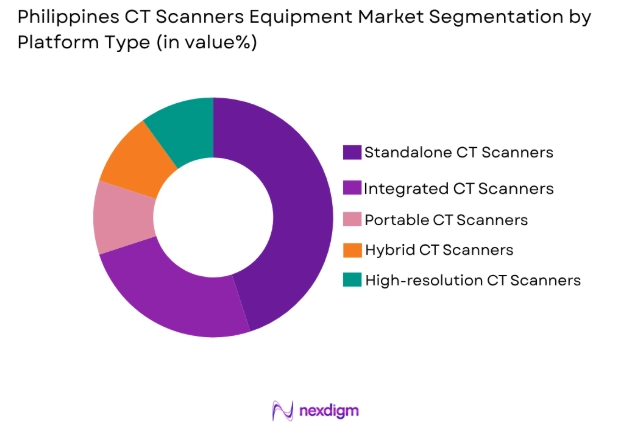
Philippines CT Scanners Equipment market is segmented by platform type into standalone CT scanners, integrated CT scanners, portable CT scanners, hybrid CT scanners, and high-resolution CT scanners. Standalone CT scanners hold a significant share in the market due to their independent functionality, which makes them an ideal choice for small to medium-sized diagnostic centers that do not require the integration with other imaging systems. Their ease of installation, maintenance, and cost-effectiveness have made them a popular choice among healthcare providers across the country.
Competitive Landscape
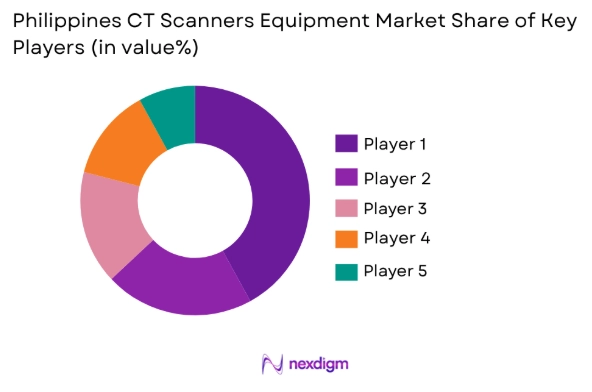
The competitive landscape of the Philippines CT Scanners Equipment market is characterized by the presence of leading global and regional players, who hold a strong influence on market trends. Major players like Philips Healthcare, Siemens Healthineers, and GE Healthcare have consolidated their position through technological innovations and extensive distribution networks. The market also sees competition from local players who provide cost-effective solutions tailored to the specific needs of the region. These players’ investment in expanding healthcare infrastructure, along with continuous product advancements, drives market competition and innovation.
| Company Name | Establishment Year | Headquarters | Technology Focus | Market Reach | Key Products | Revenue (USD) | Additional Parameter |
| Philips Healthcare | 1891 | Netherlands | ~ | ~ | ~ | ~ | ~ |
| Siemens Healthineers | 1847 | Germany | ~ | ~ | ~ | ~ | ` |
| GE Healthcare | 1892 | USA | ~ | ~ | ~ | ~ | ~ |
| Canon Medical Systems | 1937 | Japan | ~ | ~ | ~ | ~ | ~ |
| Toshiba Medical Systems | 1875 | Japan | ~ | ~ | ~ | ~ | ~ |
Philippines CT Scanners Equipment Market Analysis
Growth Drivers
Technological Advancements in Imaging Systems
The continuous technological advancements in CT scanner systems, particularly the integration of multi-slice and AI-driven imaging solutions, have played a pivotal role in driving the growth of the Philippines CT scanners market. Multi-slice CT scanners provide high-resolution images at a faster rate, improving diagnostic accuracy and reducing scan times, which is crucial for busy hospitals and diagnostic centers. Moreover, the introduction of AI-powered imaging capabilities has further enhanced diagnostic precision, providing quicker, more accurate readings, and aiding clinicians in early disease detection. These technologies also help minimize patient exposure to radiation while offering better image quality, thus improving safety. The increasing healthcare demand in the Philippines, coupled with advancements in imaging technology, has created an expanding market for cutting-edge CT scanners. Healthcare providers are continually upgrading their systems to meet patient care requirements, which will drive further adoption of advanced CT scanners in the coming years. As healthcare centers look to improve diagnostic capabilities and reduce human error, the demand for these advanced imaging solutions will continue to rise, contributing significantly to the market’s growth.
Rising Healthcare Infrastructure Investments
The Philippines has been witnessing significant investments in healthcare infrastructure, which have fueled the adoption of advanced technologies like CT scanners. Both the public and private sectors have been actively involved in modernizing healthcare facilities to accommodate the growing demand for high-quality medical services. The government’s focus on improving healthcare access across the nation, especially in rural and underserved areas, has led to increased spending on hospital upgrades and diagnostic equipment. Moreover, the private sector is also investing in expanding healthcare networks, including diagnostic imaging centers that require state-of-the-art CT scanners for more accurate and faster diagnoses. These infrastructure developments are not only improving the accessibility of healthcare services but are also enabling the integration of advanced medical technologies across the country. As both public and private investments continue to rise, the demand for CT scanners is expected to keep increasing, further accelerating the market’s growth. As healthcare infrastructure expands, the need for modern diagnostic equipment, including CT scanners, will continue to rise, making this a crucial driver of the market.
Market Challenges
High Cost of Advanced Systems
One of the most significant barriers to the widespread adoption of CT scanners in the Philippines is the high cost associated with advanced systems, particularly multi-slice and high-resolution scanners. These CT systems require a considerable capital investment, not only for the purchase of the equipment itself but also for installation, training, and ongoing maintenance. Smaller healthcare facilities, especially those located in rural or underserved regions, face challenges in acquiring these high-cost systems, hindering the adoption of the most advanced imaging technologies. As a result, many healthcare providers in these areas may opt for lower-cost alternatives, which, while more affordable, do not offer the same diagnostic accuracy and speed as advanced systems. The financial burden of upgrading or maintaining cutting-edge systems is a considerable challenge for healthcare providers who are already managing budget constraints. The high cost of ownership and maintenance of these advanced CT scanners limits their reach, impacting market penetration and slowing down the rate of adoption of newer technologies across the Philippines.
Regulatory Hurdles and Compliance Issues
The regulatory environment for medical devices, including CT scanners, in the Philippines presents a significant challenge to market growth. Compliance with stringent national and international regulatory standards is a time-consuming and often complex process, which can delay the entry of advanced technologies into the market. Manufacturers and distributors must navigate the regulatory maze to ensure that their products meet the safety, reliability, and quality standards required for approval. These lengthy approval processes can create barriers for new products entering the market and delay the availability of the latest CT scanner technologies. Moreover, continuous updates and compliance checks can add additional costs for manufacturers, making it more expensive to maintain product certifications. The need for constant regulatory updates and meeting the evolving standards can also discourage smaller manufacturers from entering the market, leading to limited competition and slower technological innovation. These regulatory hurdles significantly affect the overall growth rate of the CT scanners market in the Philippines.
Opportunities
Expansion of Diagnostic Imaging Centers
As the Philippines experiences an increase in the prevalence of chronic diseases such as cancer and cardiovascular diseases, there is a growing demand for diagnostic imaging services, creating a substantial opportunity for the CT scanners market. The expansion of diagnostic imaging centers across the country presents a significant growth opportunity, as these centers are essential for providing high-quality imaging services that aid in early disease detection and treatment planning. With government and private sector investments continuing to support the growth of healthcare infrastructure, more diagnostic imaging centers are expected to open, especially in underserved regions. These centers require advanced diagnostic equipment such as CT scanners to meet the demand for comprehensive medical imaging. As more imaging centers are established and expand their services, the demand for advanced and reliable CT scanners will rise significantly, creating new opportunities for growth in the market. This expansion will help improve the availability of healthcare services, particularly in rural and less-developed areas, where access to diagnostic imaging has traditionally been limited.
Government Initiatives to Support Healthcare Modernization
The Philippine government has launched several initiatives aimed at modernizing the healthcare sector, which creates opportunities for the CT scanners market. Programs such as the Universal Health Care Act focus on making healthcare services more accessible to all Filipinos, particularly in rural areas, by upgrading medical facilities and increasing the availability of advanced medical equipment. These government efforts are directly driving the demand for modern diagnostic tools, including CT scanners, across both public and private healthcare facilities. The expansion and modernization of hospitals and diagnostic centers are being supported by subsidies and funding programs that help offset the financial barriers to purchasing expensive equipment. As these government-led initiatives continue to improve healthcare infrastructure, they are expected to boost the demand for high-quality CT scanners, especially in regions that have previously lacked advanced diagnostic capabilities. The ongoing government support for healthcare modernization presents a significant growth opportunity for manufacturers and distributors of CT scanners in the Philippines.
Future Outlook
The Philippines CT Scanners Equipment Market is expected to see continued growth over the next five years, driven by increasing healthcare investments, technological advancements, and rising demand for accurate diagnostics. The adoption of AI-powered CT scanners and mobile systems is likely to gain momentum, improving diagnostic capabilities across various healthcare settings. Regulatory support and government initiatives to expand healthcare access will further boost demand for advanced imaging systems. With a focus on enhancing patient outcomes, the market is poised for steady growth, especially as more healthcare facilities adopt cutting-edge technologies.
Major Players
- Philips Healthcare
- Siemens Healthineers
- GE Healthcare
- Canon Medical Systems
- Hitachi Medical Corporation
- Toshiba Medical Systems
- Samsung Medison
- Carestream Health
- Fujifilm Holdings
- Medtronic
- Neusoft Medical Systems
- United Imaging Healthcare
- Shimadzu Corporation
- Hologic
- Mindray
Key Target Audience
- Investments and venture capitalist firms
- Government and regulatory bodies
- Healthcare providers and hospitals
- Diagnostic imaging centers
- Medical device distributors
- Medical imaging equipment manufacturers
- Insurance companies
Research Methodology
Step 1: Identification of Key Variables
The first step involves identifying key market variables such as technology adoption, demand drivers, and regulatory factors that influence the market.
Step 2: Market Analysis and Construction
This step involves analyzing market trends, segmentation, and competitive dynamics to construct a detailed market model that reflects the current and future state of the market.
Step 3: Hypothesis Validation and Expert Consultation
In this phase, market hypotheses are validated through consultations with industry experts, including manufacturers, healthcare providers, and regulatory bodies, to ensure the accuracy of the market model.
Step 4: Research Synthesis and Final Output
The final step synthesizes all collected data and insights into a comprehensive market report, offering actionable insights and forecasts based on reliable data and expert input.

- Executive Summary
- Research Methodology (Definitions, Scope, Industry Assumptions, Market Sizing Approach, Primary & Secondary Research Framework, Data Collection & Verification Protocol, Analytic Models & Forecast Methodology, Limitations & Research Validity Checks)

- Market Definition and Scope
- Value Chain & Stakeholder Ecosystem
- Regulatory / Certification Landscape
- Sector Dynamics Affecting Demand
- Strategic Initiatives & Infrastructure Growth

- Growth Drivers
Rising healthcare infrastructure development
Increasing prevalence of chronic diseases
Technological advancements in CT scanner systems - Market Challenges
High cost of installation and maintenance
Limited accessibility in remote areas
Regulatory hurdles and certification complexities - Market Opportunities
Expansion of diagnostic imaging centers
Government funding for healthcare sector growth
Rising demand for mobile and portable CT scanners - Trends
Adoption of AI-powered CT scanners
Growing demand for low-radiation CT scanners - Government Regulations
- SWOT Analysis
- Porter’s Five Forces

- By Market Value, 2020-2025
- By Installed Units, 2020-2025
- By Average System Price, 2020-2025
- By System Complexity Tier, 2020-2025

- By System Type (In Value%)
Multi-slice CT Scanners
Single-slice CT Scanners
Dual-source CT Scanners
Cone Beam CT Scanners
Mobile CT Scanners - By Platform Type (In Value%)
Standalone CT Scanners
Integrated CT Scanners
Portable CT Scanners
Hybrid CT Scanners
High-Resolution CT Scanners - By Fitment Type (In Value%)
Ceiling Mounted
Floor Mounted
Portable Fitment
Mobile Units - By End User Segment (In Value%)
Hospitals
Diagnostic Centers
Research Institutes

- Market Share Analysis
- Cross Comparison Parameters (Price Range, Market Value, System Complexity, Platform Type, End User Segment, Installed Units, Technology Adoption)
- SWOT Analysis of Key Competitors
- Pricing & Procurement Analysis
- Key Players
Philips Healthcare
Siemens Healthineers
GE Healthcare
Canon Medical Systems
Hitachi Medical Corporation
Toshiba Medical Systems
Samsung Medison
Carestream Health
Fujifilm Holdings
Medtronic
Neusoft Medical Systems
United Imaging Healthcare
Shimadzu Corporation
Hologic
Mindray

- Hospitals’ growing demand for advanced imaging systems
- Diagnostic centers focusing on precision diagnostics
- Research institutes investing in advanced research equipment
- Private healthcare players enhancing infrastructure

- Forecast Market Value, 2026-2035
- Forecast Installed Units, 2026-2035
- Price Forecast by System Tier, 2026-2035
- Future Demand by Platform, 2026-2035


 Request a Sample
 Ask for Customization
 Get a Quote
 Enquire Now