
 Download PDF
Market Overview
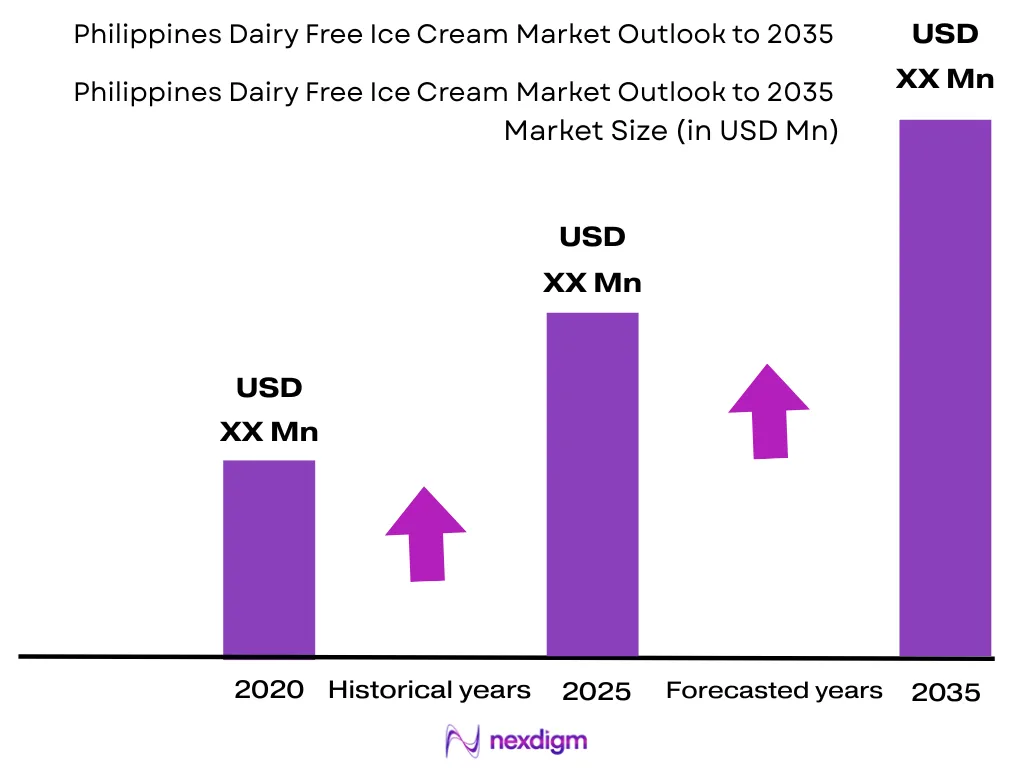
The Philippines Dairy Free Ice Cream Market is valued at approximately USD ~ Million, based on historical industry analysis of plant-based frozen desserts and non-dairy ice cream sales across retail and foodservice channels. The market is supported by increasing adoption of vegan and flexitarian diets, rising lactose intolerance awareness, and expanding availability of plant-based alternatives. According to the Philippine Statistics Authority, the country’s population exceeded 117 million, while household final consumption expenditure continued to expand, supporting premium food purchases. Additionally, the food and beverage manufacturing sector generated over PHP 2 trillion in output, creating a favorable environment for innovative dairy-free frozen dessert products.
Market Segmentation
By Base Ingredient Type
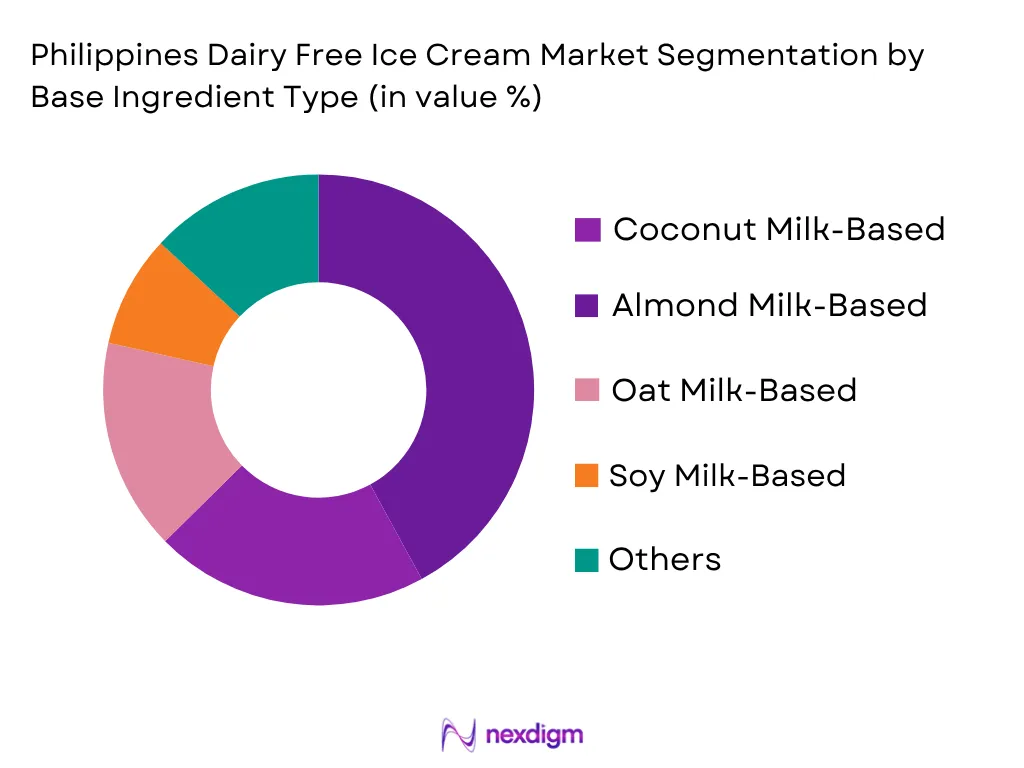
The Philippines Dairy Free Ice Cream Market is segmented by product type into coconut-based, oat-based, almond-based, soy-based, cashew-based, and mixed plant-based dairy free ice creams. Recently, coconut-based dairy free ice cream holds the dominant market share under this segmentation. Its leadership stems from the Philippines being one of the world’s largest coconut-producing nations, ensuring ingredient availability and consumer familiarity. Coconut milk delivers a creamy texture comparable to traditional dairy ice cream, making it highly acceptable among mainstream consumers. Local manufacturers leverage coconut-derived ingredients to reduce dependency on imported plant bases while offering products aligned with regional flavor preferences. In addition, coconut-based formulations support clean-label positioning and appeal to vegan, lactose-intolerant, and health-conscious consumers. The availability of coconut-derived raw materials, combined with strong cultural acceptance and cost efficiencies, has enabled this segment to maintain its dominant position within the Philippine dairy free ice cream industry.
By Distribution Channel
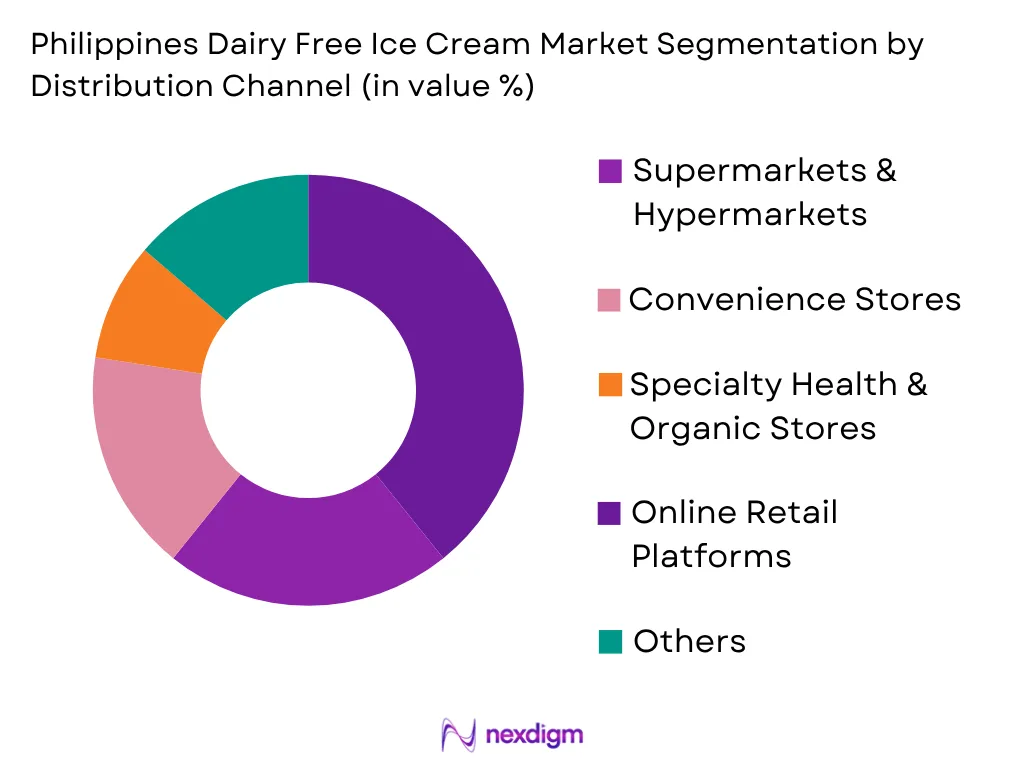
The Philippines Dairy Free Ice Cream Market is segmented by distribution channel into supermarkets and hypermarkets, convenience stores, specialty health stores, online retail platforms, direct-to-consumer channels, and foodservice establishments. Currently, supermarkets and hypermarkets dominate the market share due to their extensive product assortment, cold-chain capabilities, and nationwide reach. Large retail chains provide dedicated shelf space for premium and health-oriented products, allowing consumers to compare plant-based alternatives with conventional ice cream offerings. These retail formats also benefit from frequent promotional campaigns, premium product launches, and established relationships with domestic and international brands. The growing presence of modern grocery stores in urban centers such as Metro Manila, Cebu, and Davao has further strengthened this channel. Furthermore, consumers continue to prefer supermarkets for frozen dessert purchases because of product availability, trusted storage conditions, and the opportunity to purchase dairy-free ice cream alongside broader grocery requirements, reinforcing the channel’s leading position.
Competitive Landscape
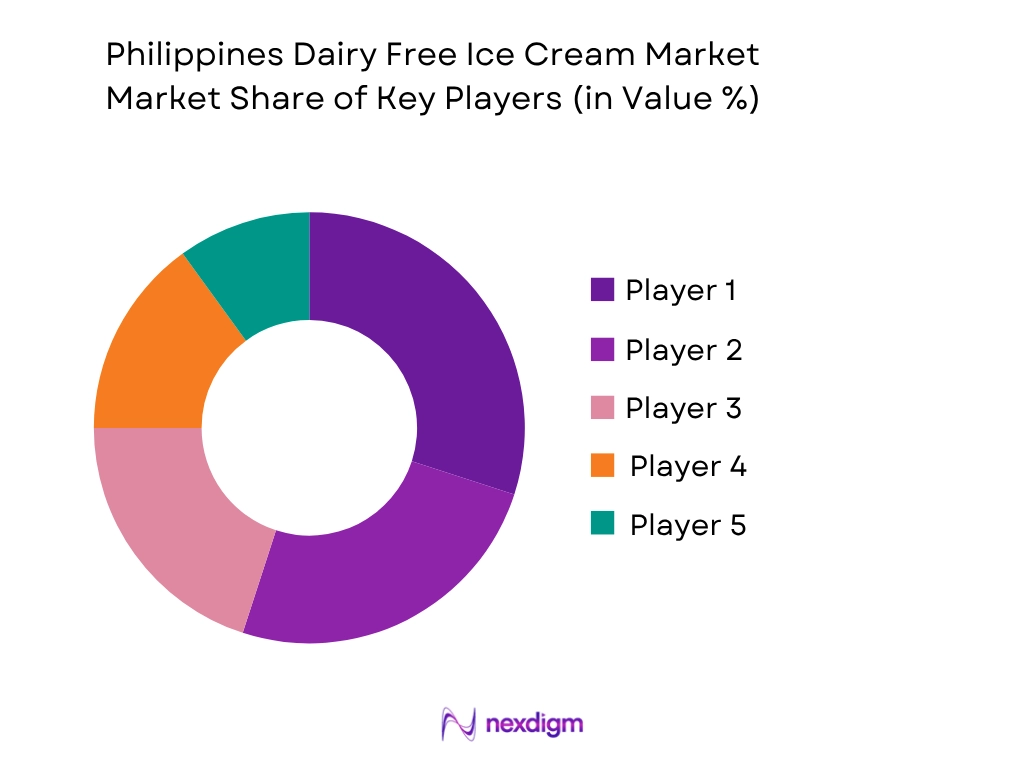
The Philippines Dairy Free Ice Cream Market remains moderately fragmented, with competition driven by multinational plant-based brands, premium frozen dessert manufacturers, and emerging regional players. Market participants compete through flavor innovation, plant-based ingredient diversification, premium positioning, and expansion across organized retail and foodservice channels. The increasing popularity of vegan and lactose-free diets has encouraged both domestic and international brands to expand their dairy free ice cream portfolios.
| Company | Establishment Year | Headquarters | Plant-Based Base Portfolio | Dairy-Free SKU Count | Distribution Reach | Premium Product Portfolio | Vegan Certification | Packaging Sustainability |
| Ben & Jerry’s | 1978 | ~ | ~ | ~ | ~ | ~ | ~ | ~ |
| Oatly | 1994 | ~ | ~ | ~ | ~ | ~ | ~ | ~ |
| Magnum Vegan | 1989 | ~ | ~ | ~ | ~ | ~ | ~ | ~ |
| Coconut Bliss | 2005 | ~ | ~ | ~ | ~ | ~ | ~ | ~ |
| Häagen-Dazs Plant-Based | 1961 | ~ | ~ | ~ | ~ | ~ | ~ | ~ |
Philippines Dairy Free Ice Cream Market Analysis
Growth Drivers
Rising Health and Wellness Awareness Supporting Plant-Based Consumption
The Philippines Dairy Free Ice Cream Market is benefiting from growing consumer focus on health, wellness, and alternative nutrition. According to the Philippine Statistics Authority (PSA), the country’s population exceeded 117 million, while urban population levels surpassed 56 million people, creating a large consumer base exposed to modern dietary trends and healthier food alternatives. The World Bank reported Philippine GDP at more than USD 470 billion, indicating expanding purchasing power that supports premium food categories, including dairy-free desserts. Furthermore, the Department of Health continues to report increasing public attention toward lifestyle-related health concerns, encouraging consumers to seek products perceived as lighter and easier to digest than traditional dairy offerings. The Philippines also recorded household final consumption expenditure exceeding PHP 20 trillion, demonstrating strong consumer spending capacity across food categories. Growing exposure to international food trends through digital platforms and modern retail has accelerated demand for vegan, lactose-free, and plant-based products. Dairy-free ice cream manufacturers are benefiting from this shift by introducing coconut-based, almond-based, and oat-based variants tailored to local tastes. The combination of rising urbanization, expanding disposable income, and increasing health consciousness continues to strengthen demand for dairy-free frozen desserts across major metropolitan areas such as Metro Manila, Cebu, and Davao.
Expansion of Modern Retail and Foodservice Infrastructure
The continued expansion of organized retail and foodservice infrastructure is a major growth driver for the Philippines Dairy Free Ice Cream Market. The Philippine Statistics Authority reported that wholesale and retail trade remains one of the country’s largest economic sectors, generating over PHP 5 trillion in gross value added. The country hosts thousands of modern retail outlets operated by chains such as SM, Robinsons, Puregold, and Metro Retail Stores Group, providing extensive shelf space for premium and specialty food products. Additionally, the Department of Trade and Industry highlighted ongoing investments in commercial developments across urban centers, increasing accessibility to imported and premium dairy-free products. The Philippines recorded foreign direct investment inflows exceeding USD 8 billion, supporting retail expansion, cold-chain logistics development, and foodservice growth. Increasing penetration of supermarkets, hypermarkets, convenience stores, and e-commerce grocery platforms has improved product visibility and availability for dairy-free ice cream brands. Food delivery platforms and quick-commerce services have further expanded access to frozen desserts. As modern retail formats continue to penetrate secondary cities and affluent urban communities, dairy-free ice cream manufacturers gain broader consumer reach, enabling category growth and accelerating the adoption of plant-based frozen dessert products throughout the country.
Market Challenges
Dependence on Imported Plant-Based Ingredients and Supply Chain Constraints
A significant challenge facing the Philippines Dairy Free Ice Cream Market is the industry’s dependence on imported ingredients such as almonds, oats, specialty stabilizers, and premium plant proteins. According to the Philippine Statistics Authority, total imports exceeded USD 130 billion, reflecting the country’s substantial reliance on foreign raw materials and food ingredients. The Bangko Sentral ng Pilipinas reported ongoing currency fluctuations against major trading currencies, which can affect procurement planning for imported plant-based inputs. The Philippines is an archipelagic nation comprising more than 7,600 islands, creating logistical complexities for frozen food distribution and cold-chain management. The Department of Agriculture has also identified continued challenges related to domestic food processing capacity and supply chain efficiency. Dairy-free ice cream manufacturers often face longer lead times for imported ingredients compared to conventional dairy products sourced locally. Furthermore, maintaining temperature-controlled transportation across multiple islands requires significant operational coordination. These supply chain complexities can affect inventory management, product consistency, and geographic expansion. While demand for plant-based frozen desserts continues to grow, the industry’s reliance on imported specialty ingredients and complex logistics networks remains a notable operational challenge that can influence market development and product availability across the Philippines.
Limited Consumer Awareness Outside Major Urban Centers
Although awareness of dairy-free and plant-based products is increasing in metropolitan regions, consumer understanding remains relatively limited across many provincial markets. The Philippine Statistics Authority indicates that more than 60 million people reside outside major urban centers, where exposure to premium health-focused food categories remains comparatively lower. The country’s agricultural sector still employs over 10 million workers, highlighting the importance of traditional food consumption patterns in many regions. According to government retail development statistics, modern trade penetration remains concentrated in urbanized areas such as Metro Manila, Cebu, and Davao. Dairy-free ice cream products are often positioned as premium offerings, requiring consumers to understand concepts such as lactose intolerance, vegan diets, and plant-based nutrition. In many secondary and rural markets, conventional dairy ice cream continues to dominate consumer preference due to familiarity and broader availability. Furthermore, educational initiatives regarding alternative nutrition remain concentrated in larger cities with stronger retail infrastructure. The challenge for manufacturers is therefore not only distribution but also consumer education. Expanding awareness beyond metropolitan regions will require sustained marketing efforts, broader retail presence, and localized product positioning to increase acceptance and encourage trial of dairy-free frozen dessert products.
Market Opportunities
Abundant Coconut Production Supporting Local Product Innovation
The Philippines Dairy Free Ice Cream Market possesses a significant opportunity through the country’s strong coconut industry. According to the Philippine Coconut Authority, the Philippines remains one of the world’s largest coconut-producing nations, with annual coconut production exceeding 14 million metric tons. The country maintains more than 3 million hectares of coconut-growing land, supporting a substantial domestic supply of coconut-derived ingredients. Coconut milk serves as one of the most widely accepted bases for dairy-free ice cream because it provides a creamy texture while aligning with local flavor preferences. The Department of Agriculture continues to support value-added coconut processing initiatives that encourage greater utilization of coconut products in food manufacturing. This creates opportunities for dairy-free ice cream producers to reduce dependence on imported plant bases while strengthening local sourcing strategies. Coconut-based products also align with consumer demand for clean-label, naturally sourced ingredients. The combination of abundant raw material availability, established agricultural expertise, and growing consumer acceptance provides manufacturers with a strong foundation for product innovation. Companies that leverage locally sourced coconut ingredients can develop differentiated offerings tailored to Philippine tastes while benefiting from improved supply chain efficiency and stronger sustainability positioning.
Growth of E-Commerce and Digital Grocery Platforms
The rapid expansion of digital commerce presents a substantial opportunity for the Philippines Dairy Free Ice Cream Market. According to the Department of Information and Communications Technology, internet users in the Philippines exceeded 85 million, while mobile connections surpassed 150 million, making digital channels increasingly important for food retail. The Philippine e-commerce sector generated transaction values exceeding PHP 2 trillion, reflecting strong consumer adoption of online purchasing behavior. Grocery delivery platforms, food delivery applications, and direct-to-consumer sales channels continue to expand nationwide, creating new routes to market for specialty frozen dessert products. Urban consumers increasingly utilize digital platforms for premium and health-oriented food purchases, enabling dairy-free ice cream brands to reach niche consumer segments more efficiently than traditional retail alone. Furthermore, online channels allow manufacturers to educate consumers about plant-based nutrition, product ingredients, and health benefits. The ability to target health-conscious consumers through digital marketing, subscription models, and online grocery partnerships provides a significant growth avenue. As internet penetration, smartphone adoption, and digital payment usage continue to increase throughout the Philippines, e-commerce is expected to remain a critical opportunity for expanding the reach of dairy-free ice cream products across diverse consumer demographics.
Future Outlook
The Philippines Dairy Free Ice Cream Market is expected to witness substantial growth over the forecast period, supported by rising consumer awareness regarding lactose intolerance, vegan lifestyles, and healthier dessert alternatives. Expansion of modern retail infrastructure, increasing e-commerce penetration, and growing demand for premium frozen desserts are likely to create favorable conditions for market development. Product innovation involving coconut, oat, and almond-based formulations is anticipated to strengthen consumer adoption. Furthermore, increasing investments in cold-chain logistics and specialty food retailing are expected to improve product accessibility across urban and semi-urban markets.
Major Players
- Ben & Jerry’s
- Oatly
- Magnum Vegan
- Häagen-Dazs Plant-Based
- Coconut Bliss
- Tofutti Brands
- So Delicious Dairy Free
- Eclipse Foods
- Cado
- Booja-Booja
- Alpro
- Perfect Day
- Kind Kones
- Overrun
- The Ice Cream & Cookie Co.
Key Target Audience
- Dairy Free Ice Cream Manufacturers
- Plant-Based Ingredient Suppliers
- Frozen Dessert Brands
- Retail Chains and Supermarket Operators
- Foodservice and HoReCa Operators
- E-Commerce and Quick Commerce Platforms
- Investment and Venture Capitalist Firms
- Government and Regulatory Bodies (Food and Drug Administration Philippines, Department of Trade and Industry, Department of Agriculture)
Research Methodology
Step 1: Identification of Key Variables
The initial phase involves developing a comprehensive ecosystem map covering dairy free ice cream manufacturers, ingredient suppliers, distributors, retailers, foodservice operators, and regulatory authorities. Extensive secondary research is conducted through industry databases, trade publications, government resources, and company disclosures to identify the critical factors influencing market growth.
Step 2: Market Analysis and Construction
Historical market data is compiled and analyzed to evaluate product penetration, retail availability, consumption patterns, distribution efficiency, and revenue generation. Demand-side and supply-side assessments are integrated to build a robust market framework and estimate segment-level performance.
Step 3: Hypothesis Validation and Expert Consultation
Market assumptions and forecasts are validated through interviews with manufacturers, distributors, retail buyers, category managers, foodservice operators, and industry experts. These consultations provide operational insights that help refine market estimates and validate industry trends.
Step 4: Research Synthesis and Final Output
The final stage combines findings from primary and secondary research sources. Data triangulation techniques are applied to validate market estimates, segment shares, competitive positioning, and future growth prospects, resulting in a comprehensive and reliable market assessment.

- Executive Summary
- Research Methodology (Market Definitions and Assumptions, Abbreviations, Market Sizing Approach, Top-Down Analysis, Bottom-Up Analysis, Demand-Side Assessment, Supply-Side Assessment, Primary Industry Interviews, Data Triangulation, Forecasting Framework, Limitations and Future Conclusions)

- Definition and Scope
- Market Evolution and Industry Genesis
- Timeline of Major Industry Developments
- Dairy Free Frozen Dessert Industry Value Chain Analysis
- Supply Chain and Cold Chain Infrastructure Analysis

- Growth Drivers (Increasing Lactose Intolerance Awareness, Rising Plant-Based Food Consumption, Expansion of Modern Retail Infrastructure, Growth in Premium Frozen Desserts, Rising Disposable Income)
- Market Challenges (Cold Chain Infrastructure Limitations, Dependence on Imported Ingredients, Price Premium over Conventional Ice Cream, Limited Consumer Awareness Outside Urban Areas, Distribution Complexity Across Islands)
- Market Opportunities (Coconut-Based Product Innovation, Functional and Protein-Enriched Dairy Free Ice Cream, Foodservice Expansion, Premium Flavor Development, E-Commerce Penetration)
- Market Trends (Oat Milk Ice Cream Adoption, Clean Label Formulations, Sugar-Free Product Launches, Sustainable Packaging Adoption, Filipino-Inspired Flavor Innovation)
- Government Regulations (Food and Drug Administration Philippines Regulations, Food Safety Act Compliance, Product Labeling Standards, Import Regulations for Food Products, Nutritional Disclosure Requirements)
- SWOT Analysis
- Porter’s Five Forces Analysis
- PESTLE Analysis
- Stakeholder Ecosystem
- Competition Ecosystem

- By Market Value (2020-2025)
- By Volume Consumption (2020-2025)
- By Average Selling Price (2020-2025)

- By Base Ingredient Type (In Value %)
Coconut-Based Dairy Free Ice Cream
Oat-Based Dairy Free Ice Cream
Almond-Based Dairy Free Ice Cream
Soy-Based Dairy Free Ice Cream
Cashew-Based Dairy Free Ice Cream
Mixed Plant-Based Dairy Free Ice Cream - By Flavor Type (In Value %)
Chocolate
Vanilla
Fruit-Based Flavors
Ube and Local Filipino Flavors
Coffee and Caramel Flavors
Nut-Based Flavors
Seasonal and Limited Edition Flavors - By Distribution Channel (In Value %)
Supermarkets and Hypermarkets
Convenience Stores
Specialty Health and Organic Stores
Online Retail Platforms
Quick Commerce Platforms
Direct-to-Consumer Channels
Foodservice and HoReCa - By Region (In Value %)
National Capital Region (NCR)
Luzon
Visayas
Mindanao
Emerging Urban Centers - By Packaging Format (In Value %)
Family Tubs
Single Serve Cups
Ice Cream Bars
Multi-Pack Formats
Bulk Foodservice Packs

- Market Share of Major Players (By Value, Volume, Product Category, Distribution Channel)
- Cross Comparison Parameters (Product Portfolio Breadth, Number of Dairy Free SKUs, Plant-Based Ingredient Diversification, Flavor Innovation Capability, Distribution Network Reach, E-Commerce Presence, Sustainable Packaging Adoption, Foodservice Penetration)
- SWOT Analysis of Major Players
- Pricing Analysis by SKU, Pack Size and Distribution Channel
- Detailed Profiles of Major Companies
Ben & Jerry’s
Magnum Vegan
Oatly
Alpro
So Good
Coconut Bliss
Tofutti
Cado
Eclipse Foods
Perfect Day
Booja-Booja
Kind Kones
Overrun
The Ice Cream & Cookie Co.
Häagen-Dazs Plant-Based

- Consumption Behavior Assessment (Consumption Frequency, Seasonal Demand, Purchase Drivers, Household Penetration)
- Demographic Consumption Trends (Age Group, Income Segment, Urban-Rural Split, Dietary Preference)
- Purchasing Power Analysis
- Household Food and Beverage Spending Analysis
- Premium versus Mass Market Demand Assessment

- By Market Value (2026-2035)
- By Volume Consumption (2026-2035)
- By Average Selling Price (2026-2035)


 Request a Sample
 Ask for Customization
 Get a Quote
 Enquire Now