

 Download PDF
Market Overview
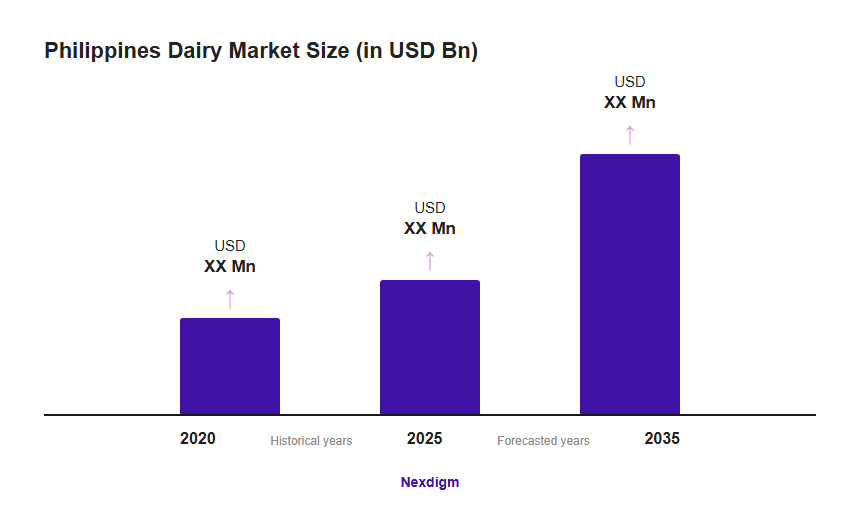
The Philippines dairy market is positioned for significant growth, reaching an estimated value of USD 1.84 billion in 2025 and projected to expand at a 6.8% CAGR through 2035. This expansion is concentrated in major industrial hubs such as Quezon City, which serves as a primary logistical gateway for national distribution, and Cagayan de Oro, a burgeoning center for regional milk processing operations. A dominant demand-side trend is the rapid shift toward ultra-high-temperature processed milk and functional dairy products among the expanding middle-class demographic, driving consumption beyond traditional beverage formats. On the supply side, the domestic industry is undergoing a structural transformation through localized production initiatives, such as those led by the National Dairy Authority, which aim to reduce the country’s heavy reliance on imported powdered milk stocks. The sector remains strictly governed by the Philippine National Standards for Milk and Dairy Products, ensuring compliance with evolving quality metrics. Furthermore, sustainability has become a critical regulatory focal point, as processors increasingly invest in circular water management systems and methane-reduction technologies at large-scale dairy farms in Bukidnon to align with the government’s mandate for climate-resilient agricultural practices by 2030.
Market Segmentation
By Product Type
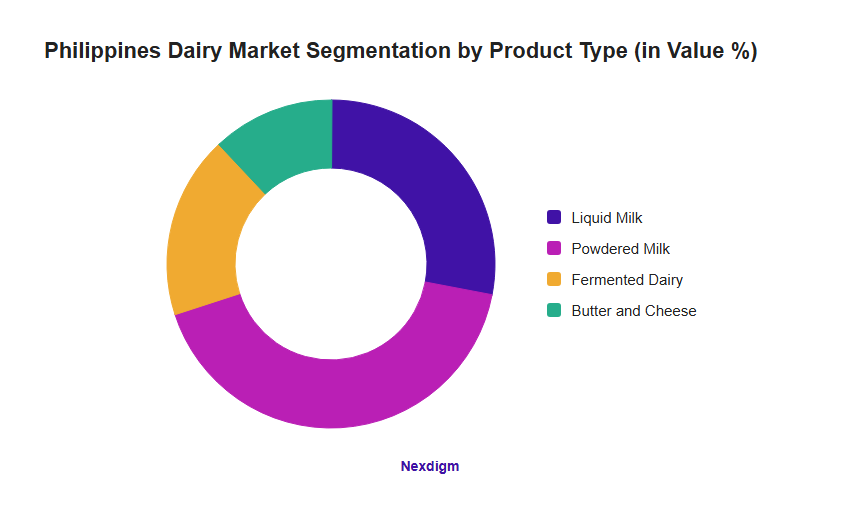
As of 2026, the Powdered Milk segment commands 42.0% of the Philippines dairy market, driven by its extended shelf life in tropical climates and widespread adoption for nutritional supplementation in households across Metro Manila and Cebu. Major multinational entities like Nestlé Philippines (est. 1911, Makati) maintain robust distribution networks for dry formats, which remain preferred by cost-conscious consumers over Liquid Milk, which represents 28.0% of the market. While Fermented Dairy at 18.0% is gaining traction due to rising health consciousness supported by the Department of Health (DOH) initiatives, and the Butter and Cheese segment accounts for 12.0% through the consistent demand from quick-service restaurants, Powdered Milk remains the bedrock of national supply. Companies such as Alaska Milk Corporation (est. 1972, Makati) leverage this preference, ensuring that powdered products effectively meet the logistical challenges of island-wide distribution while maintaining market leadership through price stability and nutritional fortification compliance.
By Distribution Channel
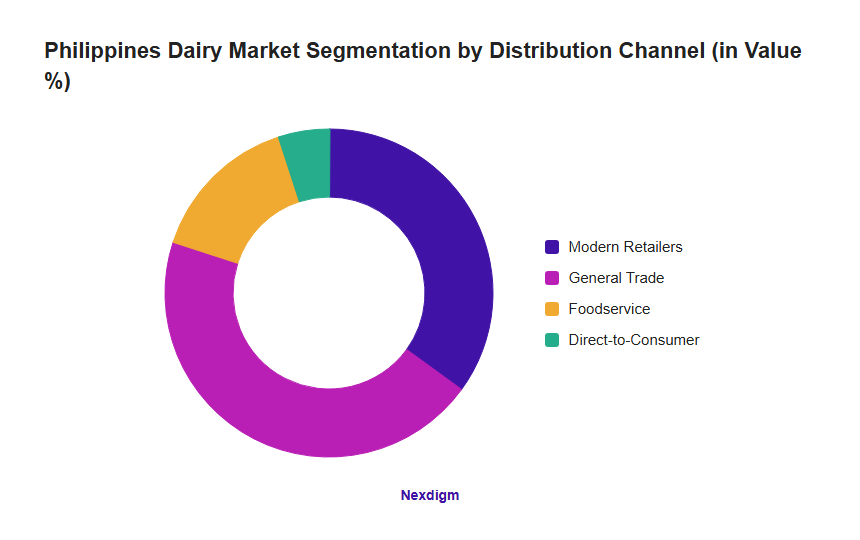
The General Trade segment serves as the critical backbone of dairy consumption in the Philippines, capturing 45.0% of the total market as of 2026. Despite the ongoing expansion of Modern Retailers, which currently holds 35.0% of the market share, the ubiquitous presence of sari-sari stores remains the most effective bridge to rural and low-income demographics. These traditional outlets often carry sachets of milk powder produced by giants like Century Pacific Food (est. 1978, Mandaluyong), ensuring daily access for fragmented populations. Foodservice channels contribute 15.0% to the total, largely tied to the institutional supply chains of national burger chains and bakeries, while Direct-to-Consumer at 5.0% represents a nascent growth area. The National Dairy Authority (NDA) continues to support infrastructure development to streamline supply, yet the sheer density of the General Trade network ensures it remains the dominant force, dwarfing the more urban-centric and modern infrastructure models prevalent in regional hubs like Davao and Iloilo.
Competitive Landscape
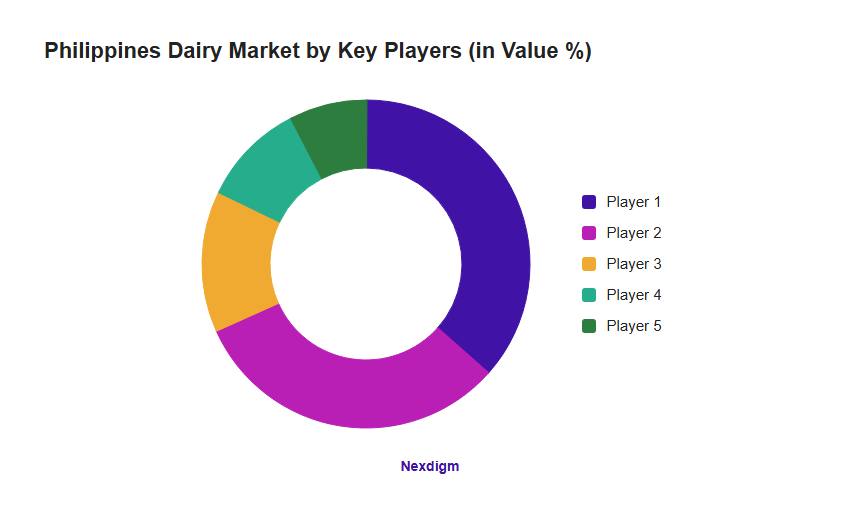
The Philippine dairy market is currently characterized by high competitive intensity, dominated by a mix of massive multinational conglomerates and established local cooperatives. In 2024, the industry is heavily shaped by the National Dairy Authority (NDA) and its mandate to increase domestic milk self-sufficiency through the Dairy Development Program. Distribution strategies prioritize the expansion of cold-chain infrastructure to reach the hyper-fragmented retail landscape in the Visayas and Mindanao regions, where traditional sari-sari stores remain the primary point of purchase for UHT milk consumers.
Major players such as Alaska Milk Corporation, a subsidiary of FrieslandCampina, and Century Pacific Food are aggressively expanding their portfolios to include health-focused and plant-based dairy alternatives. Competitive strategies have shifted toward vertical integration, with players investing in local cattle breeding programs to mitigate dependence on imported raw milk powder. This trend is further supported by the Department of Agriculture’s roadmap, which incentivizes regional processors to standardize supply chains and optimize logistics networks across the archipelago.
| Company | Establishment Year | Headquarters | Core Curricular Offered | Campus Footprint in Philippines | Fee Positioning | Digital Learning Stack Maturity | University Pathway Strength | Boarding Capability |
| Alaska Milk Corporation | 1972 | Makati, Philippines | Evaporated and condensed milk products | Nationwide retail and distribution network | Mid-market | Advanced supply chain analytics | Strong R&D industry partnerships | Not applicable |
| Nestlé Philippines | 1911 | Pasig, Philippines | Fortified powdered milk and UHT | Extensive nationwide production facilities | Premium | High-maturity cloud logistics | Global institutional research alliances | Not applicable |
| Century Pacific Food | 1978 | Taguig, Philippines | Creamer and specialized dairy beverages | Major urban center distribution | Budget | Digital procurement integration | Limited academic collaboration | Not applicable |
| San Miguel Foods | 1890 | Mandaluyong, Philippines | Fresh dairy and processed cheese | Integrated nationwide logistics | Mid-market | Highly sophisticated IoT monitoring | Strong local agricultural ties | Not applicable |
| Dairy Farmers of the Philippines | 1994 | Quezon City, Philippines | Premium fresh farm-to-table milk | Select metropolitan retail presence | Premium | Emerging tech implementation | Focus on veterinary education | Not applicable |
Philippines Dairy Market Analysis
Growth Drivers
Expansion of Local Dairy Cooperatives
Government initiatives led by the National Dairy Authority in Quezon City are prioritizing the modernization of smallholder farming cooperatives to reduce import reliance. Increased logistical investments have bolstered the supply chain, allowing local producers to capture a larger share of the processed milk segment. In 2023, the total domestic milk production volume reached 32.1 million liters, reflecting a significant push toward self-sufficiency. This systemic support ensures that dairy processing facilities in provinces like Laguna and Bukidnon operate at higher capacities to meet the nutritional demands of growing urban populations.
Rise of Functional and Fortified Dairy Products
Consumer consciousness regarding gut health and immunity has catalyzed the introduction of functional dairy beverages across Metro Manila. Major players like Alaska Milk Corporation, established in 1972 and headquartered in Makati, are reformulating portfolios to include probiotics and added vitamins. Retail data for 2024 indicates that fortified milk drinks account for 42% of total shelf space in national supermarket chains. This shift aligns with the Philippine Department of Health’s nutritional guidelines, compelling manufacturers to focus on product differentiation through high-protein and low-sugar dairy variants.
Increased Cold Chain Infrastructure Investment
The strategic development of cold storage facilities is transforming the distribution of perishable dairy goods across the archipelago. Logistics hubs in Cebu and Davao now utilize advanced refrigeration technology, reducing post-harvest losses and extending product life cycles. By late 2023, private sector capital expenditure in cold chain logistics reached 14.5 billion Philippine pesos, facilitating safer transport of pasteurized milk to remote provinces. This infrastructure improvement is critical for maintaining product integrity and ensures that premium dairy imports can reach middle-income consumers outside of major metropolitan business districts.
Growth of Quick-Service Restaurant Dairy Consumption
The rapid expansion of the Philippine quick-service restaurant sector is driving demand for bulk dairy products, particularly cheese and butter. International and local fast-food chains are opening an average of 150 new outlets annually across secondary cities. In 2024, the volume of industrial-grade mozzarella and processed cheddar utilized by the food service industry spiked by 12,000 metric tons. This sustained growth in the hospitality sector provides a reliable revenue stream for commercial dairy suppliers and encourages long-term supply contracts between regional distributors and large-scale food service operators.
Market Challenges
Feed Input Cost Volatility
High prices for imported livestock feed significantly diminish the profit margins of local dairy farmers. In 2023, the cost of quality corn and soybean meal surged, contributing to a 15% increase in operational expenses for mid-sized farms in Central Luzon.
Stringent Import Regulatory Hurdles
Complex sanitary and phytosanitary clearance processes enforced by the Bureau of Animal Industry delay the entry of essential dairy ingredients. These bureaucratic requirements caused an average supply chain lead-time increase of 22 days during the 2024 fiscal cycle.
Limited Technical Training for Smallholders
A persistent gap in advanced veterinary care and herd management expertise limits the yields of backyard dairy operations. Productivity data from 2024 shows that domestic herds currently produce 40% less milk per cow compared to regional industry standards.
Opportunities
Local Cold Chain Infrastructure Development
Expansion of regional cold storage facilities in provinces like Bukidnon and Laguna is critical to reducing raw milk spoilage rates. Current post-harvest loss in the dairy sector accounts for 18% of total production volume as of 2023. Strengthening these logistical nodes enables small-holder farmers to supply urban processing plants in Metro Manila more consistently while maintaining product safety standards.
Plant-Based Dairy Hybridization
Consumer interest in lactose-free and plant-based alternatives is surging, particularly among health-conscious demographics in Cebu City and Davao. Retail penetration for fortified soy and oat milk products increased by 22% in 2024. Local manufacturers can capture this segment by integrating locally sourced coconut milk into dairy-based functional beverages to optimize price points against expensive imported dairy proteins.
Public-Private Cooperative Scaling
Collaborations with the National Dairy Authority facilitate the adoption of automated milking systems and genetic improvement programs. Direct funding initiatives provided $45 million in credit support to dairy cooperatives during 2023 to modernize processing machinery. Scaling these partnerships allows domestic producers to achieve competitive economies of scale, directly lowering the heavy reliance on expensive New Zealand and Australian milk powder imports.
Future Outlook
The Philippine dairy market is poised for a transformative shift toward domestic self-sufficiency by 2035, driven by structural reforms under the Philippine Dairy Industry Roadmap. As the Department of Agriculture increases the national dairy herd count, the reliance on imported liquid milk and milk powder is expected to decline significantly. Urbanization and shifting dietary habits in secondary cities like Iloilo and Cagayan de Oro are fueling demand for premium yogurt, cheese, and ready-to-drink milk products. Furthermore, the implementation of the Milk Feeding Program ensures a stable institutional demand for local liquid milk, providing a reliable price floor for farmers. Technological integration, such as precision grazing and digital supply chain tracking, will mitigate the current logistical hurdles inherent in the archipelago’s geography. Companies such as Alaska Milk Corporation, founded in 1972 and headquartered in Makati, and local cooperative processors will increasingly compete by focusing on localized supply chains that prioritize freshness and nutritional density. Over the next five years, the regulatory environment will emphasize higher safety standards and sustainability, encouraging the modernization of rural collection centers. By 2030, the strategic focus will transition from import substitution to export readiness, as the Philippines leverages its improved production capacity to serve the broader Southeast Asian market. This evolution marks a transition from a consumer-only nation to a nascent regional producer.
Major Players
- Alaska Milk Corporation
- Century Pacific Food
- Nestlé Philippines
- San Miguel Foods
- Dairy Farmers of the Philippines
- Green Meadow Farm
- Magnolia Inc.
- Cowhead Philippines
- Holly’s Milk
- Arla Foods Philippines
- Gourmet Farms
- Filipinas Dairy Corporation
- DVF Dairy Farm
- Northern Mindanao Dairy Cooperative
- Universal Robina Corporation
Key Target Audience
- Dairy Product Manufacturers (e.g., Alaska Milk Corporation, established 1972, Makati City)
- Raw Milk Producers and Cooperatives (e.g., National Dairy Authority registered associations in Laguna)
- Fast-Moving Consumer Goods (FMCG) Retail Distributors (e.g., SM Prime Holdings, established 1994, Pasay City)
- Government and Regulatory Bodies (National Dairy Authority of the Philippines)
- Livestock Feed and Veterinary Service Providers (e.g., Univet Nutrition and Animal Healthcare Company, established 1968, Mandaluyong City)
- Cold Chain Logistics and Warehousing Operators (e.g., Mober Technology, established 2015, Taguig City)
- Investors and Venture Capital Firms (e.g., Kickstart Ventures, established 2012, Makati City)
- International Dairy Exporters (e.g., Fonterra Co-operative Group, established 2001, Auckland)
- Food Processing Equipment Suppliers (e.g., Tetra Pak Philippines, established 1995, Taguig City)
- E-commerce Grocery Platforms (e.g., Grab Philippines, established 2013, Taguig City)
- Agricultural Financing Institutions (e.g., Land Bank of the Philippines, established 1963, Manila)
- Packaging Material Manufacturers (e.g., Universal Robina Corporation, established 1954, Pasig City)
Research Methodology
Step 1: Identification of Key Variables
We establish the core indicators for the Philippine dairy sector by evaluating historical production data from 2010 to 2023. This phase defines essential variables such as per capita consumption rates, local raw milk volume, import dependency ratios from key partners like New Zealand and Australia, and the impact of the Republic Act 7884 on industry growth.
Step 2: Market Analysis and Construction
Our team builds a bottom-up market model utilizing 2024 pricing indexes and supply chain throughput data from major processors in provinces like Bulacan and Batangas. We cross-reference retail audit data with national trade statistics from the Philippine Statistics Authority to construct a comprehensive quantitative baseline for the dairy market outlook through 2035.
Step 3: Hypothesis Validation and Expert Consultation
We validate our preliminary market growth assumptions through targeted interviews with regional veterinary officers, commercial dairy farm managers, and government policy analysts. By engaging these specialists, we refine our projections regarding local herd productivity improvements, rising middle-class demand for ultra-high temperature processed milk, and the long-term feasibility of national self-sufficiency goals without naming specific commercial entities.
Step 4: Research Synthesis and Final Output
In the final synthesis, we integrate qualitative feedback with our quantitative projections to formulate a cohesive strategic outlook. The team audits the report against macroeconomic indicators from the National Economic and Development Authority to ensure consistency, culminating in a final document that provides actionable insights for stakeholders assessing the Philippines’ dairy trajectory through 2035.

- Executive Summary
- Research Methodology (Dairy Industry Census Review, National Dairy Authority Data Integration, Top-Down Market Sizing Validation, Bottom-Up Retail Outlet Surveying, HORECA Supply Chain Interviews, Consumer Consumption Behavior Modeling, Import Tariff Impact Simulation, Cold Chain Gap Assessment, Competitive Benchmarking Analysis, Historical Data Triangulation, Forecast Modeling via CAGR, Geographic Distribution Mapping, Industry Expert Qualitative Interviews, Supply Chain Bottleneck Analysis)

- Definition and Scope
- Market Evolution and Industry Genesis
- Dairy Infrastructure Development in Luzon
- National Dairy Authority Policy Frameworks
- Fluid Milk Cold-Chain Logistics Expansion
- ASEAN Trade Integration Dairy Impact
- UHT versus Fresh Pasteurization Dynamics

- Growth Drivers (Expansion of Local Dairy Cooperatives, Rise of Functional and Fortified Dairy Products, Increased Cold Chain Infrastructure Investment, Growth of Quick-Service Restaurant Dairy Consumption)
- Market Challenges (Feed Input Cost Volatility, Stringent Import Regulatory Hurdles, Limited Technical Training for Smallholders)
- Market Opportunities (Local Cold Chain Infrastructure Development, Plant-Based Dairy Hybridization, Public-Private Cooperative Scaling)
- Market Trends (Fortified Dairy Growth, Probiotic Health Focus, Shelf-Stable Innovation, Plant-Based Convergence)
- Government Regulations
- SWOT Analysis
- Porter’s Five Forces Analysis
- PESTLE Analysis

- By Market Value (2020-2025)
- By Annual Per Capita Consumption (2020-2025)
- By Retail Distribution Volume (2020-2025)

- By Product Type (In Value %)
- Liquid Milk
- Ultra-High Temperature Milk
- Fresh Pasteurized Milk
- Full Cream Milk
- Low-Fat Milk
- Flavored Milk
- Powdered Milk
- Whole Milk Powder
- Skimmed Milk Powder
- Fortified Nutritional Powders
- Instant Creamer Powders
- Fermented Dairy
- Set Yogurt
- Drinkable Yogurt
- Probiotic Cultured Milk
- Labneh and Curd
- Cheese and Butter
- Processed Cheese Slices
- Cheddar Blocks
- Cream Cheese Spreads
- Salted Butter
- Unsalted Cultured Butter
- By Distribution Channel (In Value %)
- Supermarkets and Hypermarkets
- Convenience Stores
- Traditional Sari-Sari Stores
- E-commerce Platforms
- Foodservice Institutional
- By Target Demographic (In Value %)
- Infant and Pediatric Nutrition
- School-Age Children Development
- Health-Conscious Working Professionals
- Geriatric Nutritional Supplementation
- HORECA Culinary Application
- By Price Positioning (In Value %)
- Economy Private Label
- Mass Market Mid-Tier
- Premium Imported Brands
- Super-Premium Organic Segment
- By Packaging Format (In Value %)
- Tetra Pak Aseptic Cartons
- Polyethylene Pouches
- High-Density Polyethylene Bottles
- Metalized Sachets
- Bulk Industrial Tubs
- By Regional Coverage (In Value %)
- National Capital Region
- Central Luzon Agricultural Belt
- CALABARZON Industrial Hub
- Visayas Urban Centers
- Mindanao Emerging Markets

- Market Share of Major Players
- Multinational Conglomerate Market Dominance
- Local Cooperative and SME Challenges
- Imported Australian-NZ Milk Competition
- Sari-Sari Store Distribution Dominance
- Direct-to-Consumer Digital Sales Strategy
- Cross Comparison Parameters (Cold Chain Infrastructure Scalability, Import Duty Tariff Compliance, Raw Milk Sourcing Ratio, Pasteurization Technology Adoption Rate, Institutional Partnership Reach, Nutritional Fortification Compliance)
- Competitive Product Benchmarking (Protein-to-Fat Ratio Specification, Shelf-Life Under Tropical Conditions, Certifications (HACCP/Halal/FDA), Packaging Material Barrier Rating, Fortification Vitamin Content Density)
- Financial and Operational Parameters
- SWOT Analysis of Major Players
- Detailed Profiles of Major Companies
- Nestlé Philippines (1911, Makati) – Bear Brand, Neslac, Cowhead
- Alaska Milk Corporation (1972, Makati) – Alaska, Alpine, Friso
- Century Pacific Food (1978, Mandaluyong) – Birch Tree, Angel Milk
- Universal Robina Corporation (1954, Pasig) – Cream All, Vitasoy
- San Miguel Foods (1969, Mandaluyong) – Magnolia
- Fonterra Brands Philippines (1995, Makati) – Anlene, Anchor
- Dutch Mill (Thailand/Philippines, Bangkok) – Dutch Mill

- Annual Consumption Per Household Unit
- Purchase Frequency at Sari-Sari Stores
- Dairy Sensitivity and Lactose Tolerance
- Breakfast Substitution Ratio Trends
- Brand Loyalty Among Mothers
- Average Spend per Nutritional Category
- Seasonal Consumption Variation Patterns

- By Market Value (2026-2035)
- By Annual Per Capita Consumption (2026-2035)
- By Retail Distribution Volume (2026-2035)


 Request a Sample
 Ask for Customization
 Get a Quote
 Enquire Now
