

 Download PDF
Market Overview
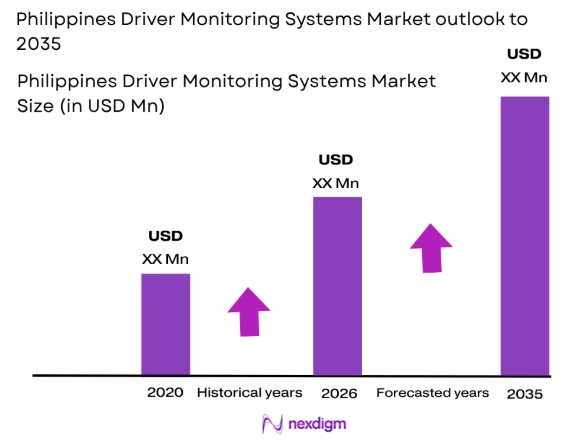
The Philippines driver monitoring systems market is poised for significant growth based on recent historical assessments. The market’s value is driven by increasing demand for enhanced vehicle safety, advancements in artificial intelligence (AI), and the growing emphasis on regulatory compliance regarding driver behavior. As vehicles become more integrated with smart technologies, the focus on minimizing human error through monitoring systems has surged. The total market size for these systems in the Philippines is estimated at approximately USD ~ million for the year, reflecting the rising awareness around road safety and the adoption of automated driving assistance technologies.
Key cities in the Philippines, such as Metro Manila and Cebu, dominate the market due to their high vehicle density and traffic-related challenges. Metro Manila, being the country’s economic and administrative hub, is the primary region for deploying driver monitoring systems, driven by a substantial number of vehicles, heavy traffic, and safety concerns. Additionally, these areas experience rapid urbanization, with a growing demand for advanced automotive technologies. Cebu also shows notable adoption, driven by increasing automotive sales and government efforts to improve traffic safety through the introduction of smarter solutions.
Market Segmentation
By Technology
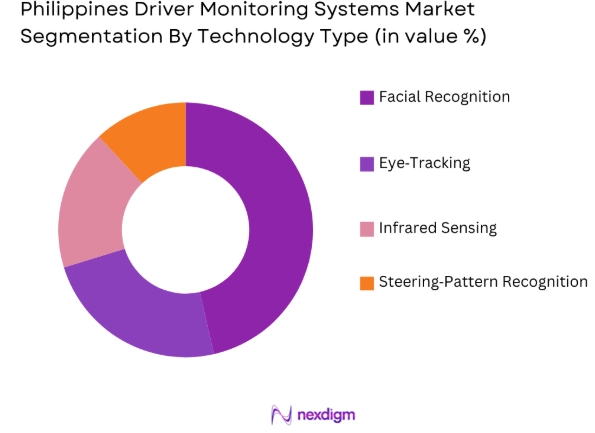
The market can also be segmented by technology into key areas such as facial recognition technology, eye‑tracking technology, infrared sensing, and steering‑pattern recognition. Facial recognition technology leads the adoption of driver monitoring systems due to its ability to deliver high‑accuracy detection of driver drowsiness, distraction, and attentiveness without intrusive hardware, making it suitable for both passenger and commercial vehicles. The strong ecosystem of AI and vision‑based software providers has accelerated deployment of these systems, particularly in new vehicle models and aftermarket safety upgrades.
By Vehicle Type
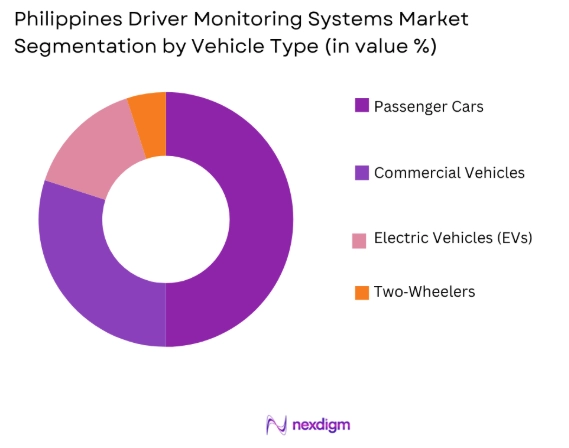
The market can also be segmented by vehicle type into passenger cars, commercial vehicles, electric vehicles (EVs), and two‑wheelers. Passenger cars dominate the adoption of driver monitoring systems because of a high consumer focus on personal safety and growing demand for advanced safety technologies in mid‑to‑high tier vehicles. Commercial vehicles follow as fleet operators increasingly install these systems to enhance driver supervision, limit accidents, and reduce liability costs. EVs and two‑wheelers show emerging yet smaller adoption due to evolving integration requirements and cost considerations.
Competitive Landscape
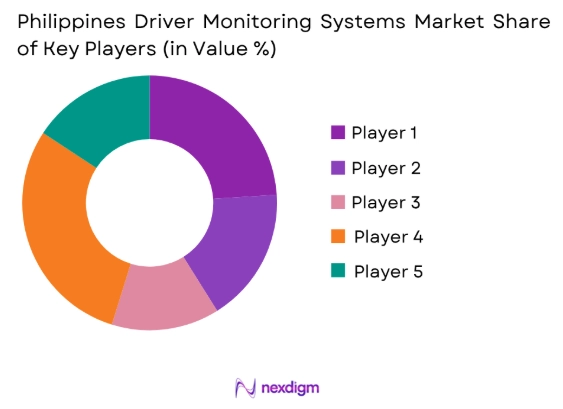
The competitive landscape of the Philippines driver monitoring systems market is characterized by intense consolidation and a few dominant players leading the innovation race. Established global automotive suppliers and technology companies are playing a key role in advancing the development of driver monitoring technologies. These companies are focusing on enhancing the precision and reliability of systems through research and development, often partnering with local vehicle manufacturers. The Philippines market is also seeing local start-ups entering the field, bringing innovative solutions tailored to local traffic conditions and driving behaviors.
| Company Name | Establishment Year | Headquarters | Technology Focus | Market Reach | Key Products | Revenue | Additional Market-Specific Parameter |
| Mobileye | 1999 | Israel | ~ | ~ | ~ | ~ | ~ |
| Bosch | 1886 | Germany | ~ | ~ | ~ | ~ | ~ |
| Seeing Machines | 2000 | Australia | ~ | ~ | ~ | ~ | ~ |
| Vayeca Technologies | 2015 | Philippines | ~ | ~ | ~ | ~ | ~ |
| Valeo | 1923 | France | ~ | ~ | ~ | ~ | ~ |
Philippines Driver Monitoring Systems Market Analysis
Growth Drivers
Advancements in Artificial Intelligence
The continuous advancements in artificial intelligence (AI) have propelled the growth of driver monitoring systems in the Philippines. AI technologies, such as facial recognition and eye-tracking, enable driver monitoring systems to detect fatigue, distraction, and other signs of impaired driving with unprecedented accuracy. This technological evolution has improved the effectiveness of these systems, making them a critical component of modern vehicles. Moreover, as AI algorithms evolve, they become more adaptable to various driving conditions and more efficient in real-time driver assessment, thus driving the market further. The increasing focus on enhancing road safety by both the government and vehicle manufacturers has made AI-powered driver monitoring systems a necessary part of vehicle safety infrastructure. This has been further driven by the adoption of stricter safety regulations that mandate the use of these systems in new vehicles. These advancements also allow for seamless integration with other safety features such as lane-keeping assistance and automatic braking systems, further supporting the market’s growth. AI has enabled driver monitoring systems to evolve beyond basic detection capabilities into intelligent systems capable of offering proactive driver interventions.
Growing Road Safety Concerns
Growing road safety concerns in the Philippines have been a significant factor driving the demand for driver monitoring systems. With the increasing number of vehicles on the roads, particularly in urban centers like Metro Manila, the government and citizens alike have become more aware of the dangers posed by distracted or fatigued driving. According to reports from local authorities, traffic-related accidents, many of which are attributed to human error, have led to heightened demand for solutions that can minimize these risks. In response to these concerns, government regulations are pushing for the implementation of technologies such as driver monitoring systems in all new vehicles. These systems are increasingly seen as a tool to enhance driver safety by alerting drivers when fatigue or distraction is detected. Furthermore, rising accident rates among commercial vehicles have led businesses to adopt these technologies as part of their fleet safety management programs. Consequently, both personal and commercial vehicle owners are looking to reduce road-related risks through proactive monitoring, significantly contributing to the market’s growth.
Market Challenges
High Initial Cost of Implementation
One of the main challenges facing the driver monitoring systems market in the Philippines is the high initial cost of implementation. Many vehicle manufacturers and fleet owners are hesitant to adopt these technologies due to the significant investment required for system installation and integration. This is especially true for small-scale car manufacturers and independent vehicle owners who are operating under budget constraints. The integration of advanced systems, such as AI-driven cameras and sensors, adds a premium cost to the vehicle, which can result in higher retail prices. For fleet owners, the cost of outfitting a large number of vehicles with these systems can also be a deterrent, as it requires substantial upfront investment. Additionally, the technology itself is still evolving, which can make it difficult for fleet owners to justify the expense when more affordable alternatives may be available. Despite the growing recognition of the benefits of driver monitoring systems, these high upfront costs pose a significant barrier to widespread adoption, limiting the market’s overall growth potential.
Lack of Infrastructure and Awareness
Another challenge facing the Philippines driver monitoring systems market is the lack of infrastructure and public awareness regarding the benefits of these technologies. Although major cities like Metro Manila are adopting these systems in their vehicles, many rural areas still lack the infrastructure to support their full functionality. Driver monitoring systems, especially those based on real-time data collection and AI, require a certain level of connectivity and reliable data sources to operate effectively. However, rural regions often suffer from inconsistent mobile network coverage, which limits the systems’ capabilities and their widespread use. Furthermore, there is a lack of awareness among many vehicle owners about the long-term benefits of these systems, such as improved safety and lower insurance premiums. Without sufficient public education and governmental support, the adoption of driver monitoring systems in smaller cities and rural areas remains sluggish, limiting overall market expansion.
Opportunities
Government Regulations Promoting Safety Standards
Government regulations in the Philippines are a key opportunity for the growth of driver monitoring systems. As the government continues to place more emphasis on road safety, regulations requiring the installation of advanced driver assistance systems (ADAS) in new vehicles are becoming more common. These regulations are designed to reduce traffic accidents caused by human error, particularly distracted driving, and to ensure compliance with international safety standards. The regulatory push for safer roads is leading to an increasing number of vehicles being equipped with driver monitoring systems, creating a robust market opportunity for vendors in the space. Furthermore, the government’s ongoing efforts to modernize its transportation infrastructure and improve road safety will likely include incentives for vehicle manufacturers and fleet operators to adopt technologies like driver monitoring systems. These policies will not only stimulate demand for these products but will also accelerate market growth by creating a favorable regulatory environment.
Rising Adoption of Electric Vehicles (EVs)
The growing adoption of electric vehicles (EVs) in the Philippines presents a significant opportunity for the driver monitoring systems market. As the government pushes for a greener, more sustainable future, the shift to electric vehicles is gaining momentum, particularly in urban areas. With EVs becoming more popular, there is an increased demand for the advanced technologies that are typically integrated into these vehicles, including driver monitoring systems. As EVs often come equipped with the latest innovations in automotive technology, the incorporation of driver monitoring systems is expected to be part of the standard offering. Additionally, the rise of the EV market opens up new channels for driver monitoring system manufacturers to target, as these vehicles are more likely to appeal to consumers who are already environmentally conscious and willing to invest in modern safety technologies. This growing market segment will provide a substantial opportunity for driver monitoring system manufacturers to expand their product offerings and grow their customer base.
Future Outlook
The driver monitoring systems market in the Philippines is expected to experience steady growth over the next five years. Technological advancements, such as improvements in AI and machine learning, will lead to more accurate and affordable systems, driving adoption across various vehicle segments. Regulatory support, particularly in urban areas, will help accelerate the integration of driver monitoring systems into new vehicles, especially in response to growing concerns about road safety. Demand-side factors, such as the increasing popularity of electric vehicles and the need for smarter transportation solutions, will also contribute to the market’s expansion. However, challenges related to cost and infrastructure in rural regions may slow down growth to some extent. Nevertheless, with continued technological innovation and supportive government initiatives, the Philippines driver monitoring systems market is set to witness significant growth in the coming years.
Major Players
- Mobileye
- Bosch
- Seeing Machines
- Vayeca Technologies
- Valeo
- Aptiv
- Continental AG
- Delphi Technologies
- Denso Corporation
- Harman International
- Magna International
- ZF Friedrichshafen
- TRW Automotive
- Toyota Industries Corporation
- Autoliv
Key Target Audience
- Investments and venture capitalist firms
- Government and regulatory bodies
- Automotive manufacturers
- Fleet operators and logistics companies
- Vehicle insurance companies
- Automotive technology developers
- Smart transportation service providers
Research Methodology
Step 1: Identification of Key Variables
The first step involved identifying critical factors influencing the market, including technological advancements, regulatory environment, and consumer adoption trends.
Step 2: Market Analysis and Construction
A comprehensive analysis of existing market data, trends, and key players was performed to construct the market size and growth forecast for the Philippines.
Step 3: Hypothesis Validation and Expert Consultation
To validate hypotheses, consultations with industry experts, government bodies, and key market participants were conducted to gather insights and refine market assumptions.
Step 4: Research Synthesis and Final Output
The final market analysis was synthesized into a comprehensive report, highlighting key growth drivers, challenges, opportunities, and the competitive landscape.

- Executive Summary
- Research Methodology (Definitions, Scope, Industry Assumptions, Market Sizing Approach, Primary & Secondary Research Framework, Data Collection & Verification Protocol, Analytic Models & Forecast Methodology, Limitations & Research Validity Checks)

- Market Definition and Scope
- Value Chain & Stakeholder Ecosystem
- Regulatory / Certification Landscape
- Sector Dynamics Affecting Demand

- Growth Drivers
Increasing Demand for Advanced Driver Assistance Systems
Rising Vehicle Safety Regulations
Growing Adoption of Connected and Autonomous Vehicles - Market Challenges
High Cost of Advanced Safety Systems
Limited Consumer Awareness in Emerging Markets
Integration Challenges with Legacy Vehicle Systems - Market Opportunities
Expansion in Electric and Autonomous Vehicle Segments
Partnerships with Automotive OEMs
Increasing Demand for Premium Vehicle Features - Trends
Integration of AI in Driver Monitoring Systems
Shift Towards Sensor Fusion Technologies - Government Regulations
- SWOT Analysis
- Porter’s Five Forces

- By Market Value, 2020-2025
- By Installed Units, 2020-2025
- By Average System Price, 2020-2025
- By System Complexity Tier, 2020-2025

- By System Type (In Value%)
Camera-based Driver Monitoring Systems
Infrared-based Driver Monitoring Systems
Radar-based Driver Monitoring Systems
Sensor Fusion-based Driver Monitoring Systems
AI-enabled Driver Monitoring Systems - By Platform Type (In Value%)
Passenger Vehicles
Commercial Vehicles
Electric Vehicles
Luxury Vehicles - By Fitment Type (In Value%)
OEM Fitment
Aftermarket Fitment
Integrated Systems
Modular Systems - By End User Segment (In Value%)
Private Vehicle Owners
Fleet Operators
Ride-hailing Service Providers

- Market Share Analysis
- Cross Comparison Parameters (System Type, Platform Type, Procurement Channel, End User Segment, Fitment Type, Sensor Technology, System Accuracy)
- SWOT Analysis of Key Competitors
- Pricing & Procurement Analysis
- Key Players
Bosch
Continental AG
Denso Corporation
ZF Friedrichshafen
Valeo
Aptiv
Magna International
Hyundai Mobis
Autoliv
Mobileye
Hitachi Astemo
Nidec Corporation
Hella GmbH
Texas Instruments
Infineon Technologies

- Rising Adoption Among Private Vehicle Owners
- Fleet Operators Prioritizing Safety Technologies
- Growth in Ride-hailing and Mobility Services
- Increasing Demand for Premium Automotive Features

- Forecast Market Value, 2026-2035
- Forecast Installed Units, 2026-2035
- Price Forecast by System Tier, 2026-2035
- Future Demand by Platform, 2026-2035


 Request a Sample
 Ask for Customization
 Get a Quote
 Enquire Now