
 Download PDF
Market Overview
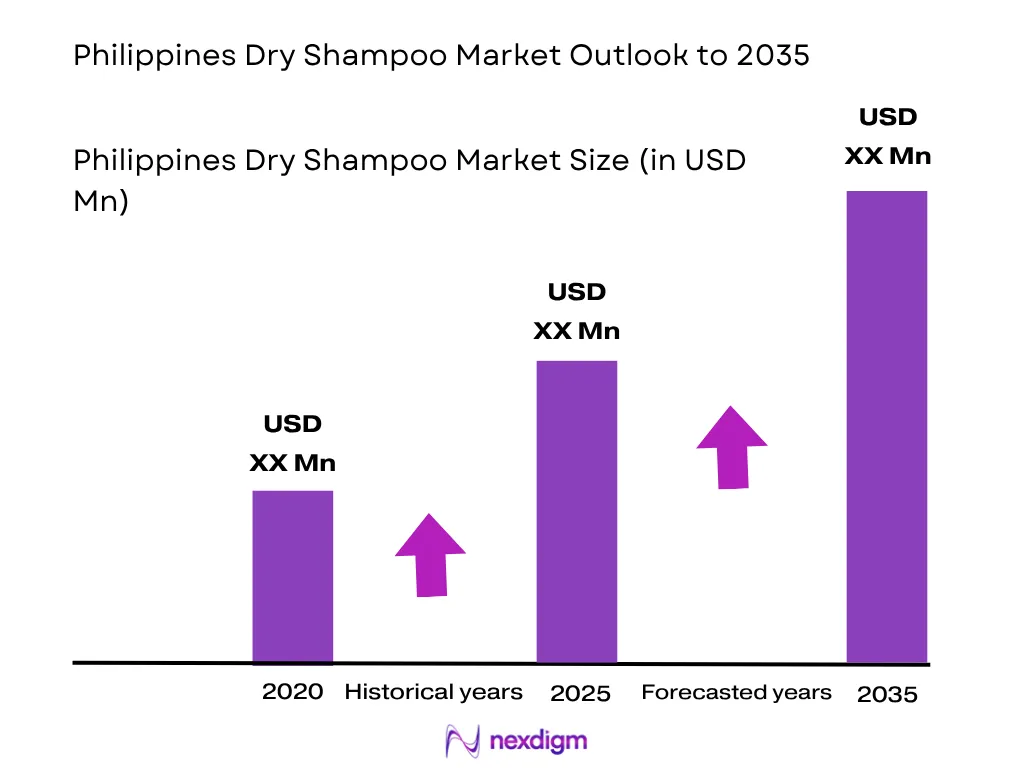
Philippines Dr Shampoo Market is valued at USD ~ million in 2025. The global dry shampoo market is anticipated to expand from its 2024 valuation of USD ~ billion to an estimated USD ~ billion by 2035, supported by lifestyle shifts and increased personal care consumption, at an approximate CAGR of 12.0% during 2026–2035.
Within the Asia‑Pacific region, major urban centers such as Metro Manila, Cebu, and Davao dominate dry shampoo demand due to higher disposable incomes, dense retail networks, and strong e‑commerce penetration. These cities serve as early adopters of personal care innovations and house major retail outlets where premium and niche dry shampoo brands are introduced. The Philippines’ position as a dynamic consumer base in Southeast Asia also attracts international brands that leverage urban consumption patterns to scale distribution nationwide.
Market Segmentation
By Form Type
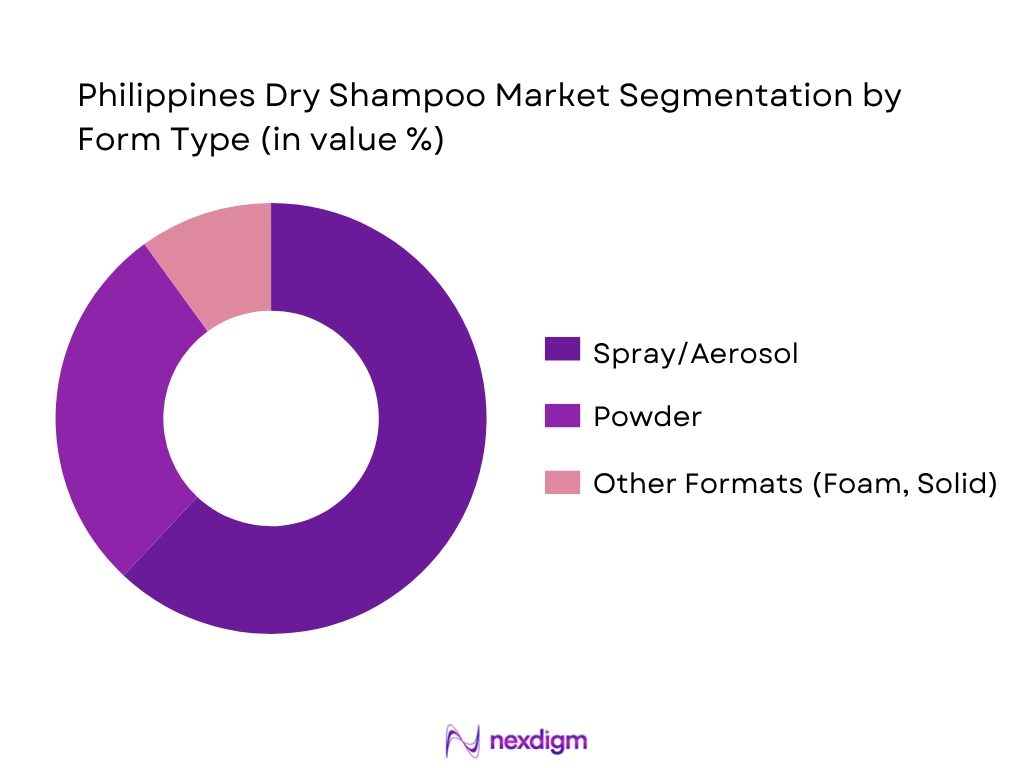
The dry shampoo market in the Philippines is segmented by form type into spray, powder, and other formats such as foam or mist variants. Among these, spray formats have the largest market share in 2024, reflecting consumer preference for quick and easy application. Spray dry shampoos deliver a fine mist that can absorb excess oil effectively, making them suitable for daily routines, especially among working adults and frequent travelers. This ease of application, combined with widespread availability through modern trade and e‑commerce platforms, supports the dominance of spray formats. Powder forms, while valued for minimal chemical propellants and eco‑friendly appeal, are still gaining traction among niche consumer groups prioritizing natural ingredients and scalp benefits.
By Distribution Channel
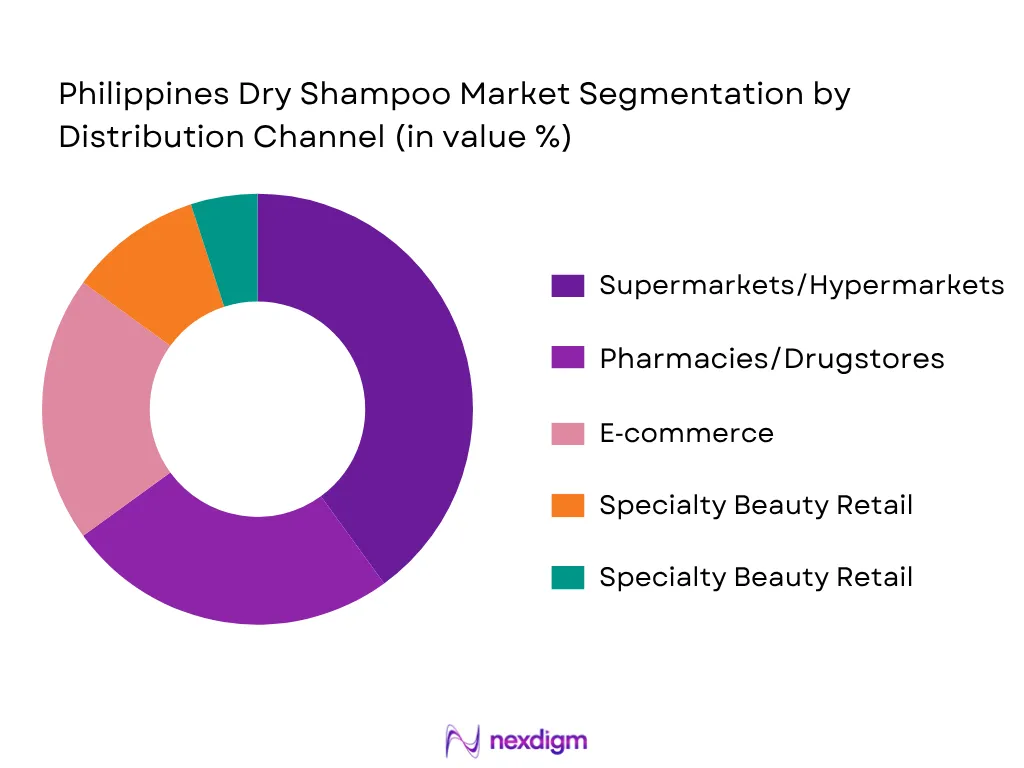
The Philippines dry shampoo market is also segmented by distribution channel. Modern trade outlets (supermarkets and hypermarkets) hold the largest share, largely because these channels offer broad product visibility and accessibility to both mainstream and premium brands, enabling consumers to interact with products before purchase. Retail chains often run promotions, enhancing purchase conversion. Pharmacies and drugstores command a strong presence due to consumer trust in regulated personal care offerings and professional recommendations. Although e‑commerce accounts for a smaller share in 2024, it is expanding rapidly as consumers increasingly prefer online convenience and direct‑to‑consumer brand interactions.
Competitive Landscape
The Philippines dry shampoo market exhibits growing competitive intensity driven by global brands expanding regional footprints alongside local distributors capitalizing on retail and online channels. This marketplace reflects both imported offerings and localized marketing, tailored to Filipino consumer preferences for grooming efficiency and hair care quality. The competitive landscape includes both multinational personal care companies and specialized hair care brands. These companies vary in portfolio depth, pricing strategies, functional claims (e.g., oil control, color protection), and distribution coverage. Premium brands often lead innovation in ingredient quality and marketing visibility, while mass‑market alternatives compete on accessibility and price. The presence of international players increases competitive pressure, compelling local brands to differentiate through tailored formulations and value pricing.
| Company | Establishment Year | Headquarters | Product Range Depth | Channel Presence | Price Tier Focus | Functional Claim Coverage | Local Distribution Scale |
| Nivea (Beiersdorf) | 1882 | Hamburg, Germany | ~ | ~ | ~ | ~ | ~ |
| Batiste (Church & Dwight) | 1847 | Ewing, USA | ~ | ~ | ~ | ~ | ~ |
| Dove (Unilever) | 1885 | London, UK | ~ | ~ | ~ | ~ | ~ |
| Suave (Unilever) | 1937 | London, UK | ~ | ~ | ~ | ~ | ~ |
| Klorane (Pierre Fabre) | 1966 | Paris, France | ~ | ~ | ~ | ~ | ~ |
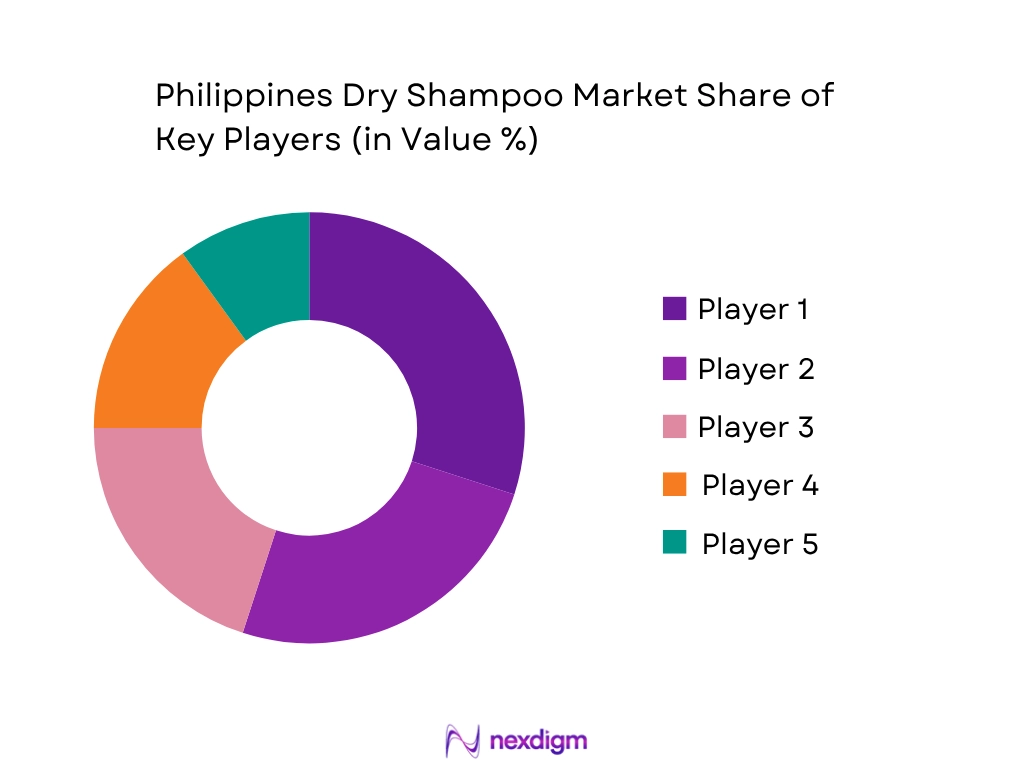
Philippines Dry Shampoo Market Analysis
Growth Drivers
Urban Lifestyles
The Philippines in 2024 has a total population of approximately 115,843,670 people, with ongoing urbanization as nearly 55.5 percent of the population living in urban centres. Urban households tend to adopt modern grooming habits and convenience‑oriented personal care products as part of daily routines. Urban centres such as Metro Manila, Cebu, and Davao also report higher digital connectivity and social media engagement which influence beauty and grooming trends. In 2024, the country’s GDP per capita was USD 3,984.83, rising from USD 3,804 in 2023, reflecting increased consumer purchasing power compared to prior years. These macroeconomic conditions enable urban consumers to allocate discretionary income toward convenience‑focused hair care products including dry shampoo, which address lifestyle needs such as time‑saving routines and busy commuting. The Philippines also registered an internet penetration rate of 73.6 percent with 86.98 million internet users, facilitating e‑commerce purchasing of personal care products. As urban lifestyles favour quick‑use, low‑maintenance hair care formats that support multi‑tasking schedules, dry shampoo adoption rises in tandem with growing urban consumer demand.
Grooming Spend
Macroeconomic indicators for the Philippines illustrate a gradual rise in consumer capacity for discretionary personal care expenditure. Although specific dry shampoo spend data is limited, broader indicators such as total personal care and hair care influence purchasing behaviour. In 2024, overall household health and care spending increased, with total health expenditure reaching PHP 1.56 trillion and per‑capita health spending rising to PHP 12,751, up from PHP 10,840 in 2023. This indicates households are allocating more budget to personal well‑being and grooming‑related categories. The Philippines’ GDP in 2024 was USD 461.62 billion, expanding with continued private consumption, and the unemployment rate remained low at 2.2 percent, suggesting stable income and a resilient domestic demand environment. Growth in hair care is typically aligned with broader personal care spend, as consumers with rising disposable income seek efficiency‑enhancing grooming products. With a youthful population and increasing middle‑income households, demand for advanced grooming products like dry shampoo is supported by broader consumer expenditure trends, as households are more willing to experiment beyond basic hygiene products.
Market Restraints
Limited Premium Penetration
Despite macroeconomic growth, premium personal care products face adoption constraints in the Philippines. The country’s GDP per capita of USD 3,984.83 in 2024 remains substantially below developed market levels, meaning a significant portion of the population prioritizes essential goods over higher‑priced grooming items. The Philippines is classified under the World Bank’s lower‑middle‑income category, which correlates with cautious consumer spending on premium discretionary items. Premium dry shampoo products, often priced higher than mass alternatives, can therefore have constrained penetration among mid‑to‑lower income brackets. Retail price sensitivity is especially evident outside major urban centres, where discretionary purchasing is limited by income constraints despite urban consumer pockets showing stronger adoption. Additionally, the Philippines health and personal care spend environment is still developing: while average health spending increased to PHP 12,751 per capita, this is allocated across a wide range of essential care categories, limiting discretionary spend available for premium grooming lines. In combination with higher retail prices for imported premium formulations, this restrains widespread premium dry shampoo adoption in the overall market.
Preference for Traditional Washing
Cultural preferences in the Philippines still favour conventional hair washing over alternative formats like dry shampoo. Traditional daily or every‑other‑day wet shampooing remains entrenched in personal care routines, influenced by tropical climate conditions that promote frequent hair washing to combat humidity and oiliness. Despite rising internet usage and digital influence with internet penetration at approximately 73.6 percent and 86.98 million users many consumers continue to view water‑based hair cleansing as more effective, reducing reliance on water‑less products. A large proportion of the population still resides in households that emphasize conventional hygiene practices, supported by readily available and affordable local shampoo products. This behavioural pattern limits the frequency and breadth of dry shampoo usage, particularly among older consumer segments or those in rural areas where convenience‑oriented products are slower to penetrate. Consequently, traditional washing practices remain a restraint to broader market expansion for dry shampoo formats, especially beyond major urban centres where lifestyle motivations for alternative grooming products are stronger.
Opportunities
Non‑Aerosol & Organic Products
Shifts in consumer preferences toward sustainable and health‑conscious personal care products create a tangible opportunity for non‑aerosol and organic dry shampoo formulations in the Philippines. With increasing internet access and digital education, a rising segment of the population seeks products perceived as safer and environmentally friendlier. In 2024, the Philippines recorded internet penetration of 73.6 percent and nearly 87 million active internet users, enabling consumers to research product ingredients and sustainability claims before purchase. This trend supports demand for non‑aerosol formulations that avoid chemical propellants and organic variants that emphasise natural components aligning with global and regional shifts toward clean beauty. Urban consumers, particularly in Metro Manila and other key cities, show higher interest in sustainability‑oriented products, underpinning growth potential for brands that can leverage natural ingredients and eco‑friendly claims. As consumer awareness grows and ‘green’ grooming becomes a part of lifestyle discussions, the market is positioned for a gradual expansion of non‑aerosol and organic categories within the dry shampoo segment.
Private Label Growth
Private labels present an emerging opportunity in the Philippines dry shampoo market, especially in mass retail channels. As economic development continues supported by a **Philippine GDP of USD 461.62 billion in 2024 and a growing middle class, retailers can leverage their scale to offer competitively priced private‑label dry shampoo products tailored to local consumer needs. Retail penetration in modern trade formats such as supermarkets and hypermarkets continues to expand, providing a distribution platform for private brands. Increased adoption of e‑commerce platforms also allows retailers to introduce private‑label grooming products directly to consumers, bypassing traditional distribution markups and enabling value‑oriented offerings. Given price sensitivity among large segments of the population, private labels can capture demand by positioning dry shampoo as an affordable alternative to imported branded products, thereby expanding category reach. In combination with retailers’ loyalty programmes and online promotions, private labels may effectively democratize access to dry shampoo products, stimulating wider consumption across socioeconomic groups.
Future Outlook
The dry shampoo sector in the Philippines is expected to gradually evolve toward greater product diversification and penetration due to lifestyle shifts, rising consumer spending on personal care, and broader retail ecosystem enhancements. Urbanization and higher female labor participation rates will sustain demand for water‑less hair care convenience products. Ongoing growth in e‑commerce adoption, particularly across mobile shopping platforms, will drive incremental market expansion and allow niche brands to reach wider audiences. Concurrently, as sustainability and ingredient transparency become more prominent, brands emphasizing natural formulations and reduced environmental impact are poised for upward momentum among conscious consumers. Premium and specialized functional claims (e.g., color protection, scalp care) will likely shape future competitive strategies, with a broader acceptance of dry shampoo as part of daily hair care routines.
Major Players in the Market
- Nivea (Beiersdorf)
- Batiste (Church & Dwight)
- Dove (Unilever)
- Suave (Unilever)
- Klorane (Pierre Fabre)
- Olaplex
- Living Proof
- Revlon (dry shampoo range)
- Henkel dry shampoo brands
- Estée Lauder dry shampoo offerings
- L’Oréal dry shampoo variants
- Boots dry shampoo
- Human Nature dry shampoo alternatives
- Local importers/distributors (various)
- Specialty/niche brands (e.g., organic dry shampoo lines)
Key Target Audience
- Retail Brands & Store Buyers
- Personal Care Product Manufacturers
- FMCG Marketing and Strategy Teams
- Investments & Venture Capitalist Firms (Consumer Goods Focus)
- Import/Export Distributors
- E‑commerce Platform Category Managers
- Government and Regulatory Bodies (Philippines FDA, Department of Trade & Industry)
- Hair Salons & Professional Beauty Service Chains
Research Methodology
Step 1: Market Definition and Variable Identification
This phase maps the ecosystem of the Philippines dry shampoo market, identifying key variables such as product types, consumer demographics, distribution channels, price tiers, and regulatory frameworks. It draws on extensive secondary databases, industry publications, and market reports for foundational definitions and assumptions.
Step 2: Data Collection and Historical Analysis
Historical data on market size, form type adoption, channel performance, and consumer behavior is collated from industry reports, trade datasets, and retailer audit data. The focus is on assessing revenue and volume trends, segmentation patterns, and demand drivers to construct a reliable market baseline.
Step 3: Hypothesis Validation and Expert Engagement
Key hypotheses on market growth drivers and restraints are tested through interviews with industry practitioners, importers, brand managers, and beauty retail executives. These interactions validate assumptions around channel shifts, product preferences, and competitive dynamics, ensuring practical relevance.
Step 4: Synthesis and Forecast Construction
The final stage integrates quantitative data with expert insights to produce forward‑looking forecasts. This includes validating forecast assumptions through bottom‑up analysis, refining segmentation estimates, and cross‑checking against regional hair care trends to ensure accuracy in projected growth scenarios.

- Executive Summary
- Research Methodology (Market Definitions, Scope & Assumptions, Abbreviation & Terminology (e.g., TAM/SAM/SOM, HHI, SKU), Data Sources & Triangulation, Primary Research Design (Consumer Surveys, Retail Audit, Expert Interviews), Secondary Research Framework (Government Data, Trade Databases), Limitations & Data Confidence Levels)

- Market Definition and Scope
- Industry Genesis & Adoption Curve
- Regulatory Environment (FDA Product Approvals, Aerosol Standards)
- Distribution & Retail Landscape (Retail Penetration, E‑Commerce Growth)
- Consumer Behaviour & Usage Patterns (Hygiene, Convenience Preferences)

- Growth Drivers (Urban Lifestyles, Grooming Spend, Millennial & Gen Z Trends, E-commerce Adoption, Hair Hygiene Awareness, Travel/On-the-Go Usage)
- Market Restraints (Limited Premium Penetration, Preference for Traditional Washing, Regulatory Compliance, Price Sensitivity, Raw Material Costs)
- Opportunities (Non-Aerosol & Organic Products, Private Label Growth, E-commerce Exclusives, Salon & Influencer Partnerships, Multi-Functional Products)
- Emerging Trends (Social Media & Influencer Marketing, Personalized/Limited SKUs, Eco-Friendly Formulations, Travel-Sized Packaging, Natural Ingredients)
- Regulatory Environment (FDA Registration, Aerosol Safety Standards, Labeling & Ingredient Disclosure, Advertising & Claim Rules)
- Porter’s Five Forces Analysis (New Entrants, Supplier Power, Buyer Power, Substitutes, Rivalry Intensity)
- SWOT Analysis (Strengths, Weaknesses, Opportunities, Threats)
- Value Chain and Supply Chain Analysis (Raw Materials – Talc, Starch, Propellants; Domestic vs Imported; Manufacturing Nodes; Logistics & Distribution; Wholesale & Retail; QA & Testing)
- Consumer Purchase Behavior & Retail Analytics (Purchase Frequency, Basket Affinity, Brand Loyalty, Channel Preference, Promo/Sampling Impact)

- Market Value (2020-2025)
- Market Volume (2020-2025)
- Price Point Analysis (2020-2025)
- Import Volume Vs. Domestic Availability (2020-2025)
- Market Concentration (2020-2025)

- By Form Type (In Value%)
Spray (Aerosol)
Powder
Foam - By Function / Benefit (In Value %)
Anti‑Dandruff
Color Protection
Oil Control / Refresh
Hair Strengthening / Anti‑Breakage
Fragrance
UV Protection - By Demographic User Base (In Value %)
Women
Men
Teens & Young Adults
Kids - By Distribution Channel (In Value %)
Modern Trade (Hypermarkets / Supermarkets)
Specialty Beauty Retail (Beauty Bars, Sephora)
Drug Stores / Pharmacies
Convenience Stores
Online Marketplace - By Price Tier (In Value%)
Economy Segment
Mid‑Range Segment
Premium Segment - By Packaging Format (In Value%)
Aerosol Can
Non‑Aerosol / Pump
Sachet / Travel Size

- Market Share Analysis (Revenue & Volume Share, Import vs Local Brands, Premium vs Mass Segments, Channel-Specific Share)
- Competitive Benchmarking (Product Portfolio, SKU Depth, Functional Claims, Price Positioning, Channel Coverage)
- Strategic Positioning (Market Position Matrix, Brand Differentiation, Value Proposition, Innovation Intensity)
- Cross Comparison Parameters (Product Form Mix Proportion, Functional Claims Portfolio, Price Positioning & Price Elasticity, Distribution Network & Channel Coverage, Import Origin & Logistics Cost, Marketing & Brand Visibility Score, Consumer Ratings & Satisfaction Indices, SKU Count & Variant Depth)
- SWOT Analysis (Company Level) (Strengths, Weaknesses, Opportunities, Threats – per Key Competitor)
- Pricing Analysis (SKU-Level Prices, Online vs Offline Price Differences, Promo & Bundling Strategies, Channel Margin Comparison)
- Key Competitor Profiles (Nivea Philippines, Batiste, Dove, Suave, Palmolive, Klorane, Olaplex, Living Proof, Fresh Hairlab, Hello Glow, Giovanni, P&G Dry Shampoo, Unilever Beauty Brands, Henkel, Revlon)
- Distribution & Channel Penetration (Modern Trade, Specialty Retail, Drugstores, E-commerce, Convenience Stores, Regional Coverage)
- Company Profiles of Key Market Participants
Nivea Philippines Dry Shampoo
Batiste (Imported)
Dove Dry Shampoo
Suave Dry Shampoo
Palmolive Dry Shampoo
Klorane Dry Shampoo
Olaplex Dry Shampoo
Living Proof Dry Shampoo
Fresh Hairlab Dry Shampoo
Hello Glow Dry Shampoo
Giovanni Dry Shampoo
P&G Dry Shampoo Portfolio
Unilever Beauty Brands (Dry Shampoo)
Henkel Dry Shampoo Range
Revlon Dry Shampoo Line

- Consumer Demographics & Segmentation (Women, Men, Teens & Young Adults, Kids, Urban vs Rural Consumers)
- Usage Patterns & Frequency (Daily vs Occasional Use, Travel/On-the-Go Use, Multi-Functional Usage, Seasonal Trends)
- Purchase Drivers (Convenience & Time-Saving, Brand Reputation, Functional Benefits – Oil Control/Color Protection, Price Sensitivity, Packaging & Size Preference)
- Brand Loyalty & Switching Behavior (Repeat Purchase Rate, Cross-Brand Switching, Influence of Promotions, Social Media/Influencer Impact)
- Channel & Format Preference (Modern Trade, Drugstore/Pharmacy, Specialty Beauty Retail, E-commerce, Convenience Stores; Aerosol vs Non-Aerosol Formats)
- Pain Points & Unmet Needs (Product Residue, Scent/Fragrance Issues, Availability of Desired Variants, Pricing Concerns, Safety Perception)
- Purchase Journey & Decision-Making (Research Channels – Online Reviews/Influencers, Comparison Shopping, In-Store Sampling, Impulse vs Planned Purchase)
- Retail Analytics & Basket Insights (Cross-Selling Potential, Bundle Purchase Trends, Average Basket Value, Promo Response, SKU Affinity)

- Market Value (2026-2035)
- Market Volume (2026-2035)
- Price Point Analysis (2026-2035)
- Import Volume Vs. Domestic Availability (2026-2035)
- Market Concentration (2026-2035)


 Request a Sample
 Ask for Customization
 Get a Quote
 Enquire Now