
 Download PDF
 Download PDF
Market Overview
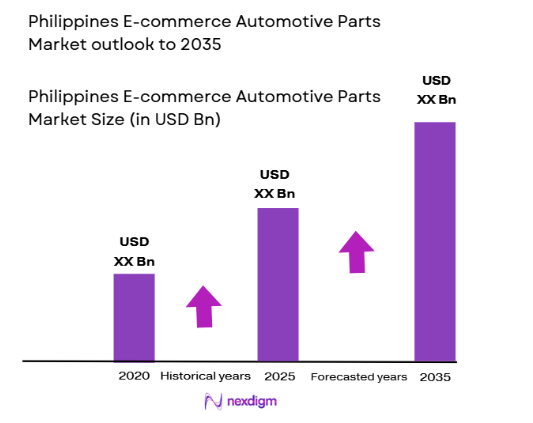
The Philippines E-commerce Automotive Parts market is estimated to reach USD ~ billion based on a recent historical assessment. The market’s growth is primarily driven by the increasing adoption of e-commerce platforms for purchasing automotive parts, the rise of vehicle ownership, and the growing demand for aftermarket products. The convenience and accessibility offered by online platforms, coupled with the expanding middle class and their preference for cost-effective vehicle maintenance solutions, are key factors contributing to this market growth.
Metro Manila and other key cities like Cebu and Davao are central to the dominance of the Philippines E-commerce Automotive Parts market. These urban centers have a large automotive consumer base, driven by a growing preference for vehicle customization, along with the rapid rise of e-commerce infrastructure in these regions. Moreover, the increasing trend of online shopping for automotive components across the country and the fast adoption of mobile platforms further support the market’s expansion in these dominant cities.
Market Segmentation
By Product Type:
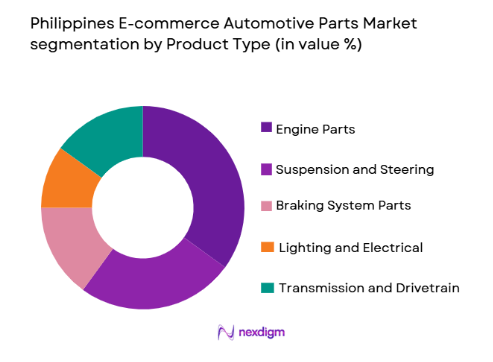
The Philippines E-commerce Automotive Parts market is segmented by product type into engine parts, suspension and steering components, braking system parts, lighting and electrical parts, and transmission and drivetrain parts. Recently, engine parts have seen a dominant market share due to their essential role in vehicle performance and the high demand for reliable, durable components for both maintenance and upgrades. These parts are frequently purchased online due to the convenience and the availability of competitive prices.
By Platform Type:
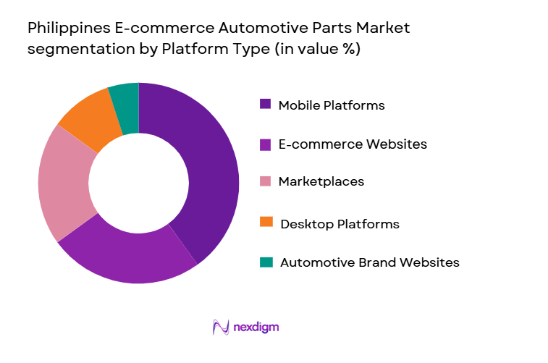
The Philippines E-commerce Automotive Parts market is segmented by platform type into desktop platforms, mobile platforms, e-commerce websites, marketplaces, and automotive brand websites. Mobile platforms have seen the most significant growth in recent years due to the increasing penetration of smartphones and the rise in mobile e-commerce usage. Consumers increasingly prefer the convenience and speed of browsing and purchasing auto parts via mobile applications, driving this sub-segment’s dominance in the market.
Competitive Landscape
The Philippines E-commerce Automotive Parts market is highly competitive, with a mix of global and local players. Major players dominate the market by leveraging extensive e-commerce platforms and broad product offerings. Market consolidation is evident as larger players acquire smaller firms to expand their reach. The influence of major global automotive parts suppliers and platforms is significant, driving innovation, competitive pricing, and increasing consumer trust in online purchasing.
| Company Name | Establishment Year | Headquarters | Technology Focus | Market Reach | Key Products | Revenue | Additional Market-Specific Parameter |
| Shopee | 2005 | Singapore | ~ | ~ | ~ | ~ | ~ |
| Lazada | 2012 | Singapore | ~ | ~ | ~ | ~ | ~ |
| AutoDeal | 2013 | Philippines | ~ | ~ | ~ | ~ | ~ |
| Carousell | 2012 | Singapore | ~ | ~ | ~ | ~ | ~ |
| Amazon | 1994 | USA | ~ | ~ | ~ | ~ | ~ |
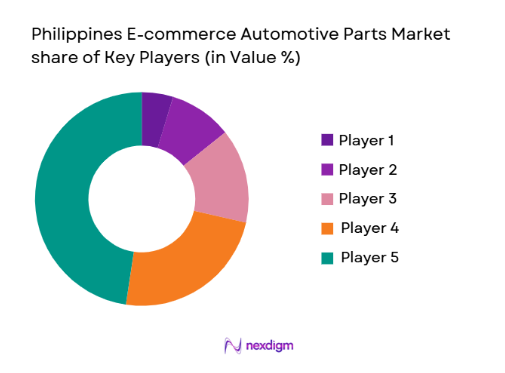
Philippines E-commerce Automotive Parts Market Analysis
Growth Drivers
Increase in Vehicle Ownership:
The growing middle class and rising disposable income in the Philippines are leading to an increase in vehicle ownership. As more consumers own vehicles, the demand for automotive parts, particularly replacement and aftermarket components, has surged. E-commerce platforms offer a convenient, cost-effective alternative for vehicle owners to source these parts, making it a driving force in the market. The growth in the automotive sector, paired with consumers’ increasing comfort with online shopping, has boosted demand for online platforms offering a wide range of products and services. Additionally, the availability of doorstep delivery has made purchasing parts easier, creating a seamless experience for customers.
Convenience and Cost-Effectiveness of E-commerce Platforms:
E-commerce platforms provide a hassle-free shopping experience that is appealing to modern consumers. Online shopping for automotive parts offers several advantages, including easy price comparisons, access to a wider variety of products, and faster delivery times. This convenience is a major driving factor in the growth of the Philippines E-commerce Automotive Parts market. Additionally, online platforms offer competitive pricing through discounts and promotions, making automotive parts more affordable. The convenience of browsing and purchasing from home, coupled with robust customer support and return policies, encourages more consumers to turn to e-commerce when purchasing automotive parts.
Market Challenges
Counterfeit Products and Quality Concerns:
A major challenge in the Philippines E-commerce Automotive Parts market is the prevalence of counterfeit products. These parts, which may appear similar to authentic components, are often of inferior quality and pose significant risks to vehicle performance and safety. The presence of fake parts on online platforms undermines consumer confidence in purchasing automotive products through e-commerce. Consumers may be hesitant to trust online sources for high-quality auto parts, which complicates the market’s growth. Online platforms must establish robust systems to verify the authenticity of the products they sell and work with trusted suppliers to address these concerns.
Logistical Issues and Supply Chain Disruptions:
Another key challenge is the logistical complexities and disruptions in the supply chain. The Philippines’ geography, with numerous islands, presents challenges for timely and cost-effective delivery of automotive parts. Furthermore, global supply chain issues, such as delays in manufacturing and shipping, can affect the availability of automotive parts. This often leads to longer delivery times and increased costs for consumers, negatively impacting their purchasing experience. Companies need to streamline their logistics operations and work with reliable partners to ensure timely and efficient delivery of products.
Opportunities
Expansion of Mobile E-commerce Platforms:
With the increasing penetration of smartphones, mobile e-commerce is expected to continue to dominate the Philippines E-commerce Automotive Parts market. The convenience of shopping via mobile applications is a significant opportunity for e-commerce platforms to tap into the growing number of mobile-first consumers. Mobile platforms allow automotive parts retailers to enhance their customer experience by offering personalized recommendations, discounts, and easy payment options. As mobile usage continues to rise, expanding mobile-friendly platforms will be crucial for players to maintain a competitive edge.
Growth of Cross-Border E-commerce:
Cross-border e-commerce presents an opportunity for the Philippines E-commerce Automotive Parts market to expand. Consumers are increasingly purchasing automotive parts from international suppliers, especially from countries with a robust automotive parts industry such as the United States and Japan. By tapping into this cross-border trade, local e-commerce platforms can offer a broader range of high-quality parts that may not be locally available. This opportunity allows for an increase in the variety of automotive components, providing consumers with more choices and the potential for cost savings.
Future Outlook
The future of the Philippines E-commerce Automotive Parts market looks promising, with expected growth driven by technological advancements, an expanding consumer base, and the continued shift towards mobile-first platforms. As the market matures, companies will focus on improving logistics and overcoming supply chain disruptions. Regulatory support for e-commerce in the Philippines will further fuel market expansion. Additionally, demand for both OEM and aftermarket parts will continue to increase, driven by a growing middle class and the rising vehicle ownership rate.
Major Players
- Shopee
- Lazada
- AutoDeal
- Carousell
- Amazon
- Mitsubishi Motors Philippines
- Honda Cars Philippines
- Isuzu Philippines
- Toyota Motor Philippines
- Ford Motor Company Philippines
- Brembo
- Bosch
- Magna International
- Denso Corporation
- Delphi Technologies
Key Target Audience
- E-commerce retailers
- Automotive manufacturers
- Automotive repair shops
- Vehicle fleet operators
- Automotive parts distributors
- Logistics service providers
- Government and regulatory bodies
- Investments and venture capitalist firms
Research Methodology
Step 1: Identification of Key Variables
This involves identifying the key variables that influence the Philippines E-commerce Automotive Parts market, such as consumer trends, market demand, and competitive factors.
Step 2: Market Analysis and Construction
We conduct thorough analysis to build a comprehensive market structure, incorporating key segments, growth drivers, challenges, and trends.
Step 3: Hypothesis Validation and Expert Consultation
Expert consultations are held to validate the assumptions and gather market insights from industry professionals and stakeholders.
Step 4: Research Synthesis and Final Output
We synthesize the gathered data into actionable insights and formulate the final report that includes key findings and recommendations.

- Executive Summary
- Research Methodology (Definitions, Scope, Industry Assumptions, Market Sizing Approach, Primary & Secondary Research Framework, Data Collection & Verification Protocol, Analytic Models & Forecast Methodology, Limitations & Research Validity Checks)

- Market Definition and Scope
- Value Chain & Stakeholder Ecosystem
- Regulatory / Certification Landscape
- Sector Dynamics Affecting Demand
- Strategic Initiatives & Infrastructure Growth

- Growth Drivers
Growth in E-commerce Adoption
Increase in Vehicle Ownership
Expansion of Online Automotive Parts Retailers
Technological Advancements in Automotive Parts
Rising Demand for Affordable Aftermarket Parts - Market Challenges
High Competition in the Online Automotive Market
Logistical Issues in Delivery and Inventory Management
Quality Control and Counterfeit Products
Regulatory Hurdles for E-commerce Operations
Consumer Trust and Product Assurance - Market Opportunities
Rise of Vehicle Customization and Modifications
Growth in Cross-border E-commerce Sales
Increasing Focus on Sustainability in Automotive Parts - Trends
Shift Towards Mobile E-commerce Platforms
Increased Integration of AI for Product Recommendations
Demand for Eco-friendly and Sustainable Parts
Growing Popularity of Subscription Services
Use of Augmented Reality for Virtual Product Fitting - Government Regulations & Defense Policy
E-commerce Regulations for Automotive Parts
Environmental Regulations for Auto Parts Disposal
Customs and Import Regulations for Automotive Components - SWOT Analysis
- Stakeholder and Ecosystem Analysis
- Porter’s Five Forces Analysis
- Competition Intensity and Ecosystem Mapping

- By Market Value, 2020-2025
- By Installed Units, 2020-2025
- By Average System Price, 2020-2025
- By System Complexity Tier, 2020-2025

- By System Type (In Value%)
Automotive Engine Parts
Suspension & Steering Components
Braking System Parts
Lighting & Electrical Parts
Transmission & Drivetrain Parts - By Platform Type (In Value%)
Desktop Platforms
Mobile Platforms
E-commerce Websites
Marketplaces
Automotive Brand Websites - By Fitment Type (In Value%)
OEM Parts
Aftermarket Parts
Performance Parts
Remanufactured Parts
Custom Parts - By EndUser Segment (In Value%)
Individual Consumers
Automotive Repair Shops
Fleet Operators
E-commerce Retailers
Automotive Manufacturers - By Procurement Channel (In Value%)
Direct Purchase from Manufacturer
Online Marketplaces
B2B E-commerce Platforms
Third-party Distributors
Retail Stores - By Material / Technology (in Value%)
Metal Components
Plastic Components
Rubber Components
Electronic Components
Smart Technology Components

- Market structure and competitive positioning
- Market share snapshot of major players
- CrossComparison Parameters (Price, Delivery Speed, Service Availability, Geographic Coverage, Technology Integration, Customer Support, Product Range, Warranty, Return Policy, Payment Methods)
- SWOT Analysis of Key Players
- Pricing & Procurement Analysis
- Key Players
Shopee
Lazada
AutoDeal
Carousell
Amazon
Mitsubishi Motors Philippines
Honda Cars Philippines
Isuzu Philippines
Toyota Motor Philippines
Ford Motor Company Philippines
Brembo
Bosch
Magna International
Denso Corporation
Delphi Technologies

- Growth in Individual Consumers’ Online Purchasing
- Rise of Automotive Repair Shops Utilizing Online Platforms
- Fleet Operators Integrating E-commerce for Parts Procurement
- E-commerce Retailers Expanding in Automotive Niche

- Forecast Market Value, 2026-2035
- Forecast Installed Units, 2026-2035
- Price Forecast by System Tier, 2026-2035
- Future Demand by Platform, 2026-2035


 Request a Sample
 Ask for Customization
 Get a Quote
 Enquire Now