
 Download PDF
 Download PDF
Market Overview
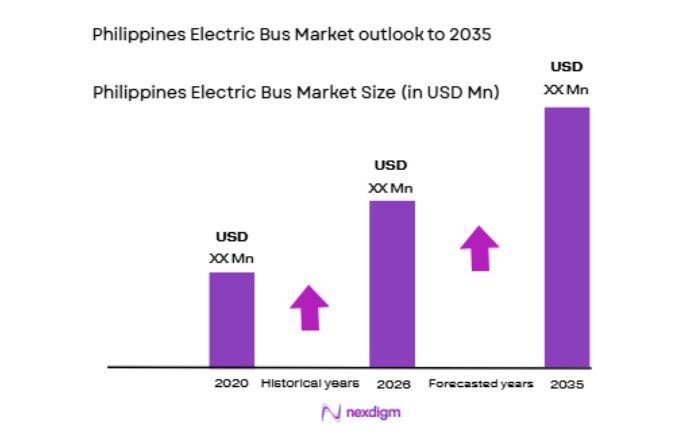
The Philippines electric bus market is expected to reach USD ~ million based on a recent historical assessment. This growth is primarily driven by the government’s push for sustainable public transportation systems, increasing environmental awareness, and a growing need to address traffic congestion and air pollution in major urban centers. The implementation of electric buses aligns with the country’s goals to reduce carbon emissions and promote cleaner, more energy-efficient transportation options.
Metro Manila and major cities such as Cebu and Davao are leading the way in electric bus adoption due to their high population densities, extensive public transport networks, and government support for green transportation initiatives. These urban centers face significant challenges related to air quality, traffic congestion, and energy consumption, making the transition to electric buses an attractive solution. The government’s initiatives to integrate electric vehicles into the public transport system are providing incentives for both operators and manufacturers to invest in electric buses.
Market Segmentation
By Bus Type
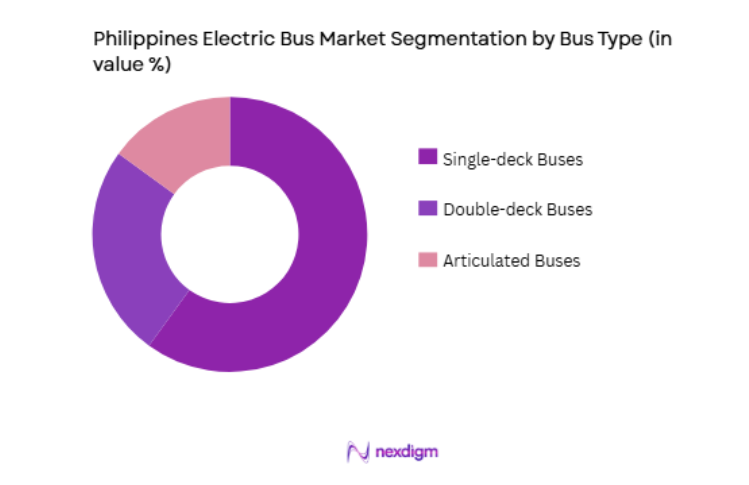
The Philippines electric bus market is segmented by bus type into single-deck, double-deck, and articulated buses. Single-deck electric buses have recently gained a dominant market share due to their efficiency in urban settings, cost-effectiveness, and ease of integration into existing transport systems. These buses are ideal for the narrow streets and heavy traffic conditions commonly found in Metro Manila and other cities, making them the preferred option for public transport operators. The affordability of single-deck electric buses, combined with their capacity to meet the needs of local transport networks, is driving their dominance in the market.
By Application
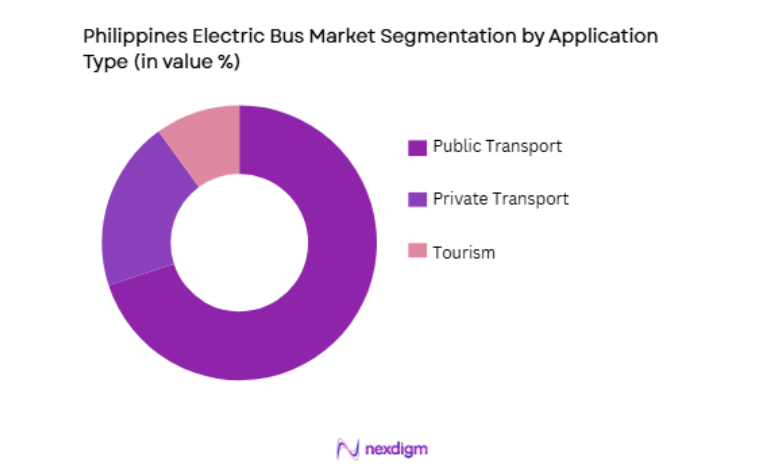
The Philippines electric bus market is segmented by application into public transport, private transport, and tourism. Public transport holds the dominant market share due to the government’s focus on integrating electric vehicles into the mass transit system. With rising concerns about air quality and the environmental impact of traditional buses, electric buses are seen as a sustainable solution to address urban pollution and congestion. The push for clean energy in public transportation, supported by government incentives and subsidies, has made electric buses the primary choice for public transport authorities seeking to modernize their fleets and meet environmental standards.
Competitive Landscape
The competitive landscape of the Philippines electric bus market is growing, with both international and local players entering the market. Global companies such as BYD, Yutong, and Volvo are investing in the Philippines, leveraging their experience in the electric vehicle (EV) sector to provide high-quality buses. Local manufacturers, such as QEV Technologies and GreenCity, are also emerging as key players, catering to the specific needs of the Philippine market. The competition is intensifying as more bus operators and municipalities invest in green solutions. The market is expected to become increasingly competitive, with companies focusing on cost-effective, efficient electric buses tailored for the unique needs of the Philippines’ urban transport systems.
| Company Name | Establishment Year | Headquarters | Technology Focus | Market Reach | Key Products | Revenue | Market-Specific Parameter |
| BYD | 1995 | Shenzhen, China | ~ | ~ | ~ | ~ | ~ |
| Yutong | 1963 | Zhengzhou, China | ~ | ~ | ~ | ~ | ~ |
| Volvo | 1927 | Gothenburg, Sweden | ~ | ~ | ~ | ~ | ~ |
| QEV Technologies | 2017 | Manila, Philippines | ~ | ~ | ~ | ~ | ~ |
| GreenCity | 2016 | Quezon City, Philippines | ~ | ~ | ~ | ~ | ~ |
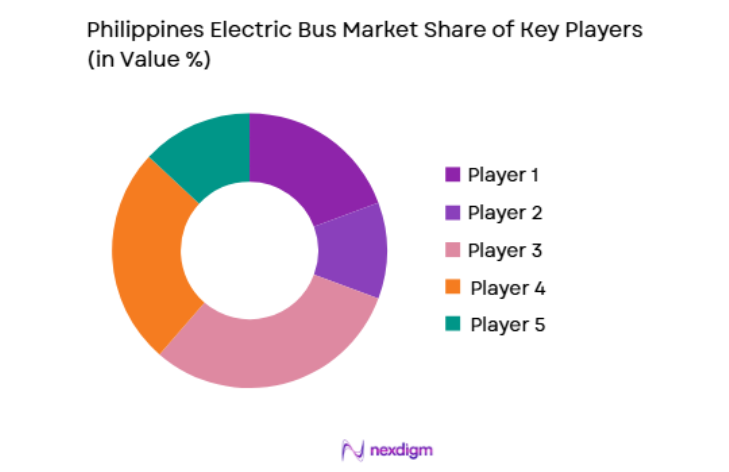
Philippines Electric Bus Market Analysis
Growth Drivers
Government Support for Green Transportation
The Philippine government has been actively supporting the transition to electric vehicles, including electric buses, as part of its efforts to reduce pollution and greenhouse gas emissions. The government’s incentives for electric vehicle adoption, such as tax breaks, subsidies, and funding for electric vehicle infrastructure, have created a favorable environment for electric bus operators. These policies are designed to support the integration of electric buses into public transport fleets, reducing the country’s reliance on fossil fuels and mitigating air pollution. The government’s commitment to achieving sustainability goals and improving urban mobility is expected to continue driving the growth of the electric bus market. As the government pushes for a greener future, the adoption of electric buses in public transport is expected to increase, contributing to the overall growth of the electric vehicle sector.
Technological Advancements in Electric Bus Manufacturing
The rapid advancements in battery technology and electric vehicle infrastructure are crucial drivers for the electric bus market in the Philippines. As battery efficiency improves and costs decrease, electric buses are becoming more affordable for public transportation agencies and private operators. Lithium-ion batteries, in particular, offer higher energy density and longer service life, making them a preferred choice for electric buses. Additionally, the development of fast-charging technologies and the expansion of charging networks are addressing key barriers to the widespread adoption of electric buses. As battery prices continue to fall and charging infrastructure expands, electric buses will become more viable and cost-effective, driving increased adoption across the country.
Market Challenges
High Initial Cost of Electric Buses
Despite the long-term savings associated with electric buses, the high initial purchase cost remains a significant challenge for many operators in the Philippines. While the total cost of ownership for electric buses is lower due to reduced fuel and maintenance costs, the upfront capital required to purchase electric buses is still higher than that of conventional diesel buses. This high initial cost can be a barrier for public transport agencies and private operators, especially in a price-sensitive market. Although government subsidies and financing options can help mitigate some of these costs, the affordability of electric buses remains a key challenge. Lowering the initial capital cost of electric buses through economies of scale, technological advancements, and continued government support will be critical for driving market growth.
Limited Charging Infrastructure
One of the main barriers to the widespread adoption of electric buses in the Philippines is the insufficient charging infrastructure. While some urban areas, particularly Metro Manila, are beginning to see the installation of charging stations, the infrastructure is still limited in many areas, particularly in suburban and rural regions. The lack of a comprehensive and accessible charging network makes it difficult for electric buses to operate efficiently across the country, limiting their adoption. The expansion of the charging infrastructure, including fast-charging stations and battery swapping facilities, will be essential for enabling the widespread use of electric buses. Without sufficient charging stations, the full potential of electric buses cannot be realized.
Opportunities
Integration of Electric Buses in Public Transport Systems
The integration of electric buses into public transportation systems presents a significant growth opportunity for the Philippines market. With increasing concerns about air quality and traffic congestion, electric buses offer a cleaner, more efficient alternative to traditional diesel-powered buses. The government’s push for sustainable public transport solutions has created an opportunity for electric buses to replace aging diesel fleets, reducing emissions and improving urban mobility. The adoption of electric buses in public transport systems will also create opportunities for local manufacturers to expand their operations and offer more tailored solutions for the Philippine market. As more cities and municipalities implement green transportation initiatives, the demand for electric buses is expected to grow, creating new opportunities for manufacturers and operators.
Expansion of Charging Infrastructure
The expansion of electric vehicle charging infrastructure presents a key opportunity for the electric bus market. As more electric buses are deployed in urban areas, the demand for reliable and accessible charging stations will increase. The development of fast-charging networks and battery swapping stations will make it easier for electric buses to operate efficiently, increasing their attractiveness to public transport agencies and private operators. Government initiatives and private investments in charging infrastructure will play a crucial role in expanding the charging network across the country. As the infrastructure improves, the adoption of electric buses will become more practical and convenient, accelerating the growth of the market.
Future Outlook
The Philippines electric bus market is expected to see significant growth in the next five years, driven by continued government support for green transportation, technological advancements in battery and charging infrastructure, and rising consumer demand for sustainable mobility solutions. The expansion of the charging network, combined with lower battery prices and improved vehicle performance, will make electric buses more affordable and accessible to public transport operators. As the market matures, the Philippines is poised to become a leading adopter of electric buses in Southeast Asia, contributing to the country’s efforts to reduce emissions and improve urban air quality.
Major Players
- BYD
- Yutong
- Volvo
- QEV Technologies
- Cleanfuel
- Tesla
- MAN
- Daimler
- Scania
- GreenCity
- Tata Motors
- New Flyer
- Proterra
- Zhongtong
- Mercedes-Benz
Key Target Audience
- Investments and venture capitalist firms
- Government and regulatory bodies
- Electric vehicle manufacturers
- Electric bus operators
- Public transport agencies
- Charging infrastructure providers
- Fleet management companies
- Environmental organizations
Research Methodology
Step 1: Identification of Key Variables
Identify key market drivers, challenges, and opportunities, such as government policies, technological advancements, and consumer adoption trends.
Step 2: Market Analysis and Construction
Analyze market trends and demand patterns using both qualitative and quantitative methods to develop an accurate market model.
Step 3: Hypothesis Validation and Expert Consultation
Consult with industry experts, government officials, and market participants to validate assumptions and refine market projections.
Step 4: Research Synthesis and Final Output
Synthesize findings into a comprehensive report, providing insights and actionable recommendations for stakeholders in the electric bus market.

- Executive Summary
- Research Methodology (Definitions, Scope, Industry Assumptions, Market Sizing Approach, Primary & Secondary Research Framework, Data Collection & Verification Protocol, Analytic Models & Forecast Methodology, Limitations & Research Validity Checks)

- Market Definition and Scope
- Value Chain & Stakeholder Ecosystem
- Regulatory / Certification Landscape
- Sector Dynamics Affecting Demand

- Growth Drivers
Government Public Transport Modernization Programs
Rising Urban Air Pollution Concerns
Expansion of Electric Mobility Infrastructure - Market Challenges
High Initial Procurement Cost of Electric Buses
Limited Nationwide Charging Infrastructure
Battery Replacement and Maintenance Costs - Market Opportunities
Public Transport Fleet Electrification Initiatives
Partnerships with Global Electric Bus Manufacturers
Development of Local Electric Vehicle Manufacturing - Trends
Adoption of Fast Charging Electric Bus Systems
Integration of Smart Fleet Management Technologies - Government Regulations
Electric Vehicle Industry Development Act Implementation
Public Utility Vehicle Modernization Program Compliance
Emission Reduction Targets for Public Transport - SWOT Analysis
- Porter’s Five Forces

- By Market Value, 2020-2025
- By Installed Units, 2020-2025
- By Average System Price, 2020-2025
- By System Complexity Tier, 2020-2025

- By System Type (In Value%)
Battery Electric Buses
Plug-in Hybrid Electric Buses
Fuel Cell Electric Buses
Hybrid Electric Buses
Electric Minibuses - By Platform Type (In Value%)
City Transit Buses
Intercity Electric Buses
School Electric Buses
Airport Shuttle Electric Buses
Tourism and Charter Electric Buses - By Fitment Type (In Value%)
Fully Built Electric Buses
Chassis-based Electric Bus Platforms
Retrofitted Diesel-to-Electric Buses
Modular Electric Bus Platforms - By End User Segment (In Value%)
Public Transportation Authorities
Private Bus Operators
Corporate Shuttle Service Providers

- Market Share Analysis
- Cross Comparison Parameters (Bus Type, Battery Capacity, Driving Range, Charging Technology, Total Cost of Ownership, Fleet Deployment Model, Charging Infrastructure Compatibility, Procurement Model, Manufacturer Presence, Maintenance Requirements)
- SWOT Analysis of Key Competitors
- Pricing & Procurement Analysis
- Key Players
BYD Company
Yutong Bus
King Long United Automotive Industry
Hyundai Motor Company
Volvo Bus Corporation
Scania AB
MAN Truck & Bus
Proterra Inc
NFI Group
Solaris Bus & Coach
Higer Bus Company
Ankai Bus
Foton Motor Group
Ashok Leyland
Golden Dragon Bus

- Public Transport Agencies Transitioning to Electric Fleets
- Private Operators Exploring Electric Bus Leasing Models
- Corporate Mobility Programs Adopting Sustainable Transport
- Tourism Sector Investing in Low-Emission Transport Services

- Forecast Market Value, 2026-2035
- Forecast Installed Units, 2026-2035
- Price Forecast by System Tier, 2026-2035
- Future Demand by Platform, 2026-2035


 Request a Sample
 Ask for Customization
 Get a Quote
 Enquire Now