
 Download PDF
Market Overview
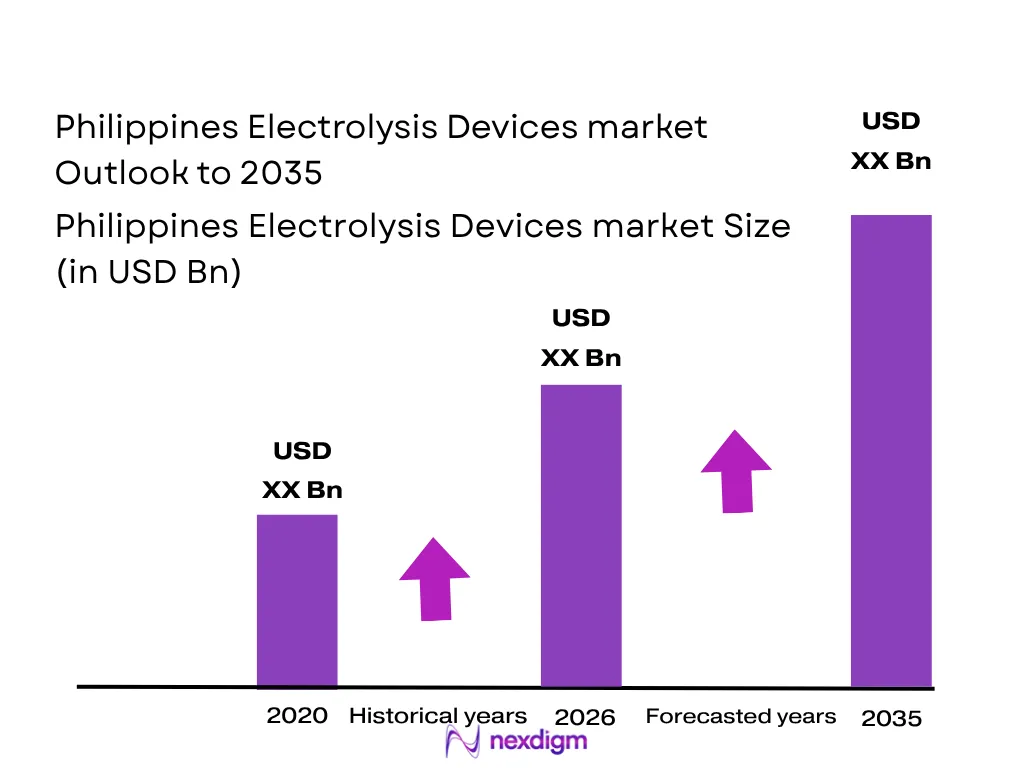
The Philippines Electrolysis Devices market was valued at USD ~ billion based on a recent historical assessment, supported by demand growth in the broader global electrolysis hair removal devices industry valued at USD ~ billion, according to industry healthcare technology databases. Market expansion is being driven by increasing demand for permanent hair removal solutions, rising adoption of aesthetic dermatology services, increasing disposable income in urban populations, and the expansion of beauty clinic chains investing in professional electrolysis equipment to differentiate treatment offerings.
Manila, Quezon City, Cebu City, and Davao City represent the most active demand centers due to dense populations, concentration of dermatology clinics, and higher spending on aesthetic treatments. These cities benefit from better access to imported medical aesthetic technologies, trained practitioners, and organized beauty service providers. The Philippines benefits from technology inflows from Japan, South Korea, and the United States because of established medical device trade relationships and the popularity of international cosmetic treatment standards among urban consumers.
Market Segmentation
By System Type
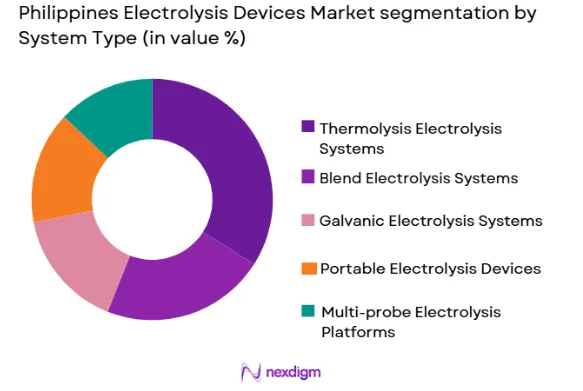
Philippines Electrolysis Devices market is segmented by system type into galvanic electrolysis systems, thermolysis electrolysis systems, blend electrolysis systems, multi-probe electrolysis platforms, and portable electrolysis devices. Recently, thermolysis electrolysis systems have a dominant market share due to factors such as faster treatment cycles, growing clinic preference for high patient turnover systems, strong brand availability, and the ability to treat multiple follicles efficiently. These systems are widely adopted in aesthetic clinics because they provide quicker results compared to galvanic systems. The increasing number of beauty centers offering express treatments also favors thermolysis platforms. Furthermore, the availability of digitally controlled thermolysis devices and practitioner familiarity with this technology strengthens adoption. Import trends also indicate stronger procurement of thermolysis equipment compared to other system types. Growing consumer preference for faster cosmetic outcomes continues to support the leading position of this segment.
By Platform Type
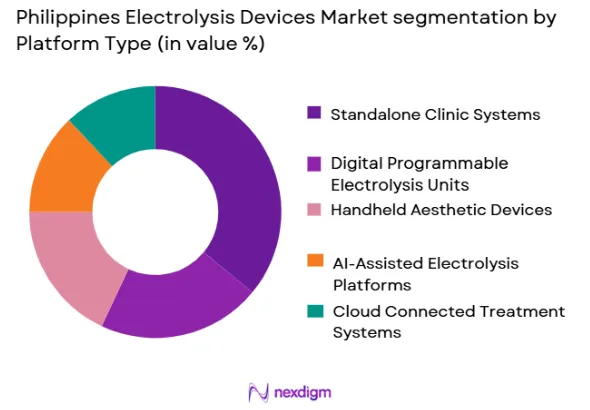
Philippines Electrolysis Devices market is segmented by platform type into standalone clinic systems, handheld aesthetic devices, digital programmable electrolysis units, AI-assisted electrolysis platforms, and cloud connected treatment systems. Recently, standalone clinic systems have a dominant market share due to factors such as their suitability for high procedure volumes, stronger reliability for continuous use, and wider installation in dermatology facilities. Clinics prefer these platforms because they offer better precision control and durability compared to portable alternatives. The expansion of aesthetic chains and franchise beauty clinics also supports demand for these systems. Additionally, standalone systems often include integrated safety monitoring features, which are preferred by professional practitioners. Importers also focus on these systems because they offer higher revenue potential per unit. The presence of skilled practitioners trained on clinic-based systems further supports segment dominance.
Competitive Landscape
The Philippines Electrolysis Devices market shows moderate consolidation with international manufacturers dominating technology supply while regional distributors control local distribution and service networks. Global companies influence innovation through digital electrolysis platforms and multi-frequency thermolysis systems, while local medical device suppliers compete through pricing, service contracts, and practitioner training. Competition is primarily driven by technology reliability, treatment speed, brand trust, and after-sales service support.
| Company Name | Establishment Year | Headquarters | Technology Focus | Market Reach | Key Products | Revenue | Local Distribution Partnerships |
| Dectro International | 1978 | Canada | ~ | ~ | ~ | ~ | ~ |
| Silhouet-Tone | 1965 | Canada | ~ | ~ | ~ | ~ | ~ |
| Instantronics | 1972 | USA | ~ | ~ | ~ | ~ | ~ |
| Sterex | 1978 | UK | ~ | ~ | ~ | ~ | ~ |
| Verseo | 2006 | USA | ~ | ~ | ~ | ~ | ~ |
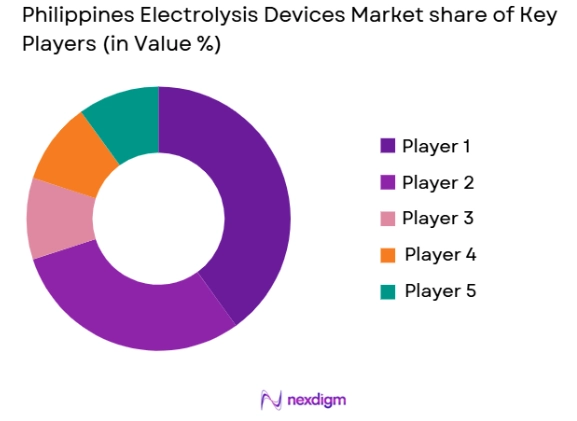
Philippines Electrolysis Devices Market Analysis
Growth Drivers
Rising demand for permanent hair removal solutions in urban areas
Urbanization and rising income levels in the Philippines are directly supporting demand for advanced personal grooming solutions such as electrolysis devices. According to the World Bank, the Philippines’ urban population reached 56.7 million people in 2023, reflecting sustained migration toward cities where aesthetic services are more accessible. Additionally, GDP per capita increased to USD 3,950 in 2023, indicating improved spending capacity on non-essential services like permanent hair removal. The Philippine Statistics Authority reported that household final consumption expenditure reached PHP 12.9 trillion in 2023, showing strong consumer spending. These macroeconomic indicators support rising demand for electrolysis treatments in urban centers where beauty awareness and disposable income are higher.
Growth of medical aesthetics and dermatology clinics
The expansion of healthcare infrastructure in the Philippines is enabling the growth of electrolysis device adoption in clinical settings. The Department of Health Philippines reported over 1,900 licensed hospitals and specialty clinics in 2023, many of which are expanding dermatology and cosmetic services. Healthcare expenditure reached PHP 1.1 trillion in 2023, according to the Philippine Statistics Authority, reflecting increased investment in medical services. Furthermore, the World Health Organization noted that the Philippines had 7.5 physicians per 10,000 population in 2022, supporting the growth of specialized aesthetic practices. This expanding clinical ecosystem is driving demand for professional electrolysis systems within dermatology and medical aesthetics clinics.
Market Challenges
High upfront cost of professional electrolysis systems
The adoption of electrolysis devices is constrained by capital intensity in a price-sensitive economy. The World Bank reports that gross national income per capita stood at USD 4,230 in 2023, indicating moderate purchasing power relative to developed markets. Meanwhile, the Philippine Statistics Authority highlights that 18.1 million Filipinos were below the national poverty threshold in 2021, with economic recovery still uneven through 2023–2024. Additionally, inflation averaged 6.0 in 2023 as per the Bangko Sentral ng Pilipinas, reducing disposable income for business investments. These economic constraints make it difficult for small clinics and independent practitioners to invest in high-cost electrolysis systems.
Limited availability of trained electrolysis practitioners
The shortage of skilled professionals limits the scalability of electrolysis services in the Philippines. According to the World Health Organization, the country had only 7.5 physicians per 10,000 population in 2022, indicating broader human resource constraints in specialized medical services. The Philippine Statistics Authority reported total employment at 48.9 million in 2023, but a significant share remains concentrated in low-skill sectors, limiting the talent pool for advanced cosmetology. Additionally, the Technical Education and Skills Development Authority recorded 2.3 million TVET enrollees in 2023, with limited specialization in electrolysis training. This shortage of certified practitioners restricts service availability and slows device adoption.
Market Opportunities
Growth of male grooming and aesthetic treatment demand
Rising workforce participation and income levels among men are expanding the customer base for electrolysis treatments. The Philippine Statistics Authority reported 34.8 million employed males in 2023, indicating a large working population with grooming needs. The World Bank states that total labor force reached 50.5 million in 2023, reflecting strong economic participation. Additionally, household consumption expenditure of PHP 12.9 trillion in 2023 supports spending on personal care services. With increasing urban employment and disposable income, male consumers are contributing to demand for permanent hair removal solutions, creating a strong opportunity for electrolysis device providers targeting gender-neutral aesthetic services.
Expansion of cosmetology education and certification programs
The growth of vocational training and certification programs is supporting the future expansion of electrolysis services. The Technical Education and Skills Development Authority reported 2.3 million enrollees in technical vocational education and training programs in 2023, indicating a strong pipeline for skill development. Education expenditure reached PHP 852 billion in 2023, according to the Department of Budget and Management Philippines, supporting training infrastructure. Additionally, literacy rates remain high at 96.3 in 2022 per the World Bank, enabling faster skill acquisition. These indicators highlight a favorable environment for expanding certified electrolysis training programs, which will improve practitioner availability and support long-term device adoption.
Future Outlook
The Philippines Electrolysis Devices market is expected to experience steady growth supported by rising dermatology clinic expansion and increasing consumer awareness of permanent hair removal procedures. Technological developments including AI assisted treatment platforms and digital electrolysis control systems are expected to improve efficiency. Regulatory alignment with international medical device standards may improve technology imports. Demand growth is also expected from male grooming and premium aesthetic treatment segments.
Major Players
- DectroInternational
- Silhouet-Tone
- Instantronics International
- Sterex
- Verseo
- Ballet Technologies
- Alvi Prague
- Apilus Systems
- Aesthetic Solutions PH
- SkinTech Philippines
- MedEquip Aesthetic
- Prime Medical Devices PH
- DermAesthetics Supply
- CosmoPro Devices
- ProDerma Technologies
Key Target Audience
- Dermatology clinic chains
- Aesthetic treatmentcenter operators
- Beauty salon chains
- Medical device distributors
- Healthcare equipment importers
- Investments and venture capitalist firms
- Government and regulatory bodies
- Medical spa operators
Research Methodology
Step 1: Identification of Key Variables
Primary variables including device installations, dermatology clinic expansion, pricing trends, and consumer procedure demand were identified. Secondary variables included technology adoption rates and practitioner availability across the Philippines aesthetic device ecosystem.
Step 2: Market Analysis and Construction
Market size construction involved analysis of device imports, distributor sales data, and clinic equipment investments. Industry databases and healthcare device trade data were used to build market estimates and validate adoption patterns.
Step 3: Hypothesis Validation and Expert Consultation
Industry assumptions were validated through consultation with distributors, biomedical equipment suppliers, and dermatology professionals. Cross verification ensured realistic representation of technology adoption trends and competitive positioning.
Step 4: Research Synthesis and Final Output
All validated datasets were synthesized using comparative benchmarking and demand modeling. Final insights were structured to reflect market realities, growth patterns, and competitive technology developments affecting the Philippines electrolysis devices ecosystem.

- Executive Summary
- Research Methodology (Definitions, Scope, Industry Assumptions, Market Sizing Approach, Primary & Secondary Research Framework, Data Collection & Verification Protocol, Analytic Models & Forecast Methodology, Limitations & Research Validity Checks)

- Market Definition and Scope
- Value Chain & Stakeholder Ecosystem
- Regulatory / Certification Landscape
- Sector Dynamics Affecting Demand
- Strategic Initiatives & Infrastructure Growth

- Growth Drivers
Rising demand for permanent hair removal solutions in urban areas
Growth of medical aesthetics and dermatology clinics
Increasing consumer awareness about advanced cosmetic procedures
Rising disposable income among middle class consumers
Expansion of professional beauty service chains - Market Challenges
High upfront cost of professional electrolysis systems
Limited availability of trained electrolysis practitioners
Competition from laser hair removal technologies
Maintenance and consumable cost pressures for small clinics
Low awareness in tier 2 and tier 3 cities - Market Opportunities
Growth of male grooming and aesthetic treatment demand
Expansion of cosmetology education and certification programs
Adoption of compact electrolysis devices for small clinics - Trends
Integration of digital control interfaces in electrolysis equipment
Shift toward painless and faster thermolysis technologies
Growing popularity of combination hair removal treatments
Demand for compact and portable electrolysis systems
Increased focus on hygiene certified disposable probes - Government Regulations & Defense Policy
Medical device registration requirements under Philippines FDA
Safety compliance standards for cosmetic treatment devices
Import regulations impacting aesthetic device distribution - SWOT Analysis
- Stakeholder and Ecosystem Analysis
- Porter’s Five Forces Analysis
- Competition Intensity and Ecosystem Mapping

- By Market Value, 2020-2025
- By Installed Units, 2020-2025
- By Average System Price, 2020-2025
- By System Complexity Tier, 2020-2025

- By System Type (In Value%)
Galvanic electrolysis systems
Thermolysis electrolysis systems
Blend electrolysis systems
Multi-probe electrolysis platforms
Portable electrolysis devices - By Platform Type (In Value%)
Standalone clinic systems
Handheld aesthetic devices
Digital programmable electrolysis units
AI-assisted electrolysis platforms
Cloud connected treatment systems - By Fitment Type (In Value%)
Fixed Clinic Installations
Mobile Aesthetic Service Units
Dermatology Center Installations
Beauty Chain Standardized Equipment
HomeUse Professional Kits - By EndUser Segment (In Value%)
Dermatology Clinics
Medical Aesthetic Centers
Beauty Salons and Spas
Cosmetology Training Institutes
Individual Practitioners - By Procurement Channel (In Value%)
Direct Manufacturer Procurement
Authorized Medical Device Distributors
Online Professional Equipment Marketplaces
Aesthetic Equipment Leasing Providers
Clinic Equipment Aggregators - By Material / Technology (in Value %)
Microprocessor Controlled Electrolysis Technology
RF Assisted Thermolysis Technology
Gold Probe Electrodes
Insulated Probe Technology
AI Assisted Hair Detection Systems

- Market structure and competitive positioning
- Market share snapshot of major players
- Cross Comparison Parameters (Product Portfolio Breadth, Technology Integration Level, Pricing Strategy, Distribution Network Strength, AfterSales Service Capability, Training Support Programs, Brand Recognition, Local Partnerships, Innovation Pipeline Strength, Regulatory Compliance Readiness)
- SWOT Analysis of Key Players
- Pricing & Procurement Analysis
- Key Players
Apilus Philippines
SilhouetTone Aesthetic Technologies Philippines
Hinkel Electrolysis Systems Asia
Instantron Beauty Systems Distribution Philippines
Clareblend Medical Philippines
Sterex Electrolysis International Asia
Dectro International Philippine Partners
Aesthetic Solutions PH Inc
DermAesthetics Device Supply Philippines
MedEquip Aesthetic Technologies Philippines
CosmoPro Medical Aesthetics Supply
SkinTech Medical Devices Philippines
ProDerma Equipment Solutions
Advanced Aesthetic Device Trading PH
Prime Beauty Medical Equipment Corporation

- Dermatology clinics focusing on premium electrolysis systems for precision procedures
- Beauty chains investing in standardized multi unit deployments
- Training institutes driving entry level device adoption
- Independent practitioners preferring portable and mid cost systems

- By Market Value, 2020-2025
- By Installed Units, 2020-2025
- By Average System Price, 2020-2025
- By System Complexity Tier, 2020-2025


 Request a Sample
 Ask for Customization
 Get a Quote
 Enquire Now