

 Download PDF
Market Overview
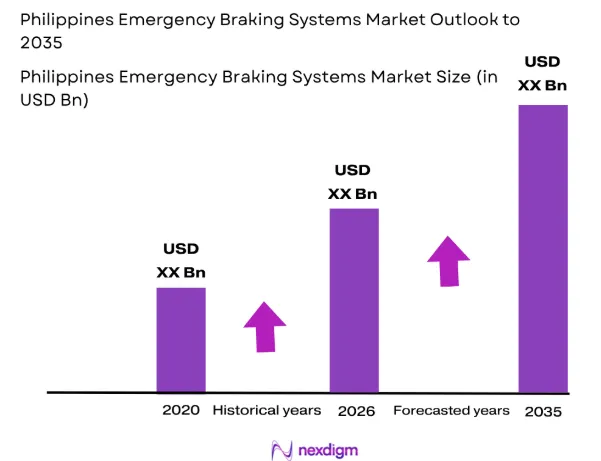
The Philippines Emergency Braking Systems (EBS) market is projected to reach USD ~ billion, based on a recent historical assessment, driven by increasing vehicle safety concerns and advancements in automotive technology. The market’s growth is primarily propelled by the growing adoption of advanced driver assistance systems (ADAS) in passenger vehicles, coupled with regulatory pressure for enhanced safety features. Consumer demand for safer driving experiences, particularly in urban areas with higher traffic volumes, further accelerates the adoption of emergency braking systems.
Metro Manila, Cebu, and Davao are the dominant cities driving the adoption of EBS in the Philippines. These urban centers experience high vehicle penetration rates, increased traffic congestion, and heightened awareness regarding road safety. Furthermore, the presence of global automotive brands offering vehicles equipped with EBS, coupled with governmental focus on safety regulations, is further fostering the demand for emergency braking systems in these regions.
Market Segmentation
By Product Type
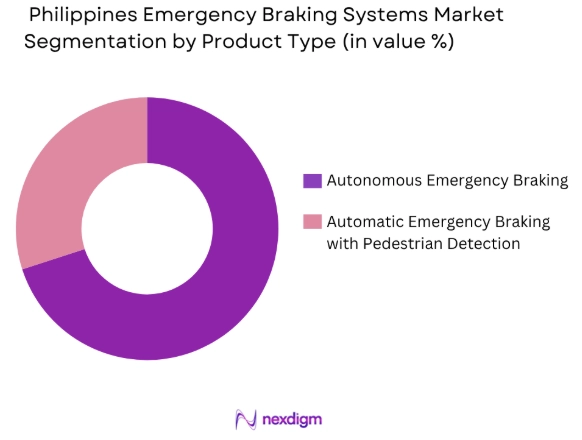
The Philippines Emergency Braking Systems market is segmented by product type into autonomous emergency braking (AEB) and automatic emergency braking (AEB) with pedestrian detection. Autonomous emergency braking has recently gained a dominant market share due to its advanced features that do not rely on the driver’s input. This technology is primarily used in advanced driver-assistance systems (ADAS), which help prevent collisions by automatically applying brakes when a potential crash is detected. The increasing integration of AEB in vehicles by OEMs to meet safety standards and consumer demand for more automated and safer driving experiences has significantly strengthened its position in the market.
By Vehicle Type
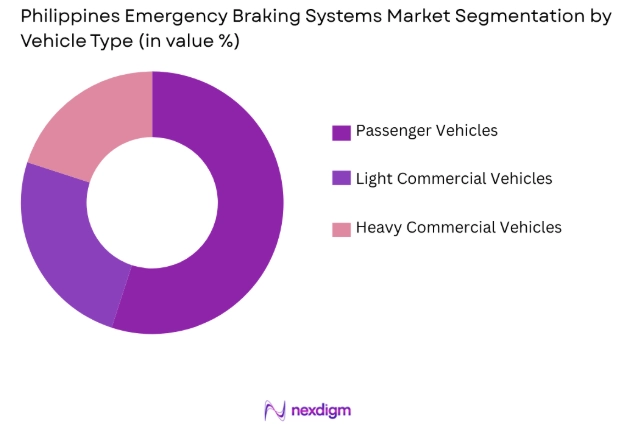
The market is segmented by vehicle type into passenger vehicles, light commercial vehicles (LCVs), and heavy commercial vehicles (HCVs). The passenger vehicle segment holds the largest share due to the rising demand for safety features among consumers. The growing awareness about road safety and vehicle protection, combined with the increasing number of accidents, has driven the widespread adoption of EBS in passenger vehicles. As regulatory bodies mandate enhanced safety features, more passenger vehicles are being equipped with EBS to meet safety standards and improve consumer appeal.
Competitive Landscape
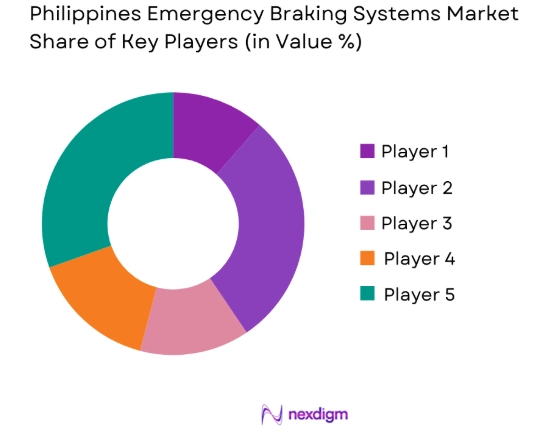
The Philippines Emergency Braking Systems market is witnessing significant competition, driven by global players focused on improving vehicle safety standards. Key players are strengthening their positions through technological advancements and expanding partnerships with automotive manufacturers. Consolidation within the automotive sector is also influencing the development of EBS technologies, as suppliers increasingly collaborate with original equipment manufacturers (OEMs) to meet regulatory standards and consumer preferences. Innovation in automated systems and the growing focus on vehicle safety are central to this market’s competitive dynamics.
| Company Name | Establishment Year | Headquarters | Technology Focus | Market Reach | Key Products | Revenue (USD Billion) | Market-Specific Parameter |
| Bosch | 1886 | Germany | ~ | ~ | ~ | ~ | ~ |
| Continental AG | 1871 | Germany | ~ | ~ | ~ | ~ | ~ |
| Denso Corporation | 1949 | Japan | ~ | ~ | ~ | ~ | ~ |
| ZF Friedrichshafen | 1915 | Germany | ~ | ~ | ~ | ~ | ~ |
| Aptiv | 1994 | US | ~ | ~ | ~ | ~ | ~ |
Philippines Emergency Braking Systems Market Analysis
Growth Drivers
Government Regulations
One of the key growth drivers for the Philippines Emergency Braking Systems market is the increasing governmental focus on enhancing vehicle safety. In line with international safety standards, the Philippine government has adopted several regulations mandating the inclusion of advanced safety technologies like emergency braking systems in new vehicles. These regulations aim to reduce road accidents and fatalities, especially in urban areas where traffic congestion is high. As these regulations become stricter, automotive manufacturers are increasingly incorporating EBS technologies into their vehicle models to comply with safety requirements, thus driving market growth. Moreover, the government’s focus on improving road safety and promoting the adoption of safety technologies further fuels the demand for EBS in the country.
Increasing Consumer Demand for Safety Features
Consumer awareness about vehicle safety has been on the rise, further boosting the demand for emergency braking systems in the Philippines. As more individuals seek vehicles with advanced safety features, the adoption of systems like EBS is expected to increase. In metropolitan areas such as Metro Manila, where traffic congestion and accident rates are high, drivers are prioritizing safety features that can prevent accidents and enhance their driving experience. Additionally, the increasing focus on collision prevention technologies and the desire for safer driving experiences among consumers are compelling automotive manufacturers to integrate EBS into their vehicles. This growing demand for safer vehicles is driving the expansion of the Philippines Emergency Braking Systems market.
Market Challenges
High Cost of Adoption
Despite the benefits that Emergency Braking Systems provide, their adoption in the Philippines faces a significant barrier in terms of cost. The initial installation cost of EBS, along with the associated sensors and software, makes it an expensive addition to vehicles. This is especially challenging for lower-income consumers who prioritize affordability over advanced safety features. As a result, the higher cost of vehicles equipped with EBS limits their adoption, particularly in the mass-market and entry-level segments. Until the technology becomes more affordable and widely available, cost will remain a significant barrier to the widespread adoption of emergency braking systems in the Philippines market.
Infrastructure and Road Conditions
The effectiveness of Emergency Braking Systems is closely tied to the quality of road infrastructure, which poses a challenge in the Philippines. Poor road conditions, including potholes, narrow lanes, and inconsistent road markings, reduce the effectiveness of EBS in preventing accidents. While the system is designed to detect potential collisions, it requires clear and well-maintained road surfaces to operate optimally. In areas where road conditions are less than ideal, the system may not perform as expected, leading to a lack of consumer trust in its reliability. This challenge is compounded by the slow pace of infrastructure improvement in rural and remote areas, limiting the system’s effectiveness in these regions.
Opportunities
Integration with Other Advanced Driver Assistance Systems (ADAS)
The integration of Emergency Braking Systems with other ADAS technologies presents significant opportunities for market growth in the Philippines. As automotive manufacturers seek to enhance the overall safety features of their vehicles, they are increasingly combining EBS with other technologies like lane departure warning, adaptive cruise control, and collision warning systems. This integration creates a comprehensive safety solution that appeals to consumers seeking advanced safety features in their vehicles. By bundling these systems, manufacturers can offer a more attractive package, driving the adoption of EBS and expanding the market. As consumer demand for automated and safe driving experiences grows, the integration of these systems will be a key growth driver for the Philippines EBS market.
Focus on Autonomous Vehicles
The development and adoption of autonomous vehicles in the Philippines present an emerging opportunity for the Emergency Braking Systems market. As self-driving technology advances, emergency braking will play a crucial role in the safety features of autonomous vehicles. TPMS, lane assist, and EBS are critical components of the autonomous driving experience. As more autonomous vehicles enter the market, the demand for advanced braking technologies like EBS will increase significantly. Furthermore, as the government pushes for regulatory frameworks to support autonomous vehicles, the Philippines is expected to see increased investment in these technologies. This shift toward autonomous vehicles presents an excellent opportunity for manufacturers of emergency braking systems to cater to a new and growing segment of the market.
Future Outlook
The Philippines Emergency Braking Systems market is expected to see steady growth over the next five years, driven by regulatory advancements, increasing consumer demand for vehicle safety, and the integration of advanced safety technologies in vehicles. As vehicle safety standards evolve and consumer awareness continues to rise, more vehicles are likely to be equipped with emergency braking systems as a standard feature. Technological developments in ADAS and the growing presence of electric and autonomous vehicles will also contribute to the expansion of the market. The government’s continued focus on road safety will further accelerate market adoption, ensuring a favorable environment for market players.
Step 1: Identification of Key Variables
Key variables influencing the market such as vehicle safety regulations, consumer demand, and technological advancements in EBS were identified for analysis.
Step 2: Market Analysis and Construction
The market was segmented by product type, vehicle category, and key growth drivers, focusing on the adoption rates and competitive dynamics.
Step 3: Hypothesis Validation and Expert Consultation
Experts from the automotive industry, including engineers and market analysts, validated the assumptions and ensured the data’s relevance.
Step 4: Research Synthesis and Final Output
The final report was synthesized using data collected from multiple sources, including industry experts, market reports, and historical trends to provide a comprehensive outlook on the Philippines EBS market.

- Executive Summary
- Research Methodology (Definitions, Scope, Industry Assumptions, Market Sizing Approach, Primary & Secondary Research Framework, Data Collection & Verification Protocol, Analytic Models & Forecast Methodology, Limitations & Research Validity Checks)

- Market Definition and Scope
- Value Chain & Stakeholder Ecosystem
- Regulatory / Certification Landscape
- Sector Dynamics Affecting Demand

- Growth Drivers
Increasing Demand for Vehicle Safety Features
Government Regulations on Vehicle Safety
Technological Advancements in Autonomous Systems - Market Challenges
High Cost of Advanced Safety Systems
Limited Awareness in Emerging Markets
Integration with Legacy Vehicle Systems - Market Opportunities
Growth in Autonomous Vehicle Adoption
Partnerships with OEMs
Increasing Demand in Fleet Management - Trends
Integration of AI and Machine Learning in Safety Systems
Growing Focus on Pedestrian and Cyclist Safety - Government Regulations
- SWOT Analysis
- Porter’s Five Forces

- By Market Value, 2020-2025
- By Installed Units, 2020-2025
- By Average System Price, 2020-2025
- By System Complexity Tier, 2020-2025

- By System Type (In Value%)
Autonomous Emergency Braking Systems
Camera-based Emergency Braking Systems
Radar-based Emergency Braking Systems
Ultrasonic-based Emergency Braking Systems
Hybrid Emergency Braking Systems - By Platform Type (In Value%)
Passenger Vehicles
Commercial Vehicles
Electric Vehicles
Luxury Vehicles - By Fitment Type (In Value%)
OEM Fitment
Aftermarket Fitment
Integrated Systems
Modular Systems - By End User Segment (In Value%)
Private Vehicle Owners
Fleet Operators
Commercial Transport Operators

- Market Share Analysis
- Cross Comparison Parameters (System Type, Platform Type, Procurement Channel, End User Segment, Fitment Type, Sensor Technology, System Reliability)
- SWOT Analysis of Key Competitors
- Pricing & Procurement Analysis
- Key Players
Bosch
Continental AG
Denso Corporation
ZF Friedrichshafen
Valeo
Aptiv
Magna International
Hyundai Mobis
Autoliv
Mobileye
Hitachi Astemo
Nidec Corporation
Hella GmbH
Texas Instruments
Infineon Technologies

- Increasing Adoption by Private Vehicle Owners
- Fleet Operators Increasing Investment in Safety
- Rising Demand for Safety Features in Commercial Vehicles
- Government Initiatives Promoting Vehicle Safety

- Forecast Market Value, 2026-2035
- Forecast Installed Units, 2026-2035
- Price Forecast by System Tier, 2026-2035
- Future Demand by Platform, 2026-2035


 Request a Sample
 Ask for Customization
 Get a Quote
 Enquire Now