
 Download PDF
 Download PDF
Market Overview
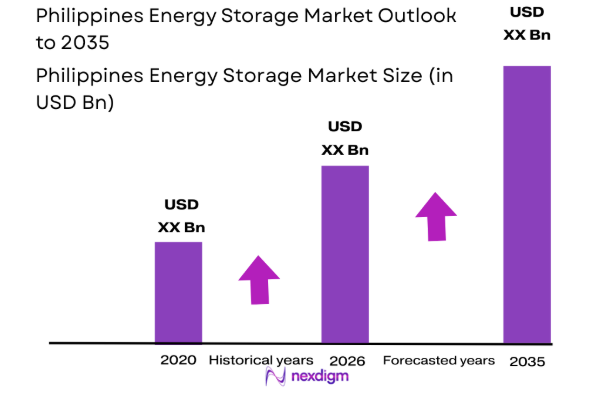
The Philippines Energy Storage market has experienced significant growth, with a market size estimated at USD ~ billion, driven primarily by the increasing demand for renewable energy solutions. The market is propelled by government incentives, the rising need for grid stability, and advancements in energy storage technologies. Investments in large-scale projects and the push for more sustainable energy infrastructure are fueling growth, making energy storage an essential part of the country’s energy transition.
The market’s dominance is concentrated in key regions such as Metro Manila and Cebu due to their high energy demand and infrastructure development. These regions benefit from government-backed projects and private sector investments, making them focal points for energy storage implementation. The increasing integration of renewable energy sources in these regions further supports the adoption of energy storage systems, ensuring grid stability and contributing to energy security.
Market Segmentation
By Product Type
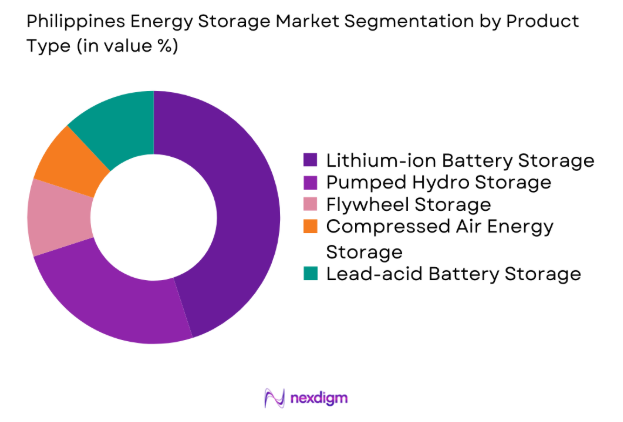
The Philippines Energy Storage market is segmented by product type into lithium-ion battery storage, pumped hydro storage, flywheel storage, compressed air energy storage, and lead-acid battery storage. Recently, lithium-ion battery storage has taken a dominant market share due to its efficiency, scalability, and cost-effectiveness. Factors such as technological advancements, cost reduction, and growing demand for renewable energy integration have further increased its popularity, making it the preferred choice for both residential and commercial applications.
By Platform Type
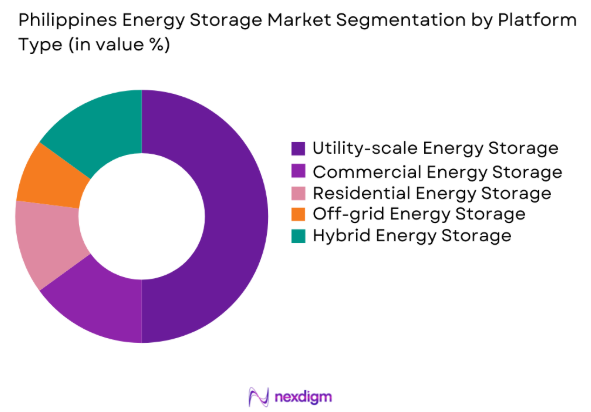
The Philippines Energy Storage market is also segmented by platform type, including utility-scale energy storage, commercial energy storage, residential energy storage, off-grid energy storage, and hybrid energy storage. Utility-scale energy storage has the largest market share due to its ability to provide large-scale grid stabilization, enhance the integration of renewable energy, and support energy security at a national level. This segment is particularly driven by government-backed projects, the growing adoption of solar and wind energy, and the need to mitigate power outages.
Competitive Landscape
The competitive landscape of the Philippines energy storage market is highly influenced by large global players and local companies. These players are driving innovation through technological advancements and large-scale installations. The market is marked by strong consolidation, with major players expanding their reach to tap into the growing demand for sustainable energy solutions. Companies are focusing on research and development to improve energy storage systems and enhance efficiency.
| Company Name | Establishment Year | Headquarters | Technology Focus | Market Reach | Key Products | Revenue (USD) | Market-specific Parameter |
| AES Energy Storage | 1981 | USA | ~ | ~ | ~ | ~ | ~ |
| Fluence Energy | 2018 | USA | ~ | ~ | ~ | ~ | ~ |
| E.ON | 2000 | Germany | ~ | ~ | ~ | ~ | ~ |
| Schneider Electric | 1836 | France | ~ | ~ | ~ | ~ | ~ |
| Siemens | 1847 | Germany | ~ | ~ | ~ | ~ | ~ |
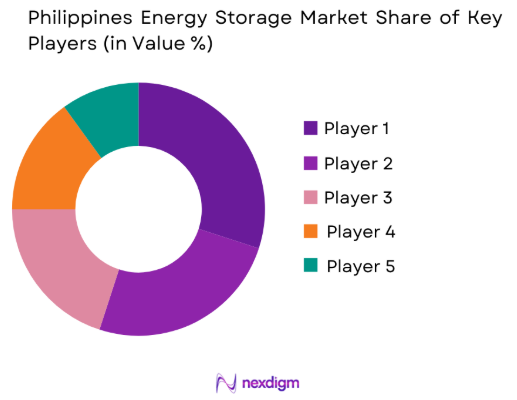
Philippines Energy Storage Market Analysis
Growth Drivers
Increasing adoption of renewable energy
The growing shift towards renewable energy sources, such as solar and wind, in the Philippines is one of the main growth drivers for the energy storage market. The integration of renewable energy into the grid requires reliable storage solutions to balance intermittency and ensure consistent power supply. Energy storage systems, particularly lithium-ion batteries, are seen as essential in facilitating this transition. With government initiatives to support green energy, such as subsidies for solar power projects, energy storage adoption is expected to increase to enable large-scale renewable power generation and consumption. Furthermore, the expansion of off-grid energy storage in remote areas will contribute to the market’s growth, providing reliable power in regions with inadequate grid infrastructure.
Technological advancements in energy storage systems
Technological improvements in energy storage systems, particularly in lithium-ion battery technology, are another key driver for the market. These advancements have made energy storage more efficient, cost-effective, and scalable, enabling the Philippines to implement these systems across different sectors, from residential to large-scale utility projects. Additionally, innovations in hybrid systems that combine multiple energy sources further boost market growth. As battery costs continue to decline and energy storage technologies evolve, more applications for energy storage systems will emerge, offering solutions to both residential and commercial users. These advancements enhance the feasibility of integrating renewable energy sources with grid storage, creating a more sustainable and resilient energy system.
Market Challenges
High initial investment costs
Despite the significant benefits that energy storage systems offer, one of the main challenges facing the market is the high initial capital investment required. The cost of installing large-scale energy storage solutions can be prohibitive for some businesses and households. This challenge is particularly evident in off-grid areas where the installation costs for both renewable energy systems and storage solutions are high. While these systems offer long-term savings and efficiency improvements, the upfront financial burden remains a significant barrier to widespread adoption, especially in a developing economy like the Philippines. Although incentives are provided by the government, the high initial cost continues to limit market expansion in certain sectors.
Regulatory and policy barriers
Another significant challenge for the Philippines energy storage market is navigating the complex regulatory landscape. The country’s energy policies are still evolving, and energy storage systems must comply with various local regulations and standards, which may differ between regions. These barriers can cause delays in project implementation, preventing market players from quickly scaling up energy storage solutions. Moreover, inconsistent policies and the lack of clear guidelines on energy storage integration with the national grid can discourage private sector investment. The market requires a clear and stable regulatory framework to incentivize further investment and smooth integration of energy storage systems into the energy sector.
Opportunities
Off-grid energy storage solutions
One of the most significant opportunities in the Philippines energy storage market lies in the development of off-grid energy storage solutions. In rural and remote areas where traditional grid infrastructure is either unavailable or too expensive, off-grid storage systems offer a reliable and cost-effective alternative. These solutions, such as solar mini-grids paired with battery storage, can significantly improve energy access in underserved areas. The government’s rural electrification efforts and the increasing adoption of renewable energy in these areas further create a conducive environment for off-grid energy storage development. The growing interest from private sector players to address energy access challenges through off-grid solutions will drive market expansion.
Expansion of hybrid energy storage systems
Another emerging opportunity lies in the growth of hybrid energy storage systems, which combine renewable energy generation with storage solutions to enhance grid stability and efficiency. By integrating sources such as solar or wind with storage devices, hybrid systems optimize energy storage and improve power management, ensuring more reliable and resilient energy infrastructure. This solution is especially beneficial in the Philippines, given the country’s increasing reliance on renewable energy resources. As demand for clean energy continues to rise, hybrid energy storage systems present a significant opportunity for market players to expand their offerings and support the transition to a more sustainable energy future.
Future Outlook
The future outlook of the Philippines energy storage market is optimistic, with continued growth expected over the next five years. Technological advancements in energy storage systems, such as improvements in battery efficiency and cost reduction, will drive adoption across residential, commercial, and utility-scale sectors. Government support, through policy incentives and funding for renewable energy projects, will also play a crucial role in market expansion. As the Philippines works towards meeting its renewable energy targets, the demand for energy storage solutions will increase to ensure grid stability and optimize energy use.
Major Players
- AES Energy Storage
- Fluence Energy
- E.ON
- Schneider Electric
- Siemens
- ABB
- General Electric
- LG Chem
- Tesla
- Vestas
- Hitachi Energy
- Saft Batteries
- Enel X
- BYD Company
- Samsung SDI
Key Target Audience
- Investments and venture capitalist firms
- Government and regulatory bodies
- Utility providers
- Renewable energy developers
- Commercial sector energy managers
- Industrial sector energy managers
- Energy storage system manufacturers
- Independent power producers
Research Methodology
Step 1: Identification of Key Variables
The initial stage involves identifying the key variables impacting the energy storage market, including technological advancements, government policies, and market trends.
Step 2: Market Analysis and Construction
We perform a comprehensive market analysis, including data collection from primary and secondary sources, to build the market structure and understand its dynamics.
Step 3: Hypothesis Validation and Expert Consultation
The hypotheses developed from market analysis are validated through expert consultations and interviews with key industry players, ensuring accuracy and reliability.
Step 4: Research Synthesis and Final Output
After synthesizing all findings and insights, we prepare the final report, ensuring that all data is presented accurately and comprehensively.

- Executive Summary
- Research Methodology (Definitions, Scope, Industry Assumptions, Market Sizing Approach, Primary & Secondary Research Framework, Data Collection & Verification Protocol, Analytic Models & Forecast Methodology, Limitations & Research Validity Checks)

- Market Definition and Scope
- Value Chain & Stakeholder Ecosystem
- Regulatory / Certification Landscape
- Sector Dynamics Affecting Demand
- Strategic Initiatives & Infrastructure Growth

- By Market Value, 2020-2025
- By Installed Units, 2020-2025
- By Average System Price, 2020-2025
- By System Complexity Tier, 2020-2025

- By System Type (In Value%)
Lithium-ion Battery Storage
Pumped Hydro Storage
Flywheel Storage
Compressed Air Energy Storage
Lead-acid Battery Storage - By Platform Type (In Value%)
Utility-Scale Energy Storage
Commercial Energy Storage
Residential Energy Storage
Off-grid Energy Storage
Hybrid Energy Storage - By Fitment Type (In Value%)
On-site Energy Storage
Grid-connected Energy Storage
Mobile Energy Storage
Integrated Energy Storage
Standalone Energy Storage - By End User Segment (In Value%)
Residential Users
Industrial Users
Commercial Users
Utility Providers
Government & Regulatory Bodies - By Procurement Channel (In Value%)
Direct Procurement
Third-party Procurement
Government Tenders
Private Sector Procurement
Online Procurement Platforms

- Market Share Analysis
- Cross Comparison Parameters (System Type, Platform Type, Procurement Channel, End User Segment, Fitment Type, Energy Source, Application Type, Geography, Technology Adoption, Regulatory Framework)
- SWOT Analysis of Key Competitors
- Pricing & Procurement Analysis
- Key Players
AES Energy Storage
E.ON
Sumitomo Electric
LG Chem
Fluence Energy
IHI Corporation
Vestas
ABB
Siemens
Schneider Electric
ENGIE
Tesla
BYD Company
Enel X
Greenlots

- Increased Demand from Residential Sector
- Commercial Sector Adoption for Cost Savings
- Industrial Users Seeking Energy Security
- Regulatory Bodies Enhancing Policy for Energy Storage

- Forecast Market Value, 2026-2035
- Forecast Installed Units, 2026-2035
- Price Forecast by System Tier, 2026-2035
- Future Demand by Platform, 2026-2035


 Request a Sample
 Ask for Customization
 Get a Quote
 Enquire Now