
 Download PDF
Market Overview
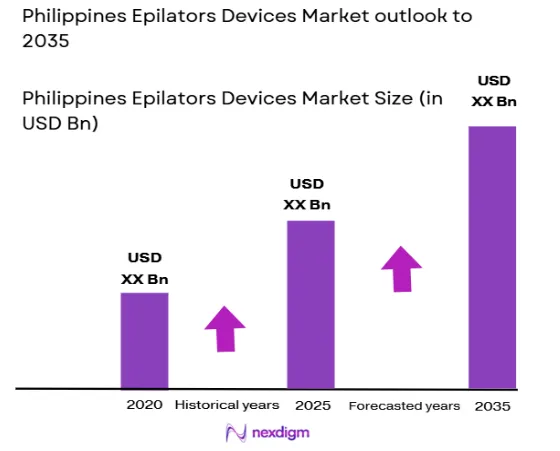
The Philippines Epilators Devices market operates within the broader personal grooming and beauty devices industry, which is supported by rising consumer spending on self-care products. The global epilators market was valued at about USD ~ billion based on a recent historical assessment, supported by strong demand for at-home grooming tools and technological improvements in personal care appliances. Within the Philippines, the skincare devices segment, which includes hair removal tools, generated approximately USD 0.0588 billion, reflecting steady demand driven by urban beauty consumption and retail expansion.
Metro Manila remains the dominant consumption center due to higher disposable incomes, organized retail penetration, and strong beauty culture influenced by Korean and Japanese trends. Cebu and Davao are also emerging as important markets due to the expansion of malls and specialty beauty stores. International manufacturing hubs such as China, Japan, and Germany dominate supply due to cost-efficient production, advanced engineering capabilities, and strong export networks supplying electrical personal grooming devices to Southeast Asian consumer markets.
Market Segmentation
By System Type
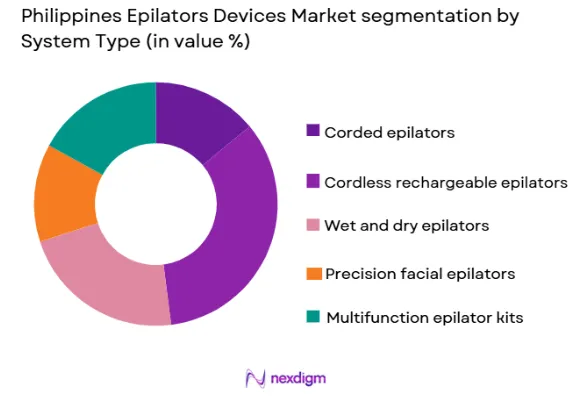
Philippines Epilators Devices Market market is segmented by system type into corded epilators, cordless rechargeable epilators, wet and dry epilators, precision facial epilators, and multifunction epilator kits. Recently, cordless rechargeable epilators has a dominant market share due to factors such as portability, convenience, and consumer preference for flexible grooming solutions. These devices are favored due to improved battery life, ergonomic designs, and the ability to be used without constant power access. Urban consumers increasingly prefer rechargeable options as they support travel usage and ease of maintenance. Strong brand promotion and competitive pricing strategies have also contributed to the growth of this segment. Furthermore, advancements in lithium battery technology and the inclusion of fast charging capabilities have strengthened adoption. Retailers also promote these models through bundled offers and online discounts. Increasing demand for home grooming solutions has further supported this segment’s leading position within the market ecosystem.
By Platform Type
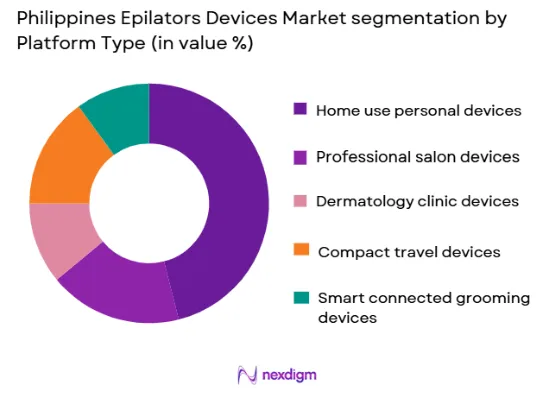
Philippines Epilators Devices Market is segmented by platform type into home use personal devices, professional salon devices, dermatology clinic devices, compact travel devices, and smart connected grooming devices. Recently, home use personal devices has a dominant market share due to factors such as affordability, accessibility, and the increasing consumer shift toward do it yourself grooming solutions. The growth of e-commerce and social media tutorials has enabled consumers to confidently adopt personal grooming technologies. Home use devices also benefit from strong product availability across both offline and online retail channels. Manufacturers are focusing on ease of use and skin comfort features which further strengthens demand. Consumers are also increasingly prioritizing privacy and cost savings compared to salon visits. Product innovation focusing on painless hair removal technologies has further driven the segment’s leadership. Marketing campaigns focusing on convenience and hygiene have also reinforced this segment’s expansion across major cities.
Competitive Landscape
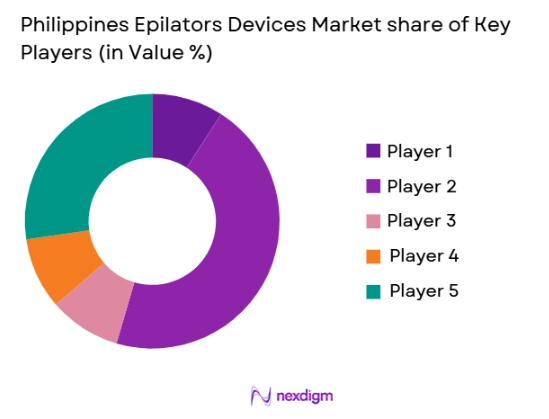
The Philippines Epilators Devices market shows moderate consolidation with a mix of global consumer electronics brands and regional distributors competing through pricing strategies, product innovation, and retail partnerships. Large multinational companies maintain competitive advantages through brand trust, product warranties, and technology integration, while smaller players compete through affordability and online distribution strategies. The presence of strong import channels and private label retailers further intensifies competition, encouraging continuous product differentiation and promotional campaigns.
| Company Name | Establishment Year | Headquarters | Technology Focus | Market Reach | Key Products | Revenue | Distribution Strength |
| Philips | 1891 | Netherlands | ~ | ~ | ~ | ~ | ~ |
| Panasonic | 1918 | Japan | ~ | ~ | ~ | ~ | ~ |
| Braun | 1921 | Germany | ~ | ~ | ~ | ~ | ~ |
| Conair | 1959 | USA | ~ | ~ | ~ | ~ | ~ |
| Xiaomi | 2010 | China | ~ | ~ | ~ | ~ | ~ |
Philippines Epilators Devices Market Analysis
Growth Drivers
Rising personal grooming awareness among urban consumers
Urbanization and income growth in the Philippines are directly supporting increased personal grooming awareness, which drives demand for epilator devices. According to the World Bank, the Philippines’ urban population reached 55,394,000 in 2023, reflecting a steadily expanding urban consumer base with higher exposure to beauty standards and digital content. Additionally, GDP per capita increased to USD 3,950 in 2023, indicating improving purchasing power for personal care products. The Philippine Statistics Authority reported household final consumption expenditure reaching PHP 15.5 trillion in 2024, with a significant share directed toward personal care. Increasing internet penetration at 73,000,000 users in 2024 further amplifies awareness of grooming trends, particularly among Gen Z consumers influenced by social media platforms, accelerating adoption of at-home hair removal devices such as epilators.
Increasing female workforce participation driving beauty device demand
The rise in female workforce participation in the Philippines is significantly boosting demand for convenient personal grooming solutions like epilators. According to the World Bank, the female labor force reached 20,700,000 in 2023, reflecting strong economic inclusion. The Philippine Statistics Authority recorded total employed persons at 48,840,000 in 2024, with women contributing a substantial share, particularly in urban service sectors. Higher workforce participation correlates with time constraints, increasing demand for at-home grooming devices over salon visits. Additionally, gross national income reached USD 471 billion in 2023, indicating broader economic growth supporting discretionary spending. The International Labour Organization notes that working women increasingly prioritize time-efficient beauty routines, reinforcing demand for portable, reusable devices such as epilators across metropolitan areas like Manila and Cebu.
Market Challenges
Skin sensitivity concerns among first time users
Skin sensitivity concerns act as a barrier to first-time adoption of epilator devices, especially among consumers with limited dermatological awareness. The Philippines Department of Health reported over 12,500,000 outpatient dermatological consultations in public health facilities in 2023, indicating a high prevalence of skin-related concerns. Additionally, the country’s tropical climate, with average humidity levels above 80 throughout 2024, increases risks of skin irritation and infections, making consumers cautious about mechanical hair removal methods. According to the World Bank, healthcare expenditure reached USD 23.8 billion in 2023, highlighting growing attention to personal health and safety. This awareness leads many consumers to prefer less invasive grooming options, slowing the adoption rate of epilators among first-time users concerned about pain, irritation, and long-term skin effects.
Presence of counterfeit and low quality imported products
The presence of counterfeit and low-quality imported grooming devices significantly impacts consumer trust and market growth. The Philippines Bureau of Customs reported seizures of counterfeit goods worth PHP 24.3 billion in 2023, including personal care electronics. Additionally, the Department of Trade and Industry documented over 3,200 consumer complaints in 2024 related to substandard electronic products, highlighting quality concerns in the market. According to the World Bank, imports of consumer goods exceeded USD 120 billion in 2023, reflecting high reliance on imported products, increasing exposure to counterfeit risks. These low-quality alternatives often lead to poor user experiences, including device malfunction and skin irritation, discouraging repeat purchases and limiting brand trust, which negatively affects the growth of legitimate epilator brands in the Philippines.
Market Opportunities
Growth of male grooming segment in the Philippines
The expanding male grooming segment presents a strong opportunity for epilator device manufacturers. According to the Philippine Statistics Authority, the male population reached 55,500,000 in 2024, forming a large target base for grooming products. Increasing employment, with total employed males exceeding 28,000,000 in 2024, supports higher disposable income for personal care. The World Bank reports GDP growth reaching USD 437 billion in 2023, indicating improving economic conditions that support lifestyle spending among men. Additionally, rising digital penetration, with over 73,000,000 internet users, is exposing male consumers to global grooming trends, including body hair management. This shift in social norms and rising income levels is creating demand for efficient, long-lasting grooming devices like epilators tailored for male usage.
Increasing demand for multifunction grooming devices
Demand for multifunction grooming devices is rising as consumers seek value and convenience in personal care products. According to the Philippine Statistics Authority, household appliance ownership increased alongside household spending reaching PHP 15.5 trillion in 2024, indicating growing acceptance of durable personal care devices. The World Bank reports electricity access at 100 percent of the population in 2023, enabling widespread usage of electronic grooming devices across urban and rural areas. Additionally, imports of electrical machinery and appliances exceeded USD 38 billion in 2023, reflecting strong demand for technologically advanced consumer products. Consumers increasingly prefer devices offering multiple functions such as trimming, shaving, and epilation in one unit, aligning with the need for efficiency, space-saving, and long-term usability, thereby supporting future growth of multifunction epilator devices.
Future Outlook
The Philippines Epilators Devices market is expected to experience steady expansion over the next five years supported by increasing beauty awareness and rising digital retail penetration. Product innovation focusing on comfort and smart technology is expected to improve adoption rates. Government product safety regulations are expected to improve quality standards. Growing urban populations and lifestyle changes will continue to strengthen demand. Expanding omnichannel retail strategies are also expected to support sustained product availability.
Major Players
- KoninklijkePhilips N.V.
- Panasonic Corporation
- Braun GmbH
- Spectrum Brands Holdings Inc.
- Groupe SEB
- Home Skinovations Ltd.
- Procter & Gamble
- Conair Corporation
- Flyco Electrical Appliance Co Ltd
- Xiaomi Corporation
- Hitachi Global Life Solutions
- TESCOM Denki Co Ltd
- Remington Products Company
- Epilady USA Inc.
- Watsons Philippines
Key Target Audience
- Personal care appliance manufacturers
- Beauty device distributors
- Cosmetics retail chains
- E-commerce platforms
- Investments and venture capitalist firms
- Government and regulatory bodies
- Dermatology clinic chains
- Beauty salon franchise operators
Research Methodology
Step 1: Identification of Key Variables
The research began with identification of key demand and supply variables including import volumes, retail sales, consumer grooming trends, pricing benchmarks, and technology adoption. Secondary data sources included trade statistics and industry publications. Demand drivers were mapped based on consumption behavior. Product innovation indicators were also evaluated. These factors formed the foundation of the research framework.
Step 2: Market Analysis and Construction
Market modeling involved triangulating retail sales data, import statistics, and manufacturer disclosures. Pricing analysis was conducted across retail channels. Market shares were constructed based on distribution visibility. Segment performance was analyzed through product availability trends. Historical growth patterns were studied to understand demand cycles. Comparative analysis helped define realistic market positioning.
Step 3: Hypothesis Validation and Expert Consultation
Industry assumptions were validated through consultation of product specialists, distributors, and retail professionals. Expert opinions helped confirm technology adoption trends. Channel partners provided insights into consumer purchasing behavior. Product managers validated pricing assumptions. Feedback loops ensured realistic data interpretation. This process improved the reliability of market conclusions.
Step 4: Research Synthesis and Final Output
All validated data points were consolidated into a structured market narrative. Segment level insights were integrated with macro demand factors. Competitive positioning was mapped through company benchmarking. Forecast assumptions were aligned with technology trends. Final outputs were structured to reflect actionable insights. Quality checks ensured consistency across the report.

- Executive Summary
- Research Methodology (Definitions, Scope, Industry Assumptions, Market Sizing Approach, Primary & Secondary Research Framework, Data Collection & Verification Protocol, Analytic Models & Forecast Methodology, Limitations & Research Validity Checks)

- Market Definition and Scope
- Value Chain & Stakeholder Ecosystem
- Regulatory / Certification Landscape
- Sector Dynamics Affecting Demand
- Strategic Initiatives & Infrastructure Growth

- Growth Drivers
Rising personal grooming awareness among urban consumers
Increasing female workforce participation driving beauty device demand
Expansion of e-commerce platforms improving accessibility
Growing influence of Korean and Japanese beauty trends
Affordable product launches targeting middle income consumers - Market Challenges
High competition from low cost shaving and waxing alternatives
Skin sensitivity concerns among first time users
Presence of counterfeit and low quality imported products
Limited awareness in rural areas
Price sensitivity in developing consumer segments - Market Opportunities
Growth of male grooming segment in the Philippines
Increasing demand for multifunction grooming devices
Expansion through influencer driven digital marketing - Trends
Rising demand for painless epilation technologies
Growth of cordless and fast charging models
Integration of skin protection sensors
Shift toward eco friendly packaging
Growing preference for compact travel friendly devices - Government Regulations & Defense Policy
Philippines FDA medical and cosmetic device compliance requirements
Import certification requirements for electrical personal care devices
Consumer product safety labeling standards - SWOT Analysis
- Stakeholder and Ecosystem Analysis
- Porter’s Five Forces Analysis
- Competition Intensity and Ecosystem Mapping

- By Market Value, 2020-2025
- By Installed Units, 2020-2025
- By Average System Price, 2020-2025
- By System Complexity Tier, 2020-2025

- By System Type (In Value%)
Corded epilators
Cordless rechargeable epilators
Wet and dry epilators
Sensitive area precision epilators
Multi-function epilator kits - By Platform Type (In Value%)
Home personal grooming devices
Professional salon grade devices
Dermatology clinic devices
Travel size compact devices
Smart connected grooming devices - By Fitment Type (In Value%)
Handheld portable units
Stationary beauty clinic units
Multi-attachment modular devices
Ergonomic grip devices
Compact pocket epilators - By EndUser Segment (In Value%)
Individual consumers
Beauty salons and spas
Dermatology clinics
Cosmetology training institutes
E-commerce beauty resellers - By Procurement Channel (In Value%)
Online marketplaces
Brand websites
Supermarkets and hypermarkets
Beauty specialty retail stores
Professional distributor networks - By Material / Technology (in Value %)
Ceramic tweezer technology
Metal disc tweezer systems
Hypoallergenic head technology
IPL assisted epilation technology
AI assisted skin sensing technology

- Market structure and competitive positioning
- Market share snapshot of major players
- Cross Comparison Parameters (Product Portfolio Diversity, Average Selling Price, Distribution Network Strength, Technology Innovation Level, Brand Recognition, After Sales Service Network, Online Presence Strength, Warranty Terms, Energy Efficiency Standards, Product Certification Compliance)
- SWOT Analysis of Key Players
- Pricing & Procurement Analysis
- Key Players
Koninklijke Philips N.V.
Panasonic Corporation
Braun GmbH
Spectrum Brands Holdings Inc.
Groupe SEB
Home Skinovations Ltd.
Meprolight Ltd.
Procter & Gamble Grooming Division
Conair Corporation
TESCOM Denki Co Ltd
Flyco Electrical Appliance Co Ltd
Xiaomi Corporation
Hitachi Global Life Solutions Inc.
Watsons Personal Care Stores Philippines Inc.
SM Store Philippines

- Young urban professionals represent the fastest growing consumer base
- Beauty salons increasingly adopting premium epilator systems
- Dermatology clinics focusing on hygiene certified devices
- Online resellers driving product awareness through bundled offers

- By Market Value, 2020-2025
- By Installed Units, 2020-2025
- By Average System Price, 2020-2025
- By System Complexity Tier, 2020-2025


 Request a Sample
 Ask for Customization
 Get a Quote
 Enquire Now