

 Download PDF
 Download PDF
Market Overview
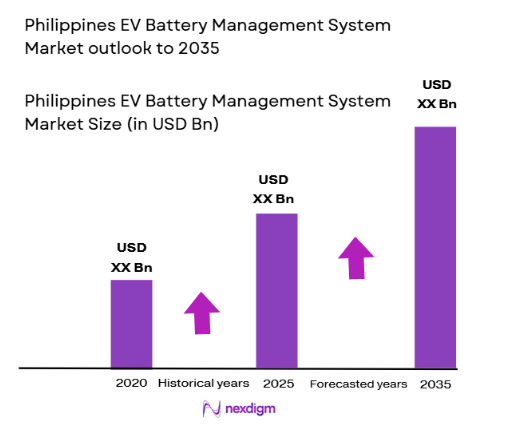
The Philippines EV Battery Management System Market size is estimated to reach USD ~ billion, driven by the rising adoption of electric vehicles in the country. Government policies favoring green energy, environmental regulations, and incentives for EV manufacturers play a significant role in the market’s expansion. The rapid development of EV infrastructure, including battery charging stations and grid integration, also fuels growth, while technological advancements in battery efficiency and management systems contribute further to the market’s positive outlook.
The dominant markets in the Philippines for EV battery management systems include urban areas like Metro Manila and Cebu City, where demand for electric vehicles is highest due to greater industrial and commercial activities. These cities benefit from better infrastructure and government support, with Metro Manila leading in terms of EV adoption due to its dense population, increasing pollution concerns, and favorable policies that incentivize EV purchases and installations.
Market Segmentation
By Product Type:
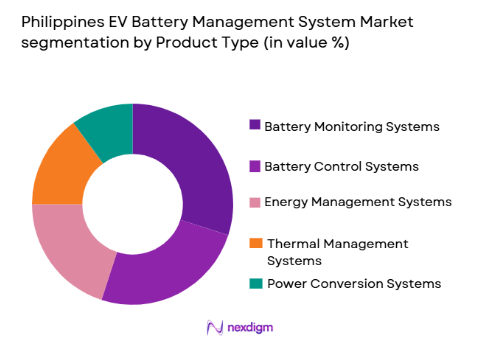
The Philippines EV Battery Management System market is segmented by product type into Battery Monitoring Systems, Battery Control Systems, Energy Management Systems, Thermal Management Systems, and Power Conversion Systems. Recently, Battery Monitoring Systems have gained the largest market share due to their crucial role in enhancing battery performance and lifespan. These systems help in accurately tracking the battery’s health, charge levels, and overall condition, ensuring safety and efficiency. With the growing shift towards electric vehicles, battery monitoring systems have become indispensable in managing the operational capabilities of EV batteries, making them a preferred choice among EV manufacturers and consumers alike.
By Platform Type:
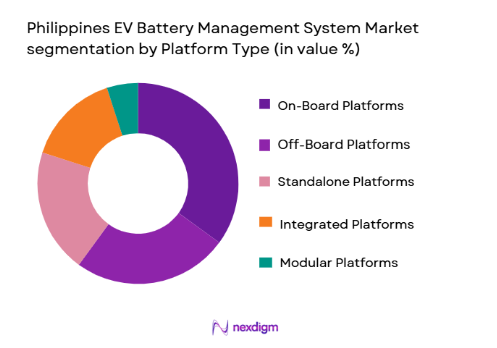
The Philippines EV Battery Management System market is segmented by platform type into On-Board Platforms, Off-Board Platforms, Standalone Platforms, Integrated Platforms, and Modular Platforms. On-Board Platforms currently hold the dominant market share due to their integration within electric vehicles, providing real-time monitoring and control of the battery system directly from the vehicle’s onboard computing system. These platforms ensure optimal energy consumption, safety, and reliability by adjusting parameters dynamically while maintaining high levels of efficiency, making them highly sought after in the market. Moreover, as EV adoption increases, the demand for on-board platforms in both OEM and aftermarket segments has significantly risen.
Competitive Landscape
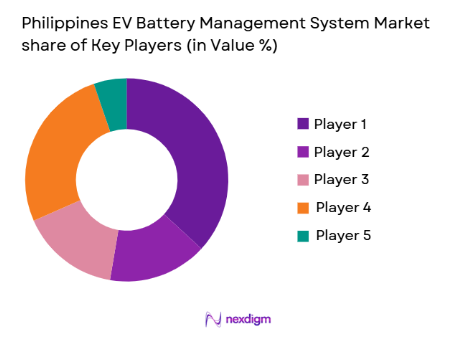
The competitive landscape of the Philippines EV Battery Management System market is characterized by several key players focusing on technological advancements and strategic partnerships to maintain market leadership. The market is seeing consolidation, with major players investing in expanding their product offerings, acquiring smaller firms, or forming joint ventures with local firms to tap into the growing demand for EV-related technologies. International players are particularly focusing on establishing a foothold in the Philippines due to the country’s increasing focus on electric vehicles and sustainability.
| Company Name | Establishment Year | Headquarters | Technology Focus | Market Reach | Key Products | Revenue (USD Billion) | Additional Market-Specific Parameter |
| Panasonic Corporation | 1918 | Japan | ~ | ~ | ~ | ~ | ~ |
| LG Chem | 1947 | South Korea | ~ | ~ | ~ | ~ | ~ |
| BYD Company | 1995 | China | ~ | ~ | ~ | ~ | ~ |
| Tesla, Inc. | 2003 | USA | ~ | ~ | ~ | ~ | ~ |
| A123 Systems | 2001 | USA | ~ | ~ | ~ | ~ | ~ |
Philippines EV Battery Management System Market Analysis
Growth Drivers
Government Support for Electric Vehicles:
Government policies and initiatives that support the adoption of electric vehicles are crucial drivers for the EV battery management system market. In recent years, the Philippine government has rolled out various incentives, such as tax exemptions and subsidies for EV manufacturers and buyers, which have boosted the demand for EVs. This, in turn, has driven the need for efficient battery management systems that ensure the proper functioning and longevity of EV batteries. With the continued support of these policies, the demand for advanced battery management systems is expected to increase, creating substantial growth opportunities in the market.
Technological Advancements in Battery Systems:
The rapid evolution of battery technology is another significant driver for the growth of the EV battery management system market. Improvements in battery efficiency, capacity, and lifespan are directly influencing the adoption of electric vehicles. As manufacturers strive to enhance the performance of EV batteries, the need for sophisticated battery management systems to monitor and optimize battery operations becomes even more critical. Technological innovations such as solid-state batteries and wireless charging systems are also expected to contribute to market growth, as they require specialized management systems to handle their complexities and optimize their performance.
Market Challenges
High Initial Investment in EV Infrastructure:
One of the primary challenges facing the Philippines EV battery management system market is the high initial investment required to build and maintain the necessary EV infrastructure. The installation of charging stations, battery swapping stations, and the adoption of integrated energy systems all require significant capital investment. These high setup costs pose a barrier to the widespread adoption of electric vehicles and, consequently, the growth of the EV battery management system market. The lack of sufficient charging infrastructure in key regions further exacerbates this issue, as consumers may be hesitant to invest in EVs without a reliable and accessible charging network.
Consumer Awareness and Education:
Another challenge hindering market growth is the lack of consumer awareness and understanding regarding electric vehicles and battery management systems. Although the EV market is gaining traction, many consumers remain unaware of the benefits and functioning of EVs and their associated technologies, including battery management systems. This lack of knowledge can lead to hesitation in adopting EVs, especially in markets where consumers are more accustomed to traditional gasoline-powered vehicles. To overcome this challenge, it is essential for stakeholders in the market to invest in consumer education programs and provide clear information on the long-term benefits of EVs and efficient battery management systems.
Opportunities
Expansion of EV Infrastructure:
One of the significant opportunities for growth in the Philippines EV battery management system market is the expansion of EV infrastructure. As the government and private sector invest more in building an extensive network of charging stations, the demand for EVs and, consequently, battery management systems will increase. By establishing an interconnected and accessible charging infrastructure, the EV market will become more attractive to consumers, facilitating the widespread adoption of electric vehicles. Battery management systems will play a key role in ensuring that these charging stations are efficient and provide optimal charging performance, thus improving the overall EV experience.
Integration of Smart Technologies:
The integration of smart technologies into electric vehicles presents another significant opportunity for the market. Smart grid systems, artificial intelligence, and IoT-enabled devices can be integrated into battery management systems to provide real-time monitoring, diagnostics, and predictive maintenance. These innovations can enhance the performance of EVs by ensuring that batteries are operating optimally, thus increasing their lifespan and efficiency. The growing trend towards smart cities and green technologies in the Philippines makes this an ideal time for the development and implementation of smart battery management systems, presenting an opportunity for market expansion.
Future Outlook
The future outlook for the Philippines EV battery management system market appears promising, with continued growth expected over the next five years. Driven by the rise in electric vehicle adoption, technological innovations, and government policies supporting green energy, the market is poised for significant expansion. The integration of smart charging systems, coupled with improved battery efficiency and cost reductions, will further boost demand. Additionally, the continued investment in EV infrastructure will be a key enabler of market growth, paving the way for widespread adoption.
Major Players
- Panasonic Corporation
- LG Chem
- BYD Company
- Tesla, Inc.
- A123 Systems
- CATL
- SK Innovation
- Bosch Group
- Denso Corporation
- Voltronic Power Technology
- Kostal Industrie
- Toshiba Corporation
- Contemporary Amperex Technology Co. Limited
- Hitachi Chemical
- Samsung SDI
Key Target Audience
- Investments and venture capitalist firms
- Government and regulatory bodies
- Electric Vehicle Manufacturers
- Battery Manufacturers
- Automotive OEMs
- EV Charging Infrastructure Providers
- Fleet Operators
- Research and Development Institutions
Research Methodology
Step 1: Identification of Key Variables
In this step, we define the critical market drivers, restraints, and trends that impact the EV battery management system market in the Philippines, ensuring a clear understanding of key influences.
Step 2: Market Analysis and Construction
Using both primary and secondary data sources, we analyze market performance, consumer preferences, and infrastructure development trends to construct a reliable market model.
Step 3: Hypothesis Validation and Expert Consultation
We validate market hypotheses through interviews and consultations with industry experts, ensuring that the data collected is accurate and actionable.
Step 4: Research Synthesis and Final Output
We synthesize all findings, integrating quantitative and qualitative data to produce a comprehensive market report that provides actionable insights and forecasts.

- Executive Summary
- Research Methodology (Definitions, Scope, Industry Assumptions, Market Sizing Approach, Primary & Secondary Research Framework, Data Collection & Verification Protocol, Analytic Models & Forecast Methodology, Limitations & Research Validity Checks)

- Market Definition and Scope
- Value Chain & Stakeholder Ecosystem
- Regulatory / Certification Landscape
- Sector Dynamics Affecting Demand
- Strategic Initiatives & Infrastructure Growth

- Growth Drivers
Government Incentives for EV Adoption
Increasing EV Production and Demand
Technological Advancements in Battery Efficiency
Rising Fuel Prices Driving EV Adoption
Environmental Policies Promoting Clean Energy - Market Challenges
High Initial Costs of EVs and Battery Systems
Limited Charging Infrastructure
Supply Chain and Material Shortages
Regulatory Hurdles in EV Infrastructure
Consumer Perception and Adoption Rates - Market Opportunities
Collaborations with International EV Manufacturers
Expansion of Charging Networks
Development of Sustainable Battery Recycling Practices - Trends
Growth of Smart Charging Systems
Integration of AI and IoT in Battery Management
Shift Toward Sustainable and Eco-friendly Battery Materials
Increased Focus on Battery Life Cycle Management
Demand for Modular and Scalable Battery Systems - Government Regulations & Defense Policy
EV Adoption Mandates
Battery Recycling and Disposal Regulations
Subsidies and Tax Incentives for EV Manufacturers - SWOT Analysis
- Stakeholder and Ecosystem Analysis
- Porter’s Five Forces Analysis
- Competition Intensity and Ecosystem Mapping

- By Market Value, 2020-2025
- By Installed Units, 2020-2025
- By Average System Price, 2020-2025
- By System Complexity Tier, 2020-2025

- By System Type (In Value%)
Battery Monitoring Systems
Battery Control Systems
Energy Management Systems
Thermal Management Systems
Power Conversion Systems - By Platform Type (In Value%)
On-Board Platforms
Off-Board Platforms
Standalone Platforms
Integrated Platforms
Modular Platforms - By Fitment Type (In Value%)
OEM Solutions
Aftermarket Solutions
In-house Developed Systems
Third-party Developed Systems
Upgraded Systems - By EndUser Segment (In Value%)
Automotive Manufacturers
Battery Manufacturers
EV Charging Stations
Government & Research Institutions
Fleet Operators - By Procurement Channel (In Value%)
Direct Procurement
OEM Partnership Contracts
Government Tenders
Distributors & Resellers
Online Platforms - By Material / Technology (in Value%)
Lithium-Ion Batteries
Solid-State Batteries
Lead-Acid Batteries
Nickel-Metal Hydride Batteries
Graphene Batteries

- Market structure and competitive positioning
- Market share snapshot of major players
- CrossComparison Parameters (System Type, Platform Type, Procurement Channel, EndUser Segment, Fitment Type, Material/Technology, Market Value, Installed Units, Average System Price, System Complexity Tier)
- SWOT Analysis of Key Players
- Pricing & Procurement Analysis
- Key Players
Panasonic Corporation
LG Chem
Samsung SDI
BYD Company
Tesla, Inc.
Hitachi Chemical
A123 Systems
CATL
SK Innovation
Bosch Group
Denso Corporation
Voltronic Power Technology
Kostal Industrie
Toshiba Corporation
Contemporary Amperex Technology Co. Limited

- Increasing Role of OEMs in Battery Systems
- Demand from Government and Fleet Operators
- Technological Collaboration with International Players
- Growing Investments in EV Infrastructure

- Forecast Market Value, 2026-2035
- Forecast Installed Units, 2026-2035
- Price Forecast by System Tier, 2026-2035
- Future Demand by Platform, 2026-2035


 Request a Sample
 Ask for Customization
 Get a Quote
 Enquire Now