
 Download PDF
 Download PDF
Market Overview
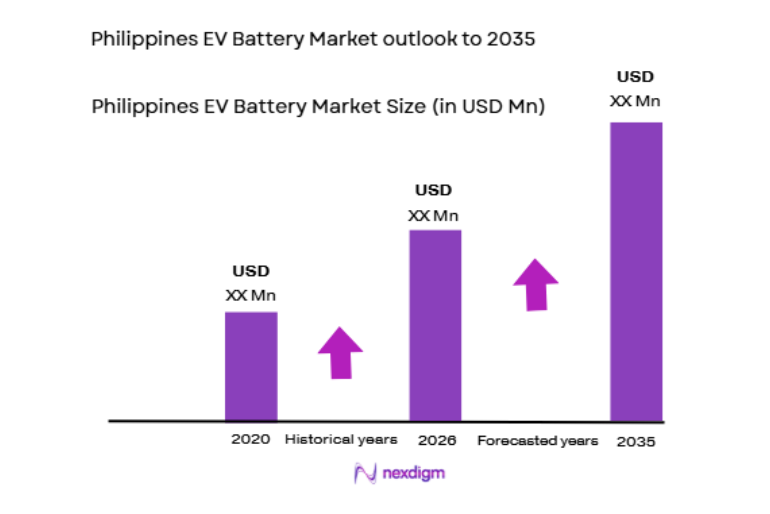
The Philippines EV battery market is expected to reach USD ~ million based on a recent historical assessment. This growth is driven by the increasing demand for electric vehicles (EVs), supported by government incentives, rising fuel prices, and growing environmental concerns. Additionally, advancements in battery technology, including longer-lasting, more efficient battery solutions, have made EVs more affordable and accessible, further boosting the market for EV batteries in the Philippines.
Metro Manila and key cities such as Cebu and Davao dominate the market due to their higher population densities, greater consumer purchasing power, and government-backed initiatives. These cities are hubs for the adoption of electric vehicles, as they have better infrastructure and more developed financial products for EV financing. The government’s efforts to reduce carbon emissions and improve air quality also play a crucial role in fostering demand for electric vehicles and, consequently, EV batteries in these urban areas.
Market Segmentation
By Battery Type
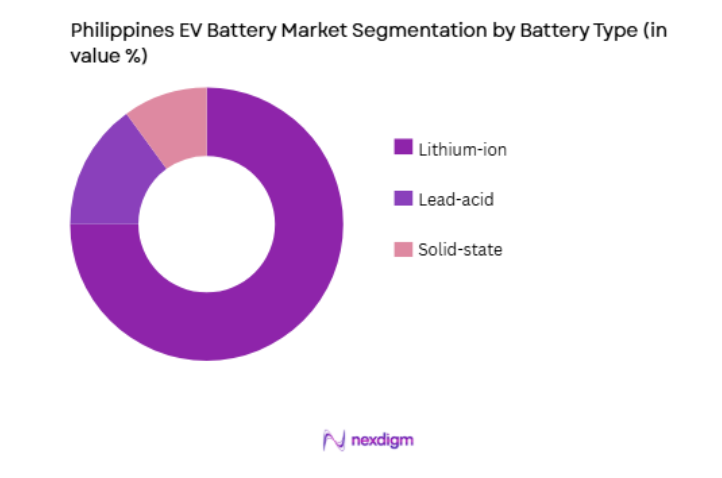
The Philippines EV battery market is segmented by battery type into lithium-ion (Li-ion), lead-acid, and solid-state batteries. Recently, lithium-ion batteries have gained a dominant market share due to their high energy density, longer lifespan, and decreasing costs. As the demand for electric vehicles grows, lithium-ion batteries have become the preferred choice due to their performance benefits and the rapid advancements in manufacturing processes. With local and international players continuously investing in improving battery efficiency, lithium-ion batteries are well-positioned to dominate the market for EVs in the Philippines.
By Vehicle Type
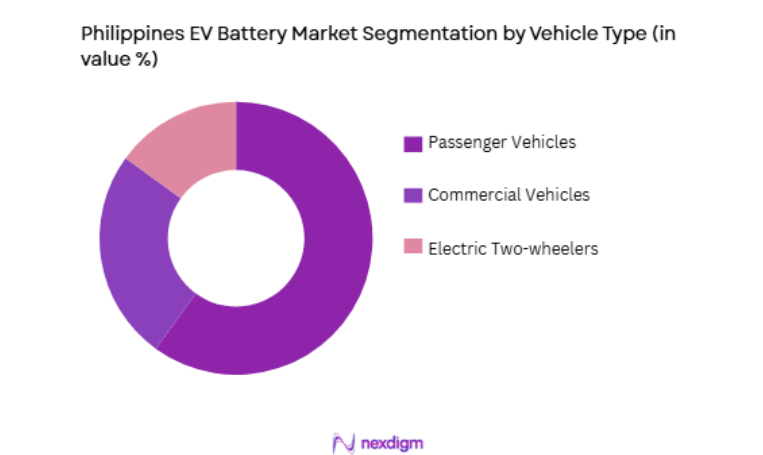
The Philippines EV battery market is segmented by vehicle type into passenger vehicles, commercial vehicles, and electric two-wheelers. Passenger vehicles dominate the market share due to the rising middle class, increasing disposable income, and the growing adoption of electric vehicles in the private transport sector. Government policies that provide financial incentives for individuals purchasing electric vehicles further support this demand. As urban congestion increases, electric cars are becoming a popular alternative to traditional internal combustion engine vehicles, leading to increased demand for EV batteries in the passenger vehicle segment.
Competitive Landscape
The competitive landscape of the Philippines EV battery market is dynamic, with several local and global players vying for market share. International companies such as LG Chem, Panasonic, and BYD are leading the market, leveraging their global supply chains and technological advancements. Local players like Cleanfuel and QEV Technologies are also establishing themselves by focusing on affordable solutions tailored to the needs of the Philippine market. With the growing adoption of EVs, the competition in the market is expected to intensify, with more players investing in R&D and forming strategic partnerships to expand their market presence.
| Company Name | Establishment Year | Headquarters | Technology Focus | Market Reach | Key Products | Revenue | Market-Specific Parameter |
| LG Chem | 1947 | Seoul, South Korea | ~ | ~ | ~ | ~ | ~ |
| Panasonic | 1918 | Osaka, Japan | ~ | ~ | ~ | ~ | ~ |
| BYD | 1995 | Shenzhen, China | ~ | ~ | ~ | ~ | ~ |
| Cleanfuel | 2007 | Makati, Philippines | ~ | ~ | ~ | ~ | ~ |
| QEV Technologies | 2017 | Manila, Philippines | ~ | ~ | ~ | ~ | ~ |
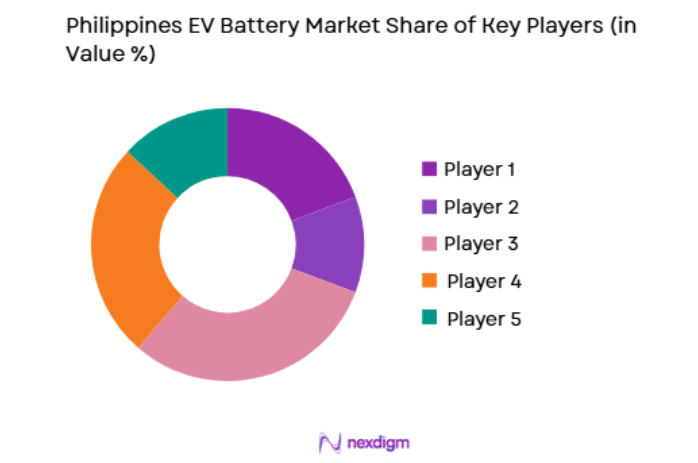
Philippines EV Battery Market Analysis
Growth Drivers
Government Incentives and Policies
The Philippine government has been actively supporting the adoption of electric vehicles and the growth of the EV battery market through various incentives, such as tax exemptions, subsidies, and grants for EV manufacturers and consumers. These measures are designed to reduce the carbon footprint and promote cleaner, greener transportation solutions. Additionally, the government has formulated long-term plans to reduce air pollution and reliance on fossil fuels by promoting electric mobility. As the demand for electric vehicles grows, the demand for EV batteries will follow suit. The government’s commitment to building a sustainable infrastructure for EV adoption, including EV charging stations and battery swapping solutions, will further drive market growth. With continued government support, the Philippines is set to see a steady rise in both the EV and EV battery markets, as consumers and businesses increasingly adopt electric vehicles as a primary mode of transportation.
Technological Advancements in Battery Efficiency and Cost Reduction
The rapid advancements in EV battery technology, particularly in lithium-ion batteries, are a key driver of growth in the Philippines market. As battery manufacturers invest in research and development, the energy density of batteries has improved, and their costs have decreased, making electric vehicles more affordable for consumers. Additionally, the lifespan and performance of EV batteries have increased, addressing one of the main concerns related to electric vehicle adoption. As battery technologies continue to evolve, the cost of EV batteries is expected to decrease further, making electric vehicles more accessible to a larger portion of the population. These advancements will continue to drive the demand for EV batteries in the Philippines as both consumers and businesses opt for sustainable, cost-effective transportation solutions.
Market Challenges
High Initial Cost of Electric Vehicles
Despite the long-term savings associated with electric vehicles, the high initial cost of purchasing an electric vehicle, which includes the cost of the EV battery, remains a significant challenge for widespread adoption in the Philippines. While government incentives help reduce some of the costs, the price disparity between electric vehicles and traditional internal combustion engine vehicles remains substantial. This cost barrier is particularly significant for the middle- and lower-income population segments, who may not have the financial means to invest in electric vehicles. Although battery prices have been decreasing, the upfront cost remains an obstacle for the growth of the EV market in the Philippines. For the EV battery market to grow, there is a need for greater affordability and accessibility of electric vehicles through additional subsidies, financing options, and long-term cost reduction strategies.
Insufficient Charging Infrastructure
One of the key barriers to the widespread adoption of electric vehicles in the Philippines is the lack of a comprehensive and accessible charging infrastructure. While the government has begun installing charging stations in urban centers, the network is still insufficient to support the mass adoption of electric vehicles. This lack of infrastructure creates concerns among potential EV buyers, particularly regarding range anxiety and the convenience of charging their vehicles. Without a robust network of charging stations, the adoption of electric vehicles and, consequently, the demand for EV batteries will remain limited. To overcome this challenge, significant investments are needed in expanding the charging infrastructure across the country, particularly in rural areas, to ensure that EV owners can easily access charging points and use their vehicles with confidence.
Opportunities
Expansion of EV Charging Infrastructure
The expansion of electric vehicle charging infrastructure presents a major growth opportunity for the EV battery market in the Philippines. As the number of electric vehicles on the road increases, the demand for charging stations and battery swapping services will also rise. The government’s efforts to promote EV infrastructure development, combined with private sector investment, will facilitate the widespread adoption of electric vehicles across the country. With more charging stations being built in key urban areas and along major highways, consumers will have greater access to EV charging, making electric vehicles more practical and attractive. The development of a reliable and fast-charging network will boost consumer confidence in electric vehicles, leading to increased demand for EVs and, in turn, greater demand for EV batteries. This growth in infrastructure will be a key factor in the success of the Philippines EV battery market.
Integration with Renewable Energy
The integration of electric vehicle charging stations with renewable energy sources offers an opportunity to make electric vehicles even more sustainable and environmentally friendly. As the Philippines increasingly adopts solar and wind power, EV charging stations powered by renewable energy will help reduce the carbon footprint of electric vehicles. This integration not only supports the country’s goals for a cleaner energy future but also enhances the appeal of electric vehicles as an eco-friendly alternative to traditional transportation. The use of solar-powered charging stations, particularly in remote or off-grid areas, can increase the accessibility of electric vehicles and create new growth opportunities for the EV battery market. As renewable energy infrastructure continues to expand, the integration of EV charging networks with green energy solutions will accelerate the adoption of electric vehicles and further drive the demand for EV batteries.
Future Outlook
The Philippines EV battery market is expected to experience substantial growth over the next five years, driven by the increasing adoption of electric vehicles, government support for green transportation, and advancements in battery technology. The expansion of charging infrastructure and the reduction in EV battery costs will make electric vehicles more affordable and accessible to a wider population. As the government continues to incentivize clean energy transportation, the market for EV batteries will grow, particularly as the demand for electric vehicles in both the private and public transport sectors rises. With technological advancements in battery efficiency, renewable energy integration, and continued regulatory support, the EV battery market in the Philippines is poised for a strong and sustainable future.
Major Players
- LG Chem
- Panasonic
- BYD
- Cleanfuel
- QEV Technologies
- Tesla
- Nissan
- Hyundai
- Bosch
- CATL
- Samsung SDI
- VARTA
- AESC
- SK Innovation
- Toshiba
Key Target Audience
- Investments and venture capitalist firms
- Government and regulatory bodies
- Electric vehicle manufacturers
- Battery manufacturers
- Charging infrastructure providers
- Public transport operators
- Fleet management companies
- Environmental organizations
Research Methodology
Step 1: Identification of Key Variables
Identify and define key variables influencing the Philippines EV battery market, including technological advancements, government policies, and consumer adoption trends.
Step 2: Market Analysis and Construction
Analyze market trends and demand patterns using a combination of primary and secondary research methods to construct a reliable market model.
Step 3: Hypothesis Validation and Expert Consultation
Validate hypotheses and assumptions by consulting with industry experts, automotive manufacturers, and government officials to ensure accuracy and relevance.
Step 4: Research Synthesis and Final Output
Synthesize findings into a comprehensive report, offering actionable insights and strategic recommendations for stakeholders in the Philippines EV battery market.

- Executive Summary
- Research Methodology (Definitions, Scope, Industry Assumptions, Market Sizing Approach, Primary & Secondary Research Framework, Data Collection & Verification Protocol, Analytic Models & Forecast Methodology, Limitations & Research Validity Checks)

- Market Definition and Scope
- Value Chain & Stakeholder Ecosystem
- Regulatory / Certification Landscape
- Sector Dynamics Affecting Demand

- Growth Drivers
Government Support for Electric Vehicles
Reduction in Battery Costs
Increased Adoption of Electric Two-Wheelers - Market Challenges
Supply Chain Disruptions for Raw Materials
Battery Disposal and Recycling Issues
High Initial Cost of EV Batteries - Market Opportunities
Battery Recycling and Repurposing
Growth in Electric Commercial Vehicles
Technological Advancements in Battery Chemistry - Trends
Rising Demand for Long-Range EV Batteries
Integration of Renewable Energy with Battery Storage - Government Regulations
Battery Recycling Regulations
EV Incentive Programs and Subsidies
Environmental Compliance for Battery Production - SWOT Analysis
- Porter’s Five Forces

- By Market Value, 2020-2025
- By Installed Units, 2020-2025
- By Average System Price, 2020-2025
- By System Complexity Tier, 2020-2025

- By System Type (In Value%)
Lithium-Ion Batteries
Lead-Acid Batteries
Solid-State Batteries
Nickel-Metal Hydride (NiMH) Batteries
Zinc-Air Batteries - By Platform Type (In Value%)
Passenger Electric Vehicles
Commercial Electric Vehicles
Two-Wheelers
Energy Storage Systems
Off-grid Applications - By Fitment Type (In Value%)
Original Equipment Manufacturer (OEM) Batteries
Aftermarket Batteries
Battery Leasing Models
Integrated Battery Solutions - By End User Segment (In Value%)
Private Consumers
Fleet Operators
OEM Manufacturers

- Market Share Analysis
- Cross Comparison Parameters (System Type, Platform Type, End User Segment, Battery Life, Charging Time)
- SWOT Analysis of Key Competitors
- Pricing & Procurement Analysis
- Key Players
Panasonic
LG Chem
Samsung SDI
BYD Company
CATL
SK Innovation
AESC
Gotion High-Tech
Mitsubishi Corporation RtM Japan
Toshiba Corporation
China National Petroleum Corporation (CNPC)
EVE Energy
Farasis Energy
CALB
VARTA AG

- Increased Demand for EV Batteries in Public Transportation
- Private Consumers’ Interest in EV Adoption
- Fleet Operators’ Need for High-Performance Batteries
- Battery Recycling Demand from Government Initiatives

- Forecast Market Value, 2026-2035
- Forecast Installed Units, 2026-2035
- Price Forecast by System Tier, 2026-2035
- Future Demand by Platform, 2026-2035


 Request a Sample
 Ask for Customization
 Get a Quote
 Enquire Now