
 Download PDF
 Download PDF
Market Overview
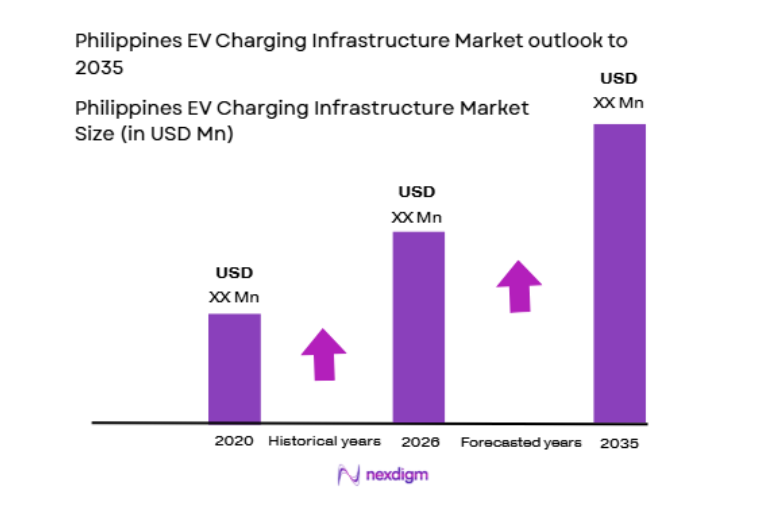
The Philippines EV charging infrastructure market is projected to reach USD ~ million based on a recent historical assessment. The market growth is largely driven by the increasing adoption of electric vehicles (EVs) in the country, supported by government incentives, the rise in environmental awareness, and the decreasing costs of EVs. Additionally, advancements in charging technology and infrastructure are making it easier for consumers and businesses to adopt EVs, creating strong demand for expanded charging networks.
Metro Manila and key cities like Cebu and Davao are at the forefront of EV charging infrastructure development. These urban centers have seen significant investments in EV infrastructure due to their dense populations, high traffic, and growing awareness about pollution and environmental impact. With government incentives, local policies supporting EV adoption, and rising investments in both public and private EV charging stations, these cities are leading the transition to a cleaner, more sustainable transportation system in the Philippines.
Market Segmentation
By Charging Type
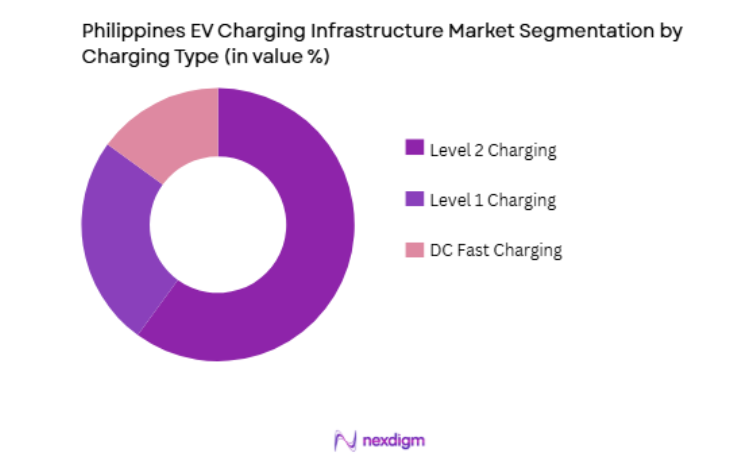
The Philippines EV charging infrastructure market is segmented by charging type into Level 1, Level 2, and DC fast charging. Recently, Level 2 chargers have gained a dominant market share due to their ability to provide faster charging times compared to Level 1 chargers while still maintaining affordability. Level 2 chargers are suitable for home use and public charging stations, making them the preferred choice for residential areas, commercial spaces, and urban developments. The expansion of Level 2 charging networks, supported by the decreasing installation costs and increasing demand for EVs, is driving their dominance in the market.
By End-Use Application
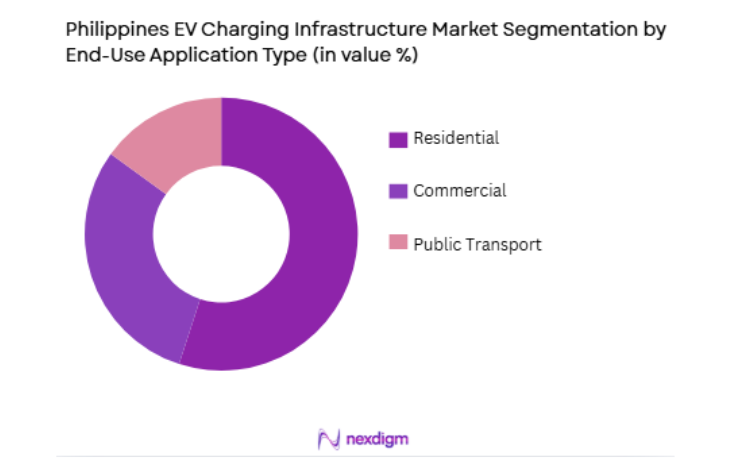
The Philippines EV charging infrastructure market is segmented by end-use application into residential, commercial, and public transportation. The residential segment dominates the market share due to the increasing number of electric vehicle owners opting for home charging solutions. With the rise in electric vehicle adoption among middle-class families and the availability of government incentives for residential charging station installations, more homeowners are installing Level 2 charging stations in their homes. The convenience of charging at home, combined with lower installation costs, has led to strong demand for residential charging solutions, making it the leading segment in the market.
Competitive Landscape
The competitive landscape of the Philippines EV charging infrastructure market is growing, with several local and international players competing for market share. Global companies, such as Siemens, ABB, and Schneider Electric, are making significant investments in the development of charging stations, while local firms like Cleanfuel and QEV Technologies are also actively expanding their charging networks to meet the rising demand for EVs. The market is experiencing increasing collaboration between car manufacturers, utility providers, and technology companies to enhance charging infrastructure and streamline the consumer experience. As the government continues to support EV adoption, the competitive landscape will evolve, leading to more advanced solutions and increased market consolidation.
| Company Name | Establishment Year | Headquarters | Technology Focus | Market Reach | Key Products | Revenue | Market-Specific Parameter |
| Siemens | 1847 | Munich, Germany | ~ | ~ | ~ | ~ | ~ |
| ABB | 1988 | Zurich, Switzerland | ~ | ~ | ~ | ~ | ~ |
| Schneider Electric | 1836 | Rueil-Malmaison, France | ~ | ~ | ~ | ~ | ~ |
| Cleanfuel | 2007 | Makati, Philippines | ~ | ~ | ~ | ~ | ~ |
| QEV Technologies | 2017 | Manila, Philippines | ~ | ~ | ~ | ~ | ~ |
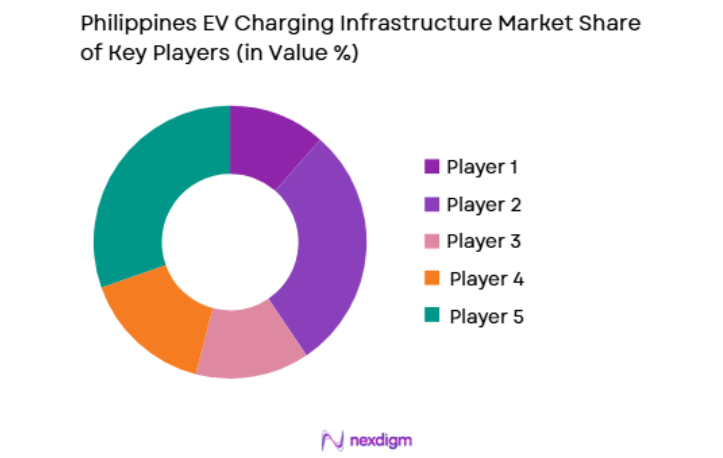
Philippines EV Charging Infrastructure Market Analysis
Growth Drivers
Government Support and Regulations
The Philippine government has been actively promoting the adoption of electric vehicles and their supporting infrastructure to meet environmental goals and reduce pollution. Through various incentives, including tax reductions, subsidies, and support for infrastructure development, the government is encouraging both individuals and businesses to switch to electric mobility. Additionally, government regulations mandating the installation of charging stations in commercial and residential areas are playing a crucial role in expanding the EV charging network. The establishment of policies to provide a favorable regulatory environment for EVs is expected to continue driving the growth of the EV charging infrastructure market, ensuring a smooth transition to electric mobility in the country. As the government pushes forward with green initiatives and sustainable transportation strategies, the demand for EV charging infrastructure is anticipated to increase, accelerating market growth.
Technological Advancements in Charging Solutions
The continued development of more efficient and faster charging technologies is a significant growth driver for the EV charging infrastructure market in the Philippines. As EV adoption grows, the need for faster charging solutions has become more pronounced. DC fast chargers, which reduce the time required for a full charge, are becoming more common in key urban centers and along major highways. The ability to charge EVs quickly and conveniently is crucial to consumer adoption, and technological advancements in smart charging solutions are enabling seamless integration with energy management systems. Furthermore, the use of renewable energy sources for charging stations is becoming more feasible, enhancing the environmental benefits of electric vehicles. As charging infrastructure technology continues to evolve, the EV charging market will expand, meeting the growing demands of electric vehicle owners and operators.
Market Challenges
High Installation Costs and Infrastructure Expansion
One of the primary challenges facing the Philippines EV charging infrastructure market is the high cost of installing charging stations. Although government subsidies and incentives help to offset some of these costs, the infrastructure development required to support widespread EV adoption remains capital-intensive. Installing Level 2 and DC fast chargers, as well as upgrading existing electrical grids to accommodate the increased demand, can be expensive for both private operators and government initiatives. As the market grows, ensuring the affordability of infrastructure installation is critical to meeting the demand for EV charging stations. Additionally, the need for well-distributed networks in both urban and rural areas further complicates the expansion process, making it difficult for charging infrastructure providers to cover the entire market effectively.
Lack of Charging Stations in Rural Areas
Despite progress in urban centers like Metro Manila, there is a significant lack of EV charging stations in rural areas. This infrastructure gap is a major barrier to the widespread adoption of electric vehicles across the country. Consumers in rural regions are hesitant to purchase electric vehicles due to concerns over the availability of charging stations, which limits the potential market for electric mobility. In addition, the geographical challenges of providing electricity and the high costs associated with establishing charging stations in remote areas hinder the expansion of charging infrastructure. Overcoming this challenge will require greater investment from both the government and private sector in building a comprehensive and accessible charging network that extends beyond urban areas and into the countryside, ensuring that electric vehicles can be used nationwide.
Opportunities
Integration with Renewable Energy
The integration of electric vehicle charging stations with renewable energy sources presents a unique opportunity for growth in the Philippines EV charging infrastructure market. As the country moves towards a more sustainable energy future, the use of solar and wind power to charge electric vehicles can significantly reduce the carbon footprint of the entire system. By deploying solar-powered charging stations in both urban and remote areas, EV owners can benefit from clean energy solutions, further enhancing the environmental benefits of electric mobility. Additionally, integrating renewable energy sources into the charging infrastructure can help reduce the strain on the country’s electricity grid, supporting both sustainability and energy security. This integration presents a promising opportunity to grow the EV charging market while also contributing to the Philippines’ broader sustainability goals.
Public-Private Partnerships for EV Charging Networks
The growth of public-private partnerships (PPPs) to develop electric vehicle charging networks presents an opportunity for significant market expansion. Through collaboration between government bodies, private sector companies, and financial institutions, the Philippines can create a robust and well-distributed network of charging stations across the country. PPPs can provide the necessary capital investment for infrastructure development and help to share the risks associated with large-scale EV charging projects. By combining the expertise and resources of both sectors, these partnerships can accelerate the installation of charging stations in underserved regions and promote widespread adoption of electric vehicles. With the support of these partnerships, the EV charging infrastructure market is well-positioned to grow in the coming years.
Future Outlook
The Philippines EV charging infrastructure market is expected to experience substantial growth over the next five years, supported by government policies, technological innovations, and increasing consumer demand for electric vehicles. As the government continues to provide incentives for EV adoption and infrastructure development, the market will expand, particularly in urban areas and along key transport routes. Technological advancements in charging solutions, such as fast-charging systems and integration with renewable energy sources, will further drive the growth of the market. The continued growth of electric mobility, combined with a more extensive charging network, will lead to increased EV adoption and support the country’s environmental goals.
Major Players
- Siemens
- ABB
- Schneider Electric
- Cleanfuel
- QEV Technologies
- BP Chargemaster
- Tesla
- BYD
- Nissan
- Shell
- Hyundai
- Engie
- Volta
- Blink Charging
- Tata Power
Key Target Audience
- Investments and venture capitalist firms
- Government and regulatory bodies
- Electric vehicle manufacturers
- EV charging station developers
- Utility companies
- Energy providers
- Private sector investors
- Environmental organizations
Research Methodology
Step 1: Identification of Key Variables
Identify and define key market drivers, challenges, and opportunities based on recent market data and expert opinions.
Step 2: Market Analysis and Construction
Analyze market trends and demand patterns using primary and secondary research, constructing a reliable model for forecasting market performance.
Step 3: Hypothesis Validation and Expert Consultation
Consult with industry experts, government officials, and market participants to validate hypotheses and refine market projections.
Step 4: Research Synthesis and Final Output
Combine findings from research and expert consultations into a comprehensive report that highlights key insights, recommendations, and growth strategies for stakeholders.

- Executive Summary
- Research Methodology (Definitions, Scope, Industry Assumptions, Market Sizing Approach, Primary & Secondary Research Framework, Data Collection & Verification Protocol, Analytic Models & Forecast Methodology, Limitations & Research Validity Checks)

- Market Definition and Scope
- Value Chain & Stakeholder Ecosystem
- Regulatory / Certification Landscape
- Sector Dynamics Affecting Demand

- Growth Drivers
Government Policies Supporting EV Infrastructure
Increase in Electric Vehicle Adoption
Technological Advancements in Charging Solutions - Market Challenges
Lack of Sufficient Charging Infrastructure
High Infrastructure Development Costs
Limited Consumer Awareness and Adoption - Market Opportunities
Expansion of Charging Networks in Urban Areas
Development of Fast and Ultra-fast Charging Stations
Private Sector Participation in EV Charging Solutions - Trends
Shift Toward Renewable Energy Integration with Charging Stations
Emergence of Smart Charging Solutions - Government Regulations
EV Charging Infrastructure Standards
Government Funding and Subsidies for Charging Stations
Regulations on Charging Infrastructure Integration - SWOT Analysis
- Porter’s Five Forces

- By Market Value, 2020-2025
- By Installed Units, 2020-2025
- By Average System Price, 2020-2025
- By System Complexity Tier, 2020-2025

- By System Type (In Value%)
Level 1 Charging Stations
Level 2 Charging Stations
DC Fast Charging Stations
Ultra-fast Charging Stations
Wireless Charging Systems - By Platform Type (In Value%)
Public Charging Stations
Private Charging Stations
Workplace Charging
Residential Charging Solutions
Fleet Charging Solutions - By Fitment Type (In Value%)
Standalone Charging Units
Integrated Charging Units
Mobile Charging Units
On-demand Charging Solutions - By End User Segment (In Value%)
Private Consumers
Fleet Operators
Government & Public Sector

- Market Share Analysis
- Cross Comparison Parameters (System Type, Platform Type, End User Segment, Charging Speed, Infrastructure Density, Geographic Coverage, Payment Systems, Integration with Renewable Energy, Charging Accessibility, Charging Station Location)
- SWOT Analysis of Key Competitors
- Pricing & Procurement Analysis
- Key Players
Tesla
ChargeNet
Philippine Electric Vehicle Association
EVGo
Sun Mobility
Shell Recharge
Meralco
Greenlots
ABB
Siemens
Schneider Electric
Eaton
Engie
Cargill
BluSmart

- Increasing Adoption of Electric Vehicles Among Consumers
- Fleet Operators’ Interest in Efficient Charging Solutions
- Government Initiatives to Promote EV Infrastructure
- Private Sector’s Role in Expanding Charging Networks

- Forecast Market Value, 2026-2035
- Forecast Installed Units, 2026-2035
- Price Forecast by System Tier, 2026-2035
- Future Demand by Platform, 2026-2035


 Request a Sample
 Ask for Customization
 Get a Quote
 Enquire Now