
 Download PDF
Market Overview
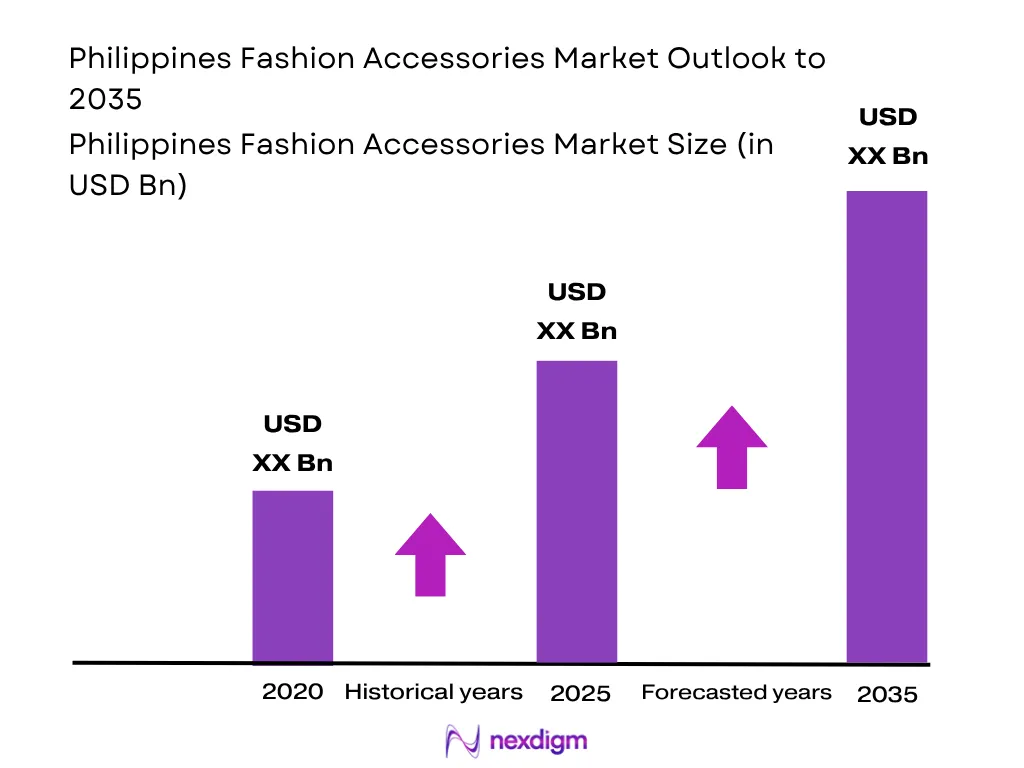
The Philippines fashion accessories market is valued at USD ~ billion, reflective of broad consumer demand across watches, fashion jewellery, handbags, and ancillary accessories such as belts and eyewear. Growth is driven by rapid integration of wearable technologies into traditional fashion accessories, increased online sales through platforms like Shopee and Lazada, and rising expenditure by urban millennials and Gen Z consumers seeking both fashion expression and functional utility. Continued adoption of digital channels and influencer marketing further sustains market momentum.
Dominance in this market stems largely from Metro Manila, with its dense urban population, elevated disposable incomes, and concentration of retail clusters and trendy malls. Cebu and Davao are noted as secondary urban hubs where rising lifestyle spending fuels accessories demand. The presence of global and local brands, strong e‑commerce penetration, and lifestyle shopping centres contribute to these cities’ lead positions. International import sources such as South Korea, China, Hong Kong, Indonesia, and Vietnam dominate supply flows, adding competitive variety and trend influence.
Market Segmentation
By Product Type
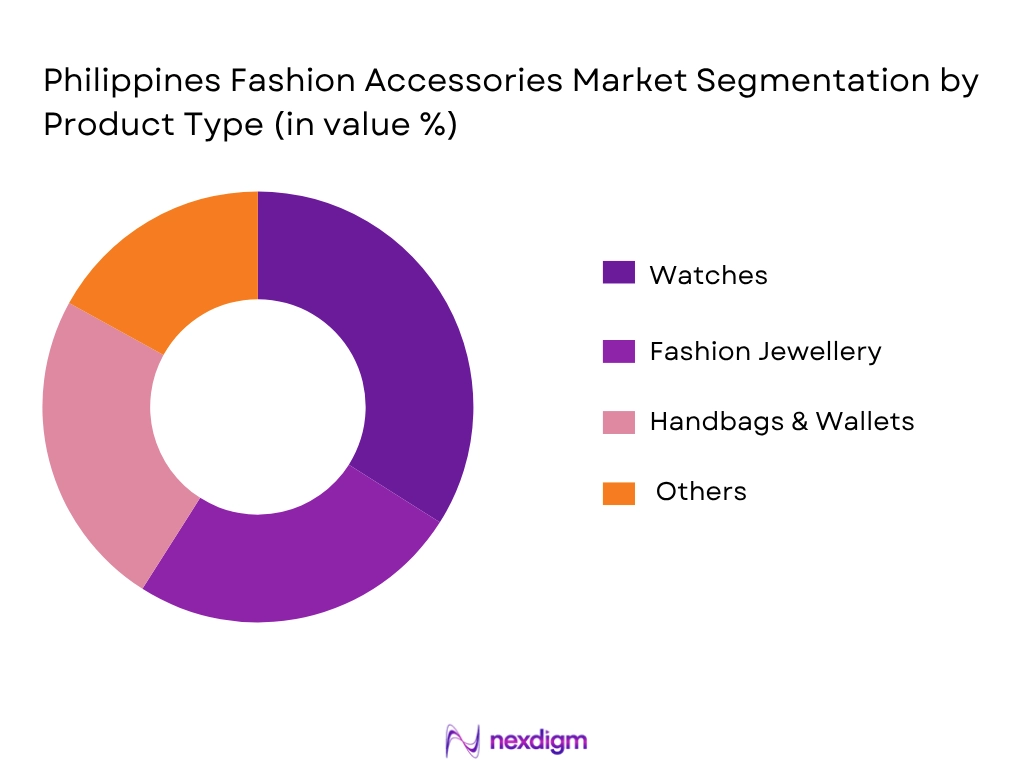
The product‑type segmentation reflects a diverse accessory ecosystem. Watches command the largest value share driven by smartwatch integration and tech enhancements, attracting both function‑ and fashion‑oriented consumers. Smart wearables now blend health monitoring features with design aesthetics, expanding appeal beyond traditional timepieces. Fashion jewellery holds the next largest share, boosted by affordable luxury, customized designs, and strong social media influence, especially among female consumers seeking unique pieces. Handbags and wallets remain integral to urban lifestyles, valued for both functionality and brand identity. The “Others” category including belts, hats, scarves, and sunglasses gains traction through seasonal trends and streetwear culture, contributing meaningfully to overall growth.
By Distribution Channel
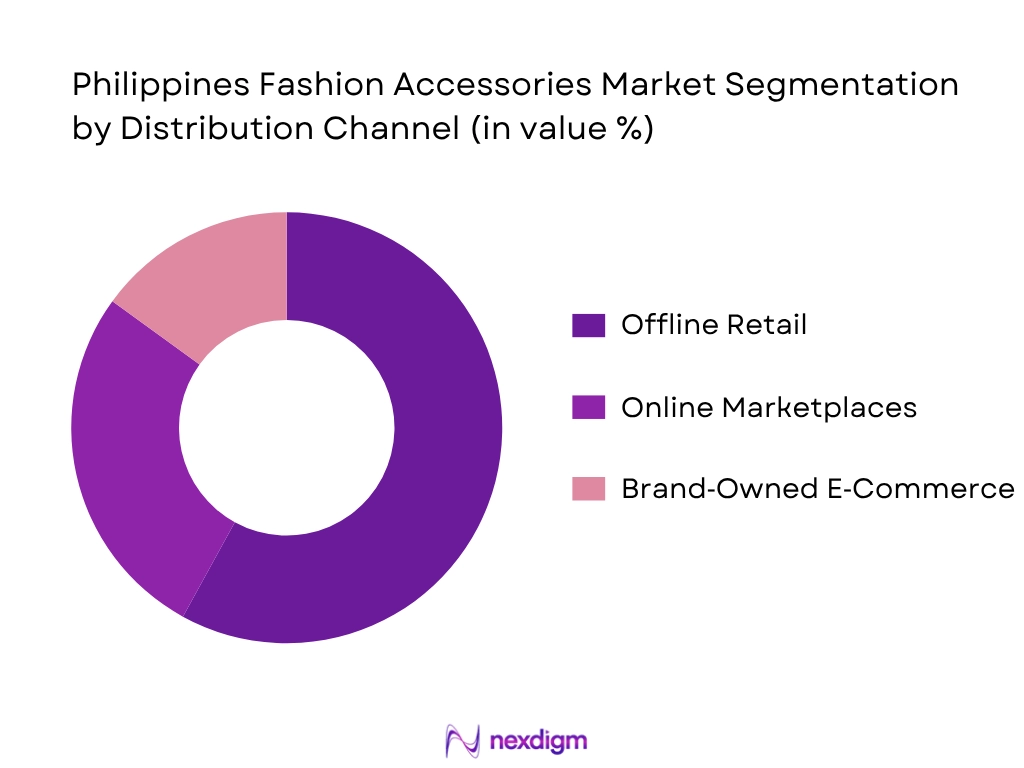
Offline retail remains the core revenue driver, reflecting Filipino shoppers’ preference for tactile purchase experiences—particularly for jewellery, premium bags, and watches where in‑store fitting or inspection fosters purchase confidence. Major malls and department store clusters like Greenbelt, SM Aura, and Ayala Centre serve as key consumption points. Online marketplaces are rapidly scaling, enabled by mobile commerce, social commerce trends, and seamless logistics that appeal to younger demographics. Brand‑owned e‑commerce channels support premium lines and loyal customer bases, capitalising on omnichannel strategies and digital marketing to capture engagement and repeat purchases.
Competitive Landscape
The Philippines fashion accessories market is characterised by a mix of global brands, domestic labels, and digital‑first players. Several key firms maintain strong influence over design trends, distribution reach, and consumer loyalty, while growing local niche brands capture emerging subsegments. The competitive landscape exhibits consolidation at the premium and mass‑market tiers. Dominant global brands benefit from established supply chains and marketing power, while Filipino brands leverage cultural relevance and artisan craftsmanship. Expansion of e‑commerce has amplified competition, enabling agile entrants to scale regionally.
| Company | Est. Year | Headquarters | Primary Category | Distribution Footprint | Brand Positioning | Retail & Online Presence | Manufacturing/ Sourcing Footprint | Price Tier Focus |
| Penshoppe | 1986 | Philippines | ~ | ~ | ~ | ~ | ~ | ~ |
| Bench (Suyen Corp) | 1987 | Philippines | ~ | ~ | ~ | ~ | ~ | ~ |
| SM Retail Inc | 1960s | Philippines | ~ | ~ | ~ | ~ | ~ | ~ |
| Zalora Philippines | 2012 | Singapore/ PH | ~ | ~ | ~ | ~ | ~ | ~ |
| Daniel Wellington | 2011 | Sweden | ~ | ~ | ~ | ~ | ~ | ~ |
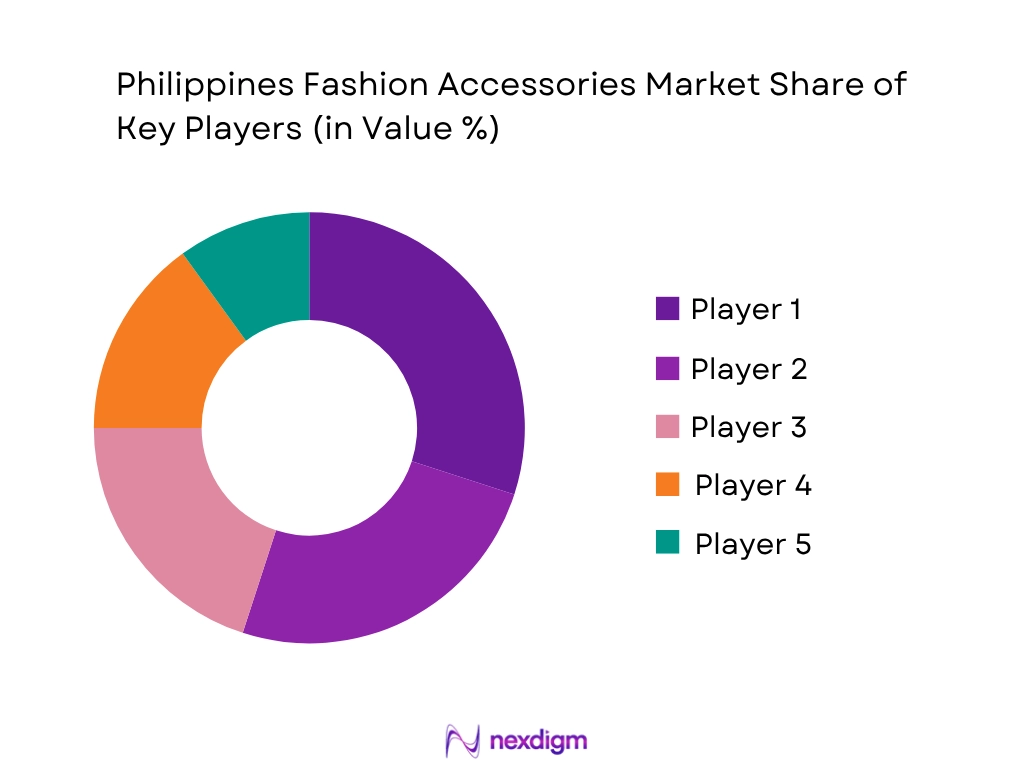
Philippines Fashion Accessories Market Analysis
Growth Drivers
Urbanization
The Philippines continues to urbanize rapidly, creating concentrated demand hubs for fashion accessories in major cities. As of 2024, 42,074,000 people lived in urban areas out of a national population of 115,843,670, indicating that roughly 36 percent of the population is urban. This movement toward cities such as Metro Manila (population ~14 million), Cebu City (~1 million), and Davao City (~1 million) funnels a high density of consumers into retail and lifestyle ecosystems where accessory consumption is disproportionately stronger than in rural regions. Urban residents also access malls, premium boutiques, and high‑traffic retail corridors more frequently; the Philippines has over 600 malls nationwide, more per capita than many comparable economies, which serve as fashion accessory sales hubs. High foot traffic in urban malls correlates with increased discretionary purchases such as watches, handbags, jewellery, and fashion wear. Moreover, urban populations show higher adoption of global trends through social media, enhancing demand for contemporary accessory categories. This demographic trend supports elevated retail turnover for accessories relative to non‑urban areas and underpins structural growth for both organized retail and digital commerce in the accessory space.
Rising Disposable Income
Increasing disposable income among Filipino households is strengthening consumer capacity for non‑essentials such as fashion accessories. In 2024, the Philippines recorded a GDP per capita of USD 3,984.8, reflecting steady income growth that translates into higher discretionary spending power. The services sector, particularly trade and retail, accounts for around 63 percent of GDP, indicating robust consumer‑oriented economic activity. Personal remittances from overseas Filipino workers a major contributor to household incomes represented about USD 37.5 billion, or 8.7 percent of GDP, in 2024, providing supplemental income that often funds lifestyle and non‑necessity purchases including accessories. Surveys by the Philippines Statistics Authority indicate that households in higher income brackets allocate a larger share of spending to clothing and fashion items relative to lower income groups. Urban centers with comparatively higher income levels, such as Metro Manila and Cebu, exhibit increased spend on branded watches, designer bags, and tech‑enhanced accessories. Moreover, the youth and young adult demographic, representing over 30 percent of the total population, tends to prioritise fashion expression, further converting disposable income into accessory spend. These income dynamics thus play a crucial role in driving consumption within the accessories market.
Market Challenges
Counterfeit Products
The prevalence of counterfeit fashion accessories presents a systemic challenge to market integrity in the Philippines. Enforcement data for 2024 from the Intellectual Property Office of the Philippines (IPOPHL) show that authorities seized PHP 40.99 billion worth of counterfeit goods, an all‑time high level of confiscations. Much of this activity targeted imitations of luxury watches, branded bags, and jewellery frequently sold in high‑traffic retail districts such as Divisoria and Quiapo, as well as on informal online marketplaces. Counterfeit products not only siphon revenue from legitimate retailers and brands but also undermine consumer trust in authentic accessory offerings. The accessibility of counterfeit items at significantly lower price points creates competitive pressure on licensed distributors who operate within legal and quality standards. Furthermore, these counterfeits often lack safety and quality assurances, exposing consumers to substandard materials that tarnish perceptions of the broader category. Government agencies cite the complexity of enforcement across physical and digital channels as a constraint; despite increased seizures, e‑commerce platforms and informal street markets continue to serve as distribution pathways. The persistence of counterfeit goods thus remains a structural barrier to formal market growth, affecting pricing, consumer confidence, and brand equity in the fashion accessories segment.
Grey Import
Grey or parallel imports pose significant competitive concerns for the Philippines fashion accessories market by enabling unregulated product flows that bypass official brand channels. In 2024, Philippine import data show that goods imports totaled USD 185.16 billion, comprising a broad mix of consumer and capital products. Within this total, accessories such as watches, jewellery, and leather goods are frequently imported through informal channels, especially via ports in Metro Manila and Subic Bay, due to tariff differentials or lack of enforcement on brand authorisation. These grey imports often compete directly with officially sourced products, creating price distortions and undermining authorised distributors’ contractual pricing structures. Official import documentation frequently does not distinguish fully between licensed and grey channels, complicating oversight by authorities. The Department of Trade and Industry has acknowledged challenges in tracking and regulating such imports, particularly as they are resold through informal retail networks and online platforms. Consumer perception of lower prices associated with grey imports further exacerbates the compliance challenge, as cost‑conscious buyers prioritise affordability over supplier authenticity. In turn, this dynamic inhibits revenue capture by legitimate market participants, creates uncertainty in supply assurances, and elevates competitive risk for brands investing in authorised Philippines distribution.
Market Opportunities
Expansion of Social Commerce on TikTok and Instagram
Social commerce platforms are increasingly central to fashion accessory discovery and transactions in the Philippines, presenting a powerful growth opportunity. Data from the 2024 National Information and Communications Technology (ICT) Household Survey show that 32.4 percent of online sellers offered “clothing, footwear, sporting goods, or accessories” as the primary goods sold online, making accessories one of the most sold categories. Additionally, 94.4 percent of online sellers used social media platforms such as Facebook, Instagram, and TikTok to reach consumers, with live selling and influencer highlights driving engagement. The Philippines also reported that 36.7 percent of internet users aged 10 and above made online purchases, with accessories frequently cited as impulse or trend purchases facilitated by social feeds. Platforms such as TikTok Shop and Instagram Shopping integrate seamless payment and checkout features that reduce friction and shorten the purchase decision cycle for accessory purchases. Influencer partnerships and creative content formats have been shown to amplify brand visibility and catalyse direct conversions without the need for traditional retail infrastructure, effectively lowering barriers to entry for brands and independent designers. Given these digitally led behaviours, fashion accessory companies that tailor offerings to mobile‑first, socially engaged consumers can capitalise on an evolving commerce landscape that increasingly favours interactive social selling.
Branded Affordable Accessory Lines
The emergence of branded yet affordable accessory lines reflects a tangible opportunity in the Philippines market, driven by demand among value‑seeking consumers. National consumer expenditure surveys indicate that a substantial portion of retail spend is directed toward accessible fashion segments. In 2024, discretionary expenditure on clothing and personal items remained significant in household consumption baskets, with lower‑to‑middle income groups allocating measurable share to “fashion accessory items” within overall discretionary spend. This trend aligns with the broader demographic profile where a large cohort of consumers are young adults and professionals balancing quality with budget considerations. Affordable branded lines positioned between mass commodity products and premium luxury goods offer value propositions that resonate with wide swaths of shoppers who are fashion conscious but price sensitive. Social media buying behaviour further amplifies this opportunity, as consumers increasingly discover and purchase such products through mobile platforms without encountering premium pricing barriers. Brands that articulate clear, accessible value through design, quality assurance, and targeted marketing can effectively mobilise these segments. Moreover, collaborations with local designers or micro‑influencers enhance authenticity and market penetration of budget‑friendly accessory collections. As Filipino consumer spending patterns evolve, affordable branded lines stand to capture meaningful share from both traditional retail and digital commerce avenues.
Future Outlook
The Philippines fashion accessories market is expected to sustain strong growth through the coming decade, supported by continuous digital adoption and evolving consumer preferences that blend fashion sensibilities with pragmatic functionality. Urbanisation, rising incomes, and lifestyle changes will drive premium and tech‑integrated accessory demand, while local craftsmanship and cultural designs bolster differentiation. E‑commerce and omnichannel retailing will play increasingly central roles, particularly in reaching millennials and Gen Z. Sustainability trends are expected to influence purchase decisions as eco‑conscious materials and ethical production gain prominence.
Major Market Players
- Penshoppe
- Bench (Suyen Corporation)
- SM Retail Inc
- Zalora Philippines
- Daniel Wellington
- Nike (watches / accessories)
- Adidas (lifestyle accessories)
- Fossil Group
- Coach
- Michael Kors
- Huawei (tech wearables)
- Garmin
- Casetify
- Jewelmer
- Tropik Beatnik
Key Target Audience
- Retail & Fashion Merchants
- E‑commerce Platform Investors
- Apparel & Accessory Chain Buyers
- Brand Licensing & Distribution Agents
- Investments and Venture Capitalist Firms
- Luxury and Lifestyle Brand Expansion Teams
- Government and Regulatory Bodies (e.g., Department of Trade and Industry Philippines, Board of Investments)
- Importers & International Sourcing Partners
Research Methodology
Step 1: Market Definition & Variable Identification
The initial stage involves establishing the boundaries for the Philippines fashion accessories market, cataloguing accessory categories (watches, jewellery, bags, others), and identifying key influencing factors. Secondary sources including expert reports, industry databases, and trade statistics were reviewed to anchor definitions.
Step 2: Data Compilation & Historical Analysis
Historical revenue data from fashion accessory sales, distribution channel performance, and consumer behaviour trends were aggregated and analysed. This included cross‑referencing retail, e‑commerce, and import/export data to map baseline market size and segmentation.
Step 3: Hypothesis Validation with Expert Inputs
Market assumptions were tested through consultations with industry practitioners, retail buyers, and accessory brand leads. These discussions assessed drivers such as tech integration in wearables, online shopping impact, and brand strategies to validate segmented estimates.
Step 4: Synthesis and Forecast Construction
Final stage synthesises secondary and primary data, applying growth modelling to estimate forecast trajectories and competitive positioning. Validation checks were executed to ensure consistency and reliability of market figures and strategic insights.

- Executive Summary
- Research Methodology (Market definitions and scope, segmentation logic with accessory categories, primary/secondary research design, data triangulation approach, growth factor modeling, limitations)

- Market definition and accessory scope
- Market genesis and historical evolution
- Consumer lifestyle shifts
- Supply Chain Architecture
- Value & Volume Flow Analysis
- Retail Ecosystem

- Growth Drivers (Urbanization, rising disposable income, Gen Z and millennial fashion adoption, smartwatch and wearable integration, social media influence, e‑commerce penetration)
- Market Challenges (Counterfeit products, grey imports, price-sensitive consumers, low brand loyalty for local labels, fast-fashion inventory risks, platform fee pressure, logistics and delivery constraints)
- Opportunities (Expansion of social commerce on TikTok and Instagram, branded affordable accessory lines, men’s and unisex accessories, sustainable and locally crafted materials, travel retail in airports and malls, omnichannel loyalty programs, collaborations with lifestyle influencers)
- Trends (TikTok-led discovery and influencer-driven sales, Korean and minimalist styling, micro-bags and compact accessories, charm and statement jewellery, smart accessories integration, local artisan designer brands gaining recognition, personalization/customization trends)
- Regulatory and Compliance Landscape (E-commerce registration with Department of Trade and Industry, VAT compliance for foreign platforms, intellectual property rights enforcement, hallmarking for precious metals, product labeling standards, general product safety regulations)
- E-Commerce Platform Compliance (Foreign platform registration requirements, seller verification procedures, tax and VAT compliance, adherence to consumer protection rules, digital transaction reporting, anti-counterfeit monitoring)
- SWOT Analysis (Strong brand equity for global and local players, growing omnichannel reach, risk of counterfeit and grey market imports, acceleration of marketplace adoption, consumer demand volatility, opportunities for sustainable and digital-first brands)
- Stakeholder Ecosystem (Local and international designers, importers, manufacturers, wholesalers, online marketplace sellers, shopping mall operators, social media influencers, logistics and courier providers, digital payment providers, custom and duty authorities)
- Porter’s Five Forces (Supplier power driven by import dependence, buyer power due to multiple retail and online options, threat of substitutes from counterfeit/grey market items, threat of new entrants via e-commerce platforms, high competitive rivalry among global and domestic brands)

- By Value (2020-2025)
- By Volume (2020-2025)
- By E‑commerce vs Offline Sales Share (2020-2025)
- By Market Growth Momentum (2020-2025)

- By Product Type (In Value%)
Footwear (street to sports)
Bags & Luggage (handbags, backpacks, clutches)
Watches & Wearables (fashion + smart watches)
Fashion Jewellery
Wallets & Small Leather Goods - By Consumer End‑User (In Value%)
Women Consumers (purchase frequency, premium share)
Men Consumers
Kids/Teens
Unisex / Gender‑Neutral - By Distribution Channel (In Value%)
Organized Retail (Department stores, Fashion chains)
E‑commerce Marketplaces (Shopee, Lazada, Zalora)
Brand‑owned Online Stores
Specialty Boutiques & Local Artisan Outlets - By Geography (In Value%)
Metro Manila Demand Dynamics
Visayas Urban Market (Cebu)
Mindanao Growth Nodes (Davao)
Secondary Cities & Provincial Retail Flux - By Price Tier (In Value%)
Mass / Value Segment
Mid‑Tier Fashion Segment
Premium & Luxury Segment (brand penetration)
Luxury Imports (global top brands)

- Market Share of Major Players (Value share, volume share, GMV share, store-network share, online visibility share, Product Category, Channel, Price Tier)
- Cross‑Comparison Parameters (Brand Positioning Tier (Luxury/Mid/Mass), Retail Footprint Count & Flagship Location Density, Pricing Architecture (SKU Average Price Levels), E‑Commerce Penetration (% Digital Revenue), SKU Assortment Breadth & Depth, Distribution Channel Coverage, Marketing Spend & Digital Engagement Index, Exclusive Collections / Limited Editions & Brand Equity Signals)
- SWOT Analysis of Major Players (Brand strength, category specialization, retail reach, online execution, product innovation, pricing risk)
- Pricing Analysis Basis SKUs for Major Players (Handbag SKUs, jewelry SKUs, watch SKUs, eyewear SKUs, wallet SKUs, belt SKUs, hair accessory SKUs)
- Marketing and Brand Positioning Benchmarking (livestream frequency, TikTok content strategy, festival campaigns, loyalty programs)
- Detailed Profiles of Major Players
Penshoppe
Bench (Suyen Corporation)
SM Retail Inc
Zalora Philippines
Kultura Filipino
Tropik Beatnik
Island Girl PH
Nike
Adidas
Fossil Group
Michael Kors
Coach
Tory Burch
Seiko
Huawei

- Demand and Usage Analysis (Daily wear, workplace use, occasion wear, travel use, gifting use)
- Purchasing Power and Budget Allocation (ASP tolerance, basket value, instalment use, discount sensitivity)
- Needs, Desires and Pain Point Analysis (Design freshness, durability, authenticity, warranty, size-fit comfort, return convenience)
- Decision-Making Process (Influencer discovery, marketplace reviews, brand trust, peer validation, store trial)
- Customer Journey Mapping (Awareness, consideration, try-on, purchase, delivery, after-sales, repeat purchase)
- Brand Loyalty and Switching Behavior (Price promotion, new collections, celebrity collaboration, marketplace ranking)
- Online Buyer Persona Analysis (TikTok-first shopper, Shopee value buyer, luxury browser, wedding jewelry buyer)
- Offline Buyer Persona Analysis (Mall shopper, jewelry-store family buyer, premium boutique consumer, tourist buyer)

- By Value (2026-2035)
- By Volume (2026-2035)
- By E‑commerce vs Offline Sales Share (2026-2035)
- By Market Growth Momentum (2026-2035)


 Request a Sample
 Ask for Customization
 Get a Quote
 Enquire Now