

 Download PDF
 Download PDF
Market Overview
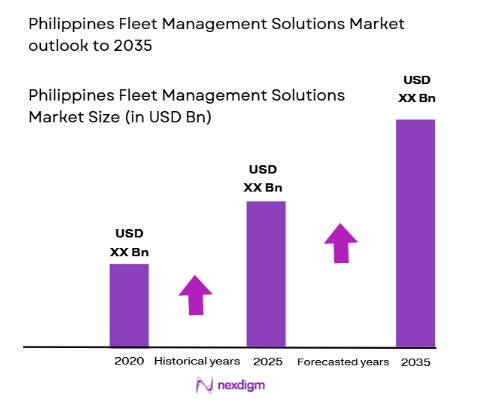
The Philippines Fleet Management Solutions Market is experiencing substantial growth driven by increasing demand for operational efficiency across various sectors. Based on a recent historical assessment, the market size for fleet management solutions is estimated to be USD ~ billion. The rapid expansion of the transportation and logistics sectors, combined with the adoption of telematics and IoT-based solutions, has significantly contributed to market growth. Fleet operators are increasingly adopting fleet management systems to streamline operations, improve vehicle utilization, and ensure cost-effective fleet maintenance.
The Philippines has emerged as a dominant player in the Southeast Asian region, owing to its strategic location as a hub for international trade and logistics. Metro Manila, Cebu, and Davao are key cities driving the demand for fleet management solutions, supported by the country’s robust transportation infrastructure and a growing economy. The increasing government focus on improving road safety and transportation efficiency further strengthens the demand for fleet management solutions. Additionally, the expanding middle-class population has fostered the adoption of innovative technology in vehicle fleets.
Market Segmentation
By Product Type:
The Philippines Fleet Management Solutions market is segmented by product type into telematics systems, fleet tracking systems, fuel management systems, maintenance management systems, and driver behavior monitoring systems. Recently, telematics systems have dominated the market share due to the increasing demand for real-time tracking and remote diagnostics. These systems offer fleet operators real-time monitoring of vehicle performance, route optimization, and maintenance alerts, which help in reducing operational costs and improving fleet efficiency. The increasing demand for data-driven insights and real-time communication systems has also contributed to the market growth of telematics systems.
By Platform Type:
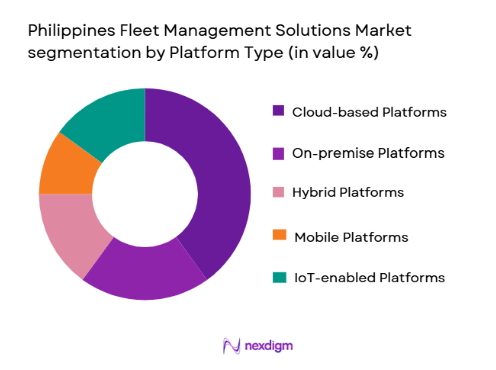
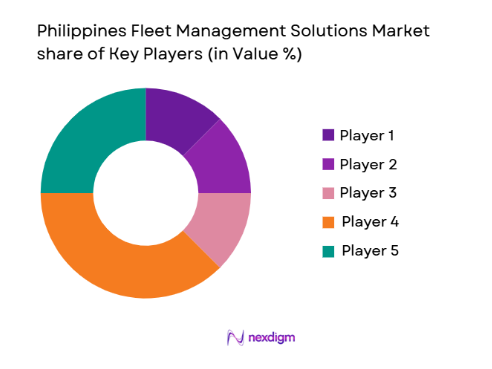
The Philippines Fleet Management Solutions market is segmented by platform type into cloud-based platforms, on-premise platforms, hybrid platforms, mobile platforms, and IoT-enabled platforms. Recently, cloud-based platforms have seen significant adoption due to their flexibility, scalability, and cost-effectiveness. The widespread internet penetration and the increasing need for centralized data management have propelled the growth of cloud-based fleet management solutions. Cloud platforms enable seamless data sharing, remote monitoring, and efficient fleet operations management, making them a popular choice among fleet operators.
Competitive Landscape
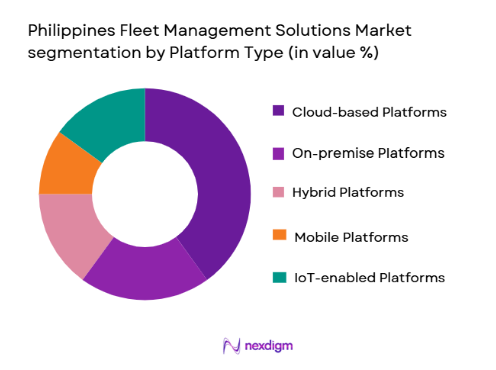
The competitive landscape of the Philippines Fleet Management Solutions market is dynamic, with key players consolidating their positions through strategic mergers, acquisitions, and partnerships. The major players in the market are focusing on product innovation, customer service, and expanding their geographical reach. The increasing competition and demand for advanced fleet management technologies are driving these players to introduce more comprehensive solutions with added features such as real-time tracking, fuel monitoring, and driver behavior analytics.
| Company Name | Establishment Year | Headquarters | Technology Focus | Market Reach | Key Products | Revenue (USD) | Market-Specific Parameter |
| Geotab | 2000 | Oakville, Canada | ~ | ~ | ~ | ~ | ~ |
| Fleet Complete | 1998 | Toronto, Canada | ~ | ~ | ~ | ~ | ~ |
| Samsara | 2011 | San Francisco, USA | ~ | ~ | ~ | ~ | ~ |
| Verizon Connect | 2008 | Basking Ridge, USA | ~ | ~ | ~ | ~ | ~ |
| Trimble Inc. | 1978 | Sunnyvale, USA | ~ | ~ | ~ | ~ | ~ |
Philippines Fleet Management Solutions Market Analysis
Growth Drivers
Government Initiatives for Transportation Efficiency:
Government initiatives aimed at improving transportation infrastructure and reducing road congestion are driving the demand for fleet management solutions. Public policies that support the adoption of eco-friendly and energy-efficient vehicles, alongside investment in smart transportation systems, are pushing fleet operators to adopt advanced fleet management technologies. The implementation of stricter environmental regulations also compels operators to track fuel consumption, maintenance schedules, and emissions, fostering growth in the fleet management sector. As government programs promote public-private partnerships, fleet operators are increasingly adopting technologies that help optimize routes, reduce fuel consumption, and enhance driver safety. Furthermore, the government’s push for digitalization in logistics and transportation systems strengthens the demand for fleet management solutions that provide real-time monitoring and centralized control.
Technological Advancements in Fleet Management Systems:
Advancements in telematics, IoT, AI, and machine learning are significant growth drivers in the Philippines Fleet Management Solutions market. The introduction of real-time tracking, automated maintenance alerts, and predictive analytics has made fleet management systems more sophisticated and efficient. These technologies help fleet operators reduce costs, improve driver behavior, and increase fleet utilization. The rise of AI-powered systems is enabling predictive maintenance, where potential vehicle issues can be identified before they lead to failures, reducing downtime and repair costs. Additionally, the integration of cloud-based platforms has allowed for more scalable and flexible solutions, making it easier for fleet operators to manage large fleets across multiple locations. As these technologies continue to evolve, they are expected to further drive the adoption of advanced fleet management solutions in the Philippines.
Market Challenges
High Initial Investment Costs:
One of the key challenges for fleet operators in the Philippines is the high initial investment required to implement advanced fleet management systems. While the benefits of improved efficiency, safety, and fuel management are clear, the upfront costs of telematics devices, installation, and subscription-based services can be significant. This is particularly challenging for small to medium-sized fleet operators who may not have the financial resources to invest in these technologies. Additionally, some fleet operators in the country may lack the technical expertise to fully implement and leverage these advanced solutions. Although the return on investment is evident in the long term, the high initial costs remain a barrier to widespread adoption, especially in the face of a price-sensitive market.
Data Privacy and Security Concerns:
With the growing use of IoT and cloud-based platforms in fleet management, data privacy and security have become a significant concern. Fleet operators are required to store vast amounts of sensitive data, including vehicle locations, driver behaviors, and fuel consumption patterns, which are vulnerable to cyber-attacks and data breaches. The Philippines, like many other countries, is still in the process of establishing robust data protection frameworks, and many fleet operators are wary of adopting systems that might expose their data to potential risks. As a result, ensuring data security and building trust with customers will be crucial for fleet management solution providers. The lack of clear regulations regarding data protection in some areas further exacerbates this challenge, making it essential for fleet management providers to implement robust cybersecurity measures.
Opportunities
Emerging Demand for Electric Vehicle (EV) Fleets:
As global and regional policies push for the reduction of carbon emissions, the demand for electric vehicles (EVs) in commercial fleets is expected to rise significantly. The Philippine government has shown support for EV adoption through various incentives, and there is a growing awareness among fleet operators about the long-term benefits of EVs, including lower maintenance and fuel costs. This shift presents a significant opportunity for fleet management solution providers to offer tailored solutions that can monitor and optimize EV fleet performance. The integration of EV-specific features such as charging station management, battery health monitoring, and energy consumption tracking will be crucial in supporting the transition to electric fleets, making it a key area for growth in the fleet management market.
Integration of Autonomous Vehicles into Fleet Operations:
Another key opportunity lies in the integration of autonomous vehicles (AVs) into fleet operations. With advancements in autonomous driving technology, the Philippines is witnessing a gradual shift towards the deployment of autonomous vehicles, especially in urban logistics and transportation services. Autonomous vehicles have the potential to greatly enhance fleet management by reducing the need for human drivers, improving safety, and lowering labor costs. Fleet operators in the Philippines are beginning to explore the integration of AVs into their fleets, and there is a growing demand for fleet management systems that can support autonomous vehicle operations. The market for autonomous fleet management solutions is still in its early stages, but it holds great potential as the technology continues to mature.
Future Outlook
The Philippines Fleet Management Solutions market is expected to continue its robust growth over the next five years, driven by the increasing adoption of advanced fleet management technologies, government initiatives, and the shift towards electric and autonomous vehicles. Technological innovations, including IoT, AI, and predictive analytics, will play a critical role in driving operational efficiency and safety in fleet management. Furthermore, regulatory support for sustainable transportation and smart city initiatives will continue to foster demand for advanced fleet management solutions. As these trends evolve, the market is expected to witness steady expansion in the coming years.
Major Players
- Geotab
- Fleet Complete
- Samsara
- Verizon Connect
- Trimble Inc.
- Teletrac Navman
- MiX Telematics
- Omnitracs
- Fleetmatics
- Lytx
- CalAmp
- Zonar Systems
- Navman Wireless
- GoFleet
- ACTIA
Key Target Audience
- Transportation and logistics companies
- Fleet operators (private sector)
- Government and regulatory bodies
- Vehicle manufacturers
- Infrastructure developers
- Insurance companies
- Fleet management solution providers
- Investments and venture capitalist firms
Research Methodology
Step 1: Identification of Key Variables
This step involves identifying key market drivers, challenges, and segments relevant to fleet management solutions, ensuring that all aspects of the market are comprehensively captured.
Step 2: Market Analysis and Construction
Comprehensive analysis of market trends, technological developments, and customer needs is conducted to build a robust market model.
Step 3: Hypothesis Validation and Expert Consultation
Expert consultations and industry interviews are carried out to validate the initial hypotheses and ensure alignment with market realities.
Step 4: Research Synthesis and Final Output
The final output is synthesized from various research sources, combining data from primary and secondary research, expert opinions, and industry reports.

- Executive Summary
- Research Methodology (Definitions, Scope, Industry Assumptions, Market Sizing Approach, Primary & Secondary Research Framework, Data Collection & Verification Protocol, Analytic Models & Forecast Methodology, Limitations & Research Validity Checks)

- Market Definition and Scope
- Value Chain & Stakeholder Ecosystem
- Regulatory / Certification Landscape
- Sector Dynamics Affecting Demand
- Strategic Initiatives & Infrastructure Growth

- Growth Drivers
Increasing Demand for Operational Efficiency in Fleet Operations
Rising Adoption of IoT for Real-time Fleet Tracking
Government Push for Sustainable Transportation Solutions
Expanding Logistics and E-commerce Sectors
Technological Advancements in Fleet Monitoring Systems - Market Challenges
High Initial Investment Costs
Integration and Compatibility Issues with Existing Fleet Systems
Data Privacy and Security Concerns
Regulatory Compliance Challenges
Operational Complexity and Maintenance Costs - Market Opportunities
Rising Demand for Eco-friendly and Electric Vehicles in Fleets
Potential for Autonomous Vehicle Integration
Expansion of Smart City and IoT Applications in Fleet Management - Trends
Growing Use of AI and Machine Learning for Predictive Maintenance
Shift Toward Subscription-based Fleet Management Services
Increase in Real-time Data Analytics for Fleet Optimization
Adoption of Electric and Hybrid Vehicles for Cost Savings
Integration of Autonomous Technology in Fleet Operations - Government Regulations & Defense Policy
Sustainability Regulations and Environmental Compliance
Government Incentives for Electric and Hybrid Fleets
Data Protection and Privacy Regulations for Fleet Data - SWOT Analysis
- Stakeholder and Ecosystem Analysis
- Porter’s Five Forces Analysis
- Competition Intensity and Ecosystem Mapping

- By Market Value, 2020-2025
- By Installed Units, 2020-2025
- By Average System Price, 2020-2025
- By System Complexity Tier, 2020-2025

- By System Type (In Value%)
Telematics Systems
Fleet Tracking Systems
Fuel Management Systems
Maintenance Management Systems
Driver Behavior Monitoring Systems - By Platform Type (In Value%)
Cloud-based Platforms
On-premise Platforms
Hybrid Platforms
Mobile Platforms
IoT-enabled Platforms - By Fitment Type (In Value%)
OEM Solutions
Aftermarket Solutions
Integrated Solutions
Modular Solutions
Custom Solutions - By EndUser Segment (In Value%)
Transportation and Logistics Companies
Fleet Operators (Private Sector)
Government Agencies
Construction & Heavy Equipment Operators
Public Transportation Providers - By Procurement Channel (In Value%)
Direct Procurement
Online Procurement Platforms
Third-party Distributors
Private Sector Procurement
Government Tenders - By Material / Technology (in Value%)
GPS Tracking Technology
Artificial Intelligence (AI)
Vehicle-to-Everything (V2X) Technology
Cloud Computing Solutions
Battery-powered Fleet Management Solutions

- Market structure and competitive positioning
- Market share snapshot of major players
- CrossComparison Parameters (System Type, Platform Type, Procurement Channel, EndUser Segment, Fitment Type, Material/Technology, Pricing, Geographical Reach, Customer Support, Scalability)
- SWOT Analysis of Key Players
- Pricing & Procurement Analysis
- Key Players
Geotab
Fleet Complete
Samsara
Verizon Connect
Fleetmatics
Zonar Systems
Teletrac Navman
Trimble Inc.
Sierra Wireless
MiX Telematics
Trackforce
Omnitracs
Navman Wireless
CargoTel
FleetPartners

- Fleet Operators’ Need for Cost Reduction and Efficiency
- Logistics Companies’ Drive for Real-time Tracking and Monitoring
- Government and Public Sector’s Push for Fleet Optimization
- Fleet Managers’ Focus on Improving Vehicle Utilization and Maintenance

- Forecast Market Value, 2026-2035
- Forecast Installed Units, 2026-2035
- Price Forecast by System Tier, 2026-2035
- Future Demand by Platform, 2026-2035


 Request a Sample
 Ask for Customization
 Get a Quote
 Enquire Now