
 Download PDF
Market Overview
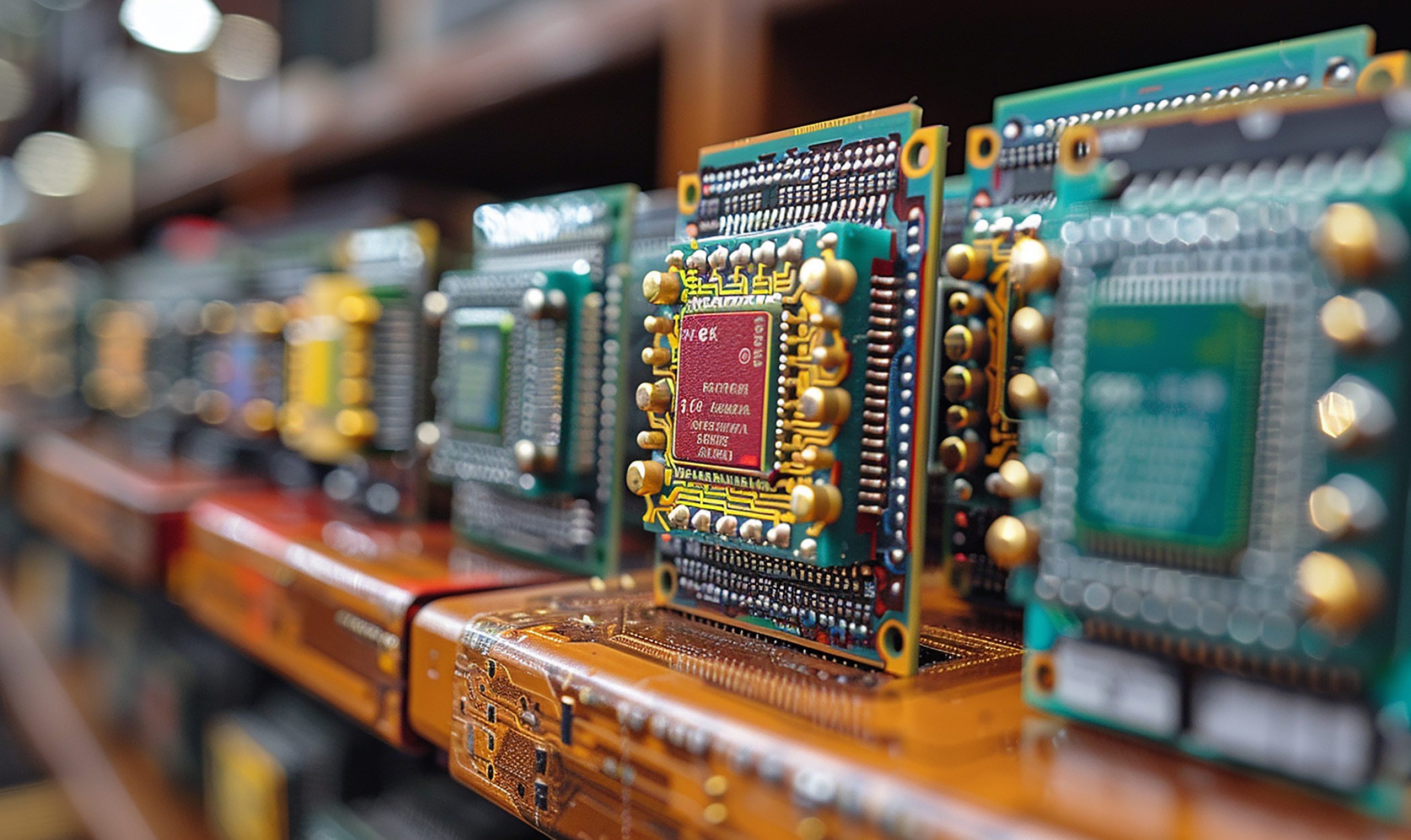
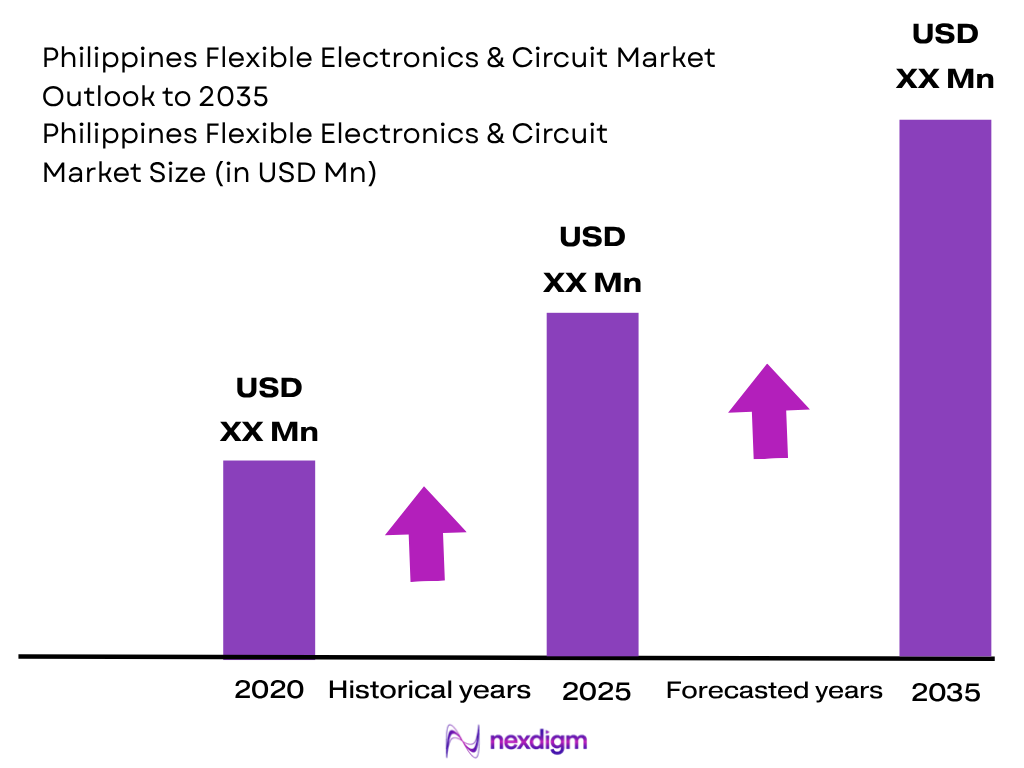
The Philippines Flexible Electronics & Circuit Market is valued at approximately USD ~ million in 2024 and is supported by the country’s established electronics manufacturing ecosystem, semiconductor assembly capabilities, consumer electronics production, and increasing adoption of advanced electronic components. The Philippines is positioned as a major electronics manufacturing hub in Southeast Asia, with electronics and electrical products representing the country’s largest export category. Electronics exports account for approximately 60% of Philippine merchandise exports, highlighting the country’s importance in semiconductor assembly, testing, packaging, and electronic component manufacturing activities. The market growth is supported by increasing demand for lightweight circuits, flexible interconnects, wearable devices, IoT components, and advanced electronic assemblies across consumer electronics, automotive, healthcare, and industrial applications.
The Philippines Flexible Electronics & Circuit Market is primarily concentrated in major electronics manufacturing regions including Metro Manila, Calabarzon, Cebu, and emerging technology hubs due to the presence of semiconductor companies, electronics manufacturing service providers, economic zones, and export-oriented industrial facilities. Calabarzon has become a major electronics manufacturing cluster because of its proximity to Metro Manila, availability of industrial parks, and presence of multinational electronics manufacturers. The Philippines recorded a GDP of approximately USD 437 billion in 2023 according to World Bank indicators, supporting industrial expansion and technology investments. The country’s strong electronics manufacturing foundation, skilled technical workforce, and export-oriented industrial ecosystem create favorable conditions for flexible electronics adoption.
Market Segmentation
By Circuit Technology Type
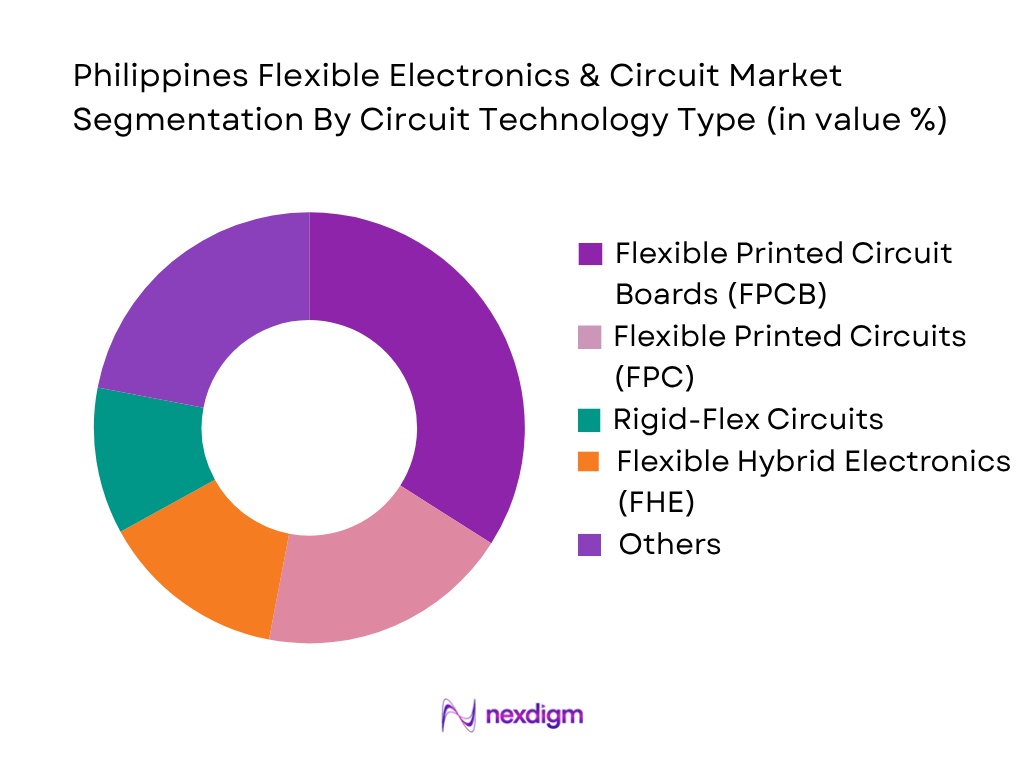
The Philippines Flexible Electronics & Circuit Market is segmented by circuit technology type into Flexible Printed Circuit Boards (FPCB), Flexible Printed Circuits (FPC), Rigid-Flex Circuits, Flexible Hybrid Electronics (FHE), Printed Electronics Circuits, Stretchable Electronics Circuits, Thin-Film Flexible Circuits, and Multilayer Flexible Circuits. Flexible Printed Circuit Boards represent the dominant technology segment due to their extensive usage in semiconductor packaging, consumer electronics, communication devices, automotive systems, and industrial equipment. The Philippines has a strong electronics assembly and semiconductor backend manufacturing ecosystem, supporting demand for flexible interconnect solutions. Semiconductor and electronic component exports represent a significant portion of the country’s export economy, with semiconductor-related products accounting for more than 70% of electronic component exports. Flexible circuits are increasingly preferred because they reduce component weight, improve space utilization, and support compact electronic designs. The expansion of consumer electronics manufacturing, wearable devices, and IoT applications is increasing adoption of FPCB and FPC technologies.
By Application Area
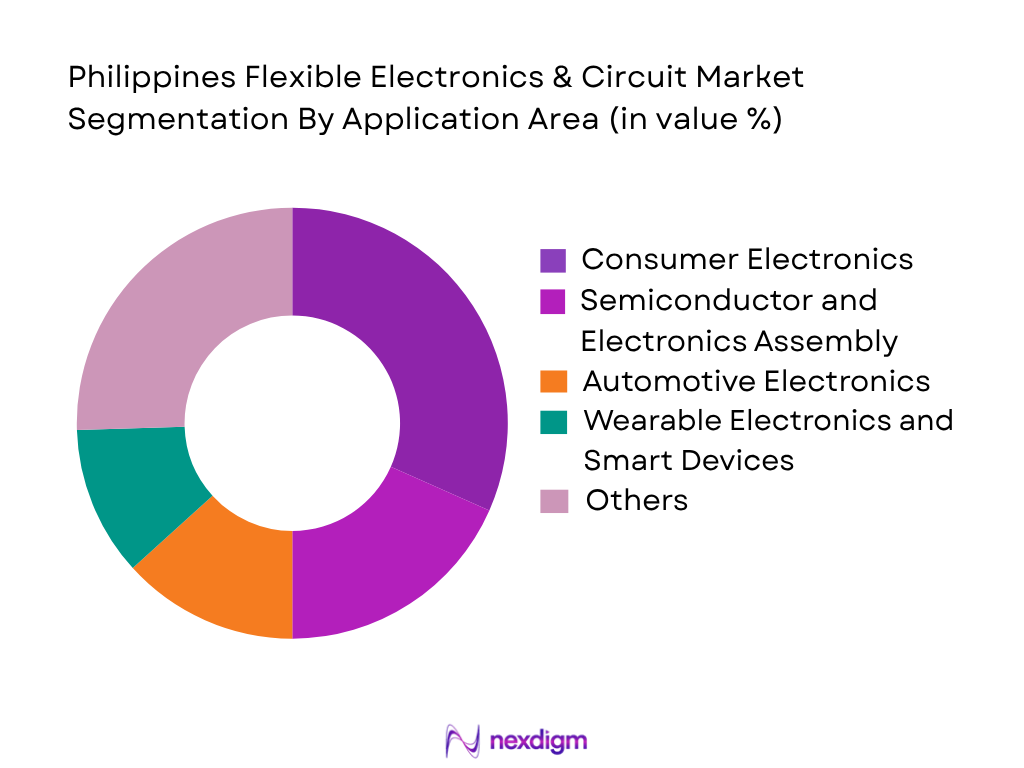
The Philippines Flexible Electronics & Circuit Market is segmented by application area into consumer electronics, wearable electronics and smart devices, healthcare and medical electronics, automotive electronics, electric vehicle electronics, aerospace and defense electronics, industrial automation electronics, Internet of Things (IoT) devices, smart packaging electronics, telecommunication equipment, and energy systems. Consumer electronics represents the leading application segment due to the Philippines’ established role in electronics assembly, semiconductor packaging, and export manufacturing. Flexible circuits are widely used in smartphones, tablets, displays, compact electronic devices, and communication equipment because of their lightweight structure and high reliability. The increasing adoption of IoT devices, smart wearables, and connected technologies is further supporting flexible electronics demand. The Philippines electronics industry already has capabilities ranging from IC packaging, PCB assembly, and full product assembly, creating a supporting ecosystem for flexible circuit integration. Healthcare electronics and automotive applications are emerging segments due to increasing demand for wearable monitoring devices, sensors, and advanced electronic systems.
Competitive Landscape
The Philippines Flexible Electronics & Circuit Market includes global electronic component manufacturers, semiconductor companies, flexible circuit suppliers, and electronics manufacturing service providers. The competitive environment is influenced by multinational companies operating through Philippine economic zones and electronics manufacturing clusters. Companies compete through flexible circuit technology capabilities, semiconductor integration expertise, manufacturing capacity, supply chain partnerships, and application-specific solutions. The Philippines’ position as a semiconductor assembly and testing hub attracts global electronics companies seeking cost-efficient manufacturing and regional supply chain integration.
| Company | Establishment Year | Headquarters | Flexible Electronics Capability | Major Application Areas | Manufacturing Capability | Technology Focus | Philippines Presence |
| Amkor Technology | 1968 | Arizona, USA | ~ | ~ | ~ | ~ | ~ |
| Texas Instruments Philippines | 1930 | Texas, USA | ~ | ~ | ~ | ~ | ~ |
| Integrated Micro-Electronics Inc. (IMI) | 1980 | Philippines | ~ | ~ | ~ | ~ | ~ |
| Flex Ltd. | 1969 | Singapore | ~ | ~ | ~ | ~ | ~ |
| TE Connectivity | 1941 | Switzerland | ~ | ~ | ~ | ~ | ~ |
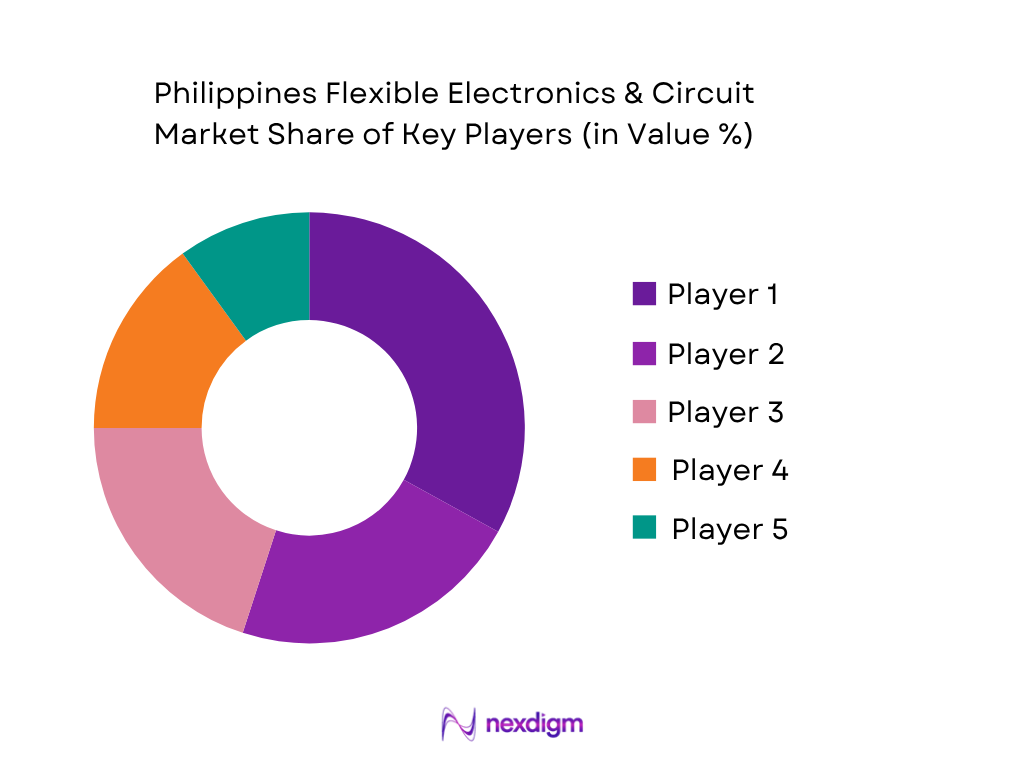
Philippines Flexible Electronics & Circuit Market Analysis
Growth Drivers
Expansion of Electronics Manufacturing and Semiconductor Assembly Ecosystem
The Philippines Flexible Electronics & Circuit Market is supported by the country’s established electronics manufacturing ecosystem, particularly in semiconductor assembly, testing, packaging, and electronics manufacturing services. The Philippines remains one of the important electronics production hubs in Southeast Asia, with electronic products contributing approximately USD 49.1 billion in exports according to trade statistics released by the Philippine Statistics Authority for recent periods. The country’s manufacturing sector contributes around 23% of GDP, according to World Bank economic indicators, reflecting the importance of industrial activities in national economic development. Flexible electronics and circuit technologies benefit from this ecosystem because existing semiconductor facilities provide supporting capabilities for component integration, advanced packaging, and electronic assembly operations. The presence of economic zones such as those managed by the Philippine Economic Zone Authority supports multinational electronics companies through established infrastructure and export-oriented manufacturing facilities. The country’s GDP reached approximately USD 437 billion according to World Bank data, demonstrating economic capacity supporting technology investment and industrial expansion. Growing demand for lightweight electronic assemblies, miniaturized components, and advanced interconnection solutions across consumer electronics, automotive systems, telecommunications, and industrial applications is encouraging manufacturers to explore flexible circuit technologies. The increasing integration of advanced electronics into products manufactured within the Philippines creates opportunities for flexible electronics suppliers to participate in expanding value chains.
Increasing Adoption of Smart Devices, IoT Systems, and Connected Electronics
The Philippines Flexible Electronics & Circuit Market is driven by increasing adoption of smart devices, connected technologies, wearable electronics, and Internet of Things applications. The Philippines has a rapidly expanding digital ecosystem, supported by a population of more than 115 million people according to World Bank demographic indicators, creating a large consumer base for smartphones, smart devices, and connected electronic products. Digital connectivity continues to increase, with internet users exceeding 85 million according to national telecommunications and digital development assessments, supporting demand for compact and efficient electronic components. Flexible circuits are increasingly important in smart devices because they enable thinner designs, reduced component weight, improved durability, and efficient space utilization. The Philippines’ consumer electronics manufacturing and semiconductor assembly capabilities provide a supporting environment for flexible circuit integration into electronic products. The expansion of telecommunications infrastructure, mobile applications, smart home devices, and wearable technologies is creating additional demand for flexible electronic components. Government initiatives supporting digital transformation and technology adoption are also contributing to increased deployment of connected systems across industries. Flexible sensors, flexible printed circuits, and hybrid electronic solutions are gaining importance in applications such as healthcare monitoring devices, industrial automation equipment, and consumer electronics. The continued development of digital infrastructure, increasing device connectivity, and rising demand for advanced electronic products are expected to strengthen opportunities for flexible electronics manufacturers operating in the Philippines.
Market Challenges
Dependence on Imported Flexible Electronics Materials and Advanced Manufacturing Technologies
The Philippines Flexible Electronics & Circuit Market faces challenges due to dependence on imported materials, specialized manufacturing equipment, and advanced technology solutions required for flexible electronics production. While the country has strong semiconductor assembly and electronics manufacturing capabilities, many critical inputs used in flexible electronics manufacturing, including polyimide substrates, liquid crystal polymer materials, conductive inks, and advanced circuit fabrication equipment, are sourced from international suppliers. According to World Bank trade indicators, the Philippines remains highly integrated into global supply chains, with manufactured electronics representing a significant component of international trade activities. This dependence exposes manufacturers to external risks including global supply disruptions, logistics constraints, foreign exchange fluctuations, and changes in international component availability. Flexible electronics production requires specialized processes such as high-precision printing, substrate engineering, sensor integration, and thin-film manufacturing, which require significant technical expertise and investment. The domestic ecosystem currently has stronger capabilities in semiconductor assembly and testing compared with complete flexible electronics manufacturing. According to World Bank development indicators, the Philippines has a large working-age population exceeding 70 million people, providing workforce potential; however, specialized flexible electronics engineering skills require further development. Expanding local capabilities would require investments in advanced manufacturing infrastructure, material production, research facilities, and technical training programs to reduce reliance on imported technologies and strengthen domestic value creation.
Limited Local Flexible Electronics Research and Production Infrastructure
The Philippines Flexible Electronics & Circuit Market encounters limitations due to limited domestic research infrastructure and specialized production facilities dedicated specifically to flexible electronics technologies. The country has developed strong capabilities in semiconductor assembly and electronics manufacturing services; however, advanced flexible electronics manufacturing requires specialized facilities for flexible substrate processing, printed electronics production, sensor development, and high-performance circuit integration. According to World Bank innovation indicators, research and development expenditure in many developing economies remains lower compared with advanced electronics manufacturing countries, creating challenges in building indigenous technology capabilities. Flexible electronics require continuous innovation in materials, manufacturing processes, and application development, particularly for emerging sectors such as healthcare wearables, automotive electronics, and industrial IoT systems. The Philippines’ electronics sector is primarily focused on assembly, testing, and manufacturing support activities, while advanced design and technology development are often managed by multinational companies outside the country. Developing stronger local research capabilities requires collaboration between industry stakeholders, technology developers, and manufacturing organizations. The availability of specialized engineers, advanced testing facilities, and flexible electronics production equipment remains an important factor influencing market development. Strengthening domestic innovation capabilities would support greater participation in higher-value segments of the flexible electronics supply chain and improve competitiveness in regional electronics manufacturing markets.
Market Opportunities
Growth Opportunities from Healthcare Wearables and Flexible Medical Electronics
The Philippines Flexible Electronics & Circuit Market presents opportunities through increasing adoption of healthcare wearables, medical monitoring devices, and flexible healthcare electronics. Flexible electronic technologies enable lightweight, comfortable, and portable medical devices such as wearable sensors, patient monitoring patches, and connected healthcare equipment. The Philippines healthcare sector serves a population exceeding 115 million people, according to World Bank demographic data, creating significant demand for accessible healthcare technologies and digital health solutions. Healthcare systems are increasingly adopting remote monitoring technologies and connected medical devices to improve healthcare accessibility and patient management. Flexible sensors and printed electronics can support applications including continuous health monitoring, biometric measurement, and smart diagnostic devices. The country’s growing digital healthcare initiatives and increasing technology adoption provide opportunities for flexible electronics companies to collaborate with medical device manufacturers and healthcare technology providers. The expansion of electronics manufacturing capabilities also supports the possibility of localized production and assembly of healthcare electronic components. Flexible electronics offer advantages such as lightweight structures, improved patient comfort, and integration capability, making them suitable for next-generation healthcare applications. Increasing healthcare technology adoption, combined with the Philippines’ electronics manufacturing foundation, creates opportunities for flexible circuit suppliers to expand into medical and wearable technology segments.
Expansion of Automotive Electronics, Electric Mobility, and Industrial IoT Applications
The Philippines Flexible Electronics & Circuit Market has opportunities through increasing adoption of automotive electronics, electric mobility solutions, and industrial IoT technologies. Flexible circuits are increasingly used in automotive applications including battery management systems, vehicle sensors, infotainment systems, lighting modules, and electronic control systems because of their lightweight characteristics and space-saving design. The Philippines automotive industry is gradually moving toward electrification and connected vehicle technologies, creating demand for advanced electronic components. According to International Energy Agency data, global electric vehicle sales exceeded 14 million units in 2023, accelerating demand for advanced automotive electronic systems worldwide. Industrial sectors in the Philippines are also adopting automation technologies, digital monitoring systems, and IoT-enabled equipment to improve operational efficiency. Flexible sensors and electronic circuits support these applications by enabling compact monitoring solutions, real-time data collection, and integration into complex industrial systems. The Philippines’ manufacturing base, skilled electronics workforce, and participation in regional supply chains create opportunities for flexible electronics suppliers to support automotive and industrial technology development. Growth in smart manufacturing, connected infrastructure, and electric mobility applications is expected to increase demand for flexible circuit technologies across automotive, industrial, and energy-related applications.
Future Outlook
The Philippines Flexible Electronics & Circuit Market is expected to experience increasing adoption due to the country’s established electronics manufacturing ecosystem, semiconductor industry expansion, and growing demand for advanced electronic components. Future growth will be supported by increasing integration of flexible circuits in consumer electronics, automotive systems, healthcare devices, and industrial IoT applications. Government initiatives supporting electronics innovation and advanced manufacturing are expected to strengthen domestic capabilities. The Philippine electronics roadmap identifies development of flexible electronics, printed electronics, smart wearables, and advanced sensors as emerging technology priorities.
Major Players
- Amkor Technology Philippines
- Integrated Micro-Electronics Inc. (IMI)
- Texas Instruments Philippines
- Analog Devices Philippines
- ON Semiconductor Philippines
- NXP Semiconductors Philippines
- STMicroelectronics Philippines
- Microchip Technology Philippines
- Flex Philippines
- TE Connectivity Philippines
- Fujitsu Philippines
- Samsung Electronics Philippines
- Panasonic Philippines
- Molex LLC
- Sumitomo Electric Industries Philippines
Key Target Audience
- Flexible electronics manufacturers and flexible circuit component suppliers
- Semiconductor assembly, testing, and packaging companies
- Consumer electronics manufacturers and electronic device producers
- Automotive electronics manufacturers and electric vehicle component suppliers
- Healthcare technology companies and medical device manufacturers
- Industrial automation companies and IoT solution providers
- Investments and venture capitalist firms (technology investment funds, semiconductor-focused investors, electronics manufacturing investors)
- Government and regulatory bodies (Department of Trade and Industry Philippines, Department of Science and Technology Philippines, Board of Investments Philippines)
Research Methodology
Step 1: Identification of Key Variables
The initial phase involves developing an ecosystem framework covering flexible electronics manufacturers, semiconductor companies, electronics manufacturing service providers, application industries, and technology suppliers operating in the Philippines. Extensive secondary research is conducted to identify important market variables including electronics manufacturing capacity, semiconductor ecosystem development, flexible circuit adoption, application demand, supply chain structure, and technology integration trends influencing the Philippines Flexible Electronics & Circuit Market.
Step 2: Market Analysis and Construction
This phase involves analyzing historical and current market conditions related to flexible circuit adoption across consumer electronics, automotive electronics, healthcare technology, industrial automation, and IoT applications. The assessment includes evaluation of manufacturing capabilities, electronics export activities, component demand, application penetration, and supply chain relationships to determine market development patterns and industry opportunities.
Step 3: Hypothesis Validation and Expert Consultation
Market assumptions are validated through interactions with industry participants including semiconductor manufacturers, electronics assembly companies, flexible circuit suppliers, technology providers, and application-based organizations. These consultations provide operational insights regarding manufacturing capabilities, procurement trends, technology adoption challenges, and future requirements across different flexible electronics application areas.
Step 4: Research Synthesis and Final Output
The final stage combines primary and secondary research findings through data validation and triangulation. Information from manufacturers, industry stakeholders, trade data, technology developments, and application trends is analyzed to create a comprehensive assessment of the Philippines Flexible Electronics & Circuit Market. The final output provides insights into market structure, competitive landscape, growth factors, challenges, and future opportunities.

- Executive Summary
- Research Methodology (Market Definition and Scope, Philippines Flexible Electronics & Circuit Market Classification, Flexible Circuit Technology Mapping, Flexible Printed Circuit Board (FPCB) Evaluation, Flexible Printed Electronics Assessment, Flexible Hybrid Electronics Analysis, Printed Electronics Technology Assessment, Conductive Material Technology Evaluation, Flexible Substrate Material Analysis, Polyimide Film Assessment, Liquid Crystal Polymer (LCP) Substrate Evaluation, Stretchable Electronics Assessment, Thin Film Electronics Analysis, Sensor Integration Evaluation, Wearable Electronics Technology Mapping, Automotive Flexible Electronics Assessment, Medical Flexible Electronics Evaluation, Industrial IoT Electronics Application Mapping, Semiconductor Packaging Integration Assessment, Electronics Manufacturing Service Evaluation, Supply-Side Assessment, Demand-Side Assessment, Primary Industry Interviews, Data Triangulation, Forecasting Framework)

- Definition and Scope
- Philippines Flexible Electronics & Circuit Industry Evolution and Development of Semiconductor Assembly and Testing Industry, Electronics Manufacturing Services Expansion, Flexible Printed Circuit Adoption, Consumer Electronics Production Growth, Wearable Electronics Integration, Healthcare Technology Advancement, Automotive Electronics Development, Industrial Automation Deployment, Telecommunications Infrastructure Growth, IoT-Based Electronic Systems, Advanced Packaging Technologies and Electronics Export Ecosystem Development
- Flexible Electronics & Circuit Value Chain Analysis
- Flexible Electronics & Circuit Supply Chain Analysis
- Flexible Substrate Suppliers, Conductive Material Suppliers, Copper Foil Manufacturers, Electronic Component Suppliers, Flexible Circuit Fabricators, Printed Electronics Developers, Semiconductor Assembly and Testing Companies, Electronics Manufacturing Service Providers, Sensor Manufacturers, Display Technology Providers, Automotive Electronics Suppliers, Medical Device Manufacturers, Wearable Technology Companies, Industrial Automation Solution Providers, Telecommunications Equipment Providers, Smart Device Manufacturers, Distribution Networks and End-Use Industries

- Growth Drivers (Expansion of Semiconductor Manufacturing Ecosystem, Increasing Electronics Export Activities, Growth of Electronics Manufacturing Services, Rising Demand for Miniaturized Components, Wearable Technology Adoption, Healthcare Electronics Development, Automotive Electronics Integration, IoT Device Expansion, Telecommunications Infrastructure Growth, Digital Transformation Initiatives)
- Market Challenges (Limited Domestic Flexible Electronics Manufacturing Facilities, Dependence on Imported Advanced Materials, High Technology Investment Requirements, Limited Flexible Circuit Fabrication Capacity, Shortage of Specialized Technical Expertise, Advanced Equipment Dependency, Limited Local R&D Infrastructure, Supply Chain Dependence, Complex Manufacturing Requirements, Competition from Established Asian Electronics Manufacturing Countries)
- Market Opportunities (Expansion of Flexible Healthcare Electronics, Growth of Wearable Device Manufacturing, Semiconductor Packaging Innovation, Automotive Electronics Component Development, Industrial IoT Applications, Smart Packaging Electronics, Flexible Sensor Deployment, Advanced Display Technologies, Electronics Manufacturing Localization, Sustainable Flexible Electronics Development)
- Market Trends (Growth of Flexible Hybrid Electronics, Increasing Electronics Miniaturization, Expansion of Wearable Electronics, Flexible Sensor Integration, Semiconductor Packaging Advancement, Printed Electronics Adoption, Smart Manufacturing Development, IoT-Based Electronics Deployment, Sustainable Material Adoption, Automated Electronics Production)
- Government Regulations and Standards (Department of Trade and Industry Electronics Industry Development Programs, Philippine Economic Zone Authority Manufacturing Regulations, Department of Information and Communications Technology Digital Programs, Bureau of Philippine Standards Electronic Product Standards, Semiconductor Industry Development Initiatives, Import Regulations for Electronic Components, Environmental Compliance Standards, Manufacturing Safety Regulations)
- SWOT Analysis
- Porter’s Five Forces Analysis
- PESTLE Analysis
- Stakeholder Ecosystem
- Competition Ecosystem

- By Market Value (2020-2025)
- By Volume Consumption (2020-2025)
- By Average Selling Price (2020-2025)
- By Flexible Printed Circuit Board (FPCB) Consumption Volume (2020-2025)
- By Flexible Hybrid Electronics Consumption Volume (2020-2025)
- By Printed Electronics Consumption Volume (2020-2025)
- By Flexible Sensor Application Volume (2020-2025)
- By Wearable Electronics Application Volume (2020-2025)
- By Healthcare Flexible Electronics Application Volume (2020-2025)
- By Automotive Flexible Electronics Application Volume (2020-2025)

- By Circuit Technology Type (In Value %)
Flexible Printed Circuit Boards (FPCB)
Flexible Printed Circuits (FPC)
Rigid-Flex Circuit Boards
Flexible Hybrid Electronics (FHE)
Printed Electronics Circuits
Stretchable Electronics Circuits
Thin-Film Flexible Circuits
Multilayer Flexible Circuits - By Material Type (In Value %)
Polyimide-Based Flexible Substrates
Polyester-Based Flexible Substrates
Liquid Crystal Polymer (LCP) Materials
Copper Foil Flexible Materials
Conductive Ink Materials
Silver-Based Conductive Materials
Organic Semiconductor Materials
Advanced Composite Flexible Materials - By Application Area (In Value %)
Consumer Electronics
Wearable Electronics and Smart Devices
Healthcare and Medical Electronics
Automotive Electronics
Electric Vehicle Electronics
Industrial Automation Electronics
Internet of Things (IoT) Devices
Telecommunication Equipment
Smart Packaging Electronics
Energy Storage and Battery Management Systems
Semiconductor Packaging Applications - By Manufacturing Technology (In Value %)
Photolithography-Based Manufacturing
Screen Printing Technology
Inkjet Printing Technology
Roll-to-Roll Manufacturing
Laser Processing Technology
Additive Electronics Manufacturing
Hybrid Manufacturing Processes
Surface Mount Technology Integration - By End-Use Industry (In Value %)
Consumer Electronics Industry
Semiconductor and Electronics Manufacturing Industry
Healthcare Technology Industry
Automotive Industry
Industrial Manufacturing Industry
Telecommunication Industry
Aerospace and Defense Industry
Energy and Battery Industry
Smart Packaging Industry
Digital Infrastructure Industry - By Region (In Value %)
National Capital Region
Calabarzon Region
Central Luzon Region
Central Visayas Region
Western Visayas Region
Northern Mindanao Region
Davao Region
Other Philippine Regions

- Market Share of Major Players (By Philippines Revenue, Flexible Circuit Product Portfolio, FPCB Manufacturing Capability, Flexible Electronics Technology Coverage, Flexible Material Technology Portfolio, Application Industry Coverage, Semiconductor Integration Capability, Production Capacity, Research and Development Capability, Customer Base, Regional Presence, Manufacturing Partnerships, Innovation Pipeline, Export Capability, Supply Chain Integration)
- Cross Comparison Parameters (Flexible Circuit Product Portfolio Breadth, FPCB Manufacturing Capability, Flexible Hybrid Electronics Expertise, Flexible Substrate Technology Coverage, Roll-to-Roll Manufacturing Capability, Sensor Integration Capability, Semiconductor Packaging Integration Capability, Automotive Electronics Application Capability)
- SWOT Analysis of Major Players
- Competitive Positioning Matrix
- Flexible Circuit Technology and Application Benchmarking
- Detailed Profiles of Major Companies
Amkor Technology Philippines Inc.
Integrated Micro-Electronics Inc. (IMI)
ASE Technology Holdings Inc.
Samsung Electronics Philippines Corporation
LG Electronics Philippines Inc.
TE Connectivity Philippines
Molex LLC
Flex Philippines
Fujikura Electronics Philippines Corporation
Sumitomo Electric Industries Philippines Inc.
Nitto Denko Corporation
Panasonic Industry Philippines
3M Philippines
Honeywell Philippines
Schneider Electric Philippines

- Consumer Electronics Manufacturer Requirement Assessment
- Wearable Technology Manufacturer Demand Analysis
- Healthcare Device Electronics Requirement Assessment
- Medical Monitoring Device Manufacturer Evaluation
- Automotive Electronics Integration Assessment
- Electric Vehicle Component Manufacturer Demand Analysis
- Semiconductor Assembly and Testing Industry Requirement Analysis
- Industrial Automation Electronics Requirement Analysis
- IoT Device Manufacturer Application Assessment
- Smart Packaging Solution Provider Demand Analysis
- Telecommunication Equipment Manufacturer Requirement Analysis
- Energy Storage System Electronics Requirement Assessment
- Digital Infrastructure Technology Provider Demand Analysis
- Flexible Circuit Component Procurement Preference Assessment

- By Market Value (2026-2035)
- By Volume Consumption (2026-2035)
- By Average Selling Price (2026-2035)
- By Flexible Printed Circuit Board (FPCB) Consumption Volume (2026-2035)
- By Flexible Hybrid Electronics Consumption Volume (2026-2035)
- By Printed Electronics Consumption Volume (2026-2035)
- By Flexible Sensor Application Volume (2026-2035)
- By Wearable Electronics Application Volume (2026-2035)
- By Healthcare Flexible Electronics Application Volume (2026-2035)
- By Automotive Flexible Electronics Application Volume (2026-2035)


 Request a Sample
 Ask for Customization
 Get a Quote
 Enquire Now