
 Download PDF
Market Overview
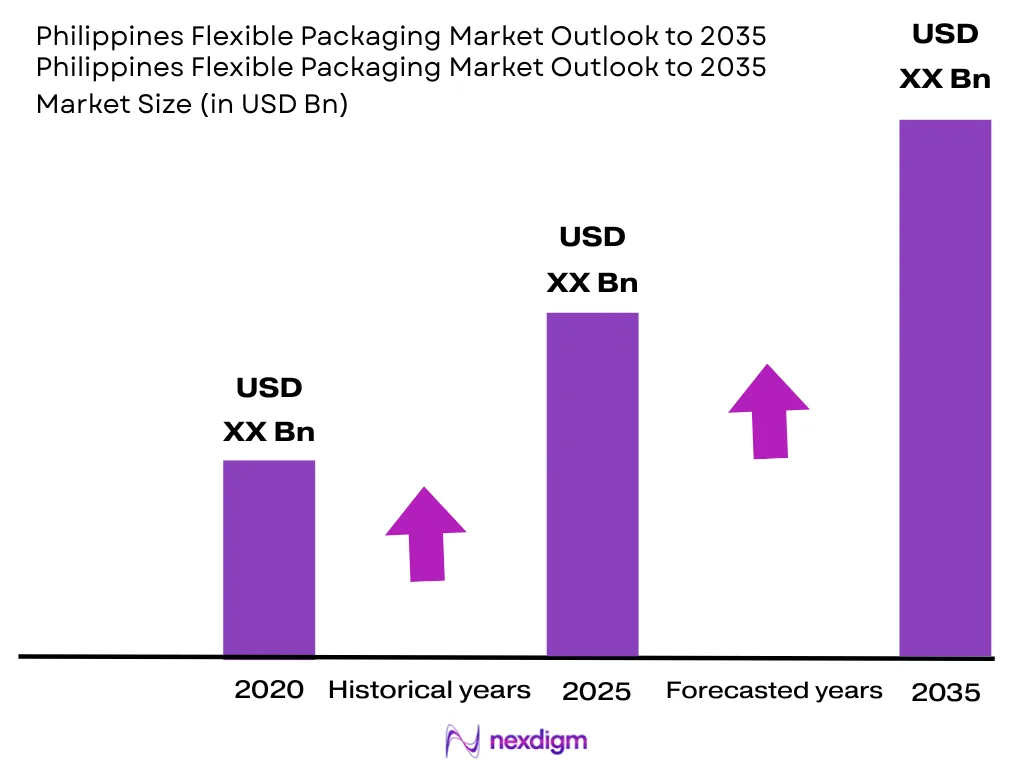
The Philippines Flexible Packaging Market was valued at USD ~ Billion in 2024 and is anticipated to expand at a CAGR of ~% during 2026-2035. The market is primarily driven by the Philippines’ deeply entrenched sachet economy, rapid e-commerce growth, and the country’s implementation of Republic Act No. 11898, the Extended Producer Responsibility Act of 2022, which industry observers have described as the world’s most aggressive EPR law due to its explicit inclusion of flexible plastics such as sachets within mandatory waste recovery obligations. The Philippines sachet packaging segment alone was valued at approximately USD 8.4 billion in 2025 and is projected to reach approximately USD 13.9 billion by 2031, reflecting a compound annual growth rate of approximately 8.7%. The Department of Environment and Natural Resources reported that obligated enterprises exceeded the mandated 2025 plastic waste recovery target, achieving a national diversion rate of 55.98% against a 40% requirement, with over 246 million kilograms of plastic waste diverted through 1,017 registered EPR programs.
Market Segmentation
By Material
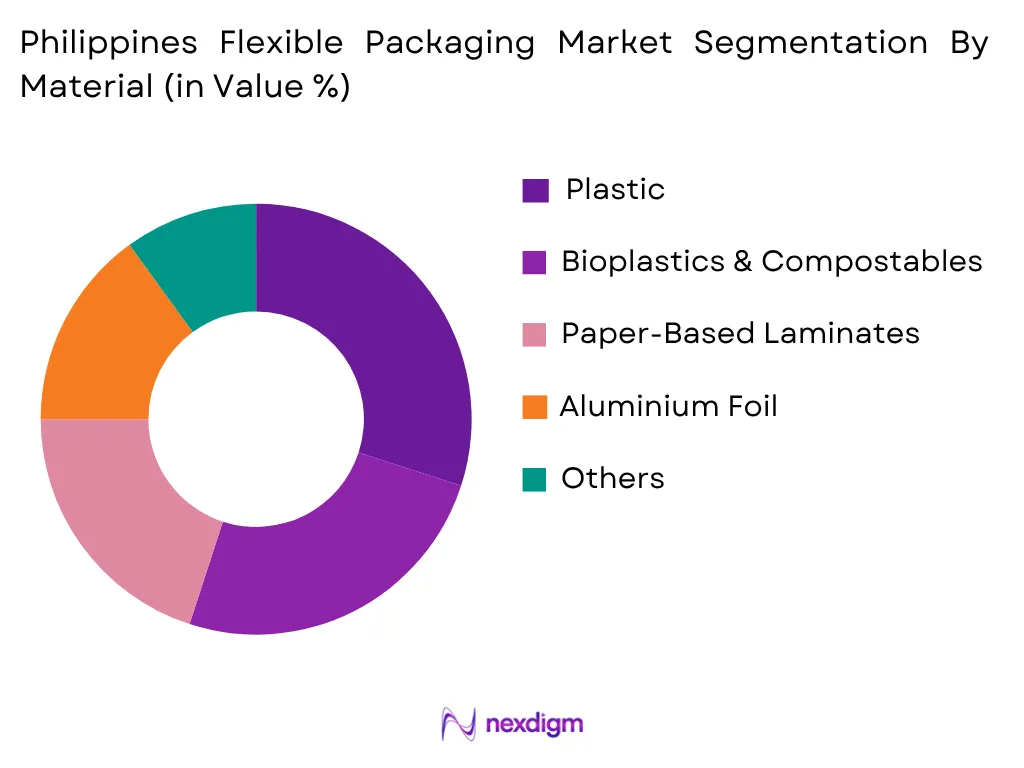
Plastic, primarily polyethylene and polypropylene, continues to dominate the Philippines Flexible Packaging Market, anchored by its established role in the country’s sachet-based retail economy that serves price-sensitive consumers across both organized and informal retail channels. Traditional plastics account for the substantial majority of the broader Philippines plastics market, though converters are increasingly under pressure to redesign multilayer barrier structures toward mono-material formats as DENR’s EPR recyclability scoring methodologies begin rewarding simpler, more easily recyclable structures over legacy multilayer laminates. Bioplastics and biodegradable substrates represent an emerging but rapidly gaining segment, exemplified by San Miguel Corporation’s 2025 announcement that it would begin using biodegradable plastic packaging sourced from local firm Philippine Bioresins Corporation, with the Department of Science and Technology confirming a 65% breakdown rate within 24 months. Recycled PET and post-consumer recycled content are also gaining share as food-grade recycling capacity expands to meet escalating EPR recycled-content expectations from major FMCG brand owners.
By Product Type
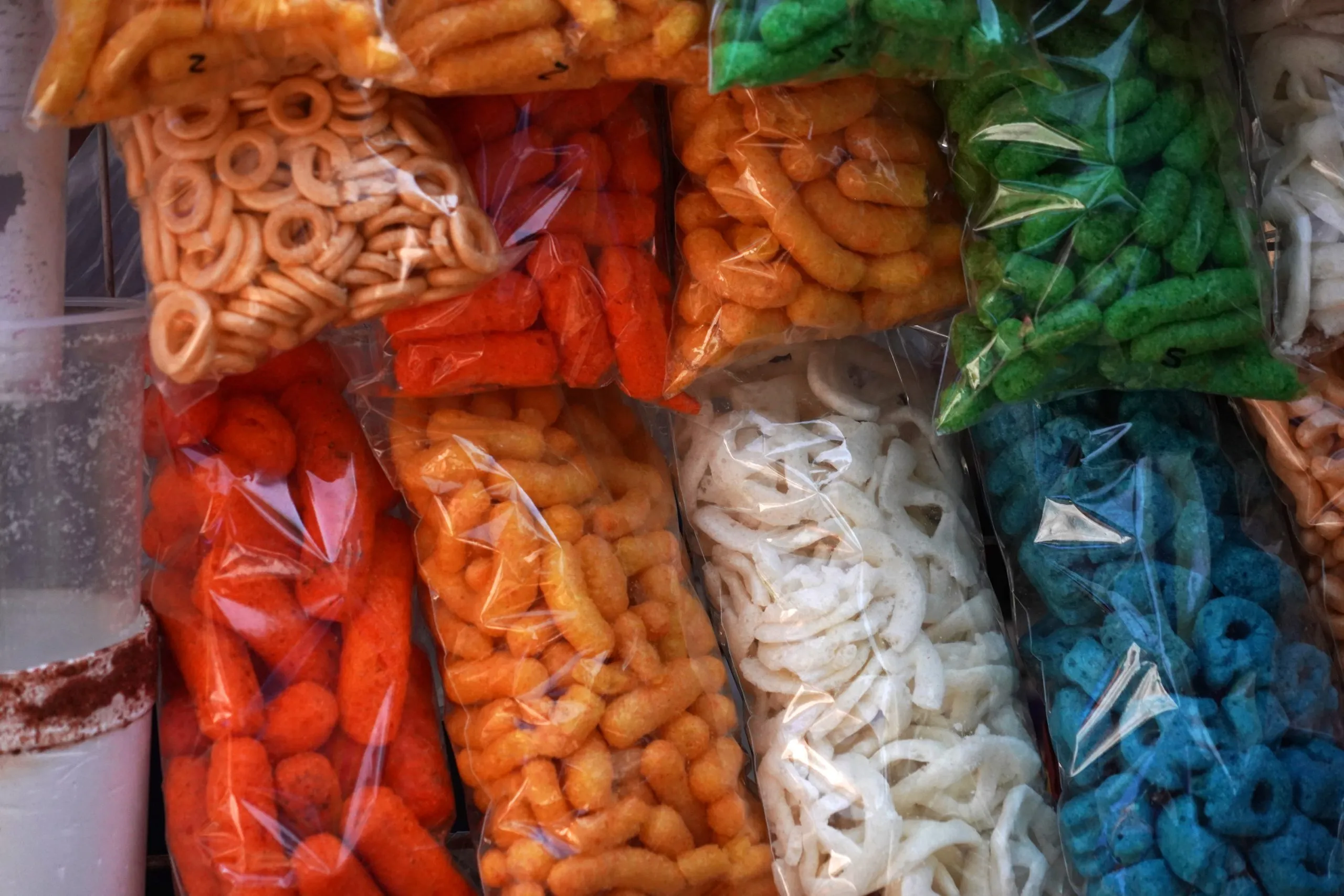
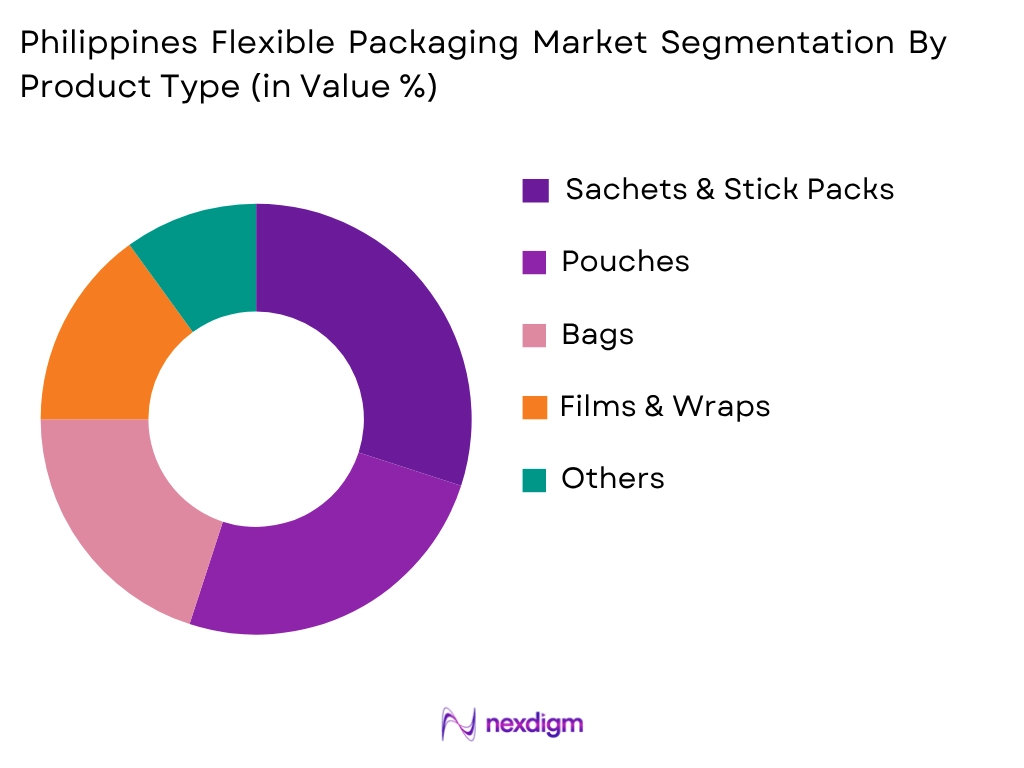
Sachets & Stick Packs represent the largest and most distinctive product-type segment in the Philippines Flexible Packaging Market, reflecting the country’s globally recognized sachet economy, in which sachets constitute approximately 52% of the nation’s residual plastic waste according to environmental advocacy research. Sachets enable affordable, single-serve unit pricing for personal care products, food seasonings, and pharmaceutical items, making them a foundational packaging format for reaching lower-income Filipino consumers across both urban and rural retail channels. Pouches, Bags, and Sacks represent the second-largest segment, driven by rising demand for convenient, portioned packaging in retail and food applications, while flexible mailers and courier bags have expanded rapidly alongside the Philippines’ digital economy, which reached approximately USD 36 billion in gross merchandise value in 2025, up 16% year-on-year, with e-commerce accounting for more than 60% of total digital transactions through platforms including Lazada, Shopee, and TikTok Shop.
Competitive Landscape
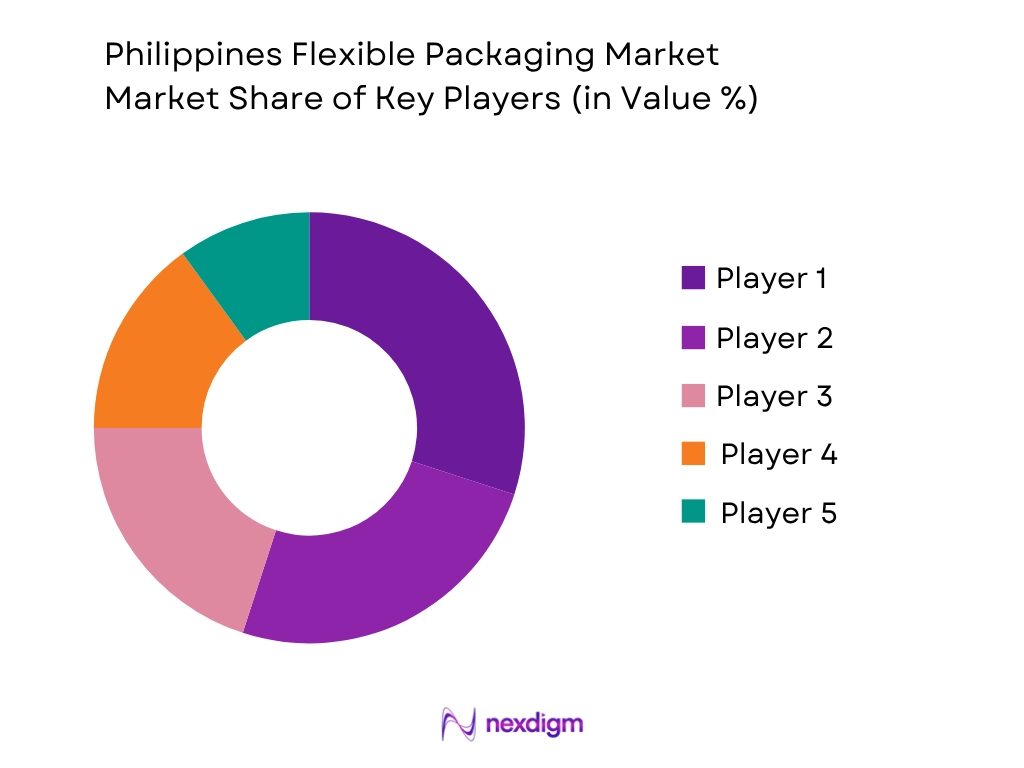
The Philippines Flexible Packaging Market features a dynamic mix of large, vertically integrated conglomerates and regional converters navigating an unusually stringent regulatory environment relative to most emerging Southeast Asian markets. Competition is primarily based on EPR compliance readiness, feedstock access, mono-material design capability, and the ability to serve the Philippines’ fragmented retail landscape spanning modern trade, traditional sari-sari stores, and rapidly growing e-commerce channels. San Miguel Corporation and D&L Industries maintain leadership positions leveraging deep integration across food, beverage, and specialty chemicals value chains, with D&L Industries anchoring specialty compounds through its Batangas blending facilities serving multinational food brands. JG Summit’s petrochemical operations, centered on the country’s only naphtha cracker at its Batangas complex, provide a degree of domestic feedstock integration, though the facility’s approximately 480,000-tonne annual ethylene output covers only a fraction of national demand, leaving most converters reliant on imported resin exposed to global price swings and currency risk. NPC Alliance Corporation has positioned its Calabarzon plants specifically to capture EPR-driven procurement mandates through recycled-content formulations, illustrating how regulatory compliance capability is increasingly becoming a core competitive differentiator in this market.
| Company | Establishment Year | Headquarters | Primary Product Portfolio | Flexible Packaging Portfolio
|
Manufacturing Presence | Major End-Use Industries | Key Strategic Focus | Certifications & Compliance |
| San Miguel Corporation | 1890 | ~ | ~ | ~ | ~ | ~ | ~ | ~ |
| D&L Industries, Inc. | 1963 | ~ | ~ | ~ | ~ | ~ | ~ | ~ |
| JG Summit Holdings | 1957 | ~ | ~ | ~ | ~ | ~ | ~ | ~ |
| Petron Corporation | 1973 | ~ | ~ | ~ | ~ | ~ | ~ | ~ |
| Pilipinas Shell Petroleum Corporation | 1914 | ~ | ~ | ~ | ~ | ~ | ~ | ~ |
Philippines Flexible Packaging Market Analysis
Growth Drivers
Sachet Economy and Portion-Controlled Packaging Demand
The Philippines flexible packaging market is anchored by the country’s deeply entrenched sachet economy, with the Philippines sachet packaging segment alone valued at approximately USD 8.4 billion in 2025 and projected to grow to approximately USD 13.9 billion by 2031 at a compound annual growth rate of approximately 8.7%. Sachets enable affordable, single-serve pricing for personal care, food, and pharmaceutical products, making them essential for reaching price-sensitive consumers, with the World Bank Group specifically characterizing the Philippines’ high dependence on single-use plastics as having created a defining sachet economy. Growing consumption of personal care and food products, along with expanding pharmaceutical applications, continues to drive sachet adoption, while manufacturers increasingly focus on sustainable mono-material structures and recyclable laminates to align with tightening environmental regulations. Continuous innovation in high-speed form-fill-seal machinery and barrier coating technologies continues to support cost-efficient sachet production even as material specifications evolve to meet recyclability requirements.
E-Commerce Boom and Digital Retail Expansion
Rapid growth of the Philippines’ digital economy continues to drive substantial new demand for flexible packaging formats suited to e-commerce logistics. The Philippine digital economy is projected to reach approximately USD 36 billion in gross merchandise value in 2025, growing approximately 16% year-on-year, with e-commerce representing the largest single sector at more than 60% of total digital transaction value. The explosive growth of online platforms including Lazada, Shopee, and TikTok Shop has fundamentally reshaped packaging requirements, driving demand for lightweight, durable flexible mailers and courier bags capable of withstanding multi-touchpoint last-mile logistics networks. E-commerce penetration reached approximately 15% in 2024 and continues climbing, pushing parcel volumes that increasingly favor lightweight flexible films over heavier rigid packaging formats. Leading e-commerce platforms have also begun embedding recycled-content guidelines into seller scorecards, encouraging a gradual shift from virgin polypropylene mailers toward recycled low-density polyethylene and recycled PET films across the Philippines’ fast-growing digital retail packaging segment.
Market Challenges
World’s Most Aggressive EPR Law and Stranded Asset Risk
The Philippines Flexible Packaging Market faces uniquely stringent regulatory pressure under Republic Act No. 11898, the Extended Producer Responsibility Act of 2022, which industry observers have characterized as the world’s most aggressive EPR law specifically because it includes flexible plastics such as sachets within its mandatory waste recovery obligations, unlike most comparable EPR regimes globally. The law establishes an escalating recovery schedule requiring obligated enterprises, defined as businesses with combined total assets exceeding PHP 100 million, to divert 20% of their plastic footprint by 2023, rising progressively to 80% by 2028, with non-compliance risking fines of up to PHP 20 million and potential loss of business license. Metro Manila converters face particular stranded asset risk, as legacy multilayer sachet lamination equipment increasingly falls out of favor under DENR’s EPR recyclability scoring protocols, which reward simpler mono-material structures over the multilayer barrier laminates that have historically dominated Philippine sachet production. Annual third-party compliance audits and advance EPR credit purchases or co-processing offset arrangements add further overhead, disproportionately burdening small and medium-sized manufacturers with limited capital for equipment upgrades.
Near-Total Feedstock Import Dependency and Working Capital Strain
The Philippines Flexible Packaging Market remains heavily exposed to feedstock import dependency, as only one domestic naphtha cracker, JG Summit’s Batangas petrochemical complex, converts naphtha into olefins domestically, with its approximately 480,000-tonne annual ethylene output covering only a fraction of national polyethylene and polypropylene demand. Plastics import value rose approximately 24.75% year-on-year to USD 288.57 million in January 2025 alone, according to Philippine Statistics Authority trade data, underscoring the industry’s near-total reliance on foreign feedstock. Spot polypropylene and polyethylene prices closely track China’s export price swings, complicating margin forecasting for Philippine converters, who must typically prepay for resin 60 to 90 days in advance of collecting payment from FMCG buyers, creating significant working capital strain. Currency volatility further amplifies cost uncertainty, since resin is invoiced in US dollars while the vast majority of finished flexible packaging products are sold in Philippine pesos, leaving converters exposed to exchange rate fluctuations between the point of resin procurement and final product sale.
Market Opportunities
Mono-Material Redesign and Recycled-Content Capacity Expansion
Escalating EPR recyclability scoring requirements create substantial opportunity for converters investing in mono-material redesign and certified recycled-content production capacity. NPC Alliance Corporation has positioned its Calabarzon plants specifically to capture EPR-driven procurement mandates through recycled-content formulations, illustrating a broader industry shift toward suppliers capable of demonstrating verified sustainability credentials. Food-grade polyethylene producers in Calabarzon are piloting 500-tonne annual units to process contaminated agricultural film on-site, reflecting growing interest in decentralized, modular processing approaches that can supplement centralized mechanical recycling infrastructure. The Philippine Economic Zone Authority’s fiscal incentives, including a 5% special corporate income tax rate and duty-free resin imports, continue to attract compounders willing to balance imported feedstocks with local recycled content, positioning PEZA-registered converters to serve both domestic EPR compliance needs and export-oriented multinational food brand customers seeking certified sustainable packaging solutions from Philippine suppliers.
Biodegradable and Bio-Based Substrate Innovation
Growing brand owner commitment to sustainable packaging alternatives creates meaningful opportunity for converters and material innovators developing biodegradable and bio-based substrates suited to the Philippines’ tropical climate and fragmented retail economy. In 2025, San Miguel Corporation announced it would begin using biodegradable plastic packaging sourced from local firm Philippine Bioresins Corporation, with the Department of Science and Technology confirming a 65% breakdown rate within 24 months, demonstrating a credible, locally sourced alternative to conventional plastic sachet materials. Decentralized pyrolysis units and digital traceability platforms are increasingly fragmenting the traditional refinery-to-converter supply hierarchy, creating new opportunities for smaller-scale, geographically distributed recycling and material recovery operations. As proposed national harmonization legislation such as House Bill 6470 seeks to consolidate the current patchwork of over 300 local government single-use plastic ordinances into a unified framework, converters that have already invested in biodegradable or certified recyclable substrates are well positioned to benefit from reduced regulatory fragmentation and clearer national compliance standards.
Future Outlook
The Philippines Flexible Packaging Market is expected to witness robust expansion over the forecast period, supported by continued growth of the country’s sachet economy, rapid e-commerce expansion, and increasing investment in EPR-compliant mono-material and recycled-content packaging solutions. Continued escalation of Republic Act No. 11898’s recovery targets toward 80% by 2028 will accelerate converter investment in recyclable material redesign and certified recycling infrastructure, even as the industry continues to navigate near-total feedstock import dependency and currency-driven cost volatility. The market is also likely to benefit from potential national regulatory harmonization under proposed legislation such as House Bill 6470, which could reduce compliance complexity currently created by over 300 fragmented local government single-use plastic ordinances.
Major Players
- San Miguel Corporation
- D&L Industries, Inc.
- JG Summit Holdings
- Petron Corporation
- Pilipinas Shell Petroleum Corporation
- Chemrez Technologies, Inc.
- Philippine Resins Industries, Inc.
- NPC Alliance Corporation
- Philippine Bioresins Corporation
- Amcor
- Huhtamaki
- Constantia Flexibles
- UFlex Limited
- Berry Global
- Toppan Inc.
Key Target Audience
- Flexible Packaging Manufacturers
- Food & Beverage Processing Companies
- Personal Care & Cosmetics Manufacturers
- Healthcare & Pharmaceutical Companies
- E-Commerce & Retail Companies
- Investment and Venture Capitalist Firms
- Government and Regulatory Bodies (Department of Environment and Natural Resources (DENR), Bureau of Product Standards, Philippine Economic Zone Authority (PEZA))
- Raw Material Suppliers and Petrochemical Producers
Research Methodology
Step 1: Identification of Key Variables
The research process begins with identifying the complete ecosystem of the Philippines Flexible Packaging Market, including raw material suppliers, packaging converters, printing technology providers, brand owners, retailers, and regulatory authorities. Extensive secondary research is conducted using company annual reports, government publications, trade associations, customs statistics, industry journals, and proprietary databases to determine the variables influencing market demand, pricing, production, consumption, and technological developments.
Step 2: Market Analysis and Construction
Historical market information is collected and analyzed to estimate market size, production volumes, import-export activity, application-wise demand, and pricing trends. A combination of top-down and bottom-up approaches is used to estimate market revenues and validate segment-level performance. Consumption patterns across sachets, pouches, e-commerce packaging, and food and beverage applications are evaluated to establish an accurate representation of the industry.
Step 3: Hypothesis Validation and Expert Consultation
The preliminary findings are validated through Computer-Assisted Telephone Interviews (CATIs) and structured discussions with flexible packaging converters, procurement managers, distributors, packaging engineers, regulatory experts, and senior executives operating within the Philippine packaging industry. These interviews help verify market assumptions, competitive developments, technology adoption trends, pricing dynamics, and future investment opportunities while refining the overall market estimates.
Step 4: Research Synthesis and Final Output
The final stage integrates insights obtained from primary interviews with quantitative information collected through secondary sources. Data triangulation techniques are applied to reconcile differences between supply-side and demand-side estimates, ensuring robust market forecasting. The report is then reviewed through multiple quality assurance checkpoints to deliver a comprehensive analysis covering market size, segmentation, competitive landscape, future outlook, and strategic recommendations for industry stakeholders.

- Executive Summary
- Research Methodology (Market Definitions and Assumptions, Abbreviations, Market Sizing Approach, Top-Down Analysis, Bottom-Up Analysis, Demand-Side Assessment, Supply-Side Assessment, Primary Industry Interviews, Secondary Research Validation, Data Triangulation, Forecasting Framework, Limitations and Future Conclusions)

- Definition and Scope
- Market Evolution and Industry Genesis
- Timeline of Major Industry Developments
- Flexible Packaging Industry Value Chain Analysis
- Supply Chain Analysis

- Growth Drivers (Sachet Economy & Portion-Controlled Packaging Demand, E-Commerce Boom & Digital Retail Growth, Rising Personal Care & FMCG Consumption, PEZA Investment Incentives, Growth in Export Processing Zones, Urbanization-Driven Convenience Packaging)
- Market Challenges (World’s Most Aggressive EPR Law Compliance Costs, Stranded Asset Risk for Legacy Sachet Equipment, Near-Total Feedstock Import Dependency, Currency Mismatch & Working Capital Strain, Fragmented Local Government Plastic Bans, Limited Recycling Infrastructure)
- Market Opportunities (Mono-Material Redesign & Recycled-Content Capacity, Biodegradable & Bio-Based Substrate Innovation, Growth in Food-Grade Recycled PET Production, National Regulatory Harmonization Potential, PEZA-Enabled Export Manufacturing, Refillable & Reuse Packaging Systems)
- Market Trends (Shift Toward Mono-Material Recyclable Films, Growth in Certified Recycled-Content Adoption, Decentralized Pyrolysis & Chemical Recycling, Digital Traceability Platform Adoption, EPR Scoring-Driven Material Substitution, Refill & Reuse Pilot Programs)
- Government Regulations (Extended Producer Responsibility Act – Republic Act No. 11898, DENR EPR Program Registration Requirements, Bureau of Product Standards Compliance, PEZA Fiscal Incentives, Local Government Single-Use Plastic Ordinances, Proposed House Bill 6470 Harmonization)
- Import and Export Analysis (Trade Volume, Major Import Sources, Export Destinations, HS Code Analysis, Trade Balance)
- Raw Material Availability Analysis (Domestic Naphtha-Derived Olefins, Imported Polyethylene & Polypropylene Resins, Recycled PET & PCR Feedstock, Kraft Paper & Pulp, Bio-Based Polymer Feedstocks)
- Technology Landscape (Multilayer Coextrusion Technologies, Flexographic & Digital Printing Systems, Barrier Coating Technologies, Modular Pyrolysis Recycling Technologies, Digital Traceability Platforms)
- Sustainability Assessment (Post-Consumer Recycled Content Adoption, Mono-Material Recyclability, EPR Diversion Rate Performance, Biodegradable Substrate Certification, Circular Economy Partnerships)
- PESTLE Analysis
- SWOT Analysis
- Porter’s Five Forces Analysis
- Stakeholder Ecosystem
- Competition Ecosystem

- By Market Value (2020-2025)
- By Volume Consumption (2020-2025)
- By Average Selling Price (2020-2025)

- By Material Type (In Value %)
Plastic (Polyethylene & Polypropylene)
Paper-Based Laminates
Aluminum Foil
Bioplastics & Compostables
Multilayer Composite Films - By Product Type (In Value %)
Sachets & Stick Packs
Pouches
Bags
Films & Wraps
Laminates & Rollstock
Shrink & Stretch Films - By Printing Technology (In Value %)
Flexography
Rotogravure
Digital Printing
Offset Printing
Others - By End User (In Value %)
Food & Beverage
Personal Care & Cosmetics
Household & Home Care
Healthcare & Pharmaceutical
E-Commerce & Retail
Agriculture & Export Processing
Others - By Region (In Value %)
Metro Manila (National Capital Region)
Calabarzon
Central Luzon
Cebu & Central Visayas
Davao & Mindanao

- Market Share of Major Players (By Value, Volume, Material Type, Application Industry, Product Category)
- Cross Comparison Parameters (Product Portfolio Breadth, Feedstock Integration, Barrier Technology Performance, EPR Compliance Readiness, Manufacturing Capacity, Regulatory Certifications, FMCG Customer Base, Innovation & New Product Launch Frequency)
- SWOT Analysis of Major Players
- Pricing Analysis by Product Category and SKU
- Production Capacity Analysis
- Manufacturing Footprint Analysis
- Distribution Network Analysis
- Innovation Benchmarking
- Detailed Profiles of Major Companies
San Miguel Corporation
D&L Industries, Inc.
JG Summit Holdings
Petron Corporation
Pilipinas Shell Petroleum Corporation
Chemrez Technologies, Inc.
Philippine Resins Industries, Inc.
NPC Alliance Corporation
Philippine Bioresins Corporation
Amcor
Huhtamaki
Constantia Flexibles
UFlex Limited
Berry Global
Toppan Inc.

- Consumption Pattern Analysis (Industrial Usage, Batch Size, Product Category Penetration, Seasonal Demand, Reformulation Activity)
- Purchasing Criteria (Barrier Performance, EPR Compliance & Scoring, Cost Efficiency, Recyclability, Print Quality, Shelf Appeal)
- Procurement and Supplier Selection Analysis
- Recycled-Content Adoption Assessment
- Sachet vs Alternative Format Demand
- Product Attribute Preference Analysis (Moisture Barrier Performance, Seal Integrity, Print Definition, Mono-Material Recyclability, Affordability, Shelf Life Extension)
- EPR Compliance Influence on Material Selection
- Pain Point Analysis
- Decision-Making Process

- By Market Value (2026-2035)
- By Volume Consumption (2026-2035)
- By Average Selling Price (2026-2035)


 Request a Sample
 Ask for Customization
 Get a Quote
 Enquire Now