
 Download PDF
Market Overview
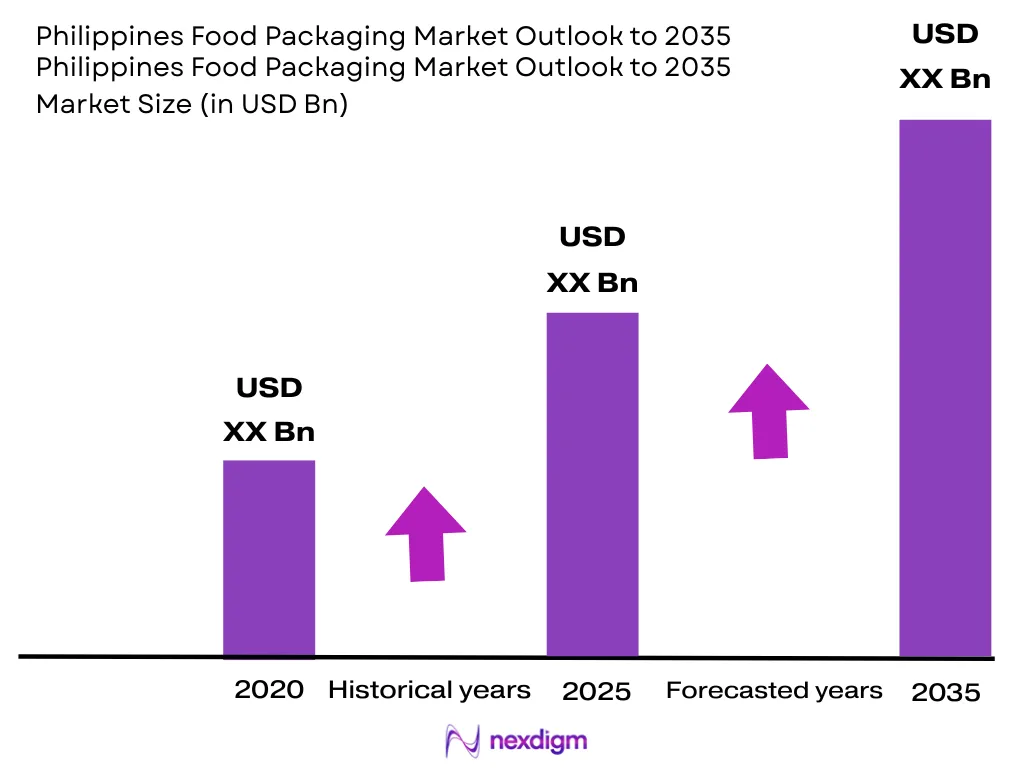
The Philippines Food Packaging Market was valued at USD ~ Billion in 2024 and is anticipated to expand at a CAGR of ~% during 2026-2035. The market spans flexible plastics, rigid plastics, glass, metal, and paper-based formats deployed across the country’s beverage, dairy, bakery, frozen food, and canned food sectors. Flexible packaging remains the single largest pack material by volume, accounting for approximately 38.4 billion units in 2024 and roughly 48.2% of total packaging volume in 2023, followed by glass at approximately 19.5% volume share. The Philippines beverage packaging segment alone, encompassing plastic bottles, metal cans, glass containers, paperboard cartons, and flexible pouches, was valued at approximately USD 3.67 billion in 2025 and is projected to reach approximately USD 5.57 billion by 2034. Metal food cans remain the preferred format for condensed milk, a culturally significant staple ingredient across Filipino cuisine, reflecting the durable role of rigid metal packaging alongside the country’s rapidly growing flexible and aseptic carton segments.
Market Segmentation
By Material
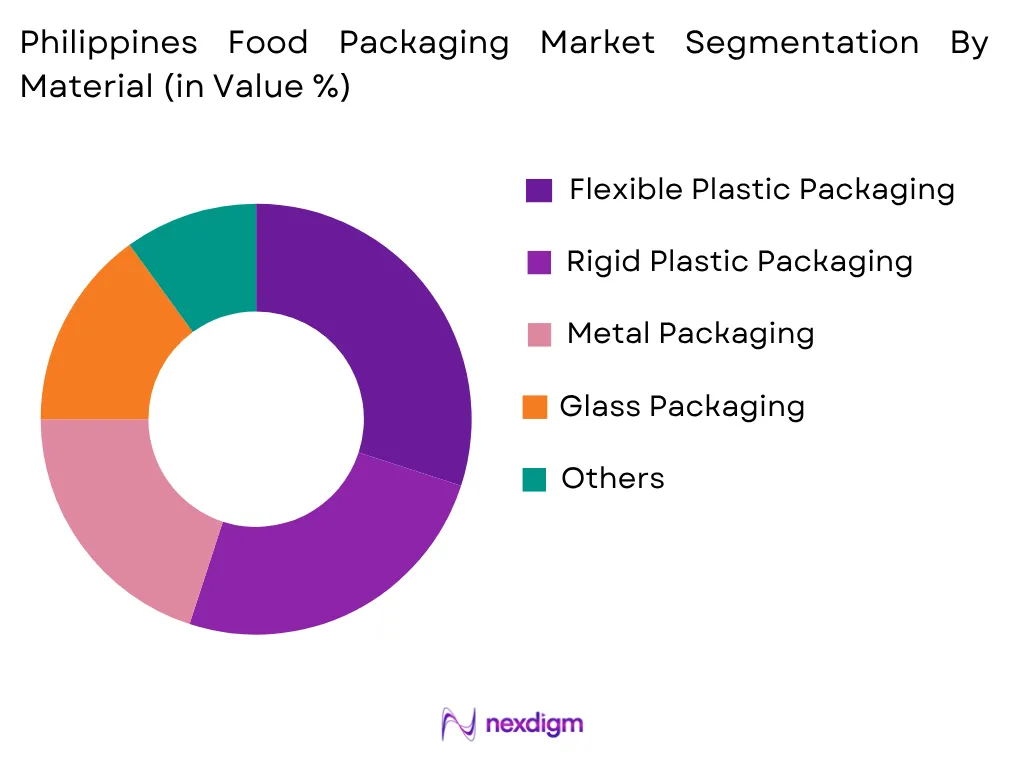
Flexible plastic packaging represents the largest material segment by volume in the Philippines Food Packaging Market, supported by its dominant role in the country’s sachet-based retail economy and widespread use across snacks, ready-to-eat meals, and frozen foods. Glass packaging holds the second-largest volume share at approximately 19.5%, retaining strong positioning in beverages, condiments, and specialty food categories where premium presentation and recyclability are valued by both brand owners and increasingly eco-conscious consumers. Metal packaging maintains an entrenched position in canned foods, particularly condensed milk, a staple ingredient across Filipino desserts and beverages, where airtight metal cans preserve freshness and extend shelf life in ways that align closely with established consumer preferences. Paper and paperboard packaging, together with aseptic liquid cartons, represent a fast-growing segment as beverage and dairy manufacturers increasingly adopt shelf-stable carton formats that reduce reliance on cold chain infrastructure while appealing to sustainability-conscious retailers and consumers.
By Application
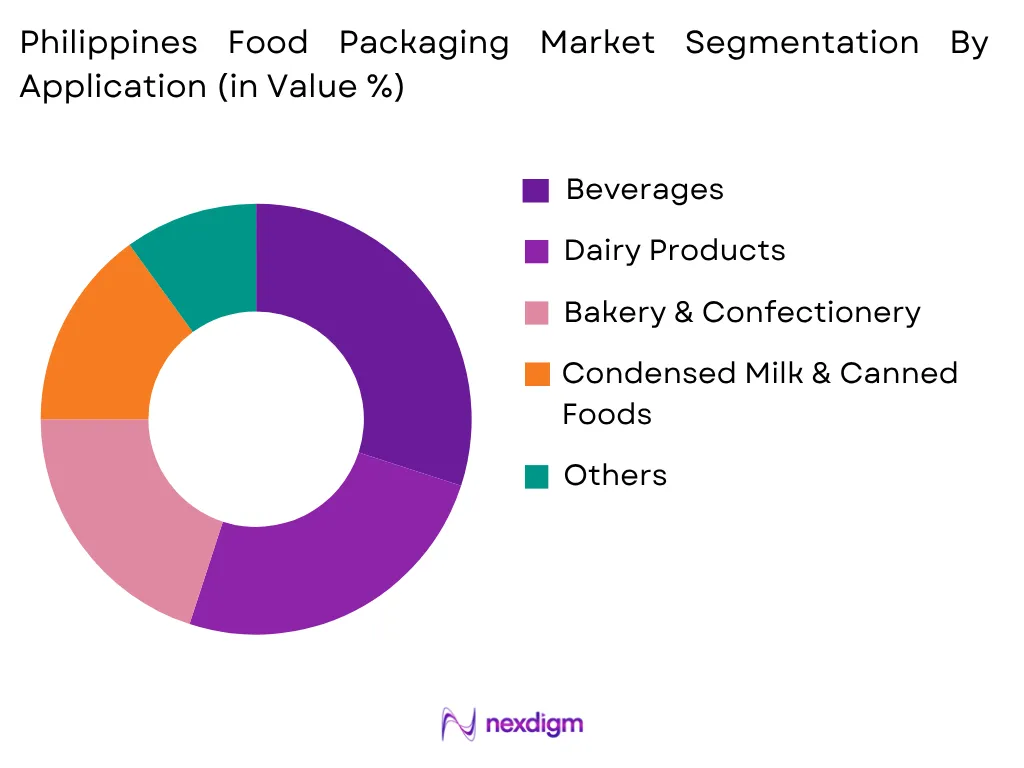
Beverages represent the largest application segment in the Philippines Food Packaging Market, spanning plastic bottles, aluminum cans, glass containers, aseptic cartons, and flexible pouches deployed across both alcoholic and non-alcoholic categories. The Philippines aluminum cans market alone was valued at approximately USD 1.14 billion in 2025 and is projected to reach approximately USD 1.44 billion by 2034, with premiumization trends in the soft drinks segment continuing to support demand for canned formats over conventional bottles. Dairy Products represent a rapidly growing application, as rising dairy consumption drives increasing demand for tamper-evident and resealable packaging formats that extend shelf life and reassure consumers of product integrity. Condensed Milk & Canned Foods maintain a distinctive and culturally rooted position within the Philippines market, given condensed milk’s foundational role in traditional Filipino desserts and beverages, sustaining consistent demand for metal can packaging even as other categories shift toward flexible and carton-based alternatives.
Competitive Landscape
The Philippines Food Packaging Market features a distinctive competitive structure in which a small number of vertically integrated conglomerates operate across multiple packaging materials, spanning glass, metal, and plastic, while global specialists in aseptic cartons and can-making compete for share in specific high-growth categories. San Miguel Yamamura Packaging Corporation, formed through a joint venture between San Miguel Corporation and Japan’s Yamamura Glass, maintains a uniquely broad footprint spanning glass bottles, metal cans, and plastic packaging formats, positioning it as the Philippines’ most diversified domestic packaging supplier. Global aseptic carton specialists including Tetra Pak continue to expand regional capacity serving the Philippine market, while domestic converter Actron Industries has invested directly in aseptic filling technology through its Calamba, Laguna facility to capture growing demand for shelf-stable beverage and dairy packaging. Glass and metal packaging specialists including O-I Glass and Crown Holdings compete for share in premium beverage and canned food categories, where recyclability credentials increasingly provide a competitive advantage under DENR’s EPR recyclability scoring framework relative to legacy multilayer plastic structures.
| Company | Establishment Year | Headquarters | Primary Product Portfolio | Food Packaging Portfolio
|
Manufacturing Presence | Major End-Use Industries | Key Strategic Focus | Certifications & Compliance |
| San Miguel Yamamura Packaging Corporation | 1998 | ~ | ~ | ~ | ~ | ~ | ~ | ~ |
| Tetra Pak | 1951 | ~ | ~ | ~ | ~ | ~ | ~ | ~ |
| Amcor | 1860 | ~ | ~ | ~ | ~ | ~ | ~ | ~ |
| Crown Holdings | 1892 | ~ | ~
The Philippines Food Packaging Market was valued at USD ~ Billion in 2024 and is projected to expand at a CAGR of ~% during 2026-2035. The Philippines beverage packaging segment alone was valued at approximately USD 3.67 billion in 2025, growing toward approximately USD 5.57 billion by 2034. The market is driven by premiumization across beverage and dairy categories, aseptic carton capacity expansion, and rising packaged food consumption. The primary growth drivers of the Philippines Food Packaging Market include premiumization trends across beverage and dairy packaging, aseptic carton capacity expansion exemplified by Actron Industries’ 2026 SIG Midi 12 filling line, rising packaged food consumption amid urbanization, and continued e-commerce and modern retail growth across the country. The Philippines Food Packaging Market faces challenges including cross-material EPR compliance complexity under Republic Act No. 11898, import dependency across resin, tinplate, and glass feedstocks, currency mismatch between USD-invoiced raw materials and PHP-denominated sales, and fragmented local government single-use plastic ordinances creating an inconsistent national compliance environment. The Philippines Food Packaging Market is led by prominent multi-material and specialist packaging companies such as San Miguel Yamamura Packaging Corporation, Tetra Pak, Amcor, Crown Holdings, O-I Glass, D&L Industries, JG Summit Holdings, Petron Corporation, Actron Industries, Philippine Resins Industries, NPC Alliance Corporation, Huhtamaki, Constantia Flexibles, UFlex, and Ball Corporation. Flexible plastic packaging represents the dominant material segment by volume in the Philippines Food Packaging Market, accounting for approximately 48.2% of total packaging volume in 2023, followed by glass packaging at approximately 19.5% volume share. Metal packaging retains a distinctive, culturally rooted position in canned foods, particularly condensed milk, a staple ingredient across Filipino cuisine.  NEXMR9806Product Code
 80Pages
 2025Base Year
 March , 2026Date Published
Buy Report
Multi-Report Purchase Plan
A Customized Plan Will be Created Based on the number of reports you wish to purchase  Enquire Now Enquire Now

|


 Request a Sample
 Ask for Customization
 Get a Quote