
 Download PDF
Market Overview
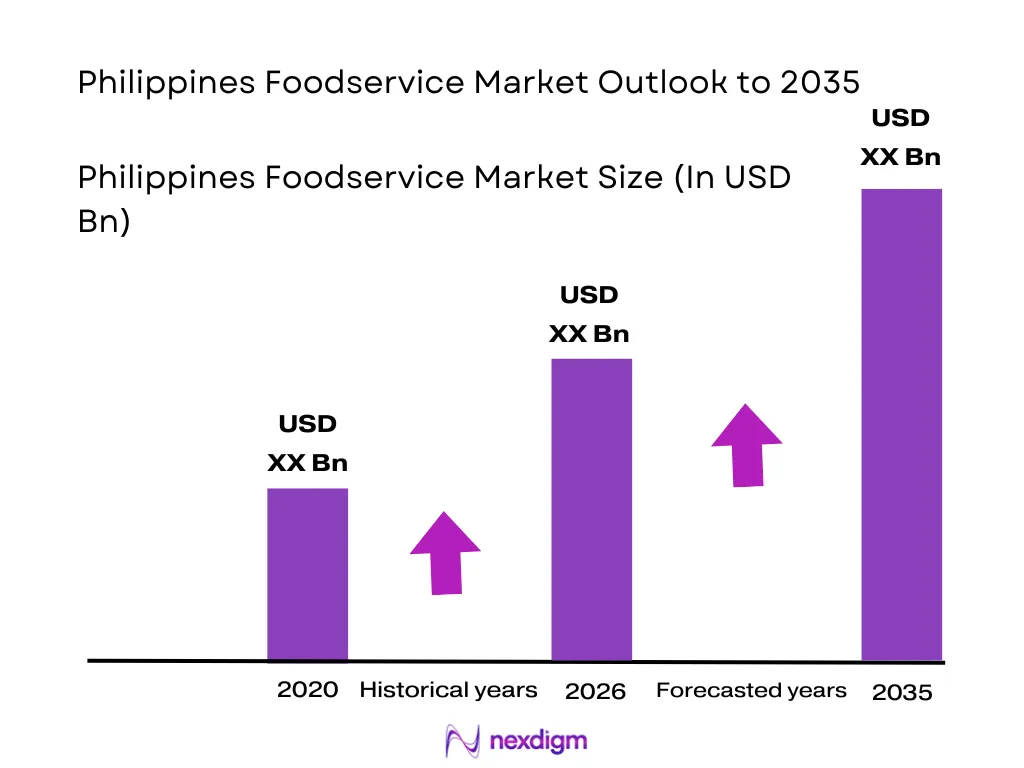
The Philippines Foodservice Market is valued at approximately USD ~ billion, supported by increasing urban consumption, rising digital food ordering penetration, and strong demand for convenience dining formats. Household final consumption expenditure accounted for more than 76 of GDP in 2024 according to the World Bank, highlighting the country’s consumption-driven economy. The services sector added nearly 2.5 million jobs in 2024, strengthening restaurant traffic across cafés, quick service restaurants, and delivery-focused formats. Expansion of app-based ordering ecosystems and increasing digital payment penetration continue to accelerate demand across organized foodservice channels.
Metro Manila dominates the Philippines Foodservice Market due to dense urbanization, superior mall infrastructure, higher consumer purchasing power, and concentration of organized restaurant chains. Cebu and Davao are emerging as strong secondary growth centers because of expanding tourism infrastructure, rising middle-income populations, and increasing commercial activity. Luzon remains the operational hub because of stronger logistics connectivity and larger population concentration. Visayas and Mindanao are witnessing increasing penetration of quick service restaurants, cafés, and cloud kitchens due to expanding digital accessibility, infrastructure modernization, and growth in provincial consumption demand.
Market Segmentation
By Foodservice Format
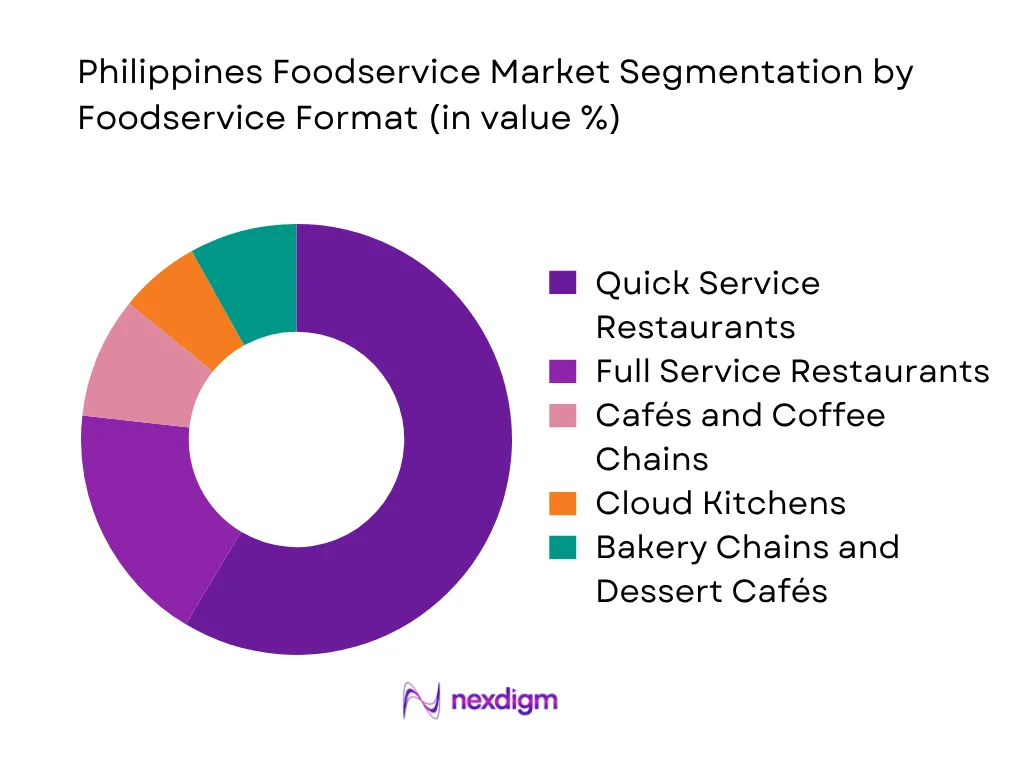
The Philippines Foodservice Market is segmented by foodservice format into quick service restaurants, full service restaurants, cafés and coffee chains, cloud kitchens, bakery chains and dessert cafés, institutional catering, and fine dining restaurants. Quick service restaurants dominate the Philippines Foodservice Market because of affordability, high accessibility, and extensive nationwide penetration. Organized chains have expanded aggressively through franchising models across malls, transport hubs, and residential districts. The growing urban workforce and increasing time-constrained lifestyles have strengthened demand for convenient dining solutions. Integration with food delivery platforms and digital ordering applications has further accelerated customer reach. Drive-thru expansion, localized menu offerings, and value-oriented pricing continue to support strong repeat consumption among working professionals, students, and middle-income households.
By Cuisine Type
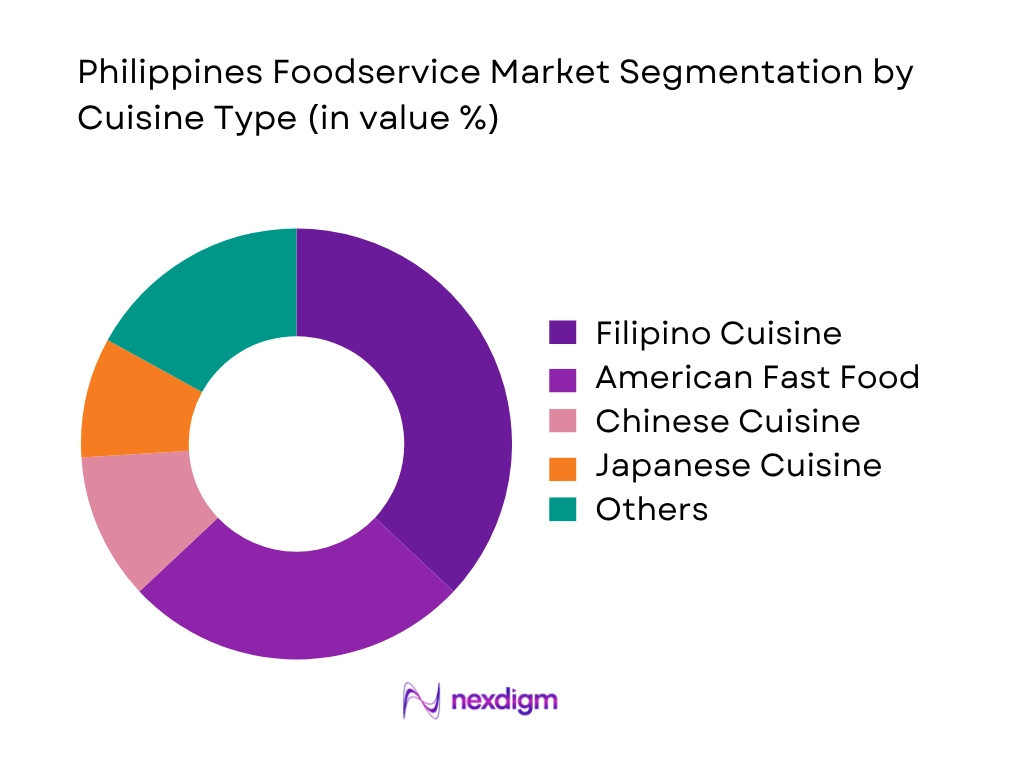
The Philippines Foodservice Market is segmented by cuisine type into Filipino cuisine, American fast food, Chinese cuisine, Japanese cuisine, Korean cuisine, Italian cuisine, and healthy or plant-based concepts. Filipino cuisine dominates the market because of strong cultural familiarity, affordability, and high repeat consumption frequency among local consumers. Traditional rice-based meals and grilled food offerings remain deeply integrated into daily dining behavior across households and workplaces. Localized menu adaptation and affordable combo meals strengthen mass-market accessibility. Filipino cuisine also benefits from strong emotional brand loyalty and growing tourism demand for authentic local dining experiences. The segment maintains strong traction across both independent restaurants and organized chains operating in urban and provincial markets.
Competitive Landscape
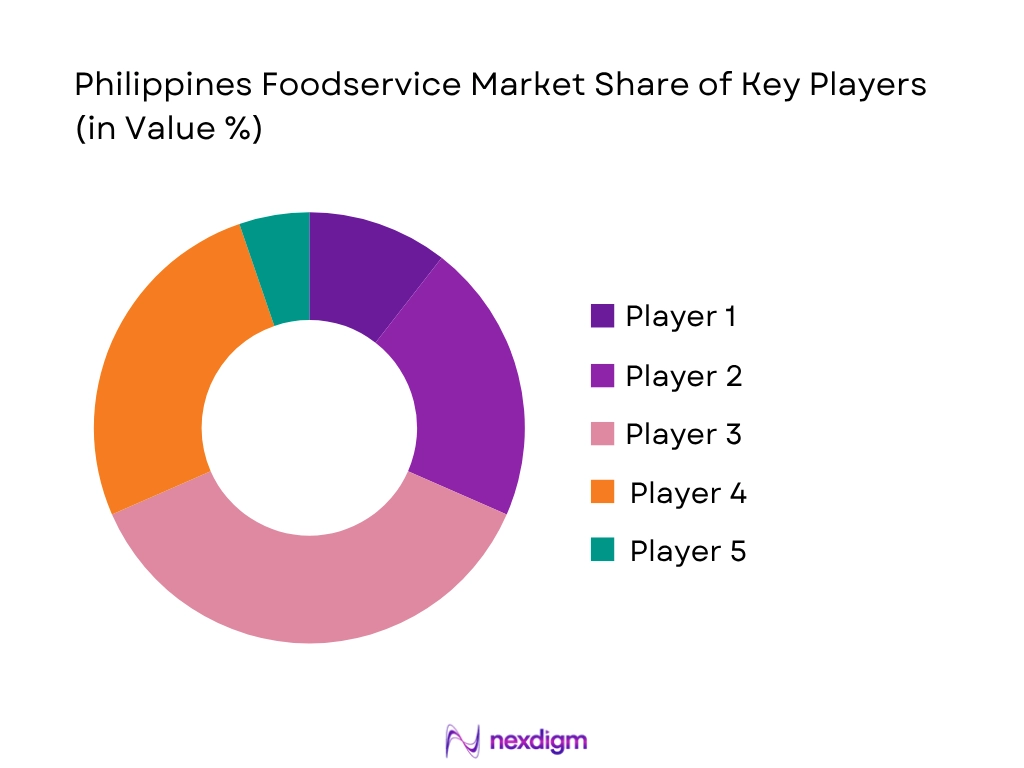
The Philippines Foodservice Market is moderately consolidated, with major operators competing through aggressive outlet expansion, delivery platform integration, menu localization, and franchising strategies. Leading foodservice companies are focusing on digital ordering ecosystems, loyalty applications, cloud kitchen expansion, and operational automation to strengthen customer retention. Organized chains continue to dominate metropolitan regions, while regional and emerging operators are expanding rapidly across provincial cities through lower-cost franchise models and delivery-oriented operations.
| Company | Establishment Year | Headquarters | Core Segment | Outlet Network Strength | Delivery Integration | Franchise Expansion | Digital Ordering Presence | Menu Localization |
| Jollibee Foods Corporation | 1978 | Pasig City, Philippines | QSR | ~ | ~ | ~ | ~ | ~ |
| McDonald’s Philippines | 1981 | Manila, Philippines | QSR | ~ | ~ | ~ | ~ | ~ |
| Shakey’s Pizza Asia Ventures | 1975 | Parañaque, Philippines | Casual Dining | ~ | ~ | ~ | ~ | ~ |
| Max’s Group Inc. | 1945 | Quezon City, Philippines | Casual Dining | ~ | ~ | ~ | ~ | ~ |
| Starbucks Philippines | 1997 | Makati City, Philippines | Café Chains | ~ | ~ | ~ | ~ | ~ |
Philippines Foodservice Market Analysis
Growth Drivers
Rising Urban Employment and Expanding Consumer Spending Supporting Foodservice Demand
The Philippines foodservice market is strongly supported by rising employment levels, urban consumer spending, and continued growth in the services economy. According to the World Bank, total employment reached approximately 49.9 million workers in 2024, while the services sector alone added around 2.5 million jobs. Female labor force participation increased to nearly 55.7 in 2024, supporting growth in dual-income households and higher expenditure on convenience dining. Household final consumption expenditure accounted for over 76 of GDP in 2024, reflecting strong consumer spending activity. Expanding business districts, mall culture, and increasing urban migration continue to strengthen demand for quick service restaurants, cafés, and delivery-focused dining formats across metropolitan and provincial regions.
Rapid Digital Payment and Smartphone Penetration Accelerating Online Food Ordering
The rapid expansion of digital payments and smartphone penetration is transforming the Philippines foodservice market by increasing accessibility to online food ordering ecosystems. According to Bangko Sentral ng Pilipinas, over 87 million Filipinos were registered under the national digital ID system in 2024, strengthening digital financial accessibility. Bank account ownership increased substantially between 2021 and 2024, while internet penetration exceeded 73 and mobile penetration crossed 90 in 2024. The expansion of QR-based payment systems and mobile wallets has accelerated app-based food ordering adoption across urban regions. Restaurants increasingly rely on delivery applications and digital ordering systems to improve customer convenience, optimize operational efficiency, and strengthen consumer engagement.
Market Challenges
Persistent Food Inflation and Higher Borrowing Costs Impacting Restaurant Operations
The Philippines foodservice market continues to face pressure from elevated food inflation, import dependency, and rising financing costs. According to the Philippine Institute for Development Studies, average bank lending rates increased to approximately 7.8 in 2024 compared to 5.9 in earlier years, increasing borrowing costs for restaurant operators. The Bangko Sentral ng Pilipinas maintained policy rates at elevated levels during much of 2024, increasing debt servicing costs across hospitality and foodservice businesses. Additionally, the Philippines recorded imports worth more than USD 125 billion while maintaining a trade deficit exceeding USD 68 billion. Dependence on imported food ingredients and supply chain volatility continues to pressure restaurant margins and operational profitability.
Infrastructure and Regional Logistics Gaps Limiting Provincial Foodservice Expansion
Infrastructure limitations and fragmented logistics networks remain key challenges affecting efficient expansion of organized foodservice across provincial regions. The Philippines consists of more than 7,000 islands, increasing dependence on inter-island transportation and cold-chain logistics. According to the World Bank, the country’s population exceeded 112 million in 2024, increasing demand for foodservice infrastructure outside Metro Manila. However, uneven transportation connectivity and warehousing limitations increase operational complexity for restaurant operators expanding into Visayas and Mindanao. Regional cities continue to require stronger distribution networks, centralized commissaries, and cold-storage systems to maintain operational consistency, food quality standards, and efficient inventory management across geographically dispersed markets.
Market Opportunities
Expansion of Provincial Cities Creating Untapped Demand for Organized Foodservice
Rapid economic development across secondary Philippine cities is creating substantial opportunities for organized restaurant chains, cafés, and delivery-focused operators. Cities such as Cebu, Davao, Iloilo, and Cagayan de Oro are witnessing rising commercial activity, increasing tourism infrastructure, and growing middle-income populations. Iloilo City generated GDP exceeding PHP 171 billion in 2024, reflecting strong regional economic growth. Expansion of mixed-use developments, shopping malls, and business process outsourcing hubs is strengthening weekday dining demand and increasing consumption of branded foodservice formats. Provincial markets offer lower occupancy costs, rising digital connectivity, and increasing young consumer populations, creating scalable growth opportunities for franchise operators and cloud kitchen businesses.
Growing Digital Financial Inclusion Supporting Delivery and Cloud Kitchen Ecosystems
The rapid expansion of digital financial inclusion is creating significant opportunities for delivery-focused restaurants and cloud kitchen ecosystems within the Philippines foodservice market. Bank account ownership increased substantially between 2021 and 2024, while digital wallet usage and QR-based transactions expanded rapidly across urban consumers. More than 87 million individuals were registered under the national digital ID system in 2024, accelerating onboarding into digital commerce ecosystems. Increasing smartphone accessibility and internet penetration are enabling restaurants to strengthen loyalty programs, subscription meal services, and AI-based customer engagement strategies. Delivery-first operators can now scale efficiently across underserved urban districts without heavy investment in dine-in infrastructure, supporting long-term market expansion.
Future Outlook
The Philippines Foodservice Market is expected to witness substantial expansion over the coming years due to increasing urbanization, digital transformation, and changing consumer dining behavior. Rising smartphone penetration, growth in digital payments, and expanding app-based food delivery ecosystems are expected to strengthen organized foodservice penetration across metropolitan and provincial regions. Quick service restaurants are expected to maintain dominance because of affordability and scalability, while cloud kitchens and café chains are anticipated to record accelerated growth among younger consumers. Investments in automation, AI-driven customer engagement, sustainable packaging, and delivery optimization are expected to improve operational efficiency and strengthen long-term market competitiveness across the Philippines.
Major Players
- Jollibee Foods Corporation
- McDonald’s Philippines
- Shakey’s Pizza Asia Ventures
- Max’s Group Inc.
- Mang Inasal
- Chowking
- Greenwich Pizza
- Goldilocks Bakeshop
- Starbucks Philippines
- The Coffee Bean & Tea Leaf Philippines
- Army Navy Burger + Burrito
- Conti’s Bakeshop and Restaurant
- Pizza Hut Philippines
- Tim Hortons Philippines
- Kenny Rogers Roasters Philippines
Key Target Audience
- Restaurant Chain Operators
- Food Delivery Aggregators
- Cloud Kitchen Operators
- Commercial Kitchen Equipment Suppliers
- Food Ingredient and Beverage Suppliers
- Investments and Venture Capitalist Firms
- Government and Regulatory Bodies
- Mall Developers and Retail Real Estate Companies
Research Methodology
Step 1: Identification of Key Variables
The initial phase involved identifying major variables influencing the Philippines Foodservice Market, including restaurant expansion, delivery penetration, digital payment adoption, urban dining behavior, and foodservice infrastructure growth. Extensive secondary research was conducted through government publications, company disclosures, hospitality databases, and trade reports to understand the ecosystem structure and operational value chain.
Step 2: Market Analysis and Construction
Historical market analysis was conducted using restaurant transaction volumes, outlet expansion trends, delivery order penetration, consumer expenditure patterns, and regional foodservice activity. Market estimations were developed using bottom-up calculations based on revenues generated across quick service restaurants, cafés, casual dining, cloud kitchens, and catering operators operating throughout the Philippines.
Step 3: Hypothesis Validation and Expert Consultation
The preliminary market findings were validated through interviews with restaurant operators, food delivery aggregators, franchise owners, kitchen equipment suppliers, and hospitality consultants. These consultations provided operational insights regarding customer behavior, digital ordering trends, outlet economics, menu localization strategies, and expansion opportunities within organized foodservice channels.
Step 4: Research Synthesis and Final Output
The final stage involved triangulating quantitative and qualitative findings to generate a comprehensive market assessment. Cross-validation was conducted using government statistics, company disclosures, operational interviews, and macroeconomic indicators to ensure consistency and reliability of market estimates, segmentation analysis, and future outlook projections for the Philippines Foodservice Market.

- Executive Summary
- Research Methodology (Market Definitions and Assumptions, Abbreviations, Research Framework, Bottom-Up Market Estimation, Top-Down Validation, Consumption Mapping, Restaurant Footfall Assessment, Delivery Ecosystem Analysis, Trade Flow Assessment, Primary Interviews with Restaurant Operators and Aggregators, Forecasting Model, Limitations and Assumptions)

- Definition and Scope
- Evolution of Organized Foodservice Consumption in the Philippines
- Industry Ecosystem and Stakeholder Mapping
- Supply Chain and Value Chain Analysis
- Food Procurement and Distribution Landscape
- Restaurant Operations and Kitchen Workflow Analysis

- Growth Drivers
Rising Urbanization and Expansion of Middle-Income Households
Increasing Adoption of Food Delivery Platforms
Growth of Franchise Restaurant Networks
Expansion of Tourism and Hospitality Activities
Increasing Digital Payment Penetration
Growth in Organized Retail and Mall Infrastructure - Market Challenges
Food Inflation and Commodity Price Volatility
Labor Availability and Wage Inflation
Supply Chain and Cold Storage Constraints
High Commercial Rental Costs
Food Safety and Regulatory Compliance Requirements
Intensifying Competition from Independent Operators - Market Opportunities
- Expansion into Provincial Growth Cities
Growth of Cloud Kitchen Ecosystems
Increasing Demand for Healthy Dining Concepts
Technology-Enabled Restaurant Operations
Growth of Specialty Coffee and Beverage Concepts
Development of Subscription-Based Meal Services - Market Trends
Rise of Korean and Japanese Food Concepts
Expansion of Specialty Coffee Chains
Growth of Hyperlocal Delivery Models
AI-Based Customer Engagement Programs
Self-Service Ordering Kiosks Adoption
Sustainable Packaging Integration
Dark Kitchen and Virtual Brand Expansion
Data-Driven Menu Optimization - Government Regulations
Food Safety and Sanitation Standards
Restaurant Licensing and Business Registration Requirements
Labor and Employment Regulations
Environmental and Waste Management Regulations
Consumer Protection and Product Labeling Standards
Halal Certification Framework - PESTLE Analysis
- SWOT Analysis
- Porter’s Five Forces Analysis
- Pricing Analysis
- Profitability Benchmarking Analysis
- Competition Ecosystem
- Stakeholder Ecosystem Analysis
- Investment and Funding Landscape
- Mergers, Acquisitions and Expansion Activities

- By Value, 2020-2025
- By Transaction Volume, 2020-2025
- By Number of Foodservice Outlets, 2020-2025
- By Average Order Value, 2020-2025
- By Delivery Order Volume, 2020-2025

- By Foodservice Format (in Value %)
Consumer Footfall
Average Ticket Size
Outlet Penetration
Order Fulfillment Rate - By Cuisine Type (in Value %)
Consumer Preference Index
Repeat Purchase Frequency
Menu Localization
Dining Frequency - By Service Model (in Value %)
Delivery Penetration
Drive-Thru Usage
Dine-In Capacity Utilization
Takeaway Order Volume - By Ordering Channel (in Value %)
Mobile App Penetration
Digital Payment Usage
Basket Size
Online Conversion Rate - By Ownership Structure (in Value %)
Franchise Density
Capital Investment
Brand Expansion Rate
Store Productivity - By Location Type (in Value %)
Mall Footfall Density
Rental Occupancy
Commercial Catchment
Tourism-Driven Traffic - By End User Demographics (in Value %)
Age-Wise Consumption
Income-Based Spending
Dining Frequency
Lifestyle Preference - By Price Positioning (in Value %)
Average Spend Per Consumer
Margin Structure
Affordability Index
Premiumization Trend - By Region (in Value %)
Metro Manila
Luzon
Visayas
Mindanao

- Market Share Analysis of Major Players on the Basis of Revenue, Outlet Count and Transactions
- Market Share Analysis by Foodservice Format
- Market Share Analysis by Region
- Cross Comparison Parameters (Company Overview, Brand Portfolio, Number of Outlets, Revenue per Outlet, Average Ticket Size, Franchise Network Strength, Delivery Integration Capability, Cloud Kitchen Presence, Digital Ordering Penetration, Loyalty Program Ecosystem, Geographic Reach, Menu Innovation Frequency, Kitchen Automation Adoption, Customer Retention Capability, Supply Chain Integration, Expansion Strategy)
- Competitive Benchmarking Matrix
- SWOT Analysis of Major Players
- Pricing Analysis by Menu Category and SKU
- Expansion Strategy Analysis
- Franchise Network Analysis
- Digital Engagement and Loyalty Program Analysis
- Detailed Profiles of Major Companies
Jollibee Foods Corporation
McDonald’s Philippines
Shakey’s Pizza Asia Ventures
Max’s Group Inc.
Mang Inasal
Chowking
Greenwich Pizza
Goldilocks Bakeshop
Starbucks Philippines
The Coffee Bean & Tea Leaf Philippines
Army Navy Burger + Burrito
Conti’s Bakeshop and Restaurant
Pizza Hut Philippines
Tim Hortons Philippines
Kenny Rogers Roasters Philippines

- Demand and Consumption Analysis
- Customer Cohort Analysis
- Needs, Preferences and Pain Point Assessment
- Digital Adoption Analysis
- Decision-Making Process Analysis

- By Value, 2026-2035
- By Transaction Volume, 2026-2035
- By Number of Foodservice Outlets, 2026-2035
- By Average Order Value, 2026-2035
- By Delivery Order Volume, 2026-2035


 Request a Sample
 Ask for Customization
 Get a Quote
 Enquire Now