
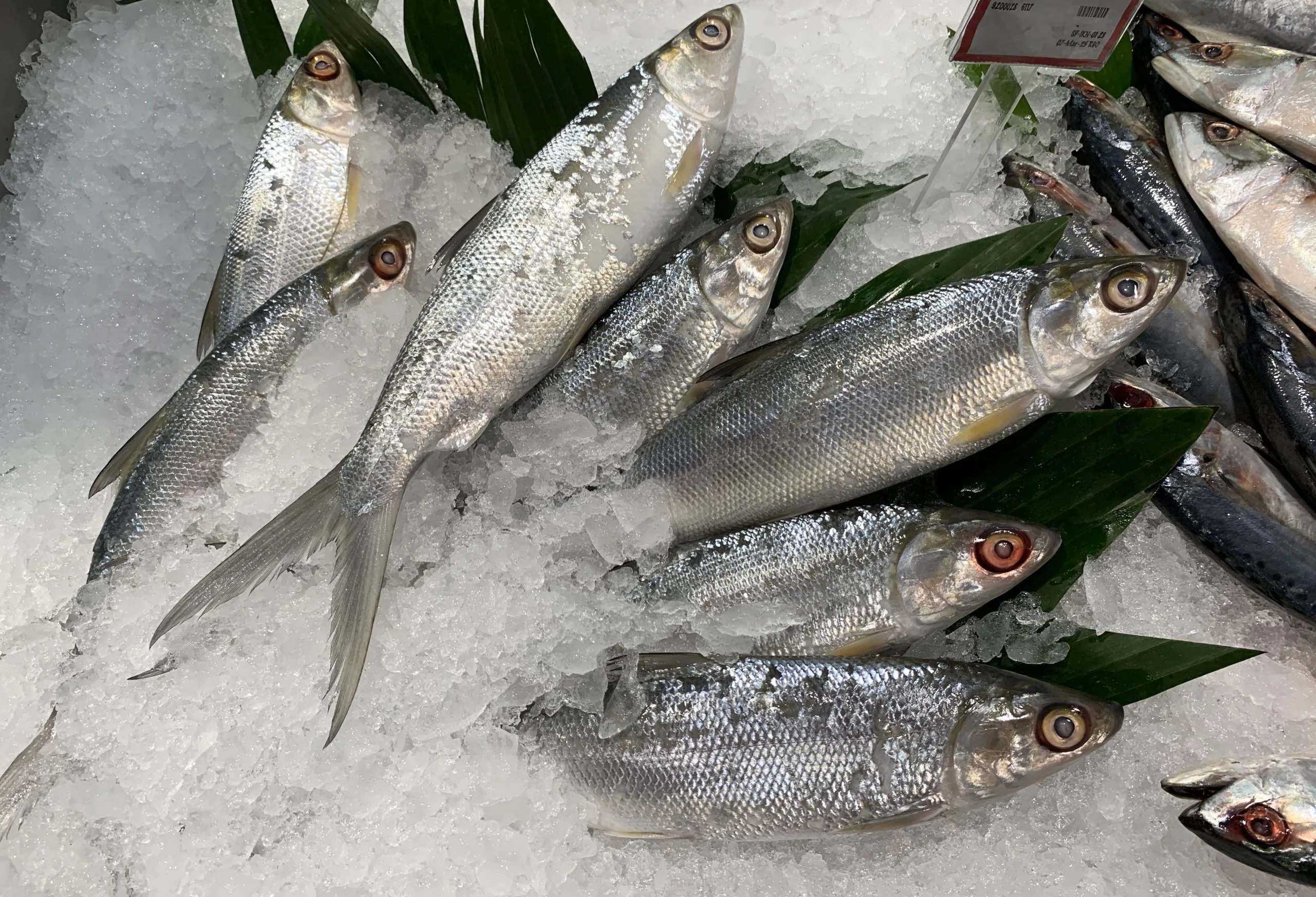
 Download PDF
Market Overview
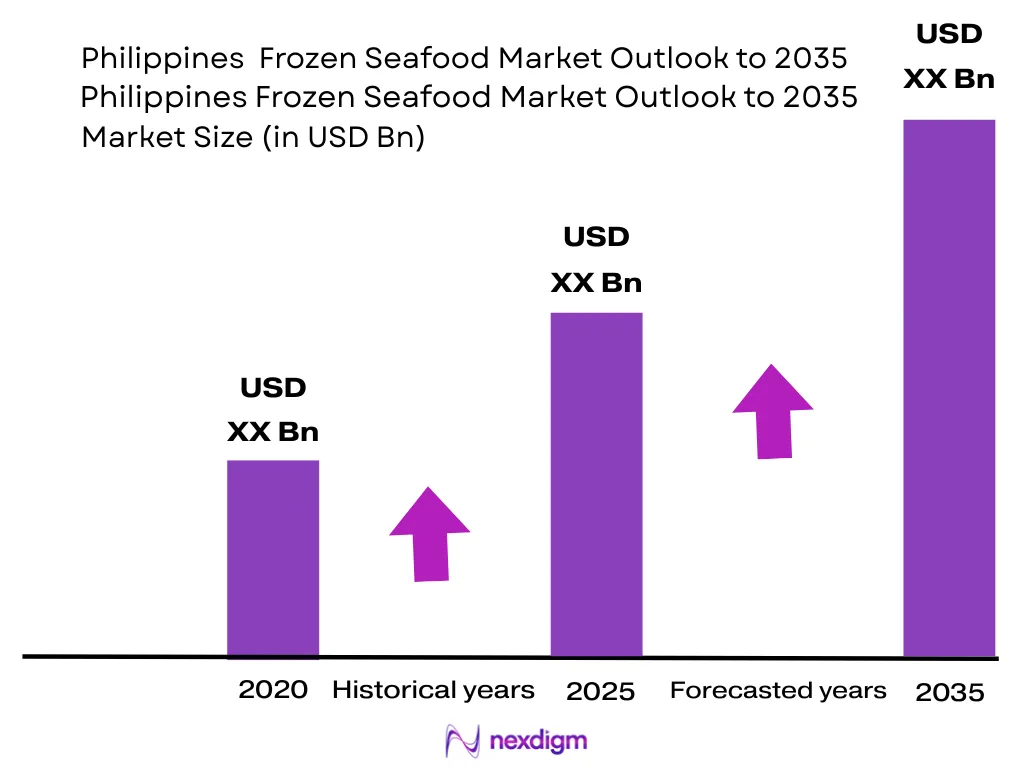
Philippines Frozen Seafood Market is supported by a seafood retail base valued at USD ~ billion, rising from USD ~ billion, with frozen products driven by skipjack, mackerel, anchovies, shrimp, squid, tuna loins and processed seafood. Imports reached Can ~ million, led by frozen skipjack at Can ~ million, frozen mackerel at Can ~ million and frozen anchovies at Can ~ million, supporting processors, wet markets and foodservice buyers. Metro Manila dominates because it concentrates supermarkets, wet markets, restaurants, import distribution, cold stores and foodservice procurement. General Santos dominates tuna processing due to tuna landings, frozen loins and export plants, while Zamboanga dominates sardine and small pelagic processing. Fisheries output reached 1.17 million metric tons before moderating to 1.07 million metric tons, while commercial fisheries output moved from 186.46 thousand metric tons to 157.68 thousand metric tons, reinforcing supply-chain reliance on processing hubs.
Market Segmentation
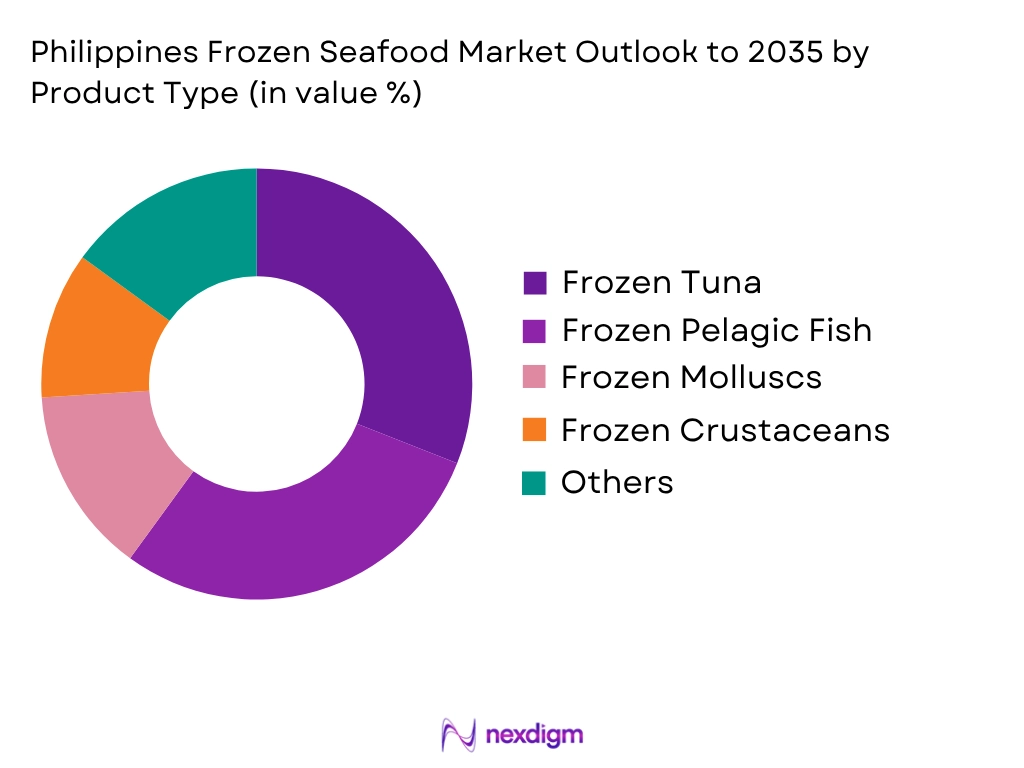
By Product Type
Philippines Frozen Seafood Market is segmented by product type into frozen skipjack and tuna, frozen small pelagic fish, frozen crustaceans, frozen molluscs, and value-added frozen seafood. Recently, frozen skipjack and tuna have a dominant market share under the product type segmentation because the Philippines is one of Asia’s most important tuna-processing centres, with General Santos serving as a major tuna hub for canning, frozen loins, and export-oriented seafood. Frozen skipjack is especially important because it is used by processors as raw material and by traders as an import-based supply stabilizer. Agriculture and Agri-Food Canada identifies frozen skipjack as the Philippines’ largest fish and seafood import in 2024, valued at Can ~ million, ahead of frozen mackerel and frozen anchovies. Frozen small pelagic fish such as mackerel, galunggong, anchovies, sardines and bonito are also important because they are widely consumed by households and wet-market buyers.
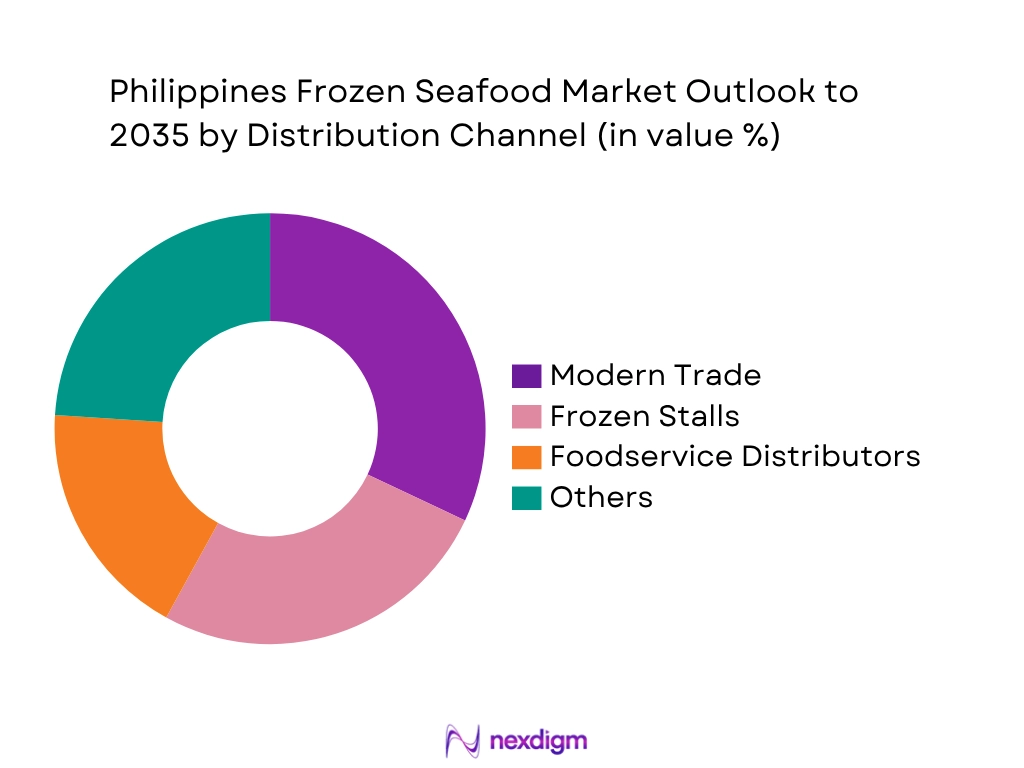
By Distribution Channel
Philippines Frozen Seafood Market is segmented by distribution channel into wet markets, fish processors, supermarkets and hypermarkets, foodservice distributors, and online grocery/direct-to-consumer seafood platforms. Recently, wet markets have a dominant market share under the distribution channel segmentation because Filipino households continue to rely heavily on traditional fish retailing for daily seafood purchases, including galunggong, mackerel, sardines, squid, shrimp, milkfish and tilapia. Wet markets are also central to frozen seafood because imported frozen fish is frequently thawed, iced, cut, and sold in smaller household quantities. Fish processors form the next major channel because frozen skipjack, tuna, mackerel, anchovies and sardines are used by canneries and value-added seafood plants. Supermarkets are growing in Metro Manila, Cebu, Davao and CALABARZON due to packaged shrimp, squid rings, seafood mixes, frozen fillets and ready-to-cook products, but traditional retail remains more important for mass seafood consumption.
Competitive Landscape
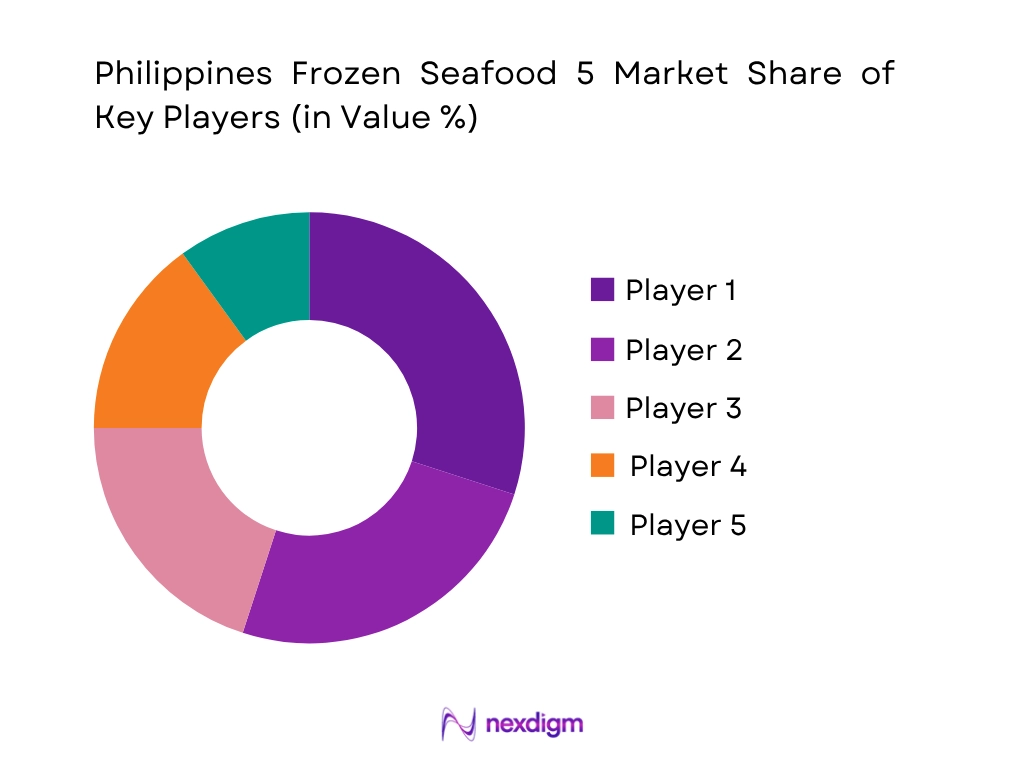
Philippines Frozen Seafood Market is led by a mix of tuna processors, sardine companies, aquaculture-linked seafood brands, frozen seafood exporters and foodservice distributors. Century Pacific Food, General Tuna Corporation, Alliance Select Foods International, Frabelle Fishing Corporation and Mega Global Corporation are important because they participate in tuna processing, canned seafood, frozen raw material procurement, domestic distribution and export-linked seafood manufacturing. The competitive structure is shaped by access to fish landings, frozen skipjack imports, cold-chain infrastructure, BFAR-approved facilities, export certification, wet-market distribution and supermarket freezer presence.
| Company | Establishment Year | Headquarters | Core Frozen Seafood Portfolio | Processing Capability | Channel Strength | Species Focus | Compliance Position | Strategic Advantage |
| Century Pacific Food | 1978 | Pasig City | ~ | ~ | ~ | ~ | ~ | ~ |
| General Tuna Corporation | 1999 | General Santos | ~ | ~ | ~ | ~ | ~ | ~ |
| Alliance Select Foods International | 2003 | Pasig City | ~ | ~ | ~ | ~ | ~ | ~ |
| Frabelle Fishing Corporation | 1966 | Navotas | ~ | ~ | ~ | ~ | ~ | ~ |
| Mega Global Corporation | 1975 | Zamboanga | ~ | ~ | ~ | ~ | ~ | ~ |
Philippines Frozen Seafood Market
Growth Drivers
Strong Fisheries Output Supporting Frozen Seafood Processing
Philippines Frozen Seafood Market is supported by a large domestic fisheries base that feeds wet markets, tuna canneries, sardine processors, supermarket freezers, foodservice suppliers and export-oriented seafood plants. The Philippine Statistics Authority recorded fisheries production of 987.19 thousand metric tons in the first quarter, 1.02 million metric tons in the second quarter, 0.97 million metric tons in the third quarter and 1.07 million metric tons in the fourth quarter of 2024. These volumes are directly relevant to frozen seafood because seasonal catch fluctuations push processors and distributors to use frozen inventory, cold-store holding and imported supply buffers. The World Bank records the Philippines’ GDP at USD 461.62 billion and GDP per capita at USD 3,984.8 in 2024, showing a large food economy where seafood remains a regular protein category. IMF records the Philippines’ population at 115.3 million in 2026, reinforcing continued demand pressure for frozen tuna, mackerel, galunggong, sardines, shrimp, squid and value-added seafood.
Frozen Fish Imports Stabilizing Processor and Wet-Market Supply
Philippines Frozen Seafood Market is driven by the use of frozen imports to stabilize wet-market supply and support processors during fishing restrictions, weather disruptions and domestic catch volatility. The Department of Agriculture authorized 30,000 MT of small pelagic fish imports in 2024, covering frozen galunggong, bigeye scad, mackerel, bonito and moonfish for the closed fishing season across northeast Palawan, the Visayan Seas and Zamboanga Peninsula. The same approval was adjusted from an original request of 35,000 MT, reflecting active supply calibration through BFAR and the National Fisheries and Aquatic Resources Management Council. The Department of Agriculture later approved an additional 8,280 MT of frozen fish after typhoon-related supply disruption, with 280 MT allocated for KADIWA ng Pangulo centers. This import mechanism supports processors, wet-market traders and institutional buyers that require stable fish availability. The World Bank records GDP of USD 461.62 billion and GDP per capita of USD 3,984.8 in 2024, indicating the macroeconomic base for large-volume food distribution.
Market Challenges
Domestic Catch Volatility Affecting Frozen Seafood Planning
Philippines Frozen Seafood Market faces a supply-planning challenge because domestic fisheries output remains volatile across quarters and subsectors. The Philippine Statistics Authority recorded total fisheries production of 1.07 million metric tons in the fourth quarter of 2024, compared with 1.17 million metric tons in the same quarter of 2023. It also recorded 0.97 million metric tons in the third quarter of 2024 and 1.02 million metric tons in the same quarter of 2023. This matters for frozen seafood because processors, canneries, wet-market traders and foodservice suppliers depend on predictable raw material availability for tuna, galunggong, mackerel, sardines, anchovies, shrimp and squid. When domestic output softens, frozen inventory becomes more important, but cold storage, import approvals and procurement timing become harder to manage. The World Bank records the Philippines’ GDP at USD 461.62 billion and GDP per capita at USD 3,984.8 in 2024, showing that even a large consumer economy can face protein-supply stress when fish output fluctuates.
Closed Fishing Seasons and Weather Shocks Increasing Import Dependence
Philippines Frozen Seafood Market is challenged by regulatory closures and weather shocks that require frozen fish import intervention. The Department of Agriculture authorized 30,000 MT of frozen small pelagic imports in 2024 for the closed fishing season covering northeast Palawan, the Visayan Seas and Zamboanga Peninsula. The imported species included galunggong, bigeye scad, mackerel, bonito and moonfish, all directly relevant to wet-market and household seafood demand. The same source states the approved volume was reduced from an initial 35,000 MT request, showing that import planning must balance fisher protection with consumer supply. After typhoons Kristine, Leon, Marce, Nika, Ofel and Pepito, the Department of Agriculture approved another 8,280 MT of frozen fish, with arrivals required by January 30, 2025. This creates operational uncertainty for importers, cold stores and traders because supply windows are policy-dependent. The World Bank records a national GDP of USD 461.62 billion in 2024, making food-supply continuity important for a large domestic economy.
Market Opportunities
Value-Added Frozen Seafood for Urban Retail and Foodservice
Philippines Frozen Seafood Market has an opportunity in value-added frozen seafood because domestic fisheries output and import-backed supply provide raw material for fillets, seafood mixes, fish balls, breaded fish, tuna loins, shrimp packs, squid rings and ready-to-cook formats. The Philippine Statistics Authority recorded quarterly fisheries production of 987.19 thousand metric tons, 1.02 million metric tons, 0.97 million metric tons and 1.07 million metric tons across 2024, creating a broad raw-material base for processing despite seasonal volatility. Import-backed supply also supports this opportunity, with the Department of Agriculture approving 30,000 MT of frozen small pelagic fish imports and a later 8,280 MT augmentation after typhoon-related disruptions. The World Bank records the Philippines’ GDP at USD 461.62 billion and GDP per capita at USD 3,984.8 in 2024, while IMF records population at 115.3 million in 2026. These indicators point to a large consumer base for packaged seafood in Metro Manila, Cebu, Davao, CALABARZON and General Santos. Operators can build future growth through branded frozen portions, supermarket SKUs and foodservice-ready packs.
Cold-Chain and Regional Hub Expansion Across Island Markets
Philippines Frozen Seafood Market has an opportunity in cold-chain and regional hub expansion because the country’s island geography requires reliable storage and reefer movement for seafood from fish ports, import entry points, tuna plants, sardine clusters, wet markets and supermarkets. The Philippine Statistics Authority recorded 1.07 million metric tons of fisheries production in the fourth quarter of 2024, while first-quarter output was 987.19 thousand metric tons, showing large quarterly product movement that must be handled through ice plants, cold stores and freezer logistics. The Department of Agriculture’s 30,000 MT frozen small pelagic import approval and subsequent 8,280 MT augmentation also show that imported frozen fish must be landed, stored and distributed quickly during closed seasons and weather shocks. The World Bank records GDP at USD 461.62 billion and GDP per capita at USD 3,984.8 in 2024, while IMF records population at 115.3 million in 2026. This supports future growth for cold stores in Metro Manila, General Santos, Zamboanga, Cebu, Davao and CALABARZON.
Future Outlook
Over the next phase, Philippines Frozen Seafood Market is expected to grow through tuna processing, frozen small pelagic imports, aquaculture-based frozen products, supermarket freezer expansion and foodservice recovery. The market will remain linked to domestic fisheries output, closed fishing season policies, BFAR import approvals, cold-chain availability and processor demand for frozen raw material. Frozen skipjack, mackerel, anchovies, galunggong, tuna loins, shrimp, squid, milkfish, tilapia and seafood mixes will remain key commercial categories. The country’s fish and seafood market is forecast to grow at 4.40% CAGR during 2026–2034, which is used as the closest available country-level proxy for the 2026–2035 frozen seafood outlook.
Major Players
- Century Pacific Food
- General Tuna Corporation
- Alliance Select Foods International
- Frabelle Fishing Corporation
- RD Fishing Group
- Mega Global Corporation
- Permex Producer and Exporter Corporation
- Celebes Canning Corporation
- Phil-Union Frozen Foods
- Fisher Farms
- Mida Food Distributors
- Seachamp International Export Corporation
- Alsons Aquaculture Corporation
- RDEX Food International
- Foodsphere Inc.
Key Target Audience
- Frozen seafood processors
- Tuna processors and canneries
- Sardine processors and small pelagic fish processors
- Seafood importers and exporters
- Supermarket and hypermarket category teams
- Foodservice distributors and HoReCa procurement teams
- Investments and venture capitalist firms
- Government and regulatory bodies, including Bureau of Fisheries and Aquatic Resources, Department of Agriculture, Philippine Statistics Authority, Philippine Fisheries Development Authority, Bureau of Customs, Food and Drug Administration Philippines
Research Methodology
Step 1: Identification of Key Variables
The initial phase involves constructing an ecosystem map of Philippines Frozen Seafood Market, covering fishers, aquaculture producers, importers, tuna processors, sardine processors, cold-chain operators, wet-market traders, supermarkets and regulators. The key variables include frozen fish imports, domestic fisheries output, product format, processor demand, channel flow, regional clusters and cold-chain availability.
Step 2: Market Analysis and Construction
In this phase, historical and current data is compiled from PSA fisheries statistics, BFAR-linked sources, trade references, company profiles, import data and distributor mapping. The analysis covers frozen skipjack, tuna, mackerel, galunggong, sardines, anchovies, shrimp, squid, mussels and value-added frozen seafood products.
Step 3: Hypothesis Validation and Expert Consultation
Market hypotheses are developed and validated through interviews with seafood processors, importers, wet-market distributors, supermarket buyers, cold-chain operators, foodservice procurement teams and export-oriented manufacturers. These consultations validate assumptions on dominant species, import dependency, channel movement, regional demand, processing requirements and frozen format adoption.
Step 4: Research Synthesis and Final Output
The final phase integrates top-down seafood production and import indicators with bottom-up company, channel and product-level intelligence. This process validates segmentation, competitive structure, growth outlook and strategic recommendations for investors, processors, retailers, distributors, foodservice suppliers and policy-linked stakeholders in Philippines Frozen Seafood Market.

- Executive Summary
- Research Methodology (Market Definitions and Assumptions, Abbreviations, Frozen Seafood Scope, Product Inclusion and Exclusion, Market Sizing Approach, Top-Down Fisheries Supply Assessment, Bottom-Up Processor and Channel Mapping, Import-Volume Triangulation, Retail and Wet-Market Checks, Primary Interviews with Processors/Importers/Cold-Chain Operators/Distributors, Limitations and Forecast Assumptions)

- Definition and Scope
- Market Genesis
- Business Cycle
- Supply Chain and Value Chain Analysis

- Growth Drivers (High Fish Consumption, Tuna Processing Hub, Small Pelagic Demand, Frozen Import Stabilization, Aquaculture Supply, Supermarket Freezer Penetration, HoReCa Demand, Export Processing Capability)
- Market Challenges (Fisheries Production Volatility, Closed Fishing Seasons, Illegal Fishing Risk, Cold-Chain Gaps, Import Permit Delays, Wet-Market Fragmentation, Climate Events, Port and Logistics Bottlenecks)
- Market Opportunities (Frozen Tuna Raw Material, Value-Added Seafood, Aquaculture Processing, Supermarket Freezer Growth, Online Seafood Delivery, Cold-Chain Investment, Regional Processing Hubs, Export-Grade Seafood)
- Market Trends (Frozen Galunggong Imports, Tuna Raw Material Demand, Sardine Processing Clusters, Supermarket Seafood Packs, Ready-to-Cook Fish, Aquaculture Branding, Seafood E-Commerce, Traceability)
- Government Regulation (BFAR Registration, SPS Import Clearance, DA Import Orders, Closed Fishing Season Policy, Bureau of Customs Clearance, FDA Food Safety Compliance, Fisheries Administrative Orders, Export Certification)
- SWOT Analysis
- Stakeholder Ecosystem
- Porter’s Five Forces Analysis
- PESTLE Analysis
- Competition Ecosystem

- By Value (2020-2025)
- By Volume (2020-2025)
- By Imported Frozen Seafood Value (2020-2025)

- By Product Type (In Value %)
Frozen Skipjack and Tuna
Frozen Mackerel
Frozen Galunggong
Frozen Sardines and Anchovies
Frozen Shrimp and Prawns - By Distribution Channel (In Value %)
Wet Markets
Fish Ports and Wholesale Markets
Supermarkets and Hypermarkets
Foodservice Distributors
Processor Direct Procurement - By End User (In Value %)
Households
Tuna Processors and Canneries
Sardine and Small Pelagic Processors
Foodservice and HoReCa
Supermarket and Modern Retail Buyers - By Product Format (In Value %)
Whole Round Frozen Fish
Frozen Tuna Loins and Blocks
Frozen Fillets and Portions
Frozen Shrimp Formats
Frozen Squid and Cephalopod Formats

- Market Share of Major Players (Value Share, Volume Share, Tuna Processing Share, Sardine Processing Share, Frozen Retail Share, Export Processing Share, Foodservice Share)
- Cross Comparison Parameters (Tuna/Skipjack/Mackerel/Galunggong/Sardines/Shrimp/Squid/Milkfish; Processing Capability: Canning/Freezing/Filleting/IQF/Retort/Frozen Loins; Raw Material Access: Domestic Landings/Imports/Aquaculture/Fish Port Procurement; Cold-Chain Footprint: Cold Stores/Ice Plants/Reefer Trucks/Port Facilities; Channel Presence: Wet Market/Supermarket/Foodservice/Export/Online; Regulatory Compliance: BFAR Registration/HACCP/SPSIC/FDA/Export Certification; Regional Strength: Metro Manila/General Santos/Zamboanga/Cebu/Davao/CALABARZON; Value-Added Capability: Fish Balls/Breaded Seafood/Seafood Mix/Marinated Packs/Private Label)
- SWOT Analysis of Major Players
- Pricing Analysis Basis SKUs
- Detailed Profiles of Major Companies
Century Pacific Food
General Tuna Corporation
Alliance Select Foods International
Frabelle Fishing Corporation
RD Fishing Group
Mega Global Corporation
Permex Producer and Exporter Corporation
Celebes Canning Corporation
Phil-Union Frozen Foods
Fisher Farms
Mida Food Distributors
Seachamp International Export Corporation
Alsons Aquaculture Corporation
RDEX Food International
Foodsphere Inc.

- Household Demand Analysis
- Wet-Market Trader Analysis
- Tuna Processor and Cannery Analysis
- Sardine Processor Analysis
- Foodservice and HoReCa Analysis
- Supermarket Buyer Analysis

- By Value (2026-2035)
- By Volume (2026-2035)
- By Imported Frozen Seafood Value (2026-2035)


 Request a Sample
 Ask for Customization
 Get a Quote
 Enquire Now