
 Download PDF
Market Overview
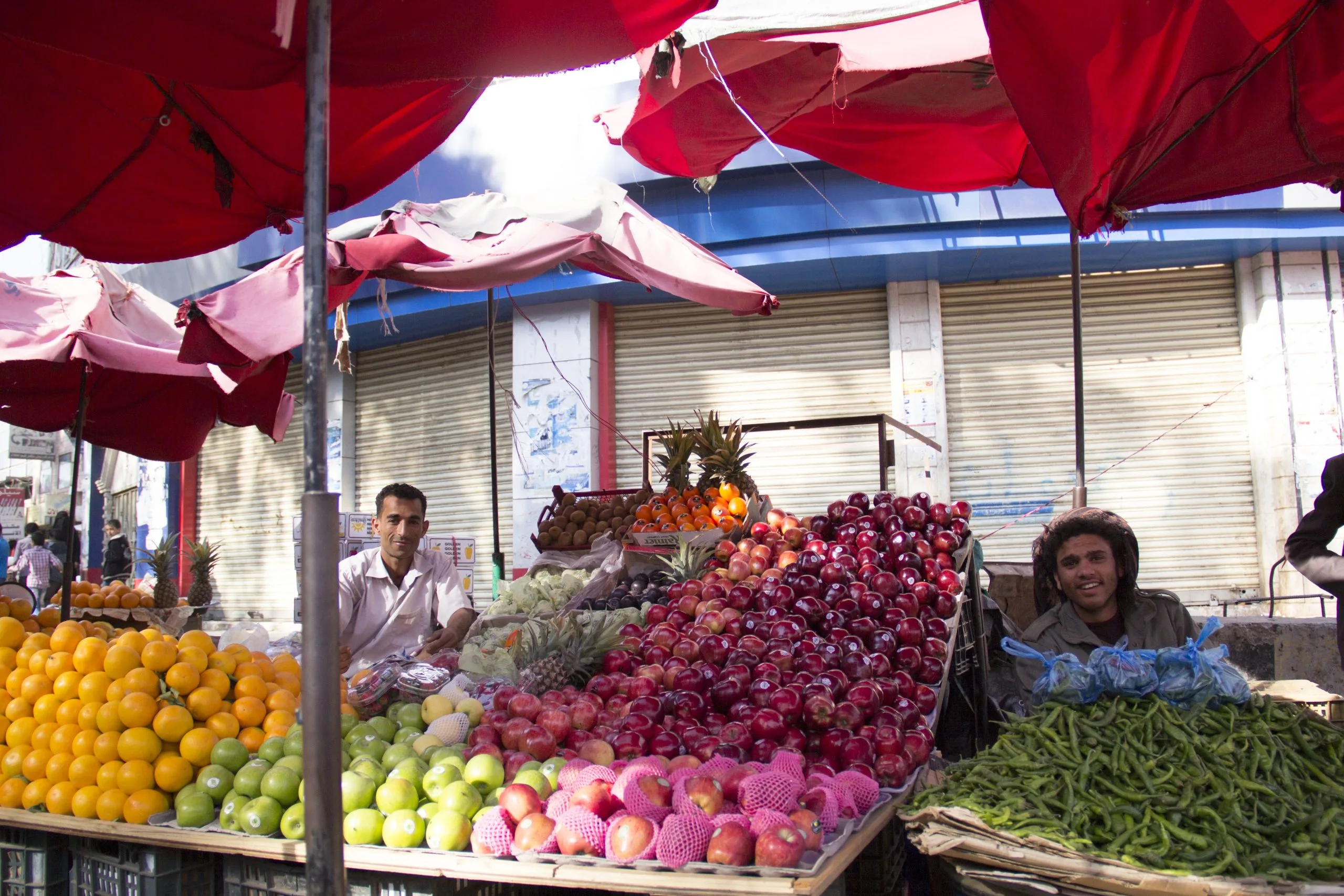
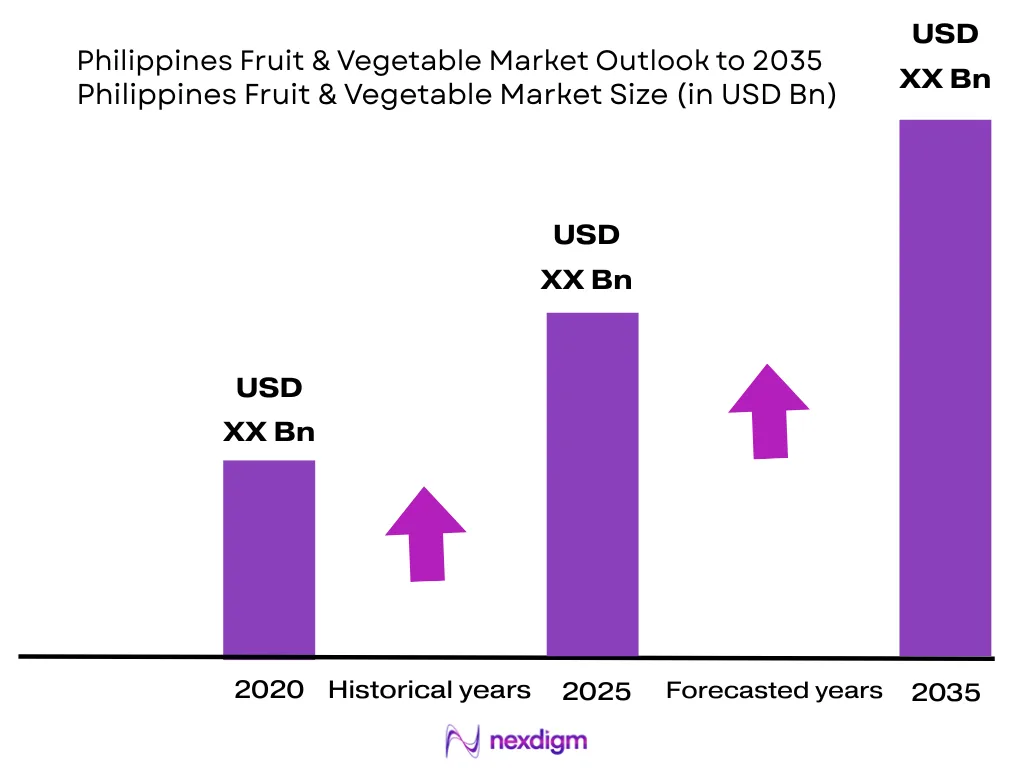
The Philippines Fruit & Vegetable Market is valued at USD ~ billion, based on a five-year historical analysis, with the published base trajectory showing USD 5.5 billion in the next reported market year and a forecast to reach USD 9.7 billion at 6.56% CAGR. Demand is driven by nutrition-led food consumption, tropical fruit exports, supermarket fresh-produce assortment, and agricultural technology adoption. Major fruit production averaged 12.7 million MT, while fresh fruit imports reached USD 321 million, highlighting both domestic scale and import dependency. Metro Manila, CALABARZON, Central Luzon, Cebu, Davao, Northern Mindanao, and SOCCSKSARGEN dominate the Philippines Fruit & Vegetable Market due to their combined roles as demand centers, plantation belts, import distribution hubs, and wholesale aggregation corridors. NCR’s population base reached about 14.0 million, Davao Region reached 5.39 million, and the national population reached 112.73 million, supporting large daily wet-market and supermarket consumption. Mindanao dominates export-oriented banana and pineapple supply, while Luzon leads highland vegetables and urban retail absorption.
Market Segmentation
By Product Type
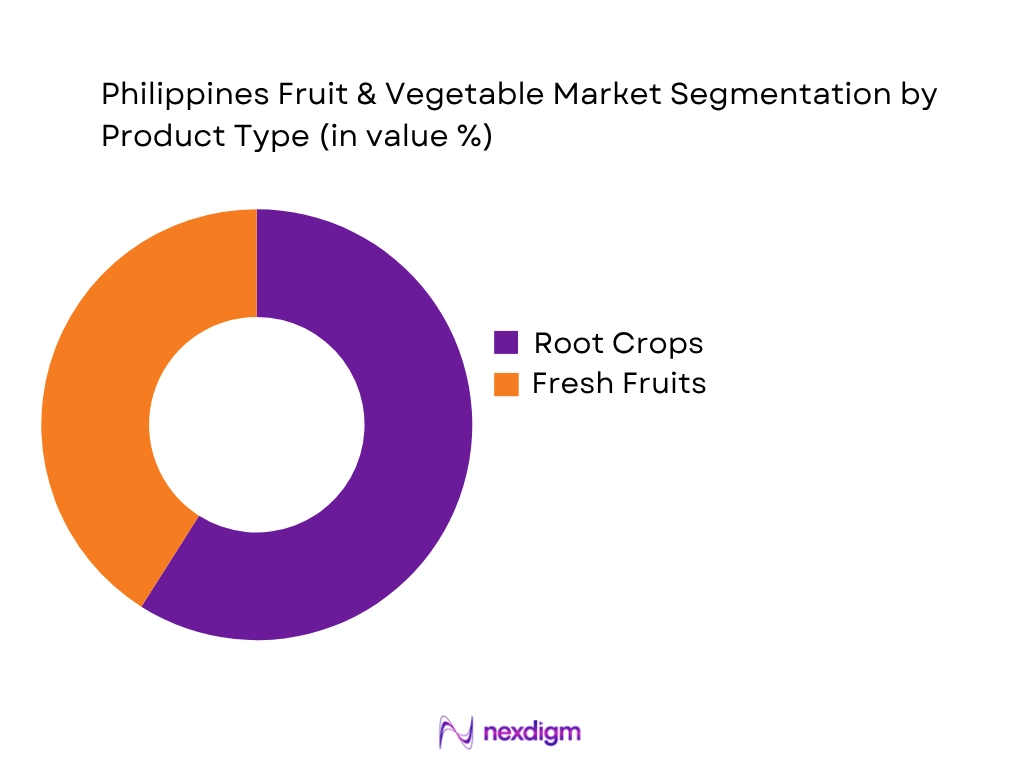
The Philippines Fruit & Vegetable Market is segmented by product type into vegetables & root crops and fresh fruits. Recently, vegetables & root crops have a dominant market share in the Philippines under the segmentation product type, due to the frequency of household purchase, daily cooking relevance, and higher SKU diversity across wet markets, supermarkets, and foodservice procurement. Core vegetables such as tomato, eggplant, cabbage, potato, sweet potato, cassava, ampalaya, and onions are consumed in recurring household meals, unlike several fruits that are more seasonal or occasion-led. PSA’s crop survey system tracks vegetables and root crops across a larger crop base, while major fruit bulletins focus on banana, mango, pineapple, and calamansi. This broader basket and higher repeat-purchase behavior support vegetables’ stronger market weight.
By Distribution Channel
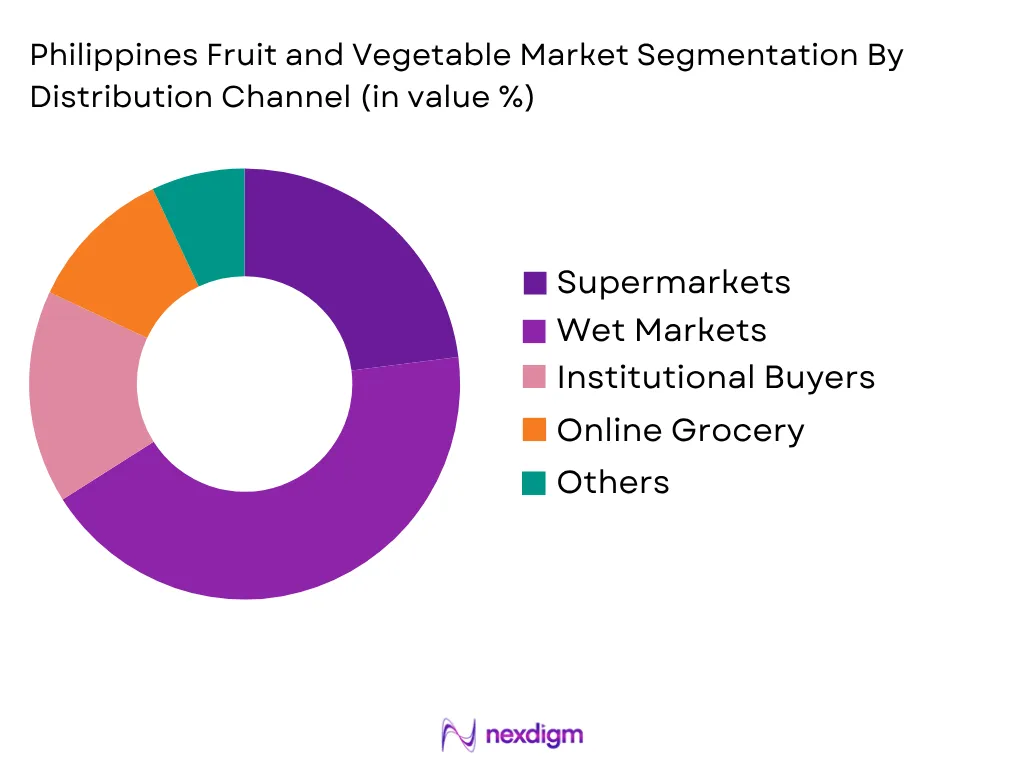
The Philippines Fruit & Vegetable Market is segmented by distribution channel into wet markets & traditional retail, supermarkets/hypermarkets, HoReCa & institutional buyers, online grocery & agri-marketplaces, and export/direct B2B channels. Recently, wet markets & traditional retail have a dominant market share in the Philippines under the segmentation distribution channel, due to daily fresh-food shopping habits, proximity to residential areas, price bargaining, loose-pack purchasing, and the ability to buy small quantities. USDA notes that wet markets sell fruits and vegetables at ambient temperature, while major supermarket chains dominate organized retail but account for only a smaller portion of total food sales because traditional outlets remain highly relevant. Modern retail is growing in key cities, but wet markets remain central for vegetables, root crops, and loose tropical fruits.
Competitive Landscape
The Philippines Fruit & Vegetable Market is moderately fragmented across plantation-led fruit exporters, domestic produce aggregators, supermarket fresh-produce programs, import distributors, and digital farm-to-market platforms. Large integrated fruit companies dominate exportable crops such as banana and pineapple, while vegetables remain more dispersed across smallholders, cooperatives, viajeros, bagsakan wholesalers, and wet-market traders. Modern retailers and agri-platforms are gaining influence through graded produce, cold-chain handling, and direct farmer sourcing.
| Company | Establishment Year | Headquarters | Core Produce Focus | Supply Model | Channel Reach | Cold-Chain/Packhouse Capability | Export Orientation | Market Positioning |
| Dole Philippines, Inc. | 1963 | Polomolok, South Cotabato | ~ | ~ | ~ | ~ | ~ | ~ |
| Del Monte Philippines, Inc. | 1926 | Taguig / Bukidnon operations | ~ | ~ | ~ | ~ | ~ | ~ |
| Sumifru Philippines Corporation | 1970s | Makati / Mindanao operations | ~ | ~ | ~ | ~ | ~ | ~ |
| Lapanday Foods Corporation | 1986 | Davao City | ~ | ~ | ~ | ~ | ~ | ~ |
| AgriNurture, Inc. | 1997 | Muntinlupa City | ~ | ~ | ~ | ~ | ~ | ~ |
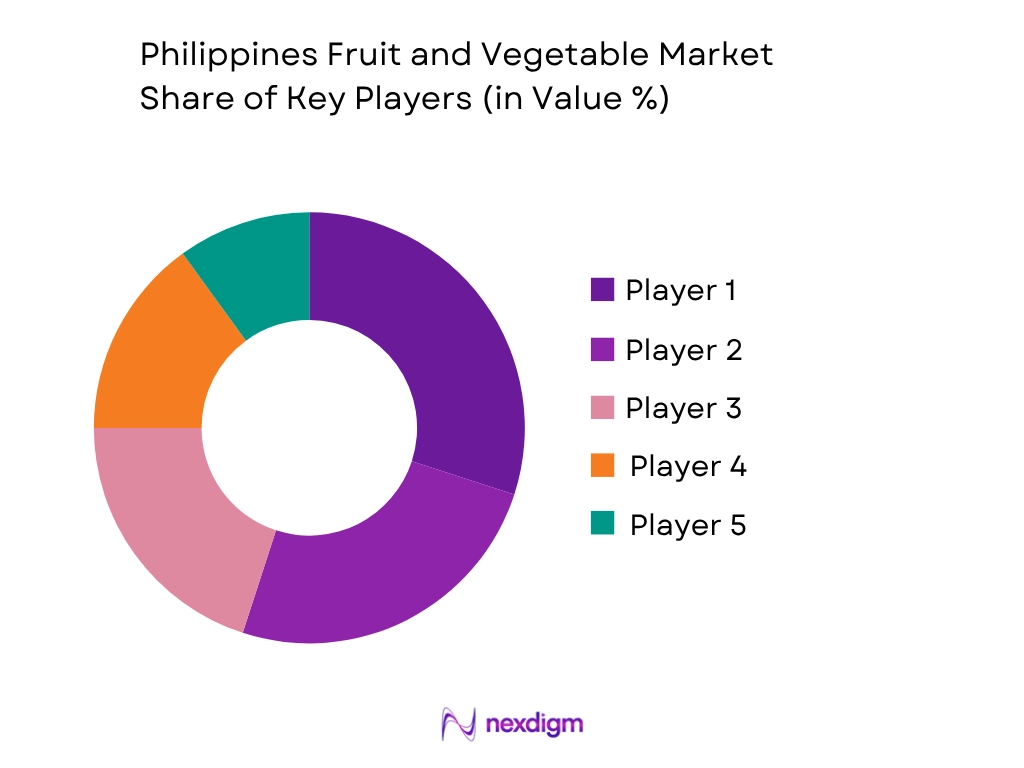
Philippines Fruit and Vegetable Market Analysis
Growth Drivers
Rising Urban Consumption Base Supporting Daily Fresh Produce Demand
The Philippines fruit and vegetable market is supported by a large consumer base and expanding urban food consumption. The World Bank reports the Philippines’ population at 115,843,670 people and GDP at USD 461.62 billion in 2024, while household final consumption expenditure reached USD 351,500,468,925 in 2024, giving retailers, wet markets, supermarkets, and foodservice buyers a broad demand base for fresh produce. Urban demand is particularly important because World Bank-linked data reports 56,316,242 urban residents in 2024, strengthening consumption in Metro Manila, CALABARZON, Cebu, Davao, and other city corridors. These urban consumers support higher throughput of vegetables, bananas, pineapples, mangoes, imported fruits, and packed fresh produce.
Strong Regional Crop Production Base Across Fruit and Vegetable Belts
The Philippines fruit and vegetable market is driven by established production belts in Mindanao, Luzon, and regional crop clusters. Davao Region produced 3,382,309.91 metric tons of fruit crops in 2024, confirming its role as a core supply base for bananas and other tropical fruits. Northern Mindanao recorded 3.5 million metric tons of major crop production in the first quarter of 2024, including 918.0 thousand metric tons of fruit crops, with Bukidnon alone contributing 740.8 thousand metric tons. National crop tracking by PSA covers banana, mango, pineapple, calamansi, mongo, potato, cabbage, eggplant, tomato, ampalaya, onion, sweet potato, and cassava, giving the market a diversified production structure rather than dependence on a single crop.
Market Challenges
Climate Shocks Disrupting High-Value Crop Supply
The Philippines fruit and vegetable market faces supply instability from El Niño, typhoons, heavy rainfall, flooding, and crop diseases. The Department of Agriculture reported El Niño-related agricultural damage of PHP 15.3 billion, including high-value crop damage of PHP 3.27 billion and cassava damage of PHP 55.63 million in 2024. A separate government-linked release recorded 784,344 metric tons of damaged crops across 270,855 hectares of agricultural land after El Niño conditions ended in 2024. This directly affects vegetables, cassava, fruit crops, and other high-value crops because production depends on stable rainfall, irrigation, farm access roads, and postharvest movement from rural farms to urban demand centers.
Fragmented Production and Regional Crop Declines Affecting Consistent Supply
The Philippines fruit and vegetable market remains exposed to uneven crop performance across provinces and regions. In Cagayan, other crops production reached 370,177.44 metric tons in 2024, but selected fruit crops showed pressure, including banana at 64,027.59 metric tons, pineapple at 18,791.41 metric tons, watermelon at 6,350.65 metric tons, and calamansi at 2,386.34 metric tons. In CAR, banana production reached only 17,777.77 metric tons in 2024, its lowest annual level in the regional series cited by PSA. These figures show that even with strong national demand, supply planning is complicated by region-specific crop cycles, disease exposure, farmer fragmentation, and climate sensitivity.
Market Opportunities
Cold-Chain, Packhouse, and Aggregation Opportunity for Perishable Produce
The Philippines fruit and vegetable market has a clear opportunity in cold-chain logistics, packhouses, sorting, grading, and organized aggregation because fresh produce output is large but remains highly perishable. Davao Region alone produced 3,382,309.91 metric tons of fruit crops in 2024, while Northern Mindanao produced 918.0 thousand metric tons of fruit crops in the first quarter of 2024. The World Bank reports agriculture, forestry, and fishing value added at USD 41,926,533,970 in 2024, confirming the macroeconomic relevance of farm-linked value chains. These figures support future investment in pre-cooling, reefer movement, reusable crates, packhouses, and quality-controlled supply to supermarkets, HoReCa buyers, exporters, and online grocery platforms.
Premium Fresh Fruit Imports and Urban Retail Assortment Expansion
The Philippines fruit and vegetable market has future growth opportunity in premium fruits, imported fruits, and organized urban retail assortments. USDA FAS reports that U.S. fresh fruit exports to the Philippines were less than USD 14 million in 2024, covering categories such as apples, grapes, oranges, plums, cherries, strawberries, nectarines, peaches, blueberries, and cranberries. The World Bank reports GDP per capita at USD 3,984.8 and GNI per capita at USD 4,470 in 2024, while urban population reached 56,316,242 people. These indicators support future expansion of premium fruit shelves, packed fruit SKUs, imported citrus, berries, grapes, and higher-grade fresh produce in Metro Manila, Cebu, Davao, and supermarket-led urban channels.
Future Outlook
Over the forecast period, the Philippines Fruit & Vegetable Market is expected to expand at a 6.56% CAGR, supported by rising household demand for nutritious food, expanding fresh fruit imports, higher modern retail penetration, and the continued export relevance of bananas, pineapples, and mangoes. Growth will also be shaped by cold-chain investment, packhouse modernization, digital produce procurement, and stronger demand from foodservice and institutional buyers. However, typhoon damage, high postharvest losses, crop diseases, port delays, and price volatility in onions and vegetables will remain structural restraints. IMARC’s published trajectory places the market at USD 9.7 billion by the end of its forecast window, while USDA data shows fresh fruit imports already at USD 321 million, signaling continuing premiumization and import dependence.
Major Players
- Dole Philippines, Inc.
- Del Monte Philippines, Inc.
- Sumifru Philippines Corporation
- Lapanday Foods Corporation
- Tagum Agricultural Development Company, Inc.
- Unifrutti Tropical Philippines, Inc.
- Marsman-Drysdale Agribusiness Holdings, Inc.
- AgriNurture, Inc.
- Southern Philippines Fresh Fruits Corporation
- Hi-Las Marketing Corporation
- Diamond Star Agro Products, Inc.
- Mayani
- FarmyHub
- SM Markets
- Puregold Price Club, Inc.
Key Target Audience
- Fresh fruit exporters and plantation operators
- Vegetable aggregators and bagsakan wholesalers
- Supermarket and hypermarket fresh-produce category heads
- Online grocery and agri-marketplace operators
- Cold-chain logistics, packhouse, and reefer transport companies
- Foodservice, hotel, restaurant, and institutional procurement heads
- Investments and venture capitalist firms
- Government and regulatory bodies — Department of Agriculture, Bureau of Plant Industry, National Plant Quarantine Services Division, Philippine Statistics Authority, Department of Trade and Industry, Food and Drug Administration Philippines
Research Methodology
Step 1: Identification of Key Variables
The initial phase involves constructing an ecosystem map for the Philippines Fruit & Vegetable Market, covering farmers, plantation exporters, cooperatives, viajeros, bagsakan traders, importers, supermarket chains, HoReCa buyers, online grocery platforms, and cold-chain operators. Key variables include crop output, farm-gate price, retail price, import value, export value, harvested area, yield, spoilage, cold-chain penetration, and channel margin.
Step 2: Market Analysis and Construction
In this phase, historical production and value data are compiled from PSA crop surveys, agricultural trade statistics, USDA FAS briefs, company disclosures, and retail-food channel references. The market is constructed using top-down indicators such as national fresh produce demand and bottom-up indicators such as crop-specific production, wholesale flow, retail sell-through, import landed value, and export-grade fruit movement.
Step 3: Hypothesis Validation and Expert Consultation
Market hypotheses are validated through interviews with fresh produce importers, exporters, supermarket procurement heads, wet-market wholesalers, cold-chain providers, agri-platform operators, farmers’ cooperatives, and foodservice distributors. These consultations are used to refine assumptions on channel split, shrinkage, farm-to-retail margins, premium imported fruit demand, supermarket listing criteria, and postharvest infrastructure gaps.
Step 4: Research Synthesis and Final Output
The final phase involves triangulating secondary data, primary interviews, trade flows, company benchmarking, and channel-level pricing observations. The bottom-up crop and channel model is reconciled with published market-size benchmarks to produce a validated view of the Philippines Fruit & Vegetable Market, including segmentation, competitive landscape, future outlook, target audience, and investment opportunities.

- Executive Summary
- Research Methodology (Fresh fruits, fresh vegetables, root crops, leafy vegetables, tropical fruits, import-export classification, farm-gate pricing, wholesale pricing, retail pricing, cold-chain utilization, wet-market channel mapping, modern retail sell-through, trader margin build-up, postharvest loss assumptions)

- Definition and Scope
- Market Genesis and Evolution
- Crop Production Belt Mapping
- Business Cycle and Seasonality
- Supply Chain and Value Chain Analysis

- Growth Drivers (Health and nutrition awareness, rising urban food expenditure, supermarket produce assortment, HoReCa recovery, tropical fruit export demand, digital farm-to-market models, DA high-value crop support, refrigerated logistics investment)
- Market Challenges (Postharvest loss, typhoon exposure, fragmented farms, inconsistent grading, high logistics cost, cold-chain shortage, trader dependence, pest and disease pressure, import clearance delays, price volatility)
- Opportunities (Export-grade tropical fruits, premium imported fruits, organic vegetables, GAP-certified produce, fresh-cut vegetables, cold-chain services, B2B restaurant supply, institutional procurement, agri-fintech-linked sourcing)
- Market Trends (Premium fresh produce, traceability, urban cold display, online produce baskets, farmer-direct sourcing, smaller purchase quantities, organic and pesticide-safe positioning, sustainability-linked packaging)
- SWOT Analysis
- PESTLE Analysis
- Porter’s Five Forces

- By Value (2020-2025)
- By Volume (2020-2025)
- By Average Realization Price (2020-2025)

- By Commodity Group (In Value %)
Tropical Fruits
Temperate and Imported Fruits
Lowland Vegetables
Highland Vegetables
Root Crops and Tubers
- By Product Form (In Value %)
Fresh whole produce
Sorted and graded produce
Pre-packed produce
Fresh-cut produce
Minimally processed produce - By Distribution Channel (In Value %)
Wet markets,
Bagsakan markets
Supermarkets/hypermarkets
Convenience stores
Online grocery - By Region (In Value %)
NCR demand center
CALABARZON consumption belt
Central Luzon supply-demand corridor
Cordillera highland vegetable belt
Northern Mindanao fruit and vegetable belt

- Market Share of Major Players (Domestic fresh fruit value, export fruit volume, vegetable aggregation volume, supermarket fresh produce supply, imported fruit distribution, B2B produce fulfillment)
- Cross Comparison Parameters (Commodity portfolio, farm/plantation footprint, contract grower network, export market access, cold-chain and packhouse capacity, GAP/GlobalG.A.P./food safety certification, wet-market/modern-retail/HoReCa channel reach, postharvest loss control capability)
- SWOT Analysis of Major Players
- Pricing Analysis by Key SKUs
- Detailed Profiles of Major Companies
Dole Philippines, Inc.
Del Monte Philippines, Inc.
Sumifru Philippines Corporation
Lapanday Foods Corporation
Tagum Agricultural Development Company, Inc.
Unifrutti Tropical Philippines, Inc.
Marsman-Drysdale Agribusiness Holdings, Inc.
AgriNurture, Inc.
Southern Philippines Fresh Fruits Corporation
Hi-Las Marketing Corporation
Diamond Star Agro Products, Inc.
Mayani
FarmyHub
SM Markets
Puregold Price Club, Inc.

- Household Consumption Behavior
- Modern Retail Buyer Behavior
- HoReCa and Institutional Demand
- Food Processing Demand
- Export Buyer Requirements

- By Value (2026-2035)
- By Volume (2026-2035)
- By Average Realization Price (2026-2035)


 Request a Sample
 Ask for Customization
 Get a Quote
 Enquire Now