
 Download PDF
 Download PDF
Market Overview
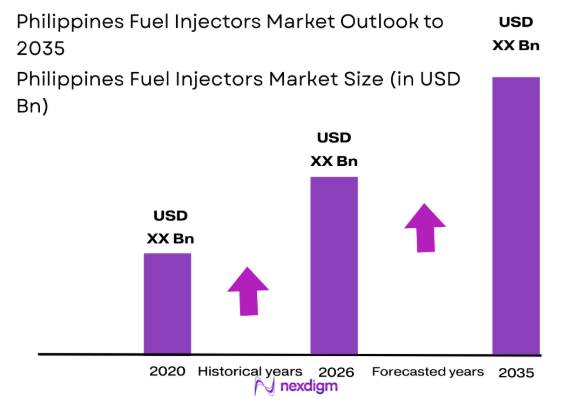
The Philippines Fuel Injectors market is poised for substantial growth, driven by the increasing demand for efficient and eco-friendly fuel systems in the automotive sector. As of a recent historical assessment, the market is valued at approximately USD ~ billion, with significant investments in technological advancements and infrastructure. Key drivers include the rising number of vehicles, stricter emission standards, and the growing preference for fuel-efficient vehicles. The market is further fueled by the expansion of vehicle manufacturing in the region and the increasing presence of global automotive players.
The Philippines is a key player in the automotive industry in Southeast Asia, with Metro Manila, Cebu, and Davao leading the demand for fuel injectors. The dominance of these cities can be attributed to their strong manufacturing bases, high vehicle ownership rates, and government policies favoring cleaner technologies. Additionally, government initiatives supporting the development of electric vehicles (EVs) and the transition to fuel-efficient vehicles further contribute to the market’s expansion. As infrastructure improves and awareness grows, the demand for advanced fuel injectors continues to rise.
Market Segmentation
By Product Type
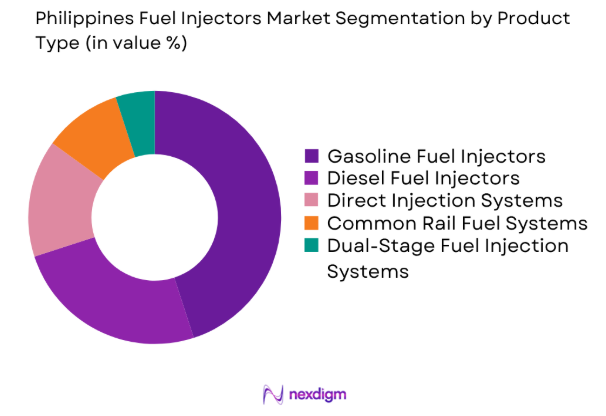
The Philippines fuel injectors market is segmented by product type into gasoline fuel injectors, diesel fuel injectors, direct injection systems, common rail fuel systems, and dual-stage fuel injection systems. Recently, gasoline fuel injectors have a dominant market share due to the increasing demand for fuel-efficient passenger vehicles and stringent emission standards. Gasoline fuel injectors are widely used across a variety of car models, including both traditional internal combustion engine (ICE) vehicles and hybrid vehicles, which further enhances their popularity. The shift towards more efficient combustion engines, alongside advancements in fuel injector technologies, has propelled gasoline injectors to the forefront of the market.
By Platform Type
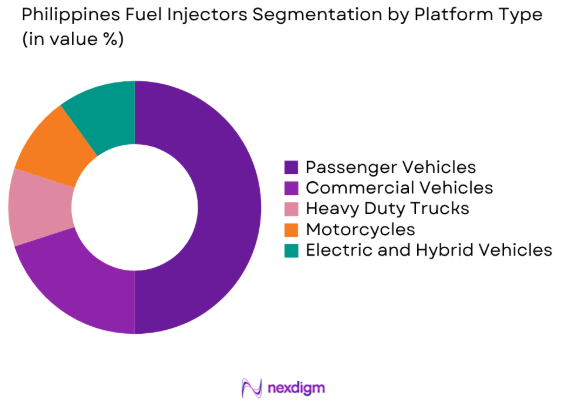
The Philippines Fuel Injectors market is segmented into passenger vehicles, commercial vehicles, heavy-duty trucks, motorcycles, and electric and hybrid vehicles. Passenger vehicles dominate the market due to their large share in vehicle sales and the widespread adoption of fuel-efficient technologies. The growing urbanization in cities like Manila, combined with the increasing number of personal vehicles, drives the demand for fuel injectors for passenger vehicles. Additionally, the growing emphasis on reducing carbon emissions and improving fuel efficiency in passenger vehicles has led to further technological advancements in fuel injectors, supporting their widespread adoption.
Competitive Landscape
The Philippines fuel injectors market is moderately competitive, with several established global players dominating the market. Leading companies are investing in innovation to provide advanced fuel injection technologies that meet the growing demand for fuel-efficient and low-emission vehicles. Mergers and acquisitions have also played a key role in the consolidation of market players, enabling them to expand their technological capabilities and geographical reach. This has led to an increase in the market influence of global players while also fostering local partnerships to meet regional demand.
| Company Name | Establishment Year | Headquarters | Technology Focus | Market Reach | Key Products | Revenue | Additional Market-Specific Parameter |
| Denso Corporation | 1949 | Japan | ~ | ~ | ~ | ~ | ~ |
| Bosch Automotive | 1886 | Germany | ~ | ~ | ~ | ~ | ~ |
| Delphi Technologies | 1994 | UK | ~ | ~ | ~ | ~ | ~ |
| Stanadyne | 1962 | USA | ~ | ~ | ~ | ~ | ~ |
| Continental AG | 1871 | Germany | ~ | ~ | ~ | ~ | ~ |
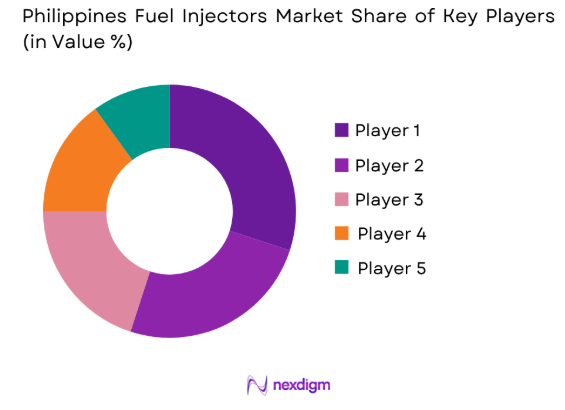
Philippines Fuel Injectors Market Analysis
Growth Drivers
Technological Advancements in Fuel Injection Systems
The growth of fuel injectors in the Philippines is driven by the rising demand for fuel-efficient vehicles and stricter emission regulations. Technological advancements, such as direct injection and common rail fuel systems, improve fuel efficiency and reduce emissions, making them appealing to both consumers and manufacturers. As the automotive industry evolves, fuel injectors with advanced features like precision, durability, and performance are becoming the preferred option. These innovations not only enhance vehicle performance but also help the industry meet stringent emission standards. Consequently, advanced fuel injectors have become crucial for compliance and are essential for the continued growth of the market.
Rising Demand for Eco-Friendly Vehicles
Another significant growth driver is the increasing demand for environmentally friendly and fuel-efficient vehicles in the Philippines. As consumers become more environmentally conscious, the demand for green technologies like hybrid and electric vehicles is growing. This shift is prompting vehicle manufacturers to adopt advanced fuel injector technologies that meet eco-friendly vehicle standards. Furthermore, government policies and incentives supporting the adoption of hybrid and electric vehicles are strengthening the demand for efficient fuel systems. These systems play a vital role in reducing fuel consumption and lowering carbon emissions. As a result, the push towards greener technologies is significantly boosting the need for advanced fuel injectors in the automotive sector.
Market Challenges
High Cost of Fuel Injectors
A major challenge in the Philippines fuel injectors market is the high cost of advanced fuel injection systems. Despite offering significant benefits in performance and fuel efficiency, the high upfront costs can deter consumers, particularly in price-sensitive markets. Maintenance costs for advanced injectors are also higher compared to traditional systems, which may limit their adoption, especially among budget-conscious segments. This challenge is particularly pronounced in the commercial vehicle sector, where fuel injector costs can account for a significant portion of the total vehicle price. As a result, the high costs of both initial purchase and maintenance can hinder the widespread adoption of advanced fuel injection systems.
Limited Local Manufacturing Capabilities
Another challenge in the market is the limited local manufacturing capabilities for fuel injectors. The Philippines heavily relies on imports for advanced fuel injection systems, which exposes the market to supply chain disruptions and rising costs. The absence of local production hampers the ability to scale operations to meet the increasing demand, restricting the market’s growth potential. While the demand for fuel-efficient systems is on the rise, the reliance on imported products makes the market vulnerable to global supply chain fluctuations, impacting both the availability and pricing of fuel injectors. This dependency adds uncertainty to the market, making it difficult to maintain stable supply and demand.
Opportunities
Growth of Electric and Hybrid Vehicles
The growing interest in electric and hybrid vehicles offers a significant opportunity for fuel injector manufacturers in the Philippines. As electric vehicle adoption rises, there is a shift towards more efficient fuel systems designed to support hybrid powertrains. Fuel injectors tailored for hybrid and electric vehicles are essential for improving performance and efficiency. Manufacturers focusing on developing fuel injection systems compatible with these powertrains can tap into this emerging market segment. By innovating to meet the needs of the electric and hybrid vehicle market, companies can position themselves for long-term growth and capitalize on the increasing demand for eco-friendly automotive technologies.
Expansion of Aftermarket Services
Another opportunity lies in the expansion of aftermarket services for fuel injectors. As the automotive market in the Philippines grows, the demand for maintenance and repair services, especially for fuel systems, continues to rise. The increasing number of vehicles on the road creates a need for fuel injector servicing, including cleaning, testing, and replacement. Fuel injector service providers can take advantage of this opportunity by offering specialized services and products that cater to the unique needs of local customers. This expansion of aftermarket services will not only meet growing demand but also create additional revenue streams for businesses operating in the fuel injector market.
Future Outlook
The Philippines fuel injectors market is expected to experience steady growth in the next five years, driven by advancements in fuel injection technology, the rise of fuel-efficient vehicles, and increased government support for clean energy solutions. Technological developments in the automotive sector, including the adoption of direct injection and common rail systems, will continue to enhance fuel efficiency and reduce emissions. Furthermore, the growing interest in electric and hybrid vehicles will contribute to the demand for specialized fuel injectors that support new powertrains. With supportive government policies and infrastructure improvements, the market is poised for long-term growth.
Major Players
- Denso Corporation
- Bosch Automotive
- Delphi Technologies
- Stanadyne
- Continental AG
- Magneti Marelli
- Hitachi Automotive
- Schaeffler Group
- Hyundai Motor Company
- Toyota Industries Corporation
- BorgWarner
- Eaton Corporation
- Johnson Controls
- Valeo
- Aisin Seiki Co.
Key Target Audience
- Investments and venture capitalist firms
- Government and regulatory bodies
- Automobile manufacturers
- Fleet operators
- Service providers in the automotive industry
- Aftermarket parts suppliers
- Vehicle dealerships
- EV infrastructure developers
Research Methodology
Step 1: Identification of Key Variables
We begin by identifying the critical variables influencing the fuel injectors market, including market drivers, challenges, segmentation, and competition.
Step 2: Market Analysis and Construction
Our analysis focuses on understanding the current state of the market, including technological trends, regional dynamics, and competitive forces that affect market growth.
Step 3: Hypothesis Validation and Expert Consultation
We validate our hypotheses by consulting industry experts, gathering insights from key players, and reviewing market reports to ensure accuracy.
Step 4: Research Synthesis and Final Output
The final output synthesizes the findings from our analysis, expert consultations, and secondary research to present a comprehensive overview of the market.

- Executive Summary
- Research Methodology (Definitions, Scope, Industry Assumptions, Market Sizing Approach, Primary & Secondary Research Framework, Data Collection & Verification Protocol, Analytic Models & Forecast Methodology, Limitations & Research Validity Checks)

- Market Definition and Scope
- Value Chain & Stakeholder Ecosystem
- Regulatory / Certification Landscape
- Sector Dynamics Affecting Demand
- Strategic Initiatives & Infrastructure Growth

- Growth Drivers
Increase in Automobile Production
Rising Demand for Fuel-Efficient Vehicles
Technological Advancements in Fuel Injection Systems - Market Challenges
High Cost of Fuel Injector Systems
Lack of Skilled Labor for Injector Maintenance
Regulatory Barriers for Aftermarket Components - Market Opportunities
Growth in Automotive Electrification
Expanding Fuel Injector Maintenance Services
Development of Smart Fuel Injection Systems - Trends
Shift Towards Direct Injection Technology
Focus on Reduced Emissions and Improved Efficiency
Increasing Popularity of Hybrid and Electric Vehicles - Government Regulations
- SWOT Analysis of Key Competitors
- Porter’s Five Forces

- By Market Value, 2020-2025
- By Installed Units, 2020-2025
- By Average System Price, 2020-2025
- By System Complexity Tier, 2020-2025

- By System Type (In Value%)
Gasoline Fuel Injectors
Diesel Fuel Injectors
Direct Injection Systems
Common Rail Fuel Systems
Dual-Stage Fuel Injection Systems - By Platform Type (In Value%)
Passenger Vehicles
Commercial Vehicles
Heavy Duty Trucks
Motorcycles
Electric and Hybrid Vehicles - By Fitment Type (In Value%)
OEM Fuel Injectors
Aftermarket Fuel Injectors
Remanufactured Fuel Injectors
High-Performance Fuel Injectors
Integrated Fuel Injector Kits - By End User Segment (In Value%)
Automobile Manufacturers
Automobile Service Providers
Fleet Operators
Vehicle Aftermarket Suppliers
OEM Distributors - By Procurement Channel (In Value%)
Direct Procurement from Manufacturers
Third-Party Distributors
Online Retailers
Service Workshops
Vehicle Dealerships

- Market Share Analysis
- Cross Comparison Parameters (System Type, Platform Type, Procurement Channel, End User Segment, Fitment Type, Geographic Region, Application Area, Fuel Type, Injector Design, Pricing Model)
- SWOT Analysis of Key Competitors
- Pricing & Procurement Analysis
- Key Players
Denso Corporation
Bosch Automotive
Delphi Technologies
Schaeffler Group
Magneti Marelli
Hitachi Automotive
Stanadyne
Johnson Controls
BorgWarner
Continental AG
Valeo
Sogefi Group
Eaton Corporatio
Eberspächer GroupAisin Seiki Co.

- Demand from Domestic and International Vehicle Manufacturers
- Impact of Aftermarket Services on Injector Sales
- Growth of the Automotive Aftermarket Industry
- Increasing Presence of International Fuel Injector Brands

- Forecast Market Value, 2026-2035
- Forecast Installed Units, 2026-2035
- Price Forecast by System Tier, 2026-2035
- Future Demand by Platform, 2026-2035


 Request a Sample
 Ask for Customization
 Get a Quote
 Enquire Now