
 Download PDF
 Download PDF
Market Overview
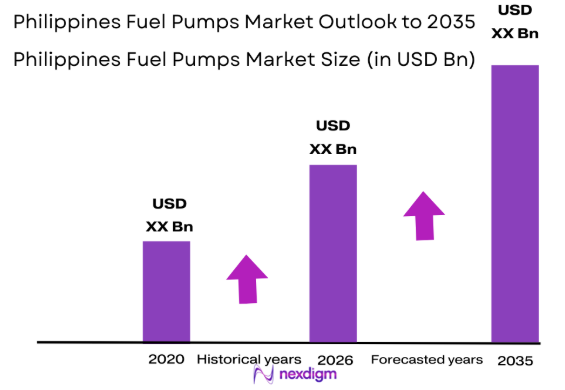
The Philippines Fuel Pumps market has seen significant growth, driven by increasing fuel demand due to expanding transportation networks and industrial development. The market size is supported by government efforts to upgrade infrastructure and the rising number of retail fuel stations. The adoption of advanced fueling technologies, including smart and contactless payment solutions, further supports growth. Based on a recent historical assessment, the market is valued at approximately USD ~ billion, with strong demand for both traditional and advanced fuel pump systems across retail and commercial sectors.
The market’s dominance is observed primarily in urban centers such as Metro Manila, Cebu, and Davao. These cities drive growth due to their high population density, extensive transportation networks, and continuous urbanization. The expanding number of fuel stations in remote areas also contributes to this market dominance. Infrastructure investments, along with the growing adoption of automated and digital fueling solutions, have further strengthened the presence of these key urban areas in the fuel pump market.
Market Segmentation
By System Type
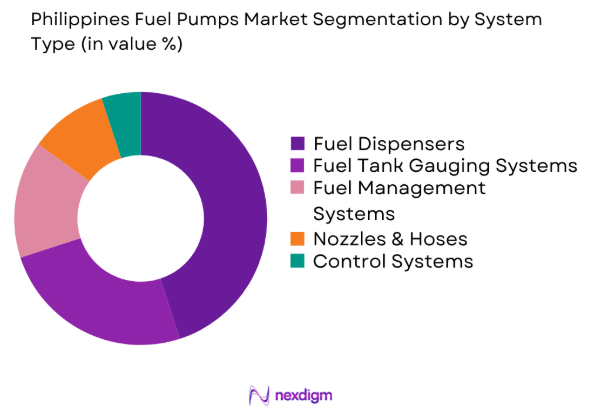
The Philippines Fuel Pumps market is segmented by system type into fuel dispensers, fuel tank gauging systems, fuel management systems, nozzles & hoses, and control systems. Recently, fuel dispensers have dominated the market share due to the growing demand for efficient and automated fueling processes, coupled with the need for reliable and durable equipment. Fuel dispensers offer enhanced safety features, ease of use, and integration with smart technologies, which makes them the preferred choice for fuel stations looking to streamline operations.
By Platform Type
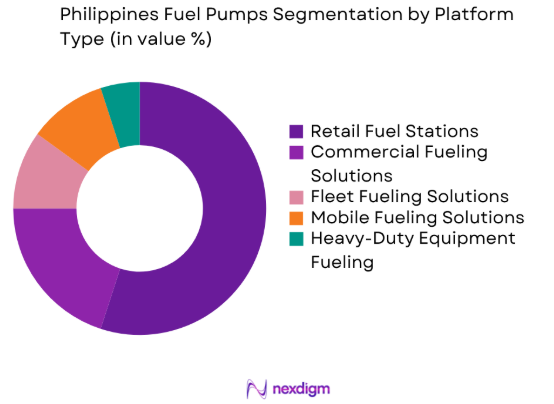
The Philippines Fuel Pumps market is segmented by platform type into retail fuel stations, commercial fueling solutions, fleet fueling solutions, mobile fueling solutions, and heavy-duty equipment fueling. Retail fuel stations have seen the highest market share due to the steady increase in the number of fuel stations catering to the growing consumer demand for fuel. These stations require a constant supply of advanced fueling systems to handle the surge in vehicle registrations, making retail fuel stations the primary platform driving market expansion.
Competitive Landscape
The competitive landscape of the Philippines fuel pumps market is characterized by the presence of several major players offering a wide range of fueling solutions. These players are focusing on expanding their market reach through partnerships, technological innovations, and the introduction of smart fueling systems. The market is moderately consolidated, with a few leading players dominating the industry.
| Company Name | Establishment Year | Headquarters | Technology Focus | Market Reach | Key Products | Revenue (USD) | Market-Specific Parameter |
| Wayne Fueling Systems | 2000 | Texas, USA | ~ | ~ | ~ | ~ | ~ |
| Gilbarco Veeder-Root | 1865 | North Carolina, USA | ~ | ~ | ~ | ~ | ~ |
| OPW Fueling Components | 1892 | Ohio, USA | ~ | ~ | ~ | ~ | ~ |
| Tatsuno Corporation | 1949 | Japan | ~ | ~ | ~ | ~ | ~ |
| Censtar | 1992 | China | ~ | ~ | ~ | ~ | ~ |
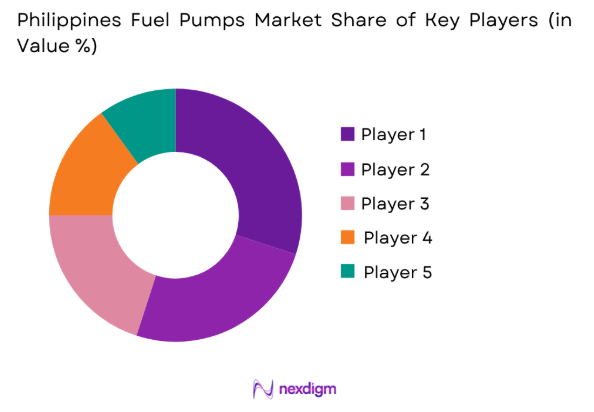
Philippines Fuel Pumps Market Analysis
Growth Drivers
Technological Innovation in Fuel Pumps
The growing demand for automated and smart fueling systems has significantly driven market growth. Innovations such as contactless payments, sensors, and real-time monitoring systems have boosted fuel efficiency and operational effectiveness. These advancements enhance the customer experience, improve safety, and reduce downtime at fueling stations. Fuel stations are increasingly upgrading to these advanced systems, contributing to higher operational efficiency. With the continuous integration of digital technologies and smart features, the market is expected to expand further, as more fueling stations embrace automation to streamline operations and meet the evolving needs of consumers. This shift is essential for enhancing overall fueling experiences and boosting industry growth.
Expansion of Retail Fuel Stations
The expansion of retail fuel stations in urban and rural areas is crucial for the growth of the fuel pumps market. As car ownership rises and fuel demand increases, the development of new stations becomes essential to meet these needs. The Philippine government’s infrastructure initiatives and policies promoting the growth of fuel retail outlets further fuel this trend. Additionally, the ongoing construction of highways and transportation hubs creates more opportunities for fuel station establishment. This infrastructure development drives the demand for fueling stations, contributing significantly to market expansion. The increased accessibility of fuel stations across the country ensures the market’s continued growth and development.
Market Challenges
High Initial Investment Costs
The high initial capital needed for advanced fuel pumps, particularly for automated and smart fueling systems, poses a major challenge for many fuel retailers in the Philippines. While these technologies offer long-term cost savings and enhanced efficiency, smaller operators and new entrants struggle with the upfront investment. This financial barrier slows the adoption of innovative fueling solutions, especially in underserved regions with lower fuel demand. As a result, the market’s overall technological advancement is limited, and the adoption of modern systems remains concentrated in more developed areas, hindering widespread implementation across the country. This challenge needs addressing for greater market growth and technology integration.
Regulatory Compliance and Environmental Concerns
Fueling stations in the Philippines face strict environmental regulations regarding fuel storage and dispensing systems. Compliance with these regulations often necessitates additional investments in eco-friendly infrastructure, such as vapor recovery systems, and ensuring proper waste management practices. Although the government has introduced measures to enhance fuel station safety and environmental sustainability, the complexity of these regulations and the high costs involved remain significant challenges. These compliance requirements create financial burdens for operators, particularly smaller stations, hindering their ability to upgrade systems or expand. As environmental standards become more stringent, fueling stations must invest more in maintaining compliance, which adds to the market’s operational challenges.
Opportunities
Growth in Electric Vehicle Infrastructure
As the Philippines prioritizes green energy and sustainability, the rise of electric vehicles (EVs) presents a significant opportunity for fuel pump manufacturers to develop integrated EV charging solutions. Government incentives promoting EV adoption, along with the growing need for a nationwide charging network, require fuel stations to evolve. This creates a new market segment for fueling equipment, where stations must accommodate both traditional fuel and EV charging needs. Manufacturers can capitalize on this transition by offering dual-purpose stations, providing a seamless solution for both types of vehicles. This shift opens up new avenues for innovation and expansion in the fueling equipment market.
Rising Demand for Mobile Fueling Solutions
The growing demand for mobile fueling services presents a significant opportunity for market growth. Mobile fueling solutions provide convenience for both consumers and businesses, especially in remote or underserved areas where access to traditional fueling stations may be limited. Industries such as construction, logistics, and transportation increasingly require fuel delivery at specific locations, driving the need for mobile fueling services. This trend is expected to continue as businesses seek ways to improve efficiency and reduce downtime. The demand for mobile fueling solutions creates an opportunity for manufacturers to develop and deploy advanced mobile fueling stations equipped with the latest technologies. These stations can provide on-site fueling, reducing logistical challenges and offering tailored solutions for various industries, further boosting market growth.
Future Outlook
The future of the Philippines fuel pumps market looks promising, driven by technological innovations and an increasing need for efficient fuel management systems. The market is expected to grow steadily over the next five years as the country continues to expand its infrastructure, both in urban and rural areas. Technological advancements, including smart fuel dispensers and automated payment solutions, will likely be key drivers of market expansion. Furthermore, the integration of electric vehicle charging systems into existing fuel stations will present new opportunities for growth.
Major Players
- WayneFuelingSystems
- Gilbarco Veeder-Root
- OPWFuelingComponents
- Tatsuno Corporation
- Censtar
- Tokheim Group
- Delta Technology
- Fuel Dispensers International
- Veeder-Root
- DoverFuelingSolutions
- Piusi
- Bennett Pump Company
- Scheidt & Bachmann
- LAFON
- Becker Pumps
Key Target Audience
- Investments and venture capitalist firms
- Government and regulatory bodies
- Fuel station owners and operators
- Technology integrators and suppliers
- Automotive manufacturers
- Commercialfuelingsolution providers
- Logistics and fleet management companies
- Energy infrastructure developers
Research Methodology
Step 1: Identification of Key Variables
The initial step involves identifying key market variables such as system type, platform type, procurement channels, and end-user segments. This allows a clear understanding of market dynamics and segmentation.
Step 2: Market Analysis and Construction
This step includes analyzing the data collected from primary and secondary sources, constructing the market model, and estimating market size and trends. The analysis focuses on historical data and projections for future growth.
Step 3: Hypothesis Validation and Expert Consultation
Industry experts and key stakeholders are consulted to validate the assumptions and models used in the analysis. This step ensures that the data is reliable and aligns with current market trends.
Step 4: Research Synthesis and Final Output
The final step synthesizes all collected data, including expert insights, to produce the final market report. This includes in-depth analysis, segmentation details, competitive landscape, and future outlook.

- Executive Summary
- Research Methodology (Definitions, Scope, Industry Assumptions, Market Sizing Approach, Primary & Secondary Research Framework, Data Collection & Verification Protocol, Analytic Models & Forecast Methodology, Limitations & Research Validity Checks)

- Market Definition and Scope
- Value Chain & Stakeholder Ecosystem
- Regulatory / Certification Landscape
- Sector Dynamics Affecting Demand
- Strategic Initiatives & Infrastructure Growth

- Growth Drivers
Increased Fuel Consumption
Expanding Retail Networks
Technological Advancements in Fueling Equipment
Regulatory Push for Clean Energy Solutions
Growth in Automotive Manufacturing - Market Challenges
High Capital Investment
Regulatory Compliance Challenges
Cost Pressures on Fuel Pump Manufacturers
Competition from Alternative Fueling Solutions
Environmental Concerns and Sustainability Challenges - Market Opportunities
Rise in Electric Vehicle (EV) Charging Stations
Integration of Smart Technologies in Fuel Pumps
Increase in Renewable Energy-Powered Fueling Stations - Trends
Shift Towards Automation and Remote Monitoring
Growth in Mobile and On-demand Fueling Solutions
Implementation of Contactless Payment Solutions - Government Regulations
- SWOT Analysis of Key Competitors
- Porter’s Five Forces

- By Market Value, 2020-2025
- By Installed Units, 2020-2025
- By Average System Price, 2020-2025
- By System Complexity Tier, 2020-2025

- By System Type (In Value%)
Fuel Dispensers
Fuel Tank Gauging Systems
Fuel Management Systems
Nozzles & Hoses
Control Systems - By Platform Type (In Value%)
Retail Fuel Stations
Commercial Fueling Solutions
Fleet Fueling Solutions
Mobile Fueling Solutions
Heavy-Duty Equipment Fueling - By Fitment Type (In Value%)
OEM Solutions
Aftermarket Solutions
Portable Solutions
Integrated Systems
Stand-alone Systems - By End User Segment (In Value%)
Oil & Gas Companies
Fuel Retailers
Logistics & Transportation
Industrial Sector
Automotive Manufacturers - By Procurement Channel (In Value%)
Direct Procurement
Online Marketplaces
Distributors
Government Tenders
Third-party Integrators

- Market Share Analysis
- Cross Comparison Parameters (System Type, Platform Type, Procurement Channel, End User Segment, Fitment Type, Technology Integration, Price Range, Market Share, Service and Maintenance Offerings, Geographic Coverage)
- SWOT Analysis of Key Competitors
- Pricing & Procurement Analysis
- Key Players
Tokheim Group
Wayne Fueling Systems
Gilbarco Veeder-Root
OPW Fueling Components
Tatsuno Corporation
Neptune Technology Group
Delphi Technologies
Dresser Wayne
Emco Wheaton
Aptar Group
MSTS
Cim-Tek Filtration
Piusi
Censtar
E-Flow Systems

- Demand from Retail Fuel Stations
- Increase in Fleet Fueling Solutions
- Automotive Industry’s Adoption of Advanced Fueling Equipment
- Industrial Sector’s Shift Toward Automated Systems

- Forecast Market Value, 2026-2035
- Forecast Installed Units, 2026-2035
- Price Forecast by System Tier, 2026-2035
- Future Demand by Platform, 2026-2035


 Request a Sample
 Ask for Customization
 Get a Quote
 Enquire Now