
 Download PDF
 Download PDF
Market Overview
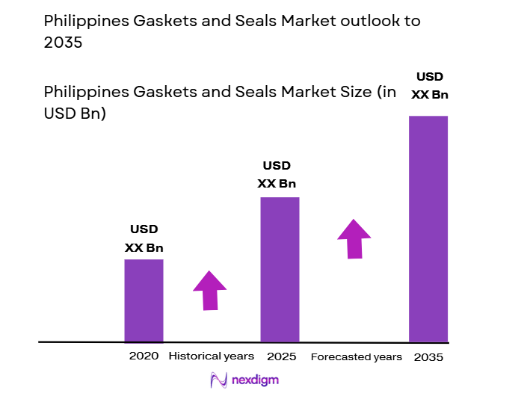
The Philippines gaskets and seals market is valued at approximately USD ~ billion based on a recent historical assessment, driven by increasing industrialization, automotive production, and maintenance requirements across key sectors. Rising demand from oil and gas, manufacturing, and marine industries has significantly contributed to the consumption of high-performance sealing solutions. Additionally, the growth of aftermarket services and equipment refurbishment cycles has supported consistent demand for replacement gaskets and seals.
Metro Manila, Cebu, and Davao serve as dominant industrial hubs due to strong manufacturing bases, port infrastructure, and logistics connectivity that facilitate equipment-intensive operations. The Philippines benefits from proximity to major Southeast Asian industrial economies such as China, Japan, and South Korea, which supply advanced sealing technologies and components. These regions support demand through expanding shipbuilding activities, automotive assembly, and infrastructure projects requiring durable sealing systems.
Market Segmentation
By Product Type
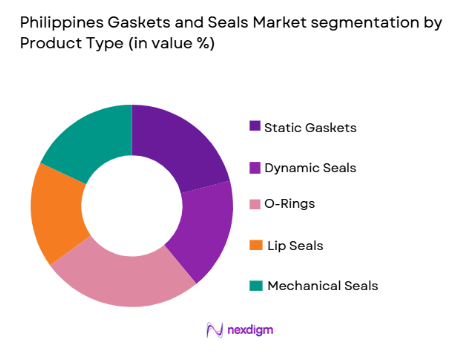
Philippines Gaskets and Seals market is segmented by product type into static gaskets, dynamic seals, O-rings, lip seals, and mechanical seals. Recently, O-rings has a dominant market share due to factors such as widespread application across automotive and industrial machinery, ease of installation, cost efficiency, and strong availability in local distribution networks. Their versatility in sealing fluids and gases across varying pressure conditions further enhances demand, particularly in maintenance-intensive sectors such as oil and gas and marine equipment operations.
By End-Use
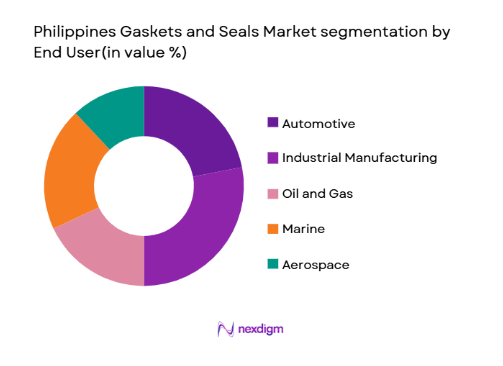
Philippines Gaskets and Seals market is segmented by end-user into automotive, industrial manufacturing, oil and gas, marine, and aerospace sectors. Recently, industrial manufacturing has a dominant market share due to expanding factory operations, machinery installations, and process equipment requirements. Continuous production cycles demand reliable sealing solutions to prevent leakage and maintain operational efficiency, while increased investments in manufacturing infrastructure further strengthen the demand for high-performance gaskets and seals.
Competitive Landscape
The Philippines gaskets and seals market is moderately consolidated, with a mix of global manufacturers and regional distributors shaping competitive dynamics. International players dominate due to advanced material technologies and established supply chains, while local firms compete through pricing flexibility and aftermarket distribution. Strategic partnerships with OEMs and industrial operators have become a key differentiator, enabling market leaders to strengthen their footprint and ensure long-term supply contracts.
| Company Name | Establishment Year | Headquarters | Technology Focus | Market Reach | Key Products | Revenue (USD Billion) | Distribution Strength |
| Freudenberg Sealing Technologies | 1849 | Germany | ~ | ~ | ~ | ~ | ~ |
| Parker Hannifin Corporation | 1917 | USA | ~ | ~ | ~ | ~ | ~ |
| Trelleborg AB | 1905 | Sweden | ~ | ~ | ~ | ~ | ~ |
| SKF Group | 1907 | Sweden | ~ | ~ | ~ | ~ | ~ |
| John Crane | 1917 | USA | ~ | ~ | ~ | ~ | ~ |
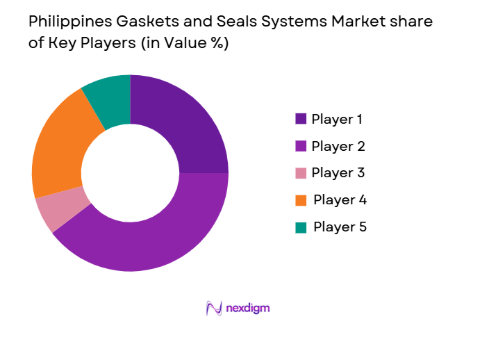
Philippines Gaskets And Seals Market Analysis
Growth Drivers
Rising Industrial Infrastructure Expansion and Machinery Demand:
The Philippines gaskets and seals market is significantly driven by expanding industrial infrastructure, particularly in manufacturing, energy, and construction sectors that require reliable sealing solutions for operational efficiency. Increasing investments in industrial zones and production facilities have resulted in higher demand for machinery and equipment, each requiring multiple sealing components for fluid containment and pressure management. Industrial plants depend on high-quality gaskets and seals to ensure leak prevention and safety compliance across operations. As machinery utilization intensifies, the need for maintenance and replacement components grows steadily, further boosting market demand. Continuous process industries such as chemicals and food processing also rely on precision sealing systems to maintain product quality and reduce contamination risks. Furthermore, government-led infrastructure initiatives are indirectly supporting industrial growth, increasing equipment deployment across sectors. As industries adopt automation and high-performance machinery, the complexity and specifications of sealing components continue to evolve. This trend drives demand for advanced materials capable of withstanding high temperatures, pressure variations, and chemical exposure. Additionally, the need for operational efficiency and cost reduction is pushing industries toward durable and long-lasting sealing solutions.
Growth of Automotive Production and Aftermarket Services:
The expansion of automotive manufacturing and vehicle ownership in the Philippines has created sustained demand for gaskets and seals across both OEM and aftermarket channels. Automotive engines, transmissions, and exhaust systems require multiple sealing components to ensure optimal performance and emission control, driving consistent product demand. Increasing vehicle usage has led to higher wear and tear, creating a robust aftermarket segment focused on replacement parts. Workshops and service centers depend heavily on standardized sealing components for repairs and maintenance, ensuring a continuous supply chain requirement. The rise in commercial vehicle fleets has further accelerated the consumption of sealing products due to frequent servicing cycles. Additionally, stricter emission regulations are encouraging the use of high-performance gaskets and seals in modern vehicles. The growing presence of automotive assembly plants in the region also supports demand for OEM components. As vehicle technology advances, including hybrid and electric systems, new sealing requirements are emerging for battery systems and thermal management. This shift is expanding the scope of applications for sealing technologies, reinforcing market growth. The combined influence of OEM production and aftermarket demand creates a stable and expanding revenue stream for market participants.
Market Challenges
Dependence on Imported Raw Materials and Advanced Technologies:
The Philippines gaskets and seals market faces challenges due to its reliance on imported raw materials and advanced sealing technologies, which increases production costs and supply chain vulnerabilities. Many high-performance sealing materials such as specialized polymers and composites are sourced from international suppliers, leading to exposure to global price fluctuations. Import dependency also creates delays in procurement, affecting manufacturing timelines and product availability in the domestic market. Local manufacturers often struggle to match the technological capabilities of global competitors, limiting their ability to produce advanced sealing solutions. This imbalance reduces competitiveness and increases reliance on foreign products. Currency exchange fluctuations further impact the cost of imported materials, making pricing unstable for end users. Additionally, limited local research and development capabilities hinder innovation in sealing technologies within the country. The absence of large-scale domestic production facilities also restricts economies of scale. As a result, industries relying on sealing components may face higher operational costs. Addressing this challenge requires investment in local manufacturing capabilities and technological advancements.
High Maintenance Costs and Frequent Replacement Cycles:
The nature of gaskets and seals involves regular wear and tear, leading to frequent replacement requirements that increase maintenance costs for end users. Industrial machinery, automotive systems, and marine equipment operate under harsh conditions, causing sealing components to degrade over time. This necessitates regular inspection and replacement, adding to operational expenses for industries. In sectors such as oil and gas, sealing failures can result in significant downtime and financial losses, making reliability a critical concern. The cost of high-performance sealing materials further increases maintenance budgets. Smaller businesses may opt for lower-cost alternatives, which can compromise quality and lead to more frequent failures. Additionally, improper installation and lack of technical expertise contribute to premature component failure. The need for specialized maintenance practices increases dependency on skilled labor, which may not always be readily available. As industries strive to reduce operational costs, balancing quality and affordability becomes a key challenge. This ongoing cycle of replacement and maintenance impacts overall market efficiency.
Opportunities
Expansion of Local Manufacturing and Supply Chain Development:
The Philippines gaskets and seals market presents significant opportunities through the development of local manufacturing capabilities, reducing dependency on imports and strengthening supply chain resilience. Establishing domestic production facilities can help manufacturers achieve cost efficiencies and improve product availability. Local production also allows for customization based on industry-specific requirements, enhancing competitiveness. Government initiatives supporting industrialization and local manufacturing provide a favorable environment for investment in sealing technologies. Collaboration between international technology providers and local firms can accelerate knowledge transfer and innovation. Developing a robust domestic supply chain can reduce lead times and improve responsiveness to market demand. Additionally, localized production can mitigate risks associated with global supply disruptions. As industries continue to expand, the demand for locally sourced sealing components is expected to increase. This creates opportunities for small and medium enterprises to enter the market and cater to niche applications. Strengthening local capabilities can also position the Philippines as a regional supplier of sealing products.
Adoption of Advanced Materials and Smart Sealing Technologies:
Technological advancements in materials and smart sealing systems offer significant growth opportunities in the Philippines gaskets and seals market, particularly in high-performance industrial applications. The development of advanced materials such as PTFE composites and high-temperature elastomers enables better durability and efficiency. These materials are increasingly used in industries requiring resistance to extreme conditions, including chemicals and energy sectors. Smart sealing technologies equipped with monitoring sensors are gaining traction for predictive maintenance applications. These systems help detect wear and potential failures, reducing downtime and maintenance costs. As industries move toward digitalization, the integration of smart components becomes essential for operational optimization. The growing adoption of Industry 4.0 practices further supports the demand for intelligent sealing solutions. Companies investing in research and development can capitalize on these trends to offer innovative products. Additionally, environmentally friendly materials are becoming increasingly important due to sustainability regulations. This shift opens new avenues for eco-friendly sealing solutions in the market.
Future Outlook
The Philippines gaskets and seals market is expected to experience steady growth over the next five years, supported by industrial expansion and rising automotive demand. Advancements in material science and smart sealing technologies will enhance product performance and durability. Increasing government support for manufacturing and infrastructure development will further drive demand. The shift toward sustainable and high-efficiency sealing solutions is anticipated to shape future market trends.
Major Players
- Freudenberg Sealing Technologies
- Parker Hannifin Corporation
- Trelleborg AB
- SKF Group
- John Crane
- EagleBurgmann
- Garlock Sealing Technologies
- Dana Incorporated
- James Walker Group
- Flexitallic Group
- KLINGER Group
- Flowserve Corporation
- Hutchinson SA
- Chesterton Company
- Bal Seal Engineering
Key Target Audience
- Automotive manufacturers
- Industrial equipment manufacturers
- Oil and gas operators
- Marine and shipbuilding companies
- Aerospace component manufacturers
- Investments and venture capitalist firms
- Government and regulatory bodies
- Industrial distributors
Research Methodology
Step 1: Identification of Key Variables
The study begins with identifying critical variables such as demand drivers, industry applications, material trends, and pricing dynamics influencing the Philippines gaskets and seals market.
Step 2: Market Analysis and Construction
Comprehensive market modeling is conducted using historical industrial data, trade statistics, and sector-specific insights to construct an accurate market framework.
Step 3: Hypothesis Validation and Expert Consultation
Initial findings are validated through consultations with industry experts, manufacturers, and supply chain participants to ensure reliability and accuracy of assumptions.
Step 4: Research Synthesis and Final Output
All insights are synthesized into a structured report, integrating qualitative and quantitative analysis to deliver actionable market intelligence.

- Executive Summary
- Research Methodology (Definitions, Scope, Industry Assumptions, Market Sizing Approach, Primary & Secondary Research Framework, Data Collection & Verification Protocol, Analytic Models & Forecast Methodology, Limitations & Research Validity Checks)

- Market Definition and Scope
- Value Chain & Stakeholder Ecosystem
- Regulatory / Certification Landscape
- Sector Dynamics Affecting Demand
- Strategic Initiatives & Infrastructure Growth

- Growth Drivers
Rising automotive production and vehicle maintenance demand
Expansion of industrial manufacturing and processing sectors
Increased investments in oil and gas infrastructure
Growing marine and shipbuilding activities
Demand for high performance sealing in heavy machinery - Market Challenges
Fluctuating raw material costs affecting production
Dependence on imported advanced sealing technologies
Limited local manufacturing capabilities for high precision seals
Wear and tear leading to frequent replacement cycles
Regulatory compliance pressures for industrial safety standards - Market Opportunities
Localization of gasket and seal manufacturing capabilities
Adoption of advanced materials for high temperature applications
Expansion of aftermarket distribution networks - Trends
Shift towards high durability and heat resistant sealing materials
Integration of smart sealing solutions with monitoring capabilities
Growth in demand for eco friendly and recyclable materials
Increased use of customized sealing solutions for industrial needs
Adoption of automation in gasket and seal manufacturing - Government Regulations & Defense Policy
Implementation of industrial safety and compliance standards
Environmental regulations promoting sustainable materials usage
Policies supporting domestic manufacturing and industrial growth - SWOT Analysis
- Stakeholder and Ecosystem Analysis
- Porter’s Five Forces Analysis
- Competition Intensity and Ecosystem Mapping

- By Market Value, 2020-2025
- By Installed Units, 2020-2025
- By Average System Price, 2020-2025
- By System Complexity Tier, 2020-2025

- By System Type (In Value%)
Static Gaskets
Dynamic Seals
O-Rings
Lip Seals
Mechanical Seals - By Platform Type (In Value%)
Automotive Systems
Industrial Machinery
Oil and Gas Equipment
Marine Applications
Aerospace Components - By Fitment Type (In Value%)
OEM Installations
Aftermarket Replacements
Custom Engineered Fitments
Retrofit Solutions
Standard Fit Components - By EndUser Segment (In Value%)
Automotive Manufacturers
Industrial Equipment Producers
Oil and Gas Operators
Marine and Shipbuilding Firms
Aerospace and Defense Contractors - By Procurement Channel (In Value%)
Direct OEM Contracts
Distributor Networks
Online Industrial Platforms
Third Party Suppliers
Government Procurement - By Material / Technology (in Value %)
Rubber Based Seals
Metal Gaskets
Composite Materials
PTFE Based Seals
Graphite Sealing Solutions

- Market structure and competitive positioning
- Market share snapshot of major players
- CrossComparison Parameters (Product Portfolio Diversity, Material Innovation Capability, Pricing Strategy, Distribution Network Strength, OEM Partnerships, Aftermarket Presence, Manufacturing Capacity, Technology Integration, Regional Footprint, Supply Chain Efficiency)
- SWOT Analysis of Key Players
- Pricing & Procurement Analysis
- Key Players
Freudenberg Sealing Technologies
Trelleborg Sealing Solutions
Parker Hannifin Corporation
SKF Group
EagleBurgmann
Garlock Sealing Technologies
Dana Incorporated
James Walker Group
Flexitallic Group
John Crane
Flowserve Corporation
KLINGER Group
Hutchinson SA
Bal Seal Engineering
Chesterton Company

- Automotive sector driving consistent demand for replacement seals
- Industrial manufacturers requiring high performance sealing systems
- Oil and gas operators focusing on leak prevention technologies
- Marine sector emphasizing corrosion resistant sealing materials

- Forecast Market Value, 2026-2035
- Forecast Installed Units, 2026-2035
- Price Forecast by System Tier, 2026-2035
- Future Demand by Platform, 2026-2035


 Request a Sample
 Ask for Customization
 Get a Quote
 Enquire Now