

 Download PDF
 Download PDF
Market Overview
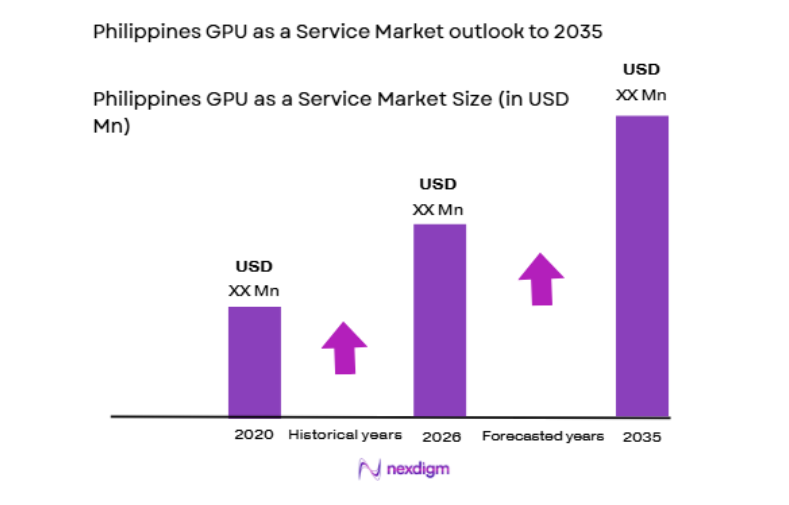
The Philippines GPU as a Service market is expected to reach USD ~ million, driven by the growing demand for cloud-based high-performance computing, particularly in sectors like artificial intelligence (AI), machine learning, and data analytics. As more businesses adopt cloud computing to handle AI workloads, the need for GPU-powered services continues to rise. Additionally, the government’s support for digital transformation and the increasing adoption of AI technologies further drive the market’s growth in the region.
The dominant cities driving the market include Metro Manila, Cebu, and Davao, with Metro Manila being the central hub due to its developed infrastructure, economic importance, and the presence of tech companies. Cebu and Davao are emerging as key players in the growing tech ecosystem, benefiting from the expanding adoption of cloud services and AI technology. These cities play a significant role in the country’s digital transformation efforts, which contribute to the GPU-as-a-Service market growth.
Market Segmentation
By Product Type
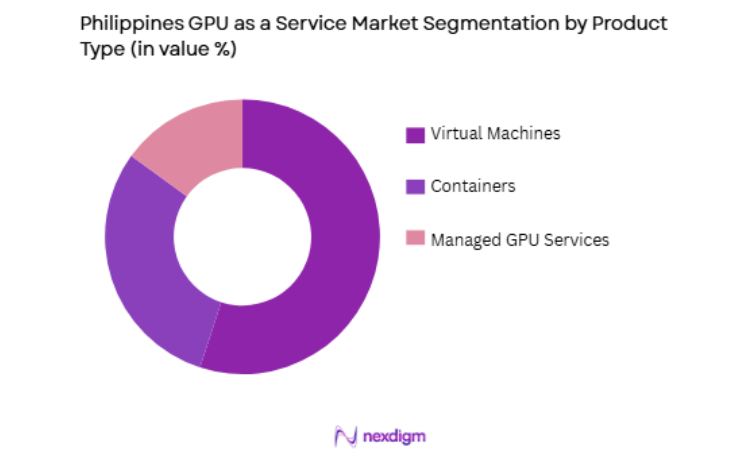
The Philippines GPU as a Service market is segmented by product type into virtual machines, containers, and managed GPU services. Virtual machines have a dominant market share due to the increasing demand for flexible, scalable, and cost-efficient solutions that allow businesses to access high-performance GPU computing without substantial upfront investments. Virtual machines are particularly favored by industries such as finance, healthcare, and education, where GPU-intensive tasks like data processing, AI model training, and simulations require robust computing power. Their ability to scale on-demand and efficiently meet the growing needs of enterprises has made them a preferred choice for companies looking to leverage GPU technology.
By End-user Industry
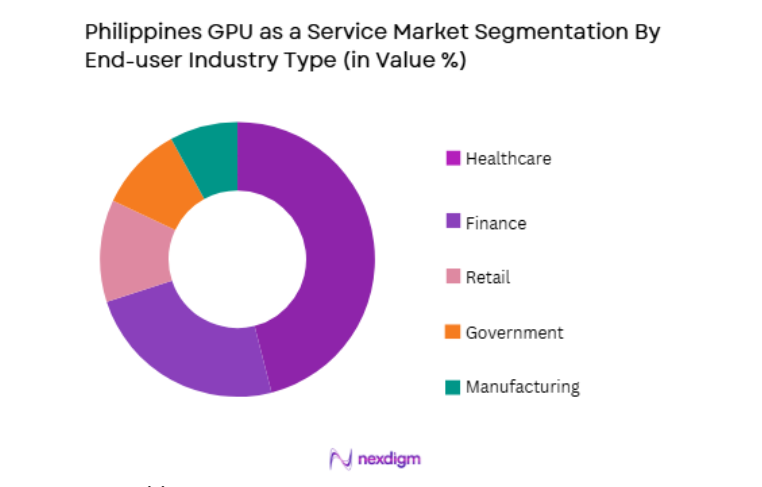
The Philippines GPU as a Service market is segmented by end-user industry into healthcare, finance, retail, government, and manufacturing. The healthcare industry has the largest market share due to the increasing need for AI-driven applications in medical imaging, diagnostics, and drug discovery. GPUs are integral to running these resource-intensive AI and machine learning models that help healthcare providers improve patient outcomes, streamline operations, and accelerate research. The rise in medical AI adoption, combined with the growing demand for faster and more accurate processing of medical data, has made healthcare the leading sector in GPU adoption.
Competitive Landscape
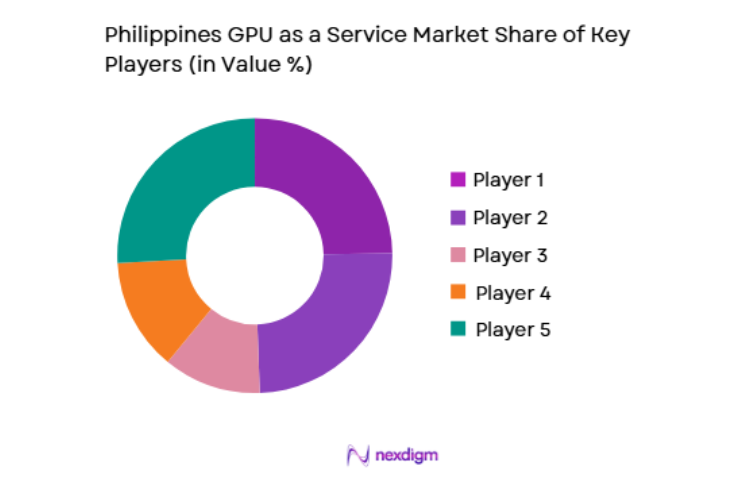
The competitive landscape in the Philippines GPU as a Service market is highly competitive, with both global players and local providers driving innovation. Major cloud providers such as Amazon Web Services (AWS), Microsoft Azure, and Google Cloud lead the market by offering GPU-powered services that cater to the increasing demand for AI and machine learning. Local players, such as Globe Telecom and PLDT, are also expanding their GPU-as-a-Service offerings to meet the local demand, ensuring a mix of global and domestic competition in the market.
| Company Name | Establishment Year | Headquarters | Technology Focus | Market Reach | Key Products | Revenue | Additional Parameter |
| Amazon Web Services | 2006 | USA | ~ | ~ | ~ | ~ | ~ |
| Microsoft Azure | 2010 | USA | ~ | ~ | ~ | ~ | ~ |
| Google Cloud | 2008 | USA | ~ | ~ | ~ | ~ | ~ |
| Globe Telecom | 1935 | Philippines | ~ | ~ | ~ | ~ | ~ |
| PLDT | 1928 | Philippines | ~ | ~ | ~ | ~ | ~ |
Philippines GPU as a Service Market Analysis
Growth Drivers
Government Digital Transformation Efforts
The Philippine government’s push for digital transformation is one of the major growth drivers for the GPU as a Service market. With the implementation of initiatives like the Digital Transformation Roadmap and the National Broadband Plan, the government has created a conducive environment for the adoption of cloud computing and high-performance computing services. These efforts aim to improve the country’s digital infrastructure and support industries in adopting cutting-edge technologies like artificial intelligence, big data, and cloud services. As the government continues to invest in modernizing the digital ecosystem, demand for GPU services will rise across various sectors, including healthcare, finance, and retail. The growth of government-led projects will significantly increase the need for scalable, GPU-powered solutions for businesses to stay competitive in the digital era.
Increasing AI and Machine Learning Adoption
The rapid adoption of artificial intelligence and machine learning technologies across various sectors has propelled the demand for GPU-powered services in the Philippines. AI and ML algorithms require massive computational power to process large datasets and perform complex tasks such as predictive analytics, natural language processing, and computer vision. GPUs are essential for these applications, offering enhanced parallel processing capabilities that make them ideal for running AI models. Industries such as healthcare, finance, and retail are increasingly adopting AI to improve operations, enhance customer experiences, and optimize decision-making, creating a significant growth opportunity for GPU-as-a-Service providers.
Market Challenges
High Infrastructure Costs for Local Providers
One of the primary challenges in the Philippines GPU as a Service market is the high cost of establishing the necessary infrastructure for GPU services. Building local data centers capable of supporting GPU-intensive workloads requires significant investment, which can be a barrier for smaller or new service providers. Even though cloud providers offer solutions to mitigate upfront costs, local players must contend with the challenge of setting up GPU-powered infrastructure while competing with established global players who already have large-scale infrastructure in place. Additionally, high operational costs related to power consumption, maintenance, and scaling infrastructure further compound the difficulty for local providers to offer competitive pricing.
Data Privacy and Regulatory Compliance
Data privacy concerns and the need for regulatory compliance present significant challenges for businesses looking to adopt GPU-as-a-Service solutions in the Philippines. With the implementation of data protection laws like the Data Privacy Act, companies must ensure that their GPU-powered services comply with local privacy standards. This includes implementing robust security measures such as encryption, access control, and regular audits. Companies must also navigate the complexities of ensuring that their GPU service providers adhere to these laws, which can be particularly challenging when data is processed across borders. As a result, businesses may face additional regulatory hurdles when adopting cloud-based GPU services in the Philippines.
Opportunities
Growth of AI and Healthcare Innovation
The increasing focus on artificial intelligence in the healthcare sector presents a significant opportunity for the GPU as a Service market. AI-powered medical imaging, diagnostics, and drug discovery applications are in high demand as the healthcare sector in the Philippines looks to improve patient outcomes and streamline operations. The ability to use GPUs for processing complex medical data and running AI models is transforming the industry, and cloud GPU services are crucial in providing the computational power needed for these innovations. As healthcare providers, research institutions, and pharmaceutical companies in the Philippines continue to embrace AI, the demand for GPU services will see significant growth, offering lucrative opportunities for service providers.
Expansion of Cloud-based Solutions in Southeast Asia
The Philippines, as part of the growing Southeast Asian cloud services market, presents significant opportunities for GPU-as-a-Service providers. The increasing digitalization across the region, especially in countries like Vietnam, Thailand, and Indonesia, drives the demand for cloud-based solutions and high-performance computing. GPU services are particularly attractive to industries such as e-commerce, logistics, and finance, which require processing large datasets and running AI algorithms. The growing regional adoption of cloud-based services, combined with the expanding presence of data centers in Southeast Asia, provides an excellent growth opportunity for GPU-as-a-Service providers looking to expand their market footprint.
Future Outlook
The future outlook for the Philippines GPU as a Service market is positive, driven by continued digital transformation, AI adoption, and government support for tech infrastructure. The market is expected to experience steady growth, with cloud computing and high-performance computing services becoming integral to various sectors such as healthcare, finance, and e-commerce. The increasing demand for AI and machine learning will continue to push businesses toward GPU-powered solutions. With more investments in local data centers and regulatory frameworks evolving to support digital services, the GPU as a Service market is well-positioned for long-term growth in the Philippines.
Major Players
- Amazon Web Services
- Microsoft Azure
- Google Cloud
- Globe Telecom
- PLDT
- Oracle Cloud
- Alibaba Cloud
- Huawei Cloud
- IBM Cloud
- Rackspace Technology
- DigitalOcean
- Atos
- VMware
- Red Hat
- Dell Technologies
Key Target Audience
- Investments and venture capitalist firms
- Government and regulatory bodies
- AI and machine learning solution providers
- Healthcare technology firms
- Financial institutions and fintech companies
- Large-scale enterprises
- Data centers and hosting companies
- Technology consulting firms
Research Methodology
Step 1: Identification of Key Variables
We begin by identifying the key variables driving the GPU as a Service market in the Philippines, including cloud adoption, AI demand, and government digital transformation efforts.
Step 2: Market Analysis and Construction
We analyze data from multiple sources, including market surveys, government reports, and industry publications, to build a comprehensive market model.
Step 3: Hypothesis Validation and Expert Consultation
We validate our assumptions through consultations with industry experts, including cloud service providers, government officials, and technology consultants.
Step 4: Research Synthesis and Final Output
We synthesize the gathered data into a comprehensive report, detailing the market’s current state, growth drivers, challenges, and future outlook.

- Executive Summary
- Research Methodology (Definitions, Scope, Industry Assumptions, Market Sizing Approach, Primary & Secondary Research Framework, Data Collection & Verification Protocol, Analytic Models & Forecast Methodology, Limitations & Research Validity Checks)

- Market Definition and Scope
- Value Chain & Stakeholder Ecosystem
- Regulatory / Certification Landscape
- Sector Dynamics Affecting Demand

- Growth Drivers
Growing demand for AI and machine learning applications
Rising adoption of cloud computing solutions
Increase in GPU utilization for gaming and simulations - Market Challenges
High cost of GPU infrastructure
Scarcity of skilled professionals in AI/ML
Security concerns with cloud-based GPU solutions - Market Opportunities
Growth in edge computing and real-time processing
Partnerships with cloud service providers for expansion
Increase in demand from the gaming and entertainment industry - Trends
Adoption of multi-cloud GPU services
Integration of GPU as a Service into AI/ML workflows
Emerging demand for GPU-accelerated cloud gaming platforms - Government regulations
Regulations on data protection and privacy for cloud computing
Cloud service compliance with local cybersecurity standards
Incentives for AI-related technological advancements - SWOT analysis
- Porters 5 forces

- By Market Value, 2020-2025
- By Installed Units, 2020-2025
- By Average System Price, 2020-2025
- By System Complexity Tier, 2020-2025

- By System Type (In Value%)
Cloud-based GPU as a Service
On-demand GPU as a Service
Edge Computing GPUs
Dedicated GPU Instances
GPU Virtualization Systems - By Platform Type (In Value%)
Cloud Platforms
On-premise Platforms
Hybrid Platforms
Platform-as-a-Service (PaaS)
Infrastructure-as-a-Service (IaaS) - By Fitment Type (In Value%)
Dedicated GPU Servers
Shared GPU Resources
Managed GPU Instances
Containerized GPU Solutions
GPU Clusters - By End User Segment (In Value%)
Gaming Industry
AI/ML Development Firms
Data Science & Analytics Firms
Cloud Service Providers

- Market Share Analysis
- Cross Comparison Parameters (System Type, Platform Type, Procurement Channel, End User Segment, Fitment Type, Deployment Model, Geographic Reach, Scalability, Pricing Model, Integration Capability, Data Security Standards, Network Latency, Performance Efficiency)
- SWOT Analysis of Key Competitors
- Pricing & Procurement Analysis
- Key Players
NVIDIA
AMD
Google Cloud
Amazon Web Services (AWS)
Microsoft Azure
IBM Cloud
Oracle Cloud
Alibaba Cloud
Huawei Cloud
Tencent Cloud
Vultr
Rackspace
DigitalOcean
OVHcloud
Linode

- Gaming industry’s shift to cloud-based solutions
- Increased demand for AI/ML services from various industries
- Cloud providers investing in GPU resources to cater to enterprise needs
- Financial services leveraging GPU for high-performance computing

- Forecast Market Value, 2026-2035
- Forecast Installed Units, 2026-2035
- Price Forecast by System Tier, 2026-2035
- Future Demand by Platform, 2026-2035


 Request a Sample
 Ask for Customization
 Get a Quote
 Enquire Now