
 Download PDF
 Download PDF
Market Overview
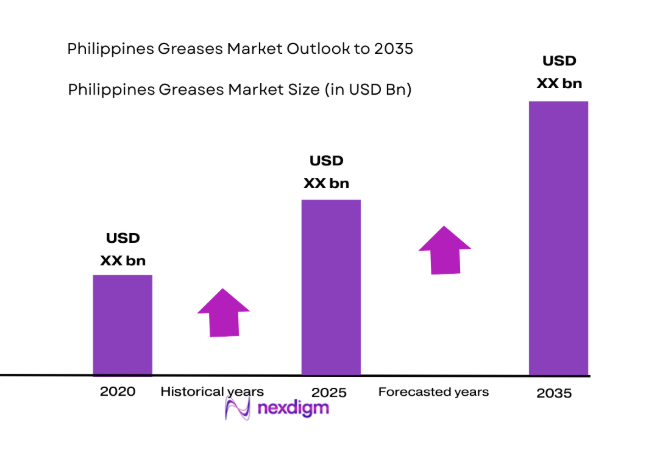
The Philippines greases market is valued at approximately USD ~ billion, driven by the expanding automotive and industrial sectors. The market is influenced by increasing industrialization and the rise in demand for lubricants in sectors like manufacturing, automotive, and agriculture. Growing infrastructure development in key regions further contributes to the demand for high-performance greases, particularly for machinery and automotive components. The market is further bolstered by local manufacturing capabilities and increasing automotive sales, leading to higher demand for various grease products across the nation.
Dominant cities in the Philippines such as Manila, Cebu, and Davao drive the majority of grease consumption due to their proximity to industrial and commercial hubs. These cities have seen significant infrastructure growth and are central to automotive and manufacturing industries, making them major drivers of market demand. The widespread adoption of advanced manufacturing techniques and higher production output in these regions are key factors for the dominance of these cities, further amplifying the need for high-quality grease products.
Market Segmentation
By Product Type
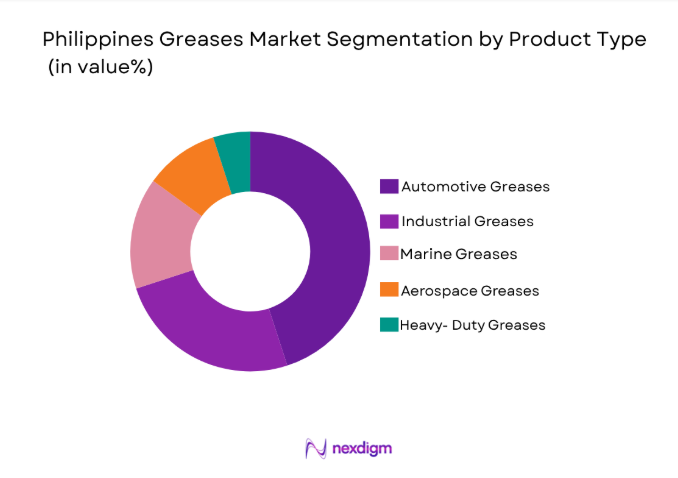
The Philippines greases market is segmented by product type into automotive greases, industrial greases, marine greases, aerospace greases, and heavy-duty greases. Recently, automotive greases have captured the dominant market share due to the increasing number of vehicles on the road and the expanding automotive sector. As more vehicles are manufactured and sold, the demand for automotive greases continues to grow, especially in high-performance and synthetic variants. This sub-segment is further bolstered by the continuous growth of the automotive aftermarkets and repair sectors, driving grease sales for maintenance and replacement.
By Platform Type
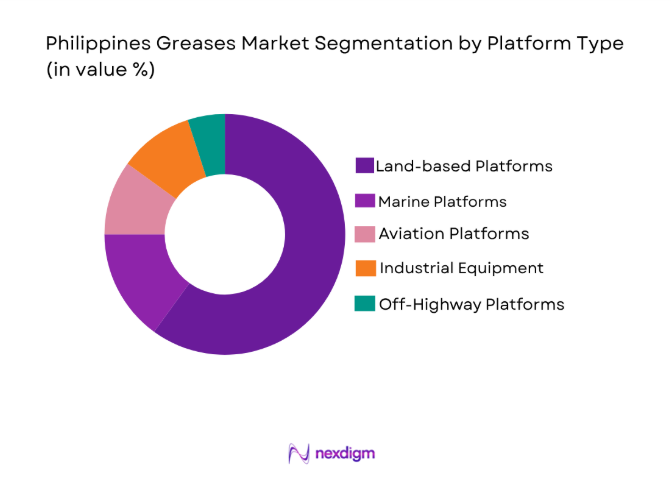
The market is segmented by platform type into land platforms, marine platforms, aviation platforms, industrial equipment platforms, and off-highway platforms. Land platforms dominate this sub-segment due to the wide usage of automotive vehicles and machinery in the Philippines. With increasing industrial production, infrastructure development, and a strong presence of the automotive industry, land-based vehicles and equipment form a major portion of grease consumption. This growth is further encouraged by governmental infrastructure projects and the growing need for maintenance of land-based machinery, vehicles, and other mechanical equipment across various sectors.
Competitive Landscape
The competitive landscape in the Philippines greases market is characterized by consolidation and the significant influence of major global and local players. The market is witnessing increasing competition, with multinational companies continuing to expand their presence in the Philippines while local manufacturers maintain a strong foothold. Major players are focusing on expanding their production capacities and improving product formulations to capture a larger share of the growing demand for automotive and industrial greases. Partnerships and acquisitions in the automotive and industrial sectors further intensify competition, leading to an environment of innovation and competitive pricing strategies.
| Company Name | Establishment Year | Headquarters | Technology Focus | Market Reach | Key Products | Revenue | Market-Specific Parameter |
| Shell Philippines | 1914 | Manila | ~ | ~ | ~ | ~ | ~ |
| Castrol Philippines | 1899 | Manila | ~ | ~ | ~ | ~ | ~ |
| ExxonMobil Philippines | 1891 | Makati | ~ | ~ | ~ | ~ | ~ |
| Chevron Philippines | 1879 | Manila | ~ | ~ | ~ | ~ | ~ |
| Fuchs Petrolub Philippines | 1931 | Davao | ~ | ~ | ~ | ~ | ~ |
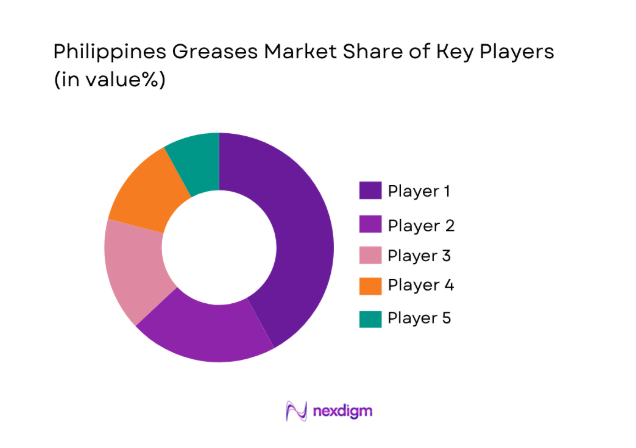
Philippines Greases Market Analysis
Growth Drivers
Government Infrastructure Development:
The growth in the Philippines greases market is largely driven by government initiatives aimed at enhancing infrastructure. Projects such as the “Build, Build, Build” program have accelerated the demand for construction equipment, vehicles, and machinery, which require high-quality greases for optimal performance and maintenance. This governmental focus on infrastructure development is creating a steady demand for industrial greases, automotive greases, and lubricants used in heavy machinery, vehicles, and equipment. In addition, increasing investments in roads, bridges, and residential buildings in urban areas have fueled demand for these products, making the grease market a key beneficiary of such developments. The construction industry’s expansion contributes directly to market growth as it drives the demand for maintenance and lubricants for machines used in construction processes, as well as transportation.
Automotive Industry Growth:
Another critical driver for the greases market in the Philippines is the booming automotive industry. The country has experienced a consistent rise in the number of vehicles on the road, contributing to increased grease consumption, particularly in the automotive aftermarket. This trend is supported by growing consumer demand for new vehicles, especially with the rise of electric vehicles (EVs) and hybrid vehicles. As more vehicles require regular maintenance, including lubrication for automotive parts such as engines and gearboxes, the demand for automotive greases continues to rise. Furthermore, an expanding fleet of commercial vehicles in logistics and transportation sectors further amplifies grease consumption. As a result, the automotive industry’s growth has been a significant contributor to the rising demand for automotive greases.
Market Challenges
Fluctuating Raw Material Prices:
One of the major challenges faced by the Philippines greases market is the volatility in raw material prices. The grease manufacturing process relies heavily on petroleum-based products and additives, whose prices are subject to fluctuation due to global crude oil price movements and supply chain disruptions. These price shifts pose challenges for grease manufacturers, as they need to absorb costs to maintain competitive pricing without compromising product quality. Price hikes in raw materials can also affect the profitability of grease producers and lead to price increases for consumers, which may negatively impact demand, particularly in price-sensitive sectors like automotive and construction. Thus, the grease market must navigate the complexities of global supply chains and unpredictable material costs to maintain stable growth.
Regulatory Compliance:
Regulatory challenges also present significant barriers to growth in the Philippines greases market. As grease formulations evolve, manufacturers are required to comply with stringent environmental and safety standards. In the Philippines, regulatory bodies enforce laws regarding the use of harmful chemicals and the disposal of industrial waste. Additionally, grease products must meet specific environmental standards to minimize their impact on natural resources and ecosystems. As these regulations become more complex and stringent, grease manufacturers may face increased costs related to product development, formulation changes, and compliance measures. These challenges can act as a restraint on market growth, especially for small and medium-sized enterprises that lack the resources to meet evolving regulatory requirements.
Opportunities
Shift Toward Eco-friendly Greases:
A key opportunity for the greases market in the Philippines lies in the growing demand for environmentally friendly and sustainable lubricants. As environmental concerns rise, consumers and industries are increasingly seeking bio-based, biodegradable, and low-toxicity grease products. Manufacturers have begun developing advanced synthetic and eco-friendly grease formulations that meet environmental regulations while offering superior performance. This shift towards sustainable products is expected to capture the attention of consumers in the automotive, industrial, and marine sectors, especially as global environmental standards become more stringent. The growing awareness of sustainability and the need for greener solutions provide a strong opportunity for grease manufacturers to innovate and offer products that align with market demands for eco-conscious alternatives.
Technological Advancements in Grease Products:
Another opportunity within the Philippines greases market is the rapid technological advancement in grease formulations. Manufacturers are continuously improving grease technology to meet the growing needs of high-performance automotive and industrial applications. Innovations such as longer-lasting synthetic greases, high-temperature greases, and greases with superior anti-wear properties are in high demand. Technological advancements allow for the development of more efficient and reliable grease products, especially for applications in harsh operating conditions such as high-temperature environments or underwater machinery. The ongoing investment in R&D to improve grease products provides a significant opportunity for market players to differentiate themselves by offering cutting-edge solutions that cater to specialized industries, thereby driving growth in the market.
Future Outlook
The greases market in the Philippines is expected to experience steady growth over the next five years. With increasing industrialization, infrastructure development, and automotive growth, demand for lubricants, particularly in heavy-duty and high-performance applications, will continue to rise. Technological advancements in grease formulations, coupled with the shift toward eco-friendly products, will drive market dynamics. Additionally, regulatory support for sustainable practices and the continued expansion of key industrial sectors will further support market growth, positioning the Philippines as a key hub in the Southeast Asian greases market.
Major Players
- Shell Philippines
- Castrol Philippines
- ExxonMobil Philippines
- Chevron Philippines
- Fuchs Petrolub Philippines
- Total Philippines
- Idemitsu Lube Tech
- Sinopec
- Mobil Lubricants
- BP Lubricants
- Lubricants Technologies
- Houghton International
- Texaco
- Petron Corporation
- Caltex Philippines
Key Target Audience
- Investments and venture capitalist firms
- Government and regulatory bodies
- Automotive manufacturers
- Industrial manufacturers
- Marine sector stakeholders
- Heavy equipment suppliers
- Logistics companies
Research Methodology
Step 1: Identification of Key Variables
The first step involves identifying critical market variables, including key industry trends, drivers, challenges, and opportunities, which influence the grease market’s dynamics.
Step 2: Market Analysis and Construction
A comprehensive analysis is conducted to assess the market size, segmentation, and dynamics, incorporating historical data and current trends to construct a robust market model.
Step 3: Hypothesis Validation and Expert Consultation
The proposed market hypotheses and findings are validated through expert consultations with industry specialists and market leaders to ensure accuracy and reliability.
Step 4: Research Synthesis and Final Output
All findings are synthesized into actionable insights, forming the foundation for the final report, which is then refined and tailored to address the specific market needs and objectives.

- Executive Summary
- Research Methodology (Definitions, Scope, Industry Assumptions, Market Sizing Approach, Primary & Secondary Research Framework, Data Collection & Verification Protocol, Analytic Models & Forecast Methodology, Limitations & Research Validity Checks)

- Market Definition and Scope
- Value Chain & Stakeholder Ecosystem
- Regulatory / Certification Landscape
- Sector Dynamics Affecting Demand
- Strategic Initiatives & Infrastructure Growth

- Growth Drivers
Increasing Industrialization and Manufacturing Activities
Rising Demand from Automotive Industry
Government Infrastructure Development Plans - Market Challenges
Fluctuating Raw Material Prices
High Competition from Imported Greases
Environmental Regulations Impacting Grease Production - Market Opportunities
Rising Demand for Bio-based Greases
Growth of Electric Vehicle Market
Technological Advancements in Grease Products - Trends
Shift Toward High-Performance Greases
Growing Adoption of Synthetic Greases - Government Regulations
- SWOT Analysis
- Porter’s Five Forces

- By Market Value, 2020-2025
- By Installed Units, 2020-2025
- By Average System Price, 2020-2025
- By System Complexity Tier, 2020-2025

- By System Type (In Value%)
Automotive Greases
Industrial Greases
Marine Greases
Aerospace Greases
Heavy Duty Greases - By Platform Type (In Value%)
Land Platforms
Marine Platforms
Aviation Platforms
Industrial Equipment Platforms
Off-highway Platforms - By Fitment Type (In Value%)
OEM Fitment
Aftermarket Fitment
Retail Fitment
Bulk Fitment - By End User Segment (In Value%)
Automotive Industry
Manufacturing Industry
Marine Sector
Aerospace Sector

- Market Share Analysis
- Cross Comparison Parameters (System Type, Platform Type, End User Segment, Fitment Type, Market Value, System Complexity, Price Tier)
- SWOT Analysis of Key Competitors
- Pricing & Procurement Analysis
- Key Players
Shell Philippines
Castrol Philippines
ExxonMobil Philippines
Total Philippines
Chevron Philippines
Fuchs Petrolub Philippines
Lubricants Technologies
BP Lubricants
Texaco
Mobil Lubricants
Shell Marine
Houghton International
Petro-Canada Lubricants
Idemitsu Lube Tech
Sasol Philippines

- Growth of Electric Vehicle Demand
- Rise in Marine Fleet Utilization
- Increased Demand for Sustainable Grease Products
- Technological Advancements in Automotive Greases

- Forecast Market Value, 2026-2035
- Forecast Installed Units, 2026-2035
- Price Forecast by System Tier, 2026-2035
- Future Demand by Platform, 2026-2035


 Request a Sample
 Ask for Customization
 Get a Quote
 Enquire Now