
 Download PDF
 Download PDF
Market Overview
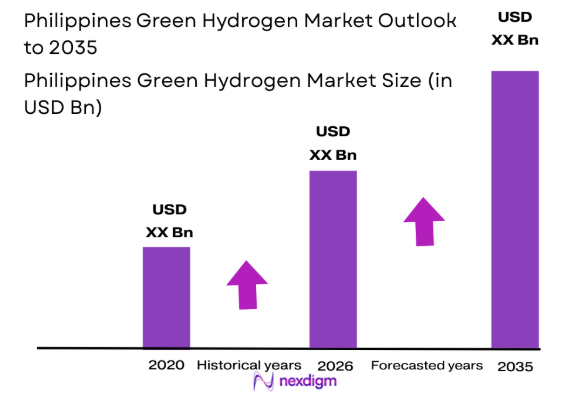
The Philippines Green Hydrogen market is poised for significant growth, with a projected market size valued at approximately USD ~ billion. This growth is primarily driven by the increasing demand for renewable energy solutions, alongside government incentives aimed at reducing carbon emissions and fostering sustainable energy alternatives. The cost reduction of electrolyzers and advancements in hydrogen production technologies are key factors propelling this market. The adoption of green hydrogen in various sectors, such as transportation and industrial manufacturing, further supports this upward trajectory.
Countries like Japan, Germany, and the United States are leading the green hydrogen market, owing to robust government policies, large-scale investments in renewable energy infrastructure, and strong commitments to decarbonization goals. These regions benefit from advanced technologies, favorable regulatory environments, and a well-established hydrogen infrastructure, which provide them with a competitive edge. Their dominance is attributed to a combination of public-private partnerships, substantial R&D investments, and a growing demand for green hydrogen in industrial applications.
Market Segmentation
By Product Type
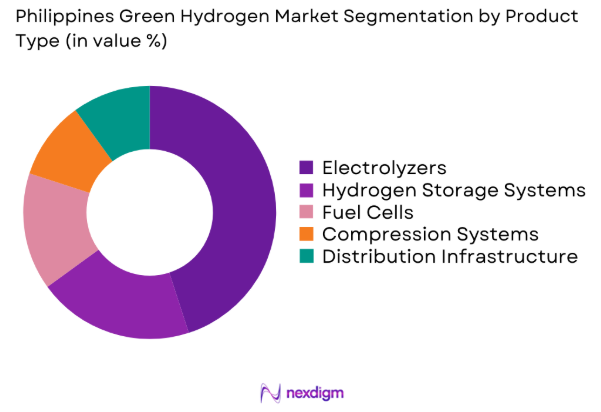
The Philippines Green Hydrogen market is segmented by product type into electrolyzers, hydrogen storage systems, fuel cells, compression systems, and distribution infrastructure. Electrolyzers dominate the market due to the increasing demand for hydrogen production through electrolysis, a clean and efficient method. The reduction in electrolyzer costs and the scalability of these systems contribute to their market dominance, making them essential for large-scale green hydrogen production. The increasing use of hydrogen in sectors such as power generation and transportation further strengthens the demand for electrolyzers, as they form the backbone of the hydrogen production process.
By Platform Type
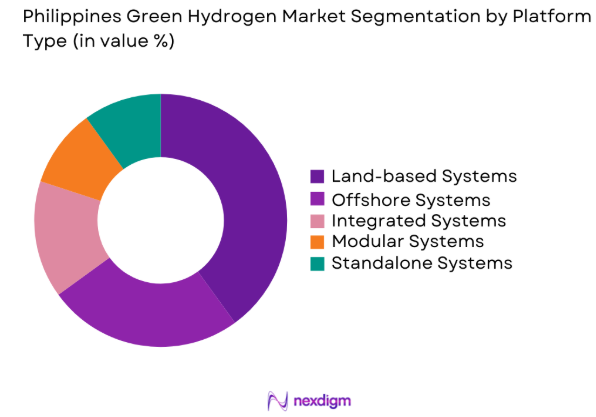
The Philippines Green Hydrogen market is segmented by platform type into land-based systems, offshore systems, integrated systems, modular systems, and standalone systems. Land-based systems currently hold the dominant share of the market. These systems benefit from established infrastructure, lower operational costs, and scalability. They are widely adopted due to their flexibility in integration with renewable energy sources such as wind and solar power. Furthermore, the growing trend of hybrid systems that combine renewable energy generation with hydrogen production systems reinforces the market position of land-based platforms in various industrial applications.
Competitive Landscape
The green hydrogen market is witnessing significant consolidation, with a few major players dominating the landscape. These companies benefit from technological leadership, strong financial backing, and strategic partnerships with governments and other industry stakeholders. The increasing investments in R&D and large-scale production plants are likely to further solidify the market position of these key players. In addition, the competitive dynamics are shaped by players’ ability to innovate in electrolyzer technology and storage solutions, and their influence on global hydrogen policy and infrastructure development.
| Company Name | Establishment Year | Headquarters | Technology Focus | Market Reach | Key Products | Revenue | Additional Parameter |
| Siemens Energy | 2008 | Germany | ~ | ~ | ~ | ~ | ~ |
| Air Products | 1940 | USA | ~ | ~ | ~ | ~ | ~ |
| Linde Group | 1906 | Germany | ~ | ~ | ~ | ~ | ~ |
| Plug Power | 1997 | USA | ~ | ~ | ~ | ~ | ~ |
| Nel ASA | 1927 | Norway | ~ | ~ | ~ | ~ | ~ |
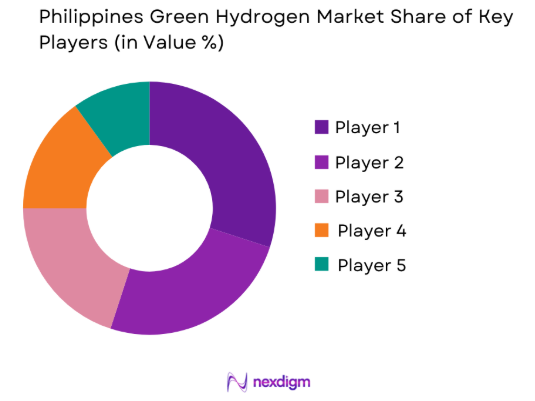
Philippines Green Hydrogen Market Analysis
Growth Drivers
Government Support for Renewable Energy
Government policies promoting clean energy transitions are key drivers for the green hydrogen market. Increased investments in research and development, tax incentives, and renewable energy mandates have created a supportive environment for market growth. Governments worldwide are setting ambitious decarbonization targets, encouraging investments in green hydrogen technologies. These policies have helped drive innovation, lowering production costs and making green hydrogen more accessible. As nations pursue carbon neutrality goals, green hydrogen is seen as a crucial solution for decarbonizing hard-to-abate sectors like heavy industry and transportation. These efforts are accelerating the adoption of green hydrogen, positioning it as a cornerstone of future sustainable energy systems.
Technological Advancements in Electrolysis
Technological advancements in electrolysis are a major growth driver for the green hydrogen market. The reduction in electrolyzer costs, driven by economies of scale and continuous innovation, has made green hydrogen production more economically viable. Enhancements in the efficiency and durability of electrolyzers have further accelerated market growth, making the process more reliable and cost-effective. Additionally, the integration of renewable energy sources like wind and solar power with electrolysis systems boosts scalability, supporting large-scale hydrogen production. These developments have positioned electrolysis as a key technology for green hydrogen, aligning with the global push for decarbonization and the growing demand for sustainable energy solutions.
Market Challenges
High Capital Investment Requirements
A major challenge for the green hydrogen market is the high initial capital investment needed to establish production facilities, including electrolyzers and storage systems. Despite advancements in technology, the large-scale deployment of green hydrogen infrastructure requires significant financial resources. This financial barrier is particularly difficult for small and medium-sized enterprises, limiting their ability to enter the market. Moreover, the long payback period for such investments discourages potential investors and slows the widespread adoption of green hydrogen solutions. The substantial upfront costs, combined with uncertain returns, contribute to the slow pace of market growth, especially in regions with limited financial support for new energy technologies.
Technological Barriers in Hydrogen Storage
Hydrogen storage is a significant challenge in the green hydrogen market due to its light and low-density nature, requiring advanced technologies for efficient transportation and storage. Current storage solutions, such as high-pressure tanks and cryogenic systems, are costly and present logistical challenges, limiting their widespread use. The lack of affordable, efficient storage options hinders the adoption of hydrogen in industries and transportation sectors. As hydrogen storage plays a crucial role in the scalability of green hydrogen solutions, addressing these technological barriers is essential for long-term market growth. Developing more cost-effective, reliable storage technologies will be key to unlocking the full potential of hydrogen as a clean energy source.
Opportunities
Collaboration with International Partners
Collaborating with international partners offers a valuable opportunity for players in the green hydrogen market. Cross-border partnerships can foster knowledge sharing, technology transfer, and joint investments in large-scale hydrogen production and infrastructure projects. These collaborations allow companies to leverage the expertise and resources of global partners, accelerating the development and deployment of green hydrogen solutions. Additionally, governments and international organizations are increasingly offering financial support for cross-border hydrogen initiatives, making it an appealing path for market expansion. By working together, stakeholders can overcome regional challenges, boost innovation, and enhance the global reach of green hydrogen technologies, contributing to the growth of a sustainable energy future.
Off-grid Hydrogen Solutions for Remote Areas
There is a growing opportunity to develop off-grid hydrogen solutions for remote areas with limited or expensive conventional energy infrastructure. These systems offer a clean, reliable energy source, reducing dependence on diesel generators and other non-renewable options. The increasing interest in hybrid energy systems, which combine renewable sources with hydrogen storage, provides an effective solution for these regions. This opportunity is especially significant in emerging economies, where access to reliable energy remains a major challenge. Off-grid hydrogen solutions can help bridge the energy gap, supporting sustainable development and improving energy security in underserved areas, while also aligning with global clean energy goals.
Future Outlook
The green hydrogen market is expected to experience significant growth in the coming years, driven by technological advancements, favorable regulatory environments, and increased demand for clean energy solutions. As hydrogen production becomes more cost-effective and scalable, it is likely to play a pivotal role in decarbonizing hard-to-abate sectors, such as heavy industry and transportation. Technological breakthroughs in storage and distribution systems are expected to further unlock new market opportunities. The continued support from governments and private sector investments will ensure the market’s expansion and integration into global energy systems.
Major Players
- Siemens Energy
- Air Products
- Linde Group
- Plug Power
- Nel ASA
- Ballard Power Systems
- Shell
- ITM Power
- McPhyEnergy
- Hydrogenics
- Mitsubishi Heavy Industries
- Cummins
- Toshiba Energy Systems & Solutions
- Enel Green Power
- Snam
Key Target Audience
- Investments and venture capitalist firms
- Government and regulatory bodies
- Renewable energy companies
- Energy storage providers
- Hydrogen production facilities
- Oil and gas companies
- Manufacturing industries
- Transportation sector companies
Research Methodology
Step 1: Identification of Key Variables
Identifying key market variables such as market size, growth drivers, and challenges that influence the green hydrogen market.
Step 2: Market Analysis and Construction
Analyzing historical data, market trends, and industry reports to construct an accurate market model for future projections.
Step 3: Hypothesis Validation and Expert Consultation
Validating the constructed model through consultations with industry experts and market leaders to ensure accuracy.
Step 4: Research Synthesis and Final Output
Synthesizing the gathered information and finalizing the report with insights, market trends, and actionable recommendations.

- Executive Summary
- Research Methodology (Definitions, Scope, Industry Assumptions, Market Sizing Approach, Primary & Secondary Research Framework, Data Collection & Verification Protocol, Analytic Models & Forecast Methodology, Limitations & Research Validity Checks)

- Market Definition and Scope
- Value Chain & Stakeholder Ecosystem
- Regulatory / Certification Landscape
- Sector Dynamics Affecting Demand
- Strategic Initiatives & Infrastructure Growth

- Growth Drivers
Government Support for Renewable Energy
Technological Advancements in Electrolysis
Rising Demand for Decarbonization
Private Sector Investments in Green Energy
Export Potential of Green Hydrogen - Market Challenges
High Capital Investment Requirements
Technological Barriers in Hydrogen Storage
Regulatory Hurdles and Policy Uncertainty
Infrastructure Development Challenges
Environmental Impact Concerns - Market Opportunities
Collaboration with International Partners
Off-grid Hydrogen Solutions for Remote Areas
Expansion of Green Hydrogen Production Facilities - Trends
Increased Use of Renewable Energy Sources
Advancements in Hydrogen Storage Technologies
Public and Private Sector Collaboration - Government Regulations
- SWOT Analysis of Key Competitors
- Porter’s Five Forces

- By Market Value, 2020-2025
- By Installed Units, 2020-2025
- By Average System Price, 2020-2025
- By System Complexity Tier, 2020-2025

- By System Type (In Value%)
Electrolyzers
Hydrogen Storage Systems
Fuel Cells
Compression Systems
Distribution and Transport Infrastructure - By Platform Type (In Value%)
Land-based Systems
Offshore Systems
Integrated Systems
Modular Systems
Standalone Systems - By Fitment Type (In Value%)
On-site Generation
Off-site Generation
Hybrid Solutions
Modular Fitment
Integrated Fitment - By End User Segment (In Value%)
Industrial Manufacturing
Power Generation
Transportation
Residential Sector
Commercial Sector - By Procurement Channel (In Value%)
Direct Procurement
Government Tenders
Private Sector Procurement
Online Bidding Platforms
Third-party Distributors

- Market Share Analysis
- Cross Comparison Parameters(System Type, Platform Type, Procurement Channel, End User Segment, Fitment Type, Technology Integration, Regulatory Compliance, Market Reach, Cost Efficiency, Scalability)
- SWOT Analysis of Key Competitors
- Pricing & Procurement Analysis
- Key Players
Shell
Air Products and Chemicals
Siemens Energy
Plug Power
Nel ASA
McPhy Energy
ITM Power
Linde Group
Uniper
Enel Green Power
Green Hydrogen Systems
Snam
TechnipFMC
Repsol
EDF Energy

- Growing Industrial Demand for Green Hydrogen
- Transportation Sector’s Shift Towards Green Fuel
- Residential Sector Adoption of Hydrogen Systems
- Commercial Demand for Clean Energy Solutions

- Forecast Market Value, 2026-2035
- Forecast Installed Units, 2026-2035
- Price Forecast by System Tier, 2026-2035
- Future Demand by Platform, 2026-2035


 Request a Sample
 Ask for Customization
 Get a Quote
 Enquire Now