

 Download PDF
 Download PDF
Market Overview
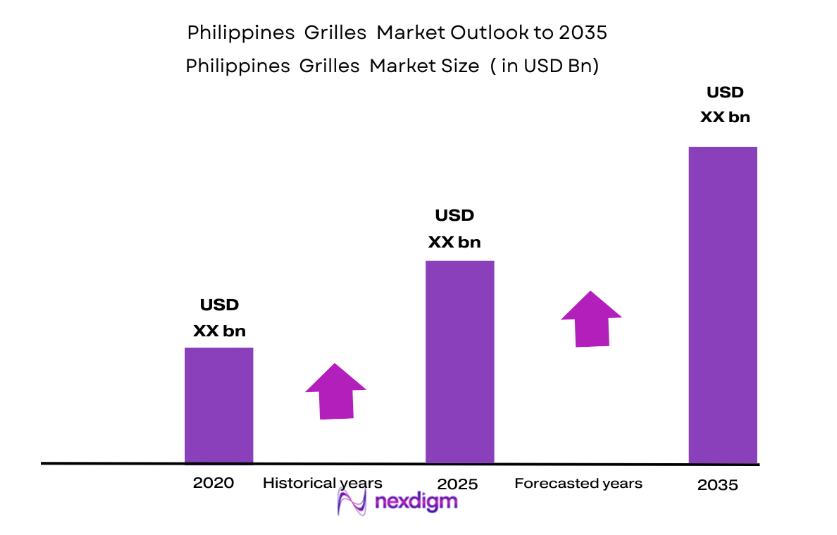
The Philippines Grilles Market is experiencing growth driven by the rising demand for automotive, construction, and HVAC industries. In the automotive sector, particularly, the increasing consumer preference for vehicle customization and the demand for more durable, eco-friendly materials have fueled the market expansion. Based on a recent historical assessment, the market size for grilles is estimated at USD ~ million. The market is also influenced by the growing adoption of electric vehicles (EVs) and the demand for premium vehicle accessories.
The Philippines stands as a dominant player in Southeast Asia for grilles, largely due to its robust automotive manufacturing sector, urban construction activities, and rapid industrialization. Metro Manila and other major urban centers like Cebu and Davao are key drivers of demand, attributed to increased vehicle sales and the expanding construction and infrastructure development in these areas. The country’s growing middle-class population also contributes to the increased demand for high-quality, custom-made grilles in both residential and commercial sectors.
Market Segmentation
By Product Type:
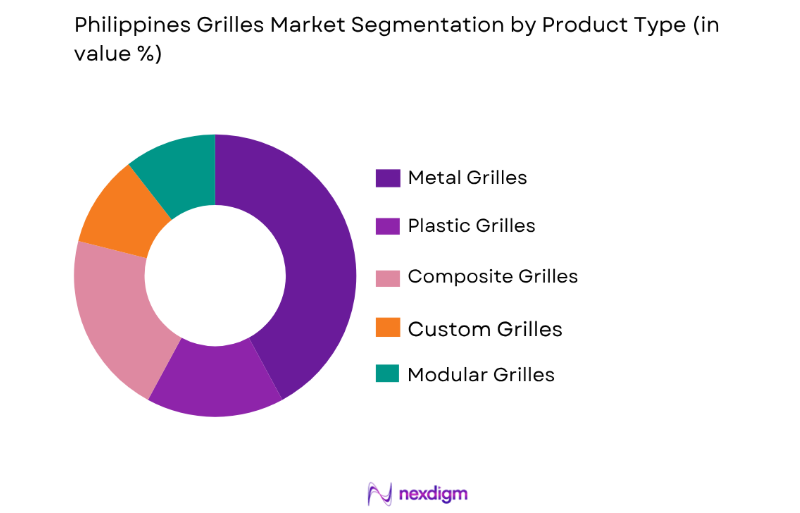
The Philippines Grilles market is segmented by product type into metal grilles, plastic grilles, composite grilles, custom grilles, and modular grilles. Recently, metal grilles have dominated the market share due to their durability and aesthetic appeal, making them the preferred choice for automotive and residential sectors. Additionally, the adoption of metal grilles in HVAC systems is increasing due to their high resistance to corrosion and structural integrity. The growing automotive customization trends, combined with the rising demand for high-performance materials, have led to a significant shift toward metal-based grilles, which is expected to continue its dominance in the near future.
By Application Type:
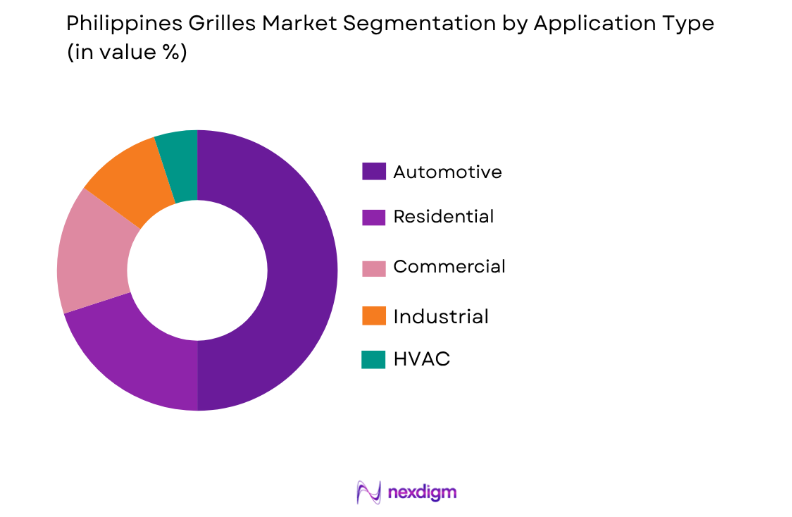
The market for grilles is segmented by application type into automotive, residential, commercial, industrial, and HVAC. Recently, the automotive sector has seen the highest market share for grilles, primarily driven by the rising preference for vehicle customization and the expanding automotive production in the Philippines. The automotive industry’s shift toward electric vehicles and luxury cars is further accelerating this demand, particularly for custom and high-performance grilles. This trend is expected to dominate as the automotive market continues to evolve in terms of design and sustainability.
Competitive Landscape
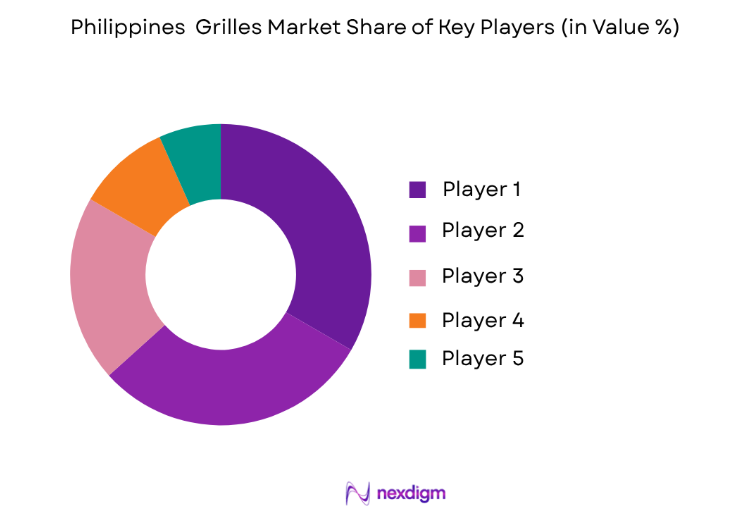
The competitive landscape of the Philippines Grilles Market is characterized by a blend of established international players and local manufacturers. The market has seen consolidation in recent years, with larger companies acquiring smaller ones to expand their market presence. The influence of major players has led to increased innovation and the development of more customized grille options, catering to both the automotive and construction industries. Additionally, these companies are focusing on the adoption of sustainable and durable materials to meet consumer demand for eco-friendly solutions.
| Company Name | Establishment Year | Headquarters | Technology Focus | Market Reach | Key Products | Revenue (USD) | Market-Specific Parameter |
| Honeywell | 1906 | Morris Plains, NJ | ~ | ~ | ~ | ~ | ~ |
| Johnson Controls | 1885 | Cork, Ireland | ~ | ~ | ~ | ~ | ~ |
| Tata Steel Limited | 1907 | Mumbai, India | ~ | ~ | ~ | ~ | ~ |
| Mahindra & Mahindra | 1945 | Mumbai, India | ~ | ~ | ~ | ~ | ~ |
| Ford Motor Company | 1903 | Dearborn, MI | ~ | ~ | ~ | ~ | ~ |
Philippines Grilles Market Analysis
Growth Drivers
Increasing Consumer Preference for Customization:
The Philippines automotive market has seen a significant rise in consumer demand for customized vehicle components, including grilles. This growing preference is driven by consumer desires for personalization and aesthetics, which have become key trends in the automotive industry. The increased availability of customized parts through online platforms and automotive shops has allowed consumers to easily access a variety of grille options, further fueling demand. With the rise of luxury vehicles and the increasing sales of electric vehicles, grilles tailored for specific automotive models are becoming more popular. Additionally, grilles made from eco-friendly materials, which are also highly durable, align with growing environmental concerns. Customization in both the automotive and residential sectors is expected to continue to drive the market’s expansion.
Government Investment in Infrastructure and Urbanization:
With the Philippines’ government focusing on infrastructure and urbanization projects, demand for high-quality building components like grilles is growing. These developments are especially evident in Metro Manila and other urban areas, where new residential and commercial buildings are rapidly emerging. As the construction industry expands, demand for durable, aesthetically pleasing, and energy-efficient grilles is rising. Grilles used in ventilation systems, facades, and security applications are integral to modern building design, providing both functional and decorative benefits. With continued government investment and urban planning, the market for residential and commercial grilles will see substantial growth.
Market Challenges
Supply Chain Disruptions:
The Philippines Grilles Market faces significant challenges due to supply chain disruptions, particularly in the procurement of raw materials like steel, plastic, and composites. The COVID-19 pandemic and global geopolitical tensions have made the availability of these materials unpredictable, which in turn impacts production timelines and costs. Additionally, local manufacturers often face high dependency on imports for specialized materials, exacerbating these issues. Supply chain disruptions lead to higher costs for manufacturers, which may affect pricing and availability for consumers, ultimately slowing down market growth. As manufacturers attempt to secure stable supply chains, this challenge remains one of the most critical obstacles for the market.
Rising Production Costs:
The increase in production costs, driven by raw material price hikes and labor shortages, presents another challenge to the Philippines Grilles Market. The rising costs of materials like aluminum, steel, and plastic are putting pressure on manufacturers to either absorb these costs or pass them on to consumers. With inflation affecting both raw materials and logistics, companies are finding it difficult to maintain competitive pricing. This challenge particularly affects smaller manufacturers that lack the resources to absorb these costs, resulting in price increases or reduced margins. The cost factor is particularly crucial for price-sensitive consumers in emerging markets within the Philippines.
Opportunities
Integration of Smart Technologies in Grilles:
The growing trend towards smart homes and smart vehicles offers opportunities for grilles manufacturers to innovate by integrating smart technologies. For automotive applications, smart grilles that feature sensors, lighting, and communication systems are becoming more popular, especially with the rise of electric vehicles and autonomous driving. In the residential and commercial sectors, grilles integrated with security and automation systems can provide additional value by improving energy efficiency, air quality, and safety. As consumers and businesses seek more advanced features, manufacturers have the opportunity to develop high-tech, customizable grilles that cater to these demands.
Rising Demand for Sustainable Grilles:
With the increasing awareness of environmental issues and sustainability, there is a rising demand for eco-friendly grilles made from recycled materials or those with a smaller carbon footprint. Manufacturers who focus on sustainability will benefit from consumers’ growing preference for green products. The automotive industry, in particular, is pushing for grilles made from lightweight materials such as carbon fiber, which not only helps in reducing overall vehicle weight but also enhances fuel efficiency. Similarly, residential and commercial sectors are seeking green alternatives for grilles in HVAC and building construction applications. This market opportunity is further supported by government policies promoting sustainability, offering incentives for manufacturers to invest in eco-friendly designs and materials.
Future Outlook
The future outlook for the Philippines Grilles Market is promising, with strong growth expected across various segments. The automotive sector, driven by increasing vehicle customization trends, and the construction industry, fueled by government infrastructure investments, will continue to drive market demand. Technological advancements, such as the integration of smart features and eco-friendly materials, are expected to reshape the market dynamics. The evolving regulatory landscape, encouraging the use of sustainable materials, will further support this transition. Demand for custom-made, durable, and sustainable grilles will continue to rise as the market adapts to consumer preferences and industry needs.
Major Players
- Honeywell
- Johnson Controls
- Tata Steel Limited
- Mahindra & Mahindra
- Ford Motor Company
- General Motors
- Volkswagen AG
- Mitsubishi Motors
- Lexus
- BMW
- Hyundai Motor Company
- Nissan Motor Co., Ltd.
- Honda Motor Co., Ltd.
- Saab Group
- Toyota Motor Corporation
Key Target Audience
- Investments and venture capitalist firms
- Government and regulatory bodies
- Automotive manufacturers
- HVAC system manufacturers
- Construction companies
- Commercial building contractors
- Residential building contractors
- E-commerce platforms
Research Methodology
Step 1: Identification of Key Variables
This step involves identifying the primary factors influencing the market, such as consumer preferences, technological advancements, and regulatory factors. These variables are determined through a review of industry reports, expert opinions, and market data.
Step 2: Market Analysis and Construction
Data is gathered from both primary and secondary sources to analyze the market structure, size, and trends. This includes gathering information from surveys, interviews, industry publications, and government reports.
Step 3: Hypothesis Validation and Expert Consultation
Hypotheses about market growth drivers, challenges, and opportunities are tested by consulting industry experts, conducting focus groups, and reviewing competitor strategies. This helps in validating the assumptions made during initial research.
Step 4: Research Synthesis and Final Output
The final market research report is prepared, synthesizing all data, trends, and insights. The report is then reviewed for accuracy and comprehensiveness, providing actionable insights for stakeholders.

- Executive Summary
- Research Methodology (Definitions, Scope, Industry Assumptions, Market Sizing Approach, Primary & Secondary Research Framework, Data Collection & Verification Protocol, Analytic Models & Forecast Methodology, Limitations & Research Validity Checks)

- Market Definition and Scope
- Value Chain & Stakeholder Ecosystem
- Regulatory / Certification Landscape
- Sector Dynamics Affecting Demand

- Growth Drivers
Increasing Demand for Vehicle Customization
Growth in Construction and Infrastructure Projects
Rising Preference for Eco-friendly and Durable Materials - Market Challenges
Supply Chain Disruptions
High Production Costs for Premium Materials
Limited Awareness of Grille Options in Emerging Markets - Market Opportunities
Expansion in the Electric Vehicle Grilles Market
Increase in Sustainable and Recyclable Materials
Technological Innovations in Grille Design - Trends
Adoption of Smart Grilles with Integrated Technology
Growing Popularity of Lightweight Materials
Customization Trends in Automotive and Residential Markets - Government Regulations
- SWOT Analysis of Key Competitors

- By Market Value, 2020-2025
- By Installed Units, 2020-2025
- By Average System Price, 2020-2025
- By System Complexity Tier, 2020-2025

- By System Type (In Value%)
Metal Grilles
Plastic Grilles
Composite Grilles
Custom Grilles
Modular Grilles - By Platform Type (In Value%)
Automotive Grilles
Residential Grilles
Commercial Grilles
Industrial Grilles
HVAC Grilles - By Fitment Type (In Value%)
OEM Grilles
Aftermarket Grilles
Custom Fit Grilles
Universal Grilles
Convertible Grilles - By EndUser Segment (In Value%)
Automotive Manufacturers
HVAC System Installers
Residential Building Contractors
Commercial Building Contractors
DIY Enthusiasts

- Market Share Analysis
- CrossComparison Parameters (Material Type, Grille Design, Application Area, Fitment Type, Procurement ChanneL)
- SWOT Analysis of Key Competitors
- Pricing & Procurement Analysis
- Porter’s Five Forces
- Key Players
Honeywell International
Johnson Controls
SABIC
Tata Steel Limited
Mahindra & Mahindra Ltd.
Ford Motor Company
Toyota Motor Corporation
General Motors
Volkswagen AG
Mitsubishi Motors
Lexus
BMW
Hyundai Motor Company
Nissan Motor Co., Ltd.
Honda Motor Co., Ltd.

- Automotive Sector’s Growing Need for Grilles
- Impact of HVAC System Growth on Grilles Demand
- Residential Grille Trends Among Homeowners
- Commercial Construction’s Influence on Grilles Usage

- Forecast Market Value, 2026-2035
- Forecast Installed Units, 2026-2035
- Price Forecast by System Tier, 2026-2035
- Future Demand by Platform, 2026-2035


 Request a Sample
 Ask for Customization
 Get a Quote
 Enquire Now